

Global Oleoresin Market Size and Forecast: (2026-2033)
The Global Oleoresin Market is estimated to be valued at USD 1.79 Bn in 2026 and is expected to reach USD 2.82 Bn by 2033, exhibiting a compound annual growth rate (CAGR) of 6.7% from 2026 to 2033.
Key Takeaways of the Oleoresin Market
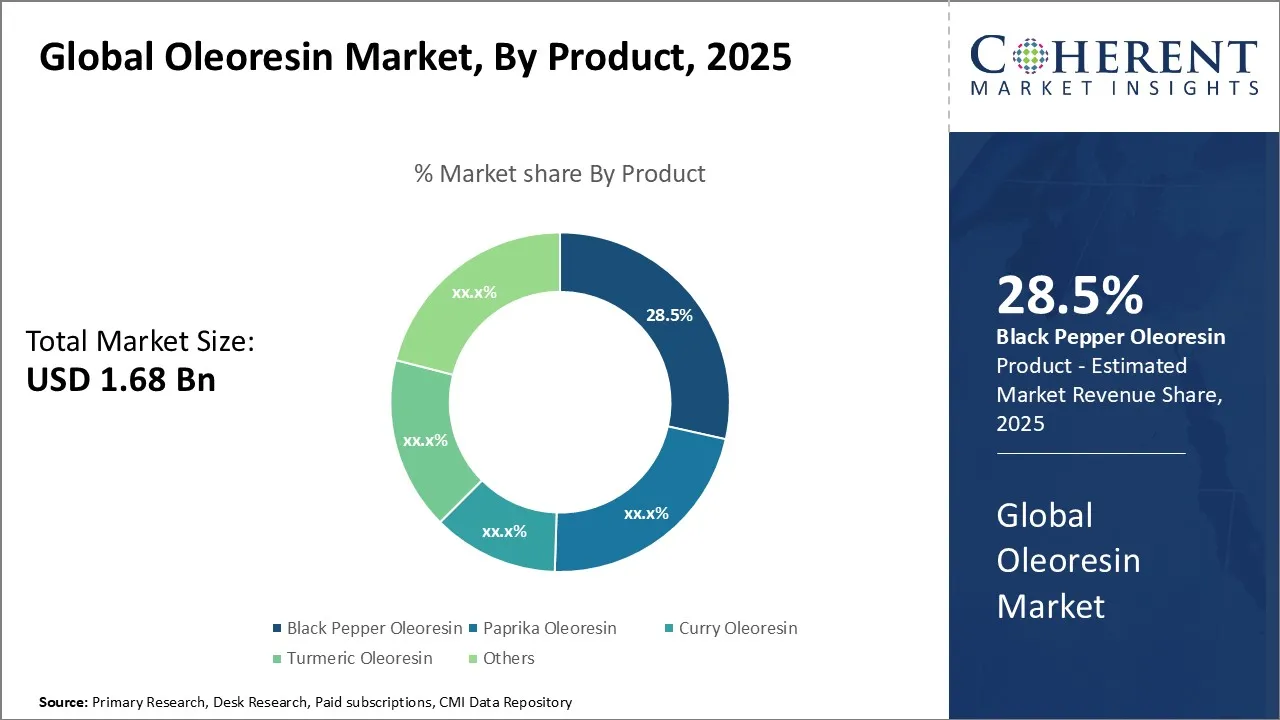
- Black pepper oleoresin is expected to dominate the global oleoresin market in 2026, capturing 29.5% of the market share.
- The food and beverage sector is projected to account for 40.7% of the global oleoresin market in 2026.
- Europe is expected to lead the global oleoresin market in 2026 with a 31. 8% share. Asia Pacific, with a 11.5% share in 2026, will be the fastest-growing regional market.
Market Overview
A notable trend in the oleoresin market is the rising consumer preference for natural and clean-label ingredients, pushing manufacturers to innovate and adopt sustainable sourcing practices. Additionally, the growing application of oleoresins in pharmaceuticals and personal care products is diversifying market demand. Technological advancements in eco-friendly extraction methods, such as supercritical CO₂ extraction, are gaining traction, supporting both environmental goals and product purity. This shift towards sustainability and higher efficacy continues to shape competitive dynamics and product development in the oleoresin sector.
Currents Events and their Impact
Current Events | Description and its impact |
Growing Demand for Fast Food (2025) |
|
Regional Market Leadership and Expansion |
|
Segmental Insights
- Current Industry Events of 2026
- Market Size Estimation
- Regional Breakdown
- Competitive Landscape
- Customer Intelligence
- Segmental Analysis
- Pricing Analysis
- Key Market Drivers, Challenges & Future Trends
- Customized Insights Section
Oleoresin Market Insights, By Product - Black Pepper Oleoresin Segment Dominates Due to Its Widespread Culinary and Therapeutic Applications
Black pepper oleoresin segment is expected to dominate the market, accounting for 29.5% share of the market in 2026, primarily due to its extensive versatility and growing demand across diverse industries. One of the key factors driving this prominence is black pepper’s status as a universally favored spice, widely used for enhancing flavor profiles in various cuisines worldwide. The oleoresin form, which is a concentrated extract, offers a standardized and convenient way to deliver black pepper’s potent flavor and aroma, making it highly attractive for food manufacturers seeking consistent taste and quality in their formulations.
Moreover, black pepper oleoresin is rich in piperine, a bioactive compound that imparts not just its pungency but also significant health benefits. This has led to expanding usage beyond culinary purposes, particularly in pharmaceuticals and nutraceuticals. Piperine’s well-documented ability to enhance the bioavailability of certain drugs and nutrients has made black pepper oleoresin a crucial ingredient in supplement formulations, fueling demand from health-conscious consumers and supplement manufacturers alike.
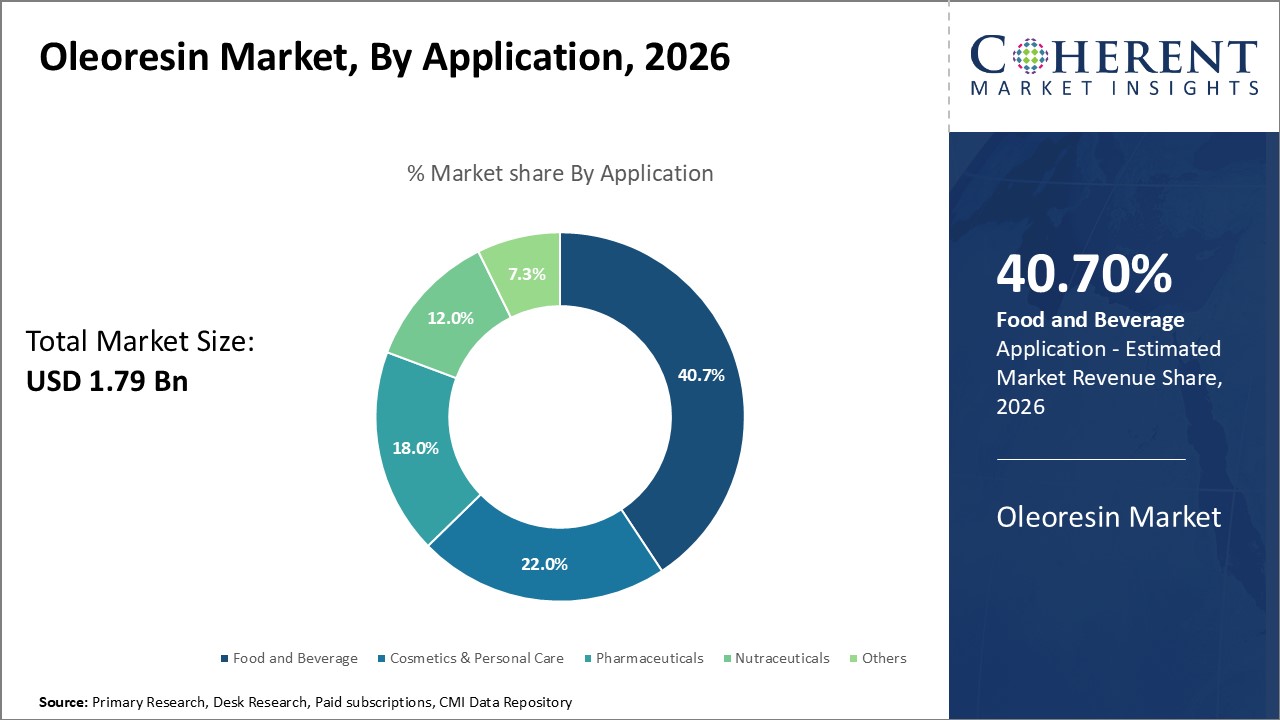
Oleoresin Market Insights, By Application - Food and Beverage Segment Leads Driven by Rising Demand for Natural Flavor Enhancers and Clean-Label Trends
The food and beverage sector is expected to hold 40.7% share of the market in 2026, primarily fueled by shifting consumer preferences toward natural flavors and the rising demand for convenience foods. Oleoresins provide a concentrated, potent source of natural spices and flavorings, making them extremely appealing to manufacturers who want to deliver authentic taste experiences without compromising on ingredient simplicity.
One of the chief drivers behind the prominence of the food and beverage application is the clean-label movement, which has transformed the way food products are formulated and marketed. Consumers today are scrutinizing ingredient lists and favoring products free from synthetic additives and artificial flavors. Oleoresins, being natural extracts derived from spices, align perfectly with these consumer demands, helping food companies meet regulatory standards and consumer expectations simultaneously.
Regional Insights
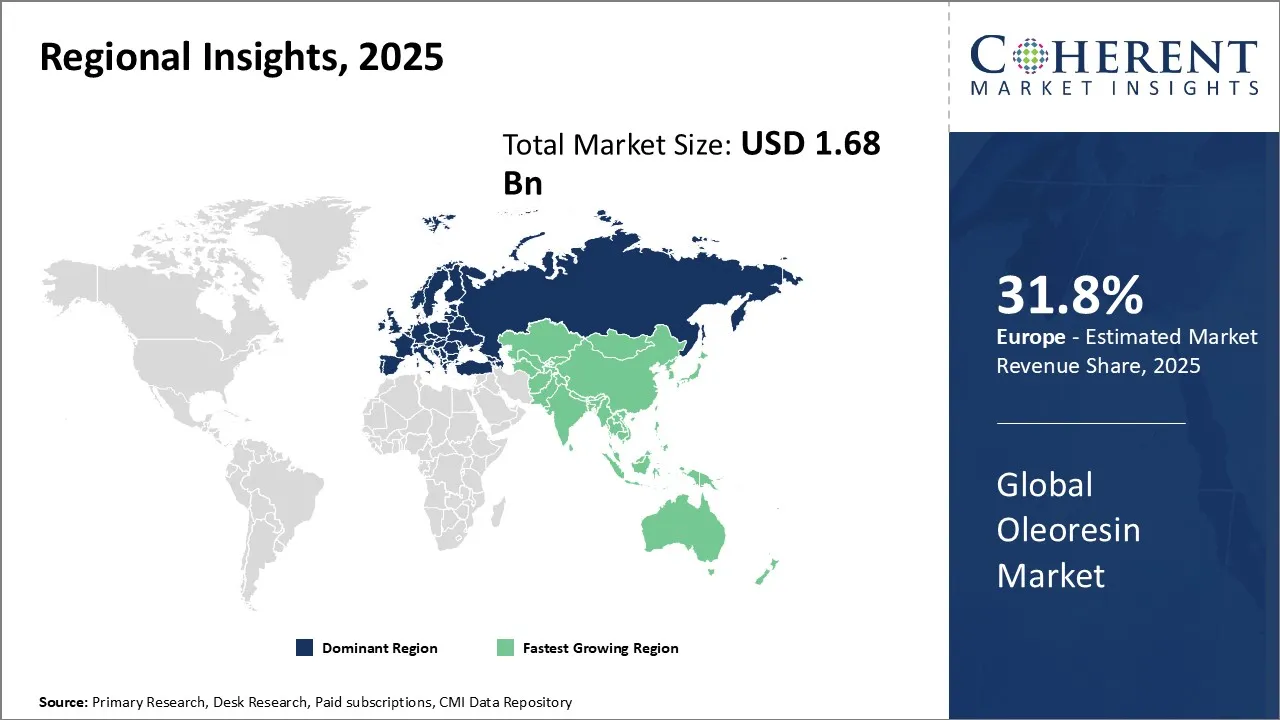
Europe Oleoresin Market Analysis and Trends
The Europe region is projected to lead the market with a 31.8% share in 2026, driven by the region’s well-established food and beverage industry, which is a significant consumer of oleoresins. Countries such as Spain, France, and the Netherlands are key producers and exporters of oleoresins, leveraging their strong agricultural practices, advanced extraction technologies, and demand for clean-label products. The European Union's stringent regulations on food safety and quality standards further support the high demand for natural and organic oleoresins, as consumers increasingly seek clean, chemical-free ingredients.
Additionally, the presence of prominent manufacturers, such as European Spice Services (Germany), Berjé Inc. (Germany), and Olam International (U.K.), strengthens the market ecosystem. The EU's support for sustainable agriculture and organic farming practices, coupled with its close proximity to major food markets in both Europe and North America, provides a solid foundation for oleoresin production and trade. These factors combine to position Europe as a major player in this market.
Asia Pacific Oleoresin Market Analysis and Trends
The Asia Pacific region is expected to exhibit the fastest growth in the market contributing 11.5% share in 2026, driven by the region's rich biodiversity, abundant raw material supply, and a well-established spice cultivation and processing industry. Countries like India, China, and Indonesia serve as major producers and exporters of oleoresins, leveraging their favorable climatic conditions and expertise in spice extraction technologies.
The region benefits from government initiatives promoting agricultural development and organic farming, which enhance the quality and yield of spice crops critical for oleoresin production. Additionally, the extensive presence of both multinational and local oleoresin manufacturers, such as Synthite Industries (India), Kancor Ingredients (India), and Chenab Agro (Pakistan), strengthens the market ecosystem. Trade dynamics in Asia Pacific favor export-led growth due to established supply chains and proximity to major spice-consuming countries, boosting the oleoresin market’s dominant position globally.
Oleoresin Market Outlook for Key Countries
India Oleoresin Market Trends
India remains a critical hub for oleoresin production globally due to its vast cultivation of spices like pepper, chili, and turmeric. The country’s long-standing spice heritage, supported by government schemes such as the Spices Board initiatives, bolsters both raw material and processed oleoresin supply. Major companies like Synthite Industries and Kancor Ingredients dominate the market with extensive product portfolios serving food, pharmaceutical, and cosmetics industries. The presence of advanced extraction technologies and sizable export operations keeps India at the forefront of the oleoresin market.
China Oleoresin Market Trends
China's oleoresin market is growing steadily, underpinned by its increasingly sophisticated food processing and flavoring industries. The government's focus on agricultural modernization and quality control reinforces raw material availability, especially in chili and ginger oleoresins. Leading domestic companies and joint ventures with international firms help enhance processing efficiencies and product innovation. China’s vast domestic consumption and notable exports imprint it as a significant player shaping the regional supply chain.
For example, KUNSHAN ODOWELL CO., LTD is a manufacturer and supplier of oleoresins based in China, known for its professional expertise in producing high-quality oleoresin products. The company offers a wide range of oleoresins, including those derived from chili, ginger, and other spices, catering to the diverse needs of the food processing, flavoring, and fragrance industries.
U.S. Oleoresin Market Trends
The U.S. represents a mature oleoresin market driven by high demand in food and beverage, pharmaceuticals, and cosmetics sectors. Advanced research and development activities by firms like McCormick & Company and Wild Flavors (part of Archer Daniels Midland) ensure continuous innovation in oleoresin applications. Strict regulatory frameworks and consumer preference for natural ingredients push manufacturers to maintain premium quality standards. This market also serves as a critical importer, sourcing oleoresins from Asia Pacific and Latin America to meet diverse industry needs.
Brazil Oleoresin Market Trends
Brazil's oleoresin market landscape is rapidly evolving, fueled by growing spice farming and alignment with global trends favoring natural flavors. Domestic companies such as Indesso are increasing oleoresin production capacities to serve both local food manufacturers and international markets. The supportive regulatory environment fosters sustainability and organic certification, encouraging investment in oleoresin extraction technologies. Brazil’s strategic location also facilitates exports within Latin America and beyond, boosting its market prominence.
Germany Oleoresin Market Trends
Germany is a key European hub for oleoresins, with well-established flavor and fragrance industries demanding high-quality natural extracts. Companies like Symrise and Döhler drive innovation in oleoresin formulations and applications for food, beverage, and cosmetics. Strong regulatory frameworks in the European Union encourage sustainable sourcing and traceability, influencing Germany’s procurement and market practices. Germany’s role as a trade and innovation center enhances Europe’s capacity to adopt and distribute oleoresins effectively throughout the continent.
Macro and Micro Economic Factors Impacting the Oleoresin Market Growth
Macroeconomic Factors
- Global Economic Stability: Overall economic conditions such as GDP growth, inflation, and consumer purchasing power strongly influence demand for oleoresins, especially in key end-use sectors like food, beverages, pharmaceuticals, and cosmetics.
- International Trade Dynamics: Fluctuations in exchange rates, changes in trade policies, and tariffs affect the pricing and global competitiveness of oleoresin exports and imports. These macro-level trade conditions can either propel or constrain growth in key regions.
- Commodity Price Volatility: The prices of raw materials (mainly spices) used to manufacture oleoresins are sensitive to global supply-demand imbalances, climate disruptions, and geopolitical events. For example, price spikes in black pepper due to climate or demand shocks directly increase production costs for oleoresin manufacturers.
- Technological Advancements: Economic investment in agriculture, biotechnology, and extraction technology at a national and global level enhances efficiency, quality, and variety of oleoresin products, driving long-term growth.
Microeconomic Factors
- Consumer Trends: Rising preference for ‘clean label’ products, demand for plant-based and ethnic flavors, and health consciousness among consumers are accelerating the shift from synthetic additives to natural oleoresins.
- End-Industry Growth: Expansion and innovation in fast food, packaged food, nutraceuticals, pharmaceuticals, and cosmetics directly increase demand for oleoresin as a natural flavoring and coloring solution.
- Supply Chain Dynamics: Manufacturers must navigate seasonal and regional availability of spice crops, logistical challenges in storage and transport, and risks of crop failures due to weather or pests. Supply chain diversification and resilience become micro-level strategies to manage these risks.
Market Players, Key Development, and Competitive Intelligence
Key Developments
- In August 2023, Divi's and Algalif teamed up to develop concentrated beadlets of sustainable, natural astaxanthin. These beadlets are used in renewable energy sources to extract astaxanthin oleoresin from microalgae in an environment-friendly manner.
- In January 2022, Givaudan acquired a 48% stake in Nanovetores Group from The Criatec Fund, a Brazilian investment fund focusing on innovative, early-stage companies. This acquisition highlights Givaudan's strategic efforts to strengthen its position in the beauty products sector and enhance its capabilities in the market.
Top Strategies Followed by Global Oleoresin Market Players
- Established market leaders, typically multinational corporations with significant resources, prioritize heavy investments in research and development (R&D) to drive innovation. These investments enable them to create high-performance oleoresin products that meet evolving customer needs and regulatory standards.
- For example, Synthite Industries, one of the largest producers of oleoresins, heavily invests in R&D to develop high-quality products like chili oleoresin and black pepper oleoresin. Their focus on innovation has enabled them to expand their product offerings and target diverse markets, including pharmaceuticals, food and beverage, and personal care, ensuring their competitive leadership on a global scale.
- Mid-level players in the oleoresin market focus on striking a balance between affordability and quality, targeting price-sensitive consumer segments, particularly in developing regions. These companies emphasize offering cost-effective oleoresin solutions that do not compromise essential product attributes such as flavor integrity, stability, and safety. To amplify their market footprint and operational capacities, mid-sized firms actively pursue collaborations and joint ventures with technology providers, ingredient suppliers, or larger players.
- For example, Natura Vitalis Industries Pvt Ltd is a prominent Indian manufacturer and exporter specializing in natural extracts, with a significant presence in the global oleoresin market. Their offerings are tailored to meet the needs of industries such as food and beverage, cosmetics, pharmaceuticals, and aromatherapy.
- Small-scale oleoresin producers carve out unique niches by specializing in innovative or highly customized products that cater to specific regional tastes or requirements. They often adopt cutting-edge extraction or formulation technologies to differentiate their offerings from mainstream products, focusing on attributes such as organic certification, enhanced purity, or novel flavor profiles.
Market Report Scope
Oleoresin Market Report Coverage
| Report Coverage | Details | ||
|---|---|---|---|
| Base Year: | 2025 | Market Size in 2026: | USD 1.79 Bn |
| Historical Data for: | 2020 To 2024 | Forecast Period: | 2026 To 2033 |
| Forecast Period 2026 to 2033 CAGR: | 6.7% | 2033 Value Projection: | USD 2.82 Bn |
| Geographies covered: |
| ||
| Segments covered: |
| ||
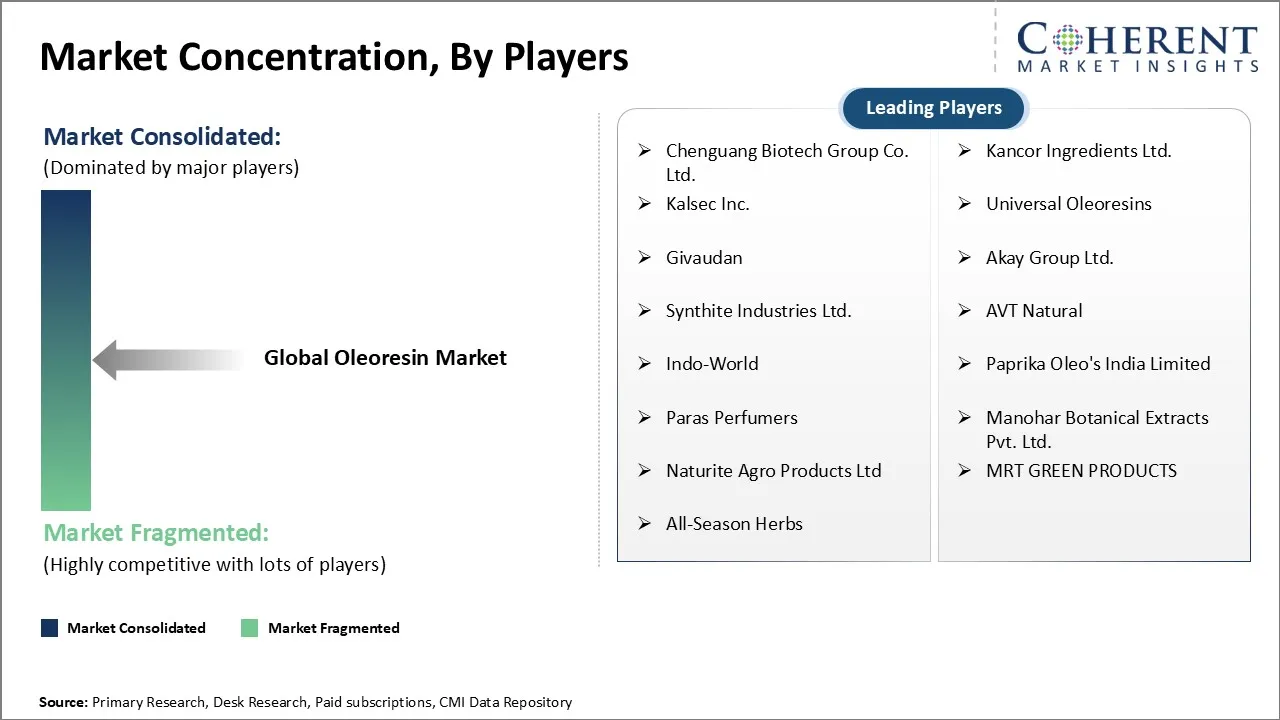
| Companies covered: | Chenguang Biotech Group Co. Ltd., Kancor Ingredients Ltd., Kalsec Inc., Universal Oleoresins, Givaudan, Akay Group Ltd., Synthite Industries Ltd., AVT Natural, Indo-World, Paprika Oleo's India Limited, Paras Perfumers, Manohar Botanical Extracts Pvt. Ltd., Naturite Agro Products Ltd, MRT GREEN PRODUCTS, and All-Season Herbs | ||
| Growth Drivers: |
| ||
| Restraints & Challenges: |
| ||
Oleoresin Market Dynamics
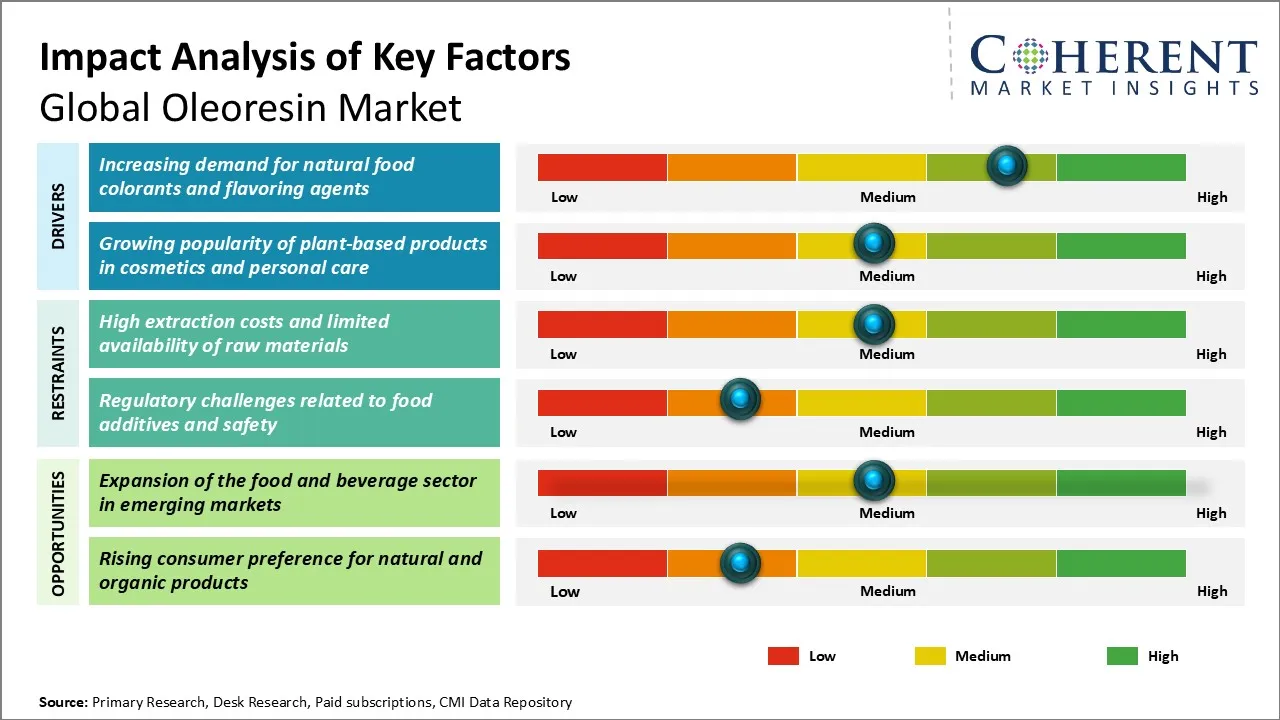
Oleoresin Market Driver - Increasing Demand for Natural Food Colorants and Flavoring Agents
The growing consumer preference for natural and clean-label products has significantly fueled the demand for oleoresins as natural colorants and flavoring agents. As awareness about the potential health risks associated with synthetic additives rises, manufacturers across the food and beverage industry are actively seeking alternatives that not only enhance product appeal but also offer health benefits. Oleoresins, derived from spices and herbs through natural extraction processes, provide concentrated flavors and vibrant colors without the drawbacks of artificial ingredients. Their ability to maintain stability during processing and storage makes them highly desirable in a wide range of applications, including snacks, processed meats, frozen meat, beverages, and bakery products.
Major food manufacturers like Nestlé, Unilever, and PepsiCo have responded by reformulating their products to incorporate natural alternatives, with oleoresins serving as ideal substitutes for synthetic Red 40, Yellow 6, and artificial vanilla flavoring. The trend extends beyond traditional applications, with oleoresins finding new applications in organic beverages, premium snack foods, and artisanal confectionery products, where natural authenticity commands premium pricing and enhanced brand perception.
Oleoresin Market Opportunity - Expansion of the Food and Beverage Sector in Emerging Markets
The rapidly expanding food and beverage sector in emerging markets presents a significant growth opportunity for the market. Emerging economies in regions such as Asia Pacific, Latin America, and Africa are witnessing increasing urbanization, rising disposable incomes, and evolving consumer lifestyles, which are driving higher demand for processed and convenience foods. Oleoresins, known for their natural flavoring, coloring, and preservative properties, are increasingly preferred in these markets as manufacturers strive to meet consumer demand for clean-label and natural ingredients.
For example, companies like Grain Processing Corporation are expanding their reach in this region by offering oleoresins that meet the evolving consumer preference for natural ingredients. The shift towards natural preservatives and flavorings is also visible in the rise of local brands focusing on clean-label foods.
Analyst Opinion (Expert Opinion)
- The global oleoresin market is witnessing significant transformation, driven by the increasing demand for natural ingredients in food, cosmetics, and pharmaceuticals. Companies like Kancor Ingredients and Givaudan are leading this shift, as highlighted at the Global Natural Ingredients Conference (2023) and the International Spice Conference (2022). Presentations emphasized the growing consumer preference for clean-label products, with Kancor showcasing its innovative extraction techniques that maintain the integrity of flavors and aromas while ensuring sustainability.
- For instance, their recent launch of a line of organic oleoresins has positioned them favorably in markets prioritizing health and environmental impact. Additionally, the rising trend of plant-based diets has fueled interest in oleoresins as natural flavor enhancers, a topic that received considerable attention at recent conferences.
- Givaudan's exploration of new oleoresin applications in the beverage sector underlines the versatility of these extracts in meeting diverse consumer needs. As regulatory frameworks evolve and consumers demand transparency, companies that prioritize innovation, sustainability, and quality will likely emerge as leaders, capturing market share in this dynamic and growing sector.
Speak to the analyst
Want personalized insights?
Take the findings above to one of our principal consultants, or have the report rebuilt around the segments, geographies and competitors you actually track.
Market Segmentation
- Product Insights (Revenue, USD Bn, 2021 - 2033)
- Black Pepper Oleoresin
- Paprika Oleoresin
- Curry Oleoresin
- Turmeric Oleoresin
- Others
- Application Insights (Revenue, USD Bn, 2021 - 2033)
- Food and Beverage
- Cosmetics and Personal Care
- Pharmaceuticals
- Nutraceuticals
- Others
- Regional Insights (Revenue, USD Bn, 2021 - 2033)
- North America
- U.S.
- Canada
- Latin America
- Brazil
- Argentina
- Mexico
- Rest of Latin America
- Europe
- Germany
- U.K.
- Spain
- France
- Italy
- Russia
- Rest of Europe
- Asia Pacific
- China
- India
- Japan
- Australia
- South Korea
- ASEAN
- Rest of Asia Pacific
- Middle East
- GCC Countries
- Israel
- Rest of Middle East
- Africa
- South Africa
- North Africa
- Central Africa
- North America
- Key Players Insights
- Chenguang Biotech Group Co. Ltd.
- Kancor Ingredients Ltd.
- Kalsec Inc.
- Universal Oleoresins
- Givaudan
- Akay Group Ltd.
- Synthite Industries Ltd.
- AVT Natural
- Indo-World
- Paprika Oleo's India Limited
- Paras Perfumers
- Manohar Botanical Extracts Pvt. Ltd.
- Naturite Agro Products Ltd.
- MRT GREEN PRODUCTS
- All-Season Herbs
Sources
Primary Research Interviews
- R&D Director – Leading Oleoresin Manufacturer
- Procurement Manager – Major Spices Retailer
- Product Development Head – Well-Known Oleoresin Brand
- Sustainability Manager – Natural Flavoring Certification Body
Stakeholders
- Manufacturers
- End-use Sectors
- Food & Beverages (Spices, Flavorings, Natural Extracts)
- Pharmaceuticals (Oleoresins in medicinal products)
- Cosmetics & Personal Care (Skin care, hair care)
- Nutraceuticals (Natural health supplements)
- Regulatory & Certification Bodies
- E-commerce Platforms and Retailers
- Technology Integration Players AI-based product recommendation tools for oleoresin products
Databases
- UN Comtrade Database
- India Import Export (EXIM) Database
Magazines
- Food & Beverage Insights – Trends in natural food flavoring and extracts
- Cosmetic & Personal Care Business – Innovations in oleoresin use in personal care
- Global Spice Trends – Market growth of oleoresins in spice formulations
- Natural Extracts Journal – Oleoresin applications and market growth
Journals
- Journal of Food Science & Technology – Application of oleoresins in food flavoring
- International Journal of Cosmetic Science – Role of oleoresins in skin care formulations
- Phytotherapy Research – Medicinal benefits and bioactive compounds in oleoresin
- Food Research International – Oleoresins for flavor enhancement and preservation
- Journal of Essential Oil Research – Oleoresin extraction methods and market applications
Newspapers
- The Financial Times – Global oleoresin market growth and demand shifts
- The Guardian – Natural ingredients and their role in the food industry
- Asia Food Journal – Oleoresin market penetration in the Asia-Pacific region
- European Food News – Regulation updates and quality standards for oleoresins
Associations
- International Association of Natural Products (IANP)
- Spice Board of India
- International Federation of Essential Oils and Aroma Trades (IFEAT)
- American Spice Trade Association (ASTA)
- European Spice Association (ESA)
- Natural Products Association (NPA)
Public Domain Sources
- FDA – Guidelines for natural extracts in food products
- European Commission – Regulations for natural flavoring and oleoresin usage in food and cosmetics
- World Health Organization (WHO) – Health standards and safety assessments for natural products like oleoresins
Proprietary Elements
- CMI Data Analytics Tool, Proprietary CMI Existing Repository of information for last 8 years.
Get access to 250+ pages report
Every segment, forecast, competitor profile and data table behind the analysis above — available for instant download.
- ESOMAR Member
- ISO 9001:2015 Certified
- D-U-N-S Registered
- GDPR & CCPA Compliant
Missing comfort of reading report in your local language? Find your preferred language:
Transform your Strategy with Exclusive Trending Reports
Frequently Asked Questions
The global oleoresin market is estimated to be valued at USD 1.79 Bn in 2026 and is expected to reach USD 2.82 Bn by 2033.
The CAGR of global oleoresin market is projected to be 6.7% from 2026 to 2033.
Increasing demand for natural food colorants and flavoring agents and growing popularity of plant-based products in cosmetics and personal care are the major factors driving the growth of the global oleoresin market.
High extraction costs and limited availability of raw materials and regulatory challenges related to food additives and safety are the major factors hampering the growth of the global oleoresin market.
In terms of product, black pepper oleoresin is estimated to dominate the market revenue share in 2026.
Chenguang Biotech Group Co. Ltd., Kancor Ingredients Ltd., Kalsec Inc., Universal Oleoresins, Givaudan, Akay Group Ltd., Synthite Industries Ltd., AVT Natural, Indo-World, Paprika Oleo's India Limited, Paras Perfumers, Manohar Botanical Extracts Pvt. Ltd., Naturite Agro Products Ltd, MRT GREEN PRODUCTS, and All-Season Herbs are the major players.
Europe is expected to lead the global oleoresin market in 2026.