

Bioactive Protein and Peptides Market Analysis and Forecasts (2026-2033)
The Bioactive Protein and Peptides Market is anticipated to grow at a CAGR of 8.2% with USD 13.5 Bn in 2026 and is expected to reach USD 18.7 Bn in 2033. Rising Health Consciousness & Preventive Healthcare, Growing Demand for Functional Foods & Nutraceuticals and Technological Advancements in Biotechnology is driving the market growth. According to our research, the demand for functional food is expected to grow and industry size will surpass 400 Bn by 2033.
Key Takeaways
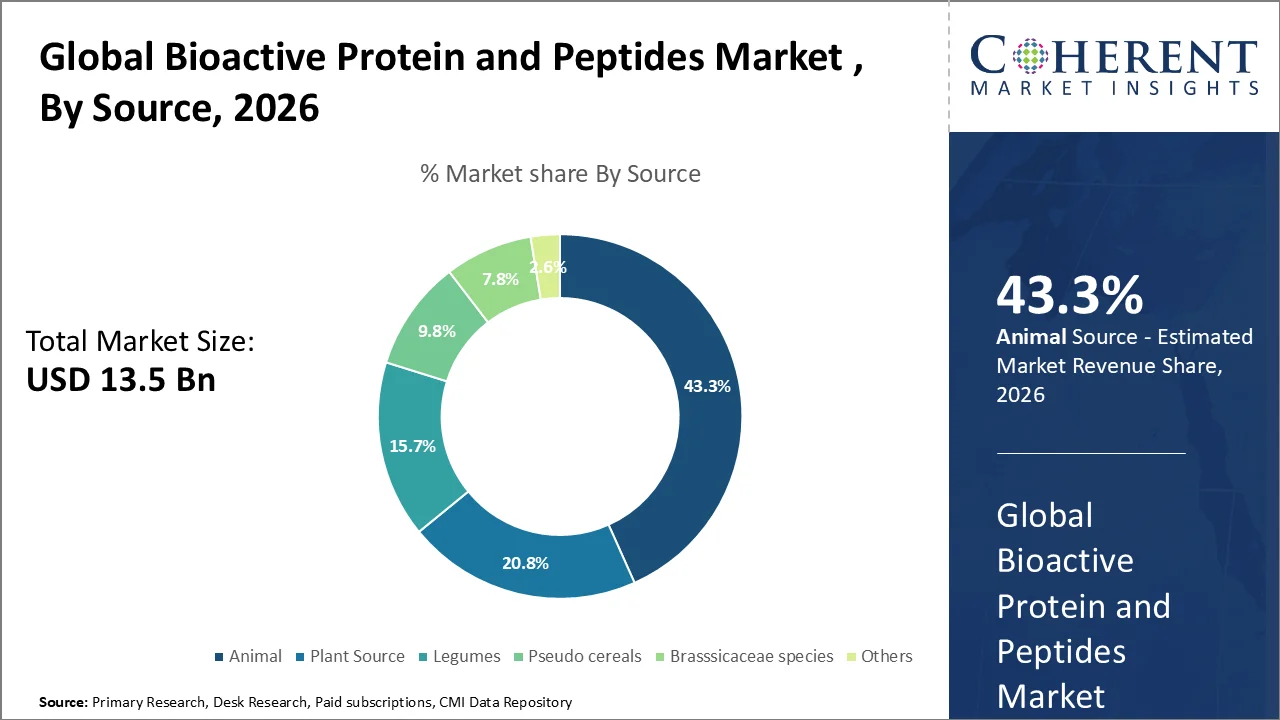
- By Source, Animal hold the largest market share of 43.3% in 2026 owing to the strong demand for functional and health-enhancing foods. According to the Center of Nutrition Studies, animal-based proteins—being more similar to human proteins—are absorbed and utilized by the body more quickly than plant-based proteins.
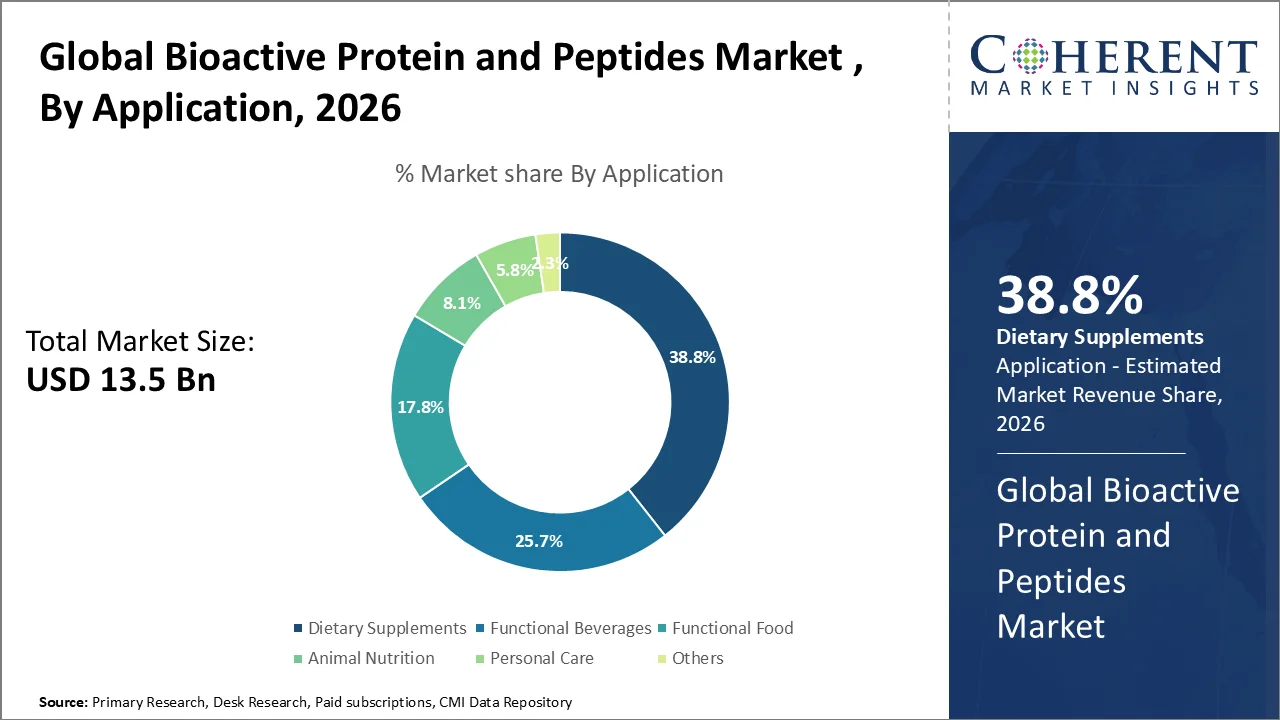
- By Application, Dietary Supplements expected to hold the largest market share of 38.8% in 2026 owing to its increasing prevalence of lifestyle diseases. The Economic Survey 2025 reports a significant increase in lifestyle diseases in India, including heart disease, diabetes, and obesity.
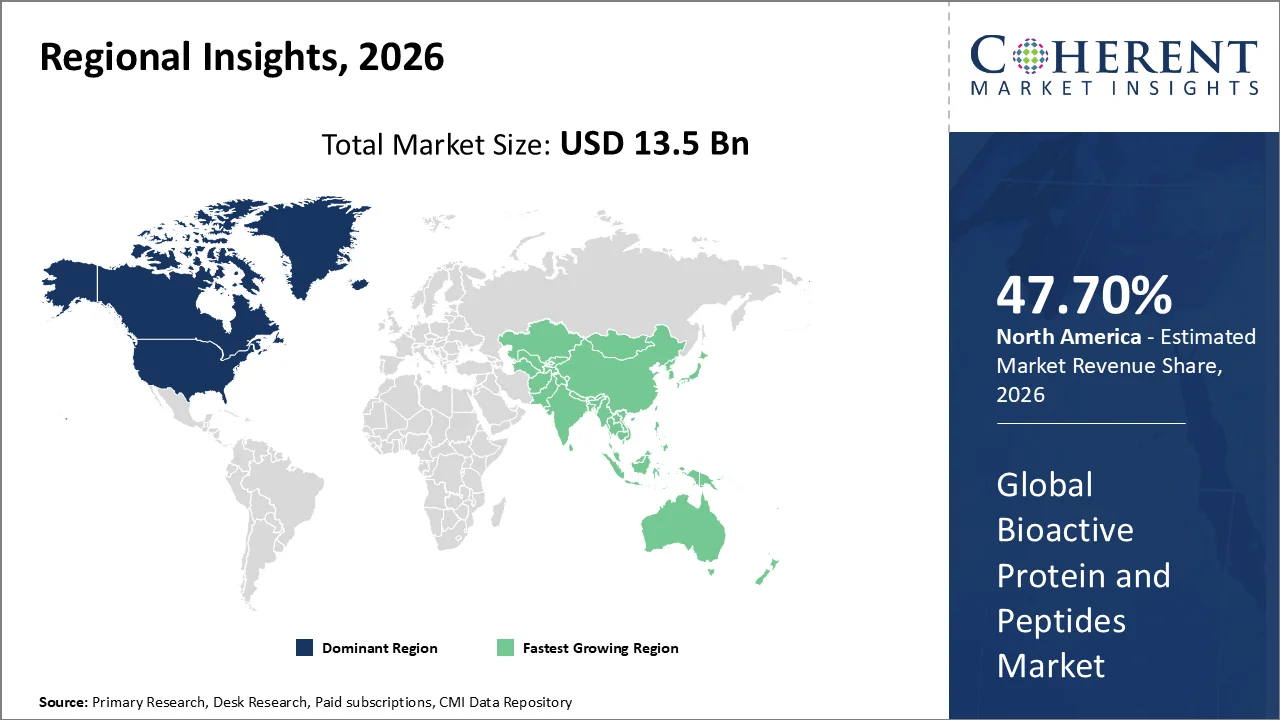
- By Region, North America hold the dominant share of 47.70% in 2026 owing to its high consumer awareness & preventive healthcare culture.
Segmental Insights
Why Animal holds the largest market share in Bioactive Protein and Peptides Market?
Animal hold the largest market share of 43.3% in 2026. Strong demand for functional foods and dietary supplements that support immunity, muscle growth, and cardiovascular health drives animal-derived bioactive proteins and peptides. Consumers prefer these proteins due to their high bioavailability and complete amino acid profile. In 2025, the FAO estimated global poultry consumption at 145 million tons (ready-to-cook equivalent). Manufacturers enhance production efficiency and functionality through advancements in enzymatic hydrolysis and extraction technologies. The availability of raw materials such as dairy, meat, eggs, and fish ensure consistent supply. India produced 239.30 million tonnes of milk in 2023–24. This is further supporting the segment’s growth.
- Current Industry Events of 2026
- Market Size Estimation
- Regional Breakdown
- Competitive Landscape
- Customer Intelligence
- Segmental Analysis
- Pricing Analysis
- Key Market Drivers, Challenges & Future Trends
- Customized Insights Section
Dietary Supplements expected to hold the largest market share
Dietary Supplements expected to hold the largest market share of 38.8% in 2026 owing to its increasing prevalence of lifestyle diseases. Rising health awareness and a shift toward preventive healthcare drive consumers to adopt dietary supplements containing bioactive proteins and peptides. People increasingly use these supplements to support immunity, muscle recovery, and overall wellness. Approximately 57.6%–75% of U.S. adults use dietary supplements, with higher usage among women and increasing prevalence with age, mainly for overall health support. The growing prevalence of lifestyle diseases and an aging population further increase adoption. By 2030, one in six people globally will be aged 60 or older, with this population rising from 1 billion in 2020 to 1.4 billion. By 2050, it is projected to reach 2.1 billion, while those aged 80 and above will triple to 426 million.
Bioactive Protein and Peptides Market Trends
- Rising demand for functional foods and nutraceuticals boosts the adoption of bioactive proteins and peptides for immunity, gut health, and overall wellness.
- Growing preference for high-protein and performance nutrition products supports increased use in sports nutrition and active lifestyle segments. According to a survey, 30 million adults in England engage in sports or physical activity each week.
- Advancements in enzymatic hydrolysis and peptide extraction technologies improve bioavailability, functionality, and product innovation.
- Increasing aging population and prevalence of chronic diseases such as cardiovascular disorders and diabetes drive demand for preventive nutrition solutions. According to the CDC (April 2026), over 90% of adults aged 65 and older have at least one chronic condition.
Current Events and Their Impact on the Bioactive Protein and Peptides Market (regulatory shifts, government policies)
Current Event | Description and its Impact |
EU Novel Food approvals tightening (2025–2026) |
|
Stricter EFSA safety requirements for novel proteins (effective 2025) |
|
Regional Insights
North America dominates owing to Strong R&D and innovation infrastructure
North America holds the dominant share of 47.70% in 2026. Strong consumer awareness of health and wellness drives demand for bioactive proteins and peptides across North America. A well-established nutraceutical and functional food industry supports their widespread adoption in supplements and fortified products. Advanced research infrastructure and continuous innovation enable manufacturers to develop high-quality ingredients. For instance, Freemen Nutra Group, a global ingredient supplier, has partnered with RAWGA Inc., a South Korean ingredient development company focused on sustainability, to introduce VC-H1, a novel plant-based collagen peptide, to the North American market.
High healthcare spending and an aging population further increase demand for preventive nutrition. U.S. healthcare spending totaled USD 5.3 trillion in 2024—about USD 15,474 per capita—representing 18.0% of GDP.
Asia Pacific expected to hold the largest market share.
Rapid urbanization and rising disposable incomes drive consumers in Asia Pacific to adopt bioactive proteins and peptides. Consumers increasingly choose functional foods and dietary supplements to improve immunity, digestion, and overall health. Growing awareness of preventive healthcare and an expanding middle-class population further support market growth.
The region benefits from abundant raw material availability and strong food processing industries that support production. Increasing prevalence of lifestyle diseases and aging populations further boost demand, while expanding e-commerce platforms and product innovation improve accessibility and consumption. A study by Redcliffe Labs in 2025, based on data from 2.8 million individuals across India for the 76th Republic Day, found that one in two people has a lifestyle disorder, with respondents comprising 52% men and 48% women.
United States acquired the prominent market share
Strong consumer awareness of health and wellness drives consumers in the United States to adopt bioactive proteins and peptides. A highly developed nutraceutical and functional food industry supports their widespread use in dietary supplements and fortified products. Advanced research institutions and biotechnology companies continuously develop and innovate peptide-based solutions. High healthcare spending and an aging population increase demand for preventive nutrition solutions. A growing fitness culture and sports nutrition trends further encourage adoption, while strong distribution networks and e-commerce channels improve product accessibility and market expansion.
Japan Bioactive Protein and Peptides Market Trends
High consumer awareness of health and longevity drives consumers in Japan to adopt bioactive proteins and peptides. An aging population increases demand for functional foods and dietary supplements that support muscle maintenance, immunity, and overall wellness. Strong technological advancements in food processing and biotechnology enable manufacturers to develop high-quality peptide ingredients. Consumers prefer scientifically backed and safe health products, which further supports adoption. Expanding applications in nutraceuticals and functional foods, along with a well-established healthcare system, continue to strengthen market growth in the country.
Who are the Major Companies in Bioactive Protein and Peptides Industry
Some of the major key players in Bioactive Protein and Peptides market are Archer Daniels Midland Company (ADM), Kerry Group, Cargill Inc., Omega Protein Corporation, Bunge Ltd., E.I., Du Pont De Nemours and Company, Fonterra Co-operative Group Ltd., Royal DSM and CHS Inc.
Key News
- In June 2025, Amplifye, a UC Davis spinout led by former Amyris CEO John Melo, has launched its first product, P24, a proprietary enzyme that it claims optimizes protein digestion and supports benefits such as improved blood glucose control and better sleep.
Market Report Scope
Bioactive Protein and Peptides Market Report Coverage
| Report Coverage | Details | ||
|---|---|---|---|
| Base Year: | 2025 | Market Size in 2026: | USD 13.5 Bn |
| Historical Data for: | 2020 To 2024 | Forecast Period: | 2026 To 2033 |
| Forecast Period 2026 to 2033 CAGR: | 8.2% | 2033 Value Projection: | USD 18.7 Bn |
| Geographies covered: |
| ||
| Segments covered: |
| ||
| Companies covered: | Archer Daniels Midland Company (ADM), Kerry Group, Cargill Inc., Omega Protein Corporation, Bunge Ltd., E.I., Du Pont De Nemours and Company, Fonterra Co-operative Group Ltd., Royal DSM and CHS Inc. | ||
Analyst Opinion
- The bioactive protein and peptides market is fundamentally driven by a structural nutrition gap rather than consumer trend cycles. Around 2 billion people globally suffer from micronutrient deficiencies, and protein malnutrition remains widespread even in developed economies, reinforcing sustained demand for bioactive peptides in functional foods and supplements rather than discretionary consumption.
- Dietary supplement penetration continues to deepen because clinical nutrition outcomes are increasingly validated. For instance, whey-derived bioactive peptides have demonstrated measurable reductions in systolic blood pressure in hypertensive populations in controlled studies, making them a functional therapeutic adjunct rather than a basic protein source.
- Collagen peptide adoption is being reinforced by tangible clinical and cosmetic outcomes. Human studies show that regular collagen peptide intake can improve skin elasticity and hydration within 8–12 weeks, which explains why collagen is now embedded not only in nutraceuticals but also in dermatology-linked cosmeceutical formulations.
- Sports nutrition is no longer a niche demand driver but a performance optimization category. Research shows that rapidly absorbed bioactive peptides accelerate muscle protein synthesis more efficiently than intact proteins post-exercise, which is why elite athletic programs and rehabilitation centers increasingly integrate peptide-based recovery formulations.
- The industry is also being structurally reshaped by precision hydrolysis technologies. Enzymatic hydrolysis now allows manufacturers to isolate specific peptide sequences with targeted bioactivity, such as antihypertensive or immunomodulatory effects, transforming peptides from generic protein derivatives into engineered functional ingredients used in clinical nutrition and advanced supplement formulations.
Speak to the analyst
Want personalized insights?
Take the findings above to one of our principal consultants, or have the report rebuilt around the segments, geographies and competitors you actually track.
Market Segmentation
- By Source
- Animal
- Dairy sub-segments
- Whey
- Casein
- Milk Protein Concentrate
- Egg & Meat
- Gelatin
- Fish & Insects
- Seafood
- Dairy sub-segments
- Plant Source
- Cereals (Wheat, Corn & Others))
- Legumes (Soybean, Pea)
- Soy protein Concentrates
- Soy Protein Isolates
- Textured Soy Protein
- Pseudo cereals
- Brassicaceae species
- Others (Sunflower)
- Animal
- By Application
- Functional Food
- Functional Beverages
- Dietary Supplements
- Animal Nutrition
- Personal Care
- Others (Printing & Painting)
- By Region
- North America
- U.S.
- Canada
- Latin America
- Brazil
- Mexico
- Argentina
- Rest of Latin America
- Europe
- Germany
- U.K.
- France
- Italy
- Spain
- Russia
- Rest of Europe
- Asia Pacific
- China
- India
- Japan
- Australia
- South Korea
- ASEAN
- Rest of Asia Pacific
- Middle East & Africa
- GCC Countries
- Israel
- Rest of Middle East & Africa
- North America
Sources
Primary Research Interviews
- Interviews with industry experts in biotechnology and pharmaceutical formulation
- Discussions with R&D scientists working on peptide synthesis and protein engineering
- Inputs from nutraceutical and functional food product developers
- Consultations with procurement managers and supply chain heads in biotech manufacturing
- Feedback from clinical researchers involved in therapeutic peptide applications
Databases
- PubMed Central (NIH database)
- ScienceDirect (Elsevier journal repository)
- SpringerLink scientific database
- Wiley Online Library
- Google Scholar (peer-reviewed indexing)
- ClinicalTrials.gov (for ongoing and completed studies)
Magazines
- Nature Biotechnology News section
- Scientific American (biotech and health editions)
- Genetic Engineering & Biotechnology News (GEN)
- The Scientist Magazine
- Chemistry World (Royal Society of Chemistry publications)
Journals
- Journal of Peptide Science
- Protein Science Journal
- Biotechnology Advances
- Journal of Functional Foods
- Molecular Pharmaceutics
- International Journal of Biological Macromolecules
Newspapers
- The Hindu (Science & Technology section)
- The Economic Times (Health & Pharma coverage)
- Business Standard (Life sciences updates)
- Financial Express (Biotech industry coverage)
- Mint (healthcare and innovation reporting)
Associations
- International Peptide Society
- Biotechnology Industry Research Assistance Council (BIRAC)
- European Federation of Biotechnology (EFB)
- American Society for Biochemistry and Molecular Biology (ASBMB)
- International Union of Biochemistry and Molecular Biology (IUBMB)
- Food Safety and Standards Authority of India (FSSAI) (for nutraceutical regulation insights)
Public Domain Sources
- World Health Organization (WHO) reports and publications
- U.S. National Institutes of Health (NIH) resources
- Food and Agriculture Organization (FAO) publications
- World Bank health and biotechnology datasets
- Government of India Ministry of Science & Technology publications
- Patent databases (WIPO, USPTO)
Proprietary Elements
- CMI Data Analytics Tool, and Proprietary CMI Existing Repository of information for last 8 years
Get access to 250+ pages report
Every segment, forecast, competitor profile and data table behind the analysis above — available for instant download.
- ESOMAR Member
- ISO 9001:2015 Certified
- D-U-N-S Registered
- GDPR & CCPA Compliant
Missing comfort of reading report in your local language? Find your preferred language:
Transform your Strategy with Exclusive Trending Reports
Frequently Asked Questions
The global bioactive protein and peptides market is estimated to reach USD 18.7 billion by the end of 2033.
Major players operating in the market include Archer Daniels Midland Company (ADM), Kerry Group, Cargill Inc., Omega Protein Corporation, Bunge Ltd., E.I., Du Pont De Nemours and Company, Fonterra Co-operative Group Ltd., Royal DSM, and CHS Inc.
High investment cost in licensing and regulatory processes and presence of immunogenic proteins and peptides in proteins may cause an allergic reaction and severe health issues. These are some of the factors that are expected to hamper growth of the market over the forecast period.
The rising demand for bioactive proteins and peptides in cosmetics and personal care products is one of the major factors that is expected to propel growth of the market over the forecast period.
The market is estimated to exhibit a CAGR of 8.2% during the forecast period.
Among regions, North America held a dominant position in the market.