

Personal Care Packaging Market Analysis & Forecast: 2026-2033
Personal Care Packaging Market is estimated to be valued at USD 770.61 Bn in 2026 and is expected to reach USD 1,381.78 Bn in 2033, exhibiting a compound annual growth rate (CAGR) of 8.7% from 2026 to 2033.
Key Takeaways
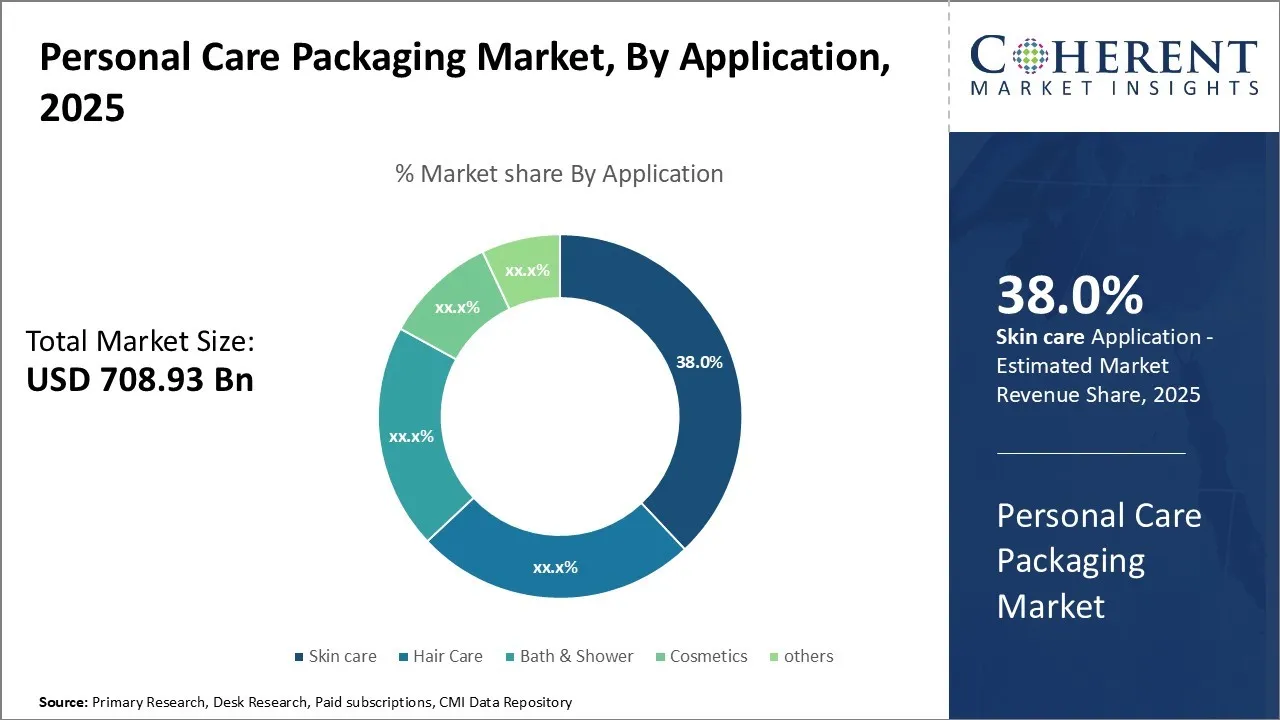
- By application, the Skincare Segment is expected to continue to lead the Personal Care Packaging Market outlook in 2026 with nearly capturing 39.0% of the market share. This is because of the rising demand by consumers for skincare items and the growing premium and functional packaging innovations that serve this category.
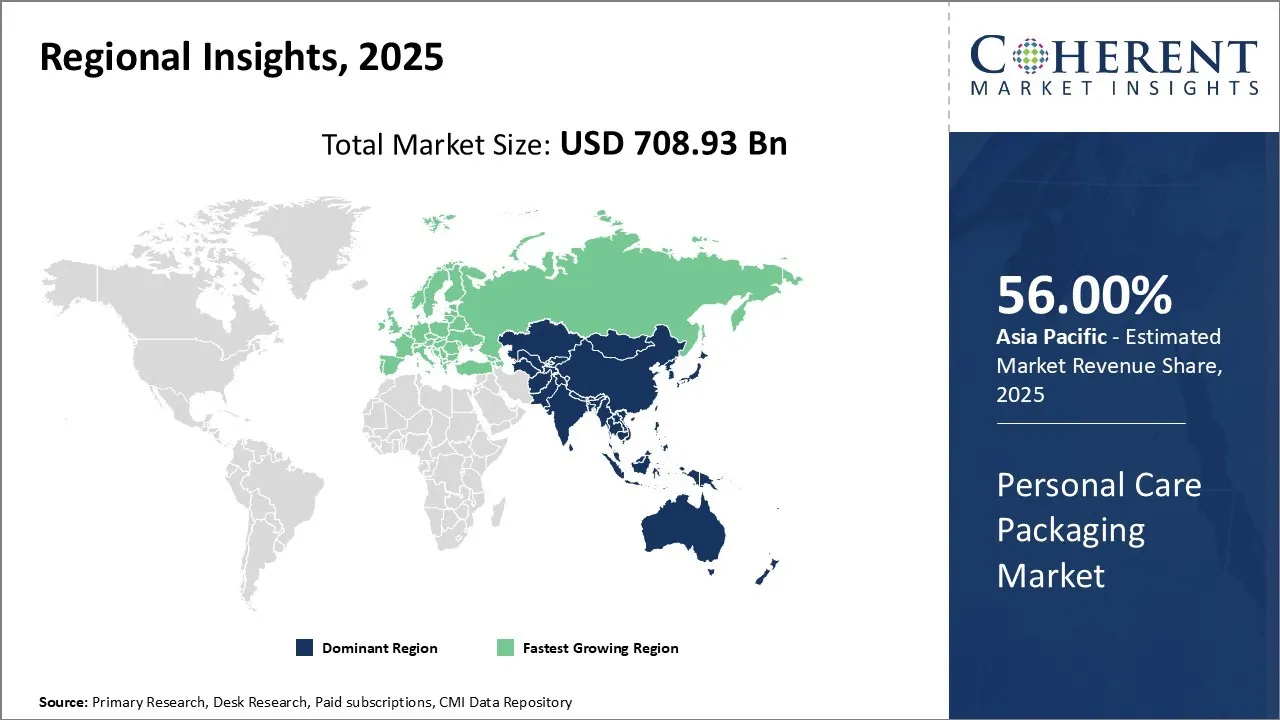
- By Region, the Global Personal Care Packaging Market is likely to be dominated by the Asia Pacific Region in 2026 with the share of 56% which is supported by the strong Regional Performance driven by Rapid urbanization and a new middle-class population with growing demand of beauty and wellness in the developing economies like China, India and some South East Asian countries.
Market Overview
Personal care packaging is materials used for the packaging of personal care products in order to protect them from contamination and other damages. These materials include plastic, flexible packaging, paperboard, glass, and metals. Some of the advanced packaging comprises pen type, pumps, sprays, sticks, and rollers balls. In terms of aesthetic value and lightweight properties, flexible packaging is gaining huge demand across the personal care packaging industry. Also, small packaged products are gaining huge demand among consumers due to their ease of use and handling during traveling.
Current Events and Its Impact on the Global Personal Care Packaging Market
Event | Description and Impact |
Global Supply Chain Disruptions and Raw Material Shortages |
|
Regulatory Changes and Sustainability Mandates |
|
Technological Advancement and Digital Integration |
|
Pricing Analysis
The global personal care packaging market has seen a 15–25% price increase since 2021, influenced by rising raw material costs, supply chain volatility, and demand for eco-friendly packaging. Pricing varies by material type, format, brand tier, and customization level.
The Perfume Bottle Personal Care Packaging Market commands premium pricing, with luxury glass bottles ranging from $0.85 to $2.50 per unit, driven by intricate design, custom closures, and low-volume production. Airless dispensers, commonly used in high-end skincare, can cost up to $3.80 per unit due to vacuum mechanisms and sterile packaging needs.
In the mid-tier segment, PET and HDPE bottles (e.g., for Dove or Olay) cost $0.25 to $0.85, with bulk discounts available. Laminated tubes and molded glass jars cater to brands balancing aesthetics with affordability.
Mass-market formats like standard PE bottles and plastic tubes are priced between $0.08 and $0.40, benefiting from high-volume economies.
Emerging trends such as Minimalist in Personal Care Packaging Design and Gender-Neutral Personal Care Packaging are reshaping pricing strategies, especially as brands aim for inclusive, clean aesthetics without sacrificing perceived value.
- Current Industry Events of 2026
- Market Size Estimation
- Regional Breakdown
- Competitive Landscape
- Customer Intelligence
- Segmental Analysis
- Pricing Analysis
- Key Market Drivers, Challenges & Future Trends
- Customized Insights Section
Adoption of New Technology
Transformation in Information Technology is now changing personal care Angles from an unconscious information conveyer to a proactive means for user interaction and engagement, safeguarding the product, and caring for the ecosystem. The market personal care products is undergoing changes through enabling smart packaging using NFC chips QR codes and RFID tags which allow verifications of the product, instructions on how to use it, and engagement with the brand on mobile devices. Especially sensitive skincare formulations are benefitting from temperature sensitive and pressure responsive packaging technologies.
With an even greater focus on sustainability, innovation is being accelerated with packaging made of biodegradable films from seaweed, composites from agricultural waste, and refillable containers with precise closure mechanisms that minimize contamination risks. Shelf life that is often an issue with cosmetic products is now being addressed without compromising design or sustainable practices through advanced barrier technologies like nanocoatings and selective permeability membranes. On the other hand, microfluidics and dual chamber airless pumps are optimizing efficacy of the product while minimizing waste through precision dispensing systems.
Personalization has now been taken to a whole new level with the use of digital printing and 3D manufacturing while augmented reality now allows interaction with the once ordinary packages. All these changes alongside others are creating a whole new competitive market for brands while changing the expectations and perceptions among consumer on value, differentiation, and brand loyalty in personal care products packaging.
Use of Sustainable and Eco-Friendly Materials
Emerging regulatory frameworks alongside increasing consumer demand for responsible personal care products have shifted focus towards sustainability in both bioplastics and packaging materials. To minimize harm to the environment and conform to circular economy principles, brands and manufacturers are adopting eco-friendly materials. Conventional plastics in use are slowly being replaced with plant-based polymers, films derived from seaweed, packaging made from mushrooms, and composites of agro-wastes which are biodegradable and compostable. These materials not only lessen landfill waste but also curb carbon emissions associated with the production of packaging.
Systems that allow for packaging reuse and refilling are also on the rise, using advanced modular closures that preserve product integrity while reducing waste. Post-consumer recycled plastics (PCR) and other recycled content are increasingly being used, capturing the interest of eco-friendly consumers while further aiding sustainability efforts.
Integration of sustainable materials impacts product development, manufacturing approaches, and supply chains, as a sustainable shift often requires additional innovation in barrier functionality, resilience, and rigidity to meet the performance standards of traditional packaging. The adoption of eco-friendly materials boosts brand value while fulfilling regulatory norms and evolving consumer demands, and serves as a primary motivator to drive the market.
Segmental Insights
Global Personal Care Packaging Market Insights, By Application
The skin care segment dominates the global personal care packaging market in 2026, holding a substantial 39.0% market share in terms of value. This leadership is driven by the rising prevalence of skin diseases and increasing consumer demand for products that provide essential nutrition to the skin and protection from harmful UV radiation. Packaging for sunscreen lotions, which help prevent skin diseases and skin cancer, plays a critical role in meeting these consumer needs.
The growing awareness of skin health and disease prevention continues to propel the demand for skin care product packaging globally, positioning this segment for sustained growth. Following skin care, the hair care and bath & shower segments account for notable shares, reflecting varied consumer preferences within the personal care packaging market.
Global Personal Care Packaging Market – Regional Insights
Asia Pacific Personal Care Packaging Market Analysis and Trends
Asia Pacific dominates the global personal care packaging market in 2026, capturing an estimated 56.00% share in terms of value. This leadership is largely driven by the increasing participation of employed women in countries such as India and China, coupled with their growing interest and spending on beauty and personal care products.
The region’s expanding urban population, rising disposable incomes, and evolving consumer lifestyles are fueling demand for innovative and attractive packaging solutions. Additionally, manufacturers in Asia Pacific are investing in sustainable and convenient packaging formats to cater to environmentally conscious consumers, further strengthening the market position.
Dominating Countries in the global Personal Care Packaging Market
India Personal Care Packaging Market Analysis and Trends
India’s personal care packaging market is growing rapidly, supported by the rising number of working women and an increasing preference for premium beauty and care products. Growing awareness about personal grooming and enhanced retail penetration continue to drive demand for sophisticated packaging designs that improve product appeal and shelf life.
China Personal Care Packaging Market Analysis and Trends
China plays a pivotal role within the Asia Pacific region, propelled by its large consumer base and booming beauty industry. Innovations in packaging technology, including eco-friendly materials and smart packaging, are gaining traction to meet consumer demand for sustainability and convenience. Government initiatives promoting green manufacturing practices are also encouraging manufacturers to adopt sustainable packaging solutions.
Market Report Scope
Personal Care Packaging Market Report Coverage
| Report Coverage | Details | ||
|---|---|---|---|
| Base Year: | 2025 | Market Size in 2026: | USD 770.61 Bn |
| Historical Data for: | 2020 To 2024 | Forecast Period: | 2026 To 2033 |
| Forecast Period 2026 to 2033 CAGR: | 8.7% | 2033 Value Projection: | USD 1,381.78 Bn |
| Geographies covered: |
| ||
| Segments covered: |
| ||
| Companies covered: | Albea Group, Amcor Ltd, Ardagh Group, Bemis Company, Inc, Bormioli Rocco Spa, Gerresheimer, Heinz- Glas GmbH, Hindustan National Glass & Industries Ltd., ITC, Koa Glass Co. Ltd, MeadWestvaco Corp, Mondi plc, Saint-Gobain, and Sonoco Products Company | ||
| Growth Drivers: |
| ||
| Restraints & Challenges: |
| ||
Global Personal Care Packaging Market Drivers
- Continues innovation and product development in the sector
Continuous product design and innovation are expected to propel the market growth of personal care packaging. Various producers are focusing on product innovation and design in order to differentiate their product offerings. Moreover, the rising need to innovate packaging design to match the ongoing trend in the market and to increase the consumer base is expected to augment the market growth of personal care packaging.
- Increasing Investment in R & D
Increasing investment by the government in R&D in order to develop advanced technologies for manufacturing efficient packaging systems is expected to propel the market growth. Growing demand for eco-friendly packaging products coupled with the rising preferences of intelligent packaging systems such as stand-up pouches is also projected to propel the market growth of personal care packaging over the forecast period.
Global Personal Care Packaging Market Restraints
- Fluctuating price of raw material
The volatile price of raw materials used in the manufacturing of packaging products is expected to restrict the market growth of personal care packaging. Plastic packaging products are produced from crude oil and the gap in the demand and supply of crude due to economic factors affect the overall price of the raw materials. Thus, the fluctuating price of raw materials is expected to restrict market growth over the forecast period.
Global Personal Care Packaging Market Opportunities
- The growing popularity of male grooming products due to a rising sense of fashion is expected to offer potential growth opportunities to the market of personal care packaging. Rising demand for anti-aging cosmetic products coupled with the growing awareness regarding beauty among consumers is also expected to augment the market growth.
- Shifting preferences of consumers towards health and hygiene is encouraging them to use shower gels, body washes, and liquid soap is expected to propel the market growth of personal care packaging. Growing demand for deodorants and hair sprays among consumers across the developing region is expected to augment demand for aerosol cans. This is further projected to fuel the market growth of personal care packaging over the forecast period.
Market Trends
Growing oral hygiene among consumers is creating demand for oral care products which is expected to augment the market growth of personal care packaging. Rising demand for small-sized packaging due to ease of use and convenience at handling is also expected to foster the market growth of personal care packaging. Moreover, growth in the packaging industry due to economic development is further anticipated to augment market growth.
Analyst Viewpoint
- The market is undergoing rapid transformation driven by evolving consumer preferences and increasing emphasis on sustainability.
- Rising demand for premium skincare and cosmetics is accelerating innovation in aesthetic and functional packaging that supports brand differentiation.
- Consumers are actively favoring eco-friendly options, including recyclable, biodegradable, and refillable packaging formats.
- The surge in e-commerce is reshaping packaging requirements, calling for lightweight, durable, and visually engaging designs suited for shipping and unboxing.
- Regulatory complexities across regions—particularly around material usage and labeling—pose compliance challenges for global brands.
- Escalating raw material costs and supply chain disruptions continue to strain profitability and operational efficiency.
- Asia-Pacific leads global market growth, driven by an expanding middle class, higher disposable incomes, and increasing beauty awareness.
- Market opportunities are expanding through smart packaging technologies (e.g., QR codes, NFC chips, AR), enhancing consumer interaction and product traceability.
- The trend toward premiumization is fueling demand for luxury packaging solutions with high-end materials and design.
- The emerging men’s grooming segment remains underexploited and presents a strategic growth avenue.
- Rising interest in personalized beauty creates a need for customizable packaging that aligns with individual preferences and enhances brand storytelling.
Personal Care Packaging Market: Key Developments
- In March 2025, AptarGroup unveiled its next-generation Airless Dispenser Series, designed for skincare and wellness products. The new line features recyclable materials and advanced oxygen barrier technology, aimed at extending product shelf life and improving sustainability.
- In January 2025, Amcor announced the launch of a fully bio-based PET bottle for perfume and personal care products, marking a major step toward carbon neutrality in premium packaging segments, including the Perfume Bottle Personal Care Packaging Market.
- In December 2024, Berry Global partnered with a leading spa chain to co-develop refillable packaging solutions for spa-grade skincare, combining luxury aesthetics with eco-conscious materials to reduce single-use plastics in Personal Care Packaging for Spas.
- In November 2024, Lumson introduced a gender-neutral packaging collection under its sustainable design division, featuring monochromatic glass containers and minimalist labels tailored to appeal to Gen Z and inclusive beauty brands.
- In October 2024, Albea Group expanded its digital printing capabilities with a new facility in France, aimed at increasing production of customized and minimalist packaging for indie and CBD skincare brands in Europe, aligning with the rising trend of Personal Care Packaging Market for CBD Skincare.
Market Segmentation
- Global Personal Care Packaging Market, By Product Type (Revenue, USD Bn, 2021 - 2033)
- Flexible packaging
- Rigid plastics
- Paper
- Glass
- Metal
- Others
- Global Personal Care Packaging Market, By Application (Revenue, USD Bn, 2021 - 2033)
- Skin care
- Hair care
- Bath & shower
- Cosmetics
- Others
- Global Personal Care Packaging Market, By Region (Revenue, USD Bn, 2021 - 2033)
- North America
- U.S.
- Canada
- Europe
- U.K.
- Germany
- France
- Italy
- Spain
- Russia
- Rest of Europe
- Asia Pacific
- China
- India
- Japan
- ASEAN
- Australia
- South Korea
- Rest of Asia Pacific
- Latin America
- Brazil
- Mexico
- Rest of Latin America
- Middle East
- GCC
- Israel
- Rest of Middle East
- Africa
- South Africa
- North Africa
- Central Africa
- North America
- Company Profiles
- Albea Group
- Amcor Ltd.
- Ardagh Group
- Bemis Company, Inc.
- Bormioli Rocco Spa
- Gerresheimer
- Heinz- Glas GmbH
- Hindustan National Glass & Industries Ltd.
- ITC
- Koa Glass Co. Ltd.
- MeadWestvaco Corp.
- Mondi plc
- Saint-Gobain
- Sonoco Products Company
Sources
Primary Research Interviews
- Personal Care Product Manufacturers
- Packaging Material Suppliers
- Cosmetics Brand Managers
- Retail Chain Executives
- Others
Databases
- Euromonitor International
- IBISWorld
- Statista Market Insights
- Grand View Research Database
- Others
Magazines
- Packaging World Magazine
- Beauty Independent Magazine
- Global Cosmetic Industry Magazine
- Packaging Digest
- Others
Journals
- Journal of Cosmetic Science
- International Journal of Cosmetic Science
- Packaging Technology and Science Journal
- Others
Newspapers
- Financial Times
- The Wall Street Journal
- Reuters Business News
- Bloomberg Business
- Others
Associations
- Personal Care Products Council
- Cosmetics & Toiletries Association
- International Association of Color Manufacturers
- Packaging Machinery Manufacturers Institute
- Others
Public Domain Sources
- U.S. Food and Drug Administration (FDA)
- European Medicines Agency (EMA)
- World Health Organization (WHO)
- United Nations Industrial Development Organization (UNIDO)
- Others
Proprietary Elements
- CMI Data Analytics Tool
- Proprietary CMI Existing Repository of information for last 8 years
Get access to 250+ pages report
Every segment, forecast, competitor profile and data table behind the analysis above — available for instant download.
- ESOMAR Member
- ISO 9001:2015 Certified
- D-U-N-S Registered
- GDPR & CCPA Compliant
Missing comfort of reading report in your local language? Find your preferred language:
Transform your Strategy with Exclusive Trending Reports
Frequently Asked Questions
The Personal Care Packaging Market size is estimated to be valued at USD 770.61 Bn in 2026, and is expected to reach USD 1,381.78 Bn by 2033.
The CAGR of the global Market is projected to be 8.7% from 2026 to 2033.
Continues innovation and product development in the sector is expected to drive the market growth during the forecast period.
Increasing Investment in R & D is rising among consumers and that is the opportunity in the market.
Fluctuating price of raw material is hampering the market growth.
Major players operating in the market include Albea Group, Amcor Ltd, Ardagh Group, Bemis Company, Inc, Bormioli Rocco Spa, Gerresheimer, Heinz- Glas GmbH, Hindustan National Glass & Industries Ltd., ITC, Koa Glass Co. Ltd, MeadWestvaco Corp, Mondi plc, Saint-Gobain, and Sonoco Products Company.
Shelf appeal includes elements like eye-catching design, color, shape, labeling, branding, and tactile feel that attract consumer attention, convey product quality, and influence purchasing decisions in a competitive retail environment.