

Inulin Market Size and Trends Forecast – 2026 – 2033
The inulin market is estimated to be valued at USD 2.16 Bn in 2026 and is expected to reach USD 3.38 Bn by 2033, exhibiting a compound annual growth rate (CAGR) of 6.6% from 2026 to 2033.
Key Takeaways of the Inulin Market
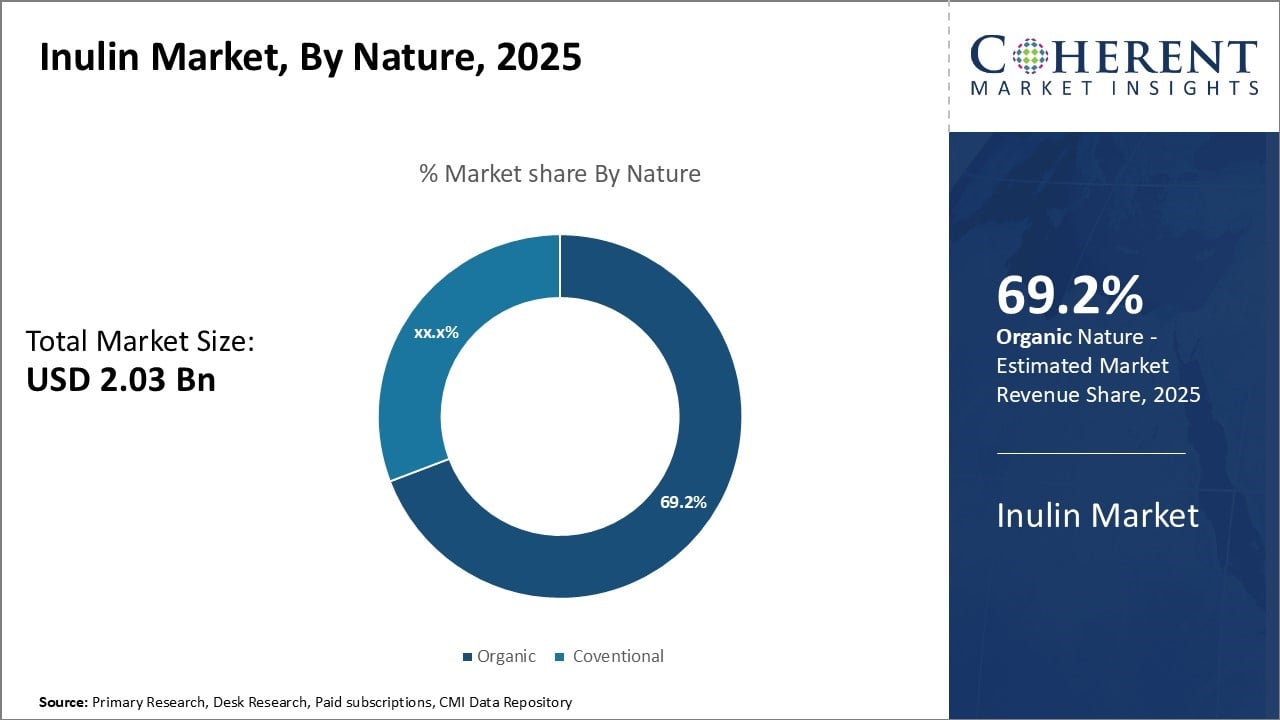
- By nature, the organic segment is estimated to contribute 70.2% share of the inulin market in 2026.
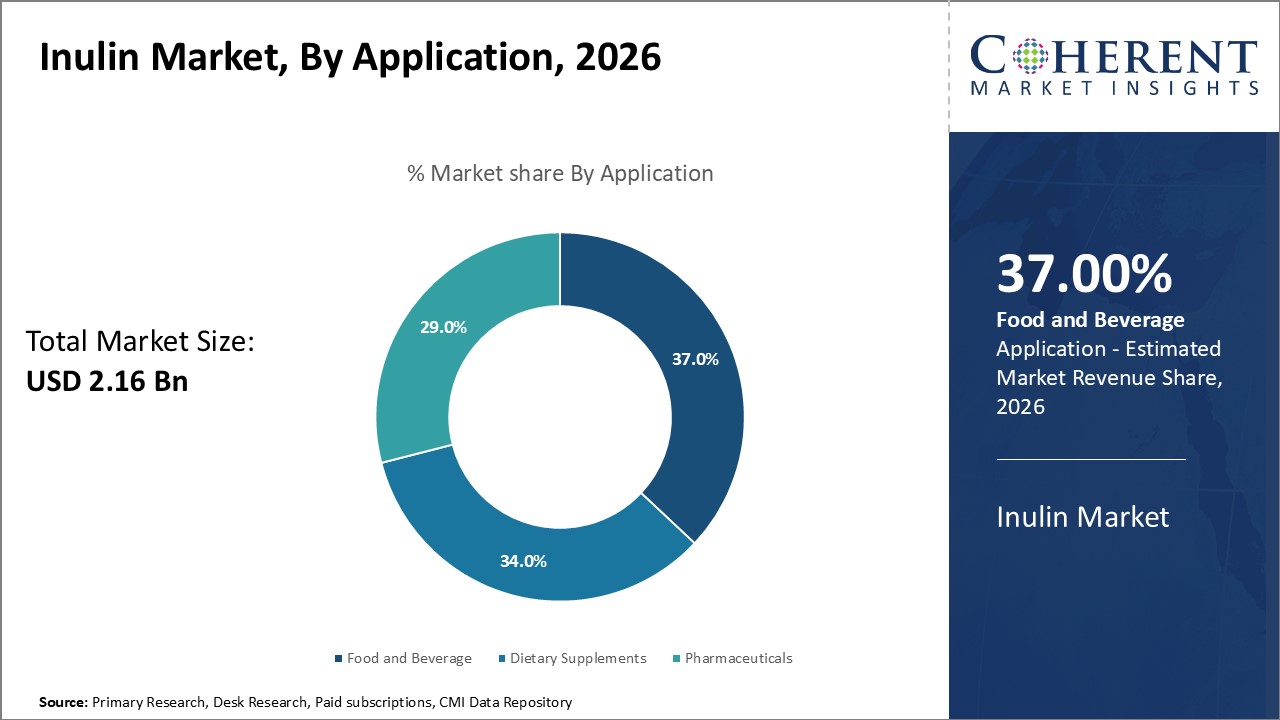
- By application, the food and beverage segment is estimated to contribute the highest market share of 37% in 2026.
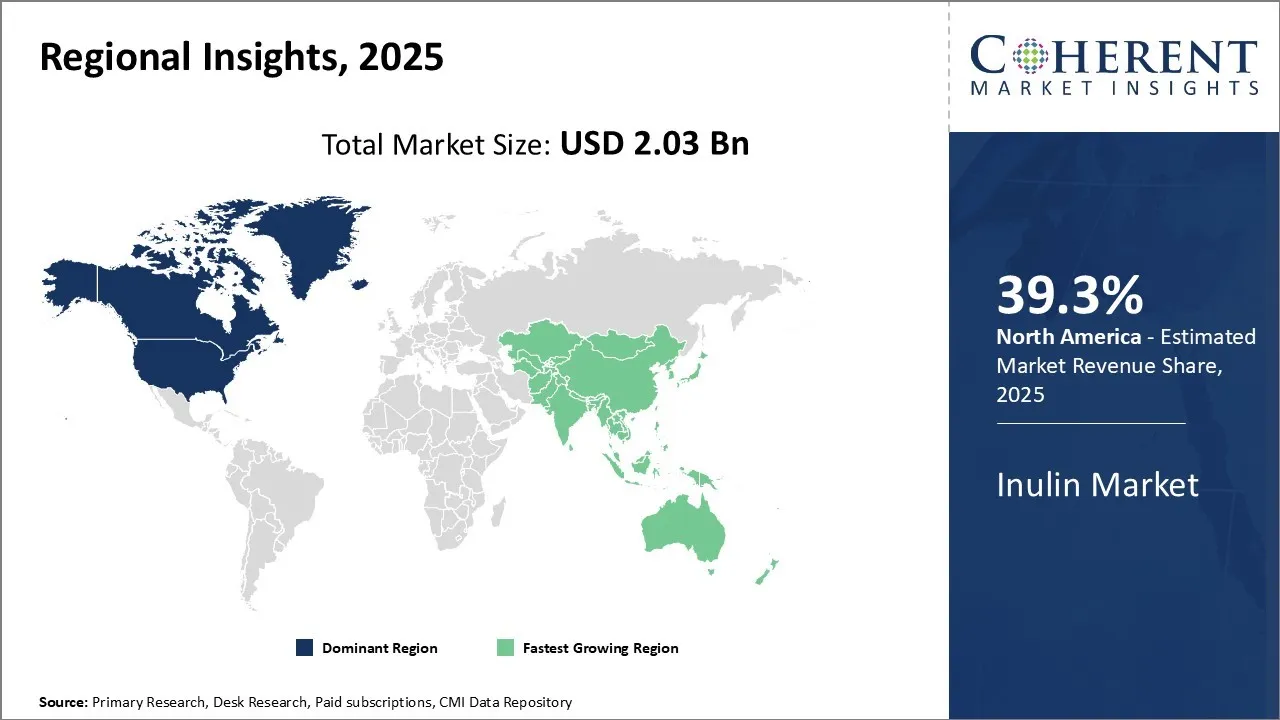
- North America remains the dominant player in the inulin market and is estimated to account for 39. 3% of the global market share in 2026.
- Asia Pacific region has emerged as the fastest growing market for inulin globally.
Market Overview
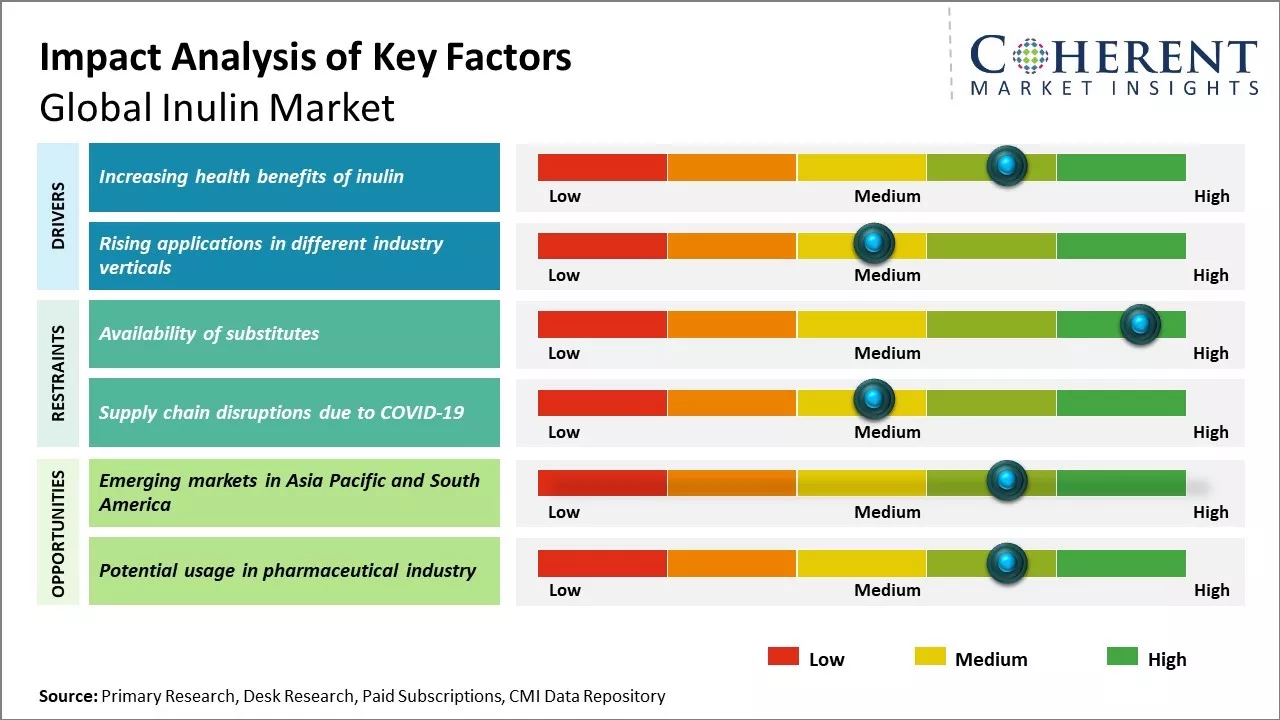
Inulin is predominantly used as a dietary fiber in various food and beverage products aiming to provide associated health benefits to consumers. The inulin market is anticipated to witness significant growth over the forecast period. The increasing demand for prebiotics and low-calorie sugar alternatives in the food and beverage industry is expected to boost the market growth. Additionally, the rising awareness about the health benefits of inulin among consumers is further expected to drive the demand.
However, the availability of substitutes, such as polydextrose and other soluble fibers, can hamper the growth of the inulin market.
Market Concentration and Competitive Landscape
Current Events and Its Impact
Current Events | Description and its impact |
Geopolitical and Trade Developments |
|
Technological and Production Innovations |
|
- Current Industry Events of 2026
- Market Size Estimation
- Regional Breakdown
- Competitive Landscape
- Customer Intelligence
- Segmental Analysis
- Pricing Analysis
- Key Market Drivers, Challenges & Future Trends
- Customized Insights Section
Market Trends
Rising Applications in Different Industry Verticals
Inulin witnesses robust growth opportunities beyond just the food industry. Its functional properties related to texture, mouthfeel, and calorie reduction have augmented its use in various other sectors. For instance, inulin finds widespread applications in cosmetics and personal care products due to its moisturizing and soothing properties. It is used in formulations of lotions, creams, and face masks. The booming cosmetics industry worldwide has increased the consumption of inulin.
Availability of Substitutes
The availability of substitutes is posing a serious threat to the growth of the inulin market. There are several substitutes available for inulin that perform similar functionalities in food and beverages. One of the major substitutes is oligofructose, which like inulin, is a fructan obtained from chicory and Jerusalem artichoke. It is cheaper than inulin and widely available globally. This has prompted many manufacturers to switch to oligofructose from inulin.
Segmental Insights
Inulin Market Insights, by Nature: Growing Health Consciousness
In terms of nature, organic is expected to contribute 70.2% share of the market in 2026. This is primarily attributed to the rising demand for organic and natural products among health-conscious consumers. People are increasingly realizing the importance of consuming chemical-free food products for overall well-being.
There is great awareness about the adverse effects of synthetic pesticides and fertilizers used in conventional farming practices. The clean label trend is also pushing the sales of organic inulin upwards. Manufacturers are able to command a premium for organic inulin due to its inherent benefits. It is grown without the use of synthetic additives and approved for use in organic food products certified by regulatory organizations. This offers advantage to food processors targeting health-oriented buyers.
Inulin Market Insights, by Application: Food and Beverage Leads the Applications Area for Inulin
The food and beverage segment dominates the overall inulin market in terms of applications. This segment is expected to account for 37% of the market share in 2026. Inulin finds wide utilization in various food products due to its desirable functional properties and health benefits.
Being a versatile ingredient, inulin is used as a fiber enhancer in many foods such as bakery, dairy, meat, and cereal products. It helps manufacturers develop high-fiber offerings. As consumer preference undergoes a major shift toward fiber-rich diets, inulin emerges as a popular solution. Furthermore, inulin acts as a fat replacer in low-calorie products. It adds volume and mouthfeel without additional calories.
Emerging Innovations in the Inulin Market
- Shift Towards Sustainable and Efficient Extraction Technologies
- Traditionally, inulin is extracted from chicory roots, but emerging technologies now also focus on alternative botanical sources such as agave, Jerusalem artichoke, and dahlia tubers. These sources can sometimes offer higher yields or different chain-length profiles, impacting solubility and fermentability, which can be tailored according to end-use requirements.
- Customized Inulin with Varying Degrees Of Polymerization (DP)
- The functionality of inulin strongly depends on the length of its fructose chains: shorter chains (oligofructose) are more soluble and ferment faster in the gut, leading to rapid prebiotic effects, whereas longer chains offer more texture-modifying properties in food applications. Advances in enzymatic and fermentation technologies enable producers to tailor inulin chain lengths to meet specific nutritional or textural needs.
Impact of AI on the Inulin Market
Artificial Intelligence (AI) is revolutionizing numerous sectors, and the inulin market is no exception. Inulin, a naturally occurring prebiotic fiber extracted primarily from chicory roots, has gained increasing demand for its health benefits in food, pharmaceuticals, and nutraceuticals.
- For instance, Cosucra, a leading global supplier of inulin, employs AI-driven data analytics to monitor the growth conditions of chicory crops from which inulin is extracted. By integrating AI-powered predictive analytics, Cosucra can anticipate harvest quality and yield fluctuations, leading to more efficient resource allocation and better raw material quality. Such integration supports sustainability initiatives by minimizing waste and optimizing crop management strategies.
- Beneo, a prominent manufacturer of functional ingredients including inulin, utilizes machine learning to monitor their extraction and purification processes in real-time. Through AI-powered sensors and predictive maintenance algorithms, Beneo identifies potential production bottlenecks and equipment failures before they occur, significantly reducing downtime. This use of AI enhances product consistency, ensuring that the inulin meets stringent purity and functionality standards demanded by food and pharmaceutical industries.
- NutraScience Labs, a contract manufacturer specializing in dietary supplements, has integrated AI analytics into their product formulation services involving inulin. By leveraging AI algorithms that analyze consumer data and nutritional trends, the company tailors inulin-based supplements optimized for gut health and metabolic outcomes. This AI-driven personalization has led to the development of products that better meet individual health needs, resulting in improved customer satisfaction and measurable health benefits such as enhanced digestion and immune function.
Regional Insights
North America Inulin Market Analysis and Trends
North America is the dominant region and is expected to account for 39.3% share in 2026. The presence of leading inulin manufacturers such as Beneo GmbH and Cargill Inc has strengthened the supply network in this region. These players have established robust distribution channels to cater to the growing demand from food & beverage industry.
For instance, in December 2024, ICL, a leading global specialty minerals company, announced a follow-on investment in Plantible Foods, participating in the company’s Series B funding round. This investment builds upon ICL’s initial participation in Plantible’s Series A round and furthers the strategic collaboration between the two companies.
Asia Pacific Inulin Market Analysis and Trends
The presence of nearly 60.5% of the world's population provides immense opportunities for the expansion of inulin market in Asia Pacific. Changing demographics, improving living standards, and rising expendable income in Asia Pacific's developing economies such as India and China have boosted the demand for high-value functional ingredients in this region.
For instance, in May 2026, Arla Foods Ingredients has extended its distribution partnership with the Brenntag Group to include Southeast Asia’s three largest food and nutrition markets. The expanded collaboration will see Brenntag distributing Arla Foods Ingredients’ extensive portfolio of protein ingredients in Vietnam, Thailand and Indonesia. It will cover a wide range of categories, including health foods, infant nutrition and sports nutrition, as well as solutions for functionality in dairy and bakery. expanding distribution networks and premium ingredient uptake in Asia Pacific. It provides a real-world anchor to the broader thesis about the inulin opportunity in the region.
U.S. Inulin Market Analysis and Trends
In the U.S., the growing focus on dietary fiber labeling and health claims regulation by the Food and Drug Administration (FDA) is significantly impacting the inulin market. This regulatory clarity has encouraged food manufacturers to incorporate inulin as a prebiotic fiber to meet consumer demand for gut health and low-sugar formulations. However, compliance with strict labeling and health claim standards requires additional investment in testing and product validation.
According to Weill Cornell Medicine in May 2024, a study published in the Journal of Experimental Medicine found that inulin—which is naturally present in foods like garlic, leeks, and sunchoke, and commonly used in fiber supplements—prompts gut microbes to release bile acids that trigger the production of inflammatory molecules in the intestine.
Canada Inulin Market Analysis and Trends
Health Canada’s regulatory framework for novel foods and its emphasis on natural health products (NHPs) have contributed to a rising demand for inulin as a functional ingredient. As Canadians become more health-conscious and interested in digestive wellness, regulatory support for clean-label ingredients has created a favorable market environment.
India Inulin Market Analysis and Trends
India’s Food Safety and Standards Authority of India (FSSAI) is increasingly promoting the use of dietary fibers in processed foods to address growing public health issues like constipation, diabetes, and obesity. This push, combined with a surge in consumer awareness around gut health, has expanded opportunities for inulin in sectors like bakery, dairy, and nutraceuticals.
China Inulin Market Analysis and Trends
In China, regulatory efforts to combat rising rates of diabetes and obesity are encouraging the use of low-glycemic and high-fiber ingredients, such as inulin, in food and beverage products. The National Health Commission (NHC) has approved inulin for use in various applications, and the government is actively promoting the development of the domestic functional food industry.
Pricing Analysis
- Bulk Industrial Pricing
- Bulk raw inulin powder (85% purity) typically ranges from USD 4.5 to 7.5 per kg depending on quality, source, and purchase volume.
- High-performance long-chain inulin and oligofructose powders can reach USD 8.0 to 12.5 per kg, given higher purity and specific functional attributes.
- Liquid inulin syrups (especially from agave or chicory) cost approximately USD 3.0 to 6.0 per kg (based on dry solids).
- Regional Prices
- Europe: Prices are generally higher due to a concentration of manufacturers and stricter regulatory standards.
- North America: Slightly lower or comparable to Europe but with prevalent specialty grades.
- Asia Pacific: Increasingly competitive pricing but quality variability can be a concern.
- Latin America: Lower cost for agave-sourced inulin; potential logistical advantages.
- Dietary Supplements Pricing
- Supplements typically use inulin at 90%+ purity, often pharmaceutical or food-grade refined.
- Bulk purchase to supplement producers ranges between USD 8 and 15 per kg, influenced by certification levels (organic, non-GMO, allergen-free).
- Retail consumer prices are significantly higher, often resulting in USD 12 - 20 per kg (packaged powder), due to packaging, branding, and smaller quantities.
- Leading supplement brands such as NOW Foods, NutraBio, and BulkSupplements position their inulin powders in the USD 15 - 20 per kg range retail, while raw bulk buyers pay closer to USD 9 - 12 per kg.
- Pharmaceutical Industry Pricing
- Pharmaceutical-grade inulin is highly purified (95%+), often with stringent compliance.
- Prices elevate to USD 12 - 18 per kg due to additional processing and quality assurance.
- Injectable or testing-grade inulin (used in renal function tests) can command prices upwards of USD 30 - 50 per kg, though these volumes are much smaller and specialized.
- Suppliers focused on pharma markets typically are niche or divisions of major ingredient companies.
Market Report Scope
Inulin Market Report Coverage
| Report Coverage | Details | ||
|---|---|---|---|
| Base Year: | 2025 | Market Size in 2026: | USD 2.16 Bn |
| Historical Data for: | 2020 To 2024 | Forecast Period: | 2026 To 2033 |
| Forecast Period 2026 to 2033 CAGR: | 6.6% | 2033 Value Projection: | USD 3.38 Bn |
| Geographies covered: |
| ||
| Segments covered: |
| ||
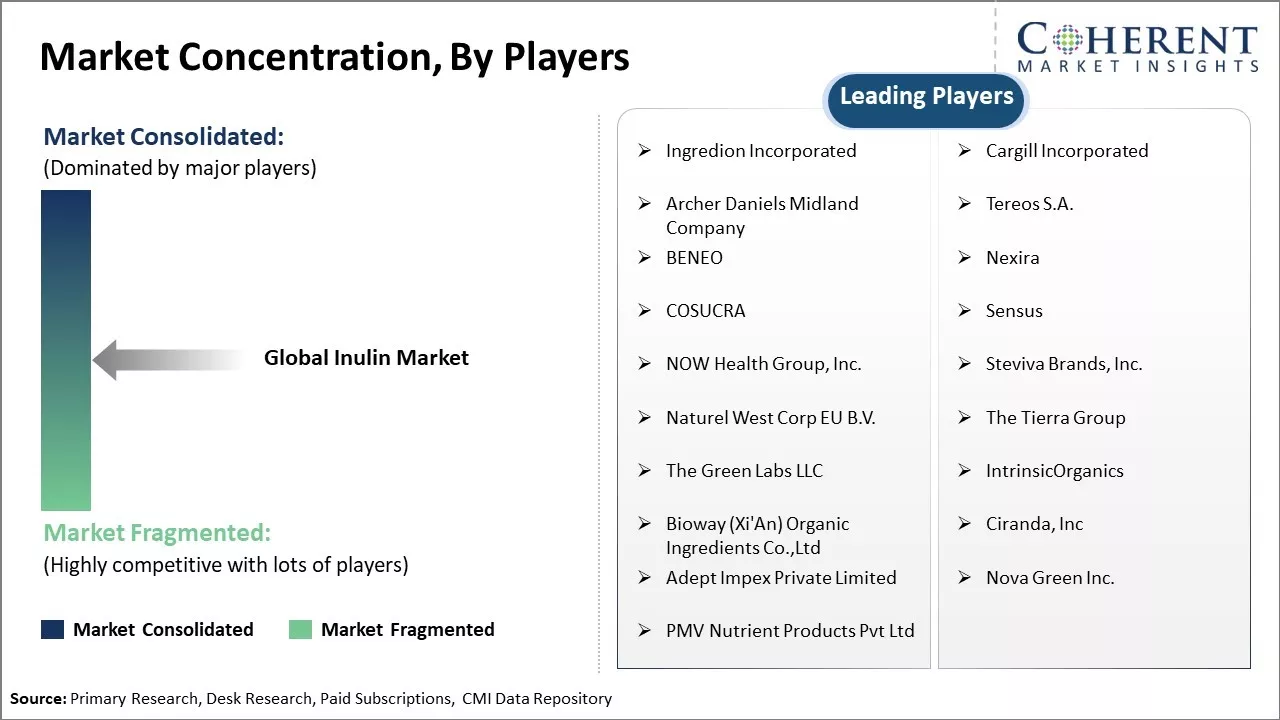
| Companies covered: | Ingredion Incorporated, Cargill Incorporated, Archer Daniels Midland Company, Tereos S.A., BENEO, Nexira, COSUCRA, Sensus, NOW Health Group, Inc., Steviva Brands, Inc., Naturel West Corp EU B.V., The Tierra Group, The Green Labs LLC, IntrinsicOrganics, Bioway (Xi'An) Organic Ingredients Co.,Ltd, Ciranda, Inc, Adept Impex Private Limited, Nova Green Inc., and PMV Nutrient Products Pvt Ltd | ||
| Growth Drivers: |
| ||
| Restraints & Challenges: |
| ||
Inulin Industry News
- In March 2025, Cargill showcased full range of innovative food solutions at AAHAR 2025. At AAHAR 2025, Cargill highlighted innovative food solutions designed to meet India’s rising demand for indulgent products that deliver on taste, quality and value.
- In March 2025, BENEO, a leading manufacturer of functional ingredients for food, feed and pharma, and WACKER, a European expert in biotechnology solutions for the food and pharma industry, launched the human milk oligosaccharide (HMO) 2’-Fucosyllactose X(2’-FL) globally. It will provide additional volumes of HMOs to the market, helping to secure supply and quality for both large and smaller manufacturers of infant formulas.
- In October 2024, at Fi Europe 2024, Best Ground International showcased its innovative prebiotic agave inulin ingredients for the food and beverage, food supplements and beauty industry.
- In September 2024, a survey conducted by Fast-Moving Consumer Goods (FMCG) Gurus revealed that half of global consumers (49%) are actively seeking solutions to support digestive health. BENEO’s chicory root fibres ensure that nutritional claims on front-of-pack is not just possible, but they are also scientifically backed, allowing product developers to get innovative with clean label formulations — without sacrificing on taste.
Analyst Views
- The inulin market demonstrates robust momentum driven by escalating consumer awareness regarding digestive health and the growing prevalence of gut-related disorders. Rising demand for functional foods and nutraceuticals, coupled with increasing adoption of clean-label products, continues to propel market expansion across multiple application segments. The food and beverage industry remains the primary growth catalyst, as manufacturers integrate inulin as a natural fiber supplement and sugar substitute in various formulations.
- However, the market faces significant restraints including high production costs and limited raw material availability, particularly chicory root, which constitutes the primary inulin source. Additionally, potential digestive side effects in sensitive consumers and regulatory complexities across different regions pose ongoing challenges for market players.
- North America is dominating the market landscape, supported by advanced food processing infrastructure and stringent health regulations favoring natural ingredients. However, Asia Pacific emerges as the fastest-growing region, driven by rapid urbanization, increasing disposable income, and growing health consciousness among consumers. The region's expanding food processing industry and rising demand for functional foods create substantial growth opportunities for inulin manufacturers seeking geographic expansion.
Speak to the analyst
Want personalized insights?
Take the findings above to one of our principal consultants, or have the report rebuilt around the segments, geographies and competitors you actually track.
Market Segmentation
- Nature Insights (Revenue, USD Billion, 2021 - 2033)
- Organic
- Conventional
- Application Insights (Revenue, USD Billion, 2021 - 2033)
- Food and Beverage
- Dietary Supplements
- Pharmaceuticals
- Regional Insights (Revenue, USD Billion, 2021 - 2033)
- North America
- U.S.
- Canada
- Latin America
- Brazil
- Argentina
- Mexico
- Rest of Latin America
- Europe
- Germany
- U.K.
- Spain
- France
- Italy
- Russia
- Rest of Europe
- Asia Pacific
- China
- India
- Japan
- Australia
- South Korea
- ASEAN
- Rest of Asia Pacific
- Middle East & Africa
- GCC Countries
- Israel
- Rest of Middle East & Africa
- Key Players Insights (Revenue, USD Bn, 2021 - 2033)
- Ingredion Incorporated
- Cargill Incorporated
- Archer Daniels Midland Company
- Tereos S.A.
- BENEO
- Nexira
- COSUCRA
- Sensus
- NOW Health Group, Inc.
- Steviva Brands, Inc.
- Naturel West Corp EU B.V.
- The Tierra Group
- The Green Labs LLC
- IntrinsicOrganics
- Bioway (Xi'An) Organic Ingredients Co.,Ltd
- Ciranda, Inc
- Adept Impex Private Limited
- Nova Green Inc.
- PMV Nutrient Products Pvt Ltd
Sources
Primary Research Interviews
- Inulin manufacturers and producers
- Food and beverage industry executives
- Pharmaceutical and nutraceutical companies
- Dietary supplement manufacturers
- Others
Magazines
- Food Processing Magazine
- Nutraceuticals World Magazine
- Natural Products Insider Magazine
- Functional Foods & Nutraceuticals Magazine
- Others
Journals
- Journal of Functional Foods
- Food Hydrocolloids Journal
- International Journal of Food Science & Technology
- Others
Newspapers
- Food Business Magazine
- Nutrition Business Journal
- Natural Products INSIDER
- Nutraceutical Business Review
- Others
Associations
- International Food Information Council (IFIC)
- Natural Products Association (NPA)
- Council for Responsible Nutrition (CRN)
- European Food Safety Authority (EFSA)
- Others
Public Domain Sources
- FDA (Food and Drug Administration) publications
- USDA (United States Department of Agriculture) reports
- WHO (World Health Organization) publications
- European Commission health and consumer reports
- Others
Proprietary Elements
- CMI Data Analytics Tool
- CMI Existing Repository of Information for the Last 8 Years
*Definition: The inulin market focuses on the sale of inulin, a type of soluble dietary fiber found in many plant foods. Inulin is extracted from chicory roots and other plants to be used as a fiber supplement or low-calorie sweetener. The inulin market caters to industries involved in food and beverage manufacturing, dietary supplements, personal care products, and others. Buyers look to purchase various inulin ingredients to add nutritional benefits and improve texture in their products for health-conscious consumers.
Get access to 250+ pages report
Every segment, forecast, competitor profile and data table behind the analysis above — available for instant download.
- ESOMAR Member
- ISO 9001:2015 Certified
- D-U-N-S Registered
- GDPR & CCPA Compliant
Missing comfort of reading report in your local language? Find your preferred language:
Transform your Strategy with Exclusive Trending Reports
Frequently Asked Questions
The inulin market is estimated to be valued at USD 2.16 Billion in 2026, and is expected to reach USD 3.38 Billion by 2033.
The CAGR of the inulin market is projected to be 6.6% from 2026 to 2033.
Increasing health benefits of inulin and rising applications in different industry verticals are the major factors driving the growth of the global inulin market.
Availability of substitutes is the major factor hampering the growth of the global inulin market.
In terms of nature, organic is estimated to dominate the market revenue share in 2026.
Ingredion Incorporated, Cargill Incorporated, Archer Daniels Midland Company, Tereos S.A., BENEO, Nexira, COSUCRA, Sensus, NOW Health Group, Inc., Steviva Brands, Inc., Naturel West Corp EU B.V., The Tierra Group, The Green Labs LLC, IntrinsicOrganics, Bioway (Xi'An) Organic Ingredients Co.,Ltd, Ciranda, Inc, Adept Impex Private Limited, Nova Green Inc., and PMV Nutrient Products Pvt Ltd are the major players in the inulin market.
North America is expected to lead the inulin market in 2026.