

Global Peripheral Nerve Injury Market Size and Forecast – 2026 to 2033
The Global Peripheral Nerve Injury Market is estimated to be valued at USD 1.94 Bn in 2026 and is expected to reach USD 3.39 Bn by 2033, reflecting a compound annual growth rate (CAGR) of 8.3% from 2026 to 2033. This steady growth reflects increasing awareness, advancements in nerve repair technologies, and rising incidence of nerve injuries globally, driving the demand for innovative treatment solutions and expanding market opportunities.
Key Takeaways of the Global Peripheral Nerve Injury Market
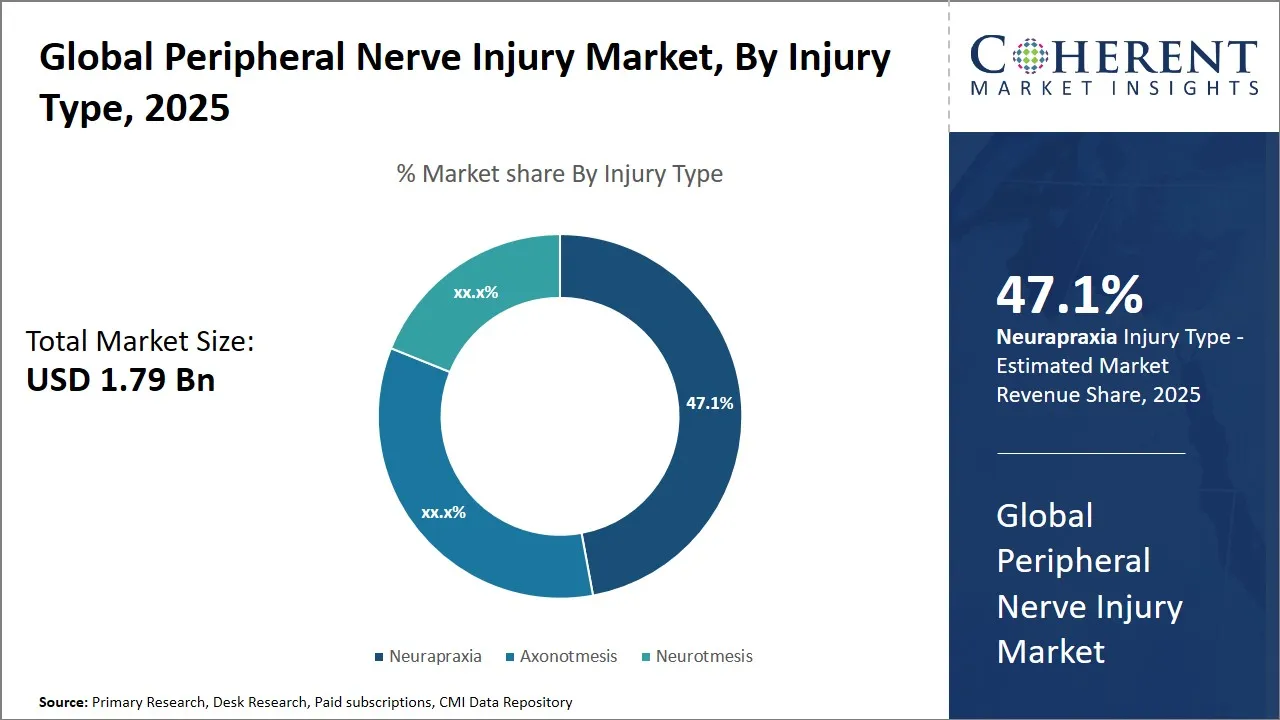
- Neurapraxia segment is expected to lead the global peripheral nerve injury market with a 48.1 % share in 2026.
- Motor nerves segment is estimated to account for 44.5% % of the market share in 2026,.
- Nerve repair conduits segment is projected to hold the largest share at 35.6 % in 2026.
- North America is expected to lead the market, holding a share of 39.2 % in 2026. Asia Pacific is anticipated to be the fastest-growing region, with 23.5% share in 2026.
Market Overview
- A key market trend is the growing adoption of advanced microsurgical techniques and bioengineered nerve grafts, which improve recovery outcomes for patients with peripheral nerve
- Additionally, increasing investments in research and development, along with collaborations between medical device manufacturers and healthcare providers, are accelerating the introduction of minimally invasive and personalized treatment options.
- These innovations, coupled with rising healthcare expenditure and aging populations, are shaping the market landscape towards more efficient and accessible nerve injury therapeutics.
Current Events and Its Impact
Current Events | Description and its Impact |
Advancements in Bioengineered Nerve Conduits |
|
U.S. FDA clearance of a sutureless peripheral nerve repair device (June 2025) |
|
Segmental Insights
- Current Industry Events of 2026
- Market Size Estimation
- Regional Breakdown
- Competitive Landscape
- Customer Intelligence
- Segmental Analysis
- Pricing Analysis
- Key Market Drivers, Challenges & Future Trends
- Customized Insights Section
Why Does Neurapraxia Dominate the Peripheral Nerve Injury Market in 2026?
Neurapraxia represents the mildest form of peripheral nerve injury, characterized by intact nerve structure with temporary conduction block, accounting for an estimated 48.1% of cases in 2026. This type of injury is reversible, so its large percentage of clinical intervention and rehabilitation operations is motivated.
Less invasive treatment of patients with Neurapraxia is often an option which creates an interest and a financial commitment towards therapies that induce nerve regeneration and functional recovery without complicated surgical interventions.
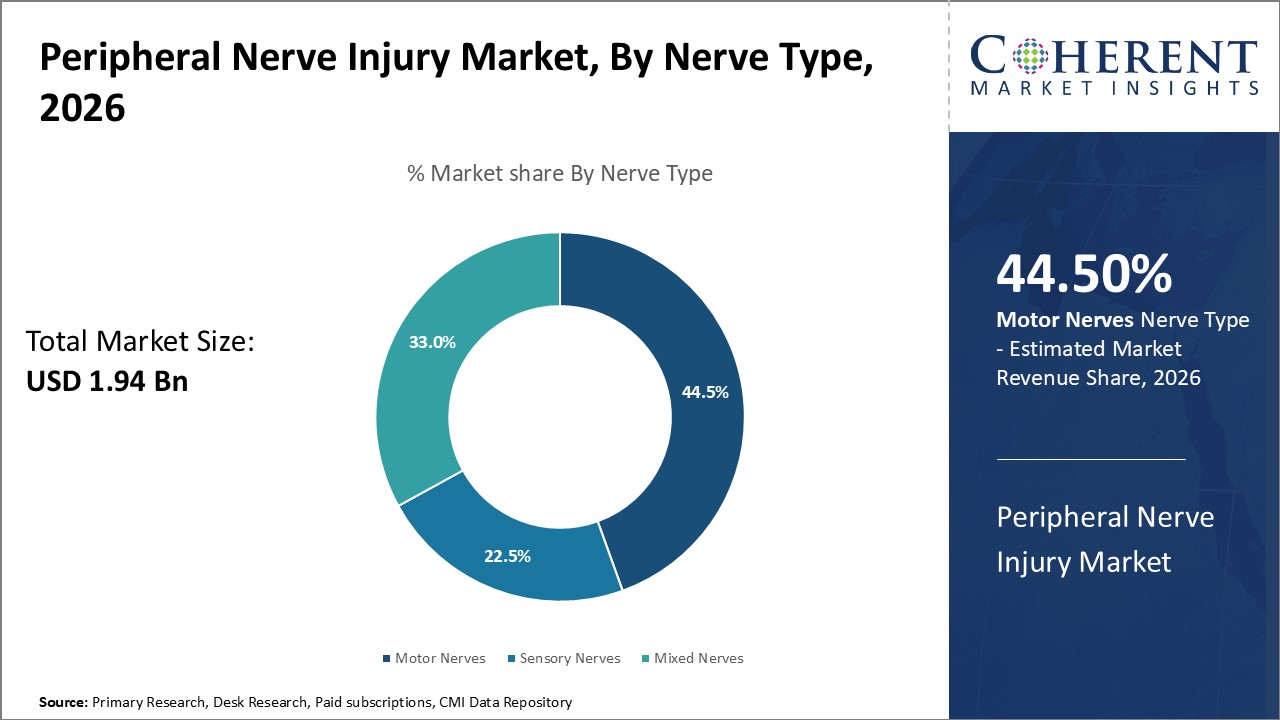
Why is the Motor Nerves Segment Dominant in the Peripheral Nerve Injury Market?
The global peripheral nerve injury market is dominated by motor nerves segment that controls the involuntary muscles, and the quality-of-life costs of motor nerve damage are enormous, which attracts an estimated 44.5% share in 2026. The destruction of nerve fibers can lead to severe loss of functionality such as muscle weakness, paralysis and motor coordination and thus the restoration of motor nerves is a major goal in the management of nerve injuries.
With clinical needs that are high regarding the need to repair and rehabilitate the motor nerves effectively, a lot of research and investment has been made on the targeted therapies. There are various causes of an increase in the motor nerve segment. Motor nerve architecture is complex and requires accurate reestablishment of motor activity, which increases the significance of the special surgical methods and novel biomaterials that provide the support of axonal regeneration.
Nerve Repair Conduits Dominate the Global Peripheral Nerve Injury Market
The nerve repair conduits are projected to hold 35.6% share in 2026, because of their central roles in inducing nerve regeneration by offering a physical scaffold to direct nerve fiber regeneration across injury gaps.
This segment is growing on the basis of the growing use of nerve conduits in lieu of the traditional nerve grafts. The benefits associated with nerve repair conduits are that there is less morbidity with the Donor site, consistent availability, and that it can be co-implanted with bioactive compounds to promote healing.
In April 2020, University College London a leading U.K. research university published new findings. UCL researchers mapped time dependent molecular signals driving Peripheral Nerve Injury degeneration in humans. The study showed regenerative support declines during chronic injury, affecting recovery outcomes. These insights guide optimal surgical timing and more effective use of nerve repair conduits.
Reimbursement Coverage Variability by Device Type Across Key Markets (U.S., EU, Japan): Peripheral Nerve Injury Market
Device Type | U.S. reimbursement coverage variability | EU reimbursement coverage variability | Japan reimbursement coverage variability |
Nerve Conduits (synthetic/bioabsorbable tubes) | Medium–High: Coverage varies by payer and indication; outpatient vs inpatient setting changes coding/payment; prior authorization common. | High: Country-by-country HTA and hospital tender rules drive uneven access; DRG “bundling” often limits separate payment. | Medium: More standardized fee schedule, but listing/category and hospital adoption decisions create variability; evidence expectations affect uptake. |
Nerve Wraps / Protectors (anti-adhesion, collagen, etc.) | High: Often viewed as adjunctive; payer scrutiny on “medical necessity”; inconsistent payment as supply/device add-on. | High: Frequently absorbed in procedure tariff; selective use in specialist centers; variable local procurement approval. | Medium–High: Adoption depends on facility policy and category recognition; coverage more stable once listed, but use-volume can be constrained. |
Nerve Allografts (processed human nerve grafts) | High: Stronger in complex cases, but payer policies differ; documentation burden high; denials possible for “experimental” wording. | Very High: Tissue rules, budget impact concerns, and national HTA decisions lead to uneven availability; reimbursement often not device-separable. | High: Regulatory/category pathways and conservative adoption create variability; reimbursement alignment improves after broader clinical acceptance. |
Autograft Harvest + Instruments (standard of care tools) | Low–Medium: Procedure-driven reimbursement generally stable; variability mainly from site-of-care and payer rules, not the tools themselves. | Low–Medium: Core procedure typically covered; payment generally via DRG/tariff; tool costs managed through hospital budgets. | Low: Procedure coverage relatively consistent under fee schedule; variability mainly operational (hospital preferences). |
Neuromodulation (PNS implants / stimulators for pain/functional recovery) | High: Coverage depends on indication, evidence base, and payer policy; prior authorization and trial requirements common. | Very High: HTA outcomes and national policies vary widely; specialist-center concentration; slower diffusion outside leading markets. | High: Coverage requires clear indication and pathway; adoption tends to be conservative; variability declines after guideline inclusion. |
Regional Insights
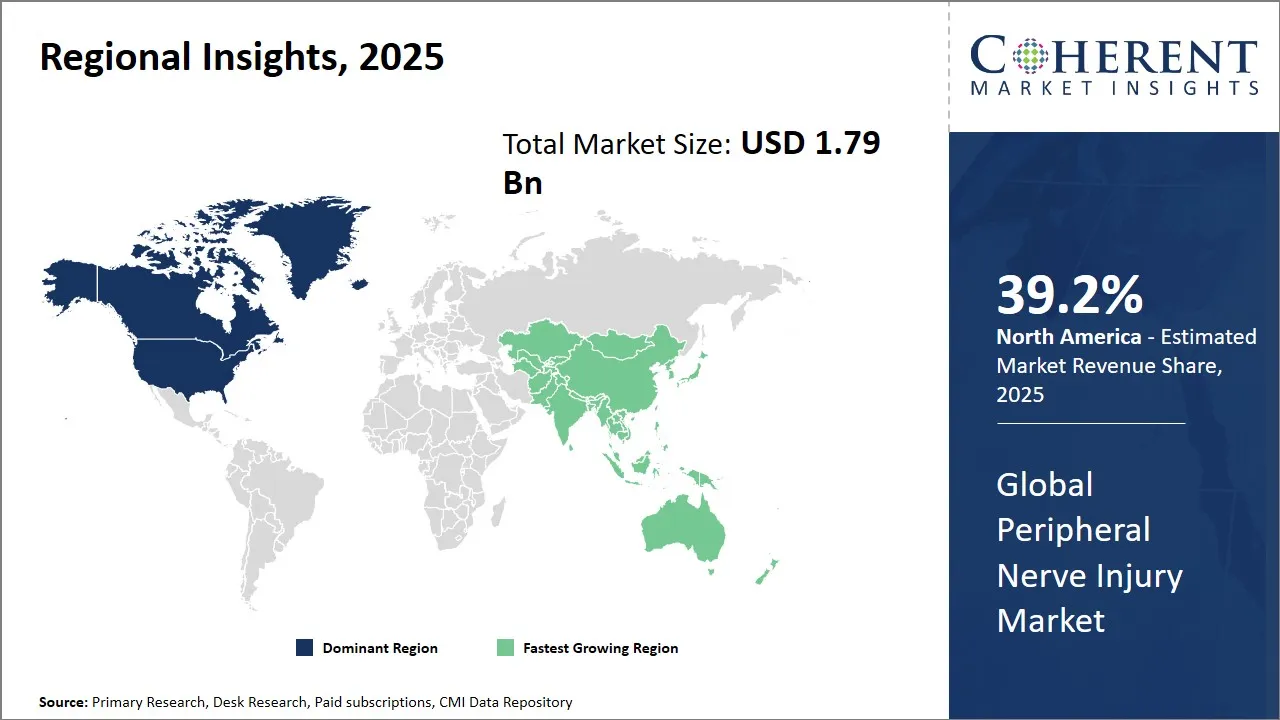
North America Peripheral Nerve Injury Market Analysis and Trends
North America region is projected to lead the market with a 39.2% share in 2026, because of exceptionally developed healthcare facility, has been greatly invested in research and development, and has government initiatives that support the market. The fact that many leading manufacturers of medical devices and biotech firms are present adds to the active ecosystem of the market where the innovative solutions in terms of the peripheral nerve repair are considered. The major market actors like Boston Scientific, Medtronic and AxoGen have already had immense presence in the region due to their introduction of higher-level nerve repair, nerve conduit and neuroprosthetics that suit the different levels of injuries.
In March 2022, Integra LifeSciences a global regenerative medical technology company launched NeuraGen 3D. The resorbable matrix targets peripheral nerve injury requiring short to mid gap repair. It supports Schwann cell migration and axonal growth through a structured collagen scaffold. The product strengthens nerve repair conduit options between hollow conduits and allografts.
Asia Pacific Peripheral Nerve Injury Market Analysis and Trends
The Asia Pacific region is expected to exhibit the fastest growth in the market contributing 23.5% share in 2026, which is a result of increasing spending on health care, improving healthcare infrastructure and increasing awareness regarding the use of advanced treatment methods to treat nerve injuries. Fast urbanization and industrialization have led to the rise in the number of injuries to the peripheral nerves, which are caused by trauma.
Asia Pacific countries such as China, India, and Japan have attracted some of the biggest players worldwide such as Stryker, Integra LifeSciences, and Medtronic who have joined the local manufacturers or create regional centers to exploit the cost advantages and exploit the high number of patients.
Peripheral Nerve Injury Market Outlook for Key Countries
Why is early diagnosis gaining importance in peripheral nerve injury treatment in the U.S.?
The peripheral nerve injury market of U.S. is also a leader owing to its strong medical device market, well established hospital facilities, and a high awareness among the patients. Such large firms as Boston Scientific, AxoGen, and Stryker are constantly working on the innovation of products, clinical trials, and educational programs about patients.
The U.S. stands as a decisive node in the development of new technologies in the regeneration and repair of peripheral nerve injuries as a result of strong reimbursement policies and extensive coverage in the healthcare sector.
Why is China witnessing rapid growth in the peripheral nerve injury market?
The market of peripheral nerve injury in China is growing very fast due to the high numbers of patients and high efforts by the government to improve health care facilities. The innovation drive and local manufacturing by the government has led to investments by multinationals such as Stryker and Integra life sciences.
The global and local players enter into strategic in partnership to hasten the flow of technology and market penetration. The growing urbanization and the growth in the number of trauma-related injuries also contribute to the need of the peripheral nerve repair solutions.
Japan Peripheral Nerve Injury Market Trends
Japan remains on the forefront in terms of technological development and use of new medical equipment. Other companies like Terumo Corporation and Medtronic are critical in the provision of advanced nerve repair devices that can be used by the aging population that is more likely to have nerve related disorders.
Well-established healthcare funding and patient-based medical reimbursement provide the favorable environment of advanced treatment modalities. The standard of care is also high and clinical research conducted jointly increases the market position of the country.
India Peripheral Nerve Injury Market Trends
India’s peripheral nerve injury market is growing due to expanding healthcare facilities and increasing awareness of advanced nerve injury treatments. Government initiatives promoting affordable healthcare and increased spending on infrastructure improve accessibility, especially in urban centers.
Key players like Medtronic and local innovators are introducing cost-effective peripheral nerve injury solutions adapted to local needs. Moreover, the rising number of road traffic accidents and industrial injuries underline the urgent demand for effective nerve repair products across the country.
End User Feedback and Unmet Needs - Peripheral Nerve Injury Market
- End users across the global peripheral nerve injury market, particularly surgeons, hospitals, and specialty clinics, emphasize the need for reliable outcomes and ease of use in real surgical settings. Nerve conduits and wraps are widely appreciated for simplifying repairs in short-gap injuries and avoiding donor-site morbidity. Many surgeons report positive experiences with bioabsorbable conduits due to their handling, reduced operative time, and acceptable sensory recovery. At the same time, a common concern is inconsistent performance in complex or long-gap injuries, along with reimbursement uncertainty and limited long-term clinical evidence, which often restrict broader adoption despite clinical interest.
- Key unmet needs include stronger indication-specific clinical data, better device customization by nerve type and gap length, and improved affordability, especially in cost-sensitive healthcare systems. End users also point to gaps in post-surgical monitoring and rehabilitation support, which affect functional recovery. Addressing these needs can accelerate adoption, reduce payer resistance, and open opportunities for innovation in advanced biomaterials, integrated care solutions, and value-based product positioning.
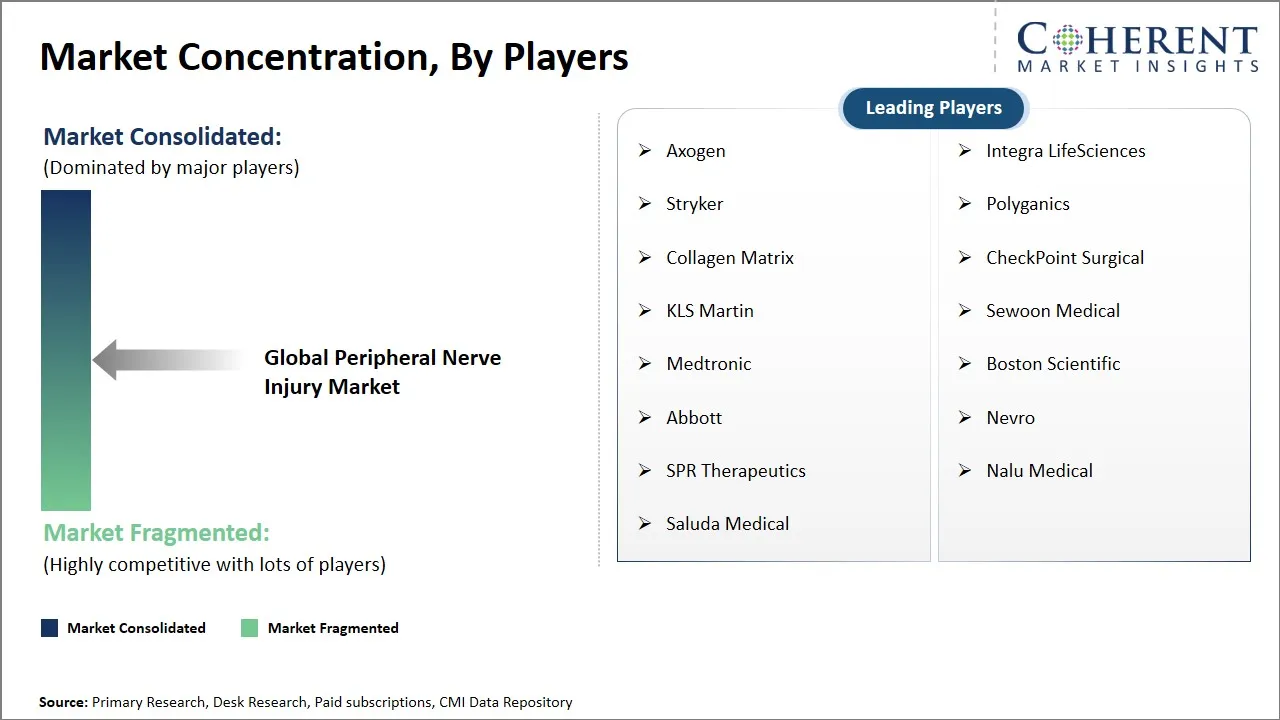
Market Players, Key Developments, and Competitive Intelligence
Key Developments
- In October 2025, Neuraptive Therapeutics a Pennsylvania based biotechnology company enrolled its first Phase 3 patient for NTX-001. The trial evaluates NTX-001 against standard neurorrhaphy in upper extremity Peripheral Nerve Injury from trauma. The multicenter U.S. study will enroll about 110 patients across 24 clinical sites. NTX-001 already holds U.S. FDA Fast Track and Orphan Drug designations.
- In August 2025, NervGen Pharma a U.S. based clinical stage biopharmaceutical company, reported strong preclinical results for NVG-291. Department of Defense sponsored studies showed NVG-291 improved functional recovery and axonal regeneration in Peripheral Nerve Injury models. The therapy also restored hearing function in blast induced sensorineural hearing loss models affecting military populations.
- In June 2024, Axogen Corporation, a U.S. based nerve repair company, launched Avive+ soft tissue matrix. The resorbable allograft is designed to protect and support healing in Peripheral Nerve Injury cases. Avive+ provides tissue separation for compression and non-transected nerve injuries. The launch strengthens Axogen’s portfolio in peripheral nerve protection and recovery solutions.
- In May 2025, Intellia Therapeutics a Cambridge based clinical stage gene editing company reported positive Phase 1 data. The update was shared at the Peripheral Nerve Society Annual Meeting. Nexiguran ziclumeran showed durable TTR reduction and functional improvement in hereditary ATTR polyneuropathy. Benefits persisted for two years after a single dose.
Top Strategies Followed by Global Peripheral Nerve Injury Market Players
Player Type | Strategic Focus | Examples |
Established Market Leaders | Heavy investment in AAV vector engineering, manufacturing scale-up, and clinical/regulatory capabilities; portfolio expansion across high-impact indications; strategic partnerships with biopharma, CDMOs, and academic centers; global commercialization and market access build-out | Novartis is scaling AAV gene therapies in neuromuscular disease (commercial + pipeline) and expanding global treatment infrastructure; Roche is advancing AAV gene therapy through Spark Therapeutics, leveraging global clinical networks and development capabilities |
Mid-Level Players | Platform optimization (capsid, promoter, payload, dosing) with tighter cost control; focus on rare/niche diseases with clearer trial endpoints; licensing/co-development to access manufacturing capacity and accelerate programs; selective geographic expansion via partners | uniQure is optimizing AAV programs for hemophilia and CNS disorders while partnering to scale development; REGENXBIO is leveraging its NAV AAV platform via licensing and partnerships to broaden pipeline reach |
Small-Scale Players | Niche innovation in capsid engineering and targeted delivery (tissue tropism, re-dosing strategies, immune-evasion concepts); rapid adoption of AI/synthetic biology to shorten design cycles; local academic/regional collaborations to de-risk early clinical work | 4D Molecular Therapeutics is developing engineered AAV capsids for improved tissue specificity (notably ocular/CNS targets); MeiraGTx is advancing ocular and CNS gene therapies via academic and clinical collaborations |
Market Report Scope
Peripheral Nerve Injury Market Report Coverage
| Report Coverage | Details | ||
|---|---|---|---|
| Base Year: | 2025 | Market Size in 2026: | USD 1.94 Bn |
| Historical Data for: | 2020 To 2024 | Forecast Period: | 2026 To 2033 |
| Forecast Period 2026 to 2033 CAGR: | 8.3% | 2033 Value Projection: | USD 3.39 Bn |
| Geographies covered: |
| ||
| Segments covered: |
| ||
| Companies covered: | Axogen, Integra LifeSciences, Stryker, Polyganics, Collagen Matrix, CheckPoint Surgical, KLS Martin, Sewoon Medical, Medtronic, Boston Scientific, Abbott, Nevro, SPR Therapeutics, Nalu Medical, and Saluda Medical | ||
| Growth Drivers: |
| ||
| Restraints & Challenges: |
| ||
Peripheral Nerve Injury Market Dynamics
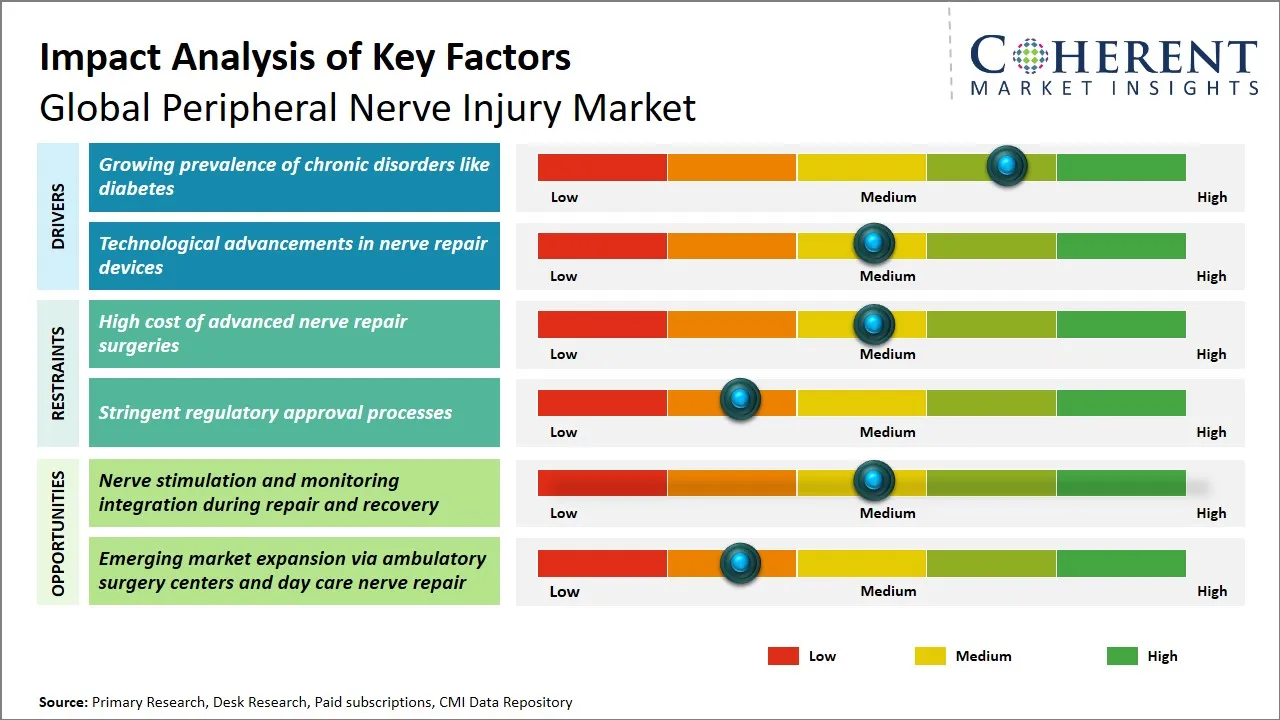
Peripheral Nerve Injury Market Driver - Growing Prevalence of Chronic Disorders Like Diabetes
The rise in the chronic disorders especially diabetes is also playing a significant role in the growth of the world peripheral nerve injury market. Peripheral neuropathy is one of the causes of diabetes, which leads to nerve damage causing numbness, pain, weakness, and is mostly experienced on the extremity. As the number of diabetic patients is increasing in the world as a result of lifestyle change, ageing, and urbanization, the number of nerve related complication is also increasing at the same rate. This wave of peripheral nerve diseases due to diabetes is fueling a rise in the demand of superior diagnostic devices, nerve repair technology, and treatment procedures. In addition, diabetic peripheral neuropathy tends to have the secondary complications of foot ulcers and infections, which in turn requires holistic management solutions.
In November 2024, World Health Organization a global public health agency reported rising diabetes prevalence worldwide. Diabetes cases reached 830 million, increasing risks of peripheral nerve injury and vascular complications. Low and middle income countries showed faster growth and lower treatment coverage. The update stressed prevention through lifestyle changes and early screening to reduce nerve damage risks.
(Source: https://www.who.int/news-room/fact-sheets/detail/diabetes)
Peripheral Nerve Injury Market Opportunity - Integration of Nerve Stimulation and Monitoring Integration During Repair and Recovery
Peripheral nerve repair and recovery through the incorporation of nerve stimulation and monitoring technologies gives a major growth potential in the global peripheral nerve injury market. In bioelectronic medicine, breakthroughs in bioelectronics have facilitated the creation of the more advanced nerve stimulation tools to stimulate nerve regeneration and functional recovery through provision of targeted electrical impulses. Such technologies not only improve the speed and quality of nerve healing but also reduce the deterioration of muscles and loss of sensation, which leads to a better patient outcome. At the same time, real-time nerve monitoring systems provide a more accurate assessment of nerve performance during and after the surgery, enabling surgeons to make better-informed decisions in relation to the course of interventions and reduce the chances of further damage caused.
In September 2025, Mount Sinai Health System, a leading academic medical center, reported a new nerve injury study. Researchers showed intraoperative electrical stimulation can predict recovery in acute Peripheral Nerve Injury. Non responsive nerves showed low spontaneous recovery, while responsive nerves recovered without surgery. Findings support faster surgical decisions and more personalized nerve injury care.
Analyst Opinion (Expert Opinion)
- With the help of standardization of reconstruction and pain management pathways, the peripheral nerve injury market is moving towards autograft first care. The factors of growth are enhanced diagnostics, the broader application of nerve repair conduits and wraps, and the sooner use of nerve transfers. Uncertainty on reimbursement is being eased by regulatory clarity such as U.S. FDA approvals and new CPT codes, which are also speeding up adoption.
- Knowledge exchange at major peripheral nerve and hand surgery meetings has increased the clinical adoption of novel repair strategies and nerve transfer techniques. The more recent push is behind regulatory advances and the growing use of temporary peripheral nerve stimulation, but there is a limitation of payer variability. Research funded by the government and the military has also kept up with the advancement in nerve repair technology.
Speak to the analyst
Want personalized insights?
Take the findings above to one of our principal consultants, or have the report rebuilt around the segments, geographies and competitors you actually track.
Market Segmentation
- Injury Type Insights (Revenue, USD Bn, 2021 - 2033)
- Neurapraxia
- Axonotmesis
- Neurotmesis
- Nerve Type Insights (Revenue, USD Bn, 2021 - 2033)
- Motor Nerves
- Sensory Nerves
- Mixed Nerves
- Product Type Insights (Revenue, USD Bn, 2021 - 2033)
- Nerve Repair Conduits
- Nerve Protectors and Wraps
- Nerve Grafts
- Neuromodulation and Stimulation Devices
- Anatomical Location Insights (Revenue, USD Bn, 2021 - 2033)
- Upper Extremity
- Lower Extremity
- Cranial Nerves
- Trunk and Spinal Peripheral Nerves
- Cause of Injury Insights (Revenue, USD Bn, 2021 - 2033)
- Traumatic Injuries
- Surgical/Iatrogenic Injuries
- Compression/Entrapment Injuries
- Sports-Related Injuries
- Occupational and Industrial Injuries
- Diagnosis Method Insights (Revenue, USD Bn, 2021 - 2033)
- Electrophysiological Tests
- Imaging Techniques
- Clinical and Physical Examination
- Surgical Technique Insights (Revenue, USD Bn, 2021 - 2033)
- Direct Nerve Repair
- Nerve Grafting
- Nerve Transfer
- Neurolysis
- Age Group Insights (Revenue, USD Bn, 2021 - 2033)
- Adult
- Pediatric
- End User Insights (Revenue, USD Bn, 2021 - 2033)
- Hospitals
- Specialty and Orthopedic Clinics
- Ambulatory Surgical Centers
- Diagnostic centers
- Rehabilitation Centers
- Regional Insights (Revenue, USD Bn, 2021 - 2033)
- North America
- U.S.
- Canada
- Latin America
- Brazil
- Argentina
- Mexico
- Rest of Latin America
- Europe
- Germany
- U.K.
- Spain
- France
- Italy
- Russia
- Rest of Europe
- Asia Pacific
- China
- India
- Japan
- Australia
- South Korea
- ASEAN
- Rest of Asia Pacific
- Middle East
- GCC Countries
- Israel
- Rest of Middle East
- Africa
- South Africa
- North Africa
- Central Africa
- North America
- Key Players Insights
- Axogen
- Integra LifeSciences
- Stryker
- Polyganics
- Collagen Matrix
- CheckPoint Surgical
- KLS Martin
- Sewoon Medical
- Medtronic
- Boston Scientific
- Abbott
- Nevro
- SPR Therapeutics
- Nalu Medical
- Saluda Medical
Sources
Primary Research Interviews
Industry Stakeholders
- Peripheral nerve surgeons
- Orthopedic trauma surgeons
- Plastic and reconstructive surgeons
- Neurosurgeons
- Medical device R&D heads
- Hospital procurement managers
End Users
- Tertiary care hospitals
- Ambulatory surgical centers
- Rehabilitation centers
- Specialty orthopedic clinics
- Hand and microsurgery clinics
- Academic medical centers
Government and International Databases
- World Health Organization
- Centers for Disease Control and Prevention
- National Institutes of Health
- European Medicines Agency
- U.S. Food and Drug Administration
- OECD Health Statistics
Trade Publications
- Journal of Hand Surgery
- Neurosurgery Today
- Orthopedic Today
- Medical Device Network
- Nature Reviews Neurology
- BMJ Open
Academic Journals
- Journal of Peripheral Nervous System
- Neurosurgery
- Clinical Neurophysiology
- Muscle & Nerve
- Journal of Neuroscience Methods
- Plastic and Reconstructive Surgery
Reputable Newspapers
- The New York Times
- The Guardian
- The Wall Street Journal
- Financial Times
- The Washington Post
- The Hindu
Industry Associations
- American Society for Peripheral Nerve
- International Federation of Societies for Surgery of the Hand
- American Academy of Orthopaedic Surgeons
- Congress of Neurological Surgeons
- European Association of Neurosurgical Societies
- World Federation of Neurosurgical Societies
Public Domain Resources
- ClinicalTrials.gov
- MedlinePlus
- National Library of Medicine
- Eurostat
- Open Government Data portals
Proprietary Elements
- CMI Data Analytics Tool: Proprietary analytics tool to analyze real-time market trends, consumer behavior, and technology adoption in market
- Proprietary CMI Existing Repository of Information for Last 8 Years
Get access to 250+ pages report
Every segment, forecast, competitor profile and data table behind the analysis above — available for instant download.
- ESOMAR Member
- ISO 9001:2015 Certified
- D-U-N-S Registered
- GDPR & CCPA Compliant
Missing comfort of reading report in your local language? Find your preferred language:
Transform your Strategy with Exclusive Trending Reports
Frequently Asked Questions
The global peripheral nerve injury market is estimated to be valued at USD 1.94 Bn in 2026 and is expected to reach USD 3.39 Bn by 2033.
The CAGR of global peripheral nerve injury market is projected to be 8.3% from 2026 to 2033.
Growing prevalence of chronic disorders like diabetes and technological advancements in nerve repair devices are the major factors driving the growth of the global peripheral nerve injury market.
High cost of advanced nerve repair surgeries and stringent regulatory approval processes are the major factors hampering the growth of the global peripheral nerve injury market.
In terms of injury type, the neurapraxia is estimated to dominate the market revenue share in 2026.
High resolution ultrasound nerve conduits nerve wraps and peripheral nerve stimulation
Standardized repair solutions biologics and neuromodulation will drive long term growth