

Nerve Repair And Regeneration Market Size and Forecast — 2026-2033
The Global Nerve Repair and Regeneration Market size is estimated to be valued at USD 9.11 billion in 2026 and is expected to reach USD 16.01 billion by 2033, exhibiting a compound annual growth rate (CAGR) of 8.4% from 2026 to 2033.
Overview
Nerve repair and regeneration products comprise biomaterials, neurostimulation devices, nerve conduits, grafts, and growth factor-based therapies that help restore damaged neural pathways. Major product categories include bioengineered nerve guidance conduits (NGCs), processed allografts, and synthetic polymer-based scaffolds that support axonal regrowth. Electrical stimulation devices and neuromodulation implants are also used to enhance nerve healing and functional recovery.
Advances in tissue engineering and stem cell therapies have led to next-generation regenerative solutions with improved biocompatibility and conductivity. Manufacturers are focusing on absorbable materials that reduce surgical revisions and combining biologics with conduits to accelerate neural repair. These products are primarily used in trauma, peripheral nerve injury, and post-surgical nerve reconstruction procedures.
Key Takeaways
The Nerve Grafts segment leads the product category, commanding 33% of market share, driven by its superior functional recovery rates and widespread clinical acceptance. Meanwhile, growth factors exhibit rapid adoption and are expected to register the fastest growth owing to therapeutic efficacy enhancements.
Peripheral nerve repair dominates the application segment with a 46% industry share, reflecting the prevalence of trauma-induced nerve injuries worldwide and escalating demand for peripheral nerve regeneration solutions.
Regionally, North America holds dominance with over 40% market share, attributed to its advanced healthcare infrastructure and strong industry presence. In contrast, the Asia Pacific is the fastest-growing region with a CAGR exceeding 9%, propelled by expanding healthcare investments and the growing prevalence of road traffic accidents.
The Hospitals & Clinics end-user segment accounts for 51% market revenue, underscoring the central role of institutional healthcare providers in adopting cutting-edge nerve repair technologies and market growth.
Nerve Repair And Regeneration Market Segmentation Analysis
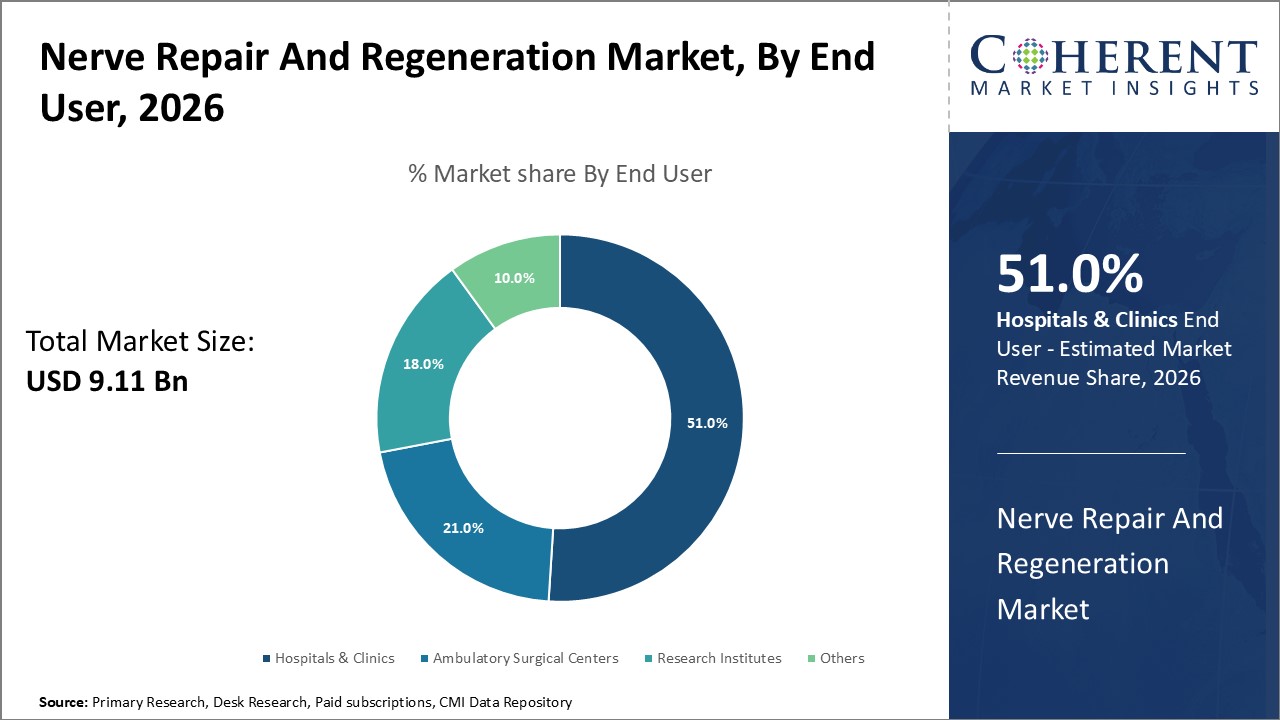
Nerve Repair And Regeneration Market Insights, By End User
Hospitals & Clinics dominate the market share at 51%, as they are primary venues for complex nerve repair surgeries and have access to resources for advanced treatments, including growth factors and stem cells. Ambulatory Surgical Centers are the fastest-growing subsegment due to the rising preference for outpatient minimally invasive procedures and cost efficiencies. Research Institutes play a critical role in driving innovation and evaluation of novel therapies, especially cellular and biomaterial-based products.
Nerve Repair And Regeneration Market Insights, By Product Type
Nerve Grafts dominate the market share at 32%, attributable to their proven efficacy in bridging nerve gaps and restoring function in peripheral nerve injuries. The predictable clinical outcomes and wide surgical acceptance make nerve grafts a preferred option. Growth Factors represent the fastest growing subsegment, propelled by new bioengineered molecules enhancing nerve cell proliferation and differentiation. Nerve Conduits provide an alternative to grafts for smaller nerve defects and are widely used due to ease of application. Stem Cells, meanwhile, are emerging as promising solutions offering regenerative potential but currently occupy a smaller share due to ongoing clinical validations.
Nerve Repair And Regeneration Market Insights, By Application
Peripheral Nerve Repair dominates the landscape with a commanding 45% share due to the high incidence of trauma and accidents affecting peripheral nerves that require surgical intervention. This segment benefits from established product utilization and ongoing clinical innovation. Central Nerve Repair, despite its complexity, is gaining traction, fueled by advancements in spinal cord injury treatments. Craniofacial Nerve Repair is a niche but strategically important segment addressing facial nerve damage from trauma and surgeries. Others consist of veterinary and small-scale nerve repair applications, contributing modestly to market revenue.
Nerve Repair And Regeneration Market Trends
The recent market trend depicts an increasing integration of regenerative medicine techniques focusing on stem cells and growth factors to enhance nerve repair efficacy.
For example, in 2025, clinical trials utilizing stem cell-embedded nerve conduits demonstrated a 36% improvement in nerve regeneration speed, signaling a paradigm shift in therapeutic approaches.
Additionally, AI-enabled diagnostics and treatment personalization emerged as significant trends, with several U.S.-based hospitals employing machine learning algorithms for treatment planning, thereby improving success rates in peripheral nerve surgeries.
The movement toward minimally invasive surgical techniques further supports faster patient recovery, accelerating the demand for innovative nerve repair devices in ambulatory surgical centers.
Nerve Repair And Regeneration Market Insights, By Geography
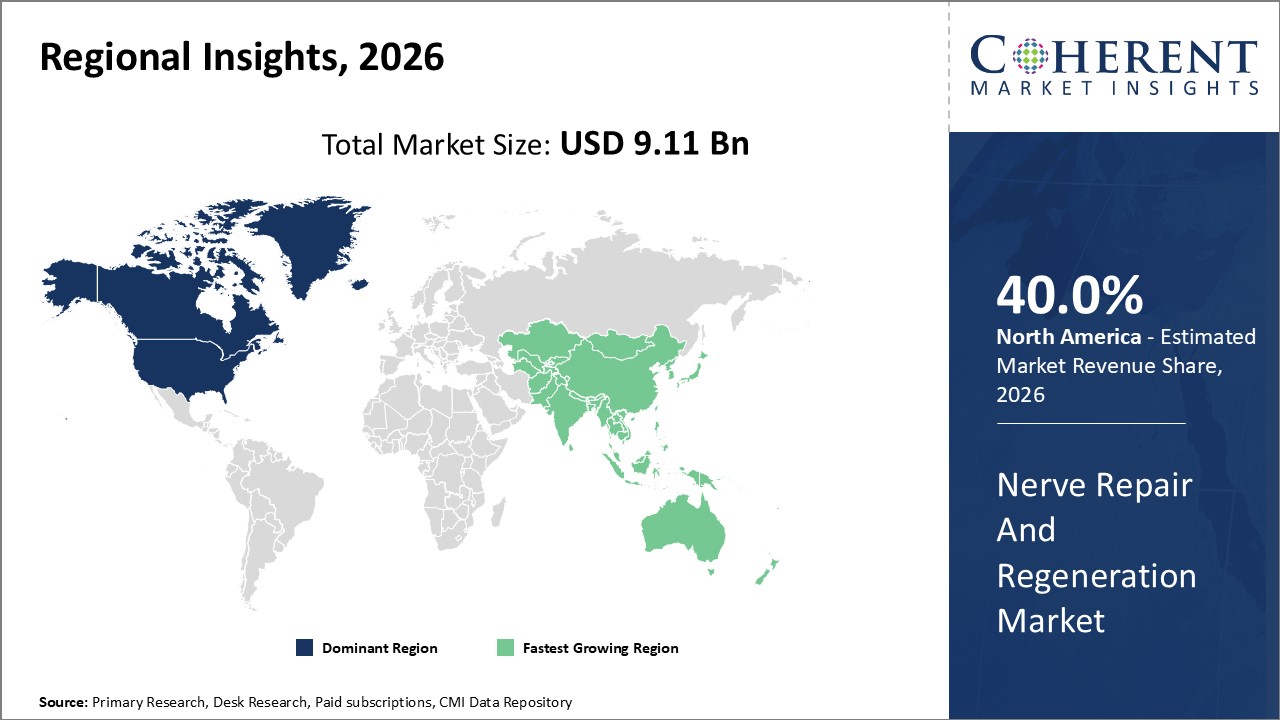
North America Nerve Repair And Regeneration Market Analysis and Trends
In North America, the dominance in the Nerve Repair and Regeneration Market is primarily driven by the presence of advanced healthcare infrastructure, favorable reimbursement frameworks, and a high prevalence of nerve injury cases. The region accounts for over 40% of the total market share, with the U.S. contributing significantly due to substantial investments in nerve repair technologies and the presence of key market players like Medtronic and AxoGen. Regulatory support and extensive R&D efforts continue to reinforce North America’s leadership position in the market.
Asia Pacific Nerve Repair And Regeneration Market Analysis and Trends
Meanwhile, the Asia Pacific exhibits the fastest growth with an estimated CAGR exceeding 9%, fueled by increasing road traffic accidents and rising healthcare expenditure. Government initiatives in countries like China and India to improve healthcare access and infrastructure have catalyzed the adoption of advanced nerve repair therapies. Rising consumer awareness and expanding patient pools also contribute to regional market expansion, with local companies investing heavily in R&D and collaborations to capture emerging opportunities
Nerve Repair And Regeneration Market Outlook for Key Countries
USA Nerve Repair And Regeneration Market Analysis and Trends
The USA’s nerve repair and regeneration market is pivotal in global revenue terms, supported by a large patient population requiring nerve repair procedures annually. The country’s robust healthcare research ecosystem has produced innovations such as biodegradable nerve conduits, gaining rapid market approval. Companies like Medtronic and Stryker invested approximately USD 120 million in 2025 towards developing next-generation nerve grafts, significantly impacting product availability and market growth. Additionally, proactive reimbursement policies and increasing awareness about nerve injury treatment options aid broader market adoption.
Germany Nerve Repair And Regeneration Market Analysis and Trends
Germany represents a key European market offering significant nerve repair and regeneration business growth opportunities, propelled by progressive healthcare infrastructure and government funding for regenerative medicine initiatives. The country boasts a strong network of specialized centers performing advanced nerve surgeries, contributing to high usage of growth factor therapies and stem cell applications. Leading companies such as Integra LifeSciences maintain a strong presence here, leveraging research collaborations with German academic institutions. The expansion of ambulatory surgical centers equipped with minimally invasive treatment capabilities further expands Germany’s market revenue potential.
Analyst Opinion
Advancements in biomaterials remain a critical supply-side indicator fueling market growth. In 2025, biodegradable nerve conduits comprised over 43% of the market share in biomaterial-based nerve repair, signifying an industry preference for innovative, resorbable materials that reduce risks of rejection and infection. These developments directly influence the market size by enabling higher treatment adoption and expanding clinical application ranges.
Demand-side indicators are strongly marked by the increasing incidence of peripheral nerve injuries in automotive and industrial accidents, which accounted for more than 3 million cases in the US alone in 2023. This influx drives pricing dynamics due to growing demand for effective nerve regeneration therapies to restore motor and sensory functions, contributing to market revenue escalation and business growth in specialized therapeutic devices.
Micro-indicators related to end-use sectors reveal that reconstructive surgery and trauma centers dominate consumption of nerve repair devices, constituting approximately 39% of the market revenue share in 2025. This is supported by growing awareness among healthcare providers regarding improved functional outcomes with nerve regeneration products and technologies.
Nano-scale innovations such as nanofiber scaffolds and nanocomposite hydrogels are progressively incorporated into nerve repair solutions, increasing efficacy and biocompatibility. Market analysis indicates a surge in patent filings and clinical trials focusing on nano-engineered nerve conduits, indicating a long-term market growth strategy driving the nerve repair and regeneration market size beyond established segments.
- Current Industry Events of 2026
- Market Size Estimation
- Regional Breakdown
- Competitive Landscape
- Customer Intelligence
- Segmental Analysis
- Pricing Analysis
- Key Market Drivers, Challenges & Future Trends
- Customized Insights Section
Market Scope
| Report Coverage | Details | ||
|---|---|---|---|
| Base Year: | 2025 | Market Size in 2026: | USD 9.11 billion |
| Historical Data for: | 2020 To 2024 | Forecast Period: | 2026 To 2033 |
| Forecast Period 2026 to 2033 CAGR: | 8.4% | 2033 Value Projection: | USD 16.01 billion |
| Geographies covered: |
| ||
| Segments covered: |
| ||
| Companies covered: | Medtronic Plc, Stryker Corporation, Biomimetics Symbiosis, Inc., Polyganics B.V., Organogenesis Inc., AxoScience, Tissue Regeneration Systems, LLC, Neuromend Technologies, Polyganics B.V., Abbott Laboratories, Smith & Nephew plc, Boston Scientific Corporation. | ||
| Growth Drivers: |
| ||
Nerve Repair And Regeneration Market Growth Factors
The increasing prevalence of nerve trauma, especially in aging populations, is the foremost growth driver, with over 1 million new cases reported annually worldwide. Advancements in biomaterial science now enable improved biocompatibility and faster nerve regeneration, creating higher adoption rates in surgical procedures. Rising investments in research and development are accelerating the introduction of regenerative therapies such as stem cell applications, which in 2025 showed a 30% year-over-year increase in clinical trial activities. Additionally, favorable reimbursement policies in developed nations are encouraging healthcare providers to integrate innovative treatment options, positively impacting market growth strategies and further expanding market revenue.
Nerve Repair And Regeneration Market Development
In June 2025, AxoGen launched Avive+ Soft Tissue Matrix™, a multi-layer amniotic membrane allograft designed as a soft-tissue barrier for nerve repair procedures. It is intended to protect and separate soft tissues during the healing process, especially for non-transected nerve injuries and nerve compressions, where it helps shield the nerve from surrounding tissues. This product is a new addition to AxoGen's peripheral nerve repair portfolio.
In March 2020, Cook Biotech Incorporated received CE-Mark clearance for its AxoGuard® Nerve Connector and AxoGuard® Nerve Protector devices, enabling commercialization in European markets for the protection and reinforcement of peripheral nerves post-surgery.
Key Players
Leading companies of the market include:
Medtronic Plc
Stryker Corporation
Biomimetics Symbiosis, Inc.
Polyganics B.V.
Organogenesis Inc.
AxoScience
Tissue Regeneration Systems, LLC
Neuromend Technologies
Polyganics B.V.
Abbott Laboratories
Smith & Nephew plc
Boston Scientific Corporation
Competitive strategies adopted by leading companies include aggressive mergers and acquisitions to expand product pipelines and distribution networks; for instance, AxoGen's acquisition of NerveGen in 2023 accelerated its product portfolio diversification and market share in peripheral nerve repair. Medtronic enhanced its research collaborations with academic institutions, driving innovation in biomaterials and securing key patents for next-generation nerve conduits, which led to a 16% revenue increase in 2025.
Nerve Repair And Regeneration Market Future Outlook
The future outlook for the Nerve Repair and Regeneration Market is optimistic, with projected double-digit growth fueled by next-generation biomaterials, 3D-printed nerve scaffolds, and gene-based regenerative therapies. As clinical trials demonstrate improved outcomes in peripheral nerve reconstruction and spinal cord repair, the transition from experimental to standardized therapy is expected to accelerate. The growing demand for neuromodulation and electrical stimulation devices in chronic pain management and neural rehabilitation will complement biological approaches. Strategic partnerships among biotech companies, academic institutions, and government research programs will drive commercialization, pushing the market toward significant technological maturity by 2035.
Nerve Repair And Regeneration Market Historical Analysis
The Nerve Repair and Regeneration Market has undergone a paradigm shift from traditional nerve grafting techniques to the application of advanced biomaterials, neurostimulation, and stem cell therapies. Historically, the field struggled with limited clinical success and slow translation of research into practice due to complex nerve physiology and lengthy recovery times. However, the 2010s brought substantial improvements with the introduction of nerve conduits, allografts, and growth factor-based regenerative technologies. The increasing prevalence of trauma-related injuries, diabetes-induced neuropathies, and neurodegenerative diseases contributed to market expansion, while regulatory support for innovative biologics further strengthened industry engagement.
Sources
Primary Research Interviews:
Neurosurgeons
Peripheral Nerve Specialists
Biomedical Engineers
Regenerative Medicine Researchers
Hospital Procurement Managers
Databases:
PubMed
ClinicalTrials.gov
FDA Medical Device Database
GlobalData Neurology Reports
Magazines:
Regenerative Medicine Today
Neurotech Business Report
Medical Device Network
Neurology Today
Journals:
Journal of Neurosurgery
Neural Regeneration Research
Tissue Engineering
Journal of NeuroEngineering and Rehabilitation
Newspapers:
The New York Times (Health)
The Guardian (Science)
The Hindu (Health)
Financial Times (Biotech)
Associations:
International Society for Stem Cell Research (ISSCR)
American Association of Neurological Surgeons (AANS)
European Society for Peripheral Nerve (ESPN)
Get access to 250+ pages report
Every segment, forecast, competitor profile and data table behind the analysis above — available for instant download.
- ESOMAR Member
- ISO 9001:2015 Certified
- D-U-N-S Registered
- GDPR & CCPA Compliant
Missing comfort of reading report in your local language? Find your preferred language:
Transform your Strategy with Exclusive Trending Reports
Frequently Asked Questions
Leading market players include Medtronic Plc, AxoGen, Inc., Integra LifeSciences, and Stryker Corporation, recognized for their extensive portfolios and innovation-driven growth strategies.
The market size is projected to increase from USD 9.11 billion in 2026 to USD 16.01 billion by 2033, highlighting significant expansion supported by technological innovation and rising clinical demand.
Hospitals and Clinics dominate the end-user segment with a 50% market share, offering the largest growth potential due to increased surgical interventions and adoption of regenerative therapies.
Integration of personalized nerve grafts, AI-assisted treatment planning, and minimally invasive techniques will drive market evolution, supported by escalating R&D investments and favorable healthcare policies.
The competitive landscape is marked by innovation-centric competition with challenges like high development costs and complex regulatory pathways impacting market entry and expansion.
Market players deploy strategies including mergers and acquisitions, strategic R&D collaboration, expanded product portfolios, and market penetration initiatives in emerging regions to enhance competitiveness.