

Global PET Imaging Agents Market Size and Forecast – 2026 To 2033
The global PET imaging agents market is expected to grow from USD 3,236.4 Mn in 2026 to USD 6,529.5 Mn by 2033, registering a compound annual growth rate (CAGR) of 10.5% from 2026 to 2033. The market for global PET imaging agents is poised for significant expansion, fueled by the rising global cancer burden, which is increasing demand for PET-based diagnosis, staging, and treatment monitoring.
According to the World Health Organization (WHO) and International Agency for Research on Cancer (IARC), an estimated 20.6 million new cancer cases were recorded globally in 2024, with cases projected to reach 34.4 million by 2050, strengthening the need for advanced molecular imaging.
Key Takeaways of the Global PET Imaging Agents Market
- Fluorine-18 is projected to hold 68.4 % of the global PET imaging agents market share in 2026, making it dominant type segment, across Europe, where multiple fluorine-18 radiopharmaceuticals are authorized for oncology and neurological PET applications. For instance, the European Medicines Agency authorizes Pylclari (piflufolastat fluorine-18) for prostate cancer PET imaging and Neuraceq (florbetaben fluorine-18) for amyloid PET imaging in patients being evaluated for Alzheimer’s disease, supporting broad clinical utilization of fluorine-18 agents.
- Oncology is projected to hold 38.8 % of the global PET imaging agents market share in 2026, making it dominant application segment, across Asia Pacific, where targeted PET imaging is expanding the role of molecular imaging in cancer diagnosis and staging. For instance, Japan’s Pharmaceuticals and Medical Devices Agency updated its radiopharmaceutical review framework in October 2025, including a prior-assessment process for the quality of new radiopharmaceutical applications, supporting regulatory pathways for advanced oncology PET agents.
- Hospitals are projected to hold 56.8 % of the global PET imaging agents market share in 2026, making it dominant end user segment, across North America, where PET radiopharmaceuticals are integrated into hospital-based cardiac and oncology diagnostic services. For instance, the U.S. Food and Drug Administration approved FLYRCADO (flurpiridaz fluorine-18) for PET myocardial perfusion imaging in adults with known or suspected coronary artery disease, reinforcing hospital-based utilization of fluorine-18 PET agents in cardiovascular diagnosis.
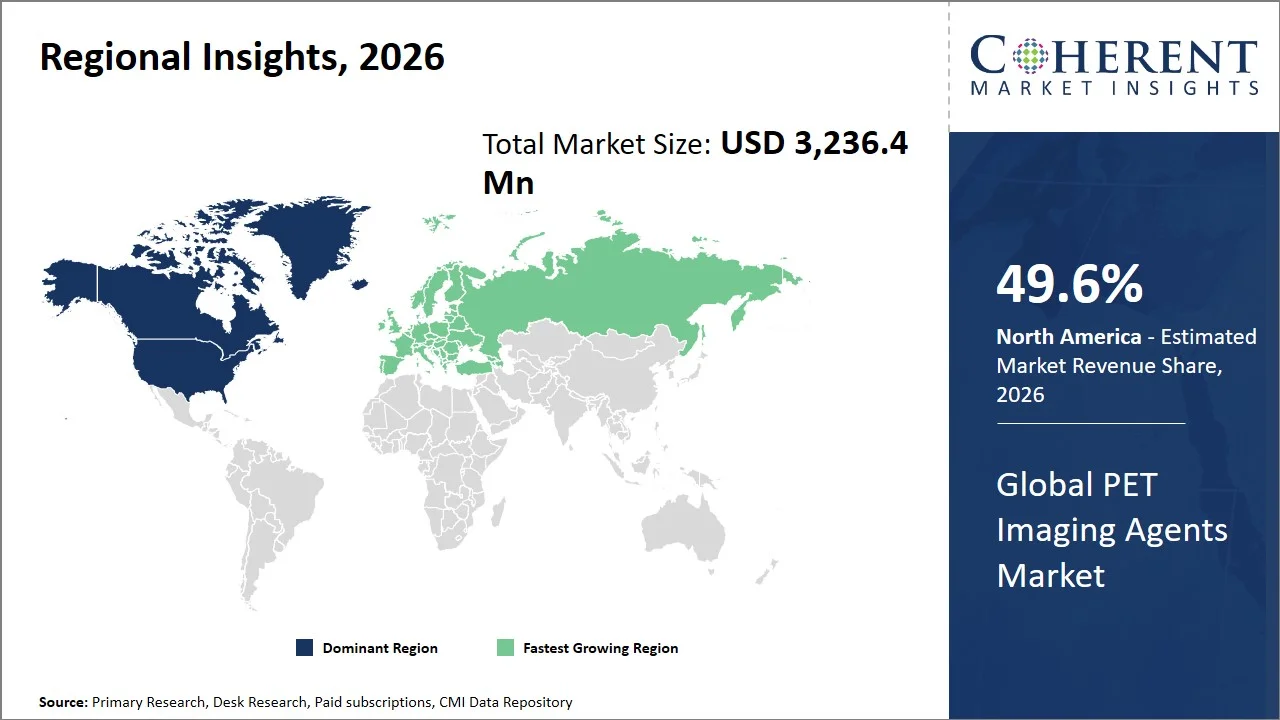
- North America market maintains dominance with an expected share of 49.6 % in 2026, bolstered by established PET infrastructure, high procedure volumes, and expanding demand for radiopharmaceutical-supported imaging. For instance, Canadian Medical Imaging Inventory projected the country’s PET–Computed Tomography capacity to increase from 60 units in 2022–2023 to 71 units by 2040, while PET–Computed Tomography examinations are projected to rise from 156,320 to 185,257 over the same period, indicating sustained expansion in PET imaging capacity and radiopharmaceutical demand.
- Europe is expected to exhibit the fastest growth in the global PET imaging agents market, registering an estimated CAGR of 10.9 % during 2026–2033, propelled by regulatory initiatives aimed at strengthening radiopharmaceutical development and supply. For instance, in April 2026, the European Medicines Agency published its Radiopharmaceuticals Horizon Scanning Report, identifying radiopharmaceuticals as an area of growing relevance in oncology, diagnostic imaging, and theranostics and highlighting the need for secure manufacturing and supply chains.
Segmental Insights
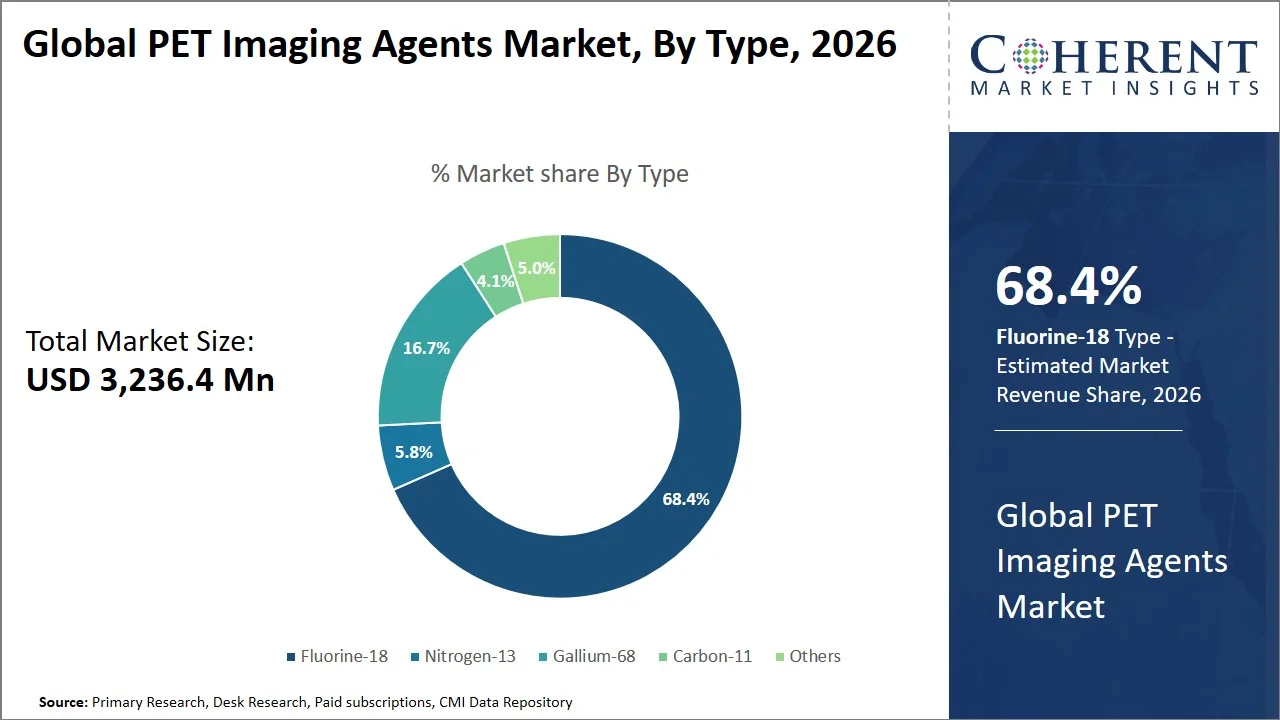
Why Do Fluorine-18 Dominate the Global PET Imaging Agents Market?
Fluorine-18 is projected to hold the market share of 68.4% in 2026, owing to its half-life of 109.8 minutes, low positron energy and widespread radiolabeling capability which are beneficial for high resolution imaging and out of production facility distribution. In addition, its proven clinical applicability in oncology, neurology and cardiology further drives demand. For instance, Fluorine-18 is listed by the International Atomic Energy Agency as one of the more frequently used radionuclides for PET in the clinic, having a reasonably long half-life permitting transport to peripheral PET centers.
- Current Industry Events of 2026
- Market Size Estimation
- Regional Breakdown
- Competitive Landscape
- Customer Intelligence
- Segmental Analysis
- Pricing Analysis
- Key Market Drivers, Challenges & Future Trends
- Customized Insights Section
Why Does Oncology Represent the Largest Application Segment in the PET Imaging Agents Market?
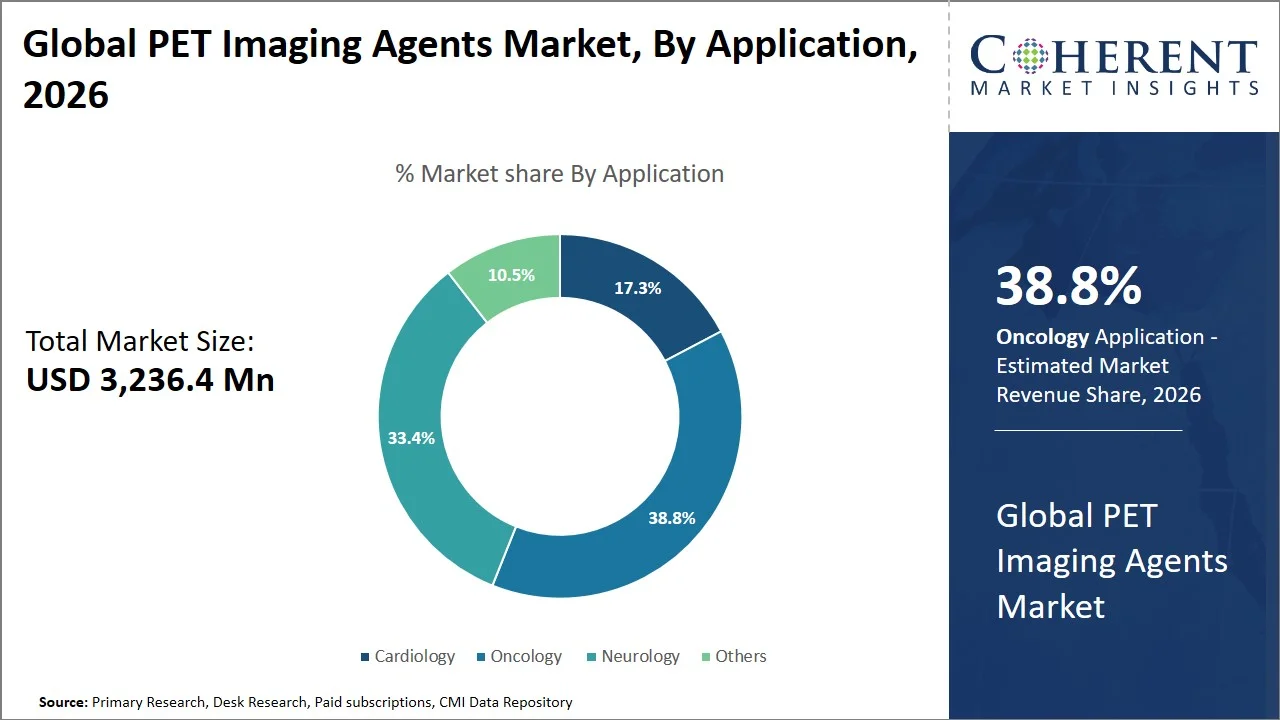
Oncology is projected to hold a market share of 38.8% in 2026, driven by growing adoption of PET in identifying the staging of tumor and evaluating metastasizing disease and treatment effectiveness. Besides anatomical imaging, the PET radiotracer gives a functional value in the diagnosis, strengthening their role in cancer management. For instance, the U.S. National Cancer Institute uses FDG-PET in routine management to stage FDG-avid lymphomas and to assess treatment response, as laid out in the Lugano Recommendations.
Hospitals Segment Dominates the Global PET Imaging Agents Market
The hospitals segment is projected to hold a market share of 56.8% in 2026, attributed to their nuclear medicine capabilities, readily available PET/computed tomography scanners, specialized clinical workforce, and the readiness to accommodate the workflow required in this niche specialty. Patients’ growing demand for PET radiopharmaceuticals for oncology, cardiology, and neurology has been helping hospitals drive persistent demand. For instance, in January 2025, regulatory filing by a hospital in Iowa for an ongoing PET/CT service provided specific facilities for radiopharmaceutical delivery, staffing, and integration into ongoing oncology operations, showing the development of the role of hospitals in providing PET-based care.
Currents Events and their Impact
Current Events | Description and its Impact |
U.S. FDA Approved New PYLARIFY TruVu Formulation to Expand PSMA PET Supply (March 2026) |
|
U.S. FDA Accepted NDA for 18F-FET PET Agent for Glioma Imaging (April 2026) |
|
PET Imaging Agents Market Dynamics
Market Drivers
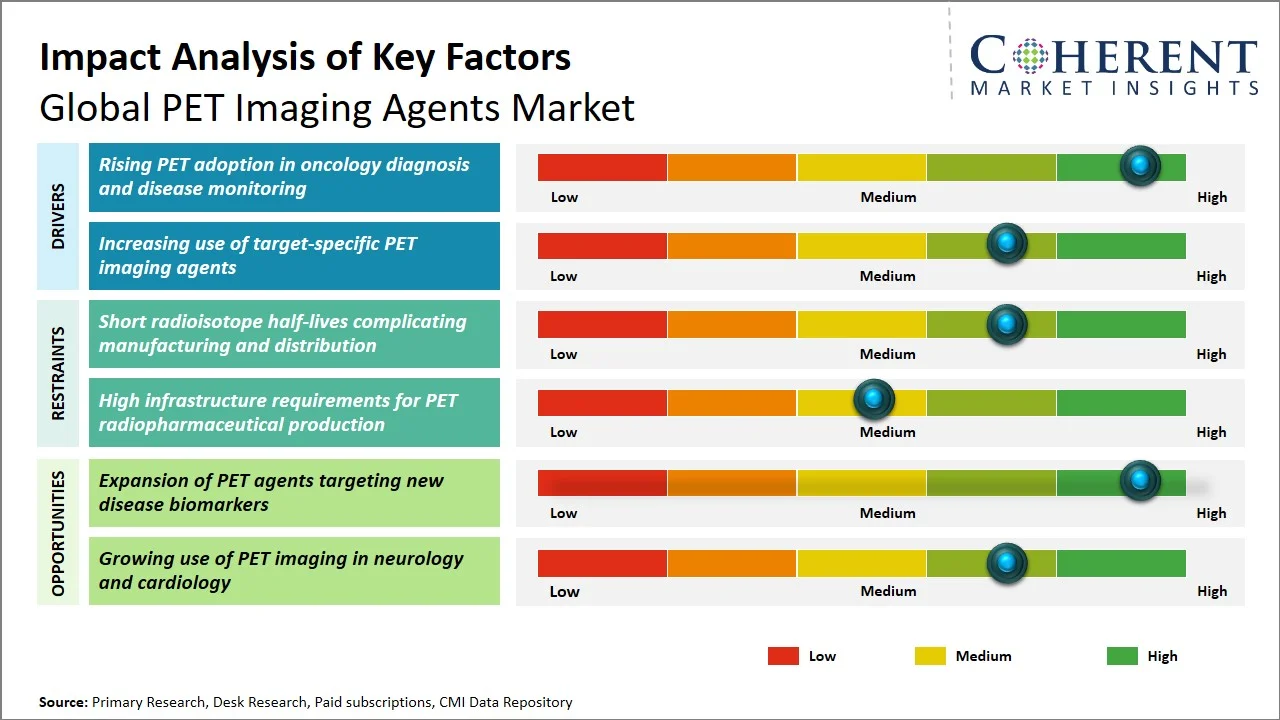
- Rising PET adoption in oncology diagnosis and disease monitoring: The growing use of PET imaging agents in oncology is driven by their ability to visualize tumor biology, support disease staging, and assess treatment response, increasing demand for more specific radiotracers. Targeted agents are also extending PET beyond conventional metabolic imaging toward molecularly defined cancers and theranostic patient selection. For instance, in March 2025, the U.S. Food and Drug Administration expanded the indication for Pluvicto based on PSMA-positive disease, with patient selection supported by Locametz or another approved PSMA PET product, reinforcing the role of PET agents in precision oncology.
- Increasing use of target-specific PET imaging agents: The increasing use of target-specific PET imaging agents is expanding molecular imaging toward disease-specific receptors and proteins, enabling more precise characterization of tumors and other pathological processes. These agents are also strengthening PET’s role in drug development, treatment selection, and monitoring of molecular targets. For instance, clinical development of zirconium-89-labeled daratumumab for immuno-PET is being investigated to visualize and monitor CD38-positive multiple myeloma, demonstrating the potential of target-specific imaging to connect PET diagnostics with targeted therapies.
- Rising Adoption of Non-Fluorodeoxyglucose PET Radiotracers: The increasing limitations of Fluorodeoxyglucose in certain tumor types are driving adoption of non-Fluorodeoxyglucose PET radiotracers that target specific receptors, proteins, and metabolic pathways. These agents are expanding PET applications across prostate cancer, neuroendocrine tumors, gliomas, and other cancers, while improving disease characterization and staging. For instance, July 2025, clinical review published by National Library of Medicine, highlighted the growing use of Gallium-68 prostate-specific membrane antigen, Gallium-68 DOTA peptides, Fluorine-18 fluciclovine, and Fluorine-18 fluoro-dihydroxyphenylalanine for cancers where conventional Fluorodeoxyglucose imaging has limitations.
Emerging Trends
- Total-Body PET Driving Lower-Dose Radiotracer Use: The adoption of long-axial-field-of-view and total-body PET systems is enabling faster imaging with substantially lower administered radiotracer activity. This trend is creating opportunities for more efficient use of PET agents and repeated or dynamic imaging protocols.
- Growth of Dynamic and Quantitative PET Imaging: PET imaging is moving beyond static visualization toward dynamic tracer-kinetic and quantitative imaging, allowing clinicians and researchers to assess tracer distribution, uptake, and retention over time. This is increasing the relevance of radiotracers with predictable kinetics and measurable biological targets.
- PET Supporting Radiotracer Discovery and Development: Advanced PET systems are increasingly being used to evaluate new radiotracers, drug pharmacokinetics, and molecular targets in humans, potentially shortening the translational pathway from radiotracer research to clinical applications. Total-body PET is particularly relevant because its high sensitivity enables tracer evaluation using lower administered activities.
Regional Insights
Why is North America a Strong Market for Imaging Agents?
North America leads the global PET imaging agents market, accounting for an estimated 49.6% share in 2026, due to the superior PET infrastructure, robust pharmaceutical and biotechnology capacities, supportive government policies and increasing encouragement of technological development and application of advanced imaging technologies. For instance, in March 2025, the National Cancer Institute established an Academic Industrial Partnership opportunity to support the implementation and validation of novel imaging technologies such as molecular and functional imaging tools for cancer diagnosis. Besides the well-formed network of relationships between health care institutions, university research and industries for developing and clinical applications of the new radiotracers, the well-established reimbursement policies and mature regulations are also among the main drivers.
Why Does Europe PET Imaging Agents Market Exhibit High Growth?
Europe is expected to exhibit the fastest growth in the global PET imaging agents market, registering an estimated CAGR of 10.9% during 2026–2033. The region is projected to account for approximately 25.5% of the global market in 2026, driven by growing nuclear medicine infrastructure, a widening market application for molecular imaging, and proactive government initiatives aimed to develop advanced imaging technologies, stimulate adoption of innovative practices, and streamline market access for them.
To further invigorate this ecosystem, the European Commission has launched new actions related to nuclear medicine supply chain, medical imaging innovation and digital health implementation. For instance, in February 2026, the European Commission announced a call for Digital Europe funding of USD 10.43 million (€9 million), targeting the large-scale pilots of Artificial Intelligence in medical imaging including PET, in view to enhance and streamline the diagnostic workflow and faster penetration across European healthcare.
Global PET Imaging Agents Market Outlook for Key Countries
Why is the U.S. Leading Innovation and Adoption in the PET Imaging Agents Market?
The U.S. dominates the PET imaging agents market due to the well-developed ecosystem of targeted PET radiotracers, clinical trial capabilities, radio-pharmaceutical manufacturing, and integrated theranostics. With the evolving healthcare in the U.S., which tends towards more imaging targeted by the marker to serve oncology, neurology and PET-guided therapy decision and treatment response monitoring, and a robust distribution framework to reach all patients regardless of their distance to a central unit with the radioactive material.
Is Japan a Favorable Market for PET Imaging Agents Market?
Japan is one of the most promising markets for the PET imaging agents market due to the well-established PET infrastructure within the country and the rapid development in targeted radiopharmaceuticals. Moreover, the country is making progress towards establishing a regulatory process for prostate-specific membrane antigen (PSMA) PET agents and expanding on new targets including Claudin18.2, renal cell carcinoma (RCC) biomarkers among others.
Is China Emerging as a Key Growth Hub for the PET Imaging Agents Market?
China is positioned as a key growth hub in the global PET imaging agents market due to expansion of PET infrastructure, higher demand on oncology imaging, and growing development of domestic radiopharmaceutical supply. During the first national survey in nuclear medicine, China registered 365 units of PET equipment and 319 institutions providing PET examinations, which shows a certain increase of base for the use of PET agents. Furthermore, the market is enhanced by increasing interest in China's new molecular targets and the future generation of radiopharmaceuticals, particularly research in gallium-68 and targeted tracers.
Why Does Germany Top the European PET Imaging Agents Market?
Germany leads the European PET imaging agents market owing to an excellent radiopharmaceutical infrastructure with a well-established cyclotron network and a substantial and growing market penetration for PET used in oncology and theranostics. There are 32 medical cyclotrons in Germany producing the primary PET radionuclides namely Fluorine-18, Carbon-11, Gallium-68 and Copper-64 in the country. Trends towards the use of targeted radioligands and theranostic imaging represent a growth potential for next generation PET agents.
Is PET Imaging Agents Market Developing in the U.K.?
The U.K. is a high-potential market for PET imaging agents due to the expansion of NHS PET-computed tomography services and funding to build supply capacity for radiopharmaceutical productions. In March 2026, NHS England launched a procurement for both the PET-computed tomography services and for the supply of tracers, and Guy's and St Thomas' NHS Foundation Trust announced that a standalone manufacturing unit for diagnostic PET radiopharmaceuticals would be produced.
PET Scanner Availability Across Key Countries, 2023
Country | PET Scanners per Million Population |
Denmark | 8.91 |
United States | 5.75 |
The Netherlands | 4.91 |
Norway | 4.19 |
Australia | 4.11 |
Italy | 3.77 |
Finland | 3.58 |
France | 3.40 |
Sweden | 2.65 |
Austria | 2.63 |
Germany | 2.08 |
Canada | 1.44 |
Greece | 1.93 |
Czechia | 2.12 |
Belgium | 2.80 |
How are the expansion of PET agents targeting new disease biomarkers creating new growth opportunities in the PET imaging agents market?
The increasing development of PET agents which exploit new disease biomarkers offers ample opportunities for the global PET imaging agents market by allowing molecular imaging to access more specific areas within oncology and neuroscience. Target-specific radiotracers will have a greater role in disease diagnosis and patient selection in targeted therapeutic treatment regimes. For instance, in November 2025, the European Medicines Agency recommended the approval of GalenVita, the gallium-68 (68Ga) radionuclide generator which allows carrier molecules to be radio labelled for 68Ga-based PET imaging of neuroendocrine tumors, meningiomas, and prostate cancer, enabling broader use of gallium-68 based target agents.
Market Players, Key Development, and Competitive Landscape
Key Developments
- On August 14, 2026, Lantheus announced that the U.S. Food and Drug Administration approved TAUKLARIFY (florquinitau F 18 injection), an F-18-labeled tau PET imaging agent for detecting tau pathology in adults being evaluated for Alzheimer’s disease. The approval expands the clinical application of PET imaging agents in neurodegenerative disease assessment and strengthens demand for targeted F-18 radiopharmaceuticals.
- In May 2026, Subtle Medical received the U.S. Food and Drug Administration clearance for SubtleHD (PET), an artificial intelligence-powered software designed to enhance low-count PET images and accelerate PET imaging workflows. The clearance strengthens the use of advanced image-processing technologies alongside PET imaging and can support more efficient utilization of PET imaging capacity.
- In September 2025, Lantheus and GE HealthCare announced an exclusive licensing agreement for piflufolastat F 18 (PYLARIFY) in Japan, under which GE HealthCare would develop, manufacture, and commercialize the prostate cancer PET imaging agent. The agreement includes transfer of regulatory dossiers, manufacturing expertise, and technical support, supporting the potential expansion of targeted F-18 PET imaging in Japan.
Competitive Landscape
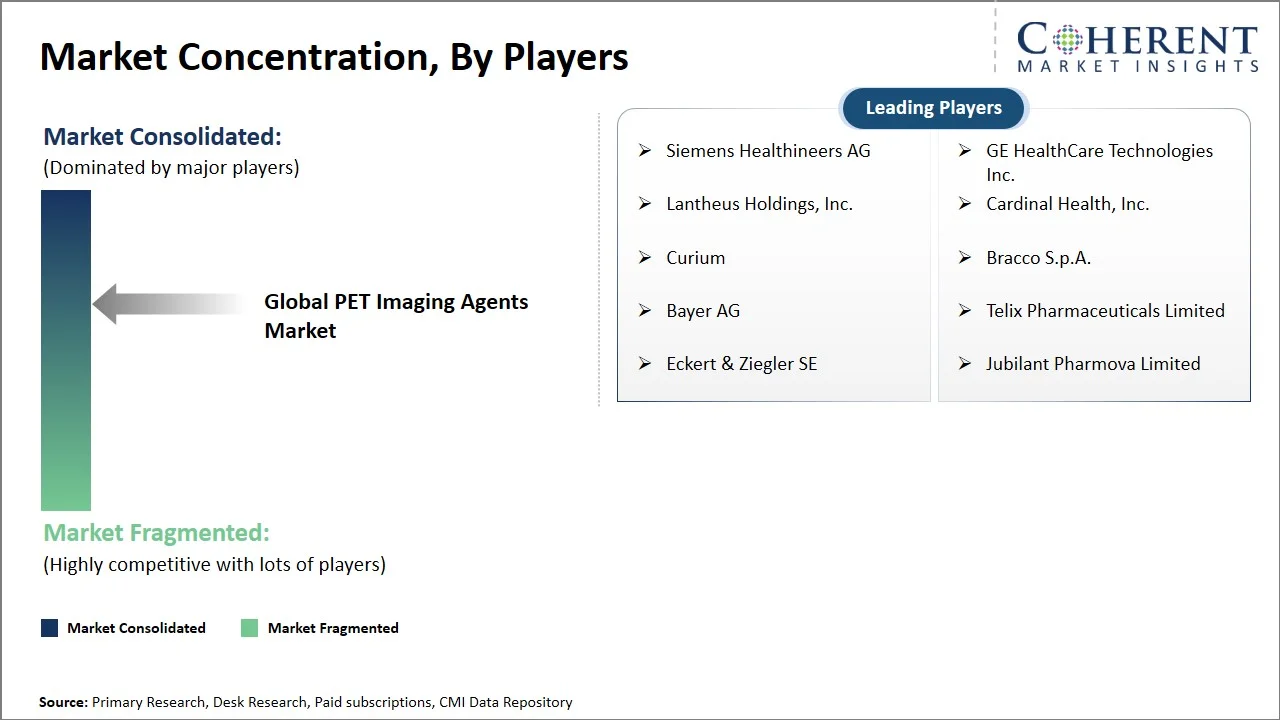
The global PET imaging agents market is highly competitive and increasingly differentiated by targeted tracer portfolios, radiopharmaceutical manufacturing capabilities, and reliable isotope supply. Players are focusing on expanding PET applications across prostate cancer, neurodegenerative diseases, and neuroendocrine tumors, while developing both Fluorine-18- and Gallium-68-based agents. Competition is also intensifying around vertical integration of isotope production, radio pharmacy networks, and last-mile distribution, as reliable dose availability remains critical because of the short half-lives of PET radionuclides. Major players are therefore strengthening their positions through portfolio expansion, manufacturing scale, strategic partnerships, and geographic expansion. Key focus areas include:
- Target-specific radiotracer development for oncology and neurological applications.
- Expansion of Fluorine-18 and Gallium-68-based PET agents across emerging indications.
- Theranostic imaging integration to support patient selection and treatment planning.
- Isotope supply and manufacturing capacity expansion to ensure reliable radiopharmaceutical availability.
- Radio pharmacy and distribution network expansion to address short radionuclide half-lives.
- Geographic expansion into emerging PET markets with growing nuclear medicine infrastructure.
Market Report Scope
PET Imaging Agents Market Report Coverage
| Report Coverage | Details | ||
|---|---|---|---|
| Base Year: | 2025 | Market Size in 2026: | USD 3,236.4 Mn |
| Historical Data for: | 2020 To 2024 | Forecast Period: | 2026 To 2033 |
| Forecast Period 2026 to 2033 CAGR: | 10.5% | 2033 Value Projection: | USD 6,529.5 Mn |
| Geographies covered: |
| ||
| Segments covered: |
| ||
| Companies covered: | Siemens Healthineers AG, GE HealthCare Technologies Inc., Lantheus Holdings, Inc., Cardinal Health, Inc., Curium, Bracco S.p.A., Bayer AG, Telix Pharmaceuticals Limited, Eckert & Ziegler SE, Jubilant Pharmova Limited | ||
| Growth Drivers: |
| ||
| Restraints & Challenges: |
| ||
Analyst Opinion (Expert Opinion)
- The global PET imaging agents market is expected to shift from conventional metabolic imaging toward target-specific, biomarker-driven radiotracers that support precision diagnosis, patient selection, and treatment monitoring. Theranostic integration is likely to become increasingly important, connecting diagnostic PET imaging with targeted radionuclide therapies.
- The maximum opportunities will probably exist within Gallium-68 for Oncology in Asia Pacific particularly China, where targeted imaging for prostate-specific membrane antigen, fibroblast activation protein, and neuroendocrine tumor targets can expand PET beyond conventional fluorodeoxyglucose-based oncology imaging. The opportunity lies particularly in agents that can serve as diagnostic companions to targeted therapies.
- In order to obtain a competitive advantage, market participants should prioritize proprietary target-specific tracer portfolios, reliable isotope sourcing, and localized radiopharmaceutical manufacturing rather than competing solely on existing tracer availability. Building integrated capabilities spanning tracer development, production, radio pharmacy, and distribution can improve dose availability while enabling faster expansion into new indications and geographies.
Speak to the analyst
Want personalized insights?
Take the findings above to one of our principal consultants, or have the report rebuilt around the segments, geographies and competitors you actually track.
Market Segmentation
- Type Insights (Revenue, USD Mn, 2021 - 2033)
- Fluorine-18
- Nitrogen-13
- Gallium-68
- Carbon-11
- Others
- Application Insights (Revenue, USD Mn, 2021 - 2033)
- Cardiology
- Oncology
- Neurology
- Others
- End User Insights (Revenue, USD Mn, 2021 - 2033)
- Hospitals
- Diagnostic Imaging Centers
- Specialty Clinics
- Research Institutes
- Others
- Regional Insights (Revenue, USD Mn, 2021 - 2033)
- North America
- U.S.
- Canada
- Latin America
- Brazil
- Argentina
- Mexico
- Rest of Latin America
- Europe
- Germany
- U.K.
- Spain
- France
- Italy
- Russia
- Rest of Europe
- Asia Pacific
- China
- India
- Japan
- Australia
- South Korea
- ASEAN
- Rest of Asia Pacific
- Middle East
- GCC Countries
- Israel
- Rest of Middle East
- Africa
- South Africa
- North Africa
- Central Africa
- North America
- Key Players Insights
- Siemens Healthineers AG
- GE HealthCare Technologies Inc.
- Lantheus Holdings, Inc.
- Cardinal Health, Inc.
- Curium
- Bracco S.p.A.
- Bayer AG
- Telix Pharmaceuticals Limited
- Eckert & Ziegler SE
- Jubilant Pharmova Limited
Sources
Primary Research Interviews
- Nuclear medicine physicians and PET/Computed Tomography specialists involved in clinical imaging and radiopharmaceutical selection
- Radiopharmaceutical production managers responsible for PET tracer manufacturing and quality control
- Cyclotron facility managers involved in the production of Fluorine-18, Nitrogen-13, and other positron-emitting radionuclides
- Radiopharmacy directors responsible for PET radiotracer preparation, dispensing, and distribution
- Nuclear medicine department heads involved in PET imaging utilization and procurement
- Pharmaceutical and biotechnology executives involved in targeted PET radiotracer development
- Regulatory and quality specialists responsible for radiopharmaceutical compliance and manufacturing standards
Stakeholders
- Radiopharmaceutical manufacturers and developers
- Cyclotron and radionuclide production facilities
- Centralized and hospital-based radio pharmacies
- Hospitals and nuclear medicine departments
- PET and PET/Computed Tomography imaging centers
- Pharmaceutical and biotechnology companies developing targeted radiotracers
- Contract development and manufacturing organizations serving radiopharmaceutical developers
- Research institutes and academic nuclear medicine centers
- Isotope production and radiopharmaceutical distribution providers
- End-use Sectors
- Hospitals and health systems
- Diagnostic imaging and PET centers
- Academic and research institutions
- Nuclear medicine departments
- Pharmaceutical and biotechnology research facilities
- Clinical trial and molecular imaging centers
- Regulatory & Health Bodies
- U.S. Food and Drug Administration
- European Medicines Agency
- International Atomic Energy Agency
- Health Canada
- Pharmaceuticals and Medical Devices Agency, Japan
- National Medical Products Administration, China
- Central Drugs Standard Control Organisation, India
- Australian Therapeutic Goods Administration
Databases
- U.S. Food and Drug Administration Drugs@FDA Database
- U.S. Food and Drug Administration PET Drug Products Database and regulatory guidance
- European Medicines Agency Medicines Database
- ClinicalTrials.gov
- International Atomic Energy Agency Nuclear Data Services
- International Atomic Energy Agency Human Health Database
- World Health Organization Global Health Observatory
- OECD Health Statistics Database
Magazines
- AuntMinnie
- Diagnostic Imaging
- Imaging Technology News
- Applied Radiology
- Radiology Business
- Medical Imaging International
Journals
- Journal of Nuclear Medicine
- European Journal of Nuclear Medicine and Molecular Imaging
- Journal of Nuclear Medicine Technology
- Molecular Imaging and Biology
- EJNMMI Radiopharmacy and Chemistry
- Clinical Nuclear Medicine
- Nuclear Medicine and Biology
- Theranostics
Associations
- Society of Nuclear Medicine and Molecular Imaging
- European Association of Nuclear Medicine
- World Molecular Imaging Society
- American College of Radiology
- Radiological Society of North America
- International Atomic Energy Agency
- International Pharmaceutical Federation
Public Domain Sources
- U.S. Food and Drug Administration – FDA Oversight of PET Drug Products: Questions and Answers
- U.S. Food and Drug Administration – PET Drug Applications: Content and Format for New Drug Applications and Abbreviated New Drug Applications
- European Medicines Agency – Guideline on Radiopharmaceuticals and related radiopharmaceutical guidance
- International Atomic Energy Agency – Planning a Clinical PET Centre and PET radiopharmaceutical supply guidance
- International Atomic Energy Agency – Production and Utilization of Emerging Positron Emitters for Medical Applications
- Society of Nuclear Medicine and Molecular Imaging – Practice Guideline for the Use of Radiopharmaceuticals
Proprietary Elements
- CMI Data Analytics Tool, Proprietary CMI Existing Repository of information for last 10 years.
Get access to 250+ pages report
Every segment, forecast, competitor profile and data table behind the analysis above — available for instant download.
- ESOMAR Member
- ISO 9001:2015 Certified
- D-U-N-S Registered
- GDPR & CCPA Compliant
Missing comfort of reading report in your local language? Find your preferred language:
Transform your Strategy with Exclusive Trending Reports
Frequently Asked Questions
PET imaging agents are primarily classified by radionuclide, including Fluorine-18, Nitrogen-13, Gallium-68, and other positron-emitting isotopes.
Fluorine-18 is widely used in PET imaging for detecting and characterizing metabolic and molecular abnormalities, particularly in oncology.
Oncology represents the leading application due to the extensive use of PET imaging for cancer detection, staging, treatment monitoring, and recurrence assessment.
PET imaging agents identify abnormal metabolic or molecular activity, helping physicians detect tumors, determine disease extent, and evaluate treatment response.
PET imaging agents help visualize biological processes associated with neurological disorders, including amyloid and tau pathology in Alzheimer’s disease.
PET imaging agents enable visualization of disease-specific molecular targets, supporting patient selection, disease characterization, and treatment planning.
Targeted PET radiotracers are molecular imaging agents designed to bind specific biological targets, enabling visualization and characterization of disease-specific processes.