

Breathing Machines Market Size and Share Analysis- 2026 To 2033
The Breathing Machines Market size is anticipated to grow at a CAGR of 3.3%, with USD 8.56 Bn in 2026, and is expected to reach USD 10.71 Bn in 2033. The primary growth drivers are largely defined by the increasing prevalence of chronic respiratory diseases, rising incidence of conditions such as chronic obstructive pulmonary disease (COPD), asthma, and sleep-related breathing disorders, growing demand for respiratory support in critical care settings, and increasing adoption of home-based respiratory care solutions. According to the World Health Organization (WHO), June 2026, chronic obstructive pulmonary disease was the third leading cause of death globally, accounting for approximately 3.4 million deaths in 2023, or about 6% of all global deaths.
Key Takeaways
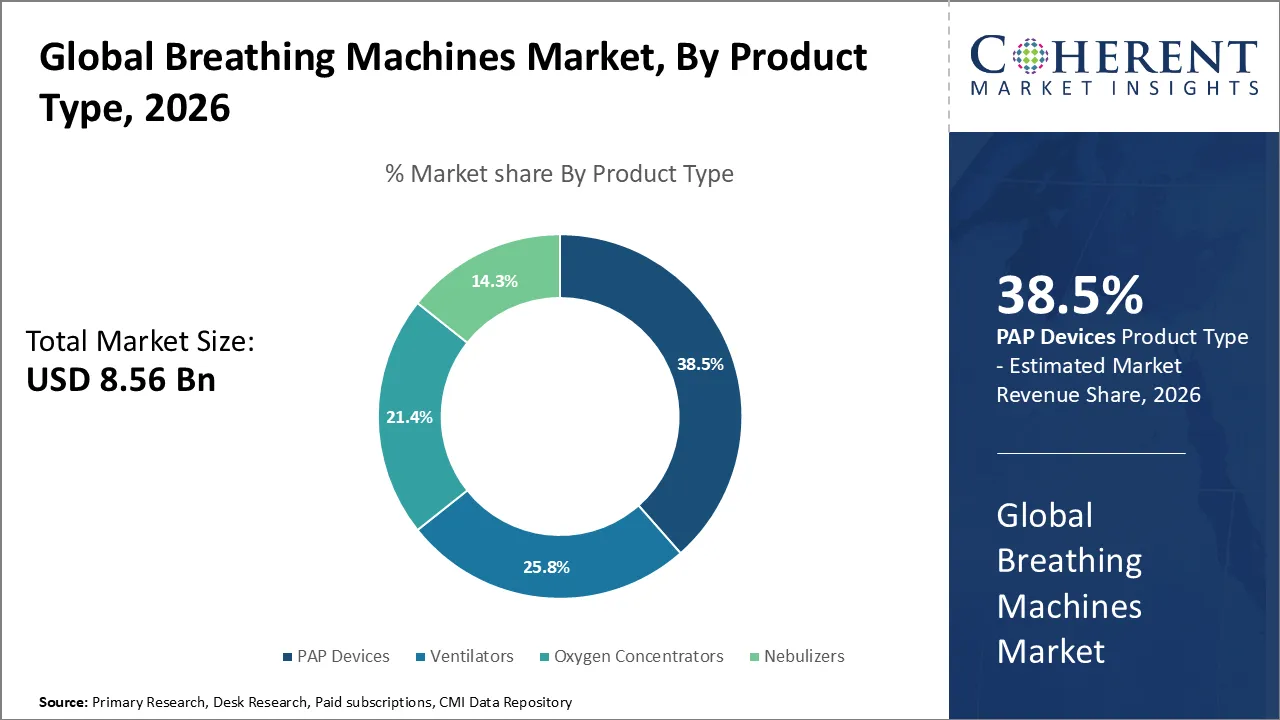
- The PAP devices segment is likely to dominate the market with 38.5% in 2026. The segment’s growth is owing to the high prevalence of obstructive sleep apnea, increasing diagnosis of sleep-disordered breathing, and growing adoption of CPAP and BiPAP systems for long-term respiratory support. A 2025 peer-reviewed study estimated that 83.7 million U.S. adults had obstructive sleep apnea in 2024, representing 32.4% of adults aged 20 years and above, supporting sustained demand for positive airway pressure devices.
- The hospitals & clinics segment is set to lead with 61.0% in 2026. The segment’s growth is owing to the extensive use of ventilators, oxygen concentrators, PAP devices, and nebulizers in intensive care, emergency medicine, surgical procedures, and treatment of acute and chronic respiratory diseases. According to the U.S. CDC, there were approximately 854,000 emergency department visits with COPD as the primary diagnosis in the U.S., highlighting the substantial acute-care burden that supports hospital and clinic use of ventilators, nebulizers, oxygen concentrators, and other respiratory-support equipment
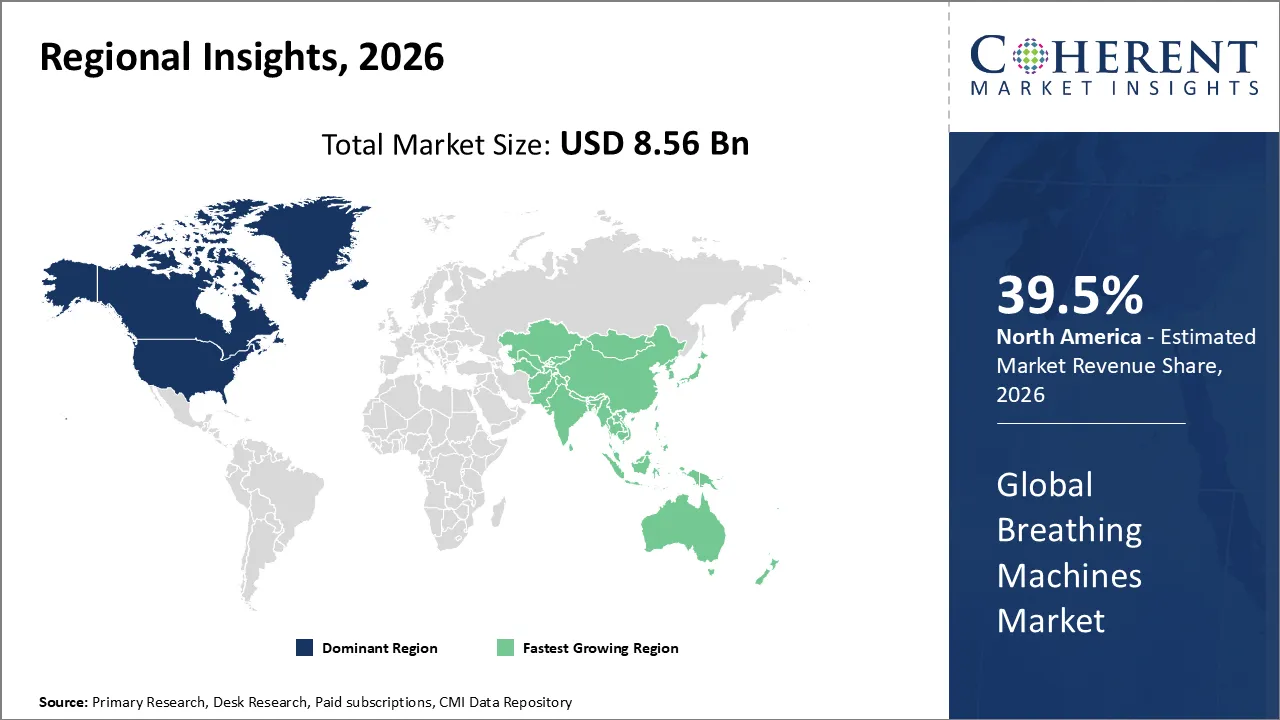
- North America is expected to acquire the prominent share of 39.5% in 2026. The region’s growth is owing to well-established respiratory care infrastructure, high diagnosis of sleep and pulmonary disorders, widespread utilization of home respiratory equipment, and favorable reimbursement for respiratory therapies. According to the U.S. CDC, 2026, 4.4% of U.S. adults had been diagnosed with COPD, emphysema, or chronic bronchitis in 2025.
Market Drivers
Rising Burden of Chronic Respiratory Diseases is Driving Demand for Breathing Machines
The Breathing Machines Market is steadily expanding, fueled by the increasing prevalence of chronic respiratory diseases such as COPD, asthma, and other conditions that affect normal breathing. These conditions frequently require respiratory-support technologies including ventilators, oxygen concentrators, nebulizers, CPAP, and BiPAP systems across hospitals as well as homecare settings.
According to the World Health Organization, there are 81.7 million people with chronic respiratory diseases in the European Region, which includes about 6.8 million new cases, underscoring the vital and ongoing need for respiratory-care facilities and breathing-support devices.
Growing Prevalence of Sleep Apnea is Accelerating Adoption of PAP Devices
The rising incidence of obstructive sleep apnea is another crucial element influencing the Breathing Machines Market, particularly the reliance on continuous positive airway pressure (CPAP) and bilevel positive airway pressure (BiPAP) devices. Thanks to heightened awareness, improved screening techniques, and a better understanding of the consequences of untreated sleep-disordered breathing, the patient population that could benefit from PAP-based respiratory therapy is expanding.
A peer-reviewed study from 2025 reveals that in 2024, approximately 83.7 million adults aged 20 and over in the U.S. were living with obstructive sleep apnea, resulting in an overall prevalence of 32.4%. Since around 30% of these cases are moderate and 18% are severe, it's clear that a significant number of individuals may require active therapeutic management.
Current Events and Their Impact on the Breathing Machines Market
Current Event | Description and its Impact |
FDA Strengthens Medical Device Safety Surveillance and Issues New Ventilator Alerts (2025–2026) |
|
Great Britain Introduces Stronger Post-Market Surveillance Requirements for Medical Devices (2025–2026) |
|
- Current Industry Events of 2026
- Market Size Estimation
- Regional Breakdown
- Competitive Landscape
- Customer Intelligence
- Segmental Analysis
- Pricing Analysis
- Key Market Drivers, Challenges & Future Trends
- Customized Insights Section
Segmental Insights
Why are PAP Devices Acquiring the Largest Share?
On the basis of product type, the PAP devices segment is projected to account for the largest Breathing Machines Market share of 38.5% in 2026. The segment’s growth is owing to the widespread use of continuous positive airway pressure (CPAP) and bilevel positive airway pressure (BiPAP) devices as non-invasive therapies for obstructive sleep apnea, along with increasing home-based treatment and long-term respiratory monitoring.
As per the U.S. Centers for Medicare & Medicaid Services (CMS), patients with obstructive sleep apnea who meet certain criteria can have their CPAP devices and accessories covered under the Medicare durable medical equipment benefit, establishing a reimbursement pathway for PAP therapy.
In December 2025, Resmed received U.S. FDA clearance for Personalized Therapy Comfort Settings (PTCS), which will be marketed as Smart Comfort, an AI-enabled digital medical device designed to recommend personalized comfort settings for patients using CPAP therapy.
Why are Hospitals & Clinics Holding the Largest Market Share?
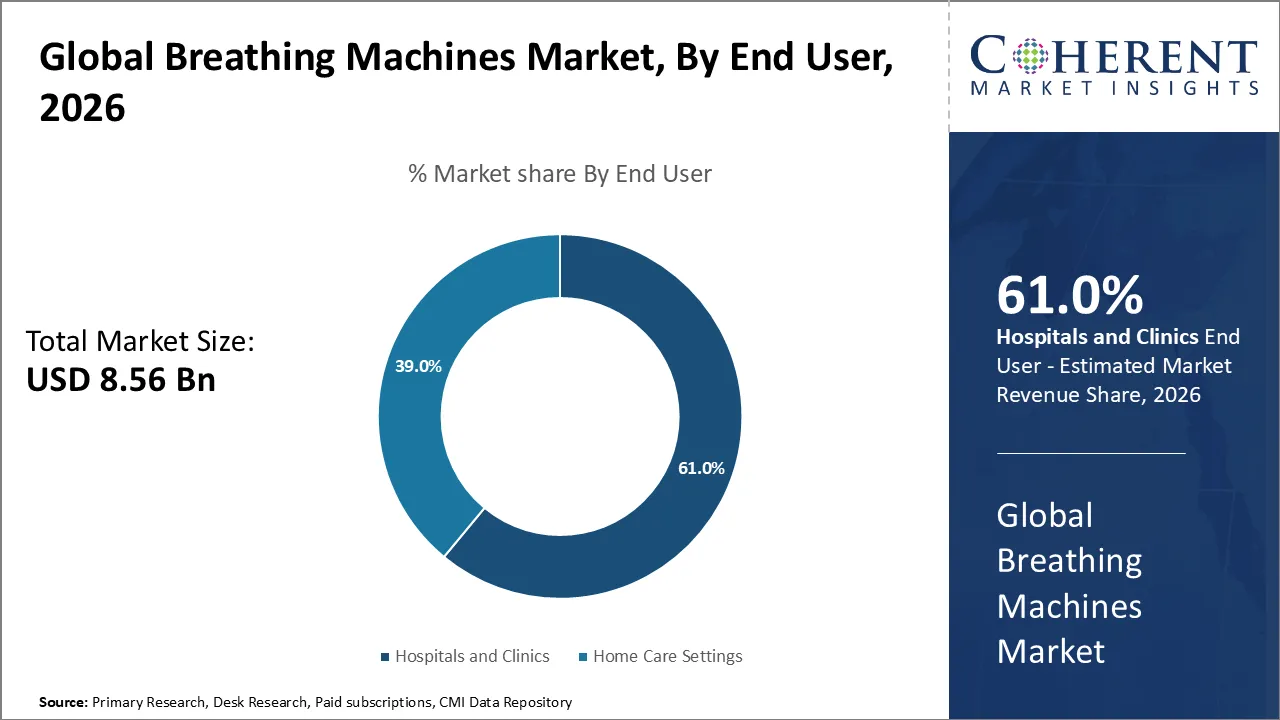
On the basis of end user, the hospitals & clinics segment is projected to lead the Breathing Machines Market with a 61.0% share in 2026. The segment’s dominance is owing to the intensive use of mechanical ventilators, oxygen-support equipment, nebulizers, and non-invasive ventilation systems in intensive care units, emergency departments, operating rooms, and respiratory-care units.
According to the CDC reported that there were 545,026 influenza-associated hospitalizations during the 2024–2025 U.S. influenza season. A clinical surveillance sample of hospitalized influenza patients showed that 16.8% needed ICU admission and 6.1% required invasive mechanical ventilation, underscoring the ongoing need for hospital-based respiratory-support equipment.
In September 2026, Mindray introduced the SV70 Non-Invasive Ventilator to the North American market. Aimed at hospital respiratory departments, the device was launched as a replacement following the withdrawal of the Philips V60, assisting hospitals in maintaining non-invasive ventilation workflows and fleet standardization.
Breathing Machines Market Trends
- PAP devices for individuals with obstructive sleep apnea are seeing improved comfort and adherence thanks to AI-driven personalization and connected monitoring. In December 2025, Resmed's cutting-edge digital medical device, Smart Comfort, received FDA approval. It leverages AI and machine learning to analyze more than 100 million nights of de-identified real-world sleep data to suggest personalized CPAP comfort settings.
- Platforms for digital respiratory care are being developed so that patients and clinicians can monitor therapy progress from a distance. In June 2026, Resmed enhanced its myAir platform by launching Smart Comfort, an advanced digital sleep coach that tracks therapy-use streaks and provides personalized CPAP comfort controls, elevating connected home respiratory management to new heights.
- The growing need for portable and home-based oxygen therapy, manufacturers are concentrating on designing oxygen concentrators that are lighter and more versatile. At about 2.9 pounds, Inogen's Rove 4 portable oxygen concentrator offers an oxygen output of up to 840 mL/min and a maximum battery life of 5 hours and 45 minutes, highlighting advancements in patient mobility within the industry.
Regional Insights
North America Dominates Owing to Advanced Respiratory Care Infrastructure and Strong Reimbursement Coverage
By 2026, North America is projected to hold a 39.5% share of the Breathing Machines Market. The region's leadership in this field can be attributed to its developed hospital infrastructure, the shared use of respiratory support equipment, established reimbursement systems for home respiratory therapy, and the presence of manufacturers of PAP devices, ventilators, nebulizers, and oxygen concentrators.
In the U.S., the reimbursement landscape also supports the adoption of devices. The Centers for Medicare & Medicaid Services (CMS) reported that in 2025, the amount of improper payments for CPAP devices exceeded USD 122 million, reflecting a troubling improper payment rate of 10.6%. This underscores the high number of PAP-device claims that Medicare processes.
Asia Pacific Breathing Machines Market Trends
Asia Pacific is expected to exhibit the fastest growth in the Breathing Machines Market over the forecast period. This region is having the highest CAGR, supported by the increasing respiratory disease burden, growing surgical volumes, improving healthcare infrastructure, and expanding access to respiratory equipment across emerging economies.
According to the WHO's 2025 report on chronic respiratory diseases in South-East Asia, almost 12% of all deaths in the region are attributed to these illnesses, underscoring a significant unmet need for respiratory diagnoses, oxygen therapy, and breathing-support technologies.
In March 2025, India's Ministry of Health and Family Welfare launched the National Guidelines on Medical Oxygen Management and began a national program to train about 200 master trainers in medical oxygen management.
Strong Reimbursement Framework and Continuous Product Innovation are Accelerating the Breathing Machines Market in the United States
The U.S. Breathing Machines Market is witnessing steady growth owing to the high adoption of PAP devices and ventilators, established reimbursement for respiratory therapy, strong hospital infrastructure, and continuous introduction of digitally connected respiratory-care products.
Product innovation is also strengthening the market. In June 2026, the U.S. FDA granted 510(k) clearance to Resmed's Orion, a non-continuous ventilator, indicating that regulatory efforts for advanced breathing-support technologies are still in progress. In April 2026, Somnetics International received FDA clearance for MySleepDash, representing another advancement in improving sleep and respiratory-care solutions in the U.S.
China Breathing Machines Market Trends
China is expected to witness strong growth in the Breathing Machines Market over the forecast period. The growth is owing to expanding critical-care capacity, continued investment in public hospitals, increasing procurement of invasive and non-invasive ventilators, and a strong domestic medical-device manufacturing base.
In July 2026, China's National Health Commission implemented new rules to bolster centralized procurement of medical equipment across public healthcare institutions, targeting equipment bought with budgeted public funds. This policy is expected to influence hospital purchasing patterns, pricing, supplier competition, and broader deployment of respiratory-care equipment.
Who are the Major Companies in Breathing Machines Industry
Some of the major key players in Breathing Machines Market are BD, Drager Medical, Fisher & Paykel, GE Healthcare, Invacare, Maque, Medtronic, OMRON, Philips Healthcare, Teijin Pharma Resmed, and Weinmann.
Key News
- In June 2026, Dräger announced U.S. FDA clearance for Evita V800 Software 3.10, advancing its intensive-care ventilation platform with updated ventilation functionality and supporting continued modernization of ICU respiratory care.
- In October 2025, GE HealthCare unveiled the Carestation 850, its next-generation anesthesia delivery system designed with adaptable ventilation and anesthesia-management capabilities for patients ranging from neonates to adults.
Market Report Scope
Breathing Machines Market Report Coverage
Report Coverage | Details | ||
Base Year: | 2025 | Market Size in 2026: | USD 8.56 Bn |
Historical Data for: | 2020 to 2024 | Forecast Period: | 2026 to 2033 |
CAGR: | 3.3% | 2033 Value Projection: | USD 10.71 Bn |
Geographies covered: |
| ||
Segments covered: |
| ||
Companies covered: | BD, Drager Medical, Fisher & Paykel, GE Healthcare, Invacare, Maque, Medtronic, OMRON, Philips Healthcare, Teijin Pharma Resmed, and Weinmann. | ||
Growth Drivers: |
| ||
Restraints & Challenges: |
| ||
Analyst Opinion
- The Breathing Machines Market is increasingly shifting toward home-based and connected respiratory care, particularly for oxygen therapy and PAP treatment. In 2026, Inogen reported that higher international demand for portable oxygen concentrators supported revenue growth of 3.4%, while the company also introduced its FDA-cleared Aurora CPAP masks in the U.S.
- Regulatory authorities are also placing greater emphasis on device-enabled home care and reduction of avoidable hospital admissions. In June 2026, the U.S. FDA conducted its READI-Home Innovation Challenge, focused on medical-device innovation that can help reduce hospital readmissions through care delivered in the home.
- At the same time, the market is moving toward higher safety, reliability, and lifecycle-management standards for respiratory devices. The FDA recorded several breathing-machine-related corrective actions in 2026, including a July 2026 correction for Baxter’s Volara positive pressure breathing devices and an August 2026 recall involving Hamilton Medical breathing circuit sets.
Speak to the analyst
Want personalized insights?
Take the findings above to one of our principal consultants, or have the report rebuilt around the segments, geographies and competitors you actually track.
Market Segmentation
- By Product Type (Revenue, USD Bn, 2021-2033)
- PAP Devices
- Nebulizers
- Ventilators
- Oxygen Concentrators
- By End User (Revenue, USD Bn, 2021-2033)
- Hospitals and Clinics
- Home Care Settings
- By Region (Revenue, USD Bn, 2021-2033)
- North America
- U.S.
- Canada
- Latin America
- Brazil
- Mexico
- Argentina
- Rest of Latin America
- Europe
- Germany
- U.K.
- France
- Italy
- Spain
- Russia
- Rest of Europe
- Asia Pacific
- China
- India
- Japan
- Australia
- South Korea
- ASEAN
- Rest of Asia Pacific
- Middle East
- GCC
- Israel
- Rest of Middle East
- Africa
- South Africa
- Central Africa
- North Africa
- North America
Sources
Primary Research Interviews
- Pulmonologists and respiratory physicians
- Respiratory therapists and critical care specialists
- Sleep medicine specialists
- Hospital ICU and emergency care professionals
- Medical device manufacturers and respiratory equipment suppliers
- Home respiratory care providers
- Hospital procurement and biomedical engineering teams
- Key opinion leaders (KOLs) in respiratory care and sleep medicine
Databases
- World Health Organization (WHO)
- Centers for Disease Control and Prevention (CDC)
- U.S. Food and Drug Administration (FDA)
- Centers for Medicare & Medicaid Services (CMS)
- National Institutes of Health (NIH)
- PubMed
- World Bank
Magazines
- Respiratory Therapy
- Sleep Review
- RT Magazine
- Medical Device and Diagnostic Industry
- MedTech Dive
Journals
- CHEST
- American Journal of Respiratory and Critical Care Medicine
- Respiratory Medicine
- Journal of Clinical Sleep Medicine
- European Respiratory Journal
- Sleep Medicine Reviews
Newspapers
- The New York Times
- The Guardian
- The Wall Street Journal
- Financial Times
- The Economic Times
Associations
- American Association for Respiratory Care (AARC)
- American Thoracic Society (ATS)
- European Respiratory Society (ERS)
- American Academy of Sleep Medicine (AASM)
- European Sleep Research Society (ESRS)
- Global Initiative for Chronic Obstructive Lung Disease (GOLD)
Public Domain Sources
- Company Annual Reports and Investor Presentations
- FDA Device Clearances, Recalls, and Safety Communications
- WHO and CDC Respiratory Disease Publications
- Government Healthcare and Medical Device Publications
- Clinical Trial Registries and Peer-reviewed Research Publications
- Hospital Procurement and Medical Equipment Tender Documents
- Company Product Launches and Regulatory Announcements
- Publicly Available Respiratory Care and Sleep Medicine Guidelines
Proprietary Elements
- CMI Data Analytics Tool
- Proprietary CMI Existing Repository of Information for the Last 10 Years
Get access to 250+ pages report
Every segment, forecast, competitor profile and data table behind the analysis above — available for instant download.
- ESOMAR Member
- ISO 9001:2015 Certified
- D-U-N-S Registered
- GDPR & CCPA Compliant
Missing comfort of reading report in your local language? Find your preferred language:
Transform your Strategy with Exclusive Trending Reports
Frequently Asked Questions
The Breathing Machines Market is expected to reach USD 10.71 Bn in 2033, compared with USD 8.56 Bn in 2026.
Major players operating in the Breathing Machines Market include BD, Drager Medical, Fisher & Paykel, GE Healthcare, Invacare, Maque, Medtronic, OMRON, Philips Healthcare, Teijin Pharma Resmed, and Weinmann.
The high equipment and maintenance costs and stringent medical device regulatory requirements are the key factors hampering market growth.
The rising prevalence of chronic respiratory diseases, increasing incidence of obstructive sleep apnea, growing demand for respiratory support in critical-care settings, and increasing adoption of home-based respiratory care are supporting market growth.
The Breathing Machines Market is anticipated to grow at a CAGR of 3.3% between 2026 and 2033.
Among regions, North America is expected to dominate the Breathing Machines Market, accounting for approximately 39.5% of the market share in 2026.
Asia Pacific is expected to exhibit the fastest growth over the forecast period, supported by the increasing respiratory disease burden, improving healthcare infrastructure, growing surgical volumes, and expanding access to respiratory equipment.