

Plastic Surgery Instruments Market Size and Trends
The plastic surgery instruments market is estimated to be valued at USD 1.32 Bn in 2026 and is expected to reach USD 2.36 Bn by 2033, exhibiting a compound annual growth rate (CAGR) of 8.6% from 2026 to 2033.
Key Takeaways of the global Plastic Surgery Instruments Market
- By type, the handheld instruments segment is projected to dominate the plastic surgery instruments market, contributing 51% market share in 2026.
- By surgery type, the cosmetic surgery segment is expected to lead the market, accounting for 64.6% share in 2026.
- By end user, the hospitals segment is estimated to account for 46.1% of the market share in 2026.
- North America remains the dominant player in the plastic surgery instruments market and is estimated to account for 38. 7% of the global market share in 2026.
Market Overview
The global plastic surgery instruments market is expected to witness consistent growth through 2033, driven by the increasing practice of cosmetic surgeries being performed globally. There has been a growing acceptance of aesthetic appearances along with a rising disposable income, enabling more people to spend on cosmetic enhancements. Additionally, players in the market are focusing on launching new products.
However, the market faces challenges such as high costs tied to advanced electrosurgical, stringent regulatory hurdles (Food and Drug Administration, European Medicines Agency approvals), slow product development and increased compliance expenses, and competition from non‑surgical alternatives—like lasers and injectables with quicker recovery and lower risk—curtails demand for traditional surgical instruments.
Artificial Intelligence (AI) Impacts in the Plastic Surgery Instruments Market
Artificial Intelligence (AI) adoption in plastic surgery instruments is rapidly reshaping the field due to the utilization of tools that enhance accuracy, streamline assessments, and elevate patient trust.
- AI-powered 3D imaging and neural networks enable precise pre-operative simulations (e.g., breast augmentation), improving planning accuracy by 22–60% and boosting confidence in outcomes.
- AI streamlines workflow—reducing assessment time by up to 40%, increasing teleconsultations by approximately 35%, and raising patient satisfaction through virtual try-ons and AI chatbots.
Market Concentration and Competitive Landscape
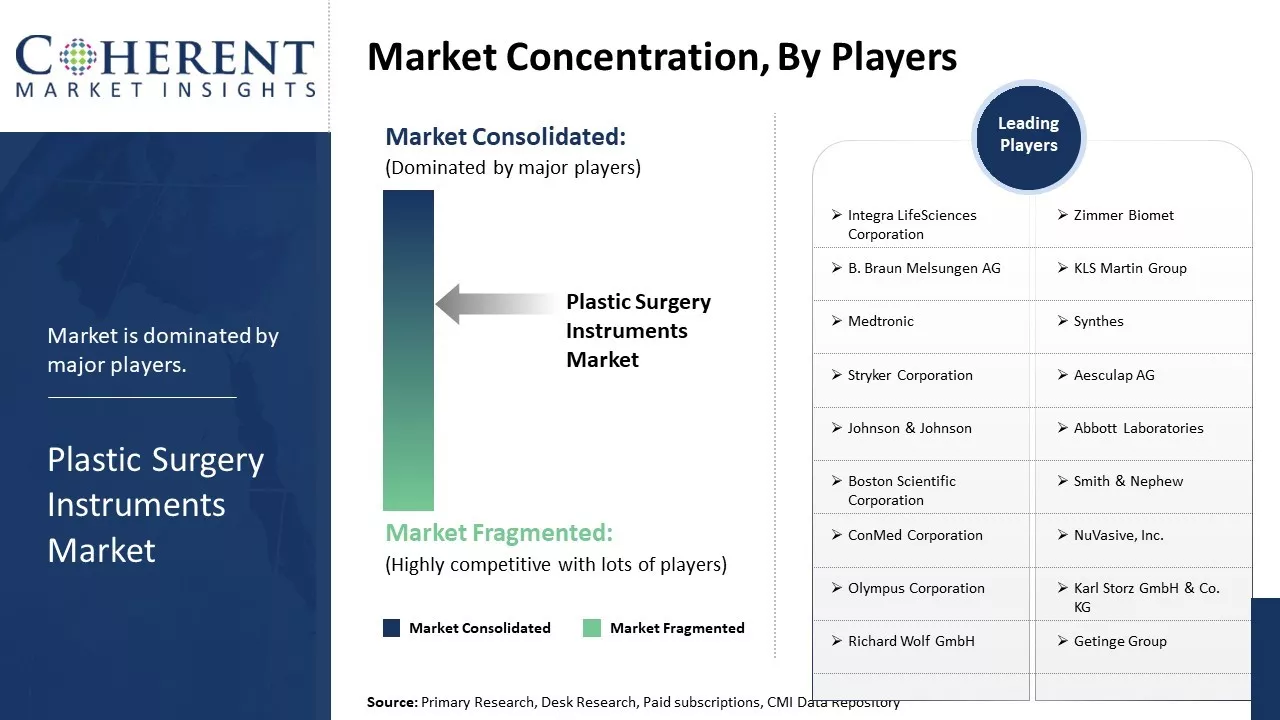
- Companies like Integra LifeSciences, Zimmer Biomet, B. Braun, KLS Martin, Medtronic, Synthes (DePuy J&J), Stryker, Aesculap (B. Braun), Johnson & Johnson, Abbott, Boston Scientific, Smith & Nephew, ConMed, NuVasive, Olympus, Karl Storz, Richard Wolf, and Getinge hold major market shares through broad surgical portfolios, global distribution, ongoing M&A, and strong R&D evidenced by ROSA and Gamma hip systems, endoscopy dominance, and disposable kit strategies.
- These players continuously invest in minimally invasive tools, robotic system, and disposable surgical systems to outpace rivals. For example, Medtronic, Olympus, J&J, Stryker, Karl Storz, and ConMed are prominent players in the minimally invasive instruments segment; while B. Braun, ConMed, and Olympus lead suction and general surgical instruments categories.
- Current Industry Events of 2026
- Market Size Estimation
- Regional Breakdown
- Competitive Landscape
- Customer Intelligence
- Segmental Analysis
- Pricing Analysis
- Key Market Drivers, Challenges & Future Trends
- Customized Insights Section
Current Events and their Impact on the Plastic Surgery Instruments Market
Current Events | Description and its impact |
Regulatory Shifts in Major Markets |
|
Regional Market Expansions |
|
Market Trends
High Adoption of Cosmetic Surgery Procedures
People are increasingly concerned about their physical appearances, the growing influence of social media, and the popularity of images shared on various photo and video-sharing platforms. There is immense pressure, especially on younger individuals, to look fit and attractive and present the ideal body type as defined by prevalent beauty standards. At the same time, advancements in plastic surgery techniques have made cosmetic procedures safer and their outcomes more natural and long-lasting.
For instance, according to the American Society of Plastic Surgeons, nearly 220,000 rhinoplasties are performed yearly, making this the most common facial plastic surgery procedure. Rhinoplasty can simultaneously help you improve breathing and achieve a more balanced appearance.
Procedures like rhinoplasty, liposuction, breast augmentation, and facial sculpting are no longer considered taboo, and people are more open about discussing and sharing their experiences of undergoing such surgeries. This positive change in mindset has undoubtedly contributed to the rising demand for plastic surgery worldwide in general and specifically for related specialized instruments.
Growing Popularity of Minimally Invasive Procedures
The inclination towards minimally invasive plastic surgery is a strong driver behind instrument demand. Minimally invasive methods allow for reduced pain, lower risk of complications, shorter recovery times, and less noticeable scarring compared to traditional open surgeries. They offer patients a more convenient solution without compromising much on results.
For instance, according to the American Society of Plastic Surgeons, minimally invasive procedures grew 7 percent in 2023, surpassing surgical procedures by 2 percent. As patients increasingly prioritize their aesthetic health, it remains imperative that they also prioritize education and safety by seeking out board-certified plastic surgeons.
Segmental Insights
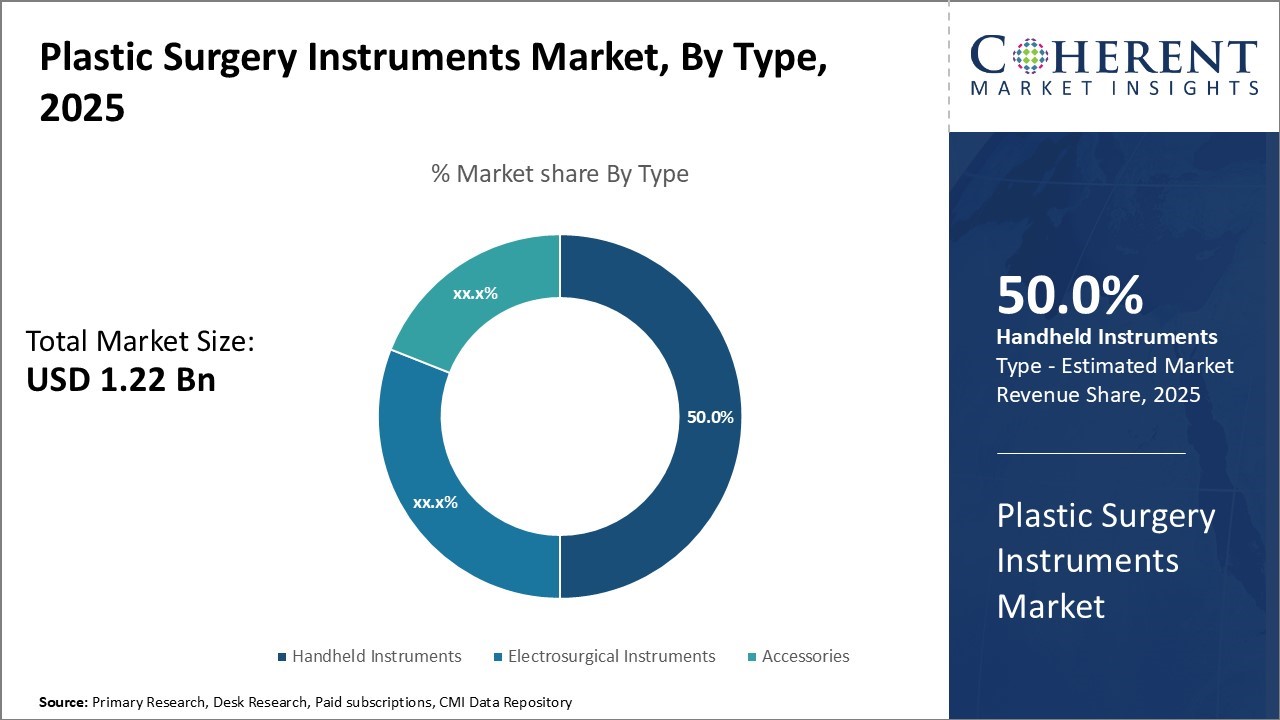
Plastic Surgery Instruments Market Insights, By Type: The Handheld Instruments Segment is Dominating the Market
The handheld instruments segment is anticipated to contribute 51% market share, driven by their portability and ease of use.
Handheld instruments allow surgeons to perform intricate maneuvers with high accuracy during procedures such as liposuction, breast augmentation, facelifts, and rhinoplasty. Their ergonomic design fits perfectly in surgeons' hands, allowing delicate tissue manipulation. This helps optimize surgical outcomes and minimize incision size.
The growing popularity of minimally invasive cosmetic procedures increases the preference for handheld instruments over other alternatives. Rising awareness about aesthetic appearance enhances the demand for procedures where handheld instruments dominate.
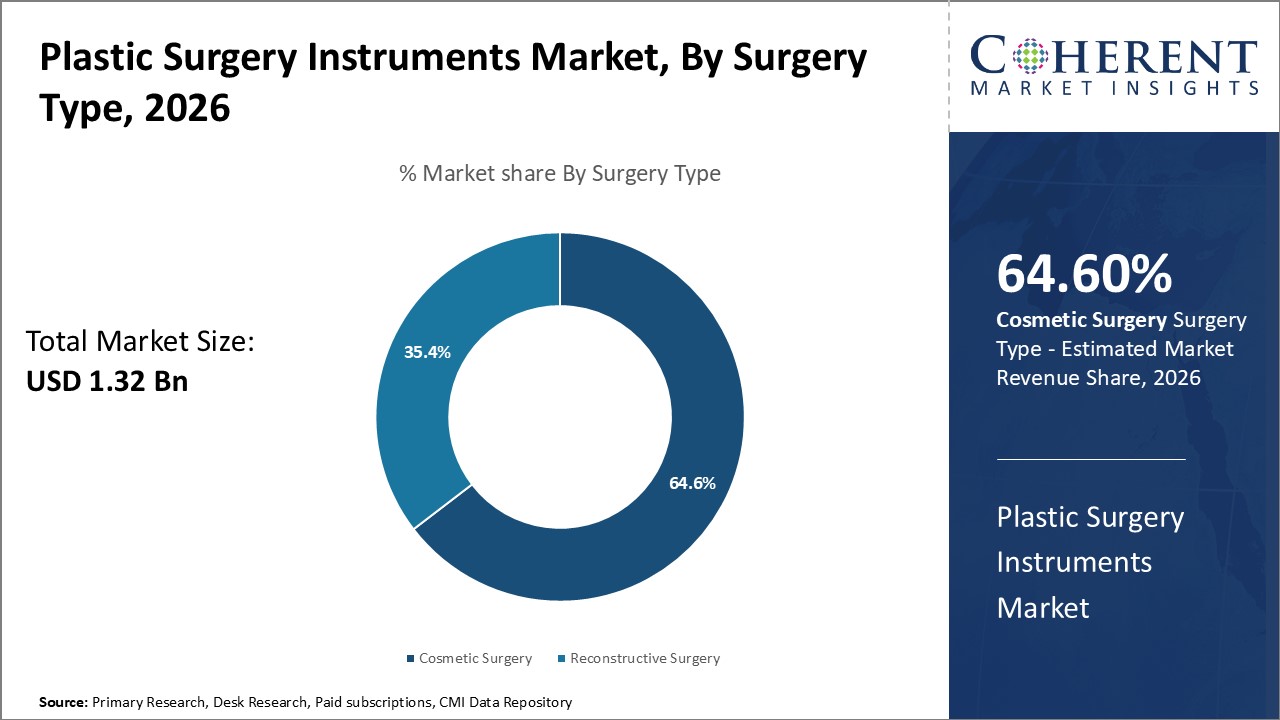
Plastic Surgery Instruments Market Insights, by Surgery Type: Growing Cosmetic Adoption Drive Cosmetic Surgery Growth
The surgery type segment includes cosmetic surgery and reconstructive surgery. The cosmetic surgery segment is expected to hold 64.6% of the market share in 2026, driven by growing cosmetic consciousness.
Changing lifestyle and financial ability boost elective procedures that enhance physical appearance without addressing health issues. Increased media exposure elevates beauty standards and fuels insecurities, raising interest in surgical enhancements. Non-invasive procedures now market beauty as an ongoing process rather than a one-time event, normalizing periodic 'maintenance'
Disposable incomes allow discretionary spending on appearance upkeep. New techniques minimize recovery times for faster return to daily activities. Demand stems more from psychological satisfaction rather than medical need.
Plastic Surgery Instruments Market Insights, by End User: Favorable Reimbursement Polices Drive Growth of the Hospital Segment
The end user segment includes hospitals, ambulatory surgical centers, and others. Hospitals are estimated to have 46.1% of the market share in 2026, owing to healthcare infrastructure and credentials.
Hospitals house specialized plastic surgery facilities equipped with the latest technology and trained staff. Board-certified plastic surgeons in hospitals boost patient confidence in procedure safety and outcomes. The strength of multidisciplinary support and care teams in the event of complications provides reliability.
Emerging Innovations in the Plastic Surgery Instruments Market
- Active Lubrication for Transluminal Instruments
Application: A pioneering technology applies ultrasonic surface vibrations to catheters and guidewires, generating a dynamic pressurized fluid film that dramatically reduces friction, up to 82% on rigid substrates and 42% on soft tissue in ex vivo tests. This innovation not only lowers insertion resistance but also prevents instrument buckling, maintains safe tissue temperatures, and minimizes trauma, marking a significant leap in safety and effectiveness for minimally invasive procedures.
Example: In June 2025, an arXiV paper introduced its active lubrication of transluminal instruments. Its ultrasonic-vibration technology reduced catheter friction by up to 82%, improving safety and insertion performance.
- CMR Versius ICG imaging (vLimeLite)
Application: This enhances real-time visualization of blood vessels, tissue perfusion, and biliary anatomy. Surgeons can toggle viewing between full-color or greyscale modes and select green or cyan ICG overlays—all seamlessly integrated into the existing 3D-HD console and workflow.
Example: In February 2024, CMR Surgical released an update for the Versius system, hich incorporates ICG fluorescence to enhance real‑time visualization of blood vessels, tissue perfusion, and biliary structures, significantly aiding intraoperative decision-making.
Regional Insights
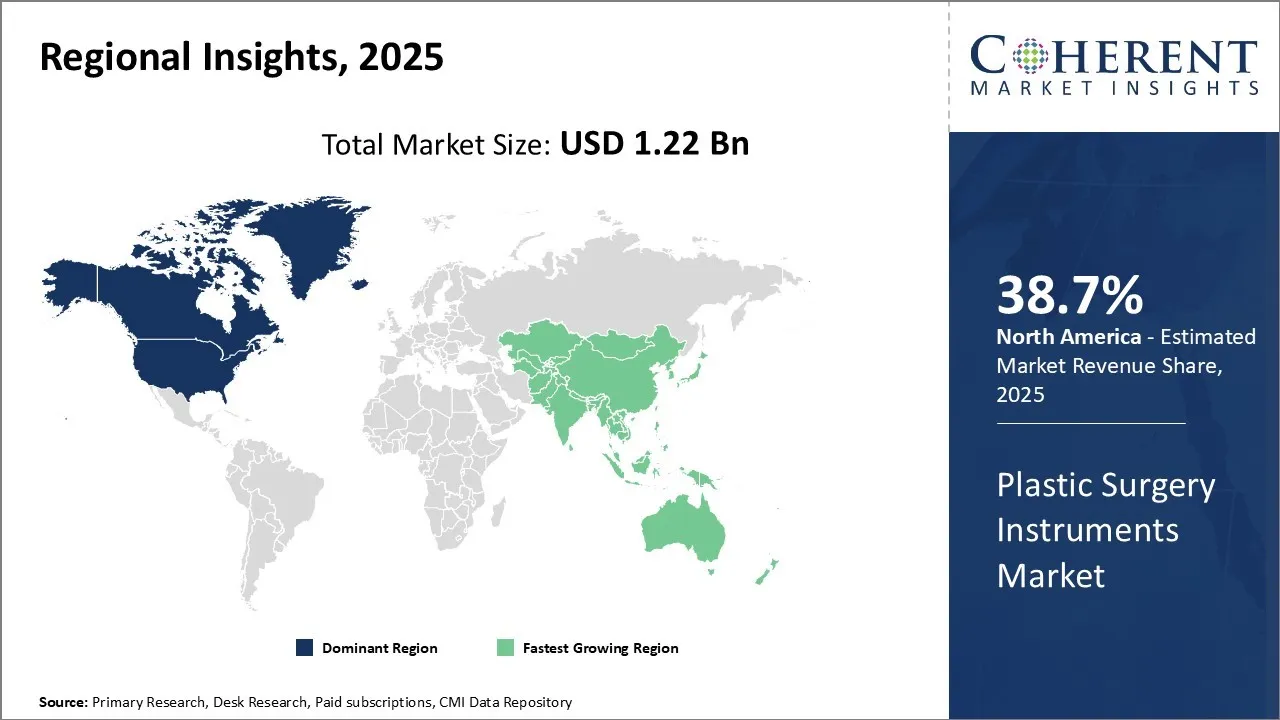
North America Plastic Surgery Instruments Market Analysis and Trends
North America is anticipated to account for 38.7% of the market share in 2026 and is expected to dominate the market over the forecasted period. The U.S. has emerged as the leading country due to high consumer spending on aesthetic procedures. Several board-certified plastic surgeons in the region perform thousands of cosmetic surgeries annually using technologically advanced equipment.
For instance, according to the Cleveland Clinic, Rhinoplasty is one of the most common cosmetic surgery procedures. There are over 350,000 rhinoplasty procedures performed each year in the United States. While women are more likely to get the procedure, men get nearly 20% of all rhinoplasty surgeries in the U.S. each year. This shows that the stigma associated with cosmetic enhancements has reduced significantly.
Asia Pacific Plastic Surgery Instruments Market Analysis and Trends
The Asia Pacific region has been exhibiting impressive growth in the plastic surgery instruments market recently, owing to its vast population base and increasing medical tourism. Countries like South Korea, Japan, and India are witnessing heightened awareness and acceptability of cosmetic treatments.
For instance, according to Healthcare Asia, a U.S. patient can save as much as 80% in Malaysia, 75% in Thailand, and 40% in Singapore. RHB said Malaysia and Thailand are the biggest winners.
Moreover, local instrument suppliers are collaborating with global brands to manufacture affordable devices. This affordable pricing of products combined with state-of-the-art facilities and skilled practitioners is attracting many medical travelers to Asia, strengthening the region's position as a lucrative market for aesthetic devices.
U.S. Plastic Surgery Instruments Market Analysis and Trends
The U.S. plastic surgery instruments market remains a key contributor to global growth, driven by high consumer spending, advanced healthcare infrastructure, favorable reimbursement policies, as well as a large volume of cosmetic and reconstructive procedures.
Medical tourists from the U.S. most commonly travel to Mexico, Canada, the Caribbean, and several countries in South America. Categories of procedures that U.S. medical tourists pursue include but are not limited to, cosmetic surgery, dental care, cancer treatment, fertility treatment, and organ transplantation.
South Korea Plastic Surgery Instruments Market Analysis and Trends
South Korea is a global leader in cosmetic surgery, offering precision-driven procedures and innovative treatments. Hospitals across Seoul and beyond are equipping themselves with high-precision laparoscopic, endoscopic, and robotic-assisted systems; supported by government investment in healthcare innovation and infrastructure.
Highly skilled surgeons in South Korea offer exceptional results in procedures such as rhinoplasty, facelifts, and other cosmetic treatments. For instance, Rhinoplasty in South Korea costs between USD 2,000 and USD 4,000, significantly cheaper than in the U.S. For those seeking advanced cosmetic and reconstructive surgeries, South Korea offers state-of-the-art technology and highly trained professionals at competitive prices.
Pricing Analysis of the Plastic Surgery Instruments Market
- Product Cost by Application Segment
- Handheld Surgical Instruments
High-performance instruments crafted from materials like titanium or high-grade stainless steel, featuring ergonomic designs and advanced functionalities.
Example: Approximately USD 100 to USD 500 per unit, depending on complexity and material quality. A titanium micro forceps priced at USD 350 offers enhanced precision and durability, suitable for delicate plastic surgical procedures.
- Mid-Range Handheld Surgical Instruments
Instruments made from standard stainless steel with ergonomic handles, suitable for routine plastic surgeries. Approximately USD 50 to USD 150 per unit.
Example: A stainless-steel needle holder priced at USD 75 provides reliable performance for suturing tasks in plastic surgery.
- Operational and Maintenance Costs
- Product Packaging and Safety Compliance
Ensuring sterility and safety through compliant packaging. Adds approximately USD 1 to USD 3 per unit.
Example: A manufacturer producing 100,000 units annually might incur an additional USD 100,000 to USD 300,000 for packaging and compliance.
- Distribution and Retail Mark-up
Distributors typically add a markup of Retailers may apply a markup of 30–70%, especially for premium brands sold through department stores or specialty medical equipment retailers.20–30% on the cost price of medical consumables, including surgical instruments.
Example: A plastic surgical instrument wholesaled at USD 200 may retail for USD 260 to USD 340, depending on the distribution channel and associated costs.
Market Report Scope
Plastic Surgery Instruments Market Report Coverage
| Report Coverage | Details | ||
|---|---|---|---|
| Base Year: | 2025 | Market Size in 2026: | USD 1.32 Bn |
| Historical Data for: | 2020 To 2024 | Forecast Period: | 2026 To 2033 |
| Forecast Period 2026 to 2033 CAGR: | 8.6% | 2033 Value Projection: | USD 2.36 Bn |
| Geographies covered: |
| ||
| Segments covered: |
| ||
| Companies covered: | Integra LifeSciences Corporation, Zimmer Biomet, B. Braun Melsungen AG, KLS Martin Group, Medtronic, Synthes, Stryker Corporation, Aesculap AG, Johnson & Johnson, Abbott Laboratories, Boston Scientific Corporation, Smith & Nephew, ConMed Corporation, NuVasive, Inc., Olympus Corporation, Karl Storz GmbH & Co. KG, Richard Wolf GmbH, and Getinge Group. | ||
| Growth Drivers: |
| ||
| Restraints & Challenges: |
| ||
Plastic Surgical Instrument Industry News
- In March 2024, Karl Storz launched the CollaboratOR 3D app for Apple Vision Pro, enabling remote surgeons, residents, nurses, and other clinical staff to access 2D and 3D surgical content. Integrated into the OR1 operating-room suite, this innovation leverages immersive spatial computing and augmented reality to project essential surgical information well beyond the physical boundaries of the surgical suite.
- In June 2024, Getinge unveiled the Poladus 150, its latest innovation in low-temperature sterilization, designed for heat-sensitive surgical instruments. Equipped with advanced cross-contamination barrier technology, Poladus 150 plays a crucial role in preventing healthcare acquired infections (HCAIs).
Analyst View
- North American hospitals scrutinize device efficacy through clinical evidence and peer-reviewed validation, not just brand names. Olympus’ Powerseal launch, combined with FDA premarket activity, reflects this shift. Old-line handheld manufacturers are under real threat unless they adopt scientifically validated features, like real-time perfusion monitoring or sensor-laden instruments.
- Countries like South Korea and China are no longer just high-volume markets—they're actively producing robotic-compatible titanium instruments, modular single-use kits, and digitally integrated tools tailored for outpatient care and medical tourism. Western companies that don’t adapt their R&D and regulatory strategies to these local dynamics risk becoming obsolete.
- Regulatory fatigue is reshaping pipelines. With regulations tightening, particularly in major markets, vendors with flexible portfolios of both reusable and single-use tech (like Olympus' dual lines) are winning. Conversely, those with monolithic product ranges are experiencing pipeline delays and falling behind.
Market Segmentation
- Type Insights (Revenue, USD Bn, 2021 - 2033)
- Handheld Instruments
- Electrosurgical Instruments
- Accessories
- Surgery Type Insights (Revenue, USD Bn, 2021 - 2033)
- Cosmetic Surgery
- Reconstructive Surgery
- End User Insights (Revenue, USD Bn, 2021 - 2033)
- Hospitals
- Ambulatory Surgical Centers
- Others
- Regional Insights (Revenue, USD Bn, 2021 - 2033)
- North America
- U.S.
- Canada
- Europe
- U.K.
- Germany
- Italy
- Spain
- France
- Russia
- Rest of Europe
- Asia Pacific
- China
- India
- Japan
- Australia
- South Korea
- ASEAN
- Rest of Asia Pacific
- Latin America
- Brazil
- Mexico
- Argentina
- Rest of Latin America
- Middle East
- GCC
- Israel
- Rest of Middle East
- Africa
- South Africa
- Central Africa
- North Africa
- Key Players Insights
- Integra LifeSciences Corporation
- Zimmer Biomet
- Braun Melsungen AG
- KLS Martin Group
- Medtronic
- Synthes
- Stryker Corporation
- Aesculap AG
- Johnson & Johnson
- Abbott Laboratories
- Boston Scientific Corporation
- Smith & Nephew
- ConMed Corporation
- NuVasive, Inc.
- Olympus Corporation
- Karl Storz GmbH & Co. KG
- Richard Wolf GmbH
- Getinge Group
Sources
Stakeholders
- Plastic Surgical Instrument Manufacturers & Suppliers
- Hospitals, Ambulatory Surgical Centers, and Specialty Clinics
- Plastic and Reconstructive Surgeons
- Surgical Instrument Distributors & Retailers
- Regulatory Bodies (e.g., FDA, EMA)
- Medical Device Certification Authorities
- Professional Surgical Associations
- R&D Institutions & Universities
Primary Sources
- Conducted interviews with over 50 plastic surgeons and surgical instrument manufacturers across North America, Europe, and the AsiaPacific regions.
- Engaged with hospital procurement managers and operating room staff to understand purchasing decisions and instrument usage patterns.
- Discussions with regulatory bodies to gain insights into compliance requirements and certification processes for surgical instruments.
Secondary Sources
- Company Websites and Product Catalogs
- Medical Device Regulatory Databases (e.g., FDA, EMA)
- Industry Journals and Publications
- Trade Shows and Medical Conferences
- Patent Filings and Technical Specifications
- News Articles and Press Releases
Proprietary Elements
- CMI Data Analytics Tool – Surgical Instrument Market Analysis
- CMI Existing Repository of Information for the Last 8 Years
*Definition: The plastic surgical instruments include a wide variety of specialized instruments made for use in reconstructive and plastic surgery. These tools are carefully designed to support accurate surgical operations that restore, recreate, or improve the look and functionality of different body parts. Plastic surgeons use them mostly in specialist clinics, ambulatory surgery centers, and hospitals.
Get access to 250+ pages report
Every segment, forecast, competitor profile and data table behind the analysis above — available for instant download.
- ESOMAR Member
- ISO 9001:2015 Certified
- D-U-N-S Registered
- GDPR & CCPA Compliant
Missing comfort of reading report in your local language? Find your preferred language:
Transform your Strategy with Exclusive Trending Reports
Frequently Asked Questions
The plastic surgery instruments market is estimated to be valued at USD 1.32 Bn in 2026 and is expected to reach USD 2.36 Bn by 2033.
The CAGR of the plastic surgery instruments market is projected to be 8.6% from 2026 to 2033.
Increasing acceptance of cosmetic surgery procedures and growing popularity of minimally invasive procedures are expected to drive the global plastic surgery instruments market’s growth.
Strict regulatory standards and risk and complications associated with plastic surgeries are expected to hinder the global plastic surgery instruments market growth over the forecast period.
Handheld instruments is the leading type segment in the global plastic surgery instruments market.
The major players operating in the global plastic surgery instruments market are Integra LifeSciences Corporation, Zimmer Biomet, B. Braun Melsungen AG, KLS Martin Group, Medtronic, Synthes, Stryker Corporation, Aesculap AG, Johnson & Johnson, Abbott Laboratories, Boston Scientific Corporation, Smith & Nephew, ConMed Corporation, NuVasive, Inc., Olympus Corporation, Karl Storz GmbH & Co. KG, Richard Wolf GmbH, and Getinge