

Preclinical CRO Market Size and Forecast – 2026 to 2033
The Global Preclinical CRO Market is estimated to be valued at USD 7.40 billion in 2026 and is expected to reach USD 13.49 billion by 2033, exhibiting a compound annual growth rate (CAGR) of 9.0% from 2026 to 2033. The market's substantial growth can be attributed to the increasing demand for outsourcing preclinical research activities, the growing number of pharmaceutical and biotech companies, and the rising focus on drug discovery and development.
Key Takeaways of the Global Preclinical CRO Market:
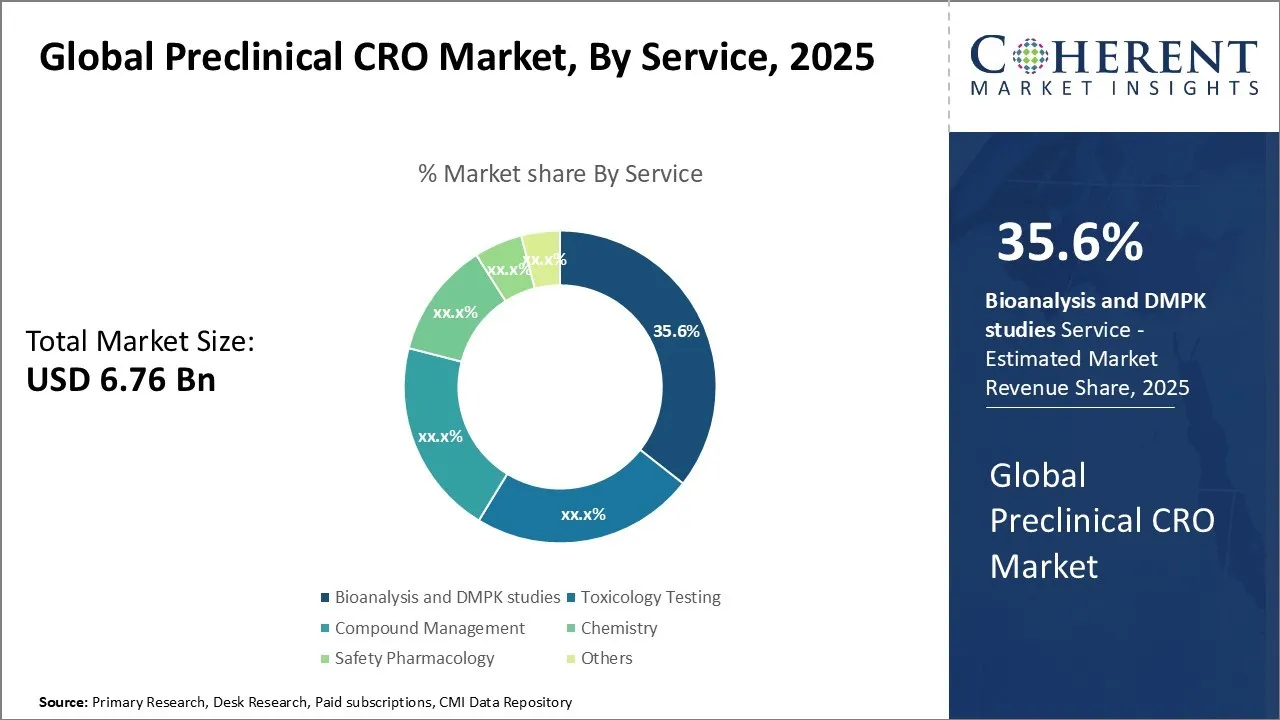
- Bioanalysis and DMPK studies will lead the service segment with 36.6% share in 2026.
- PDX models are expected to dominate with 62% share in 2026.
- Small animal models are expected to hold 59% share in 2026.
- North America is projected to lead the market in 2026 with a 39. 3% share while Asia Pacific is set to be the fastest-growing region, capturing 32.3% share.
Market Overview
The preclinical CRO market is witnessing several trends, including the adoption of advanced technologies such as artificial intelligence, machine learning, and robotics to streamline and accelerate the drug discovery process. Additionally, there is a growing emphasis on personalized medicine and the development of targeted therapies, which is driving the demand for specialized preclinical services. Furthermore, increasing collaborations between pharmaceutical companies and preclinical contract research organizations. are expected to foster innovation and improve the efficiency of the drug development process.
Current Events | Description and its impact |
Technological Advancements in Preclinical Testing |
|
Increasing Demand for Outsourcing Preclinical Services |
|
Segmental Analysis
- Current Industry Events of 2026
- Market Size Estimation
- Regional Breakdown
- Competitive Landscape
- Customer Intelligence
- Segmental Analysis
- Pricing Analysis
- Key Market Drivers, Challenges & Future Trends
- Customized Insights Section
Preclinical CRO Market Insights, By Service –Bioanalysis and DMPK Studies Dominate due to Regulatory and ADME Demand
The bioanalysis and DMPK studies segment is projected to dominate the service category of the global preclinical CRO industry, accounting for approximately 36.6% of the total market share in 2026. This dominance is attributed to the growing emphasis on pharmacokinetic and pharmacodynamic profiling of drug candidates in early development stages.
The segment’s relevance is further supported by stringent regulatory expectations for comprehensive absorption, distribution, metabolism, and excretion (ADME) data prior to clinical testing. Other prominent services include Toxicology Testing and Custom Synthesis, which are widely adopted for ensuring drug safety and compound availability, respectively. The increasing complexity of drug molecules and rising outsourcing trends also drive demand in medicinal chemistry and in-vitro ADME services.
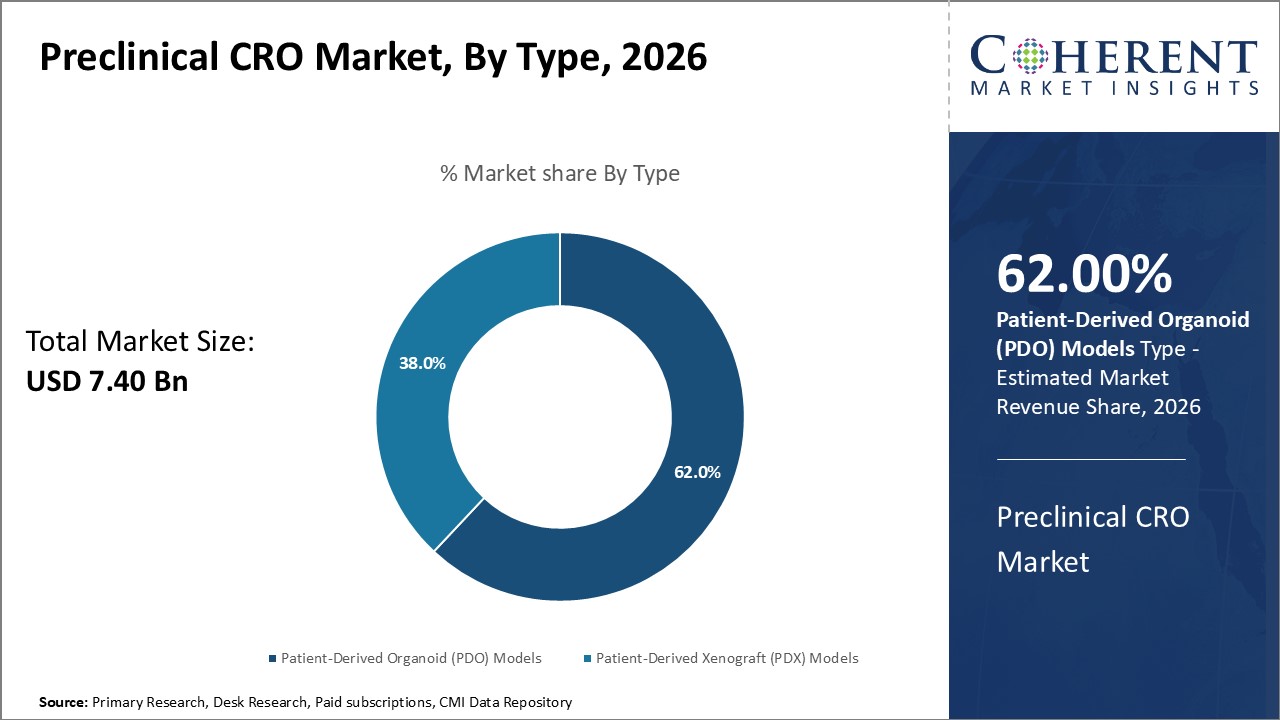
Preclinical CRO Market Insights, By Type – PDX Models Lead Owing to High Predictive Accuracy in Oncology
The Patient-Derived Xenograft (PDX) models segment is expected to be the leading segment in this category, capturing 62% market share in 2026. The segment’s growth is driven by its high predictive value in oncology drug development, as PDX models retain the histological and genetic characteristics of the original human tumors. They are extensively used for personalized medicine research and efficacy testing of anti-cancer drugs. In contrast, Patient-Derived Organoid (PDO) models are gaining traction for their scalability and applicability in high-throughput drug screening, especially in gastrointestinal and neurological diseases, but currently hold a smaller market share due to their relatively recent adoption.
Preclinical CRO Market Insights, By Animal Model – Small Animal Models Preferred Owing to Cost Efficiency and Research Versatility
The small animal model segment is expected to dominate preclinical CRO market, holding about 59% of the market share in 2026. These models are favored due to their cost-effectiveness, short breeding cycles, ease of genetic manipulation, and wide acceptance in regulatory toxicology and efficacy studies. Rodent models are integral to early-stage drug discovery, particularly in oncology, neurology, and infectious diseases. The large animal model segment, though smaller in share, plays a vital role in bridging translational gaps, especially in cardiovascular, metabolic, and orthopedic research, where physiology more closely resembles that of humans.
Regional Insights:
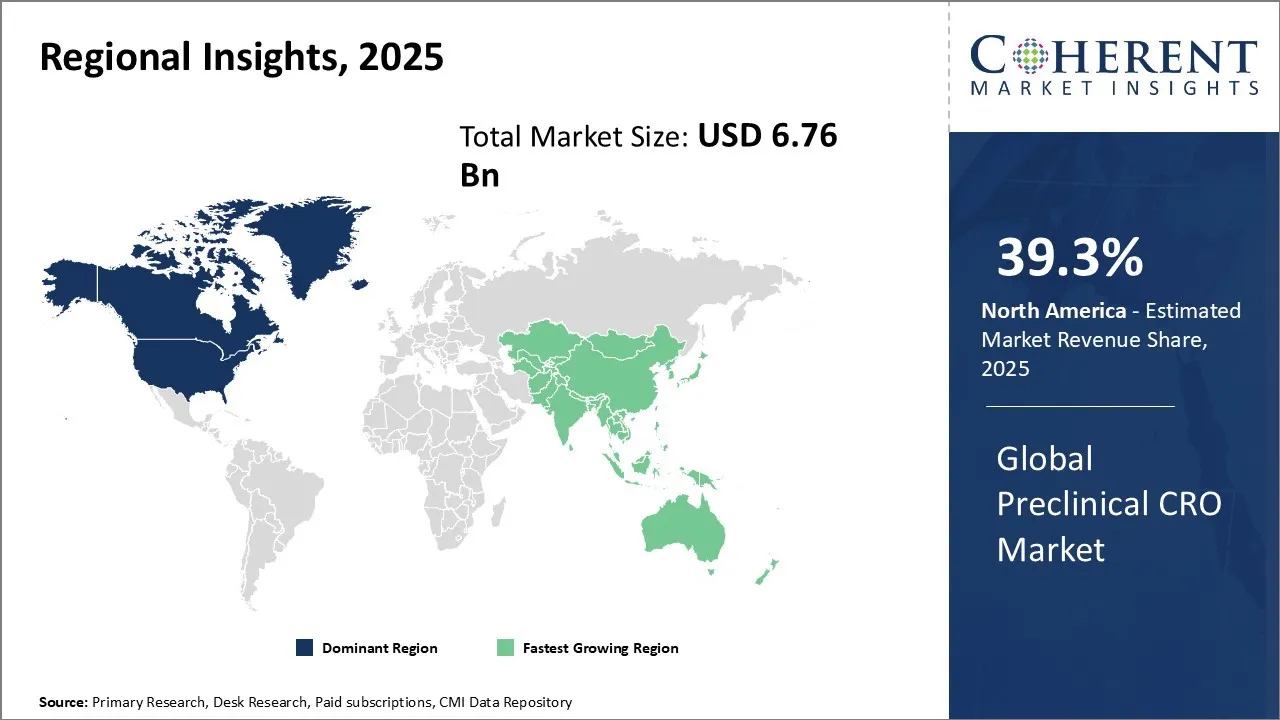
North America Preclinical CRO Market Analysis and Trends
North America’s dominance in the global preclinical CRO industry with an estimated 39.3% in 2026 can be attributed to several factors. The region boasts a well-established healthcare infrastructure, coupled with a strong presence of major pharmaceutical and biotechnology companies. The U.S., in particular, has been at the forefront of preclinical research, with a robust ecosystem fostering innovation and collaboration between academia, industry, and government agencies.
The region's favorable regulatory environment, including streamlined processes for preclinical studies and drug development, has further contributed to its market leadership. Additionally, North America benefits from a skilled workforce, advanced technology, and significant investment in research and development (R&D) activities. Notable companies such as Charles River Laboratories, Covance (a subsidiary of LabCorp), and ICON plc have played a crucial role in shaping the preclinical CRO landscape in the region, offering a wide range of services and expertise to support drug discovery and development efforts.
Asia Pacific Preclinical CRO Market Analysis and Trends
The Asia Pacific region is expected to exhibit the fastest growth in the global preclinical CRO industry with a share of 32.3% in 2026. This growth can be attributed to several key factors, including the increasing prevalence of chronic diseases, rising healthcare expenditure, and growing government support for pharmaceutical R&D. Countries such as China, India, and Japan have emerged as prominent players in the preclinical CRO space, leveraging their large patient populations, cost-effective research capabilities, and improving regulatory frameworks.
The region has witnessed significant investments by global pharmaceutical companies, seeking to capitalize on the opportunities presented by the Asia Pacific preclinical CRO market. Additionally, the presence of a skilled scientific workforce, coupled with the availability of advanced research facilities and animal models, has further fueled the growth of preclinical CROs in the region. Companies such as WuXi AppTec, Shanghai Medicilon, and Crown Bioscience have established themselves as key players, offering a comprehensive range of preclinical services to both domestic and international clients.
Global Preclinical CRO Market Outlook for Key Countries:
U.S. Preclinical CRO Market Analysis and Trends
The growing burden of chronic illnesses such as cardiovascular diseases, diabetes, cancer, and neurological disorders is intensifying the demand for innovative treatments in the U.S. healthcare sector. In response, pharmaceutical companies are increasingly outsourcing preclinical trials to accelerate the identification of viable drug candidates targeting these conditions. This trend is expected to significantly contribute to the growth of the U.S. preclinical CRO market over the forecast period. For instance, in January 2023, the American Cancer Society reported an increase in U.S. lung cancer cases from 236,740 in 2022 to 238,340, signaling a rising cancer burden. This trend is expected to drive demand for advanced therapies and fuel growth in the U.S. preclinical CRO market.
Canada Preclinical CRO Market Analysis and Trends
The Canada preclinical CRO industry is expected to witness steady growth, supported by proactive government initiatives aimed at strengthening the country’s clinical research landscape. In January 2023, the Canadian Institutes of Health Research announced targeted investments to support domestic research projects, reflecting a strong commitment to advancing drug development. Such legislative and financial backing is likely to accelerate early-stage research and innovation, thereby increasing the demand for preclinical CRO services to facilitate the transition of new drug candidates into clinical trials. These efforts are set to play a pivotal role in propelling the Canada preclinical CRO market over the forecast period.
Mexico Preclinical CRO Market Analysis and Trends
The Mexico preclinical CRO industry is poised for growth, supported by a strong and transparent regulatory environment. The Federal Commission for the Protection against Sanitary Risk (COFEPRIS) plays a central role in streamlining trial approvals through well-defined guidelines and efficient review processes, fostering trust among pharmaceutical companies and research organizations. In May 2023, COFEPRIS further strengthened this framework by updating its guidelines for preclinical and clinical studies, reinforcing safety standards and operational clarity. This regulatory advancement enhances Mexico’s appeal as a strategic hub for preclinical research, positioning the country for significant market expansion in the coming years.
Japan Preclinical CRO Market Analysis and Trends
Japan continues to be a key player in the global preclinical CRO industry, with a well-established pharmaceutical industry and a strong focus on innovation. The country's aging population and increasing prevalence of chronic diseases have driven the demand for new drug development, creating opportunities for preclinical CROs. Japan's regulatory environment, characterized by stringent quality standards and a focus on patient safety, has further contributed to the growth of the preclinical CRO market. Companies such as Shin Nippon Biomedical Laboratories (SNBL) and CMIC Group have established themselves as leading preclinical CRO providers in Japan, offering a wide range of services to support drug discovery and development efforts.
End User Feedback and Unmet Needs
End users in the global preclinical CRO industry —including pharmaceutical companies, biotech firms, and government research institutions—consistently highlight the value of specialized expertise, regulatory compliance, and accelerated timelines offered by CROs. For example, Noble Life Sciences, a mid-sized oncology-focused biotech firm, reported significant satisfaction with a CRO's ability to customize toxicology studies and rapidly deliver GLP-compliant data, enabling quicker progression into IND-enabling studies. This responsiveness and scientific support were cited as crucial in de-risking early-stage pipeline investments.
However, recurring concerns among end users point to challenges in data integration, limited access to advanced digital tools, and inconsistent communication across geographically dispersed teams. A notable example involves a government-sponsored research initiative that faced delays due to fragmented reporting formats and lack of real-time data sharing, which hindered decision-making during in-vivo pharmacokinetics testing.
Unmet needs in the preclinical CRO space largely revolve around the lack of standardized platforms for cross-functional collaboration, limited AI-enabled predictive modeling, and pricing transparency. Addressing these issues through investment in digital infrastructure, enhanced client-CRO interface tools, and tiered service models could not only improve user satisfaction and operational efficiency but also foster long-term partnerships and innovation in preclinical research.
Market Players, Key Developments, and Competitive Intelligence
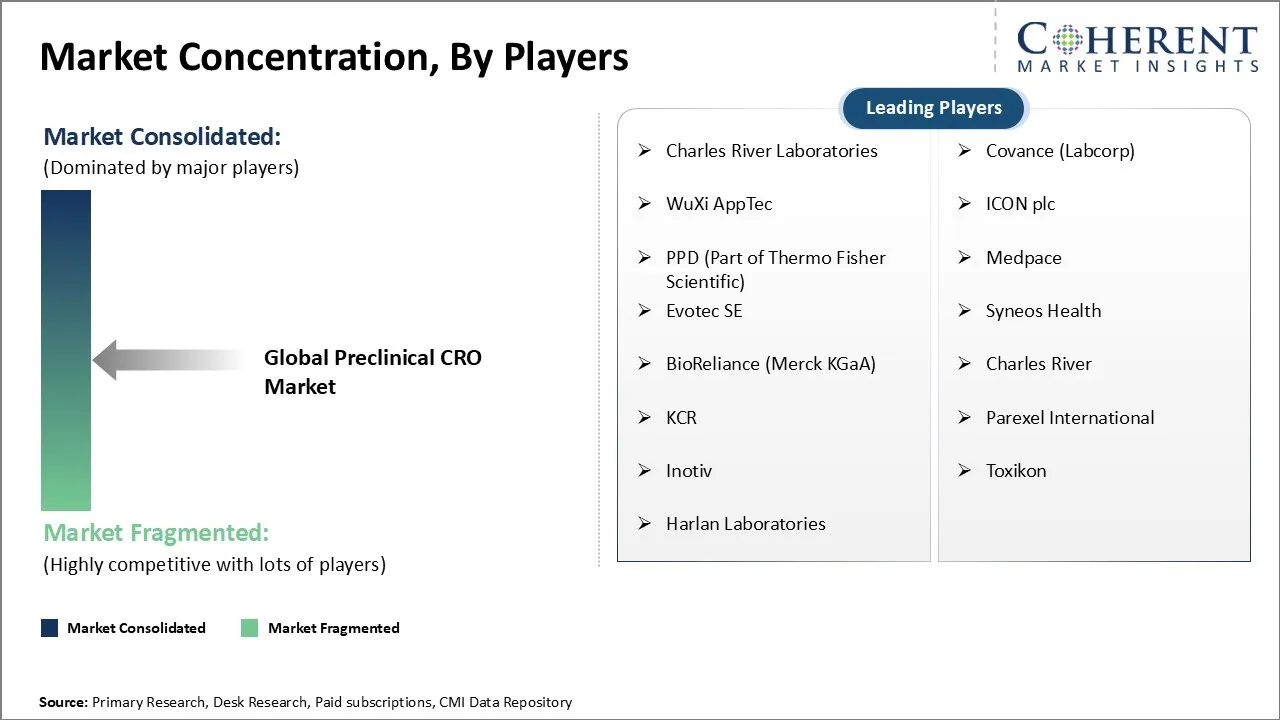
Key Developments
- In January 2025, PMGC Holdings Inc., through its subsidiary Northstrive Biosciences, a biopharmaceutical company, entered into a research agreement with a leading preclinical CRO specializing in metabolic disorders. The study will evaluate EL-32, an engineered probiotic, both alone and in combination with semaglutide, focusing on effects on glycemic control and body composition in diet-induced obese (DIO) mice. Results and a detailed report are expected within three months of study completion.
- In September 2024, Hesperos Inc., a global contract research organization (CRO), announced that its Human-on-a-Chip technology contributed in vitro proof-of-concept data for Dianthus Therapeutics’ FDA Investigational New Drug submission of DNTH103, now in a Phase II trial for generalized myasthenia gravis (gMG). Using its neuromuscular junction (NMJ) model, Hesperos showed DNTH103 improved nerve signal transmission and reduced muscle fatigue in gMG conditions.
- In June 2024, Charles River Laboratories and Sanofi, global pharmaceutical companies, partnered to implement virtual control groups (VCGs) in preclinical studies, aiming to reduce the use of live animals by leveraging historical control data. Announced on June 5, 2024, the initiative uses Charles River’s extensive database to provide reliable study comparisons without traditional live control groups. This approach enhances ethical research practices and accelerates drug development.
- In March 2024, PsychoGenics Inc., a CRO specializing in CNS-focused preclinical and translational drug discovery, unveiled its refreshed corporate identity and branding. This rebranding reflects the company’s deep expertise and customized solutions designed to support the development of innovative CNS therapies for biopharmaceutical companies, government agencies, and research institutions.
Top Strategies Followed by Global Preclinical CRO Market Players
- Established players in the global preclinical CRO market are focusing on extensive research and development to innovate high-performance products. These companies invest heavily in R&D to stay ahead of the competition and deliver cutting-edge solutions to their clients. Moreover, strategic partnerships with major industry players or original equipment manufacturers (OEMs) are crucial for solidifying market presence.
- For instance, in May 2024, Radyus Research, a drug development organization, announced a strategic partnership with South Korea-based Dt&CRO to help South Korean biotech companies enter the U.S. pharmaceutical market. The collaboration will provide integrated support in drug development planning, regulatory strategy, IND filings, and clinical trial management.
- Mid-level players in the global preclinical CRO market are focusing on delivering cost-effective solutions to target price-sensitive consumers. These companies aim to provide quality services at competitive prices to attract clients with limited budgets. For example, Eurofins Scientific, a mid-level CRO, has implemented lean operational strategies to reduce costs and offer affordable preclinical testing services.
- For instance, in February 2023, Apax Partners, acquired Porsolt, a globally recognized CRO. This acquisition is set to strengthen Porsolt’s service offerings and broaden its portfolio and capabilities in drug screening, safety, and efficacy, enhancing its value to clients worldwide.
- Small-scale players in the global preclinical CRO market often focus on niche therapeutic areas or innovative service offerings to stand out. Companies like Citoxlab (specialized in safety assessments for biopharmaceuticals and cell therapies) and Inotiv (leveraging AI for streamlined preclinical testing) exemplify this trend. These firms invest in advanced technologies such as automation and data analytics to enhance service quality and remain competitive despite their size.
Market Report Scope
Preclinical CRO Market Report Coverage
| Report Coverage | Details | ||
|---|---|---|---|
| Base Year: | 2025 | Market Size in 2026: | USD 7.40 Bn |
| Historical Data for: | 2020 To 2024 | Forecast Period: | 2026 To 2033 |
| Forecast Period 2026 to 2033 CAGR: | 9.0% | 2033 Value Projection: | USD 13.49 Bn |
| Geographies covered: |
| ||
| Segments covered: |
| ||
| Companies covered: | Charles River Laboratories, Covance (Labcorp), WuXi AppTec, ICON plc, PPD (Part of Thermo Fisher Scientific), Medpace, Evotec SE, Syneos Health, BioReliance (Merck KGaA), Charles River, KCR, Parexel International, Inotiv, Toxikon, and Harlan Laboratories | ||
| Growth Drivers: |
| ||
| Restraints & Challenges: |
| ||
Preclinical CRO Market Dynamics
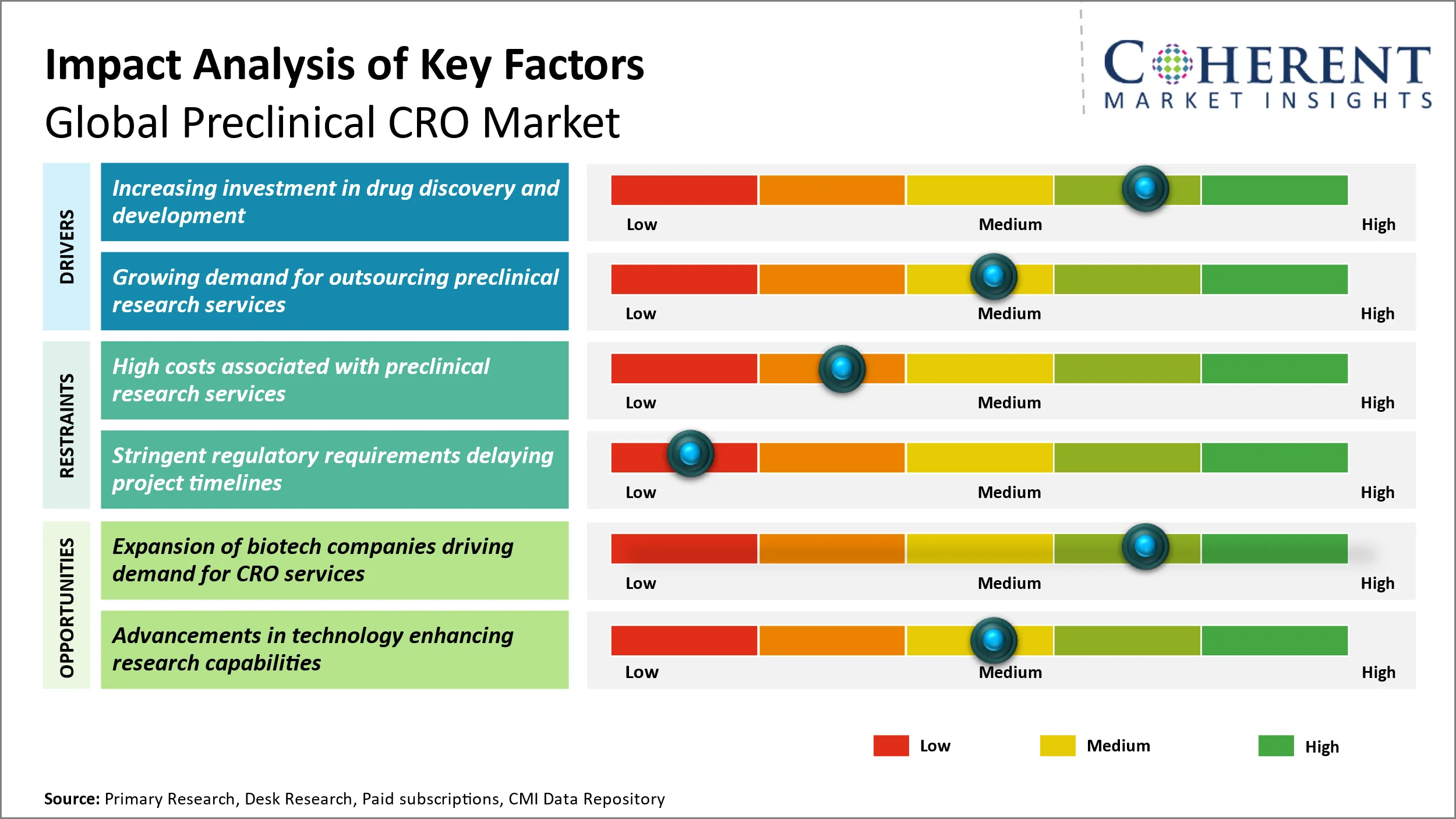
Preclinical CRO Market Driver - Increasing investment in drug discovery and development
The global preclinical CRO market is experiencing a significant boost due to the increasing investments in drug discovery and development. Pharmaceutical and biotechnology companies are allocating substantial resources to identify novel drug candidates and accelerate the drug development process. This surge in investment is driven by the pressing need for innovative therapies to address unmet medical needs and the growing prevalence of chronic diseases. Preclinical CROs play a crucial role in this endeavor by providing specialized expertise, advanced technologies, and comprehensive services that enable companies to streamline their drug discovery efforts. These CROs offer a wide range of services, including in vitro and in vivo testing, toxicology studies, pharmacokinetic and pharmacodynamic analysis, and bioanalytical services.
By outsourcing these critical functions to preclinical CROs, pharmaceutical and biotechnology companies can focus on their core competencies, reduce costs, and improve the efficiency of their drug development programs. As a result, the increasing investment in drug discovery and development is expected to continue driving the growth of the global preclinical CRO market in the coming years. Pharmaceutical companies are increasing R&D spending to develop advanced treatments for chronic diseases, driving demand for preclinical studies. For instance, in India, the 2023–2024 Union Budget allocated USD 427.2 Mn to the Ministry of Science and Technology, with USD 130.48 Mn specifically dedicated to biotech R&D and promoting industrial growth—further supporting the preclinical CRO market.
Preclinical CRO Market Opportunity - Expansion of Biotech Companies Driving Demand for CRO Services
The expansion of biotech companies presents a significant opportunity for the global preclinical CRO market. As the number of biotech companies continues to grow, so does the demand for specialized preclinical research services. Biotech companies often lack the in-house resources and expertise to conduct comprehensive preclinical studies, making them more likely to outsource these services to CROs. This trend is particularly evident in the development of novel biologics, cell and gene therapies, and other advanced therapeutic approaches, which require extensive preclinical testing to ensure safety and efficacy.
The increasing demand for CRO services from biotech companies is expected to drive the growth of the global preclinical CRO market. CROs that can offer tailored, high-quality services and demonstrate expertise in working with biotech companies will be well-positioned to capitalize on this opportunity. For instance, in October 2022, Thermo Fisher Scientific Inc., a global leader in scientific services, along with its PPD clinical research business, announced the launch of the PPD DCT Network. This initiative aims to support research sites and investigators worldwide in conducting decentralized clinical trials (DCTs) for pharmaceutical and biotech clients.
Analyst Opinion (Expert Opinion)
- The global preclinical CRO market is witnessing strong growth, driven by the increasing outsourcing of drug development by pharmaceutical and biotech companies seeking to reduce costs and accelerate timelines. Technological advancements such as AI-driven toxicology modeling, organ-on-a-chip platforms, and virtual control groups are transforming preclinical studies, enabling higher predictability and reduced animal usage. Regulatory support for ethical and innovative study designs—along with a surge in preclinical activity for oncology, metabolic disorders, and rare diseases—continues to boost demand. However, challenges such as rising operational costs, talent shortages, and regulatory complexity in multi-region trials pose barriers to seamless growth. Emerging opportunities lie in supporting early-stage biotechs in developing markets and in expanding specialty services for gene therapies and microbiome research.
- Key industry events like the BIO International Convention, AAALAC International Conference, and Preclinical Imaging Consortium Annual Meeting have fostered collaborative dialogue and showcased innovations shaping the CRO landscape. Recent initiatives, such as Radyus Research’s partnership with Dt&CRO to help South Korean biotechs enter the U.S. preclinical CRO market, and PMGC’s collaboration with a metabolic disorder CRO to evaluate its probiotic therapy, underscore the market's global expansion. Additionally, projects like the Charles River–Sanofi virtual control animal program and Hesperos’ Human-on-a-Chip model aiding U.S. FDA IND submissions highlight how CROs are evolving into strategic innovation partners beyond traditional contract roles.
Speak to the analyst
Want personalized insights?
Take the findings above to one of our principal consultants, or have the report rebuilt around the segments, geographies and competitors you actually track.
Market Segmentation
- Service Insights (Revenue, USD Bn, 2021 - 2033)
- Bioanalysis and DMPK studies
- In vitro ADME
- In-vivo PK
- Toxicology Testing
- GLP
- Non-GLP
- Compound Management
- Process R&D
- Custom Synthesis
- Others
- Chemistry
- Medicinal Chemistry
- Computation Chemistry
- Safety Pharmacology
- Others
- Bioanalysis and DMPK studies
- Type Insights (Revenue, USD Bn, 2021 - 2033)
- Patient-Derived Organoid (PDO) Models
- Patient-Derived Xenograft (PDX) Models
- Animal Model Insights (Revenue, USD Bn, 2021 - 2033)
- Small Animal Model
- Large Animal Model
- Model System Insights (Revenue, USD Bn, 2021 - 2033)
- In Vivo
- In Vitro
- Application Insights (Revenue, USD Bn, 2021 - 2033)
- Oncology
- Neurology
- Cardiology
- Infectious Diseases
- Metabolic Disorders
- Others
- End Users Insights (Revenue, USD Bn, 2021 - 2033)
- Biopharmaceutical Companies
- Government and Academic Institutes
- Medical Device Companies
- Research Institutes and Universities
- Others
- Regional Insights (Revenue, USD Bn, 2021 - 2033)
- North America
- U.S.
- Canada
- Latin America
- Brazil
- Argentina
- Mexico
- Rest of Latin America
- Europe
- Germany
- U.K.
- Spain
- France
- Italy
- Russia
- Rest of Europe
- Asia Pacific
- China
- India
- Japan
- Australia
- South Korea
- ASEAN
- Rest of Asia Pacific
- Middle East
- GCC Countries
- Israel
- Rest of Middle East
- Africa
- South Africa
- North Africa
- Central Africa
- North America
- Key Players Insights
- Charles River Laboratories
- Covance (Labcorp)
- WuXi AppTec
- ICON plc
- PPD (Part of Thermo Fisher Scientific)
- Medpace
- Evotec SE
- Syneos Health
- BioReliance (Merck KGaA)
- Charles River
- KCR
- Parexel International
- Inotiv
- Toxikon
- Harlan Laboratories
Sources
Primary Research Interviews:
- Industry Stakeholders:
- Biopharmaceutical industry executives
- Preclinical CRO service providers
- Medical device developers
- Regulatory affairs specialists
Databases:
- gov
- Scopus
- ScienceDirect
- WHO International Clinical Trials Registry Platform (ICTRP)
Magazines:
- Contract Pharma
- Pharmaceutical Technology
- Outsourcing Pharma
- BioPharma Dive
Journals:
- International Journal of Toxicology
- Journal of Pharmacological and Toxicological Method
- Regulatory Toxicology and Pharmacology
- Journal of Preclinical and Clinical Research
Newspapers:
- Pharmaceutical Business Review (PBR)
- BioPharma Reporter
- FierceBiotech
- PharmaTimes
Associations:
- Society of Toxicology (SOT)
- Association of Clinical Research Organizations (ACRO)
- Drug Information Association (DIA)
- European Federation for Pharmaceutical Sciences (EUFEPS)
Public Domain Sources:
- World Health Organization (WHO)
- U.S. National Institutes of Health (NIH)
- European Commission – DG Health and Food Safety
- Conference Proceedings from events like BIO International Convention, DIA Global Annual Meeting, and Preclinical World Congress
Proprietary Elements:
- CMI Data Analytics Tool: Proprietary analytics tool to analyze real-time market trends, consumer behavior, and technology adoption in dark factories.
- Proprietary CMI Existing Repository of Information for Last 8 Years
Get access to 250+ pages report
Every segment, forecast, competitor profile and data table behind the analysis above — available for instant download.
- ESOMAR Member
- ISO 9001:2015 Certified
- D-U-N-S Registered
- GDPR & CCPA Compliant
Missing comfort of reading report in your local language? Find your preferred language:
Transform your Strategy with Exclusive Trending Reports
Frequently Asked Questions
The global preclinical CRO market is estimated to be valued at USD 6.76 Bn in 2025 and is expected to USD 12.21 Bn by 2032.
The CAGR of the global preclinical CRO market is projected to be 8.82% from 2025 to 2032.
Increasing investment in drug discovery and development and growing demand for outsourcing preclinical research services are the major factors driving the growth of the global preclinical CRO market.
High costs associated with preclinical research services and stringent regulatory requirements delaying project timelines are the major factors hampering the growth of the global preclinical CRO market.
In terms of service, the bioanalysis and DMPK studies segment is estimated to dominate the market revenue share in 2025.
Charles River Laboratories, Covance (Labcorp), WuXi AppTec, ICON plc, PPD (Part of Thermo Fisher Scientific), Medpace, Evotec SE, Syneos Health, BioReliance (Merck KGaA), Charles River, KCR, Parexel International, Inotiv, Toxikon, and Harlan Laboratories are the major players.
North America is expected to lead the global preclinical CRO market in 2025.