

Global Protein Crystals Market Size and Forecast – 2026 To 2033
The global protein crystals market is expected to grow from USD 685.4 Mn in 2026 to USD 1,145.7 Mn by 2033, registering a compound annual growth rate (CAGR) of 7.6% from 2026 to 2033. The market for protein crystals is poised for significant expansion, fueled by rising investment in structural biology, and biomedical research.
The U.S. National Institutes of Health (NIH) is the largest public funder of biomedical research in the world, with grants totaling USD 29.5 billion across 2,738 organizations to advance biomedical and life sciences research, emphasizing the rising trend toward structural biology, protein characterization and drug discovery investigations based on extensive use of protein crystallization techniques.
(Source: ScienceDirect)
Key Takeaways of the Global Protein Crystals Market
- Therapeutic protein crystals are projected to hold 37.5 % of the global protein crystals market share in 2026, making it the dominant product type segment, across North America due to increasing government support for structural biology and protein-based therapeutics. For instance, the U.S. National Institute of Allergy and Infectious Diseases (NIAID) grants funds to Centers for Research on Structural Biology of Infectious Diseases (CRSTAL-ID) program, a program that focuses specifically on the experimental determination of the three-dimensional structure of pathogen- and drug target- proteins. (Source: National Institute of Allergy and Infectious Diseases) These government-funded structural biology efforts reinforce the demand for protein crystallization reagents, screening kits, and crystal optimization tools used in therapeutic protein research.
- The drug discovery and development segment is projected to hold 42.6 % of the global protein crystals market share in 2026, making it the dominant application segment across Europe due to substantial public investment in structural biology infrastructure underpinning pharmaceutical innovation. For instance, Instruct-ERIC is a research infrastructure recognized by the European Commission for structural biology providing European researchers with a broad range of sophisticated crystallography, cryo-EM and integrative structural biology techniques. The program is endorsed by several European states and reinforced with an extension of the public funding towards cryo-EM and structural biology infrastructures, which enables structure-based drug discovery programs across the region. (Source: Instruct-ERIC)
- Pharmaceutical and biotechnology companies are projected to hold 46.3 % of the global protein crystals market share in 2026, making it the dominant end user segment across Asia Pacific due to rising government investments in national protein science infrastructure and advanced structural biology capabilities. For instance, the National Facility for Protein Science in Shanghai (NFPSS) which was authorized by the National Development and Reform Commission (NDRC) of China consists of 9 technology systems and 6 synchrotron beamline stations for preparation, structure analysis and function study of proteins. The center has logged over 100,000 user visits since its opening in 2015, underscoring the increasing prevalence of protein structure research at pharmaceutical and biotechnology institutions in the region. (Source: Chinese Academy of Sciences)
- North America maintains its dominance with an expected share of 39.4 % in 2026, bolstered by substantial government investments in biomedical and life sciences research. For instance, the FY2025 U.S. President's Budget seeks USD 50.1 billion in discretionary and mandatory funding for the National Institutes of Health (NIH) to advance biomedical research initiatives including structural biology, drug discovery, and precision medicine programs. (Source: Department of Health and Human Services) Such investment will enhance the region's research network and promote faster uptake of protein crystallization technologies for protein structure analysis and drug design.
- Asia Pacific is expected to exhibit the fastest growth with an estimated contribution of 22.6 % share in 2026, driven by rising public investments in research and development across key biotechnology markets. For instance, China's National Bureau of Statistics reported that the country's expenditure on R&D in 2024 was USD 500 billion (RMB 3.6 trillion), with considerable investments directed toward life sciences, biotechnology, and biomedical innovation. (Source: The State Council)
- Growing Demand for Membrane Protein Structure Analysis: Membrane proteins represent a large fraction of the targets used by drug developers; however, they are difficult to characterize due to their complex structures. A rising research interest in G protein-coupled receptors (GPCRs), ion channels and transporters are fueling a greater need for sophisticated protein crystallization technology. Technologies such as lipidic cubic phase (LCP) crystallization and microcrystal formation are now improving success rates, allowing growth in the service areas offered by protein crystal suppliers who cater to pharmaceutical and structural biology customers.
- Integration of Artificial Intelligence in Crystallization Workflow Optimization: With the use of AI-driven platforms, the screening experimental designs and crystallization conditions are predicted with higher efficiency by reducing trial and error. Crystallization success rates are thus enhanced and research development cycles are reduced. Due to its increasing application in drug discovery pipelines by pharmaceutical industries, demands are anticipated to rise for high-throughput and automated protein crystallization systems.
Segmental Insights
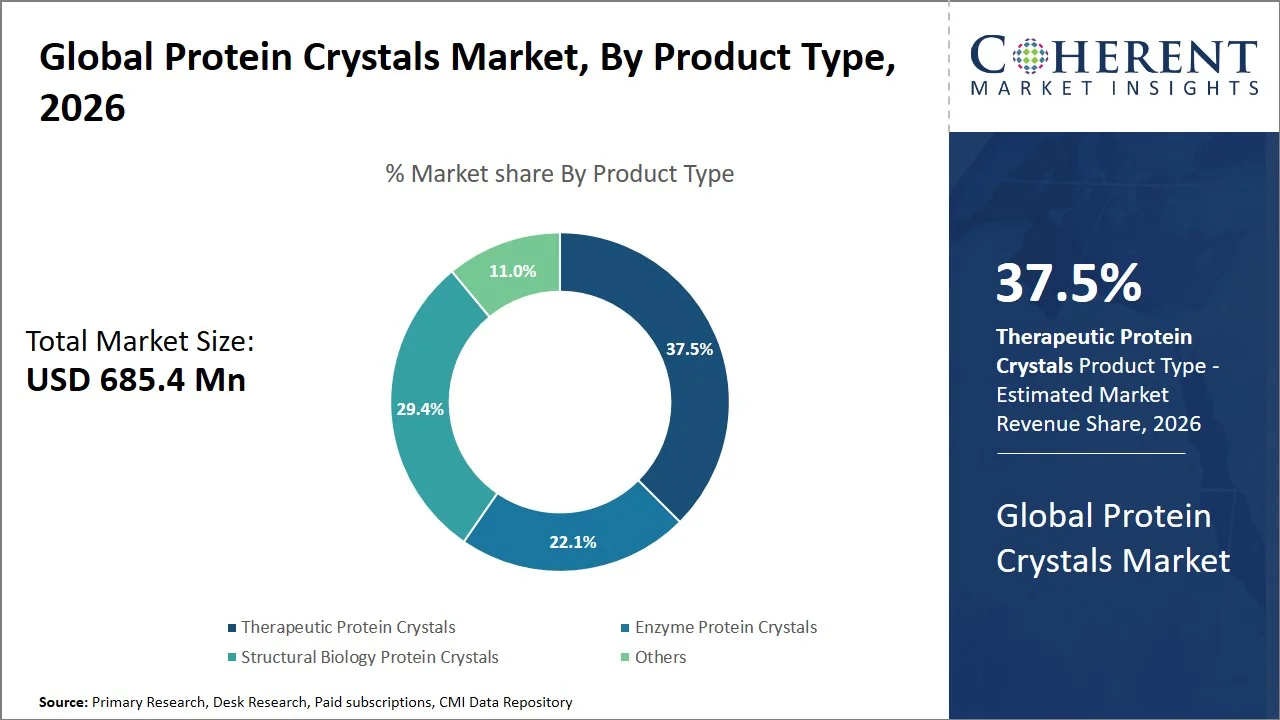
Why Do Therapeutic Protein Crystals Dominate the Global Protein Crystals Market?
Therapeutic protein crystals are projected to hold a market share of 37.5% in 2026, owing to their crucial function in the discovery and design of biotherapeutics such as antibodies (monoclonal antibodies) and recombinant proteins, enzyme therapies. The technique aids researchers in obtaining information on a protein structure which can then be used to increase drug efficacy, stability, safety, and to comply with regulatory requirements. Growing pipeline of biologics and growing demand of personalized medicine also drives the segment growth. For instance, the U.S. FDA's Center for Drug Evaluation and Research (CDER) had approved 123 products in 2025. Additionally, 18 biosimilars were also approved, reflecting sustained growth in protein-based therapeutics that utilize sophisticated structural characterization during product development. (Source: Food and Drug Administration)
- Current Industry Events of 2026
- Market Size Estimation
- Regional Breakdown
- Competitive Landscape
- Customer Intelligence
- Segmental Analysis
- Pricing Analysis
- Key Market Drivers, Challenges & Future Trends
- Customized Insights Section
Why Does Drug Discovery and Development Represent the Largest Application Segment in the Protein Crystals Market?
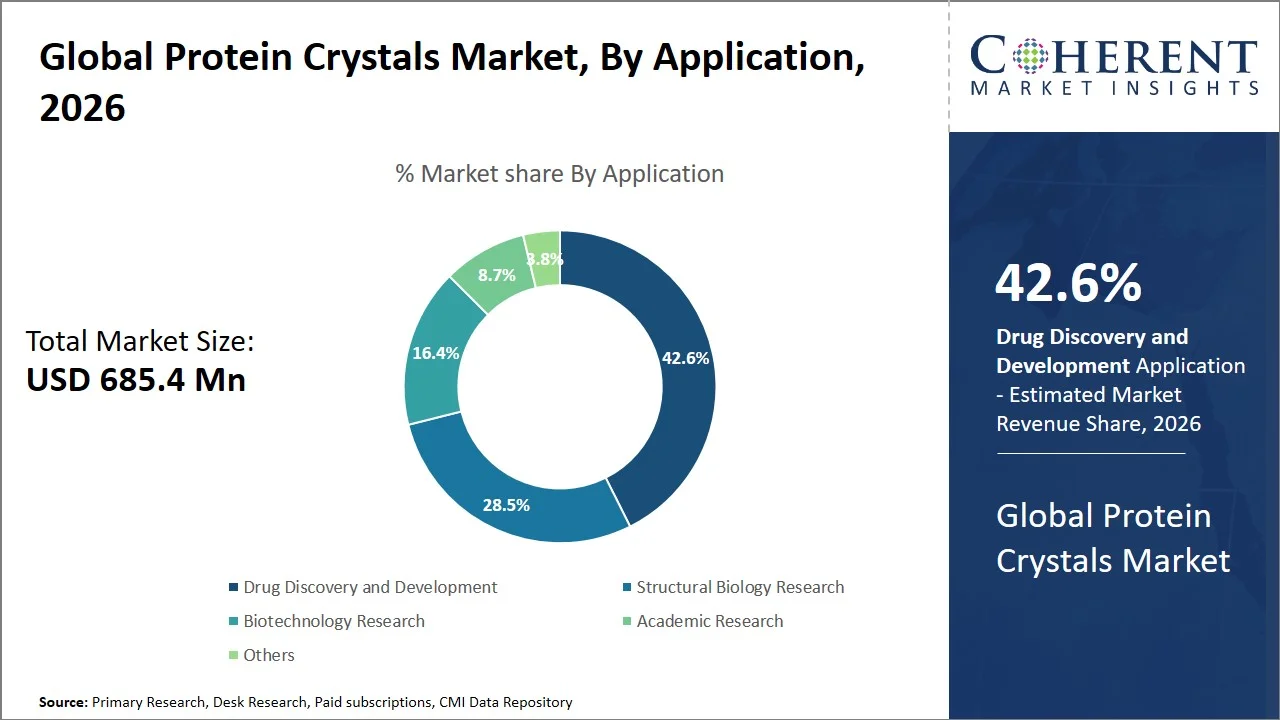
Drug discovery and development is projected to hold a market share of 42.6% in 2026, as protein crystallography is essential for structure-based drug design, target validation and lead optimization. Proteins crystals provide crucial structural information about the protein structures and interaction with drug molecules that enables to make drug development more efficient and successful. The increasing investment in novel therapies and precision medicine is another factor contributing to the segment growth. For instance, European Federation of Pharmaceutical Industries and Associations (EFPIA) annual pharmaceutical report 2025, indicates that the European pharmaceutical sector spent about USD 59.4 billion (EURO 55 billion) on R&D in 2024. This illustrates the dependence of novel drugs development on newer drug discovery techniques like protein crystallography. (Source: European Federation of Pharmaceutical Industries and Associations)
Pharmaceutical and Biotechnology Companies Segment Dominates the Global Protein Crystals Market
The pharmaceutical and biotechnology companies segment is projected to hold a market share of 46.3% in 2026, attributed to massive spending on biologics development, structure-based drug design and protein characterization. Proteins crystallization techniques find application in studying structures of proteins, fine-tuning therapeutic leads and aiding biologics and biosimilars in regulatory filings. The segment's growth is further spurred by the increasing pharma R&D expenditure, and the rising trend towards protein-based therapeutic innovation. For instance, according to the Pharmaceutical Research and Manufacturers of America (PhRMA) membership survey, biopharmaceutical firms in the U.S. spent about USD 104 billion on R&D in 2024, emphasizing industry’s continued investment in novel therapy development through sophisticated structural biology and protein crystallization technologies. (Source: International Trade Administration)
Currents Events and their Impact
Current Events | Description and its Impact |
U.S. FDA Issues AI Guidance for Drug & Biological Product Development and Expands AI-Assisted Scientific Reviews (January 2025) |
|
European Commission Launches Life Sciences Strategy and Advances Biotech Regulatory Reforms (July 2025) |
|
(Source: Food and Drug Administration, NCP Brussels)
Protein Crystals Market Dynamics
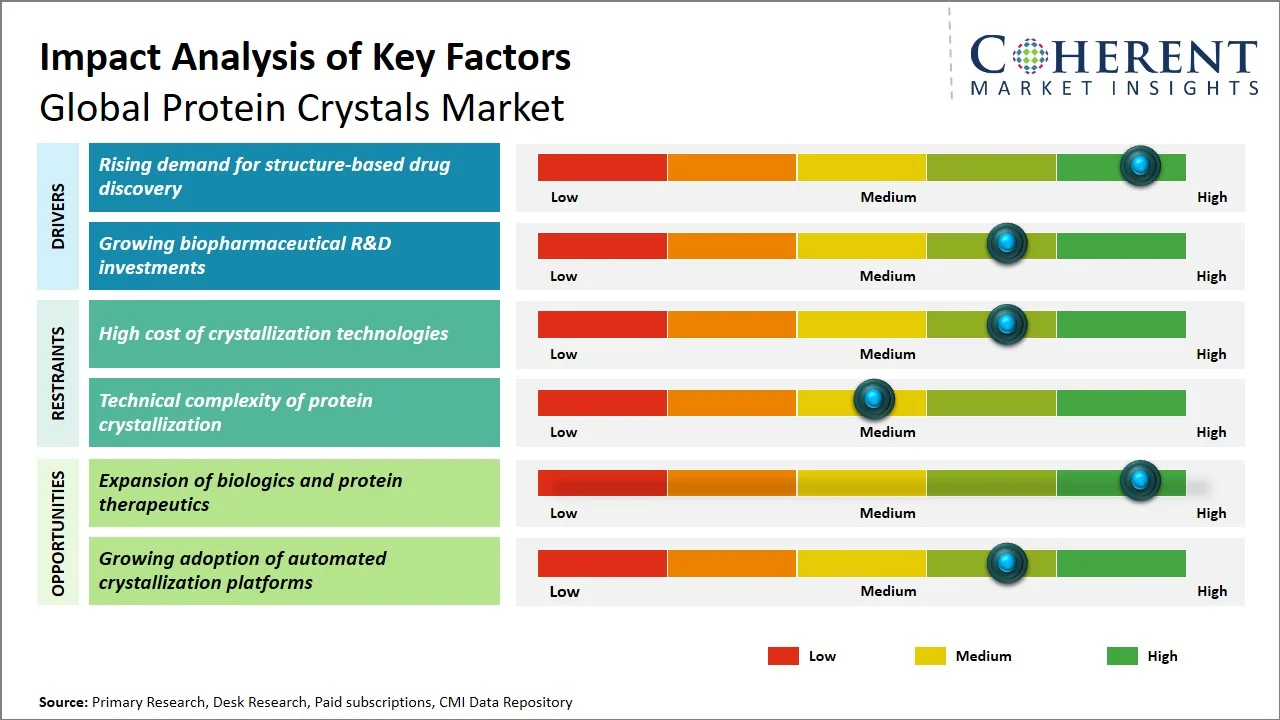
Market Drivers
- Rising demand for structure-based drug discovery: The increasing application of structure-based drug discovery is reinforcing increase in the use of protein crystallization techniques, since information regarding the three-dimensional structure of a protein at high resolution is imperative for target identification, lead optimization, and rational drug design. Protein crystallography generates a complete picture of a drug/protein interaction, allowing a pharmaceutical firm to develop drugs that are both more effective and specific. The developing field of biologics and the drive for precision medicine is also helping to propel the use of crystallography. For instance, the Protein Data Bank (PDB) surpassed the milestone of 250,000 experimentally determined structures of biomolecules, reaching 250,441 entries, demonstrating the growing impact that structural biology and protein crystallography play in drug discovery and modern pharmaceutical science. (Source: Protein Data Bank)
- Growing biopharmaceutical R&D investments: Due to an increased focus and investment into biopharmaceutical research, the application of protein crystallization technologies in drug discovery and biologics development has expanded. Protein crystallography is an important tool in gaining information regarding target structures in target identification and antibody engineering, in the optimization of protein-based therapeutics. As the number of biologics pipelines grows within the pharmaceutical companies, demand in characterization at high-resolution continues to increase. For instance, the European Union’s research and innovation framework programme, Horizon Europe, has an indicative budget of USD 101 billion (EUR 93.5 billion) for 2021-2027 to support research and innovation, including health, life sciences, and biotechnology research. (Source: European Commission)
Emerging Trends
- Increasing Adoption of Serial Crystallography and X-ray Free-Electron Laser (XFEL) Technologies: Serial crystallography and XFEL platforms are gaining popularity in determining protein structures at room temperature, enabling analysis of dynamics in real-time. Such platforms permit the use of smaller crystals, and a greater examination of transient protein states, expanding opportunities in structural biology and next generation drug discovery.
- Growing Convergence of Cryo-EM and Protein Crystallography in Structural Biology: Cryo-electron microscopy is not replacing crystallography but is working with protein crystallography and other structural biology approaches, providing more holistic structural data. Combined structural biology approaches are being utilized by researchers to more readily define complicated proteins and protein assemblies and to accelerate the development of biologics and precision medicine.
Regional Insights
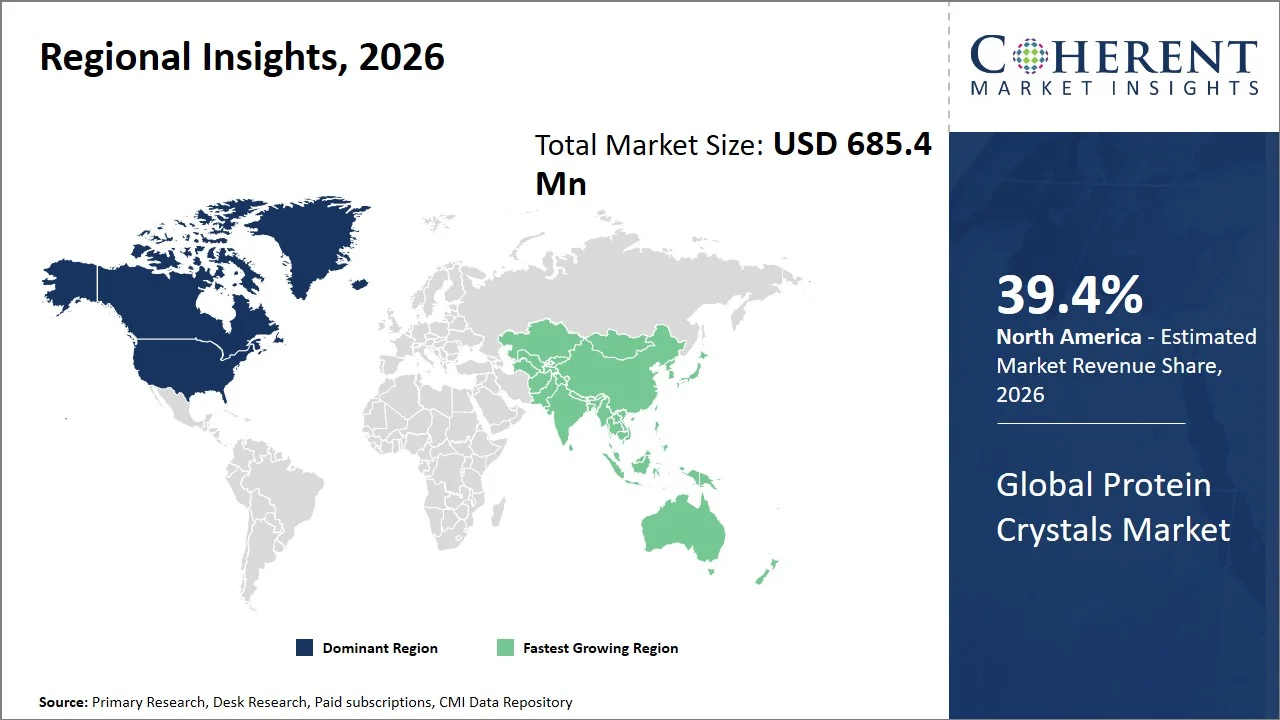
Why is North America a Strong Market for Protein Crystals?
North America leads the global protein crystals market, accounting for an estimated 39.4% share in 2026, owing to strong pharmaceutical and biotechnology ecosystem, high standard research facility and government initiatives, which are providing a considerable funding for life science sector. The existence of many biotech hubs in the U.S. fosters innovation in protein crystallography that is considered as critical for research in drug discovery and structural biology. Moreover, robust regulatory frameworks and intellectual property rights are well-established, expediting investments from major pharmaceutical companies. For instance, according to the Biotechnology Innovation Organization (BIO), venture capital investment in the U.S. biosciences rallied to approximately USD 26 billion in 2024, compared to USD 23.3 billion in 2023, indicating sustained investment in pharmaceutical and biotechnology research and innovation. (Source: Biotechnology Innovation Organization)
Why Does the Asia Pacific Protein Crystals Market Exhibit High Growth?
The Asia Pacific protein crystals market is expected to exhibit the fastest growth with an estimated contribution of 22.6% share to the global market in 2026, owing to the fast-paced industrialization, exploding investments in biotech research and burgeoning healthcare industry. Countries like China, India and Japan are putting a strong emphasis on biotechnology as part of their economic development plans with government support via fundings and schemes like China "Made in China 2025" and India biotechnology parks. The climb in pharmaceutical manufacturing industry coupled with increasing requirement for developing novel drugs is further propelling the wave in the industry. Additionally, favourable trading policies and increasing partnerships with global giants is further aiding market growth. For instance, in June 2025, AstraZeneca announced a strategic research collaboration with CSPC Pharmaceuticals Group Limited for AI-enabled drug discovery. This demonstrates the integration of Asia Pacific-based companies into global pharmaceutical networks. (Source: AstraZeneca)
Global Protein Crystals Market Outlook for Key Countries
Why is the U.S. Leading Innovation and Adoption in the Protein Crystals Market?
The U. S. is at the forefront of innovation and adoption in the protein crystals market driven by highly mature structural biology landscape and the early adoption of protein crystallography into the drug discovery processes. The abundance of pharmaceutical firms (such as Pfizer, Merck & Co., Bristol Myers Squibb, and Eli Lilly), biotechnology companies (such as Amgen, Regeneron Pharmaceuticals, and Gilead Sciences), academic research centers (such as The Scripps Research Institute, Stanford University, Harvard Medical School, and The Rockefeller University), and synchrotrons (such as Advanced Photon Source (APS) at Argonne National Laboratory and the National Synchrotron Light Source II (NSLS-II) at Brookhaven National Laboratory) helps to foster advancements in protein structure determination methodologies. The established strength in biologics development, antibody engineering, and personalized medicine continues to facilitate the need for high resolution protein characterization.
Is Japan a Favorable Market for Protein Crystals?
Japan is one of the most promising markets for the protein crystals market owing to the highly efficient structural biology capabilities, expertise in protein science and pharmaceutical research along with technological advancements. The protein structure determination capability in Japan is very strong through institutions (Such as RIKEN, University of Tokyo and Kyoto University) being at the forefront. While, powerful synchrotron facility is an added advantage for high-resolution crystallography studies. Japan's sustained emphasis on the development of biologics, regenerative medicines and tailor-made therapeutic solutions further propels the use of protein characterization tools. The academia-industry relationship is highly robust, with leading pharmaceutical players (such as Takeda Pharmaceutical, Astellas Pharma, Daiichi Sankyo, and Chugai Pharmaceutical) being instrumental in utilizing protein crystallization technology during the research and development processes of various drugs.
Is China Emerging as a Key Growth Hub for the Protein Crystals Market?
China is positioned as a key growth hub in the global protein crystals market driven by country’s booming biopharmaceutical market and growing usage of structure-based drug discovery. A comprehensive protein science system that provides good structural biology equipment and a wide variety of antibody companies, recombinant protein providers and biosimilars vendors has already been established. The integration of protein characterization techniques in the process of pharmaceutical R&D is also contributing to the rapid growth of protein crystals market.
Why Does Germany Top the European Protein Crystals Market?
Germany is the leader in the European market for protein crystals due to its robust pharmaceutical manufacturing sector and widespread utilization of structural biology in drug development, along with biologics research. The country has presence of well-established life science companies (such as Bayer AG, Boehringer Ingelheim, Merck KGaA, BioNTech), as well as research institutions and universities (such as Max Planck Society, Helmholtz Association, Technical University of Munich, Heidelberg University) that are actively involved in protein characterization and crystallographic studies. The development and knowledge in biopharmaceuticals, as well as good laboratory infrastructure, support the increasing popularity of protein crystallization technology among researchers and commercial developers in Germany.
Is Protein Crystals Market Developing in the U.K.?
The U.K. protein crystals market shows immense potential driven by significant strengths of the country in terms of structural biology, protein engineering and translational biomedical research. Rising investments in biologics development, innovative therapeutics and personalized medicine is increasing demand for high-resolution characterization tools for proteins. The focus on elucidating structures and interactions of proteins for developing drugs is another driving factor for market growth. Additionally, strong academia-industry collaboration, combined with the common use of structure-based drug design, is supporting the increasing demand from pharmaceutical and biomedical research applications. For instance, U.K.-based Diamond Light Source has specialized macromolecular crystallography beamlines which serve thousands of structural biology experiments each year, facilitating protein structure determination and therefore helping research into drug discovery at all levels of industry (pharmaceutical and biotechnology as well as academia). (Source: Diamond Light Source)
Regional Research Ecosystem and Policy Support for the Protein Crystals Market
Region | Key Government/Research Focus | Major Supporting Initiatives | Impact on Protein Crystals Market |
North America | Structural biology research, biologics development, and precision medicine | NIH-funded structural biology programs, FDA initiatives supporting AI-enabled drug development, and strong federal biomedical research funding | Supports extensive use of protein crystallization in structure-based drug discovery, biologics characterization, and translational research, reinforcing regional market leadership. |
Europe | Life sciences innovation and collaborative research infrastructure | Horizon Europe, Instruct-ERIC, European Life Sciences Strategy, and public-private drug discovery partnerships | Expands access to advanced crystallography facilities and funding for structural biology projects, increasing adoption of protein crystallization technologies across academia and industry. |
Asia Pacific | Biotechnology expansion, protein science infrastructure, and pharmaceutical innovation | China's National Facility for Protein Science, National Key R&D Programs, Japan's AMED funding initiatives, and South Korea's biotechnology development plans | Accelerates protein structure research capabilities and biologics development, making the region the fastest-growing market for protein crystallization products and services. |
Middle East & Africa | Research capacity building and biotechnology diversification | National biotechnology strategies in Saudi Arabia and the UAE, investments in genomics and biomedical research centers | Growing life sciences infrastructure is increasing demand for advanced protein analysis tools, creating emerging opportunities for protein crystallization technology providers. |
Latin America | Expansion of pharmaceutical research and academic life sciences programs | Government-supported research initiatives in Brazil, Mexico, and Argentina, alongside increased investment in biotechnology and healthcare innovation | Strengthens structural biology research capabilities and supports gradual adoption of protein crystallization technologies for academic and pharmaceutical applications. |
How is the expansion of biologics and protein therapeutics creating new growth opportunities in the protein crystals market?
The continued and accelerating growth of biologics and protein therapeutics is providing substantial market growth for protein crystals, as they must be analyzed structurally to a large extent during all stages of discovery, development and manufacturing. Protein crystallography is invaluable in characterizing protein folding, molecular interactions, and stabilities to better improve biologics and biosimilars. Pharmaceutical companies’ ongoing commitment to protein therapies is fueling market growth in all areas of crystallization technology. For instance, according to DrugPatentWatch, biologic drugs generated more than USD 461 billion in global revenue in 2023, and the figure is anticipated to exceed USD 700 billion by 2030, highlighting the commercial significance of protein therapeutics and the demand for structural biology tools to facilitate their development. (Source: DrugPatentWatch)
Market Players, Key Development, and Competitive Intelligence
Key Developments
- In June 2025, BioOrbit announced plans to advance space-manufactured protein crystals toward pre-clinical trials in 2026. The company highlighted the potential of microgravity-based crystallization to produce purer and more structurally uniform protein crystals, which may improve therapeutic efficacy and drug formulation outcomes. The development underscores growing commercial interest in advanced protein crystallization technologies for biopharmaceutical research and next-generation therapeutics.
- In April 2024, researchers from Arizona State University successfully launched protein crystal experiments to the International Space Station to study protein crystallization under microgravity conditions. The research aims to generate higher-quality protein crystals that can provide deeper insights into protein structures and support advancements in drug discovery and biomedical research. The initiative highlights growing scientific interest in innovative crystallization techniques to enhance structural biology and therapeutic development.
Competitive Landscape
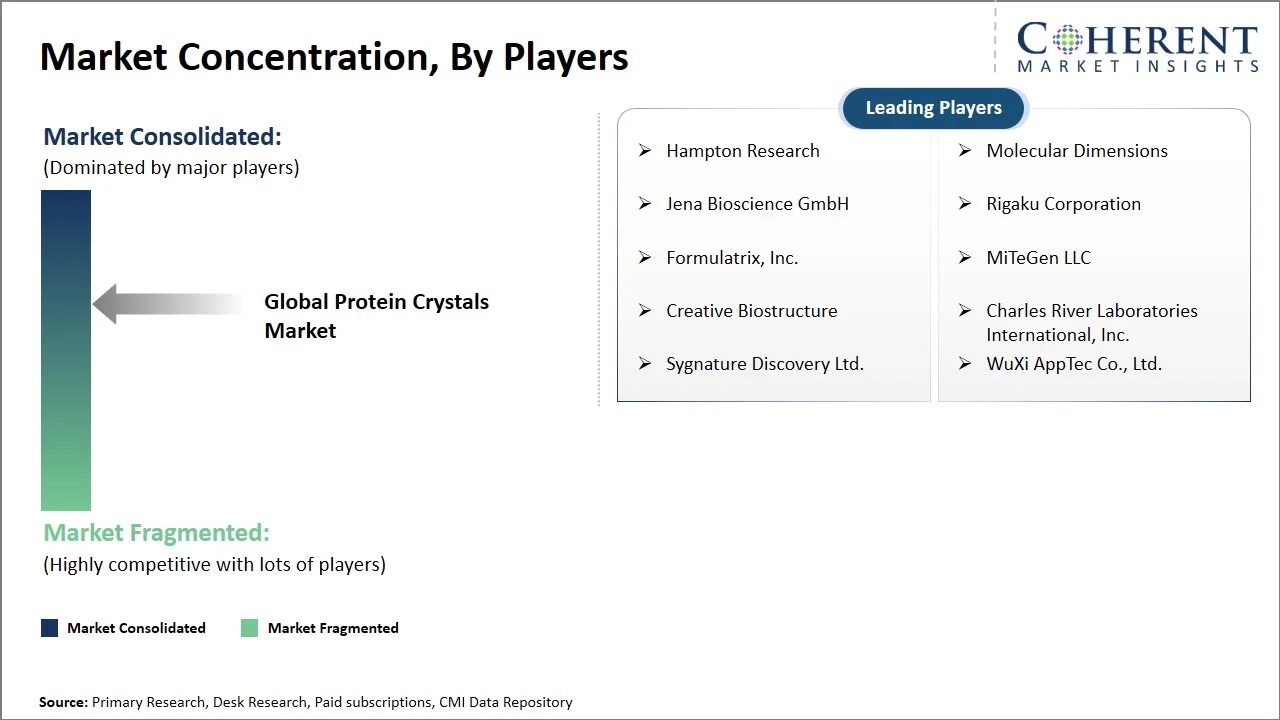
The global protein crystals market is moderately consolidated influenced by competition from specialty reagents suppliers in crystallization and structural biology solutions companies, laboratory automation suppliers and contract research organizations (CROs). Companies in the market space are focusing on increasing crystallization success rates, providing higher throughput screenings and applying automation and AI in protein structure determination workflows. Partnerships with pharmaceutical companies, research institutes and synchrotron facilities were significant growth strategy used to enhance drug discovery applications. Key focus areas include:
- Development of advanced crystallization reagents, screening kits, and microfluidic platforms to improve crystal quality and reproducibility
- Expansion of high-throughput and automated crystallization technologies to support structure-based drug discovery programs
- Strengthening structural biology capabilities through AI-enabled crystal prediction, imaging, and data analysis solutions
- Strategic partnerships, acquisitions, and research collaborations to expand service portfolios and enhance presence in pharmaceutical and biotechnology research markets
Market Report Scope
Protein Crystals Market Report Coverage
| Report Coverage | Details | ||
|---|---|---|---|
| Base Year: | 2025 | Market Size in 2026: | USD 685.4 Mn |
| Historical Data for: | 2020 To 2024 | Forecast Period: | 2026 To 2033 |
| Forecast Period 2026 to 2033 CAGR: | 7.6% | 2033 Value Projection: | USD 1,145.7 Mn |
| Geographies covered: |
| ||
| Segments covered: |
| ||
| Companies covered: | Hampton Research, Molecular Dimensions, Jena Bioscience GmbH, Rigaku Corporation, Formulatrix, Inc., MiTeGen LLC, Creative Biostructure, Charles River Laboratories International, Inc., Sygnature Discovery Ltd., and WuXi AppTec Co., Ltd. | ||
| Growth Drivers: |
| ||
| Restraints & Challenges: |
| ||
Analyst Opinion (Expert Opinion)
- The protein crystals market is expected to experience sustained growth over the next few years driven by on-going growth of structure-based drug discovery, biologics production and personalized medicine. Drug discovery research is going to concentrate on the more complex proteins and the protein-protein interaction, and will thus generate growing demand on high-end protein crystallization techniques. Combinations of artificial intelligence, automated platforms and high throughput crystallization will ultimately contribute to increasing the efficiency and speeding up protein structure determination; hence crystallography is bound to be a compulsory method in drug discovery of the future.
- The maximum opportunities will probably exist within drug discovery and development application in the U.S., China and Japan, where investment in biologics, infrastructure for structural biology and novel therapies continues. Increased research in the areas of membrane proteins, antibodies therapeutics and rare diseases is likely to spur a huge demand for novel crystallization technologies and tailored structural biology services.
- In order to obtain a competitive advantage, market participants should focus on the development of AI-based crystallization platform, broadening capabilities in automation and integrated solutions (including crystallization, imaging, and structural analyses). Strategic partnerships will play a vital role to ensure longer-term projects with the pharmaceutical companies, as well as with the research institutions, and the synchrotron facilities. Improvement of the success rates for the more challenging protein targets and shorter/reliable work flow will make any player win the competition of protein crystals market.
Speak to the analyst
Want personalized insights?
Take the findings above to one of our principal consultants, or have the report rebuilt around the segments, geographies and competitors you actually track.
Market Segmentation
- Product Type Insights (Revenue, USD Mn, 2021 - 2033)
- Therapeutic Protein Crystals
- Enzyme Protein Crystals
- Structural Biology Protein Crystals
- Others
- Application Insights (Revenue, USD Mn, 2021 - 2033)
- Drug Discovery and Development
- Structural Biology Research
- Biotechnology Research
- Academic Research
- Others
- End User Insights (Revenue, USD Mn, 2021 - 2033)
- Pharmaceutical and Biotechnology Companies
- Research Institutes
- Academic Institutions
- Contract Research Organizations (CROs)
- Others
- Regional Insights (Revenue, USD Mn, 2021 - 2033)
- North America
- U.S.
- Canada
- Latin America
- Brazil
- Argentina
- Mexico
- Rest of Latin America
- Europe
- Germany
- U.K.
- Spain
- France
- Italy
- Russia
- Rest of Europe
- Asia Pacific
- China
- India
- Japan
- Australia
- South Korea
- ASEAN
- Rest of Asia Pacific
- Middle East
- GCC Countries
- Israel
- Rest of Middle East
- Africa
- South Africa
- North Africa
- Central Africa
- North America
- Key Players Insights
- Hampton Research
- Molecular Dimensions
- Jena Bioscience GmbH
- Rigaku Corporation
- Formulatrix, Inc.
- MiTeGen LLC
- Creative Biostructure
- Charles River Laboratories International, Inc.
- Sygnature Discovery Ltd.
- WuXi AppTec Co., Ltd.
Sources
Primary Research Interviews
- Structural biologists and protein crystallography researchers involved in protein structure determination and structure-function analysis
- Drug discovery scientists and medicinal chemists utilizing structure-based drug design (SBDD) approaches
- Biopharmaceutical R&D leaders developing biologics, biosimilars, monoclonal antibodies, and recombinant protein therapeutics
- Laboratory automation and crystallization platform specialists supporting high-throughput screening workflows
- Contract Research Organizations (CROs) and Contract Development & Manufacturing Organizations (CDMOs) providing structural biology and protein characterization services
- Researchers from synchrotron facilities, X-ray crystallography centers, and structural biology institutes
Stakeholders
- Protein crystallization reagent, consumable, and screening kit manufacturers
- Structural biology solution providers and crystallography instrumentation companies
- End-use Sectors
- Pharmaceutical companies
- Biotechnology companies
- Academic and research institutes
- Contract Research Organizations (CROs)
- Government-funded life sciences laboratories
- Regulatory & Health Bodies
- U.S. Food and Drug Administration (FDA)
- National Institutes of Health (NIH)
- European Medicines Agency (EMA)
- European Commission (Horizon Europe)
- Japan Agency for Medical Research and Development (AMED)
- National Medical Products Administration (NMPA), China
- Ministry of Science and Technology (MOST), China
Databases
- Protein Data Bank (PDB)
- ClinicalTrials.gov
- NIH RePORTER
- European Clinical Trials Information System (CTIS)
- Horizon Europe Projects & Results Platform
- FDA Drug Approval Database
- UniProt Protein Knowledgebase
- OECD Science, Technology and Innovation Database
Magazines
- Drug Discovery Today
- Genetic Engineering & Biotechnology News (GEN)
- BioPharm International
- Pharmaceutical Technology
- The Medicine Maker
- Laboratory Equipment Magazine
Journals
- Acta Crystallographica Section D: Structural Biology
- Journal of Structural Biology
- IUCrJ
- Protein Science
- Nature Structural & Molecular Biology
- Crystals
- Structure
- Journal of Molecular Biology
Newspapers
- Financial Times – biotechnology and pharmaceutical innovation coverage
- The Wall Street Journal – life sciences and drug development trends
- The Economic Times – biotechnology and healthcare innovation coverage
- China Daily – life sciences and biomedical research developments
Associations
- International Union of Crystallography (IUCr)
- American Crystallographic Association (ACA)
- Protein Society
- Biotechnology Innovation Organization (BIO)
- Pharmaceutical Research and Manufacturers of America (PhRMA)
- European Federation of Pharmaceutical Industries and Associations (EFPIA)
- International Society for Structural Biology (ISSB)
Public Domain Sources
- National Institutes of Health (NIH)
- U.S. Food and Drug Administration (FDA)
- European Commission
- European Medicines Agency (EMA)
- World Health Organization (WHO)
- National Center for Biotechnology Information (NCBI)
- Japan Agency for Medical Research and Development (AMED)
- Ministry of Science and Technology (MOST), China
- Protein Data Bank (PDB) Consortium
Proprietary Elements
- CMI Data Analytics Tool, Proprietary CMI Existing Repository of information for last 10 years.
Get access to 250+ pages report
Every segment, forecast, competitor profile and data table behind the analysis above — available for instant download.
- ESOMAR Member
- ISO 9001:2015 Certified
- D-U-N-S Registered
- GDPR & CCPA Compliant
Missing comfort of reading report in your local language? Find your preferred language:
Transform your Strategy with Exclusive Trending Reports
Frequently Asked Questions
The global protein crystals market is estimated to be valued at USD 685.4 Mn in 2026 and is expected to reach USD 1,145.7 Mn by 2033.
Therapeutic protein crystals dominate due to their critical role in biologics development, protein structure characterization, and structure-based drug design for complex diseases such as cancer, autoimmune disorders, and genetic conditions.
Protein crystals are highly ordered arrangements of protein molecules used to determine three-dimensional protein structures through techniques such as X-ray crystallography.
The CAGR of the global protein crystals market is projected to be 7.6% from 2026 to 2033.
Protein crystals enable high-resolution visualization of drug-target interactions, supporting rational drug design and lead optimization.
Protein crystallization helps characterize protein structure, stability, and molecular interactions, ensuring the safety, efficacy, and quality of biologic therapeutics.
Rising demand for structure-based drug discovery, and growing biopharmaceutical R&D investments are the major factors driving the growth of the global protein crystals market.