

DNA/Gene Microarray Market Size and Share Analysis - 2026 To 2033
The DNA/gene microarray market refers to the industry involved in the development, production, and use of microarray technologies that analyze thousands of genetic sequences simultaneously on a single platform. DNA microarrays are used to study gene expression, detect genetic variations, and support applications such as genomics research, disease diagnosis, drug discovery, and personalized medicine. The market includes different microarray types, applications, end users, and geographic regions, including oligonucleotide DNA microarrays, complementary DNA microarrays, research laboratories, diagnostic laboratories, pharmaceutical companies, and healthcare institutions.
Key Statistics at a Glance
Metric | Value |
Market Size (2026) | USD 5.4 Billion |
Projected Market Size (2033) | USD 9.9 Billion |
CAGR (2026–2033) | 9.0% |
Leading Type Segment (2026) | Oligonucleotide DNA Microarrays (60% market share) |
Leading End User Segment (2026) | Biopharmaceutical and Pharmaceutical Companies (42% market share) |
Leading Region (2026) | North America (40% market share) |
Top Application Areas | Genomics, Drug Research and Development, Cancer/Oncology, and Disease Diagnostics |
Key Players | Affymetrix, Inc.; Illumina, Inc.; Agilent Technologies Inc.; Thermo Fisher Scientific Inc.; Bio-Rad Laboratories, Inc.; Twist Bioscience Corporation |
Global DNA/Gene Microarray Market Size and Revenue Forecast 2026–2033
The global DNA/gene microarray market is estimated to be valued at USD 5.4 Bn in 2026 and is expected to reach USD 9.9 Bn by 2033, growing at a CAGR of 9.0% during the forecast period. This growth is attributable to increasing adoption of genomic research and precision medicine, rising prevalence of genetic disorders and chronic diseases, and continuous advancements in microarray technologies.
Key Takeaways from the DNA/Gene Microarray Market Report
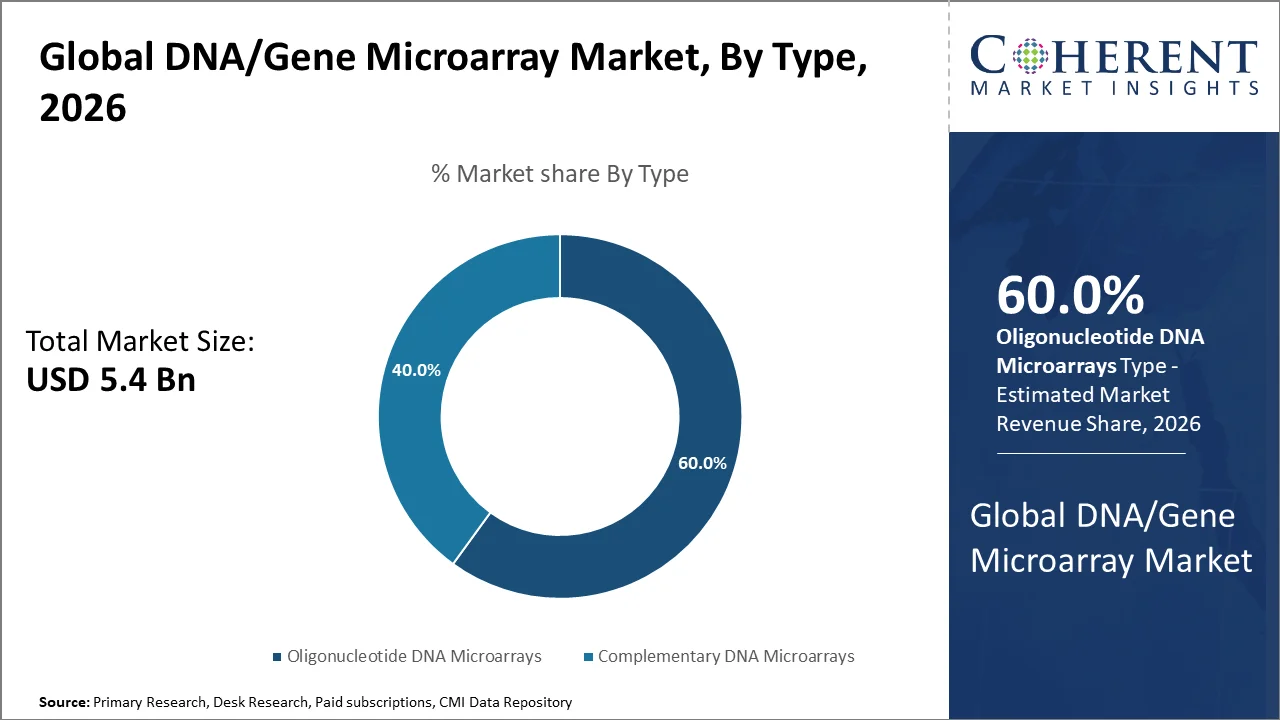
- Oligonucleotide DNA microarrays are expected to hold the largest market revenue share of 60% in 2026 due to their high specificity, reproducibility, cost-effectiveness, and ability to analyze multiple genetic targets simultaneously. A 2024 validation study reported >99% genotype accuracy and >99% call rates, highlighting their reliability for high-throughput genetic analysis.
- The biopharmaceuticals and pharmaceuticals segment is expected to occupy a key market share of 42% in 2026 on account of the rising application of microarray technology in drug discovery, target identification, biomarker validation, and personalized medicine development. UK Biobank offers genome-wide genetic information on nearly 500,000 individuals.
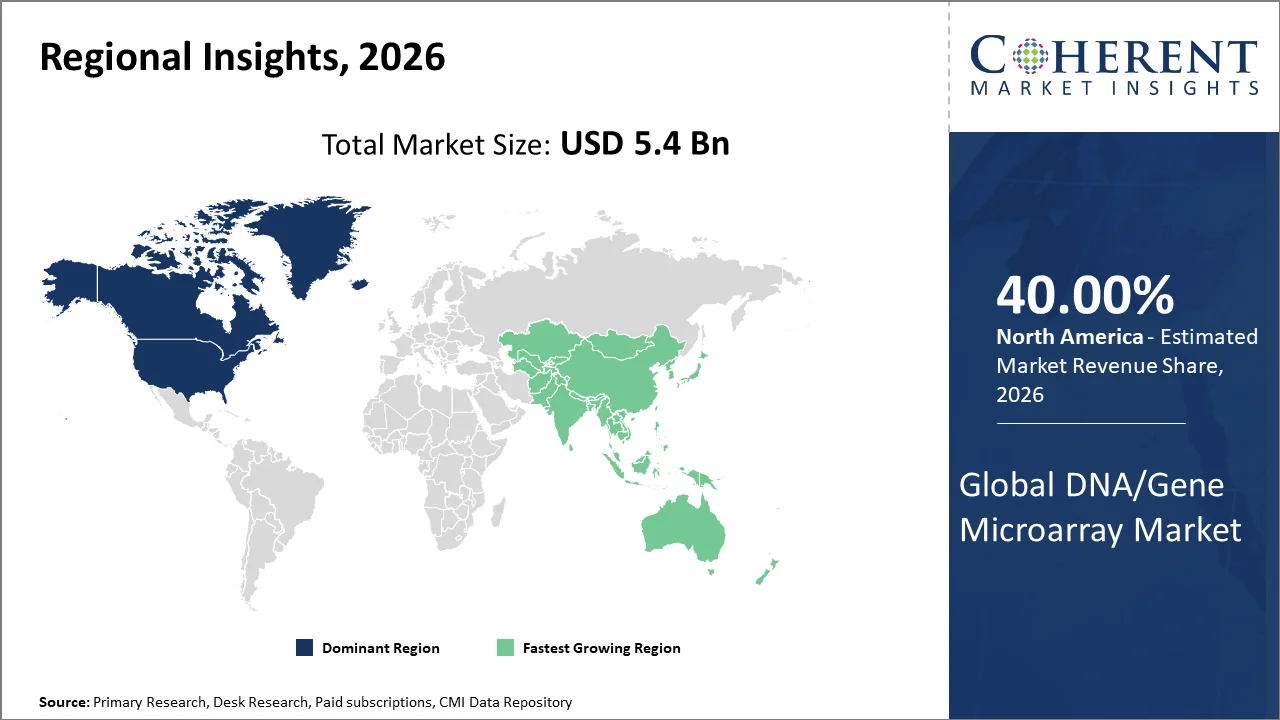
- North America is projected to dominate global DNA/gene microarray industry with a share of 40% in 2026 due to presence of major biotechnology companies, strong research funding, and early adoption of genomic technologies. For example, the NIH invests most of its nearly USD 48 billion budget in medical research for the American people.
- Asia Pacific, registering a CAGR of over 11.6% , is poised to emerge as a highly lucrative market for DNA/gene microarray manufacturers during the forecast period due to rising genomics research, healthcare investments, and adoption of advanced diagnostics.
DNA/Gene Microarray Market Overview
The global DNA/gene microarray market is expected to register strong growth during the forecast period. This is due to increasing investments in genomic research, rising demand for personalized medicine, growing applications in disease diagnosis and drug discovery, and advancements in microarray technologies that improve accuracy, speed, and cost-effectiveness. In addition, rising prevalence of cancer and genetic disorders and increasing investments in biotechnology and life science research is expected to support market expansion.
Government funding, academic research, and biotechnology investments are increasing worldwide. This, in turn, is expected to propel demand for DNA microarrays as they remain an important platform for gene expression profiling, genotyping, and functional genomics studies.
Similarly, pharmaceutical and biotechnology companies increasingly use microarrays during drug discovery, target identification, toxicity studies, and biomarker validation to accelerate research and reduce development timelines. This will also boost DNA/gene microarray market value in the coming years.
Advancements in microarray technology are also expected to support market growth during the forecast period. Improvements in probe design, array density, hybridization chemistry, automation, and data analysis software have enhanced the sensitivity, accuracy, and throughput of microarray assays. These technological advancements are expanding the use of DNA/gene microarrays in clinical diagnostics, gene expression profiling, genotyping, and research applications, thereby supporting market expansion in the coming years.
Segmental Insights
- Current Industry Events of 2026
- Market Size Estimation
- Regional Breakdown
- Competitive Landscape
- Customer Intelligence
- Segmental Analysis
- Pricing Analysis
- Key Market Drivers, Challenges & Future Trends
- Customized Insights Section
Which DNA/Gene Microarray Type Dominates the Market?
Oligonucleotide DNA Microarrays Lead the Market with a Three-Fifths Share
Oligonucleotide DNA microarrays are slated to dominate the market, accounting for a revenue share of 60% in 2026. This dominance is attributable to their high specificity, improved reliability, lower production costs, and broad application in genomics research, clinical diagnostics, and pharmaceutical development. Growing demand for advanced genomic tools and precision medicine solutions is also expected to drive adoption of oligonucleotide DNA microarrays.
For example, chromosomal microarray analysis (CMA), which uses oligonucleotide-based arrays, has shown higher diagnostic accuracy than traditional karyotyping. A study of 21,698 patients across 33 studies found that CMA detected genetic abnormalities in 15–20% of cases, compared with about 3% using karyotyping, supporting its growing use in clinical diagnostics.
Who is the Leading End User of DNA/Gene Microarrays?
Biopharmaceutical and Pharmaceutical Companies Remain Key End Users
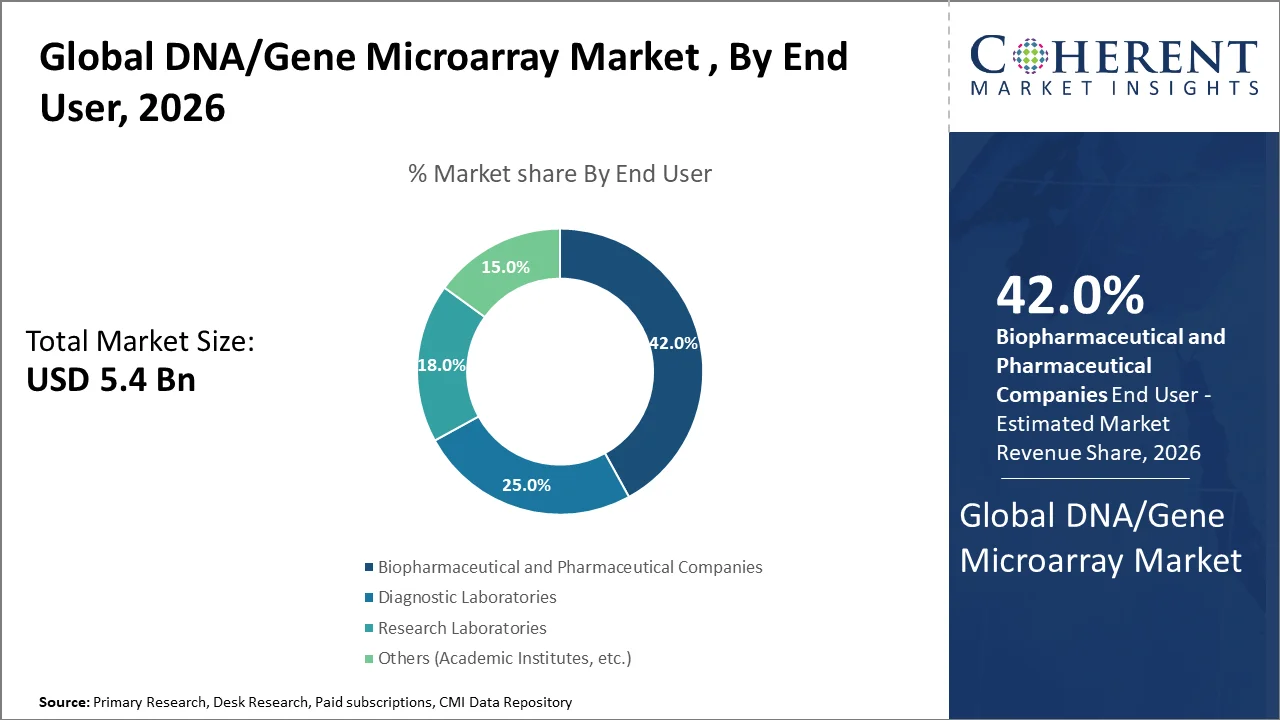
Biopharmaceutical and pharmaceutical companies are projected to remain leading end users of DNA/gene microarrays, holding a market share of 42% in 2026. This is mostly due to increasing use of microarray technology in drug discovery, biomarker identification, pharmacogenomics, and clinical research.
Biopharmaceutical and pharmaceutical companies use DNA/gene microarrays to analyze gene expression patterns, study disease mechanisms, identify potential drug targets, and support the development of personalized therapies. Growing focus on precision medicine and rising demand for advanced genomic analysis tools are also driving adoption among biopharmaceutical and pharmaceutical companies.
DNA/Gene Microarray Market Growth Drivers
Rising demand for precision medicine
Growing adoption of precision medicine is a key factor driving growth of the DNA/gene microarray market. DNA/gene microarrays are widely used for gene expression analysis, genotyping, and identification of disease-related genetic variations, supporting personalized treatment decisions. Increasing use of precision medicine in oncology, rare disease research, and pharmacogenomics is expected to boost demand for microarray-based technologies.
DNA/Gene Microarray Market Opportunities
Increasing Prevalence of Cancer and Genetic Disorders
Growing global burden of cancer, inherited diseases, and genetic disorders is driving the demand for high-throughput genomic analysis. Microarrays support biomarker discovery, disease classification, gene expression analysis, and companion diagnostics, making them valuable tools in clinical research and diagnostics. For instance, the This rising prevalence of cancer and genetic disorders is expected to create lucrative growth opportunities for the DNA/gene microarray market during the forecast period.
DNA/Gene Microarray Market Trends
Integration with Next-Generation Sequencing (NGS)
DNA microarrays are increasingly being used alongside NGS technologies for validation studies, genomic profiling, large-scale population screening, and cost-effective analysis of known genetic variants. The complementary use of microarrays and NGS allows researchers and clinicians to leverage the high-throughput capabilities of NGS while benefiting from the affordability, scalability, and established workflows of microarray platforms.
For instance, a 2025 review in BMC Genomics highlighted the growing use of NGS and SNP microarrays together in forensic genetics. The study noted that microarrays offer a cost-effective approach for kinship analysis and forensic investigative genetic genealogy while complementing NGS-based sequencing.
Current Events and Their Impact on the DNA/Gene Microarray Market
Current Event | Description and its Impact |
WHO Funding for Global Genomic Surveillance Programs (2026) |
|
NIH Investment in Precision Medicine and Genomics Research |
|
Regional Insights
Growing Precision Medicine Adoption Fueling Market Growth in North America
North America is expected to dominate the global DNA/gene microarray market during the forecast period, accounting for a share of 40% in 2026. This is attributed to the increasing adoption of precision medicine, strong genomic research activities, rising demand for genetic testing as well as advanced healthcare infrastructure and presence of leading biotechnology companies. Growing investments in genomics and personalized healthcare are also supporting the use of DNA/gene microarrays in disease research, diagnostics, and drug development.
Rising focus on precision medicine is playing a key role in boosting North America DNA/gene microarray market. According to the National Human Genome Research Institute (NHGRI), the U.S. Precision Medicine Initiative has supported the use of genomic information to improve disease prevention, diagnosis, and treatment. In addition, the National Institutes of Health (NIH) reported that the All of Us Research Program aims to collect health and genomic data from at least 1 million participants to advance personalized healthcare research.
Asia Pacific DNA/Gene Microarray Market Trends
Asia Pacific DNA/gene microarray market is poised to exhibit a CAGR of 11.6% during the forecast period. This can be attributed to increasing prevalence of genetic disorders, expanding healthcare infrastructure, growing research activities, and rising adoption of advanced molecular diagnostic technologies. Globally, 5,000–8,000 rare genetic diseases have been identified, including 450 reported in India. Improving access to genomic testing and government initiatives supporting precision healthcare are also supporting market expansion in the region.
Growing burden of genetic and chronic diseases is increasing demand for advanced genomic technologies in Asia Pacific. According to the accounting for 75% of all deaths excluding those related to the COVID-19 pandemic. This rising disease burden is driving the adoption of DNA/gene microarray technologies for disease profiling, biomarker identification, and genomic analysis.
DNA/Gene Microarray Market Outlook – Country-wise
U.S. DNA/Gene Microarray Market Trends
The United States is expected to remain the leading market for DNA/gene microarray technologies during the forecast period. This can be attributed to rising popularity of precision medicine, increasing genomic research activities, and growing demand for molecular diagnostic tools. Availability of funding for genomics research, expanding applications of microarray technology in cancer research and genetic disorder testing, and strong presence of leading biotechnology companies are also fostering market growth in the nation.
China DNA/Gene Microarray Market Forecast
The DNA/gene microarray market in China is projected to grow rapidly during the assessment period. This is mostly due to increasing investments in genomics research, rising prevalence of genetic disorders, growing adoption of precision medicine, and expanding healthcare infrastructure. Government initiatives supporting biotechnology development and integration of advanced molecular diagnostic technologies are also contributing to market growth.
Who are the Major Companies in the DNA/Gene Microarray Market?
Company | Headquarters | Key Brands / Products | Market Segment |
Thermo Fisher Scientific Inc. | Waltham, Massachusetts, U.S. | Applied Biosystems Microarray Solutions, Axiom Genotyping Solutions, GeneChip Arrays | Genotyping, Gene Expression Analysis, Genomics Research |
Illumina, Inc. | San Diego, California, U.S. | Infinium™ Microarrays, BeadArray™ Technology | Genotyping, Genetic Research, Precision Medicine |
Agilent Technologies, Inc. | Santa Clara, California, U.S. | SurePrint™ Microarray Technology | Gene Expression Analysis, Genomics Research, Cytogenetics |
Bio-Rad Laboratories, Inc. | Hercules, California, U.S. | Microarray and Genomic Analysis Solutions | Life Science Research, Molecular Biology |
Revvity, Inc. | Waltham, Massachusetts, U.S. | Genetic Screening and Research Platforms | Genomics, Diagnostics, Life Science Research |
Twist Bioscience Corporation | South San Francisco, California, U.S. | Synthetic DNA Products, Custom Array-Based DNA Solutions | Synthetic Biology, Genomics Research |
LC Sciences | Houston, Texas, U.S. | Gene Expression Microarrays, miRNA Microarray Services | Genomics Research Services, Molecular Biology |
Oxford Gene Technology (OGT) | Oxford, United Kingdom | CytoSure™ Microarray Products | Cytogenetics, Genomic Diagnostics |
Key Strategies Adopted by Industry Players
Top DNA-gene microarray companies are adopting various organic and inorganic strategies to boost their revenue as well as gain a competitive edge over the industry. These include new product launches and approvals, investments in R&D, mergers, partnerships, acquisitions, and distribution agreements. Manufacturers are focusing on developing advanced microarray platforms with improved accuracy, higher throughput as well as broader applications in genomics research, diagnostics, and personalized medicine.
- In June 2026, Hoffmann-La Roche Ltd. launched AXELIOS 1, a next-generation sequencing (NGS) platform. The platform uses Roche’s Sequencing by Expansion (SBX) technology to support advanced genomic analysis.
- In May 2026, Illumina, Inc. introduced a whole-genome sequencing solution for highly sensitive molecular residual disease (MRD) research. The solution supports MRD detection research in solid tumors and blood cancers using whole-genome sequencing technology.
Market Report Scope
DNA/Gene Microarray Market Report Coverage
| Report Coverage | Details | ||
|---|---|---|---|
| Base Year: | 2025 | Market Size in 2026: | USD 5.4 Bn |
| Historical Data for: | 2020 To 2024 | Forecast Period: | 2026 To 2033 |
| Forecast Period 2026 to 2033 CAGR: | 9.0% | 2033 Value Projection: | USD 9.9 Bn |
| Geographies covered: |
| ||
| Segments covered: |
| ||
| Companies covered: | Affymetrix, Inc., Illumina, Inc., Agilent Technologies Inc., Roche NimbleGen Inc., Sequenom, Inc., Biometrix Technology Inc., LC Sciences, Life Technologies Corp., Lifegen Technologies LLC, Microarrays Inc., Thermo Fisher Scientific Inc., Bio-Rad Laboratories, Inc., Caliper Life Sciences, Perkin Elmer, Inc., PathogenDx, Inc., Twist Bioscience Corporation, Arraylt Corporation, Molecular Device, LLC and Raybiotech Inc. | ||
| Growth Drivers: |
| ||
| Restraints & Challenges: |
| ||
Analyst Opinion (Expert Opinion)
- Growing demand for precision medicine is supporting market expansion. As healthcare moves toward personalized diagnosis and treatment, gene microarrays are increasingly used to identify genetic variations and support disease risk assessment, especially in oncology and inherited disorders.
- Rising genetic testing adoption is creating new opportunities. The increasing use of genomic testing in research and clinical applications is driving demand for technologies that can analyze large numbers of genetic markers quickly as well as efficiently.
- Increasing cancer and rare disease research is slated to boost DNA/gene microarray market growth during the forthcoming period. Gene microarrays help researchers study gene expression patterns and identify disease-related changes, supporting the development of targeted therapies and improving understanding of complex diseases.
- Large scale genomic projects have helped facilitate the process further. As per the National Human Genome Research Institute (NHGRI), the cost of sequencing of the human genome has decreased immensely between 2001 and the present period, going from about US$95 million down to well below US$1,000 per genome.
Speak to the analyst
Want personalized insights?
Take the findings above to one of our principal consultants, or have the report rebuilt around the segments, geographies and competitors you actually track.
Market Segmentation
- By Type Insights ( Revenue, USD Bn, 2021 - 2033)
- Oligonucleotide DNA Microarrays
- Complementary DNA Microarrays
- By Application Insights ( Revenue, USD Bn, 2021 - 2033)
- Genomics
- Proteomics
- Agricultural Biology
- Environment
- Drug Research and Development
- Cancer/oncology
- Others (SNP Analysis, etc.)
- By End User Insights ( Revenue, USD Bn, 2021 - 2033)
- Biopharmaceutical and Pharmaceutical Companies
- Diagnostic Laboratories
- Research Laboratories
- Others (Academic Institutes, etc.)
- By Region Insights ( Revenue, USD Bn, 2021 - 2033)
- North America
- U.S.
- Canada
- Latin America
- Brazil
- Argentina
- Mexico
- Rest of Latin America
- Europe
- Germany
- U.K.
- Spain
- France
- Italy
- Russia
- Rest of Europe
- Asia Pacific
- China
- India
- Japan
- Australia
- South Korea
- ASEAN
- Rest of Asia Pacific
- Middle East
- GCC
- Israel
- Rest of Middle East
- Africa
- North Africa
- Central Africa
- South Africa
- North America
Sources
Primary Research interviews
- Interviews with key stakeholders including microarray technology manufacturers, biotechnology companies, diagnostic laboratories, academic researchers, healthcare professionals, and industry experts involved in genomics and molecular diagnostics.
Databases
- National Center for Biotechnology Information (NCBI) databases
- Gene Expression Omnibus (GEO) database
- U.S. Food and Drug Administration (FDA) databases
- ClinicalTrials.gov database
- National Human Genome Research Institute (NHGRI) databases
- World Health Organization (WHO) databases
- Centers for Disease Control and Prevention (CDC) databases
- European Bioinformatics Institute (EMBL-EBI) databases
Magazines
- Nature Biotechnology
- Genetic Engineering & Biotechnology News (GEN)
- The Scientist
- Bio-IT World
- Lab Manager
- Technology Networks
Journals
- Nature Genetics
- Nature Biotechnology
- Genome Research
- Genome Biology
- The American Journal of Human Genetics
- Clinical Chemistry
- BMC Genomics
- PLOS Genetics
- Journal of Molecular Diagnostics
Newspapers
- The Wall Street Journal
- The New York Times
- Financial Times
- The Economic Times
- The Hindu BusinessLine
- Reuters Health & Science
Associations
- American Society of Human Genetics (ASHG)
- Association for Molecular Pathology (AMP)
- American Association for Clinical Chemistry (AACC)
- International Society for Computational Biology (ISCB)
- European Society of Human Genetics (ESHG)
- Biotechnology Innovation Organization (BIO)
Public Domain sources
- U.S. Food and Drug Administration (FDA) regulatory documents and approvals
- National Institutes of Health (NIH) publications and research resources
- National Human Genome Research Institute (NHGRI) reports
- Centers for Disease Control and Prevention (CDC) genetic testing resources
- World Health Organization (WHO) genomic medicine resources
- European Medicines Agency (EMA) regulatory information
- Government healthcare and biotechnology policy publications
- Company annual reports, investor presentations, product announcements, and regulatory filings from microarray technology providers
Proprietary Elements
- CMI Data Analytics Tool
- Proprietary CMI Existing Repository of information for last 8 years
Get access to 250+ pages report
Every segment, forecast, competitor profile and data table behind the analysis above — available for instant download.
- ESOMAR Member
- ISO 9001:2015 Certified
- D-U-N-S Registered
- GDPR & CCPA Compliant
Missing comfort of reading report in your local language? Find your preferred language:
Transform your Strategy with Exclusive Trending Reports
Frequently Asked Questions
The global DNA/Gene Microarray Market is estimated to be valued at USD 5.4 Bn in 2026.
The global DNA/Gene Microarray Market value is expected to reach USD 9.9 Bn by 2033.
The global market is poised to exhibit a CAGR of 9.0% from 2026 to 2033.
Major growth drivers include increasing adoption of precision medicine, rising prevalence of cancer and genetic disorders, and growing use of genomic technologies in research and diagnostics.
A major challenge for the DNA/gene microarray market is the high cost associated with microarray technologies and genomic analysis workflows.
DNA microarrays are increasingly used alongside next-generation sequencing (NGS) for validation studies, population screening, and analysis of known genetic variants.
Oligonucleotide DNA microarrays are expected to lead the market with a share of 60% in 2026.