

Oncology Biosimilars Market Size and Share Analysis- 2026 To 2033
The Oncology Biosimilars Market size is anticipated to grow at a CAGR of 16.6% with USD 9.7 Bn in 2026 and is expected to reach USD 28.5 Bn in 2033. The primary drivers are defined by rising cancer incidence, expanding access to biologic therapies, patent expirations of major oncology drugs, and stronger requirements for affordable cancer treatment. According to the World Health Organization, an estimated 20.6 million new cancer cases occur annually worldwide. This is rapidly strengthening demand for biosimilar monoclonal antibodies, immunomodulators, supportive oncology biologics, hospital-pharmacy distribution, and cost-effective treatment pathways. Oncology biosimilars are increasingly adopted across breast, lung, colorectal, cervical, kidney, stomach, brain, and other cancers in diverse developed and emerging healthcare markets worldwide.
Key Takeaways
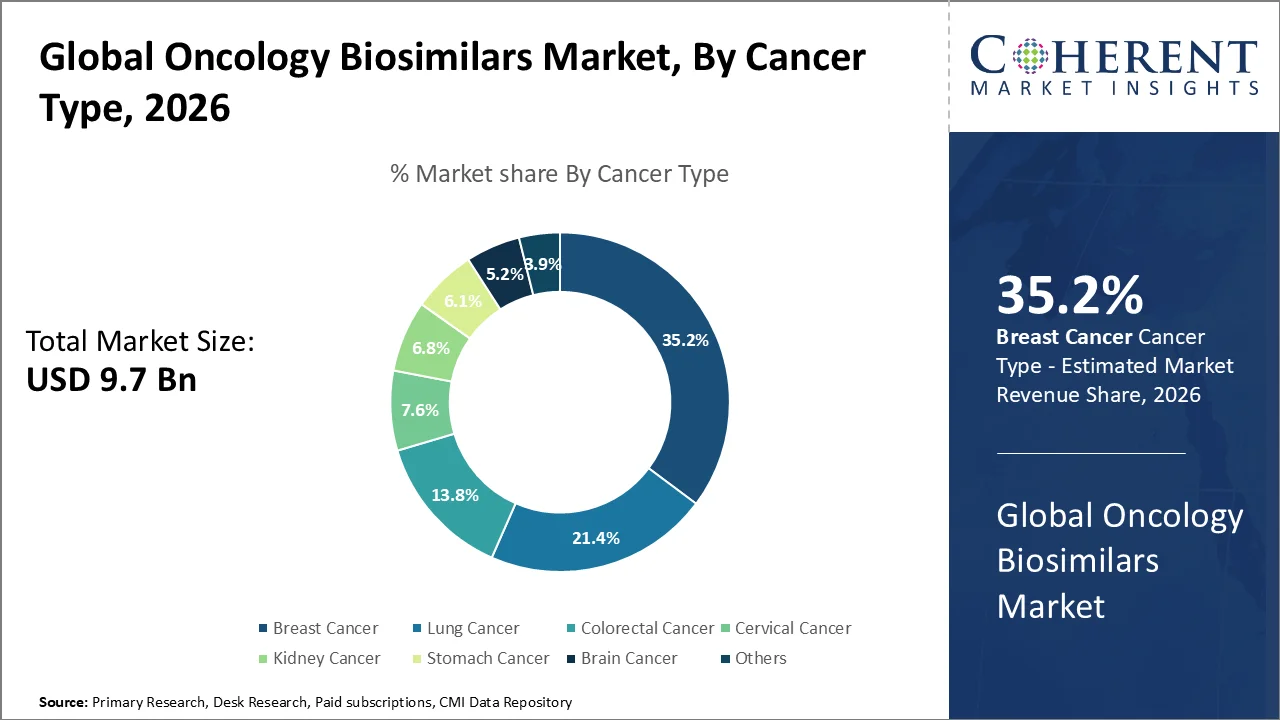
- The breast cancer segment is likely to dominate the market with 35.2% in 2026. The segment’s growth is owing to the high disease incidence and extensive use of trastuzumab biosimilars in HER2-positive treatment, creating sustained demand for affordable biologic treatment. WHO estimated 2.4 million women were diagnosed with breast cancer worldwide in 2024.
- The monoclonal antibodies segment is set to lead with 56.8% in 2026. The segment’s growth is owing to the central role in targeted oncology treatment across solid and hematologic malignancies. Biosimilars of trastuzumab, bevacizumab, and rituximab expand access while offering comparable safety and effectiveness to reference biologics.
- The hospital pharmacies segment are expected to dominate the market with a share of 65.5% in 2026. The segment’s growth is owing to the centralized procurement, specialist supervision, intravenous administration, and established oncology infusion infrastructure within high-volume oncology treatment centers.
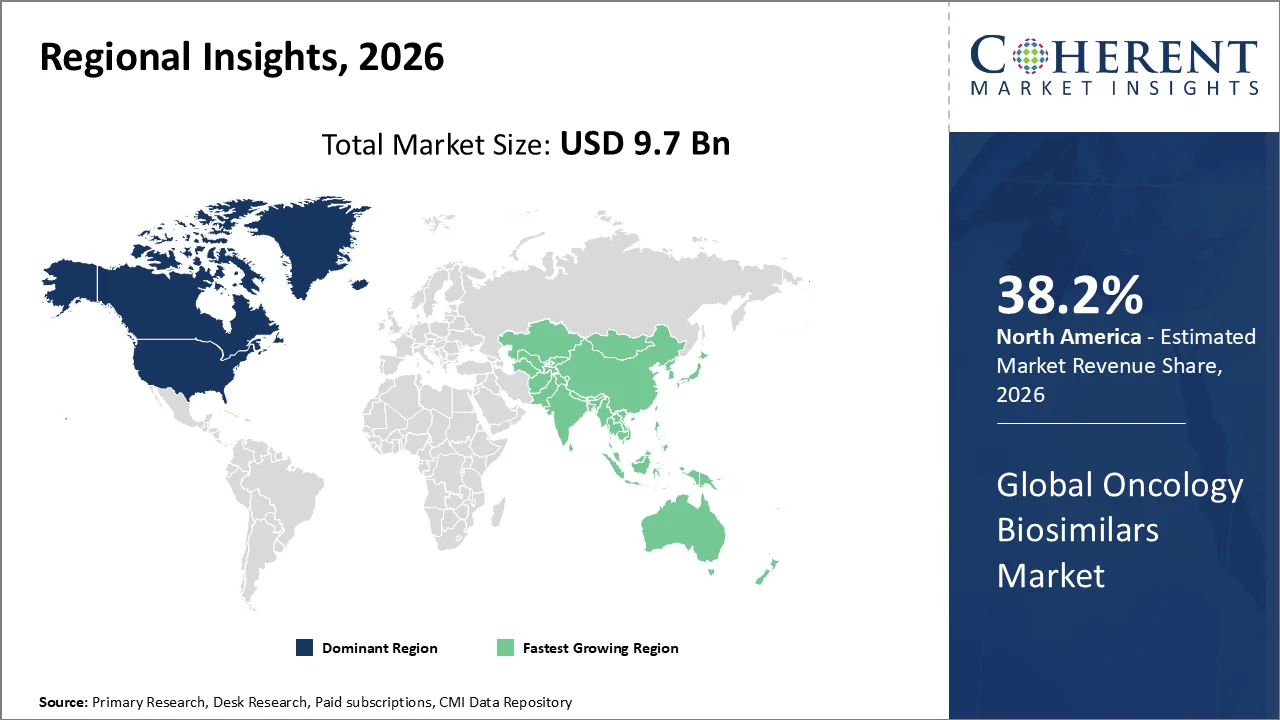
- North America is expected to acquire the prominent share of 38.2% in 2026. The region’s growth is owing to the high cancer incidence, favorable reimbursement, regulatory approvals, strong biosimilar competition, and broad physician acceptance regionally. Approximately 2.1 million new cancer cases are expected in the U.S. during 2026.
Segmental Insights
Why is Breast Cancer Segment Acquiring the Largest Share?
On the basis of cancer type, the breast cancer segment is projected to account for the largest Oncology Biosimilars Market share of 35.2% in 2026. The segment’s growth is owing to the substantial diagnosed patient pool, sustained use of HER2-targeted monoclonal antibodies, and increasing substitution of reference biologics with lower-cost trastuzumab biosimilars.
The U.S. National Cancer Institute’s SEER program estimates 321,910 new female breast cancer cases in 2026, thereby creating a treatment population across early-stage and metastatic settings. SEER also reports an incidence rate of 132.5 cases per 100,000 women annually, thereby strengthening the persistent demand for biologic therapy.
In April 2024, the FDA approved Hercessi (trastuzumab-strf), a biosimilar to Herceptin, for HER2-overexpressing breast cancer, including adjuvant and metastatic indications.
- Current Industry Events of 2026
- Market Size Estimation
- Regional Breakdown
- Competitive Landscape
- Customer Intelligence
- Segmental Analysis
- Pricing Analysis
- Key Market Drivers, Challenges & Future Trends
- Customized Insights Section
Monoclonal Antibodies hold the Largest Market Share
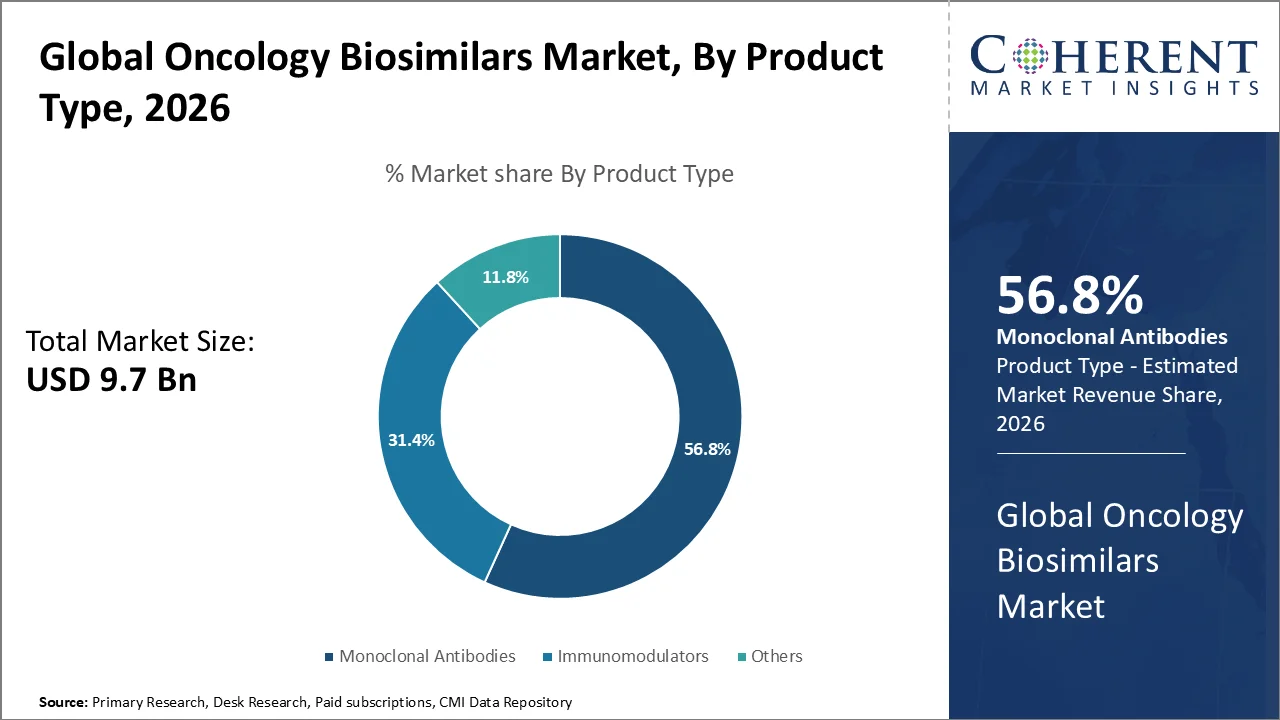
On the basis of product type, the monoclonal antibodies segment lead with a major 56.8% share in 2026. The growth is owing to the clinical use of trastuzumab, bevacizumab, rituximab, and pertuzumab biosimilars across breast, colorectal, lung, ovarian, and hematologic cancers. In October 2025, the U.S. FDA reported that it had approved 76 biosimilars, thereby expanding treatment choice and competition in biologic medicines including cancer therapies.
In November 2025, the FDA approved Poherdy, or pertuzumab-dpzb, as the first interchangeable biosimilar to Perjeta. It is indicated with trastuzumab and chemotherapy for HER2-positive metastatic, neoadjuvant, and adjuvant breast cancer treatment. This is strengthening the commercial and therapeutic position of monoclonal antibody biosimilars globally through hospital adoption as well as physician confidence.
Market Drivers
Rapid Shift Toward Lower-cost Biosimilars is Transforming the Market in the U.S.
The rapid shift toward lower-cost biosimilars is transforming the U.S. oncology biosimilars market by increasing competition for high-cost therapeutic and supportive-care biologics. Hospitals, oncology practices, and insurers are increasingly evaluating biosimilars to control treatment expenditure while maintaining comparable quality, safety, and clinical effectiveness.
In May 2026, the U.S. FDA approved Accord BioPharma’s Ennumo (pegfilgrastim-pccg), a biosimilar to Neulasta. Ennumo is indicated to reduce infection incidence, manifested by febrile neutropenia, among adults and pediatric patients with non-myeloid cancers receiving myelosuppressive chemotherapy. The approval expands the availability of lower-cost supportive oncology biologics and gives U.S. hospitals another option for managing chemotherapy-related neutropenia.
Growth of Chemotherapy-support Biosimilars: A Major Breakthrough in the Oncology Biosimilars Market
Chemotherapy-support biosimilars are emerging as a major breakthrough in the oncology biosimilars market by helping patients manage treatment-related complications at a potentially lower cost. The category mainly includes biosimilar versions of granulocyte colony-stimulating factors like filgrastim and pegfilgrastim. These biologics stimulate the bone marrow to produce neutrophils, thereby reducing the risk of infection among patients who develop chemotherapy-induced neutropenia.
In January 2026, Accord BioPharma received FDA approval for Filkri, a filgrastim biosimilar to Neupogen. Filkri stimulates neutrophil production in patients receiving cancer treatment and is approved for chemotherapy, bone marrow transplantation, chronic neutropenia, and radiation exposure indications across settings.
Current Events and Their Impact on the Oncology Biosimilars Market
Current Event | Description and its Impact |
2025 EMA Initiative to Streamline Biosimilar Development
|
|
2026 FDA Guidance on Non-U.S. Comparator Products |
|
Oncology Biosimilars Market Trends
- The expanding patent expiries and regulatory approvals are increasing the availability of biosimilar trastuzumab, bevacizumab, rituximab, pegfilgrastim, and pertuzumab across oncology indications, especially for HER2-positive breast cancer and supportive chemotherapy care in developed as well as emerging healthcare systems.
- Greater physician and hospital acceptance supports switching from reference biologics, as biosimilars deliver comparable safety and efficacy while improving affordability.
- Advanced analytical characterization, cell-line engineering, and scalable biomanufacturing reduce development complexity, strengthen product consistency, and support faster global commercialization while reducing batch failures and supply risks.
- The rising global cancer incidence is increasing the demand for cost-effective biologic therapies across breast, lung, colorectal, and hematologic cancers. In 2026, WHO and IARC reported nearly 10 million cancer deaths annually, with new cancer cases projected to approach 35 million worldwide by 2050.
- Supportive regulatory pathways is broadening the competition and patient access to biologic treatments. The U.S. FDA’s Center for Drug Evaluation and Research approved 18 biosimilars during 2025 including four biosimilars for reference products that previously had no approved biosimilar competitors, thereby demonstrating expanding regulatory support for affordable biological medicines.
Regional Insights
North America Dominates Owing to the Strong Regulatory Support and Cancer Treatment Demand
The North America region accounts for 38.2% of the market share in 2026. The region’s growth is owing to the substantial cancer burden, established biologic treatment infrastructure, and an active FDA biosimilar pathway.
CDC data show that 1,851,238 new cancer cases were reported in the United States, the latest incidence year available. The agency also recorded 613,349 cancer deaths in 2023, reinforcing demand for affordable biologics used across breast, colorectal, lung, hematologic, and metastatic cancers.
In February 2025, the FDA approved Osenvelt, or denosumab-bmwo, as a biosimilar to Xgeva. The product is indicated to prevent skeletal-related events in patients with multiple myeloma and bone metastases from solid tumors, and to treat giant cell tumor of bone and refractory hypercalcemia of malignancy.
Asia Pacific Oncology Biosimilars Market Trends
Asia Pacific is expected to witness strong growth in market over the forecast period. The region’s growth is owing to the cancer burden, expanding biologic treatment capacity, and regulatory pathways encouraging locally developed alternatives.
IARC’s GLOBOCAN 2024 estimates recorded 10,471,458 new cancer cases across Asia, creating sustained demand for affordable monoclonal antibodies used in breast, lung, colorectal, gastric, and hematologic cancers. India, China, Japan, South Korea, and Australia are strengthening clinical development, manufacturing, and hospital adoption.
In May 2026, India’s CDSCO oncology committee recommended permission for Intas Pharmaceuticals to manufacture and market a proposed trastuzumab emtansine biosimilar after reviewing Phase III comparability data in HER2-positive breast cancer.
Established Biologics Infrastructure and Expanding FDA Approvals is Accelerating the Oncology Biosimilars Market in United States
The U.S. is the largest individual market for Oncology Biosimilars. This is owing to the established biologics infrastructure, expanding FDA approvals, and strong demand for lower-cost cancer therapies. In March 2026, the FDA reported 82 approved biosimilars, including products used in oncology and supportive cancer care.
China Oncology Biosimilars Market Trends
China is emerging as an important Asia Pacific market owing to high cancer burden, expanding biologics manufacturing capabilities, and supportive regulatory environment for domestically developed biosimilars. In May 2026, Henlius received NMPA approval for HANBEIYOU, its pertuzumab biosimilar, covering early-stage and metastatic HER2-positive breast cancer.
Who are the Major Companies in Oncology Biosimilars Industry
Some of the major key players in Oncology Biosimilars Market are Amgen Inc., Allergan, Plc, Mylan N.V., Samsung Bioepis Co., Ltd., Teva Pharmaceutical Industries Ltd., Pfizer Inc., Celltrion Healthcare, Novartis International AG, Biogen Idec, Inc., and Biocon Limited.
Key News
- In April 2026, Biocon launched Bosaya and Aukelso, interchangeable denosumab biosimilars, across the United States. The products expand treatment access for osteoporosis and cancer-related bone complications.
- In January 2026, Zydus launched Tishtha, the world’s first nivolumab biosimilar, in India for treating multiple cancers. Tishtha costs approximately one-fourth of the reference drug, improves affordability, supports flexible dosing, reduces medicine wastage, and may benefit more than 500,000 patients.
Market Report Scope
Oncology Biosimilars Market Report Coverage
| Report Coverage | Details | ||
|---|---|---|---|
| Base Year: | 2025 | Market Size in 2026: | USD 9.7 Bn |
| Historical Data for: | 2020 To 2024 | Forecast Period: | 2026 To 2033 |
| Forecast Period 2026 to 2033 CAGR: | 16.6% | 2033 Value Projection: | USD 28.5 Bn |
| Geographies covered: |
| ||
| Segments covered: |
| ||
| Companies covered: | Amgen Inc., Allergan, Plc, Mylan N.V., Samsung Bioepis Co., Ltd., Teva Pharmaceutical Industries Ltd., Pfizer Inc., Celltrion Healthcare, Novartis International AG, Biogen Idec, Inc., and Biocon Limited. | ||
| Growth Drivers: |
| ||
| Restraints & Challenges: |
| ||
Analyst Opinion
- The Oncology Biosimilars Market growth is supported by the expanding cancer treatment needs. IARC projects global cancer incidence to increase by 67% between 2024 and 2050, intensifying pressure on treatment budgets. The demand is structural as health systems increasingly require affordable biologic therapies at scale.
- Cost pressure is speeding the adoption. The FDA states that biologics represent only 5% of prescriptions but account for 51% of drug spending, thereby making lower-cost biosimilars vital for improving patient access and reducing expenditure across hospitals, insurers, and programs.
- Regulatory confidence is strengthening the market growth. The FDA-approved biosimilars must demonstrate high similarity and no clinically meaningful differences from reference products. Wider availability of trastuzumab, bevacizumab, rituximab, pegfilgrastim, and denosumab biosimilars is expanding treatment choice across breast, lung, colorectal, blood, stomach, and other cancers, while encouraging physician acceptance, payer substitution, and competition across developed and emerging markets.
Speak to the analyst
Want personalized insights?
Take the findings above to one of our principal consultants, or have the report rebuilt around the segments, geographies and competitors you actually track.
Market Segmentation
- By Cancer Type (Revenue, USD Bn, 2021-2033)
- Lung Cancer
- Colorectal cancer
- Cervical Cancer
- Breast Cancer
- Kidney cancer
- Stomach cancer
- Brain Cancer
- Others
- By Product Type (Revenue, USD Bn, 2021-2033)
- Monoclonal Antibody
- Immunomodulators
- Others
- By Distribution Channel (Revenue, USD Bn, 2021-2033)
- Hospital Pharmacies
- Online Pharmacies
- Retail Pharmacies
- By Region (Revenue, USD Bn, 2021-2033)
- North America
- U.S.
- Canada
- Latin America
- Brazil
- Mexico
- Argentina
- Rest of Latin America
- Europe
- Germany
- U.K.
- France
- Italy
- Spain
- Russia
- Rest of Europe
- Asia Pacific
- China
- India
- Japan
- Australia
- South Korea
- ASEAN
- Rest of Asia Pacific
- Middle East
- GCC
- Israel
- Rest of Middle East
- Africa
- South Africa
- Central Africa
- North Africa
- North America
Sources
Primary Research Interviews
- Medical oncologists
- Hematologist-oncologists
- Oncology pharmacists
- Hospital administrators and procurement managers
- Cancer treatment center managers
- Biosimilar manufacturers and distributors
- Health insurance providers and reimbursement specialists
- Key opinion leaders (KOLs) in oncology and biosimilars
Databases
- World Health Organization (WHO)
- U.S. Food and Drug Administration (FDA)
- European Medicines Agency (EMA)
- National Institutes of Health (NIH)
- National Cancer Institute (NCI)
- Organisation for Economic Co-operation and Development (OECD)
Magazines
- Oncology Times
- Cancer Therapy Advisor
- The Cancer Letter
- Pharmaceutical Technology
Journals
- Journal of Clinical Oncology
- The Lancet Oncology
- Cancer
- BioDrugs
- Targeted Oncology
- Journal of Oncology Pharmacy Practice
Newspapers
- The New York Times
- The Guardian
- The Wall Street Journal
- Financial Times
Associations
- American Society of Clinical Oncology (ASCO)
- European Society for Medical Oncology (ESMO)
- National Comprehensive Cancer Network (NCCN)
- International Society of Oncology Pharmacy Practitioners (ISOPP)
- Association for Accessible Medicines (AAM)
- Medicines for Europe
Public Domain Sources
- Company annual reports and investor presentations
- Government health ministry publications
- Regulatory approval databases and assessment reports
- Clinical trial registries such as ClinicalTrials.gov
- National cancer registries and healthcare expenditure databases
- Biosimilar approval and product-label databases published by the FDA and EMA
Proprietary Elements
- CMI Data Analytics Tool
- Proprietary CMI Existing Repository of Information for Last 10 Years
Get access to 250+ pages report
Every segment, forecast, competitor profile and data table behind the analysis above — available for instant download.
- ESOMAR Member
- ISO 9001:2015 Certified
- D-U-N-S Registered
- GDPR & CCPA Compliant
Missing comfort of reading report in your local language? Find your preferred language:
Transform your Strategy with Exclusive Trending Reports
Frequently Asked Questions
The Oncology Biosimilars Market is expected to reach USD 28.5 Bn in 2033.
Major players operating in the global Oncology Biosimilars Market include Amgen Inc., Allergan, Plc, Mylan N.V., Samsung Bioepis Co., Ltd., Teva Pharmaceutical Industries Ltd., Pfizer Inc., Celltrion Healthcare, Novartis International AG, Biogen Idec, Inc., and Biocon Limited.
The brand loyalty and physician skepticism, high development and manufacturing complexity, and stringent regulatory hurdles the key factors hampering growth of the market.
The rising cancer cases, patent expirations for blockbuster biologic drugs, and the urgent need for lower healthcare costs is boosting the demand for Oncology Biosimilars.
The Oncology Biosimilars Market is anticipated to grow at a CAGR of 16.6% between 2026 and 2033.
Among regions, North America is expected to account for a largest market share in the global Oncology Biosimilars Market over the forecast period.
The global Oncology Biosimilars Market is on a steady upward trajectory owing to the expiring biologic patents, rising cancer burdens, and demands for healthcare cost containment.