

Gene Therapy for Rare Disease Market Size and Share Analysis - Growth Trends and Forecast (2026 - 2033)
The global gene therapy for rare disease market size is projected to grow from USD 242.5 Mn in 2026 to USD 1,978.7 Mn by 2033, registering a compound annual growth rate (CAGR) of 35% during the forecast period (2026-2033). This growth is mainly driven by increasing prevalence of rare genetic disorders, rising investments in advanced gene therapy research, growing approvals of innovative gene-based treatments, and expanding adoption of precision medicine worldwide. According to an article published by Rare Diseases International, over 300 million persons live with a rare disease worldwide. Over 6 000 rare diseases have been identified. They affect nearly 5% of the global population.
Key Takeaways from the Gene Therapy for Rare Disease Market Report
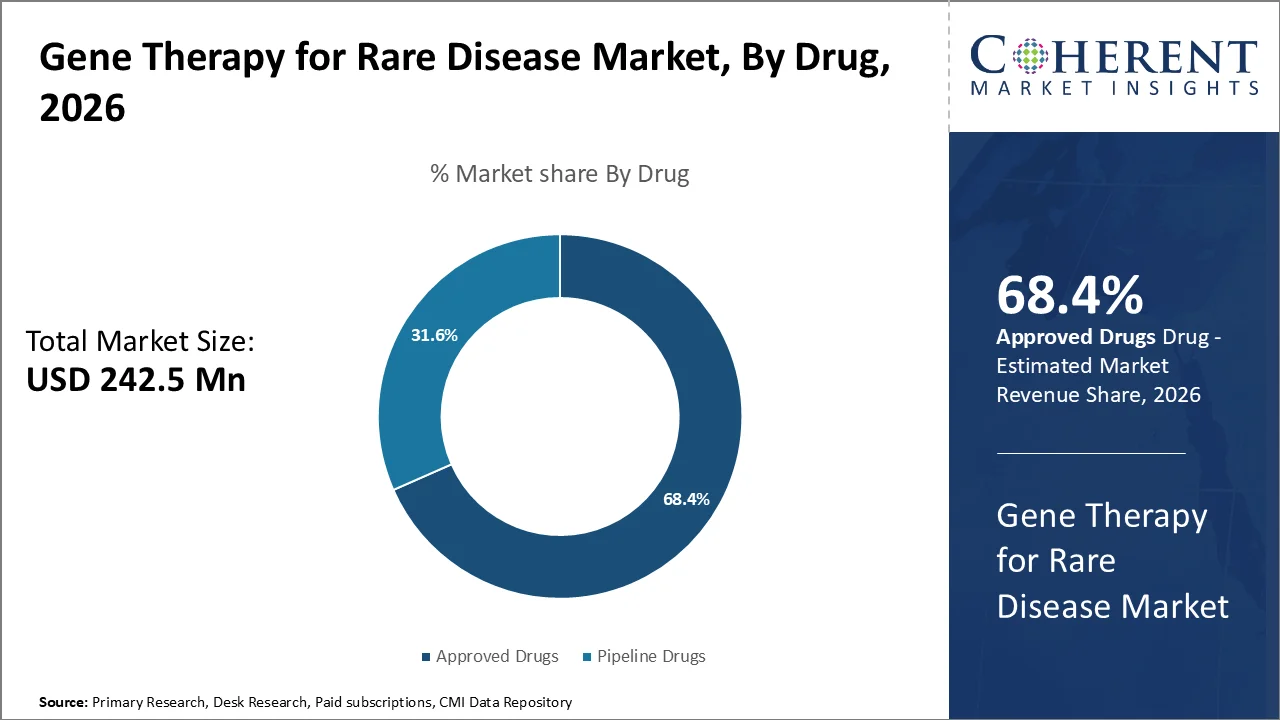
- The approved drugs segment is expected to dominate the market with a share of 68.4% in 2026 owing to increasing commercialization of FDA and EMA-approved gene therapies and rising adoption of advanced rare disease treatments. According to the U.S. Food and Drug Administration (FDA), the number of approved cell and gene therapy products has increased significantly over the past few years, supporting rapid market expansion.
- The oncology segment holds the largest share, expected to account for 36.7% in 2026. The rising incidence of rare blood cancer cases and the increasing use of gene edited CAR T-cell therapy is boosting the segment growth. The American Cancer Society claims that blood cancers such as leukemia, lymphoma, and myeloma constitute a major disease burden across the globe.
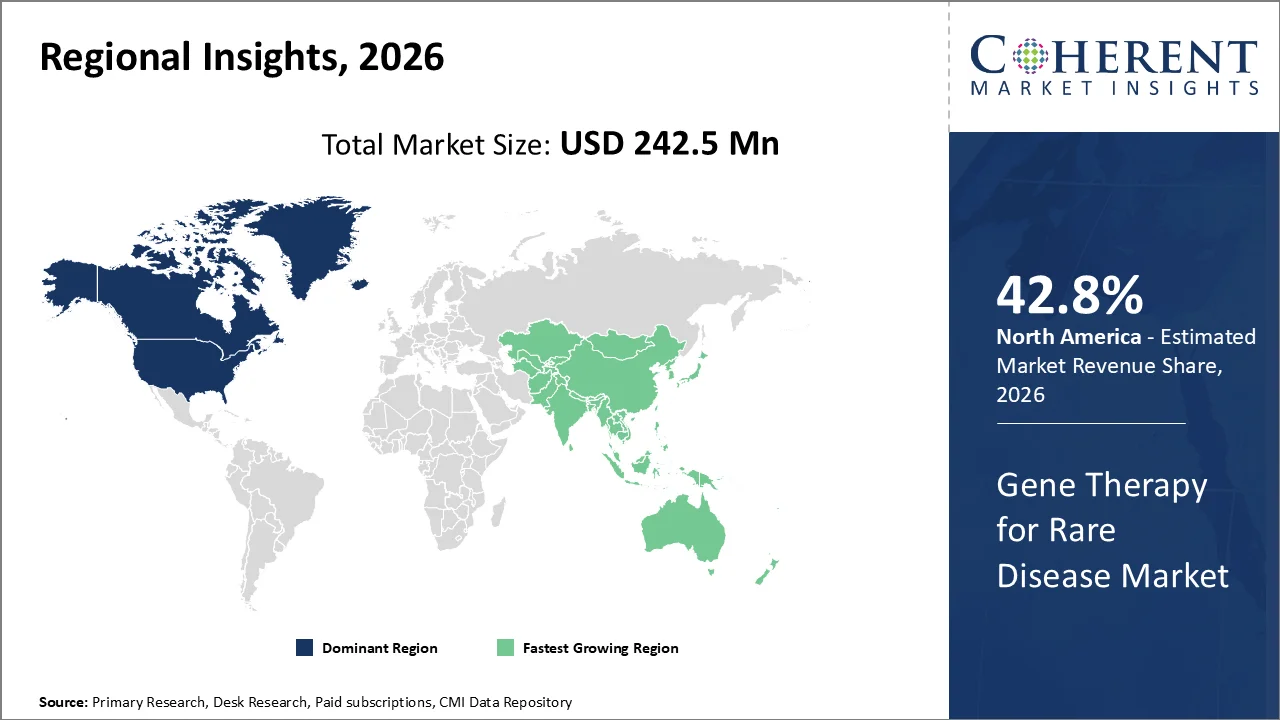
- The North American region is forecast to hold the major share of around 42.8% of the global market for gene therapy in rare diseases by 2026 due to a strong presence of leading biotech players in the region. The government of the United States, through the National Institutes of Health (NIH), has been making substantial investments in research on genetic disorders and precision medicine.
Segmental Insights
Why is the Approved Drugs Segment Acquiring the Largest Market Share?
The approved drugs segment is anticipated to hold the largest market share in the global gene therapy for rare disease market during the forecast period of 2026, accounting for nearly 68.4% of the overall market revenue. This is because of the growing use of commercially available gene therapies approved by the Food & Drug Administration (FDA) and European Medicines Agency (EMA), along with an increase in the application of clinical trial-based gene therapy for rare diseases.
The increasing success of treatments like Kymriah, Yescarta, Luxturna, and Zolgensma continues to improve the commercial environment for FDA-approved gene therapies. Improvements in the manufacture of such drugs and the establishment of more treatment centers is helping with this process.
In January 2025, Novartis announced continued expansion of global access programs for Kymriah to strengthen treatment availability for eligible cancer patients worldwide. Such developments are accelerating growth in the approved drugs segment.
- Current Industry Events of 2026
- Market Size Estimation
- Regional Breakdown
- Competitive Landscape
- Customer Intelligence
- Segmental Analysis
- Pricing Analysis
- Key Market Drivers, Challenges & Future Trends
- Customized Insights Section
Which Therapeutic Application Segment Dominates the Market?
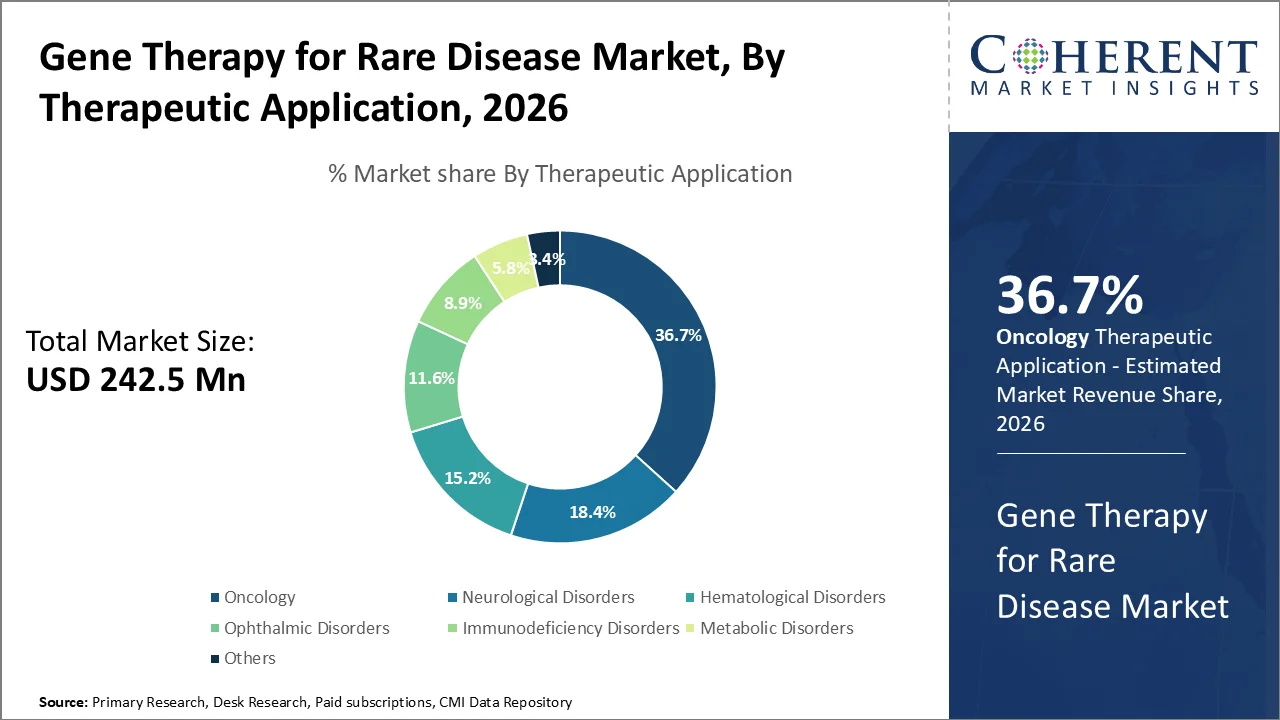
The oncology segment is estimated to capture an approximate share of 36.7% in the gene therapy for rare disease market on a global scale, driven by an increase in the incidence of rare hematological cancers along with the rising use of CAR-T and gene-engineered immunotherapies. Gene therapies are increasingly being used to treat rare hematological malignancies such as leukemia, lymphoma, and multiple myelomas has witnessed widespread adoption.
Improved clinical outcomes, expanding reimbursement coverage, and increasing regulatory approvals have accelerated adoption of CAR-T therapies. Also, drug firms are making significant investments in novel oncology gene therapies that offer enhanced safety and efficacy.
In March 2025, Gilead Sciences continued expansion of Yescarta treatment programs across multiple international markets to improve access to CAR-T therapy for lymphoma patients.
Market Drivers
Increasing Regulatory Approvals and Commercialization of Gene Therapies is Accelerating the Gene Therapy for Rare Disease Market
Rapidly rising regulatory approvals of new age gene therapies have been responsible for fueling growth within the market for gene therapy for rare diseases. Regulatory authorities are increasingly supporting the development of next-generation gene therapies by offering fast track approvals and orphan drug status for rare diseases.
According to the FDA (U.S. Food and Drug Administration), there have been many increases in the number of investigational new drug applications for cell and gene therapies in recent years, where hundreds of ongoing clinical development programs exist within the United States.
In April 2024, Vertex Pharmaceuticals and CRISPR Therapeutics expanded commercialization activities for Casgevy, one of the first approved CRISPR/Cas9-based gene-editing therapies for sickle cell disease and transfusion-dependent beta thalassemia.
Rising Prevalence of Rare Genetic Disorders and Expansion of Clinical Research is Supporting Market Growth
The rising prevalence of rare genetic disorders globally is increasing demand for innovative gene therapies. Historically, most rare genetic disorders lacked effective treatment options, prompting health care institutions and research institutes to focus on research in gene replacement therapy and gene editing. Recent progress in genomics and viral vector technology has enhanced diagnostic techniques and improved the precision of therapy for ultra-rare disorders.
According to the National Organization for Rare Disorders (NORD), around 300 million individuals are suffering from rare diseases across the globe, which can largely be attributed to genetic factors accounting for close to 80% of such diseases.
Current Events and Their Impact
Current Event | Description and its Impact |
Increasing FDA Approvals for Gene Therapies and Rare Disease Treatments |
|
Expansion of Global Rare Disease Research and Gene Editing Investments |
|
Gene Therapy for Rare Disease Market Trends
- Increased use of CRISPR and gene editing has been boosting innovation in the field of rare disease treatment.
- The rising number of rare genetic disorders is increasing the need for gene therapy. The National Organization for Rare Disorders (NORD) states that about 300 million individuals are living with rare diseases around the world.
- Increasing pipelines in clinical trials for gene and cell therapies have positively impacted market growth prospects. As stated by the American Society of Gene & Cell Therapy (ASGCT), there are numerous gene and cell therapy products being developed around the world.
- The growing trend of regulatory backing and orphan drug policies is contributing towards faster adoption of gene therapy for rare diseases. Regulators like the European Medicines Agency (EMA) are still supporting faster approval timelines.
- The increasing investments in vector production facilities are helping in enhancing manufacturing scalability and accessibility of gene therapies. This includes companies like Novartis and Pfizer, which are developing global manufacturing facilities.
- Rising use of genetic sequencing and personalized medicine is contributing to better diagnoses and treatments for rare genetic diseases. As stated by the National Institutes of Health (NIH), advancements in precision medicine have greatly benefited studies on rare diseases.
Regional Insights
North America Dominates Owing to Strong Presence of Gene Therapy Developers and Advanced Healthcare Infrastructure
North America holds about 42.8% market share by 2026 owing to the significant contribution made by the presence of key biotech and pharmaceutical players, along with an advanced infrastructure base, increasing regulatory approvals for rare disease gene therapy, and ongoing investments in genomics-based medicine, viral vectors, and CAR-T cells, especially in the U.S.
In March 2026, Rocket Pharmaceuticals announced FDA approval of KRESLADI for pediatric patients with severe Leukocyte Adhesion Deficiency-I (LAD-I), an ultra-rare genetic immunodeficiency disorder.
Asia Pacific Gene Therapy for Rare Disease Market Trends
The Asia Pacific is expected to grow at the fastest rate in the forecast period 2026-2033, recording a CAGR of about 38.2%. The key factors that will contribute to the growth of this market include increased investments in biotechnological research, development of health care infrastructure, growing knowledge about rare genetic disorders, and advancements in genomic sequencing.
In May 2026, Takeda Pharmaceutical Company announced strong pipeline progress and continued investments in rare diseases and advanced therapies during its FY2025 results announcement.
U.S. Gene Therapy for Rare Disease Market Trends
The gene therapy for rare disease market in the United States is anticipated to experience substantial growth during the forecast period. Such growth is attributable to various factors such as approval of new gene therapy products, increased biotech venture capital investments, increase in the number of rare genetic diseases, and precision medicine advancements.
One of the factors propelling industry growth is the increasing commercialization of the FDA-approved gene and cell therapy products in the field of hematologic disorders, neurological conditions, and inherited retinal diseases. As per the U.S. Food and Drug Administration (FDA), the regulatory body supports and approves accelerated and orphan drug approvals in order to promote rare disease treatments. The U.S. has an equally strong pipeline in terms of gene-editing therapies and CAR-T products.
China Gene Therapy for Rare Disease Market Forecast
China is anticipated to be among the leading markets for gene therapy for rare diseases over the forecast period. This will be fueled by growing government support for innovative developments in biotech and genomic medicines, growing knowledge about rare diseases, and rising number of clinical research initiatives.
In March 2026, Belief BioMed announced that BBM-H901 (Dalnacogene Ponparvovec Injection), China’s first hemophilia B gene therapy, received official approval in Macao, China.
Who are the Major Companies in Gene Therapy for Rare Disease Industry
Some of the major key players in Gene Therapy for Rare Disease are Kite Pharma, Inc. (Gilead Sciences, Inc.), Novartis International AG, Juno Therapeutics Inc. (Celgene Corporation), Bluebird Bio, Inc., Spark Therapeutics, Inc., uniQure N.V, Orchard Therapeutics Plc., PTC Therapeutics, Inc., and BioMarin Pharmaceutical Inc.
Industry News
- In May 2026, Novartis International AG continued advancing its rare disease gene therapy portfolio through ongoing development and commercialization efforts for Zolgensma for spinal muscular atrophy (SMA).
- In April 2026, Bluebird Bio, Inc. (now Genetix Biotherapeutics) announced its corporate rebranding to Genetix Biotherapeutics while reaffirming commitment toward gene therapies for sickle cell disease, β-thalassemia, and cerebral adrenoleukodystrophy (CALD).
Market Report Scope
Gene Therapy for Rare Disease Market Report Coverage
| Report Coverage | Details | ||
|---|---|---|---|
| Base Year: | 2025 | Market Size in 2026: | USD 242.5 Mn |
| Historical Data for: | 2020 To 2024 | Forecast Period: | 2026 To 2033 |
| Forecast Period 2026 to 2033 CAGR: | 35% | 2033 Value Projection: | USD 1,978.7 Mn |
| Geographies covered: |
| ||
| Segments covered: |
| ||
| Companies covered: | Kite Pharma, Inc. (Gilead Sciences, Inc.), Novartis International AG, Juno Therapeutics Inc. (Celgene Corporation), Bluebird Bio, Inc., Spark Therapeutics, Inc., uniQure N.V, Orchard Therapeutics Plc., PTC Therapeutics, Inc., and BioMarin Pharmaceutical Inc. | ||
| Growth Drivers: |
| ||
| Restraints & Challenges: |
| ||
Analyst Opinion
- Gene Therapy for Rare Diseases Market Growth is mainly influenced by unmet medical needs as over 300 million people worldwide are affected by rare diseases that lack efficient treatments. Gene therapy is considered as a possible single treatment modality for curing diseases permanently.
- Orphan drugs and rare disease treatments are receiving more regulatory support to foster market growth. With fast-track approvals and priority review programs provided by regulatory bodies, biotech firms are being prompted to make extensive investments in rare disease gene therapies.
- Developments in viral vector technology, genome editing techniques, and production are enhancing the safety and efficacy of gene therapy treatments. Developments in these areas have paved the way for more effective gene therapy treatments for genetic diseases like spinal muscular atrophy, hemophilia, sickle-cell anemia, and various retinal diseases.
- The commercial success of the gene therapies approved like Zolgensma, Luxturna, and Roctavian has bolstered the investor’s confidence and prompted more research partnerships and trials in this niche.
- Despite strong growth potential, high treatment costs and reimbursement challenges remain major barriers to broader adoption, particularly in developing healthcare markets where access to advanced genetic therapies is still limited.
Speak to the analyst
Want personalized insights?
Take the findings above to one of our principal consultants, or have the report rebuilt around the segments, geographies and competitors you actually track.
Market Segmentation
- By Drug (Revenue, USD Mn, 2021-2033)
- Approved Drugs
- Tisagenlecleucel (Kymriah)
- Axicabtagene ciloleucel (Yescarta)
- Voretigene neparvovec (Luxturna)
- Strimvelis
- Pipeline Drugs
- GT-AADC
- Fidanacogene elaparvovec (SPK-9011)
- OTL-200
- bb2121
- AMT-061
- Others
- Approved Drugs
- By Therapeutic Application (Revenue, USD Mn, 2021-2033)
- Oncology
- Neurological Disorders
- Ophthalmic Disorders
- Hematological Disorders
- Immunodeficiency Disorders
- Metabolic Disorders
- Others
- Global Gene Therapy for Rare Disease Market, By Region: (Revenue, USD Mn, 2021-2033)
- North America
- U.S.
- Canada
- Latin America
- Brazil
- Mexico
- Argentina
- Rest of Latin America
- Europe
- Germany
- U.K.
- France
- Italy
- Spain
- Russia
- Rest of Europe
- Asia Pacific
- China
- India
- Japan
- Australia
- South Korea
- ASEAN
- Rest of Asia Pacific
- Middle East
- GCC
- Israel
- Rest of Middle East
- Africa
- South Africa
- Central Africa
- North Africa
- North America
- Key Players
- Kite Pharma, Inc. (Gilead Sciences, Inc.)
- Novartis International AG
- Juno Therapeutics Inc. (Celgene Corporation)
- Bluebird Bio, Inc.
- Spark Therapeutics, Inc.
- uniQure N.V.
- Orchard Therapeutics Plc.
- PTC Therapeutics, Inc.
- BioMarin Pharmaceutical Inc.
Sources
Primary Research Interviews
- Gene therapy researchers
- Clinical geneticists
- Rare disease specialists
- Biotechnology company executives
- Hospital pharmacy managers
- CAR-T therapy specialists
- Regulatory affairs professionals
- Key opinion leaders (KOLs) in gene therapy and rare diseases
Databases
- World Health Organization (WHO)
- U.S. Food and Drug Administration (FDA)
- National Institutes of Health (NIH)
- National Organization for Rare Disorders (NORD)
- European Medicines Agency (EMA)
- ClinicalTrials.gov
- American Society of Gene & Cell Therapy (ASGCT)
Magazines
- Genetic Engineering & Biotechnology News (GEN)
- BioPharma Dive
- Pharmaceutical Technology
- Genetic Literacy Project
Journals
- Nature Genetics
- Molecular Therapy
- The American Journal of Human Genetics
- Gene Therapy Journal
- Orphanet Journal of Rare Diseases
Newspapers
- The Wall Street Journal
- Financial Times
- The New York Times
- Reuters
Associations
- American Society of Gene & Cell Therapy (ASGCT)
- National Organization for Rare Disorders (NORD)
- European Society of Gene & Cell Therapy (ESGCT)
- Alliance for Regenerative Medicine (ARM)
Public Domain Sources
- Company Annual Reports and Investor Presentations
- Government Healthcare and Biotechnology Publications
- Clinical Trial Registries such as ClinicalTrials.gov
- Regulatory Agency Publications and Drug Approval Announcements
Proprietary Elements
- CMI Data Analytics Tool
- Proprietary CMI Existing Repository of Information for Last 10 Years
Get access to 250+ pages report
Every segment, forecast, competitor profile and data table behind the analysis above — available for instant download.
- ESOMAR Member
- ISO 9001:2015 Certified
- D-U-N-S Registered
- GDPR & CCPA Compliant
Missing comfort of reading report in your local language? Find your preferred language:
Transform your Strategy with Exclusive Trending Reports
Frequently Asked Questions
The Gene Therapy for Rare Disease Market is expected to reach USD 1,978.7 Mn by 2033.
High treatment costs, limited reimbursement coverage, complex manufacturing processes, and limited accessibility in developing regions are major factors restraining market growth.
Increasing prevalence of rare genetic disorders, rising approvals of advanced gene therapies, growing investments in genomic medicine, and expanding adoption of precision medicine are driving market growth.
The Gene Therapy for Rare Disease Market is anticipated to grow at a CAGR of 35% between 2026 and 2033.
Among regions, North America is expected to account for the largest market share in the global gene therapy for rare disease market during the forecast period.
Gene therapy treatment costs vary significantly depending on the disease and therapy type, with many approved treatments ranging from USD 500,000 to over USD 3 million per patient.
Gene therapy for rare disease is an advanced medical treatment approach that modifies, replaces, or repairs defective genes to treat or potentially cure rare genetic disorders.