

Cell Surface Markers Detection Market Size and Trends
Cell Surface Markers Detection Market is estimated to be valued at USD 7,117.0 Mn in 2026 and is expected to reach USD 13,322.5 Mn in 2033, exhibiting a compound annual growth rate (CAGR) of 9.4% from 2026 to 2033.
Key Takeaways
- Based on Product, the flow cytometry segment dominates the global cell surface markers detection market in 2026, accounting approximately 39.7% share, as it enables rapid, precise, and multiparametric analysis of cell populations.
- Based on Application, the disease diagnosis and identification segment is expected to contribute the largest share of the market in 2026, as cell surface markers are essential for accurately detecting and characterizing various diseases.
- Based on Region, North America remains the leading region in the global cell surface markers detection market in 2026, capturing around 42% share. While, Asia Pacific is anticipated to be the fastest growing region during the forecast period.
Market Overview
The cell surface markers detection market demand is experiencing significant growth, driven by advancements in biomedical research, diagnostics, and the increasing prevalence of chronic diseases. This market encompasses technologies and reagents used to identify specific proteins or molecules expressed on the surface of cells, which are crucial for understanding various cellular functions and disease states.
Current Events and their Impact on the Cell Surface Markers Detection Market
Current Event | Description and its Impact |
Technological Advancements in Single-Cell Analysis |
|
Increasing Investments in Immunotherapy and Personalized Medicine |
|
End-User Feedback and Unmet Needs in the Cell Surface Markers Detection Market
- Need for Faster Turnaround Times: Clinical laboratories and hospitals report the need for quicker test results. While technologies like flow cytometry are highly accurate, sample processing and analysis can be time-consuming, affecting diagnostic speed.
- Simplified and User-Friendly Platforms: End-users, particularly in smaller diagnostic centers and research labs, express the need for instruments that are easier to operate, require minimal training, and reduce procedural complexity.
- Cost-Effectiveness: High costs of advanced instruments, reagents, and consumables remain a key concern, especially for emerging markets. Users seek more affordable solutions without compromising accuracy and sensitivity.
- Standardization and Reproducibility: Variability in protocols and results between laboratories is a recurring concern. Users emphasize the need for standardized assays, reference materials, and calibration procedures to improve consistency.
- Integration with Digital and Data Analytics Tools: There is growing demand for systems that integrate with digital platforms for automated data analysis, reporting, and interpretation, enabling more efficient decision-making in clinical and research settings.
- Current Industry Events of 2026
- Market Size Estimation
- Regional Breakdown
- Competitive Landscape
- Customer Intelligence
- Segmental Analysis
- Pricing Analysis
- Key Market Drivers, Challenges & Future Trends
- Customized Insights Section
Reimbursable Conditions for Flow Cytometry Cell Surface Marker Detection
Flow cytometry for immunophenotyping may be reimbursed when used for the evaluation or monitoring of:
- Hematologic Disorders
- Cytopenias (e.g., anemia, neutropenia, thrombocytopenia)
- Lymphomas
- Leukemia
- Lymphoproliferative disorders
- Myelodysplastic syndromes (MDS)
- Chronic Lymphocytic Leukemia (CLL)
- Chronic Myeloproliferative Disorders (CMPD)
- Minimal Residual Disease (MRD)
- Hypercellular Hematolymphoid Disorders
- Immunologic and Infectious Conditions
- B-cell monitoring for immunosuppressive disorders
- T-cell monitoring for HIV/AIDS
- Primary Immunodeficiencies (PIDs), including those involving T cells and NK cells
Segmental Insights
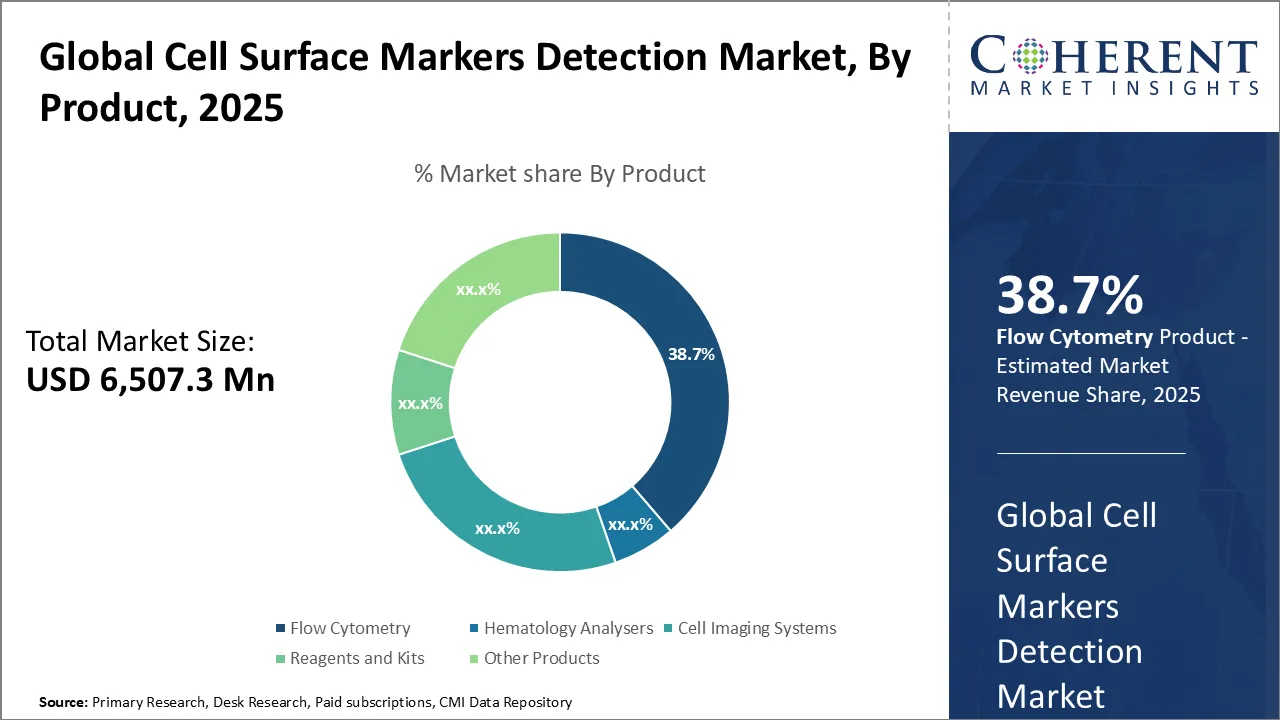
Cell Surface Markers Detection Market Insights, By Product: Flow Cytometry Acquires the most prominent share as it Enables Rapid, Precise, And Multiparametric Analysis of Cell Populations
In terms of product, the flow cytometry segment is expected to command 39.7% share of the cell surface markers detection market in 2026, as it enables rapid, precise, and multiparametric analysis of cell populations. This technology allows researchers and clinicians to identify and quantify specific cell surface markers with high sensitivity and accuracy, which is essential for immunophenotyping, disease diagnosis, and monitoring treatment responses. Its ability to analyze thousands of cells per second, combined with real-time data generation, makes it indispensable in clinical diagnostics, cancer research, and drug development. Additionally, flow cytometry supports personalized medicine initiatives by providing detailed insights into cellular heterogeneity, helping optimize therapeutic strategies and improve patient outcomes.
For instance, in May 2023, Sysmex Corporation launched its Clinical Flow Cytometry System in Japan, combining the XF-1600 flow cytometer, PS-10 sample preparation system, and monoclonal antibody reagents. This integrated system automates the entire flow cytometry testing process from sample preparation to result reporting, enhancing efficiency and standardization in diagnosing hematological diseases like leukemia and lymphoma.
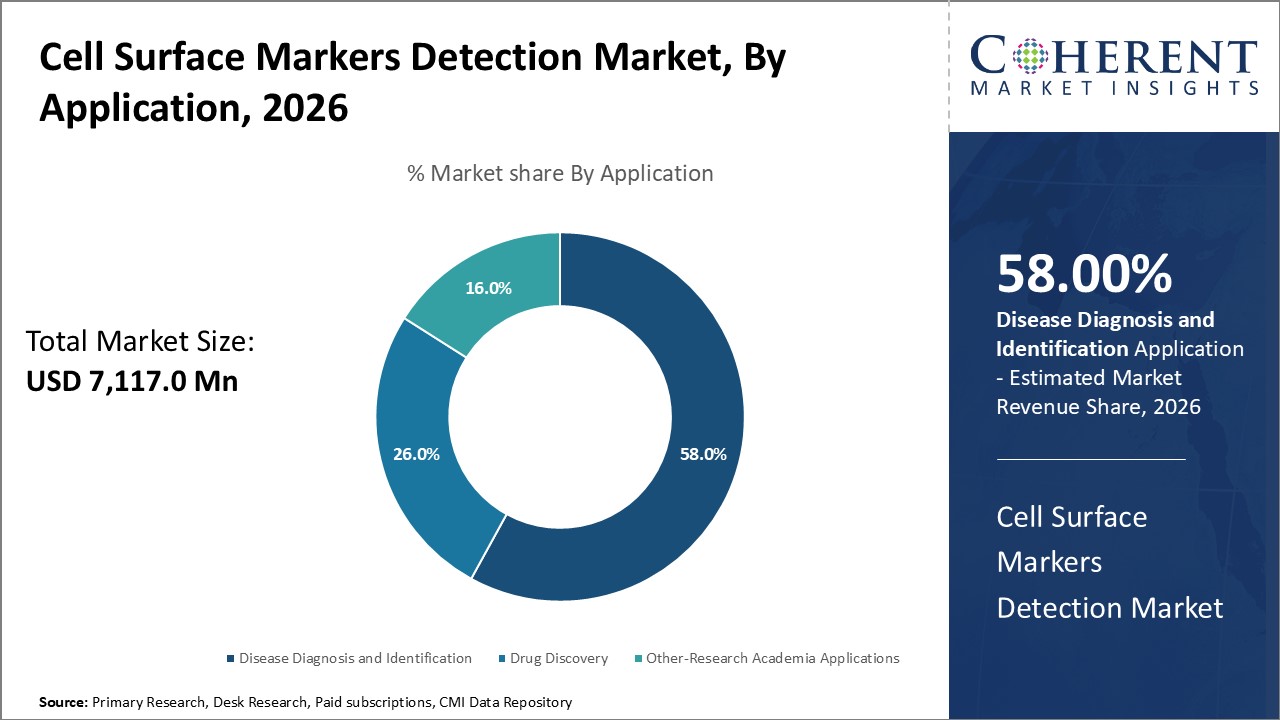
Cell Surface Markers Detection Market Insights, By Application: Disease Diagnosis and Identification holds the dominant share
In terms of application, the disease diagnosis and identification segment is expected to dominate the market in 2026 with largest share, as cell surface markers are essential for accurately detecting and characterizing various diseases. These markers help identify specific cell types, stages of disease progression, and immune responses, which is particularly critical in cancer, autoimmune disorders, and infectious diseases. Accurate detection enables early diagnosis, targeted therapy, and personalized treatment plans, improving patient outcomes. Additionally, growing adoption of precision medicine and the need for reliable biomarkers in clinical research and therapeutic development are further boosting the demand for cell surface marker detection technologies in disease diagnosis and identification.
For instance, in April 2024, the Garvan Institute of Medical Research launched a $27 million international initiative, the TenK10K project, to map 50 million human cells from 10,000 individuals. This collaboration with Illumina aims to identify genetic fingerprints associated with complex diseases such as autoimmune disorders, heart disease, and cancer.
Regional Insights
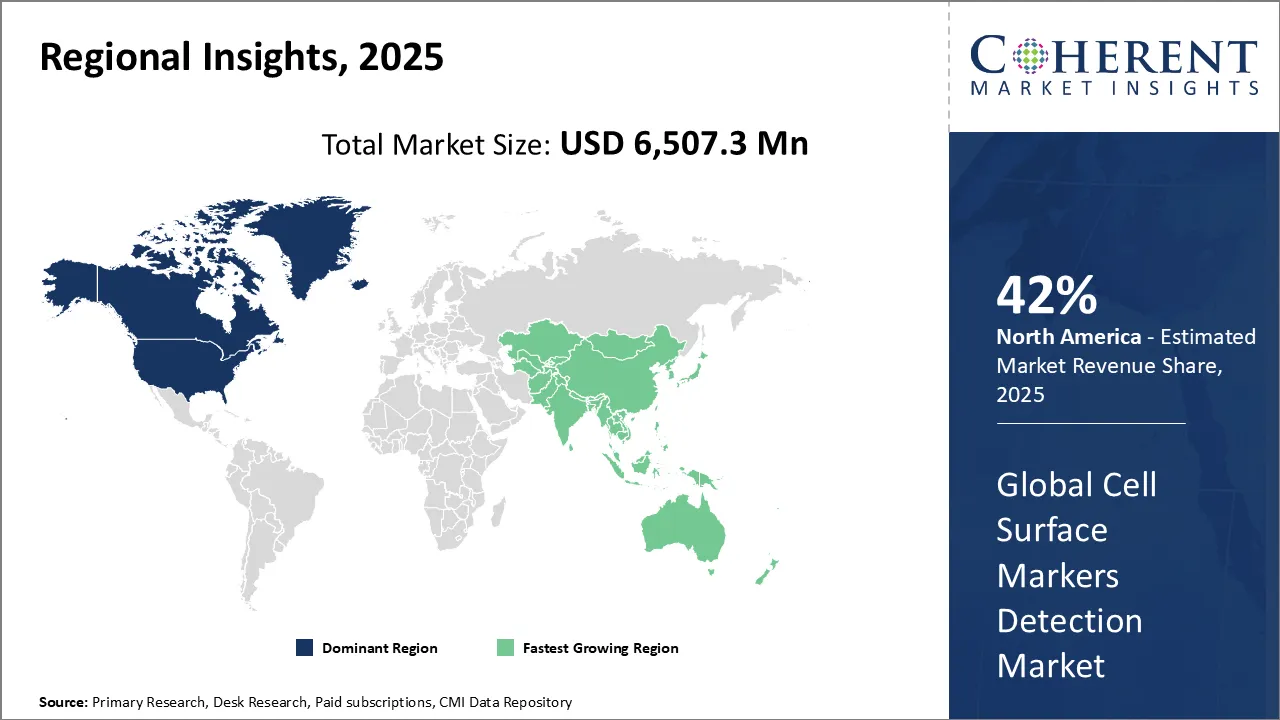
North America Cell Surface Markers Detection Market Analysis & Trends
North America is expected to gain highest share of 42% in the market in 2026. The region has a well-established healthcare infrastructure and a strong presence of research institutions and biotechnology companies, which drive extensive biomedical research and clinical diagnostics. High prevalence of chronic diseases, such as cancer, autoimmune disorders, and infectious diseases, further fuels the need for advanced diagnostic tools that utilize cell surface markers for accurate detection and monitoring.
For instance, in March 2024, Bio-Rad Laboratories introduced a range of validated primary and secondary antibodies designed for the enumeration of rare and circulating tumor cells (CTCs). These antibodies are specifically tailored for use with Bio-Rad’s Celselect Slides Enumeration Stain Kits, facilitating precise immunostaining of CTCs captured through the Genesis Cell Isolation System. This system employs unbiased size-based selection to efficiently isolate CTCs and other rare cells from liquid biopsy samples.
Asia Pacific Cell Surface Markers Detection Market Analysis &Trends
Asia Pacific is also expected to witness fastest growth in the global cell surface markers detection market share during the forecast period. Rapidly growing populations in countries like China and India are contributing to a higher prevalence of chronic diseases, including cancer, autoimmune disorders, and infectious diseases, which require precise diagnostic tools. Additionally, rising investments in healthcare infrastructure, medical research, and biotechnology are driving the adoption of advanced diagnostic technologies such as flow cytometry, hematology analyzers, and reagents & kits. Increasing government initiatives to promote healthcare access and disease monitoring, along with growing awareness of personalized medicine and immunotherapy, are further boosting the cell surface marker detection market revenue in the region.
For instance, in August 2024, researchers from the National University of Singapore (NUS) and A*STAR developed a pioneering wearable sensor capable of non-invasively detecting solid-state epidermal biomarkers (SEBs) such as cholesterol and lactate directly from the skin. Unlike traditional methods that require biofluid samples, this stretchable, hydrogel-based sensor offers continuous, real-time health monitoring. It utilizes a bilayer hydrogel system to dissolve and electrochemically analyze biomarkers, transmitting data wirelessly to external devices.
Cell Surface Markers Detection Market Outlook Country-Wise
The U.S. Cell Surface Markers Detection Market Trends
The United States is the leading market for cell surface markers detection, largely due to its well-established and advanced healthcare infrastructure. Hospitals, clinical laboratories, and research institutions across the country have widespread access to cutting-edge diagnostic technologies, which supports high adoption of tools like flow cytometry and hematology analyzers. The U.S. also benefits from robust biomedical research initiatives, with significant funding allocated to both public and private research programs aimed at understanding disease mechanisms, discovering biomarkers, and developing targeted therapies. This combination of advanced infrastructure, technological adoption, and strong research capabilities drives the high demand for cell surface markers detection technologies in the country, enabling faster, more accurate diagnostics and improved patient care outcomes.
For instance, in March 2026, Beckman Coulter Life Sciences unveiled the CytoFLEX Mosaic Spectral Detection Module, the first modular spectral flow cytometry solution in the industry. This innovation enhances the CytoFLEX LX and S Flow Cytometers, offering up to 88 detection channels and improved fluorescence sensitivity for complex multicolor experiments. The system enables simultaneous detection of multiple markers, facilitating detailed analysis of immune cell subsets and their interactions.
China Cell Surface Markers Detection Market Trends
China is witnessing rapid growth in the cell surface markers detection market due to several converging factors. The country’s healthcare infrastructure is expanding rapidly, with new hospitals, diagnostic laboratories, and research centers being established to meet the needs of its large population. Rising prevalence of chronic diseases, such as cancer, cardiovascular disorders, and autoimmune conditions, has increased the demand for precise diagnostic tools that utilize cell surface marker detection. Additionally, the Chinese government has been actively promoting biomedical research and diagnostics through funding programs, policy support, and public health initiatives, encouraging the adoption of advanced technologies like flow cytometry and hematology analyzers. Growing awareness among healthcare providers and patients about the benefits of early diagnosis and personalized medicine further fuels market demand, making China a key growth hub in the Asia-Pacific region.
For instance, in March 2024, Fosun Pharma collaborated with the Shenzhen municipal government to establish a 5-billion-yuan (approximately US$700 million) healthcare fund aimed at advancing biomedicine innovation. The fund will focus on investments in cellular biology, genetics, and related sectors. Fosun's subsidiaries, including Fuxin Shenyao, Fosun Pharma (Shenzhen), and Fujian Fund Management, will join the Shenzhen Guidance Fund in this initiative.
Market Report Scope
Cell Surface Markers Detection Market Report Coverage
| Report Coverage | Details | ||
|---|---|---|---|
| Base Year: | 2025 | Market Size in 2026: | USD 7,117.0 Mn |
| Historical Data for: | 2020 To 2024 | Forecast Period: | 2026 To 2033 |
| Forecast Period 2026 to 2033 CAGR: | 9.4% | 2033 Value Projection: | USD 13,322.5 Mn |
| Geographies covered: |
| ||
| Segments covered: |
| ||
| Companies covered: | Grifols SA, Abbott Laboratories, Sysmex Corporation, Agilent Technologies Inc., Nexcelom Bioscience, Thermo Fisher Scientific Inc., Siemens Healthineers, Nihon Kohden Corporation, F. Hoffmann-La Roche Ltd., Bio Rad Laboratories Inc., Becton, Dickinson and Company (BD), Qiagen NV, Diasorin SpA (Luminex Corporation), Danaher Corporation (Beckman Coulter Inc.), and IVD Medical Holding Limited (Immucor Inc.), among others | ||
| Growth Drivers: |
| ||
| Restraints & Challenges: |
| ||
Global Cell Surface Markers Detection Market Drivers
- Growing applications in disease diagnostics to boost market growth
One of the key factors expected to augment the growth of the global cell surface markers detection market over the forecast period is the rise in use of cell surface markers in disease diagnostics.
For instance, in November 2024, researchers developed a non-invasive malaria test called the Cytophone, which uses lasers and ultrasound to detect malaria-infected red blood cells without requiring a blood sample. This innovative approach addresses the limitations of traditional diagnostic methods, such as blood smears and rapid diagnostic tests, which can be less effective due to evolving parasite strains. The Cytophone operates by applying targeted lasers to the skin, causing infected cells to emit sound waves that are captured by ultrasound, enabling detection of the parasite's byproduct, hemozoin.
- Rise in burden of cancer to underpin market growth
Another factor which is driving the growth of the global cell surface markers detection market is the rise in prevalence of cancer around the world. For instance, with the rise in burden of cancer and need for early diagnosis of cancer, the use or demand for cancer biomarkers is also increasing with the rapid pace.
For instance, in August 2025, UCLA scientists developed a groundbreaking off-the-shelf immunotherapy for ovarian cancer, potentially transforming treatment paradigms. Unlike traditional CAR-T therapies, which require patient-specific customization, this approach utilizes engineered invariant natural killer T (iNKT) cells derived from donated stem cells. These CAR-NKT cells can target multiple cancer markers simultaneously, enhancing their efficacy against the diverse and adaptive nature of ovarian tumors.
Global Cell Surface Markers Detection Market Opportunities
The growing focus on precision medicine presents a significant future opportunity for the cell surface markers detection market forecast. By enabling the identification of specific cell surface proteins and biomarkers, these technologies allow for tailored treatment strategies that cater to individual patient profiles. Precision medicine relies on accurate cellular profiling to optimize therapy selection, monitor disease progression, and predict treatment responses, particularly in cancer, autoimmune disorders, and infectious diseases. As healthcare increasingly shifts toward personalized approaches, the demand for advanced cell surface marker detection tools is expected to rise, positioning this segment as a key growth driver and strategic opportunity for market players.
For instance, in October 2024, the National Institutes of Health (NIH) initiated a groundbreaking clinical trial, myeloMATCH, aimed at testing tailored treatment combinations for patients with acute myeloid leukemia (AML) and myelodysplastic syndromes (MDS). Funded by the NIH’s National Cancer Institute (NCI), the trial seeks to accelerate the development of personalized therapies targeting specific genetic alterations in cancer cells. Participants will undergo rapid genetic testing of their tumor samples to match them with appropriate treatments.
Analyst Opinion (Expert Opinion)
The cell surface markers detection market value is demonstrating a pronounced shift toward high-throughput and multiplexed technologies, reflecting the increasing demand for precision in immunophenotyping and targeted therapies. Flow cytometry, traditionally the workhorse in this segment, is progressively complemented by emerging mass cytometry platforms that enable simultaneous detection of over 50 markers per cell, dramatically increasing analytical resolution and reducing experimental variability. For instance, CyTOF technology by Fluidigm has been adopted by leading cancer research institutes in Europe and North America to profile tumor-infiltrating lymphocytes, underscoring the premium placed on depth and specificity of marker detection.
The integration of automated microfluidics and digital imaging solutions is accelerating the translation of marker detection from research to clinical decision-making. Companies developing imaging mass cytometry, such as Bruker and Akoya Biosciences, have reported multi-fold improvements in spatial resolution, allowing researchers to map cellular heterogeneity within tumor microenvironments with unprecedented precision. These advancements are particularly relevant in hematology and oncology, where treatment outcomes increasingly rely on accurate identification of rare cell populations.
Notably, the competitive landscape indicates that market leaders are prioritizing platform interoperability and reagent diversity. For example, the adoption of universal antibody panels compatible across multiple detection platforms has become a critical differentiator, as laboratories aim to standardize protocols while accommodating expanding marker libraries. In addition, the push toward artificial intelligence and machine learning–driven analysis of high-dimensional data is reshaping the operational framework, enabling predictive insights that were previously unattainable with manual gating approaches.
In conclusion, the Cell Surface Markers Detection Market is evolving beyond conventional applications, moving toward a highly integrated, data-intensive model that emphasizes precision, scalability, and cross-platform adaptability. This trajectory positions the market as a critical enabler of personalized medicine and advanced immunological research, where analytical accuracy and depth directly inform therapeutic strategies.
Speak to the analyst
Want personalized insights?
Take the findings above to one of our principal consultants, or have the report rebuilt around the segments, geographies and competitors you actually track.
Key Developments
- In May 2025, researchers at the Keck School of Medicine, University of Southern California, developed a spectral flow cytometry panel to enhance CAR T-cell therapy manufacturing. This tool enables high-dimensional profiling of T-cell surface markers, providing insights into their evolution during production and identifying those most effective at targeting cancer.
- In April 2025, Researchers at Boston Children's Hospital and the Cambridge Stem Cell Institute identified a promising target for treating acute myeloid leukemia (AML) and solid tumors. Their study, published in Nature Biotechnology, focuses on the RNA-binding protein NPM1, which is typically located inside cells but is found on the surface of malignant AML cells.
- In October 2024, Cell Signaling Technology (CST) introduced InTraSeq™, a pioneering single-cell analysis technology that enables simultaneous quantification of RNA, intracellular, and surface proteins—including post-translational modifications (PTMs)—in thousands of individual cells. This multimodal approach offers researchers a comprehensive view of cellular signaling pathways and gene expression dynamics, facilitating deeper insights into disease mechanisms.
Market Segmentation
- Global Cell Surface Markers Detection Market, By Product (Revenue, USD Mn, 2021 - 2033)
- Flow Cytometry
- Hematology Analysers
- Cell Imaging Systems
- Reagents and Kits
- Other Products
- Global Cell Surface Markers Detection Market, By Application (Revenue, USD Mn, 2021 - 2033)
- Disease Diagnosis and Identification
- Drug Discovery
- Other – Research and Academia Applications
- Global Cell Surface Markers Detection Market, By Geography (Revenue, USD Mn, 2021 - 2033)
- North America
- U.S.
- Canada
- Latin America
- Brazil
- Argentina
- Mexico
- Rest of Latin America
- Europe
- Germany
- U.K.
- Spain
- France
- Italy
- Russia
- Rest of Europe
- Asia Pacific
- China
- India
- Japan
- Australia
- South Korea
- ASEAN
- Rest of Asia Pacific
- Middle East
- GCC Countries
- Israel
- Rest of Middle East
- Africa
- South Africa
- North Africa
- Central Africa
- North America
- Company Profiles
- Grifols SA
- Abbott Laboratories
- Sysmex Corporation
- Agilent Technologies Inc.
- Nexcelom Bioscience
- Thermo Fisher Scientific Inc.
- Siemens Healthineers
- Nihon Kohden Corporation
- F. Hoffmann-La Roche Ltd.
- Bio Rad Laboratories Inc.
- Becton, Dickinson and Company (BD)
- Qiagen NV
- Diasorin SpA (Luminex Corporation)
- Danaher Corporation (Beckman Coulter Inc.)
- IVD Medical Holding Limited (Immucor Inc.)
Sources
Primary Research Interviews from the following stakeholders
Stakeholders
- Interviews with clinical researchers, laboratory directors, pathologists, and biomedical scientists across leading global markets.
Specific Stakeholders
- Heads of immunology and oncology research at hospitals and research institutes (e.g., Mayo Clinic, All India Institute of Medical Sciences, MD Anderson Cancer Center)
- Lab managers and directors at diagnostic laboratories (e.g., Dr. Lal PathLabs, Quest Diagnostics, LabCorp)
- Procurement heads at biotechnology and pharmaceutical companies (e.g., Roche, Novartis, Pfizer)
- Product managers and R&D leads at reagent and antibody suppliers (e.g., Bio-Rad, BD Biosciences, Thermo Fisher Scientific)
- Clinical trial coordinators and translational medicine experts in universities and contract research organizations (CROs)
- Flow cytometry and cell analysis specialists in academic and clinical labs
Databases
- World Health Organization (WHO) Global Health Observatory
- U.S. National Library of Medicine (PubMed, MEDLINE)
- ClinicalTrials.gov
- UN Comtrade Database
- Centers for Disease Control and Prevention (CDC) Data Portal
- Ministry of Health and Family Welfare (India)
- Eurostat – Health & Biotechnology Statistics
- China National Center for Biotechnology Development
- Japan External Trade Organization (JETRO) – Life Sciences
Magazines
- Nature Biotechnology
- Genetic Engineering & Biotechnology News (GEN)
- BioTechniques
- Laboratory Equipment Magazine
- The Scientist
- Biospectrum Asia
- Drug Discovery & Development
Journals
- Journal of Immunology
- Cytometry Part A
- Frontiers in Cell and Developmental Biology
- Blood
- Nature Reviews Clinical Oncology
- Journal of Translational Medicine
- Experimental Cell Research
Newspapers
- The New York Times – Health & Science Section
- The Economic Times – Healthcare & Biotechnology
- The Hindu – Science & Technology
- Financial Times – Life Sciences
- Nikkei Asia – Biotech & Pharma
- South China Morning Post – Health & Research
Associations
- International Society for Cell & Gene Therapy (ISCT)
- American Association of Immunologists (AAI)
- Society for Immunotherapy of Cancer (SITC)
- European Society for Clinical Cell Analysis (ESCCA)
- International Society for Stem Cell Research (ISSCR)
- Biotechnology Innovation Organization (BIO)
- Indian Society of Cell Biology (ISCB)
Public Domain Sources
- National Institutes of Health (NIH), U.S.
- National Institute of Standards and Technology (NIST), U.S.
- Ministry of Health and Family Welfare (India)
- Centers for Disease Control and Prevention (CDC), U.S.
- Japan Ministry of Health, Labour and Welfare (MHLW)
- European Medicines Agency (EMA) Reports
- U.S. Food & Drug Administration (FDA) Data Portal
- NITI Aayog Health & Biotechnology Reports
Proprietary Elements
- CMI Data Analytics Tool, and Proprietary CMI Existing Repository of information for last 8 years
Get access to 250+ pages report
Every segment, forecast, competitor profile and data table behind the analysis above — available for instant download.
- ESOMAR Member
- ISO 9001:2015 Certified
- D-U-N-S Registered
- GDPR & CCPA Compliant
Missing comfort of reading report in your local language? Find your preferred language:
Transform your Strategy with Exclusive Trending Reports
Frequently Asked Questions
The Cell Surface Markers Detection Market is estimated to be valued at USD 7,117.0 Mn in 2026, and is expected to reach USD 13,322.5 Mn by 2033.
The CAGR of the Cell Surface Markers Detection Market is projected to be 9.4% from 2026 to 2033.
Rise in use of cell surface markers disease diagnostics and rise in prevalence of cancer around the world is fueling the growth of the global cell surface markers detection market.
Flow cytometry segment is the leading product segment in the global cell surface markers detection market.
High cost of instruments and dearth of skilled professionals are major factors restraining growth of the global cell surface markers detection market.
Major players operating in the global cell surface markers detection market are Grifols SA, Abbott Laboratories, Sysmex Corporation, Agilent Technologies Inc., Nexcelom Bioscience, Thermo Fisher Scientific Inc., Siemens Healthineers, Nihon Kohden Corporation, F. Hoffmann-La Roche Ltd., Bio Rad Laboratories Inc., Becton, Dickinson and Company (BD), Qiagen NV, Diasorin SpA (Luminex Corporation), Danaher Corporation (Beckman Coulter Inc.), and IVD Medical Holding Limited (Immucor Inc.), among others.
Cell surface marker detection identifies abnormal or disease-specific cells early, enabling timely intervention and improved patient outcomes.