

Global Respiratory Care Devices Market Size and Forecast – 2026 To 2033
The global respiratory care devices market is expected to grow from USD 25.84 Bn in 2026 to USD 43.97 Bn by 2033, registering a compound annual growth rate (CAGR) of 7.9% from 2026 to 2033. The market for respiratory care devices is poised for significant expansion, fueled by the soaring burden of chronic respiratory diseases such as chronic obstructive pulmonary disease (COPD), asthma, and sleep apnea.
According to the World Health Organization (WHO), chronic respiratory diseases (CRDs) are among the most common non-communicable diseases and rank as the sixth leading cause of death in the WHO European Region, causing nearly 400,000 deaths annually. Additionally, an estimated 81.7 million people in the region are living with CRDs, with 6.8 million new cases reported in 2021. The growing disease burden continues to drive the demand for respiratory care devices used in the diagnosis, monitoring, and treatment of chronic respiratory conditions.
Key Takeaways of the Global Respiratory Care Devices Market
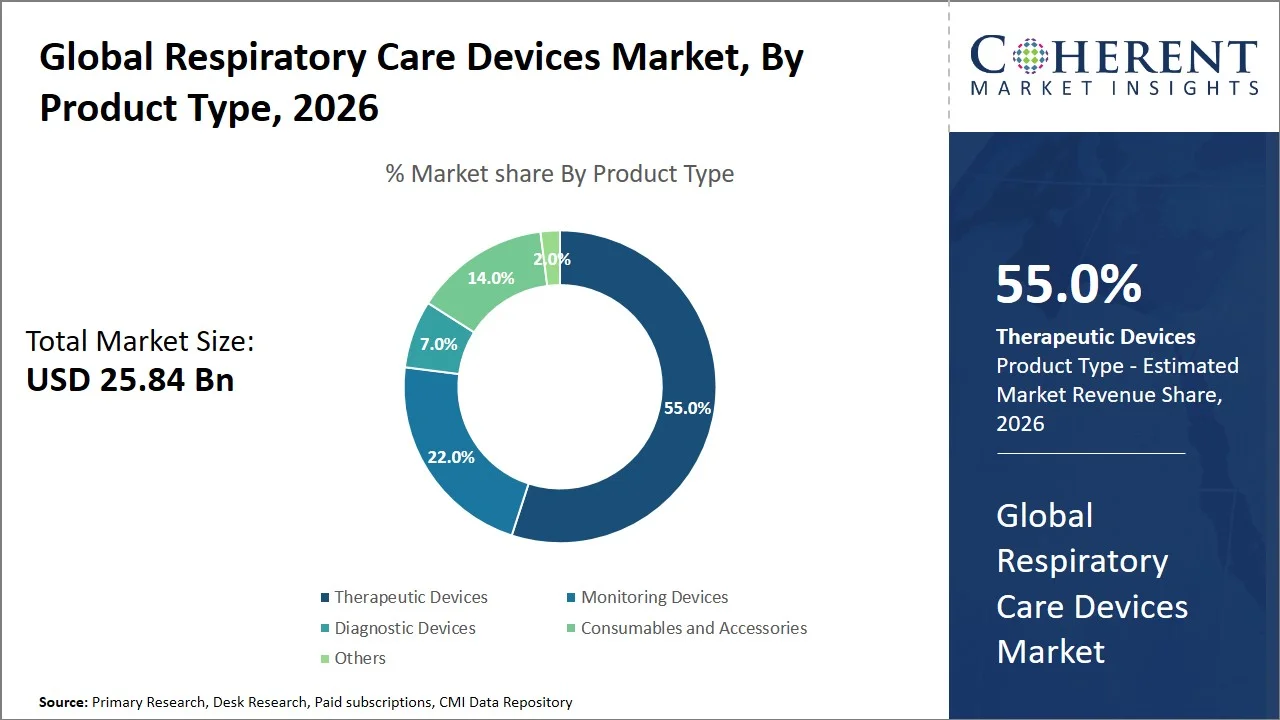
- Therapeutic devices are projected to hold 55.0 % of the global respiratory care devices market share in 2026, making it the dominant product type segment across North America due to the high prevalence of chronic respiratory diseases and increasing adoption of home-based respiratory care. For instance, the U.S. Centers for Disease Control and Prevention (CDC) estimates that approximately 14.2 million U.S. adults have been diagnosed with chronic obstructive pulmonary disease (COPD), driving sustained demand for oxygen concentrators, ventilators, and positive airway pressure devices.
- Hospitals and clinics are projected to hold 51.0 % of the global respiratory care devices market share in 2026, making it the dominant end user segment across Europe due to the region's emphasis on strengthening hospital preparedness for respiratory care. For instance, the European Commission, through the EU4Health Programme (2021–2027), has allocated USD 6.04 billion (€5.3 billion) to strengthen healthcare systems, improve preparedness for cross-border health threats, and enhance access to critical medical technologies, supporting investments in hospital-based respiratory care infrastructure and devices.
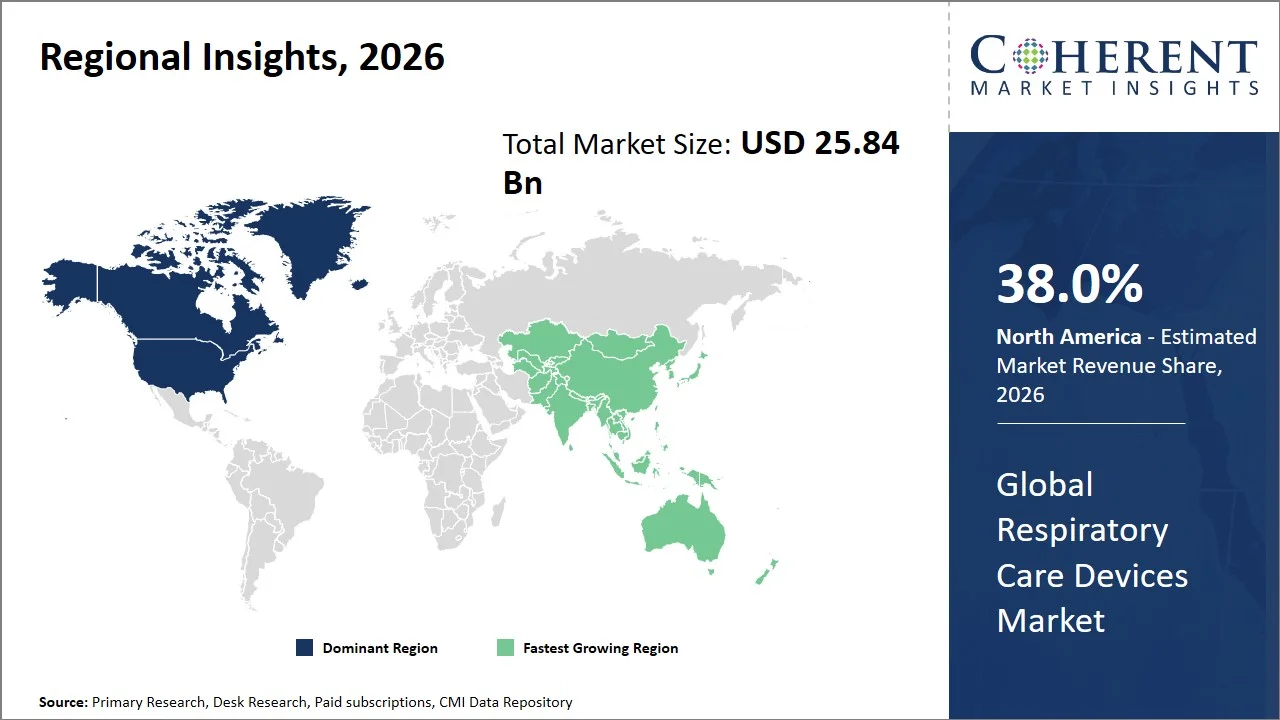
- North America maintains its dominance with an expected share of 38.0 % in 2026, bolstered by advanced healthcare infrastructure, high adoption of home respiratory care, and favorable regulatory approvals. For instance, the U.S. Food and Drug Administration (FDA) continues to accelerate innovation in respiratory care through 510(k) clearances for connected respiratory devices, including digital inhalers, wearable respiratory monitors, and home-use ventilation technologies, strengthening market adoption.
- Asia Pacific is expected to exhibit the fastest growth with an estimated contribution of 25.0 % share in 2026, driven by rising healthcare expenditure and government-led initiatives to improve respiratory healthcare access. For instance, China's Healthy China 2030 Initiative prioritizes the prevention and management of chronic respiratory diseases by strengthening primary healthcare services, promoting early diagnosis, and expanding access to essential medical technologies, supporting increased adoption of respiratory care devices.
- Expansion of Hospital-at-Home and Home Oxygen Therapy Programs: The growing shift toward hospital-at-home care models is increasing the demand for portable oxygen concentrators, CPAP/BiPAP devices, and remote respiratory monitoring systems. Governments and healthcare providers are promoting home-based respiratory care to reduce hospital admissions, lower treatment costs, and improve patient outcomes for chronic respiratory disease management. This trend is accelerating the adoption of compact, connected respiratory care devices.
- AI-enabled Predictive Respiratory Monitoring: The integration of artificial intelligence with respiratory monitoring devices presents significant growth opportunities by enabling early detection of respiratory deterioration and personalized therapy adjustments. AI-powered analytics combined with connected spirometers, pulse oximeters, and smart inhalers facilitate continuous patient monitoring, reduce emergency interventions, and support value-based healthcare, particularly for COPD and asthma management.
Segmental Insights
Why Do Therapeutic Devices Dominate the Global Respiratory Care Devices Market?
Therapeutic devices are projected to hold a market share of 55.0% in 2026, owing to the integral part that these devices play in the process of delivering oxygen, non-invasive ventilation, and long-term treatment of chronic respiratory ailments. Moreover, the growing focus of various players on the advancements of digital and AI-integrated respiratory therapies is playing an important role in the growth of the respiratory care devices market, by enabling treatment personalization and patient adherence. For instance, in December 2025, ResMed's Smart Comfort AI-enabled digital medical device received U.S. FDA clearance to provide optimized continuous positive airway pressure (CPAP) by automatically optimizing comfort settings based on individual patient needs. These innovations are anticipated to lead to better therapeutic compliance and broader use of modern therapeutic respiratory devices.
- Current Industry Events of 2026
- Market Size Estimation
- Regional Breakdown
- Competitive Landscape
- Customer Intelligence
- Segmental Analysis
- Pricing Analysis
- Key Market Drivers, Challenges & Future Trends
- Customized Insights Section
Why Do Hospitals and Clinics Represent the Largest End User Segment in the Respiratory Care Devices Market?
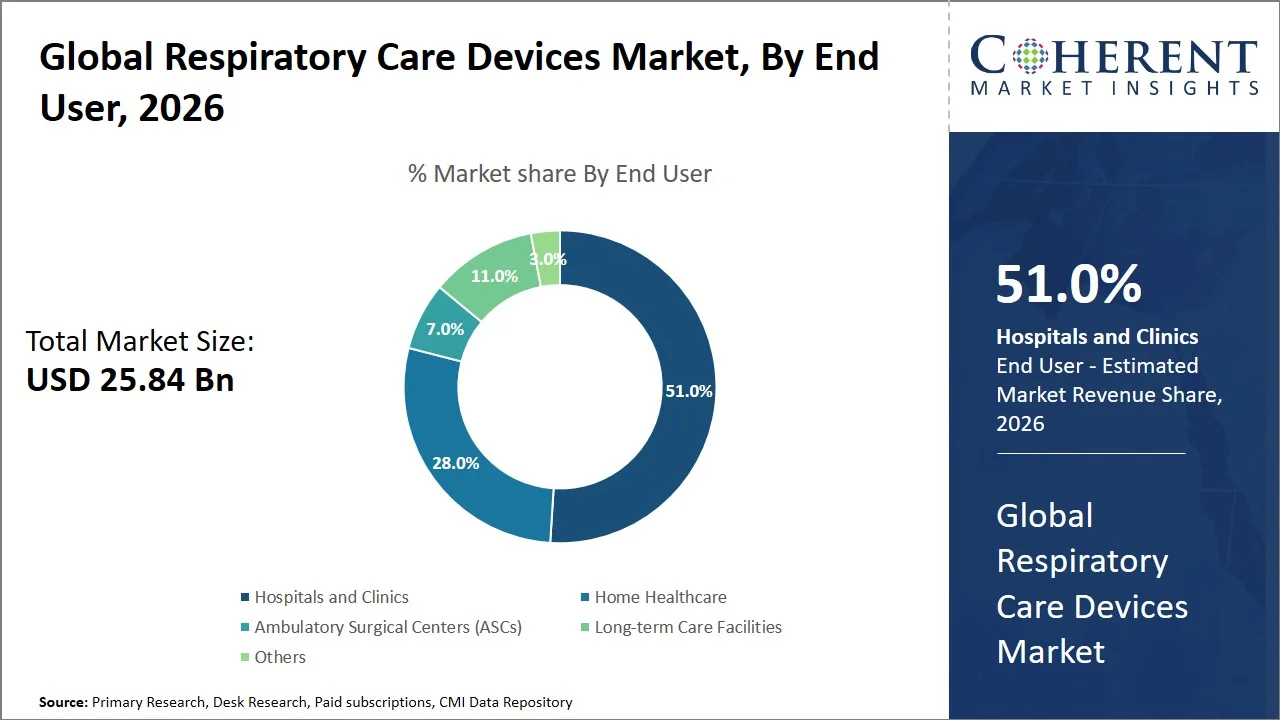
Hospitals and clinics are projected to hold a market share of 51.0% in 2026, owing to the critical role of these healthcare facilities in acute respiratory issues, critical care, and in managing pulmonary diseases which involves intensive respiratory assistance and patient monitoring. Increased use of new, advanced technologically-oriented respiratory equipment, alongside greater expansion of hospitals will augment the segment’s growth in the global respiratory care devices market. For instance, in October 2022, AirPhysio collaborated with the Apollo Hospitals Group and Medsmart in India to introduce its respiratory therapy devices to enable the adoption of non-invasive airway clearance solutions into hospitals. Such collaborations facilitate the adoption of emerging respiratory tech solutions to enable improved care for respiratory patients.
Currents Events and their Impact
Current Events | Description and its Impact |
U.S. Centers for Medicare & Medicaid Services (CMS) Expands Medicare Coverage for Home Respiratory Assist Devices (June 2025) |
|
U.S. FDA Recognizes Updated International Standard for Anaesthetic and Respiratory Equipment (May 2025) |
|
Respiratory Care Devices Market Dynamics
Market Drivers
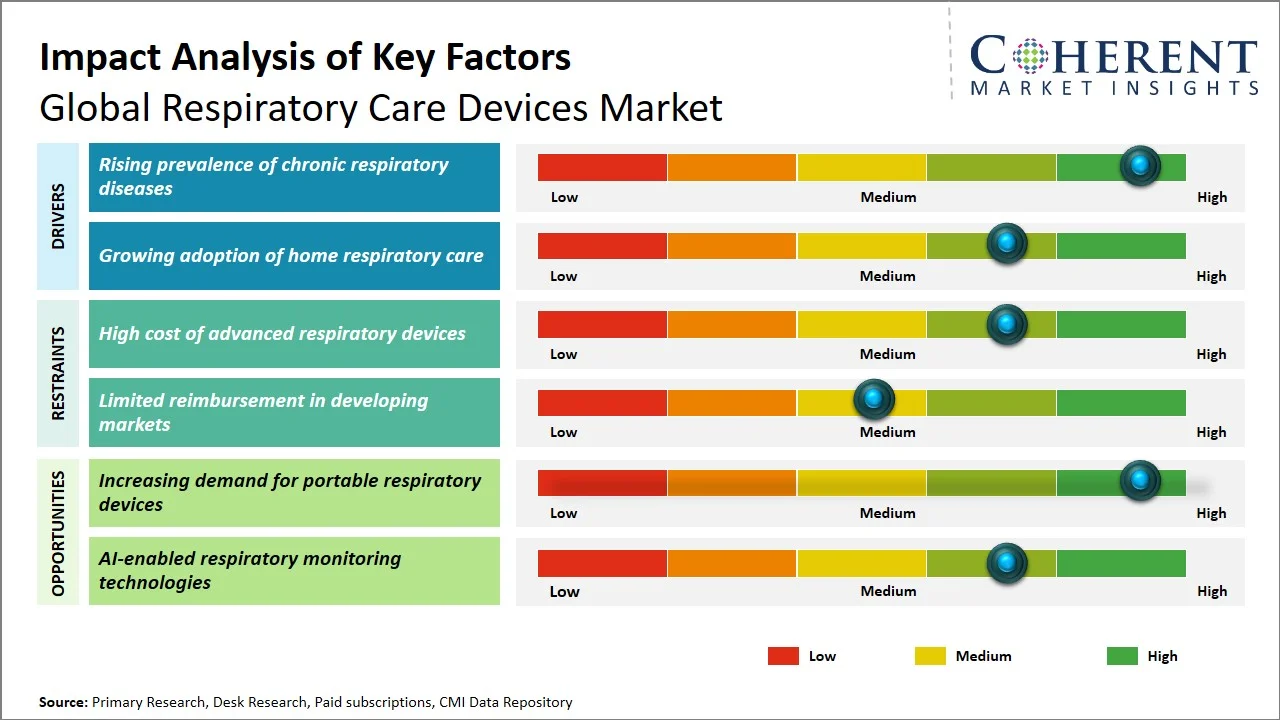
- Rising prevalence of chronic respiratory diseases: The escalating demand for respiratory care devices globally has been largely fueled by the growing chronic respiratory illness burden, the growing life expectancy, air pollution, tobacco use, and occupational exposure in the population. Hence, the need for chronic disease management is driving the usage of positive airway pressure devices, ventilators, nebulizers, and oxygen concentrators, across hospitals and homecare healthcare settings. For instance, according to the World Health Organization (WHO), an estimated 363 million people worldwide were living with asthma in 2023, with the disease causing approximately 442,000 deaths, highlighting the sustained need for advanced respiratory care technologies.
- Growing adoption of home respiratory care: The growing preference for home-based healthcare is driving the adoption of portable respiratory care devices, including oxygen concentrators, CPAP/BiPAP systems, nebulizers, and home ventilators. Home respiratory care offers improved patient comfort, reduces hospital readmissions, and lowers overall healthcare costs, making it an increasingly preferred care model for managing chronic respiratory diseases. For instance, the UK's National Institute for Health and Care Excellence (NICE) recommends home non-invasive ventilation and home oxygen therapy for eligible patients with chronic respiratory conditions, reinforcing the transition toward community-based respiratory care.
Emerging Trends
- Shift Toward Multi-Function Respiratory Devices: Manufacturers are increasingly developing multifunctional respiratory devices that combine oxygen therapy, humidification, and patient monitoring into a single platform. These integrated systems simplify respiratory care workflows, reduce equipment footprint in hospitals, and enhance patient convenience in both acute and long-term care settings.
- Growing Adoption of Sustainable Respiratory Devices: Sustainability is emerging as a key focus in respiratory care, with manufacturers emphasizing reusable components, energy-efficient oxygen concentrators, and environment-friendly inhaler technologies. Healthcare providers are increasingly prioritizing devices that reduce medical waste and align with carbon reduction goals while maintaining clinical performance.
Regional Insights
Why is North America a Strong Market for Respiratory Care Devices?
North America leads the global respiratory care devices market, accounting for an estimated 38.0% share in 2026, due to the existence of well-established healthcare infrastructure, widespread adoption rate for respiratory therapies, and extensive usage of these respiratory devices in hospitals, ICUs and for in home-health care settings. The region has a well-defined reimbursement system to provide patient with access to oxygen therapies, ventilators and continuous positive airway pressure (CPAP) devices for chronic diseases management. For instance, in November 2025, the U.S. Centers for Medicare & Medicaid Services finalized its Calendar Year 2026 Home Health Prospective Payment System (HH PPS) rule, which will enable continuing Medicare reimbursement for medically necessary home respiratory services and durable medical equipment, thereby expanding the use of respiratory equipment for in-home patient care. Additionally, the proliferation of digital health technologies and the adoption of remote patient monitoring is accelerating the adoption of connected respiratory care solutions.
Why Does the Asia Pacific Respiratory Care Devices Market Exhibit High Growth?
The Asia Pacific respiratory care devices market is expected to exhibit the fastest growth with an estimated contribution of 25.0% share to the market in 2026, owing to the increased incidence of respiratory diseases, the flourishing development of healthcare infrastructure, and the increasing reach of respiratory care services in the region. Growing urbanization and air pollution coupled with increased adoption of home-based respiratory therapies are the driving forces for key markets in this region. Furthermore, government policies promoting access to healthcare and health insurance are expected to bolster the growth in demand for respiratory care devices. For instance, India's Ayushman Bharat – Pradhan Mantri Jan Arogya Yojana (PM-JAY) offers health coverage of approximately USD 5,800 (up to ₹5 lakh) per eligible family annually, in order to promote availability of inpatient services, and sophisticated technology like respiratory care services. (Source: Press Information Bureau)
Global Respiratory Care Devices Market Outlook for Key Countries
Why is the U.S. Leading Innovation and Adoption in the Respiratory Care Devices Market?
The U.S. dominates the respiratory care devices market owing to the rapid adoption of high-tech respiratory care devices across acute, critical care as well as homecare settings. The country has strong digital health ecosystem which supports rapid adoption of connected respiratory devices and remote patient monitoring technologies. Constant drive to promote personalized respiratory treatment, early clinical adoption of innovative technologies and robust healthcare infrastructure further reinforce the U.S.'s leadership in the market.
Is Japan a Favorable Market for Respiratory Care Devices?
Japan is one of the most promising markets for the respiratory care devices market due to a highly developed healthcare system with early integration of home respiratory therapy for chronic diseases. Japan supports early diagnosis, comprehensive respiratory care and integrated usage of connected medical technology in the overall healthcare delivery. Furthermore, an efficient reimbursement system and a consistent investment in medical technology (Japan's total R&D expenditure reached a record of USD 135.8 billion (¥22.05 trillion) (approximately 3.7% of GDP) in FY2023)) supports the increasing adoption of these respiratory care devices in the country.
Is China Emerging as a Key Growth Hub for the Respiratory Care Devices Market?
China is positioned as a key growth hub in the global respiratory care devices market due to the expanding medical infrastructure, increased use of respiratory devices at home, and rising adoption of cutting-edge respiratory solutions. The demand for connected respiratory devices, especially in the home and community settings as well as hospitals is increasing with progressive developments and advancements in the health sector of China. Additionally, well-developed manufacturing facilities and rising R&D investments (R&D expenditure reached USD 503 billion (CNY 3.61 trillion in 2024)) are expediting the process for respiratory devices and systems across the country.
Why Does Germany Top the European Respiratory Care Devices Market?
Germany leads the European respiratory care devices market driven by robust healthcare facilities, extensive application of advanced medical technologies and a higher consumption of diagnostic respiratory equipment as well as respiratory devices that aid therapy. The country actively invests in integration of digital health and precision care for respiratory diseases, thus facilitating swift penetration of the smart respiratory connected devices. Furthermore, Germany's continued high level of investment in research and development (R&D) (R&D expenditure reached US$ 140.1 billion [€129.7 billion] in 2023) will further enable the emergence and adoption of innovative respiratory care devices and solutions.
Is Respiratory Care Devices Market Developing in India?
India is a high-potential market for respiratory care devices owing to the increasing prevalence of respiratory diseases, rising penetration of respiratory services, and increasing use of home-based respiratory therapy. Rising awareness about timely diagnosis and management of chronic respiratory diseases and rise in the use of home-based therapies such as portable ventilators, oxygen therapy devices, nebulizer devices and CPAP systems will fuel the demand for devices used to treat chronic respiratory diseases. Additionally, the growth in healthcare infrastructure for secondary and tertiary care, along with faster uptake of digital health tools, is fostering faster adoption of next generation respiratory solutions.
Evolution of the Global Respiratory Care Delivery Model (2020–2033)
Aspect | Traditional Model (Pre-2020) | Current Model (2020–2025) | Future Model (2026–2033) |
Care Setting | Hospital-centric treatment | Hybrid hospital & home care | Home-first, connected care ecosystem |
Device Design | Stationary, standalone devices | Portable and user-friendly devices | Smart, AI-enabled connected devices |
Patient Monitoring | Periodic clinical visits | Remote monitoring introduced | Continuous real-time monitoring |
Therapy Approach | Reactive disease management | Personalized therapy | Predictive, data-driven respiratory care |
Healthcare Connectivity | Limited digital integration | Cloud-enabled platforms | Fully interoperable digital ecosystem |
How is the increasing demand for portable respiratory devices creating new growth opportunities in the respiratory care devices market?
The market for respiratory devices is experiencing a boost due to the rising demand for portable respiratory devices. The portability of devices like portable oxygen concentrators, lightweight nebulizer systems and wearable respiration solutions helps the patients of chronic respiratory diseases undergo persistent treatment and get freedom of mobility and the liberty of their own lifestyle, thus rendering these a great device for the homecare and in outpatient segments. New innovations in battery life, lightweight design, and digital connectivity are further enhancing device usability and patient adherence. For instance, the United States Department of Transportation (DOT) allows the use of Federal Aviation Administration (FAA)-approved portable oxygen concentrator (POC) on commercial flights, enabling oxygen-dependent patients to travel safely while receiving continuous oxygen therapy. The DOT’s enabling regulation has been an instrumental factor in greater acceptance and adoption of portable respiratory care devices for everyday use.
Market Players, Key Development, and Competitive Landscape
Key Developments
- In June 2026, FindAir received U.S. FDA 510(k) clearance for its FindAir ONE for pMDI 1.2, a smart inhaler add-on designed for pressurized metered-dose inhalers. The device enables real-time medication tracking and remote patient monitoring while supporting reimbursable respiratory care services, advancing the adoption of connected respiratory care solutions in the U.S. market.
- In April 2026, Drive Medical launched the DeVilbiss by Drive 555 Compact Oxygen Concentrator, a next-generation 5L stationary oxygen concentrator designed to improve provider efficiency and patient experience. The device features a more compact design, lower energy consumption, and simplified maintenance, supporting the growing demand for cost-effective long-term oxygen therapy in home and clinical settings.
- In April 2023, Monaghan Medical Corporation entered into a three-year agreement with Premier, Inc. to supply its respiratory therapy devices through Premier's purchasing and supply chain network. The partnership expands healthcare providers' access to Monaghan's respiratory care portfolio, strengthening product availability across hospitals and clinical settings.
Competitive Landscape
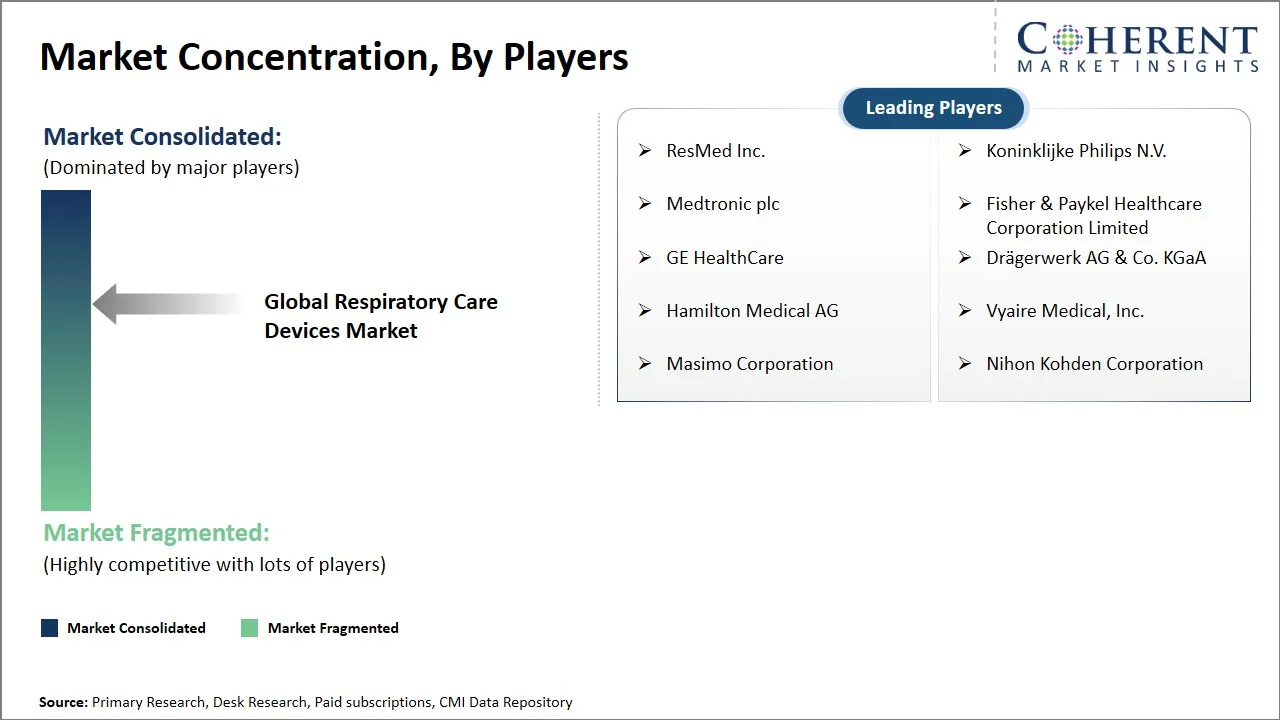
The global respiratory care devices market is moderately consolidated, with leading manufacturers competing through continuous product innovation, digital respiratory care solutions, and expansion of home healthcare portfolios. Companies are increasingly investing in connected respiratory devices, AI-enabled patient monitoring, and portable therapeutic solutions to improve patient outcomes and strengthen their market position. Key focus areas include:
- Expansion of home respiratory care and portable device portfolios
- Integration of digital health, remote monitoring, and connected respiratory solutions
- Product innovation focused on energy-efficient and patient-centric respiratory devices
- Strategic collaborations and geographic expansion to strengthen distribution and market access
- Investment in regulatory compliance, manufacturing capabilities, and next-generation respiratory technologies
Market Report Scope
Respiratory Care Devices Market Report Coverage
| Report Coverage | Details | ||
|---|---|---|---|
| Base Year: | 2025 | Market Size in 2026: | USD 25.84 Bn |
| Historical Data for: | 2020 To 2024 | Forecast Period: | 2026 To 2033 |
| Forecast Period 2026 to 2033 CAGR: | 7.9% | 2033 Value Projection: | USD 43.97 Bn |
| Geographies covered: |
| ||
| Segments covered: |
| ||
| Companies covered: | ResMed Inc., Koninklijke Philips N.V., Medtronic plc, Fisher & Paykel Healthcare Corporation Limited, GE HealthCare, Drägerwerk AG & Co. KGaA, Hamilton Medical AG, Vyaire Medical, Inc., Masimo Corporation, and Nihon Kohden Corporation | ||
| Growth Drivers: |
| ||
| Restraints & Challenges: |
| ||
Analyst Opinion (Expert Opinion)
- The future outlook for the respiratory care devices market is expected to evolve from conventional hospital-based respiratory support toward a connected, patient-centric care ecosystem, driven by the growing burden of chronic respiratory diseases, technological innovation, and the expansion of home healthcare. The integration of digital health, AI-enabled monitoring, and portable respiratory devices will continue to reshape disease management, enabling proactive and personalized care while reducing hospital dependence.
- The maximum opportunities will probably exist within home respiratory care applications, particularly portable oxygen concentrators, CPAP/BiPAP devices, and home ventilators across Asia Pacific, especially China and India. Rising healthcare investments, expanding healthcare access, increasing prevalence of COPD and asthma, and supportive government initiatives promoting home-based care are expected to drive demand in these markets over the forecast period.
- In order to obtain a competitive advantage, market participants should prioritize the development of connected and portable respiratory care devices with remote monitoring capabilities, strengthen their presence in emerging markets through localized manufacturing and distribution, and invest in regulatory-compliant, patient-centric innovations. Strategic collaborations with healthcare providers, telehealth platforms, and home healthcare service providers will further enhance market penetration and support long-term growth.
Speak to the analyst
Want personalized insights?
Take the findings above to one of our principal consultants, or have the report rebuilt around the segments, geographies and competitors you actually track.
Market Segmentation
- Product Type Insights (Revenue, USD Bn, 2021 - 2033)
- Therapeutic Devices
- Monitoring Devices
- Diagnostic Devices
- Consumables and Accessories
- Others
- End User Insights (Revenue, USD Bn, 2021 - 2033)
- Hospitals and Clinics
- Home Healthcare
- Ambulatory Surgical Centers (ASCs)
- Long-term Care Facilities
- Others
- Regional Insights (Revenue, USD Bn, 2021 - 2033)
- North America
- U.S.
- Canada
- Latin America
- Brazil
- Argentina
- Mexico
- Rest of Latin America
- Europe
- Germany
- U.K.
- Spain
- France
- Italy
- Russia
- Rest of Europe
- Asia Pacific
- China
- India
- Japan
- Australia
- South Korea
- ASEAN
- Rest of Asia Pacific
- Middle East
- GCC Countries
- Israel
- Rest of Middle East
- Africa
- South Africa
- North Africa
- Central Africa
- North America
- Key Players Insights
- ResMed Inc.
- Koninklijke Philips N.V.
- Medtronic plc
- Fisher & Paykel Healthcare Corporation Limited
- GE HealthCare
- Drägerwerk AG & Co. KGaA
- Hamilton Medical AG
- Vyaire Medical, Inc.
- Masimo Corporation
- Nihon Kohden Corporation
Sources
Primary Research Interviews
- Respiratory care device manufacturers and product management executives
- Pulmonologists, respiratory therapists, and critical care specialists
- Hospital procurement and biomedical engineering managers
- Home healthcare service providers and durable medical equipment (DME) suppliers
- Medical device distributors and respiratory care solution providers
- Digital health and remote patient monitoring technology experts
Stakeholders
- Respiratory care device manufacturers
- Hospitals, health systems, and specialty respiratory care centers
- Home healthcare providers and long-term care facilities
- Ambulatory surgical centers (ASCs) and outpatient respiratory clinics
- Medical device distributors and channel partners
- Healthcare payers and reimbursement organizations
- End-use Sectors
- Hospitals and health systems
- Home healthcare settings
- Ambulatory surgical centers (ASCs)
- Long-term care facilities and nursing homes
- Specialty pulmonary and sleep clinics
- Emergency medical services (EMS)
- Regulatory & Health Bodies
- World Health Organization (WHO)
- U.S. Food and Drug Administration (FDA)
- Centers for Medicare & Medicaid Services (CMS)
- European Medicines Agency (EMA)
- European Commission – DG SANTE
- National Institute for Health and Care Excellence (NICE)
- Health Canada
- Pharmaceuticals and Medical Devices Agency (PMDA), Japan
Databases
- World Health Organization (WHO) Global Health Observatory (GHO)
- Institute for Health Metrics and Evaluation (IHME) – Global Burden of Disease (GBD) Database
- OECD Health Statistics Database
- World Bank Open Data
- U.S. Food and Drug Administration (FDA) 510(k) & PMA Medical Device Databases
- U.S. Centers for Medicare & Medicaid Services (CMS) Coverage & Reimbursement Database
- Eurostat Healthcare Database
- United Nations Comtrade Database
- Centers for Disease Control and Prevention (CDC) Data & Statistics
- Global Initiative for Chronic Obstructive Lung Disease (GOLD) Reports
- Global Initiative for Asthma (GINA) Reports
- European Respiratory Society (ERS) Data & Publications
Magazines
- CHEST (American College of Chest Physicians Magazine)
- Medical Device & Diagnostic Industry (MD+DI) Magazine
- Respiratory Care Magazine
- Healthcare IT News Magazine
Journals
- American Journal of Respiratory and Critical Care Medicine
- European Respiratory Journal
- Journal of Aerosol Medicine and Pulmonary Drug Delivery
Newspapers
- The Wall Street Journal (Healthcare Section)
- Financial Times (Healthcare & MedTech Coverage)
- Modern Healthcare
Associations
- American Association for Respiratory Care (AARC)
- Global Initiative for Chronic Obstructive Lung Disease (GOLD)
- European Respiratory Society (ERS)
- American Thoracic Society (ATS)
Public Domain Sources
- World Health Organization (WHO) – Respiratory Disease Data
- U.S. Food and Drug Administration (FDA) – Medical Device Approvals
- Centers for Disease Control and Prevention (CDC) – Respiratory Health Statistics
- National Institutes of Health (NIH) – Clinical Research & Publications
Proprietary Elements
- CMI Data Analytics Tool, Proprietary CMI Existing Repository of information for last 10 years.
Get access to 250+ pages report
Every segment, forecast, competitor profile and data table behind the analysis above — available for instant download.
- ESOMAR Member
- ISO 9001:2015 Certified
- D-U-N-S Registered
- GDPR & CCPA Compliant
Missing comfort of reading report in your local language? Find your preferred language:
Transform your Strategy with Exclusive Trending Reports
Frequently Asked Questions
The global respiratory care devices market is estimated to be valued at USD 25.84 Bn in 2026 and is expected to reach USD 43.97 Bn by 2033.
Therapeutic devices dominate due to their extensive use in oxygen therapy, ventilation, and long-term management of chronic respiratory diseases such as COPD, asthma, and sleep apnea.
Respiratory care devices are medical devices used to diagnose, monitor, and treat acute and chronic respiratory disorders by supporting lung function and improving breathing.
The CAGR of the global respiratory care devices market is projected to be 7.9% from 2026 to 2033.
Artificial intelligence enhances respiratory care devices by enabling predictive analytics, real-time patient monitoring, and personalized therapy optimization through connected healthcare platforms.
Non-invasive ventilation (NIV) delivers respiratory support through external interfaces such as masks, reducing the need for invasive mechanical ventilation in patients with respiratory failure.
High cost of advanced respiratory devices, and limited reimbursement in developing markets are the major factors hampering the growth of the global respiratory care devices market.