

Global Rubber Dam Market Size and Forecast – 2026-2033
The Global Rubber Dam Market is estimated to be valued at USD 605.5 Mn in 2026 and is expected to reach USD 991.5 Mn by 2033, exhibiting a compound annual growth rate (CAGR) of 7.3% from 2026 to 2033. This growth reflects increasing adoption in dental and medical applications, due to rising awareness about infection control and improved procedure efficiency. Expanding healthcare infrastructure and technological advancements in dental care are also significant contributors to the market expansion over the forecast period.
Key Takeaways of the Global Rubber Dam Market
- In the Global Rubber Dam Market, Dental Rubber Dams are projected to hold the largest market share of 80.2 % in 2026, driven by their wide-ranging clinical applications.
- Within the application category, the Dental Application segment is expected to capture the largest share at 55.4 % in 2026, highlighting the essential role of rubber dams in a variety of dental procedures.
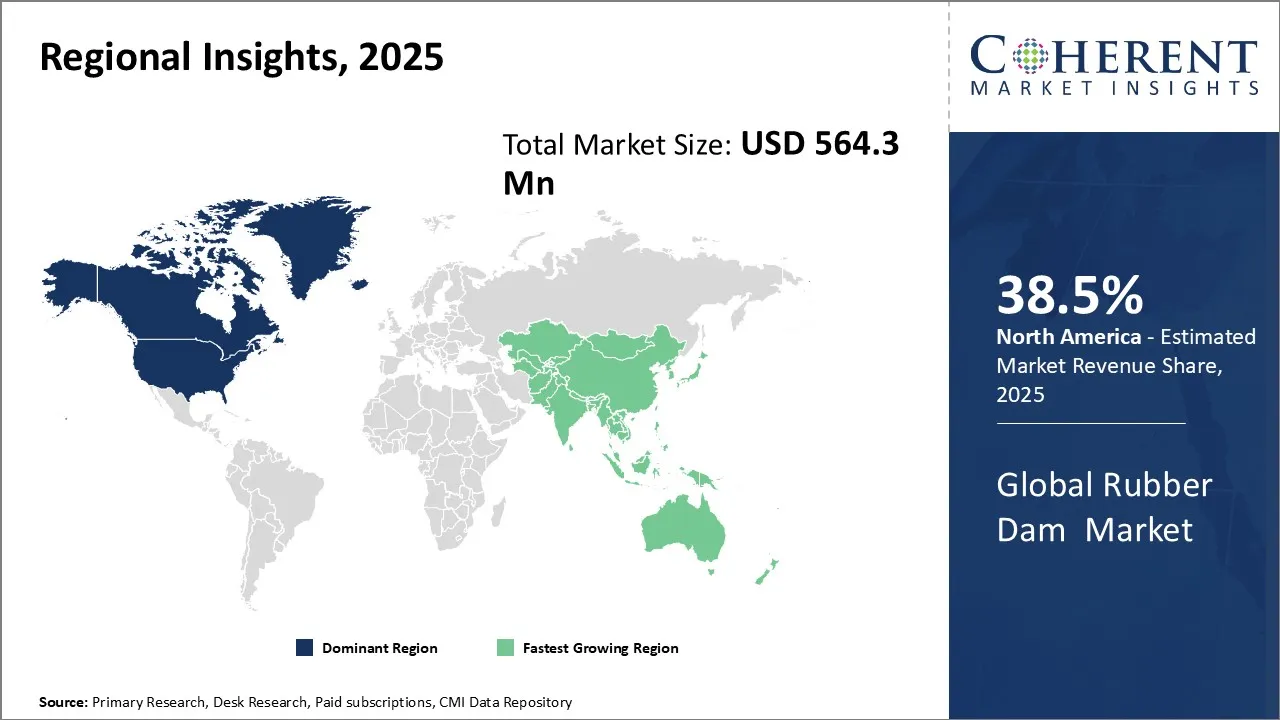
- North America is expected to lead the market, holding a share of 38.5 % in 2026.
- Asia Pacific is anticipated to be the fastest-growing region, with a market share of 23.5 % in 2026.
Market Overview
A prominent market trend in the Rubber Dam segment is the growing emphasis on patient safety and procedure precision, driving demand for enhanced isolation techniques in dental treatments. Innovations such as latex-free and more comfortable rubber dams cater to patient sensitivities and promote compliance. Additionally, integration of digital dentistry technologies and increasing use in endodontics bolster market momentum. Environmentally sustainable and reusable products are gaining traction, reflecting consumer preference toward eco-friendly healthcare solutions, further shaping market dynamics.
Current Events and Its Impact
Current Events | Description and its impact |
Increased Preference for Rubber Dams in Endodontic and Restorative Procedures |
|
Rise in Patient Awareness and Preference for Safe Dental Practices |
|
Segmental Insights
- Current Industry Events of 2026
- Market Size Estimation
- Regional Breakdown
- Competitive Landscape
- Customer Intelligence
- Segmental Analysis
- Pricing Analysis
- Key Market Drivers, Challenges & Future Trends
- Customized Insights Section
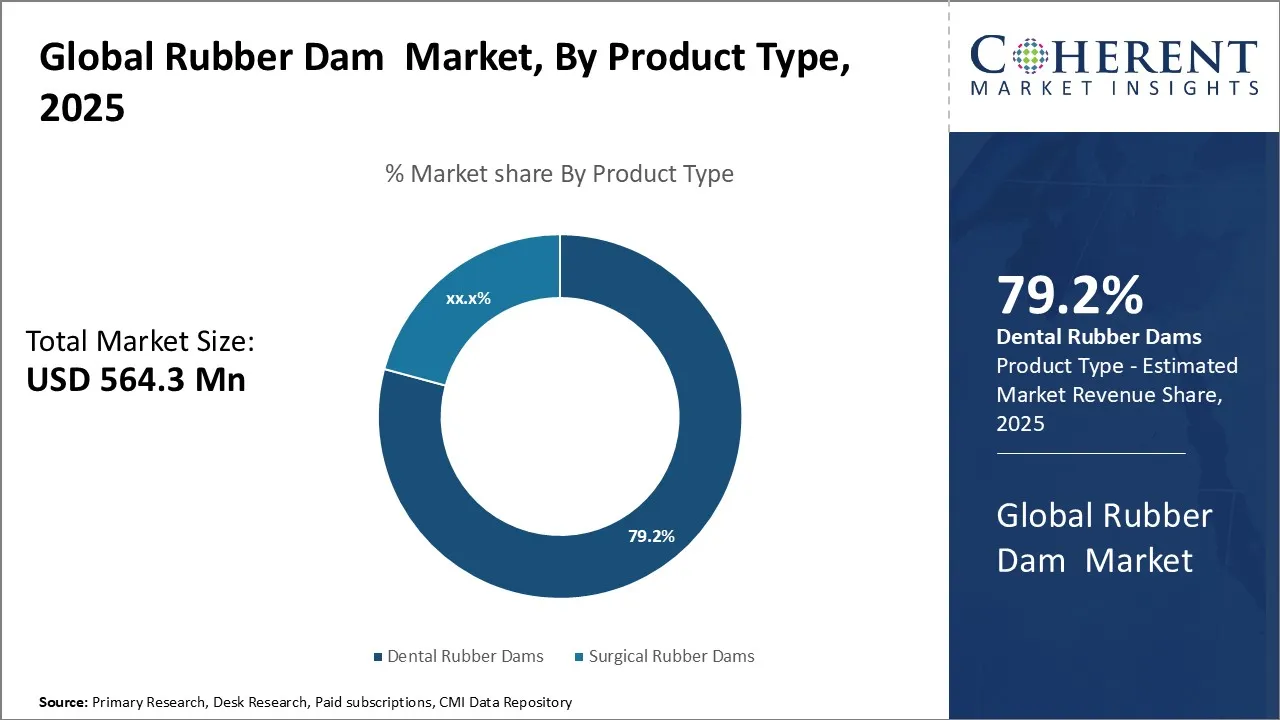
Rubber Dam Market Insights, By Product Type – Dental Rubber Dams Dominant Due To Versatility and Clinical Efficiency in Isolating the Treatment Area During Various Dental Procedures.
In terms of product type within the Global Rubber Dam Market, Dental Rubber Dams are expected to hold the highest share of 80.2% in 2026, primarily because of their broad clinical applicability and ability to enhance procedural efficiency across multiple dental treatments. Dental Rubber Dams are widely recognized for their essential role in maintaining a dry, clean working area during dental procedures, which is crucial for optimal visibility, precision, and infection control. This segment’s dominance is further bolstered by the availability of various formats such as pre-cut dental dams, roll dental dams, and dental dam kits, each addressing distinct clinical needs with tailored convenience.
In April 2025, Arshia Sabet, a dental student at the University of Toronto, U.S developed ComfiDam, the world’s first breathable dental dam, designed to improve patient comfort during dental procedures. The innovation arose from Sabet's personal struggle with chronic allergies and blocked nasal passages, which made using traditional rubber dams uncomfortable. ComfiDam incorporates an air-permeable membrane that allows patients to breathe through their mouth while preventing fluids and dental materials from passing through. This design aims to reduce anxiety and promote relaxation during treatments like root canals and fillings.
Pre-cut dental dams offer standardized sizes for quick, hassle-free use, making them particularly attractive to busy dental practices focused on reducing setup times and ensuring consistent performance. The ready-to-use nature reduces wastage and enhances workflow efficiency. Conversely, roll dental dams provide customizable lengths that enable practitioners to adapt the material size precisely to the requirements of diverse procedures, enhancing versatility. This customization ensures minimal material waste and better patient comfort through tailored isolation.
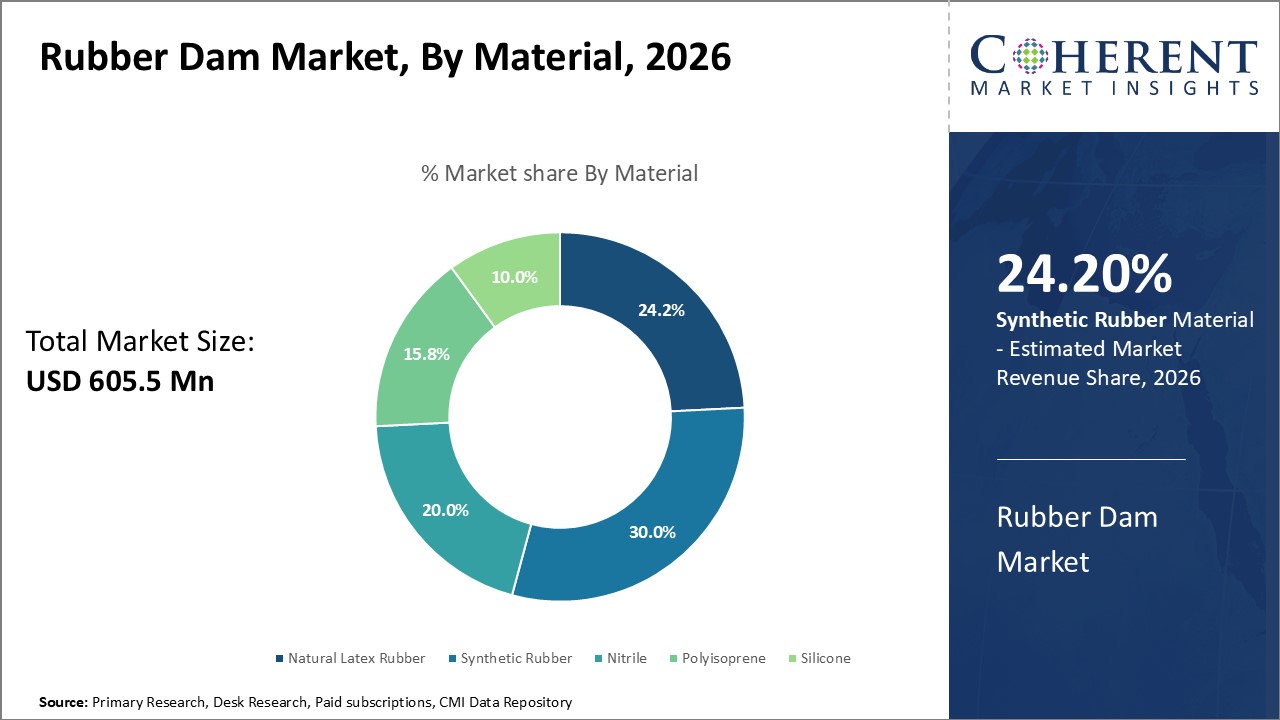
Rubber Dam Market Insights, By Material - Natural Latex Rubber Segment is Dominant Due Tosuperior Properties Such as Elasticity, Strength, and Cost-Effectiveness, Making it the Preferred Choice in Dental and Surgical Applications
The Natural Latex Rubber segment is expected to command the largest share of the market with 24.2% in 2026 within the materials classification, owing to its inherent physical properties, extensive clinical acceptance, and cost-efficiency. Natural latex rubber offers exceptional elasticity, tear resistance, and biocompatibility, which make it ideally suited for creating effective barriers in dental and surgical applications. Its ability to conform snugly to various dental anatomies, providing a tight seal, is pivotal to its widespread use.
One of the main drivers behind its dominance is the material’s superior elasticity that enhances ease of placement and durability throughout the dental procedure. This robustness minimizes the risk of tears or dislodgement, ensuring uninterrupted isolation that is critical for procedures such as endodontics and restorative dentistry. Furthermore, natural latex affords improved tactile sensation for practitioners, aiding precision in manipulation during intricate dental treatments.
Rubber Dam Market Insights, By Application - Predominance of Dental Application Fueled by Expanding Clinical Utilization and Infection Control Priorities
The Dental Application segment is projected to capture the highest share within the Global Rubber Dam Market’s application category with a share of 55.4% in 2026, reflecting the indispensable role of rubber dams in various dental treatment modalities. The widespread adoption of rubber dams in dental procedures is largely driven by their ability to provide a controlled operative environment that enhances treatment outcomes and patient safety.
The use of rubber dams in restorative dentistry—including fillings and crowns—represents a foundational practice to achieve optimal isolation of the tooth, preventing contamination from saliva and moisture that can impair adhesion and durability of restorative materials. This precision is essential not only for treatment success but also for minimizing rework and improving patient satisfaction.
Regional Insights
North America Rubber Dam Market Analysis and Trends
In North America, the dominance in the Global Rubber Dam Market is driven by a well-established healthcare infrastructure and a high concentration of dental care providers who extensively use rubber dams in endodontic and restorative procedures with an estimated share of 38.5% in 2026. The region benefits from advanced technological adoption, consistent government support in healthcare funding, and stringent regulatory standards that favor premium, high-quality dental supplies.
The presence of leading dental product manufacturers, such as DENTSPLY Sirona and 3M, headquartered or deeply rooted in the region, reinforces market strength. Robust partnerships between distributors and dental professionals contribute to a mature and stable market ecosystem. Trade policies encouraging import of innovative dental technologies further enhance North America’s position as the dominant regional market.
Asia Pacific Rubber Dam Market Analysis and Trends
Meanwhile, the Asia Pacific region is expected to exhibit the fastest growth in the Rubber Dam Market due to rapid urbanization with a share of 23.5% in 2026, rising awareness about dental hygiene, and increasing investments in healthcare infrastructure across major countries like China, India, and Japan. The region’s large and growing patient pool, expanding middle class, and increasing access to dental care are significant drivers.
In March 2026, On World Oral Health Day, Ayush institutes nationwide organized awareness drives on oral hygiene and its impact on overall health. Initiatives included free dental check-ups and workshops, with the All-India Institute of Ayurveda (AIIA) highlighting mindful dietary choices and proper brushing.
Governments in this region are actively promoting oral care initiatives and easing regulatory frameworks to attract foreign investments and encourage local manufacturing. Additionally, a burgeoning medical tourism industry in countries like Thailand and Malaysia boosts demand. Notable multinational companies, such as Ultradent Products and Septodont, along with emerging local players, are expanding their footprint, introducing cost-effective and varied product portfolios, which cater to the diverse market needs in Asia Pacific.
Global Rubber Dam Market Outlook for Key Countries
U.S. Rubber Dam Market Trends
The market in the U.S. is characterized by advanced dental technology use and high patient demand for quality endodontic treatments where rubber dams play a vital role. Companies like DENTSPLY Sirona and 3M dominate with innovative products focusing on patient comfort and clinician efficiency. The U.S. Food and Drug Administration (FDA) regulations ensure that the rubber dams available here comply with strict safety and efficacy standards, pushing manufacturers towards continuous innovation. Additionally, the presence of numerous dental schools and professional associations promotes the adoption of rubber dams as a standard of care.
For example, Cranberry USA offers high-quality dental isolation products, including their Rubber Dam Sheets and Cranberry Rubber Dam Kits. Their Rubber Dam products are designed for both comfort and durability, ensuring excellent moisture control during various dental procedures and enhancing treatment success rates.
U.K. Rubber Dam Market Trends
The U.K. dental dam market is evolving with several key trends. One prominent shift is the growing adoption of non-latex dental dams, driven by increasing awareness of latex allergies and a push for safer alternatives in healthcare settings. Additionally, advancements in materials and dental technologies are shaping the market, with manufacturers focusing on improving the effectiveness, comfort, and ease of use of dental dams. There is also a rising interest in eco-friendly and biodegradable materials, reflecting a broader industry trend toward sustainability. These developments show the market’s responsiveness to both clinical needs and patient safety.
For example, Dyrhoff Ltd, from the U.K. specializes in dental products, offering Rubber Dam Sheets and Isolation Kits. Their Rubber Dam products are designed for excellent isolation, helping clinicians maintain a clean and dry environment during dental treatments like root canals, fillings, and other restorative procedures.
China Rubber Dam Market Trends
China represents one of the most promising markets in Asia Pacific, fueled by an expanding middle class seeking better dental care and increased investments from both government and private sectors in healthcare infrastructure. Government initiatives aiming to improve oral hygiene awareness and the integration of rubber dams in standard dental practices are increasing adoption.
For example, in April 2026, the "Dental Care for Seniors and Children" initiative was launched by Yangchun Stomatological Hospital, China. In line with the World Dental Federation’s call to address oral healthcare inequality, the program provides free mobile dental services, focusing on rural seniors, children, and low-income families. It includes services such as caries prevention for children and periodontal disease care for seniors, along with oral health education.
Japan Rubber Dam Market Trends
The market in Japan is defined by high technological penetration and disciplined healthcare delivery systems. Local companies such as Kuraray Noritake Dental heavily invest in research and development to produce high-quality rubber dams that meet the country’s stringent safety and performance expectations. The aging population in Japan also increases dental care needs, positively influencing market demand. Government policies prioritizing preventive care and healthcare innovation support advancements in dental products.
For example, the Japanese government, in collaboration with organizations like the Lion Group, has implemented several initiatives to improve oral hygiene awareness. Since 1932, the Lion Group has organized the annual "Oral Health Event of Tooth Brushing for Children," which educates elementary school students about proper oral care. The initiative, supported by dental professionals and educational institutions, reaches thousands of schools and over 300,000 students annually.
End User Feedback and Unmet Needs in the Global Rubber Dam Market
- End users in the healthcare sector, particularly dental professionals and practitioners, have shared valuable insights into the performance and challenges associated with rubber dam products. Positive feedback often centers on the enhanced precision and efficiency that rubber dams provide during dental procedures such as root canals, fillings, and restorative treatments. For instance, many dental professionals have expressed satisfaction with the product’s ability to maintain a dry working field, improve procedural accuracy, and reduce the risk of contamination. One notable example is a dental practice that reported significant improvements in patient outcomes and procedure speed after integrating high-quality rubber dams, especially during endodontic treatments. Users highlighted the flexibility, ease of placement, and the availability of non-latex options, making them suitable for patients with latex allergies—a feature that has garnered positive responses.
- However, despite the widespread adoption of rubber dams, several challenges and unmet needs persist. A frequently cited concern is the lack of customization and limited sizes, which can be an issue for specific patient demographics, such as pediatric or elderly patients with unique oral conditions. Additionally, while rubber dams are effective, some practitioners have noted that the learning curve for proper application can be steep, especially for less experienced dental assistants. Another significant challenge revolves around affordability, as high-quality rubber dams, particularly non-latex variants, can be expensive for smaller or resource-constrained practices. These issues create an opportunity for manufacturers to focus on improving product customization, enhancing training resources, and offering more cost-effective options, which would not only cater to the diverse needs of dental practices but also enhance customer retention, drive growth, and spur innovation in the market.
Market Players, Key Developments, and Competitive Intelligence
Company Insights
- COLTENE Group: Coltene Group is a global leader in dental solutions, offering a wide range of products designed to enhance the quality and efficiency of dental treatments. Their portfolio includes high-quality dental dams, clamps, and accessories, with a variety of materials tailored to meet specific clinical needs. Their products, such as the HySolate Latex and Non-Latex Dental Dams, Flexi Dam, and Liquid Dam, are renowned for their superior elasticity, tear resistance, and ease of use. Coltene’s dental dams ensure effective tooth isolation, moisture control, and improved patient comfort during procedures like whitening and etching. The HySolate brand, known for its powder-free, latex-free, and scented options, delivers reliable performance and exceptional protection for both patients and dental professionals.
- Aseptico Inc.: Aseptico Inc is a leading provider of high-quality dental products, specializing in solutions that enhance the efficiency and comfort of dental procedures. Their flagship product, HandiDam Dental Dam, is a pre-framed rubber dam that offers superior elasticity, tear resistance, and ease of use for dental treatments such as endodontics. It features a flexible design that facilitates access for suction, X-ray films, and digital X-ray sensors, while its low protein content reduces patient irritation. Available in latex and latex-free versions, HandiDam meets U.S. FDA powder-free standards and is highly regarded by key opinion leaders for its reliability and patient comfort.
- Hu-Friedy Mfg. Co., LLC: It is a leading global manufacturer of high-quality dental instruments and products, dedicated to providing innovative solutions for dental professionals. Their extensive product range includes a variety of rubber dam clamps, forceps, punches, kits, and templates designed to enhance the efficiency and precision of dental procedures. Hu-Friedy’s products, such as the W56 Satin Steel™ Rubber Dam Clamp, Rubber Dam Forceps, and Ainsworth Rubber Dam Punch, are known for their durability, ergonomic design, and reliability. With a focus on improving clinical outcomes and patient comfort, Hu-Friedy continues to be a trusted name in the dental industry, offering essential tools for effective tooth isolation and optimal treatment.
Top Strategies Followed by Global Rubber Dam Market Players
- Established market leaders in the rubber dam industry heavily invest in research and development (R&D) to meet the evolving needs of dental and medical professionals. By prioritizing innovation, these companies focus on improving product durability, usability, and patient comfort. They consistently introduce high-performance products that set industry standards. Additionally, established players actively pursue strategic partnerships with original equipment manufacturers (OEMs) and other key industry stakeholders. These collaborations help enhance their product portfolios and strengthen their market positions.
- For example, Integra LifeSciences is a renowned manufacturer of medical and dental products, offering a wide range of solutions designed for precision and efficiency in dental care. Their Rubber Dam systems, including Rubber Dam Instruments, Rubber Dam Holders, and Dental Dam Clamps, are specifically engineered to provide effective moisture control, which is crucial for various dental procedures. It stays at the forefront of the dental market through innovation, precision, and strategic partnerships, enhancing their offerings and market presence.
- Mid-level players in the rubber dam market, such as those offering affordable yet reliable solutions, focus on providing essential products like Rubber Dam Clamps, Rubber Dam Kits, and related items that support dental professionals in achieving maximum isolation and precision during procedures. These products are crafted to ensure effective moisture control and improve visibility, enhancing treatment outcomes without compromising cost-efficiency. By maintaining a balance between affordability and quality, mid-tier companies cater to smaller dental clinics and emerging healthcare providers, ensuring that they have access to reliable tools that contribute to better patient care.
- For example, Dentsply Sirona is a leading name in the dental industry, offering an extensive range of high-quality dental products. Their Rubber Dam solutions, including Rubber Dam Clamps, Rubber Dam Kits, and other related products, are designed for maximum isolation and precision during various dental procedures.
- Small-scale market participants often focus on niche markets by developing specialized features or innovative designs tailored to specific clinical needs or patient segments. This approach includes adopting cutting-edge technologies, such as novel polymer formulations, advanced manufacturing processes, or unique ergonomic designs, helping them differentiate themselves from larger competitors. Despite their limited resources and production capacity, these small players remain competitive through innovation.
- For example, Kerr Corporation, while recognized as a leader in dental consumables and equipment, embodies this approach by offering unique products like the 3D Rubber Dental Dam. This innovative product is designed to optimize isolation and improve access during complex dental procedures, demonstrating how even established players within the industry utilize cutting-edge technology to stay competitive. By focusing on precision, ease of use, and effective moisture control, Kerr continues to support dental professionals in enhancing treatment outcomes, showcasing how both small and larger players leverage innovation for success in the market.
Market Report Scope
Rubber Dam Market Report Coverage
| Report Coverage | Details | ||
|---|---|---|---|
| Base Year: | 2025 | Market Size in 2026: | USD 605.5 Mn |
| Historical Data for: | 2020 To 2024 | Forecast Period: | 2026 To 2033 |
| Forecast Period 2026 to 2033 CAGR: | 7.3% | 2033 Value Projection: | USD 991.5 Mn |
| Geographies covered: |
| ||
| Segments covered: |
| ||
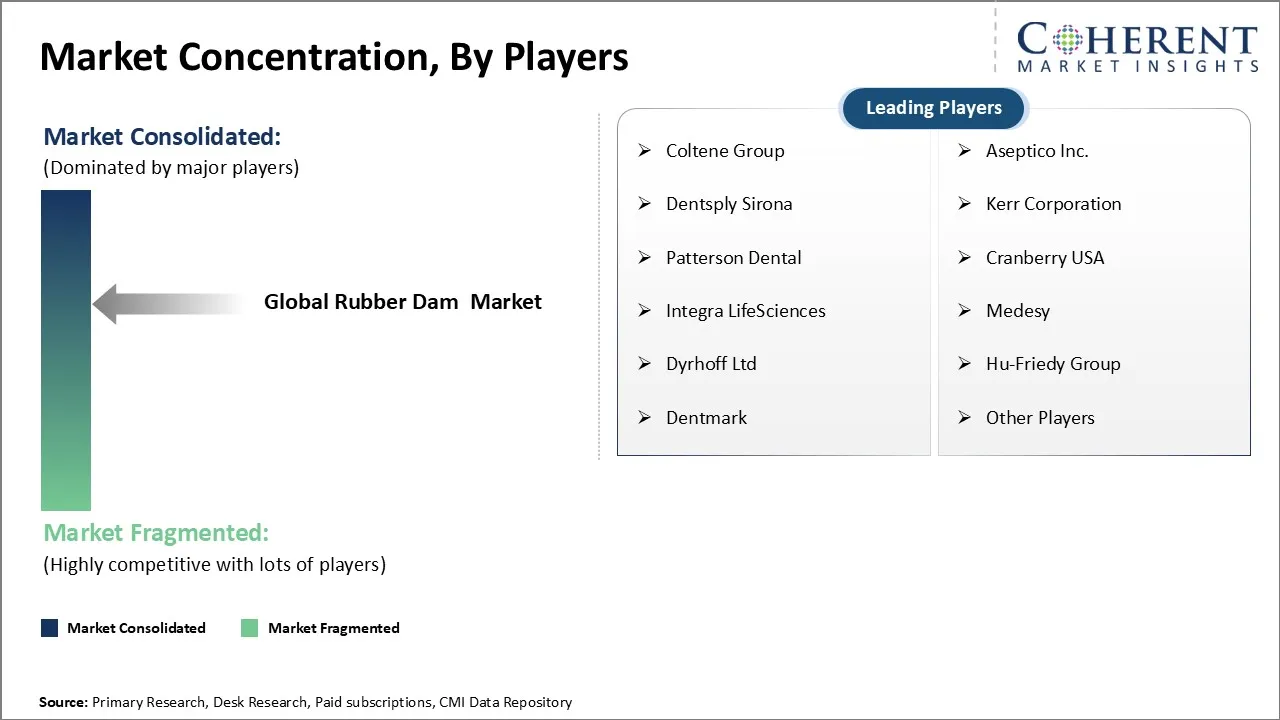
| Companies covered: | Coltene Group, Aseptico Inc., Dentsply Sirona, Kerr Corporation, Patterson Dental, Cranberry USA, Integra LifeSciences, Medesy, Dyrhoff Ltd, Hu-Friedy Group, Dentmark, and Other Players | ||
| Growth Drivers: |
| ||
| Restraints & Challenges: |
| ||
Rubber Dam Market Dynamics
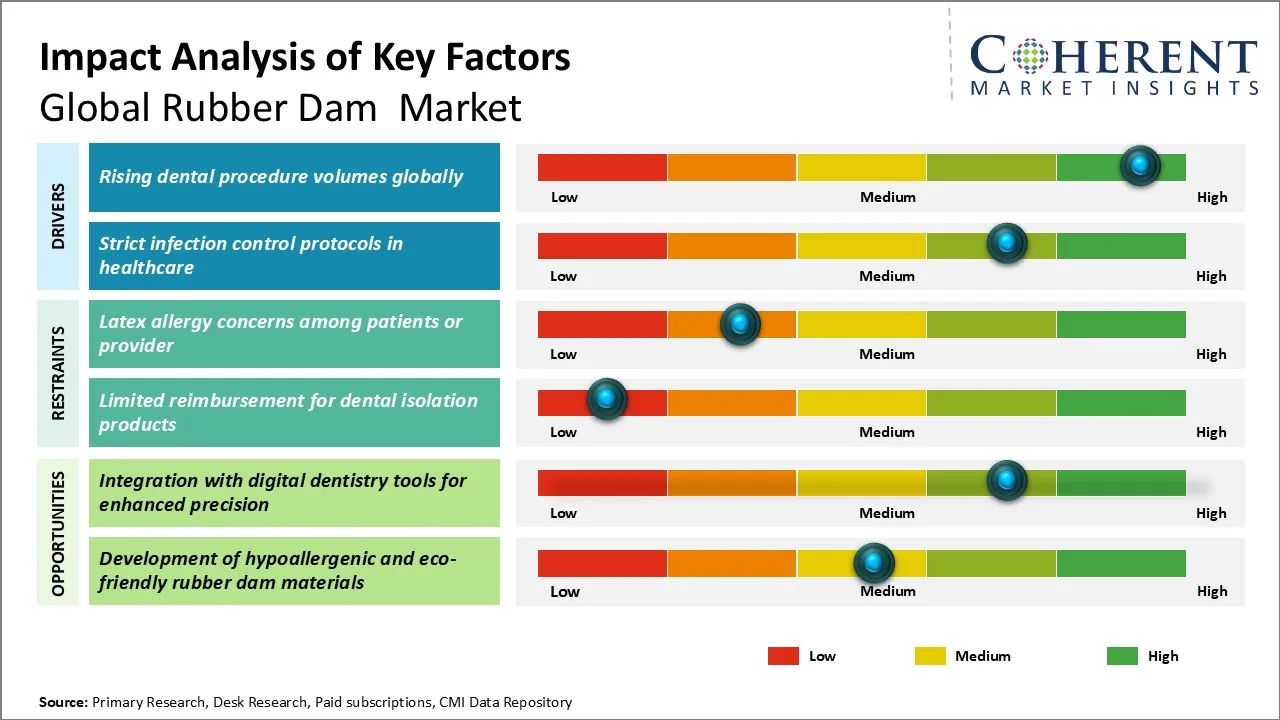
Rubber Dam Market Driver - Rising Dental Procedure Volumes Globally
The surge in dental procedures worldwide has become a significant factor driving the demand for rubber dams in dental practices. As awareness regarding oral health improves and access to dental care expands, more patients are undergoing restorative, endodontic, and preventive treatments that often require isolation of the treatment area to ensure precision, reduce contamination, and enhance patient comfort. Rubber dams play a crucial role in these procedures by creating a dry and clean operating field, preventing saliva and moisture interference, and safeguarding patients from accidental ingestion of dental materials.
Additionally, the rising prevalence of dental conditions, such as caries and periodontal diseases, has led to an uptick in complex procedures like root canals and composite restorations, which mandate the use of rubber dams for optimal outcomes. Consequently, dental practitioners are increasingly integrating rubber dams into their routine workflows, making the growth in dental procedure volumes a pivotal driver for market expansion.
In March 2025, the World Health Organization (WHO) highlighted the rising global prevalence of dental conditions, particularly dental caries (tooth decay) and periodontal diseases, which are major contributors to poor oral health. These conditions are largely preventable but continue to increase due to factors like inadequate access to dental care, poor oral hygiene, high sugar consumption, and tobacco use. The WHO advocates for preventive measures, including promoting good oral hygiene practices and integrating oral health into universal health coverage systems to address these growing challenges.
Rubber Dam Market Opportunity - Integration with Digital Dentistry Tools for Enhanced Precision
The integration of rubber dam products with advanced digital dentistry tools presents a significant opportunity within the global rubber dam market. As dental practices worldwide increasingly adopt digital technologies such as intraoral scanners, CAD/CAM systems, and 3D imaging, there is a growing demand for complementary products that enhance procedural precision and efficiency. Rubber dams, traditionally used to isolate treatment areas and improve visibility, can be innovatively adapted to align with digital workflows, enabling more accurate placement and reducing chair time.
This integration allows dentists to customize rubber dam designs based on patient-specific digital models, ensuring optimal fit and comfort. Additionally, coupling rubber dam application with real-time digital feedback can minimize procedural errors and improve outcomes in restorative, endodontic, and surgical treatments.
In March 2025, Straumann Group, a global leader in dental solutions, showcased its advanced digital dentistry innovations at the International Dental Show (IDS), including the fully launched Straumann AXS cloud-based platform and the iEXCEL implant system. Their partnerships with SprintRay and Carestream Dental highlight advancements in chairside 3D printing and CBCT integration. The integration of rubber dam products with digital dentistry tools presents a significant opportunity in the rubber dam market, enhancing precision, efficiency, and patient care.
Market Segmentation
- Product Type Insights (Revenue, USD Mn, 2021 - 2033)
- Dental Rubber Dams
- Pre-cut Dental Dams (Standard sizes for quick use)
- Roll Dental Dams (Customizable lengths for procedures)
- Dental Dam Kits (Including clamps, frames, and forceps)
- Surgical Rubber Dams
- Sterile Isolation Sheets
- Laparoscopic or Endoscopic Dams
- Dental Rubber Dams
- Material Insights (Revenue, USD Mn, 2021 - 2033)
- Natural Latex Rubber
- Synthetic Rubber
- Nitrile
- Polyisoprene
- Silicone
- Application Insights (Revenue, USD Mn, 2021 - 2033)
- Dental Application
- Restorative Dentistry (Fillings, Crowns)
- Endodontic Treatments (Root Canals)
- Periodontal Surgery (Gingivoplasty)
- Pediatric Dentistry (Primary Tooth Restoration)
- Surgical and Medical Application
- Isolation in Minor Surgeries
- Wound Management
- Infection Control Barriers
- Dental Application
- End User Insights (Revenue, USD Mn, 2021 - 2033)
- Dental Clinics
- Hospitals
- Ambulatory Surgical Centers
- Others (Academic and Research Institutes)
- Sales Channel Insights (Revenue, USD Mn, 2021 - 2033)
- Online
- Offline
- Regional Insights (Revenue, USD Mn, 2021 - 2033)
- North America
- U.S.
- Canada
- Latin America
- Brazil
- Argentina
- Mexico
- Rest of Latin America
- Europe
- Germany
- U.K.
- Spain
- France
- Italy
- Russia
- Rest of Europe
- Asia Pacific
- China
- India
- Japan
- Australia
- South Korea
- ASEAN
- Rest of Asia Pacific
- Middle East
- GCC Countries
- Israel
- Rest of Middle East
- Africa
- South Africa
- North Africa
- Central Africa
- North America
- Key Players Insights
- Coltene Group
- Aseptico Inc.
- Dentsply Sirona
- Kerr Corporation
- Patterson Dental
- Cranberry USA
- Integra LifeSciences
- Medesy
- Dyrhoff Ltd
- Hu-Friedy Group
- Dentmark
- Other Players
Sources
Primary Research Interviews
Stakeholders
- Dentists
- Dental Hygienists
- Dental Clinic Owners
- Dental Product Manufacturers
End Users
- Patients
- Dental Practitioners
- Dental Equipment Suppliers
- Oral Health Educators
Government and International Databases
- World Health Organization (WHO)
- Centers for Disease Control and Prevention (CDC)
- National Institutes of Health (NIH)
- U.S. Food and Drug Administration (FDA)
- European Medicines Agency (EMA)
- World Trade Organization (WTO)
- International Labour Organization (ILO)
Trade Publications
- Dental Tribune International
- Dental Economics
- Dentistry Today
- The Journal of the American Dental Association (JADA)
- Dental Materials Journal
Academic Journals
- Journal of Clinical Dentistry
- The Journal of Prosthetic Dentistry
- Journal of Endodontics
- Journal of Periodontology
- The International Journal of Oral & Maxillofacial Implants
- Clinical Oral Investigations
Reputable Newspapers
- The New York Times
- The Guardian
- The Wall Street Journal
- The Financial Times
- The Washington Post
Industry Associations
- American Dental Association (ADA)
- British Dental Association (BDA)
- European Dental Association (EDA)
- International Association for Dental Research (IADR)
- World Dental Federation (FDI)
Public Domain Resources
- United Nations (UN) Database
- National Institutes of Health (NIH) Public Access Repository
- U.S. Census Bureau
- PubMed Central (PMC)
- Global Health Observatory (GHO)
Proprietary Elements
- CMI Data Analytics Tool: Proprietary analytics tool to analyze real-time market trends, consumer behavior, and technology adoption in market
- Proprietary CMI Existing Repository of Information for Last 8 Years
Get access to 250+ pages report
Every segment, forecast, competitor profile and data table behind the analysis above — available for instant download.
- ESOMAR Member
- ISO 9001:2015 Certified
- D-U-N-S Registered
- GDPR & CCPA Compliant
Missing comfort of reading report in your local language? Find your preferred language:
Transform your Strategy with Exclusive Trending Reports
Frequently Asked Questions
The Global Rubber Dam Market is estimated to be valued at USD 605.5 Mn in 2026 and is expected to reach USD 991.5 Mn by 2033.
The CAGR of Global Rubber Dam Market is projected to be 7.3% from 2026 to 2033.
Rising dental procedure volumes globally and strict infection control protocols in healthcare are the major factors driving the growth of Global Rubber Dam Market.
Latex allergy concerns among patients or provider and limited reimbursement for dental isolation products are the major factors hampering the growth of Global Rubber Dam Market.
In terms of Product Type, Dental Rubber Dams are estimated to dominate the market revenue share in 2026.
By isolating the treatment area, a rubber dam prevents moisture contamination, providing a dry field for the dentist to work in. This leads to more precise work, especially in procedures like bonding, root canals, and fillings, improving the long-term success of the treatment.
The dentist will first place a frame over the patient's mouth, then stretch the rubber dam over the treated tooth and secure it with clamps. It is adjusted to ensure a tight seal, isolating the area for effective treatment.