

Polycythemia Vera Therapeutics Market Size and Share Analysis - 2026 To 2033
The polycythemia vera therapeutics market is anticipated to grow at a CAGR of 7.6% with USD 1.61 Bn in 2026 and is expected to reach USD 2.91 Bn in 2033. The increasing incidence of polycythemia vera (25.9 to 27.3 per 100,000 over 2026-2030) is expected to drive the growth of the global polycythemia vera therapeutics market over the forecast period. Moreover, symptoms of polycythemia vera usually develop slowly over many years in patients. Often, the disorder is found incidentally on a blood test, as part of a routine exam before noticeable symptoms occur.
Key Takeaways
- Primary polycythemia vera is expected to account the largest share of 62% in 2026, due to higher clinical recognition, chronic treatment need, and structured therapy pathways. People with chronic diseases and mental health conditions account for 90% of the United States' annual healthcare spending, which is about USD 5.3 trillion.
- Kinase Inhibitors will dominate with 45% in 2026, because they are the most targeted, most effective, and most widely used advanced therapy for the disease. Clinical studies have shown that ruxolitinib, the leading JAK inhibitor, achieved hematocrit control in approximately 77% of patients, compared with 45% receiving the best available therapy, making it the preferred treatment for patients who are resistant or intolerant to hydroxyurea.
- Oral segment will dominate with 58% in 2026, as chronic disease management favors easy, at-home, long-term oral therapy over hospital-based injections. Injection-related infections caused a large burden on hospitals, with 321 hospital admissions among 265 patients, resulting in 282 total infections.
- Hospital pharmacies segment will dominate with 54% in 2026, PV is a specialist-treated, high-monitoring disease requiring hospital-based care and controlled drug dispensing. Around 70%+ of PV patients require long-term specialist monitoring and cytoreductive therapy, which is typically initiated and managed in hospitals.
- North America is expected to acquire the dominant share of 40% in 2026, superior diagnosis rates, advanced healthcare systems, strong reimbursement, and early adoption of targeted therapies. In recent reports, the five-year survival rate for all cancers has reached about 70%, showing that more people are living longer after diagnosis than before.
Segmental Insights
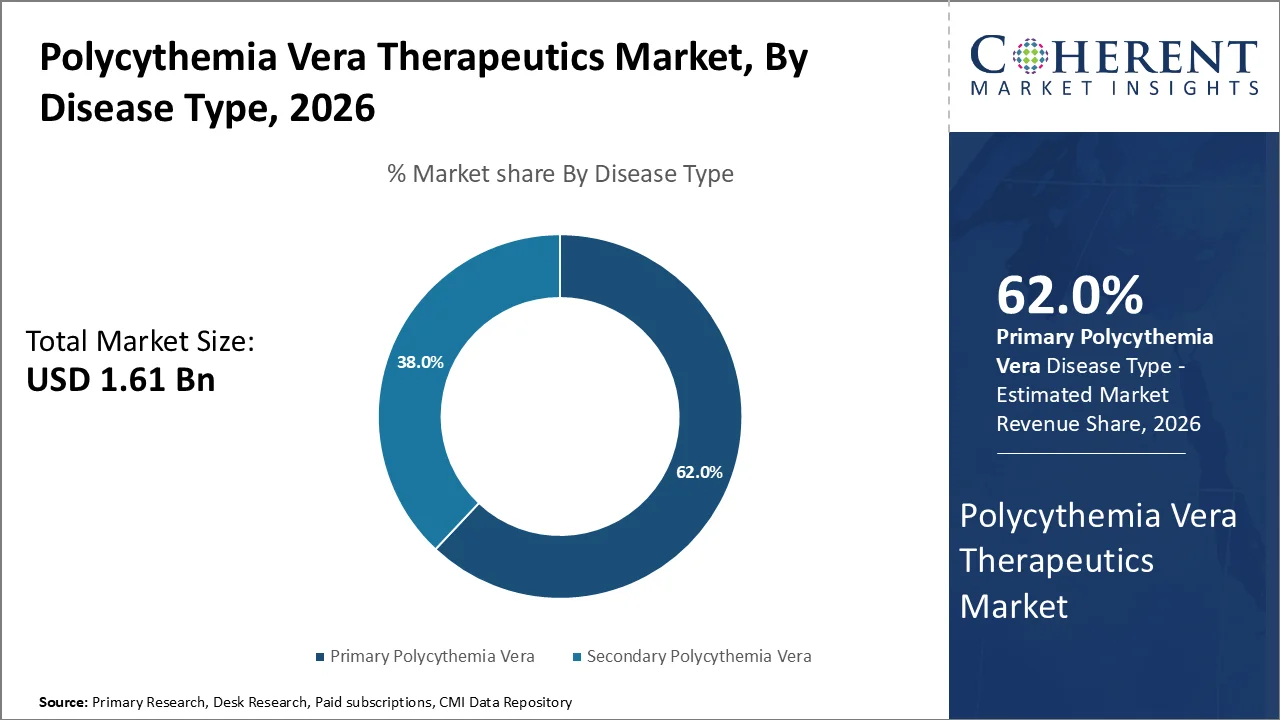
Why is Primary Polycythemia Vera Acquiring the Largest Market Share?
Primary polycythemia vera is projected to account for the largest share of disease type in 2026, representing approximately 62% of the total volume. The well-defined molecular pathogenesis, established diagnostic criteria, as well as the availability of a robust therapeutic pipeline specifically designed to target the underlying genetic mutations associated with this condition are the factors responsible for the growth of the segment.
The scientific understanding that this form of the disease is a clonal myeloproliferative neoplasm stimulated by the JAK2 V617F mutation, which is present in approximately 96% of all diagnosed Polycythemia Vera cases according to data published by the National Cancer Institute (NCI) and further validated by clinical guidelines from the European LeukemiaNet (ELN).
This high prevalence of a singular, identifiable mutation has made pharmaceutical companies as well as research institutions to develop highly targeted therapies, thereby creating a concentrated and commercially significant treatment landscape that continues to attract investment and innovation.
- Current Industry Events of 2026
- Market Size Estimation
- Regional Breakdown
- Competitive Landscape
- Customer Intelligence
- Segmental Analysis
- Pricing Analysis
- Key Market Drivers, Challenges & Future Trends
- Customized Insights Section
Kinase Inhibitors holds the Largest Market Share
Based on drug class, kinase inhibitors dominates the market, accounting for a significant 45% share in 2026. owing to their highly targeted mechanism of action, strong clinical validation, and broad physician adoption across multiple geographies. Out of 94 FDA-approved protein kinase inhibitor drugs, 10 new drugs were approved in 2025. Among all these medicines, 6 drugs work on a special type of enzyme called MEK1/2 (dual-specificity protein kinases), which aid control how cancer cells grow and divide.
The landmark discovery of the JAK2 V617F mutation, which is present in more than 95% of PV patients as documented by the World Health Organization (WHO) in its classification of myeloproliferative neoplasms is augmenting the market.
This genetic insight fundamentally transformed the therapeutic scenario by providing a clearly defined molecular target, making sure the development of highly specific JAK1/JAK2 inhibitors that directly caters to the underlying pathophysiology of the disease rather than merely managing its symptoms.
Oral holds the Largest Market Share
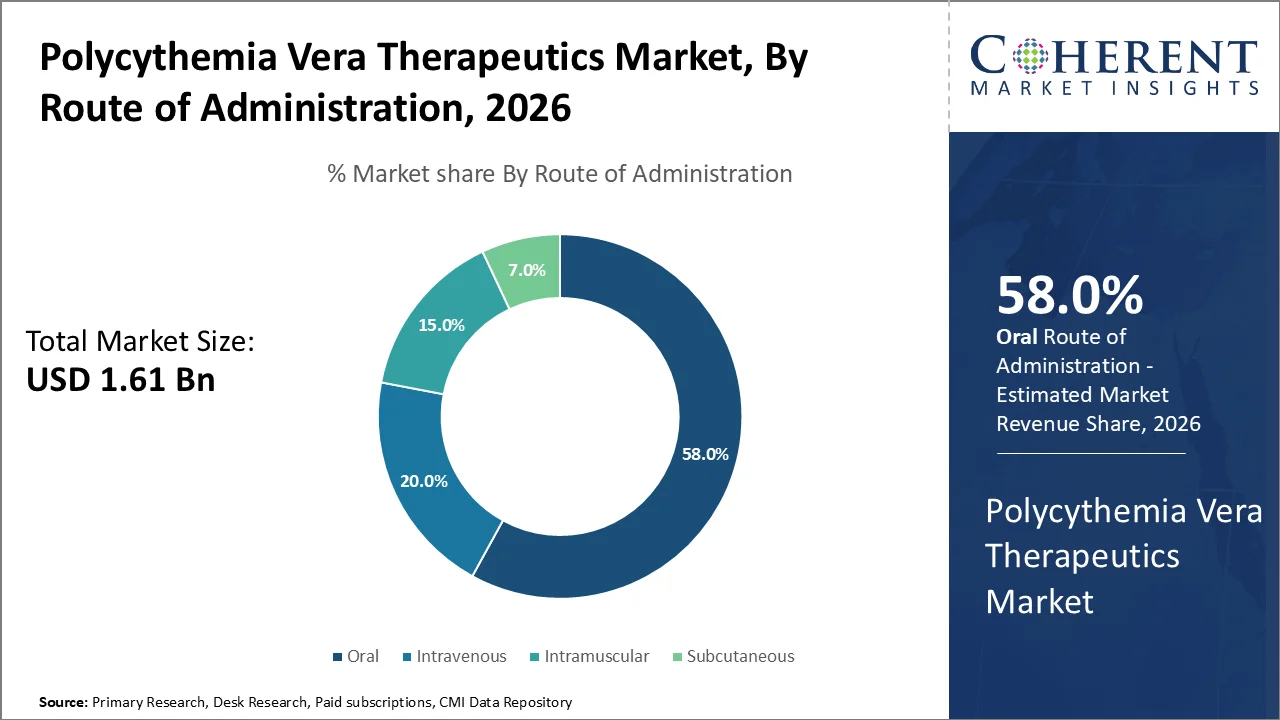
Based on route of administration, oral dominates the market, accounting for a significant 58% share in 2026, owing to its unparalleled patient convenience, superior compliance rates, as well as the high rates of clinical adoption of orally administered therapies that have fundamentally changes the management of this chronic myeloproliferative neoplasm.
The nature of polycythemia vera as a long-term chronic condition requiring continuous disease management along with the remarkable therapeutic landscape shaped by drugs such as ruxolitinib (Jakafi), which is administered orally twice daily is further propelling the market.
Jakafi sales surged by 7% in the first quarter of 2026 compared to the same period last year, reaching USD758 million. This growth was mainly because more patients started using the drug, leading to a 6% increase in paid demand.
Hospital Pharmacies holds the Largest Market Share
Based on distribution channel, hospital pharmacies dominates the market, accounting for a significant 54% share in 2026, owing to the highly specialized nature of Polycythemia Vera (PV) as a rare hematological malignancy that require close clinical supervision, complex therapeutic regimens, as well as consistent patient monitoring throughout the treatment journey.
Polycythemia Vera is classified as a myeloproliferative neoplasm (MPN) and is managed using treatments including phlebotomy, hydroxyurea, interferon-alpha formulations, the JAK1/JAK2 inhibitor ruxolitinib (marketed as Jakafi), etc., all of which demand accurate dosing protocols as well as periodic laboratory assessments, making hospital pharmacies the most appropriate and frequently utilized channel for dispensing these medications.
The complexity associated with PV management places it firmly within the domain of specialized healthcare institutions, where oncologists as well as hematologists work in tandem with clinical pharmacists to ensure that patients receive individualized care.
JAK2 Inhibitor Technology is transforming the Polycythemia Vera Therapeutics Industry
JAK2 inhibitor technology started with the discovery of the JAK2 V617F mutation in 2005, which causes overactive JAK-STAT signaling and leads to uncontrolled blood cell production in polycythemia vera. This made the development of targeted drugs called JAK inhibitors, which block this pathway as well as aid in controling the disease. Studies show that patients treated with ruxolitinib, a JAK1/2 inhibitor, achieved about 77% hematocrit control compared to 45% with best available therapy, along with better symptom relief and lower disease burden.
The first approved drug in this class, ruxolitinib (Jakafi), was FDA-approved in 2014 for PV patients resistant or intolerant to hydroxyurea. Clinical trials showed strong results, including improved blood count control, spleen size reduction, as well as symptom improvement, establishing JAK inhibition as a major breakthrough in treatment. Long-term studies also showed that around 73% of patients-maintained hematocrit control over several years, confirming durable effectiveness.
Second-Generation JAK2-Selective Inhibitors: A major breakthrough in Polycythemia Vera Therapeutics
Second-generation JAK2-selective inhibitors are newer drugs designed to improve treatment of blood cancers like polycythemia vera by being more targeted and reducing side effects. These include fedratinib, pacritinib, and momelotinib, which work by blocking the JAK2 pathway more selectively or in different ways to better manage symptoms and complications like anemia or low platelets.
For example, fedratinib is more selective for JAK2 and is mainly used in myelofibrosis, while pacritinib is made for patients with low platelet counts, as well as momelotinib also aid improve anemia. These newer drugs expand treatment alternatives for patients who do not respond well to older therapies like ruxolitinib.
Current Events and Their Impact on the Polycythemia Vera Therapeutics Market
Current Event | Description and its Impact |
FDA approval of next-generation ruxolitinib extended-release (Jakafi XR) in 2026 for PV |
|
Strong pipeline expansion of novel PV therapies (JAK inhibitors, interferon, and hepcidin-based drugs) |
|
Polycythemia Vera Therapeutics Market Trends
- The approval of ruxolitinib (Jakafi/Jakavi, Novartis/Incyte) showed a paradigm inclination in PV management, establishing JAK1/JAK2 inhibition as a cornerstone of second-line treatment for hydroxyurea-resistant or hydroxyurea-intolerant patients.
- Beyond JAK inhibition, researchers and pharmaceutical companies are potentially exploring mechanisms including BCL-2 inhibitors, MDM2 inhibitors (e.g., KRT-232/navtemadlin), BET bromodomain inhibitors, telomerase inhibitors (imetelstat), interferon-alpha formulations (Ropeginterferon alfa-2b / BESREMi, PharmaEssentia), etc.
- Historically, PV management focused on hematocrit control and symptom relief. The contemporary clinical and regulatory environment is highly emphasizing molecular response specifically, reduction in JAK2 V617F allele burden as a meaningful endpoint.
- Improved access to genetic testing, greater hematologist awareness, and the broader adoption of next-generation sequencing (NGS) panels are leading to higher diagnosis rates of PV globally.
- As key branded therapies approach or pass patent expiration windows, the anticipated entry of hydroxyurea generics (already prevalent) and potential biosimilar versions of interferon preparations is expected to intensify pricing pressure in established markets.
Regional Insights
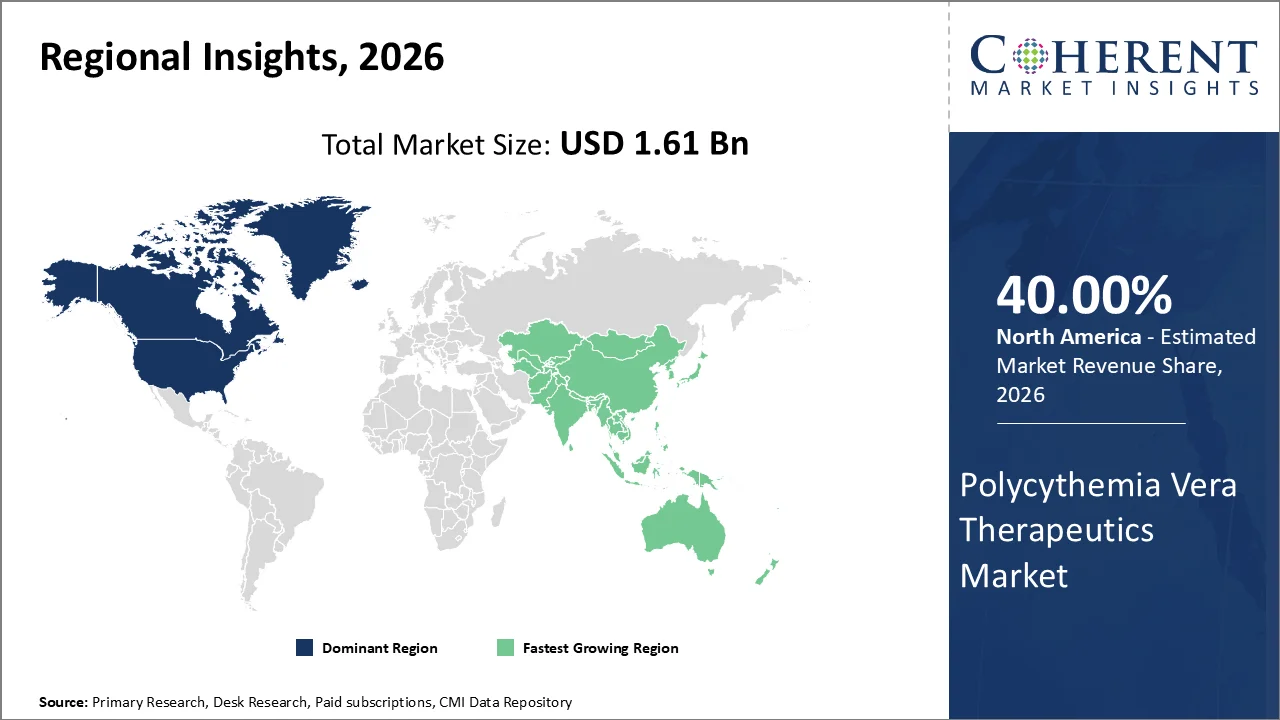
North America dominates owing to owing to its robust pharmaceutical research ecosystem
North America account 40% market share in 2026, owing to its well-established healthcare infrastructure, robust pharmaceutical research ecosystem, and high prevalence of diagnosed polycythemia vera (PV) cases supported by advanced screening and diagnostic capabilities. Last year, medicines sold by AstraZeneca in the United States were worth about USD4.8 billion, which is around 4% of all pharmaceutical exports from the US. This shows that AstraZeneca is an important company in the US pharmaceutical market, and it sells a large amount of its medicines there.
The United States, in particular, is the epicenter of PV therapeutics development, largely driven by the U.S. Food and Drug Administration's (FDA) accelerated approval pathways that have supported the commercialization of JAK inhibitors such as ruxolitinib (Jakafi) and ropeginterferon alfa-2b (Besremi).
According to the National Cancer Institute (NCI), myeloproliferative neoplasms, including polycythemia vera, are highly being diagnosed due to improved genomic profiling capabilities, particularly JAK2 V617F mutation testing, which has become a standard diagnostic criterion across U.S. oncology centers.
Furthermore, the Centers for Medicare and Medicaid Services (CMS) reimbursement frameworks have majorly widened patient access to newer PV therapeutics, building sustained demand. The publicly funded provincial healthcare systems of Canada have also highly incorporated PV-targeted therapies into their national formularies, further reinforcing the dominance of the North American sub-segment within the broader regional landscape.
Asia Pacific Polycythemia Vera Therapeutics Market Trends
The Asia Pacific region is poised to be the fastest-growing region through 2026-2033, expanding at a CAGR of approximately 6.8%. The growth in healthcare access, better diagnostic tools, and higher government investment in cancer care are the growth inducing factors. Fuda Cancer Hospital in China has treated more than 10,000 international patients from over 100 countries, showing a high demand for advanced cancer treatment in the region.
Countries including China, Japan, South Korea, Australia, etc., have experienced major improvements in hematological disease registries as well as rare disease identification programs, leading to greater numbers of diagnosed PV cases requiring therapeutic intervention.
Japan's Ministry of Health, Labour and Welfare (MHLW) has been particularly active in expediting approvals for JAK inhibitors under its Sakigake designation system, which accelerates review timelines for innovative treatments addressing serious as well as rare diseases.
High Disease Awareness is Accelerating the Polycythemia Vera Therapeutics Market Demand in United States
The U.S. contributes the highest share in the Polycythemia Vera (PV) therapeutics market in North America, the high disease awareness, as well as robust regulatory framework that accelerates the approval and commercialization of novel therapeutic agents.
The United States has one of the most advanced oncology and hematology care ecosystems globally, which directly translates into superior diagnostic rates and earlier identification of PV cases, consequently driving higher therapeutic utilization. According to the National Cancer Institute's Surveillance, Epidemiology, and End Results (SEER) Program, myeloproliferative neoplasms, including PV, are consistently tracked as well as managed through a network of specialized hematology centers across the country, making sure that patients receive timely effective treatment interventions.
Furthermore, the U.S. Food and Drug Administration (FDA) has played an important role in enabling access to advanced PV therapies, with the landmark approval of ruxolitinib (Jakafi) by FDA serving as a transformative event for PV management in the country.
China Polycythemia Vera Therapeutics Market Trends
China contributes the highest share in the Polycythemia Vera therapeutics market in Asia Pacific, due to its well-established healthcare infrastructure, large patient pool, as well as robust pharmaceutical manufacturing ecosystem that collectively drive the adoption of advanced therapeutic interventions.
The comprehensive oncology and hematology care network of the country, which spans across Tier-1 and Tier-2 cities through specialized hospitals and cancer treatment centers is further augmenting the market.
The National Health Commission of China has consistently prioritized hematological malignancy management under its national disease control frameworks, enabling better disease detection and treatment uptake across provinces.
According to data from the Chinese Society of Hematology, Polycythemia Vera represents a significant proportion of myeloproliferative neoplasm diagnoses in mainland China, particularly in older male populations above 50 years of age.
Who are the Major Companies in Polycythemia Vera Therapeutics Industry
Some of the major key players in polycythemia vera therapeutics market include, Pfizer Inc., Galena Biopharma, Bristol-Myers Squibb Company, Novartis AG, Eli Lilly and Company, PharmaEssentia Corporation, Bayer AG, Mylan N.V., Teva Pharmaceuticals Industries Ltd, GlaxosmithKline plc, ANP Technologies, INC., F. Hoffmann-La Roche Ltd., Gilead Sciences, Inc, Karus Therapeutics Limited, and Miragen Therapeutics, Inc.
Key News
- In March 2026, Takeda and Protagonist Therapeutics in the U.S. FDA has accepted their new drug application (NDA) for rusfertide and will review it quickly (Priority Review). Rusfertide is a new, first-in-class medicine for polycythemia vera (PV), a rare blood disease where the body makes too many red blood cells.
- In June 2026, PharmaEssentia announced that the U.S. FDA has approved the BESREMi Pen for treating polycythemia vera (PV). This is a new device that helps patients self-inject their PV medicine at home more easily instead of using a syringe.
Market Report Scope
Polycythemia Vera Therapeutics Market Report Coverage
| Report Coverage | Details | ||
|---|---|---|---|
| Base Year: | 2025 | Market Size in 2026: | USD 1.61 Bn |
| Historical Data for: | 2020 To 2024 | Forecast Period: | 2026 To 2033 |
| Forecast Period 2026 to 2033 CAGR: | 7.6% | 2033 Value Projection: | USD 2.91 Bn |
| Geographies covered: |
| ||
| Segments covered: |
| ||
| Companies covered: | Pfizer Inc., Galena Biopharma, Bristol-Myers Squibb Company, Novartis AG, Eli Lilly and Company, PharmaEssentia Corporation, Bayer AG, Mylan N.V., Teva Pharmaceuticals Industries Ltd, GlaxosmithKline plc, ANP Technologies, INC., F. Hoffmann-La Roche Ltd., Gilead Sciences, Inc, Karus Therapeutics Limited, and Miragen Therapeutics, Inc. | ||
| Growth Drivers: |
| ||
| Restraints & Challenges: |
| ||
Analyst Opinion
- Polycythemia Vera (PV) therapeutics market is witnessing significant transformation driven by advancing molecular research and deeper understanding of JAK2 mutation mechanisms underlying this rare myeloproliferative neoplasm.
- The widespread adoption of JAK inhibitors, particularly ruxolitinib, has fundamentally reshaped treatment paradigms, offering superior symptom management compared to conventional hydroxyurea therapy.
- Additionally, growing pipeline activity from pharmaceutical companies exploring novel therapeutic combinations as well as next-generation targeted agents is catalyzing market growth.
- However, certain restraints temper market momentum, including the high cost of targeted therapies, which is a major accessibility challenges across price-sensitive emerging economies.
- Precision medicine approaches leveraging biomarker-driven patient stratification are highly unlocking personalized treatment pathways.
Speak to the analyst
Want personalized insights?
Take the findings above to one of our principal consultants, or have the report rebuilt around the segments, geographies and competitors you actually track.
Market Segmentation
- By Disease Type (Revenue, USD Bn, 2021-2033)
- Primary Polycythemia Vera
- Secondary Polycythemia Vera
- By Drug Class (Revenue, USD Bn, 2021-2033)
- Antimetabolite
- Kinase Inhibitors
- Alpha Interferon
- Selective Serotonin Reuptake Inhibitors
- Others
- By Route of Administration (Revenue, USD Bn, 2021-2033)
- Oral
- Intravenous
- Intramuscular
- Subcutaneous
- By Distribution Channel (Revenue, USD Bn, 2021-2033)
- Hospital Pharmacies
- Retail Pharmacies
- Online Pharmacies
- By Region (Revenue, USD Bn, 2021-2033)
- North America
- U.S.
- Canada
- Latin America
- Brazil
- Mexico
- Argentina
- Rest of Latin America
- Europe
- Germany
- U.K.
- France
- Italy
- Spain
- Russia
- Rest of Europe
- Asia Pacific
- China
- India
- Japan
- Australia
- South Korea
- ASEAN
- Rest of Asia Pacific
- Middle East
- GCC
- Israel
- Rest of Middle East
- Africa
- South Africa
- Central Africa
- North Africa
- North America
Sources
Primary Research Interviews
- Hematologists and Oncologists
- Pharmaceutical & Biotechnology Company Executives
- Hospital Pharmacists & Clinical Researchers
- Healthcare Payers & Reimbursement Specialists
- Others
Databases
- GlobalData Healthcare
- IQVIA Pharma Intelligence
- Clarivate Analytics (Cortellis)
- PubChem Compound Database
- Others
Magazines
- Oncology Times
- Pharmaceutical Executive
- BioPharma Dive
- Drug Discovery & Development Magazine
- Others
Journals
- Blood (American Society of Hematology Journal)
- Leukemia & Lymphoma Journal
- The New England Journal of Medicine
- British Journal of Haematology
- Others
Newspapers
- The Wall Street Journal (Healthcare Section)
- Financial Times (Pharma & Biotech)
- Reuters Health News
- The Guardian (Health & Science)
- Others
Associations
- American Society of Hematology (ASH)
- Myeloproliferative Neoplasm Research Foundation (MPN RF)
- European Hematology Association (EHA)
- MPN Advocacy & Education International
- Others
Public Domain Sources
- U.S. Food & Drug Administration (FDA)
- National Cancer Institute (NCI)
- World Health Organization (WHO)
- ClinicalTrials.gov
- Others
Proprietary Elements
- CMI Data Analytics Tool
- Proprietary CMI Existing Repository of information for last 10 years
Get access to 250+ pages report
Every segment, forecast, competitor profile and data table behind the analysis above — available for instant download.
- ESOMAR Member
- ISO 9001:2015 Certified
- D-U-N-S Registered
- GDPR & CCPA Compliant
Missing comfort of reading report in your local language? Find your preferred language:
Transform your Strategy with Exclusive Trending Reports
Frequently Asked Questions
The polycythemia vera therapeutics market is expected to reach USD 2.91 Bn in 2033.
Major players operating in the global polycythemia vera therapeutics market include Pfizer Inc., Galena Biopharma, Bristol-Myers Squibb Company, Novartis AG, Eli Lilly and Company, PharmaEssentia Corporation, Bayer AG, Mylan N.V., Teva Pharmaceuticals Industries Ltd, GlaxosmithKline plc, ANP Technologies, INC., F. Hoffmann-La Roche Ltd., Gilead Sciences, Inc, Karus Therapeutics Limited, and Miragen Therapeutics, Inc.
High cost of treatment limiting patient access in developing economies is one of the major factors that is expected to hamper growth of the market over the forecast period.
Rising prevalence of polycythemia vera and other myeloproliferative neoplasms globally are driving growth of the global polycythemia vera therapeutics market.
The polycythemia vera therapeutics market is anticipated to grow at a CAGR of 7.6% between 2026 and 2033.
Among regions, North America is expected to account for a largest market share in the global polycythemia vera therapeutics market over the forecast period.
Polycythemia vera is a chronic myeloproliferative neoplasm with excessive red blood cell production, increasing thrombotic risk.