

Global Senior Living Market Size and Forecast – 2026 to 2033
The global senior living market is estimated to be valued at USD 275.99 Bn in 2026 and is expected to reach USD 417.73 Bn by 2033, exhibiting a compound annual growth rate (CAGR) of 6.1% from 2026 to 2033. This steady growth reflects increasing demand for senior living facilities driven by aging populations worldwide, rising health awareness, and the growing preference for ambient assisted living and specialized care services.
Key Takeaways of the Global Senior Living Market
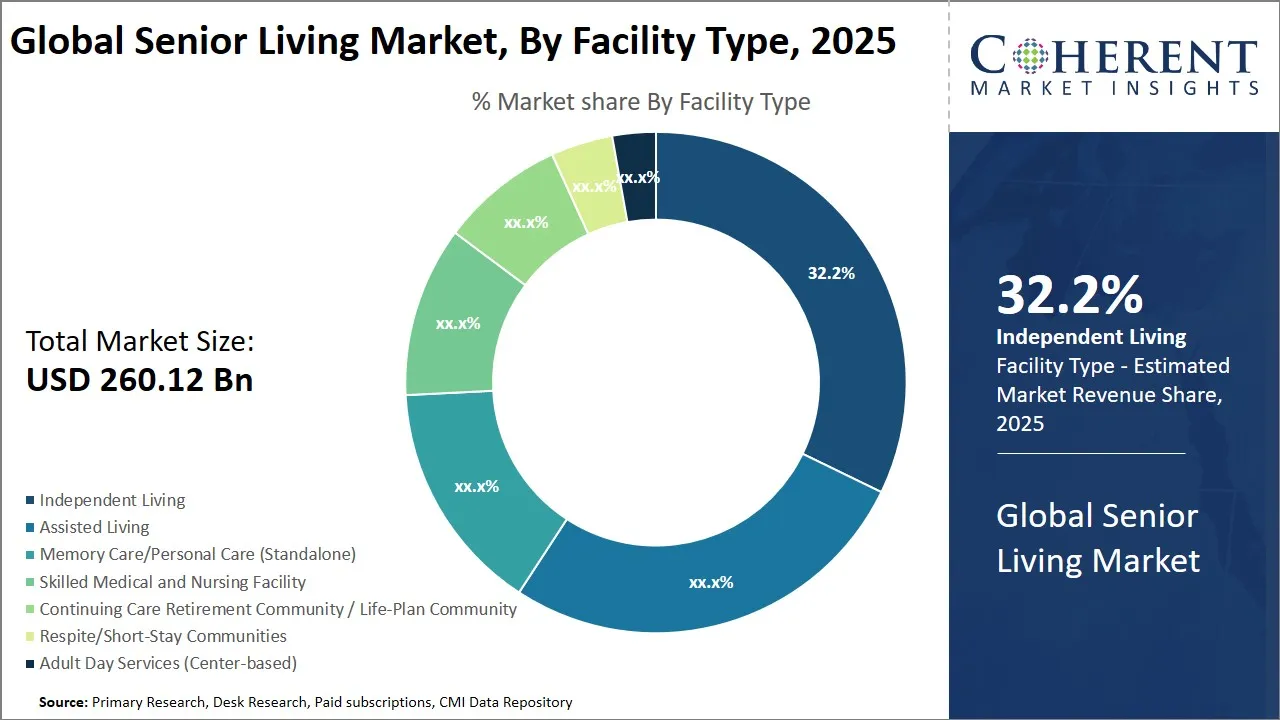
- The independent living segment is projected to account for 33.2 % share in 2026.
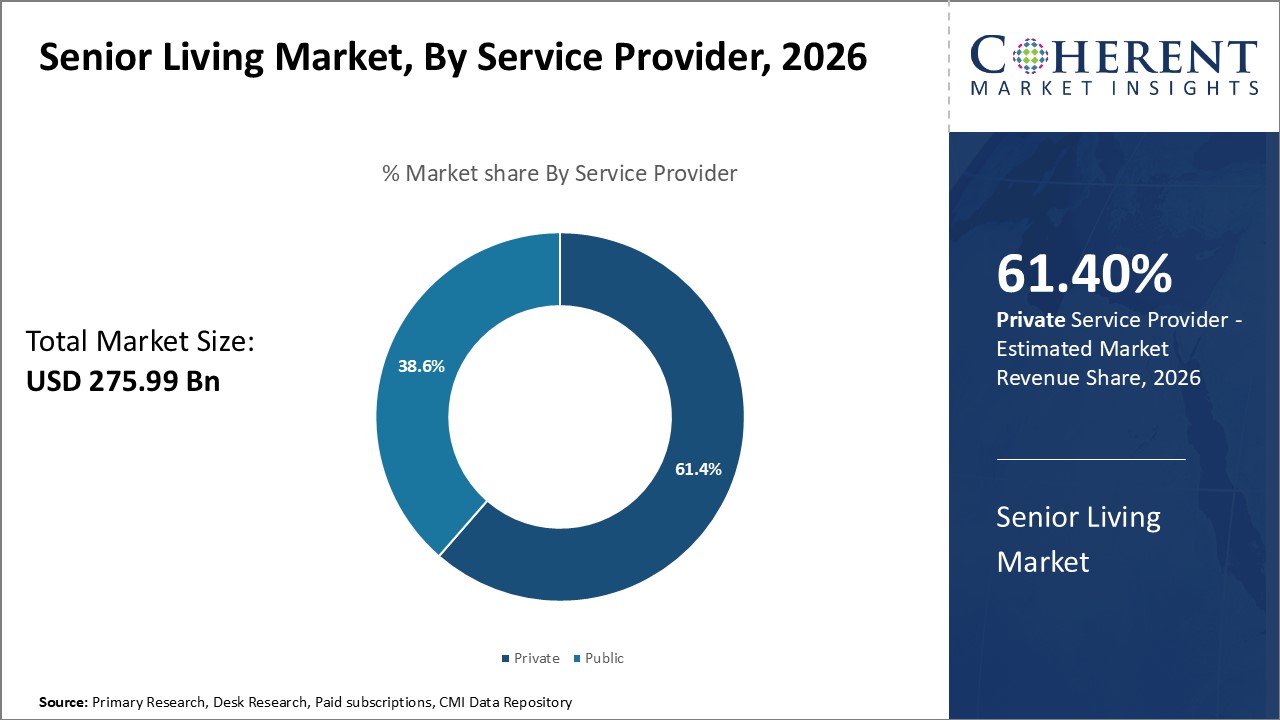
- By service provider, the private segment is expected to capture 61.4 % share in 2026.
- By service type, the adult day care segment is projected to hold 35.3 % share in 2026.
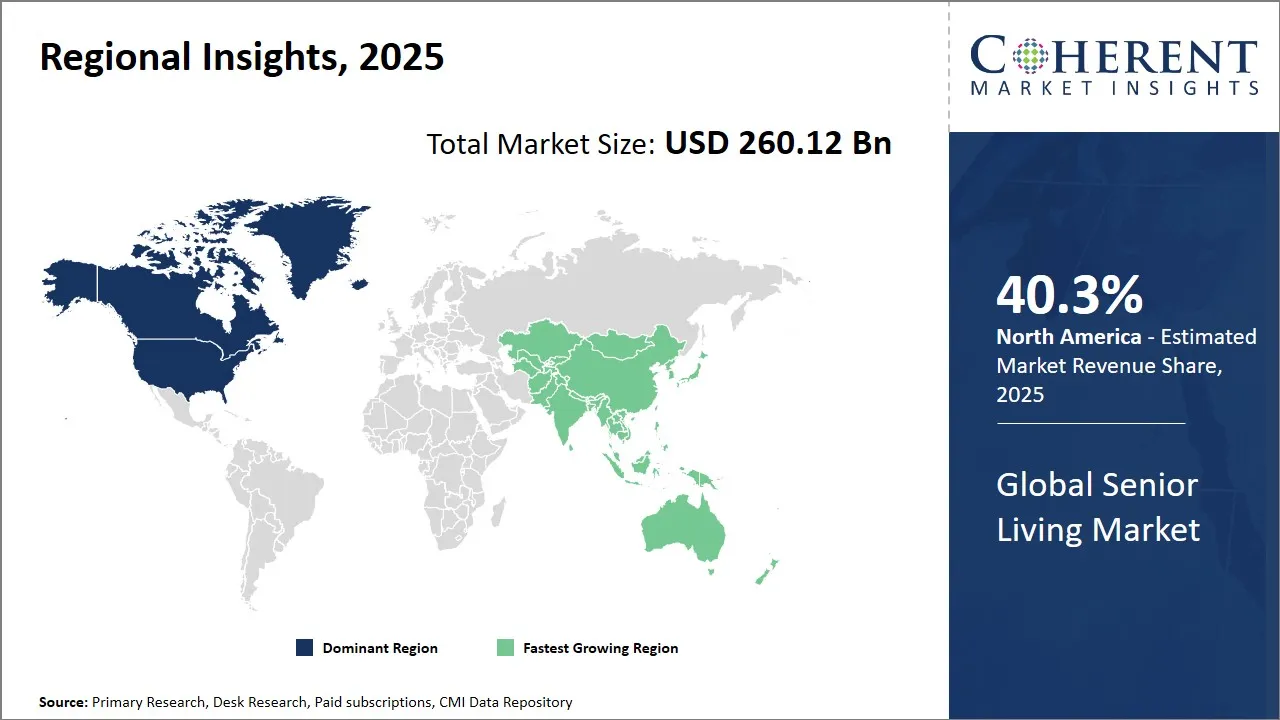
- North America is expected to lead the market, holding a share of 40.3 % in 2026. Asia Pacific is anticipated to be the fastest-growing region, with an expected market share of 23.5% in 2026.
Market Overview
Current market trends indicate a shift towards integrating advanced technologies such as smart home systems, telemedicine, and AI-driven health monitoring within senior living communities. Additionally, there is a rising emphasis on personalized care, wellness programs, and sustainable infrastructure to enhance quality of life and promote independence among seniors. These trends, combined with increasing governmental support and private investments, are shaping the future trajectory of the senior living market.
Current Events and Its Impact
Current Events | Description and its Impact |
Haryana Retirement Housing Policy |
|
Technology Integration in Senior Care (AI, IoT, Remote Monitoring) |
|
Segmental Insights
- Current Industry Events of 2026
- Market Size Estimation
- Regional Breakdown
- Competitive Landscape
- Customer Intelligence
- Segmental Analysis
- Pricing Analysis
- Key Market Drivers, Challenges & Future Trends
- Customized Insights Section
Senior Living Market Insights, by Facility Type - Independent Living Segment Dominates Facility Type Segment Driven by Autonomy and Lifestyle Preferences
The independent living segment is projected to account for 33.2% share in 2026, due to the growing desire among older adults to maintain autonomy and engage in an active lifestyle while still benefiting from a community environment. This segment appeals to seniors who are relatively healthy and do not require extensive medical or personal care but seek the convenience of shared amenities, social interaction, and reduced household responsibilities. The emphasis on preserving independence without sacrificing security or community support is a significant driver fueling the popularity of independent living options.
Seniors today are increasingly prioritizing quality of life and social connectivity, which independent living communities facilitate by offering a wide range of recreational activities, wellness programs, and communal spaces designed for engagement and socialization. The demographic shift towards aging baby boomers, who tend to be more health-conscious and financially prepared, also contributes to their preference for this segment. These communities often provide the flexibility to scale care services if needed in the future, making them an attractive middle ground between fully independent living and more medically intensive senior facilities.
Senior Living Market Insights, by Service Provider - Private Segment Leads as it Offers Customized and Premium Care Solutions
The private segment is expected to capture 61.4% share in 2026, due to premium care options tailored to the diverse needs of seniors. Private senior living service providers capitalize on their flexibility and resource availability to create differentiated service models that cater to individual preferences, ranging from luxury accommodations to specialized medical and wellness programs.
The preference for private providers is closely linked to perceptions of quality and responsiveness. Private organizations typically have greater capacity to invest in state-of-the-art facilities, cutting-edge healthcare technology, and a broader range of ancillary services that enhance residents’ comfort and well-being. They also have the advantage of faster decision-making and innovation cycles, allowing for the rapid adaptation of emerging trends in elder care and resident lifestyle demands. This agility resonates with a clientele that increasingly seeks personalized experiences and higher standards of living.
Senior Living Market Insights, by Service Type - Adult Day Care Segment Thrives due to Community Integration and Support for Caregivers
The adult day care segment is projected to hold 35.3% share in 2026, because it addresses the dual needs of providing supportive daytime care for seniors while allowing them to maintain community ties and family connections. Adult day care centers offer structured programs that often combine health monitoring, therapeutic activities, and social engagement in a non-residential setting, making this service an attractive option for seniors who do not require full-time institutional care but still need supervision and companionship during the day.
In December 2024, Paranjape Schemes, India’s largest senior citizen housing provider, launched its 16th senior living project Athashri at Forest Trails in Pune, India. The new community is designed to offer seniors comfort, safety, and a vibrant environment surrounded by greenery while still being close to city conveniences, reflecting the company’s long-standing commitment to creating purpose-built homes that support dignified and joyful living for older adults.
A key factor driving growth in adult day care services is the increasing recognition of its role in supporting family caregivers. Many seniors prefer to age in place, supported by family members, and adult day care programs provide an essential respite, reducing caregiver burnout by offering reliable, professional care during working hours or other commitments.
Regional Insights
North America Senior Living Market Analysis and Trends
The North America region is projected to lead the market with a 40.3% share in 2026, driven by a mature healthcare infrastructure combined with a highly developed ecosystem of senior care services. The presence of a large aging population coupled with widespread awareness about elderly care options positions this region as the leader. Government policies in the United States and Canada that promote assisted living, long-term care insurance, and healthcare subsidies significantly support market expansion. Additionally, advanced technology integration in care facilities, such as telehealth and smart monitoring systems, enhances service quality and operational efficiency.
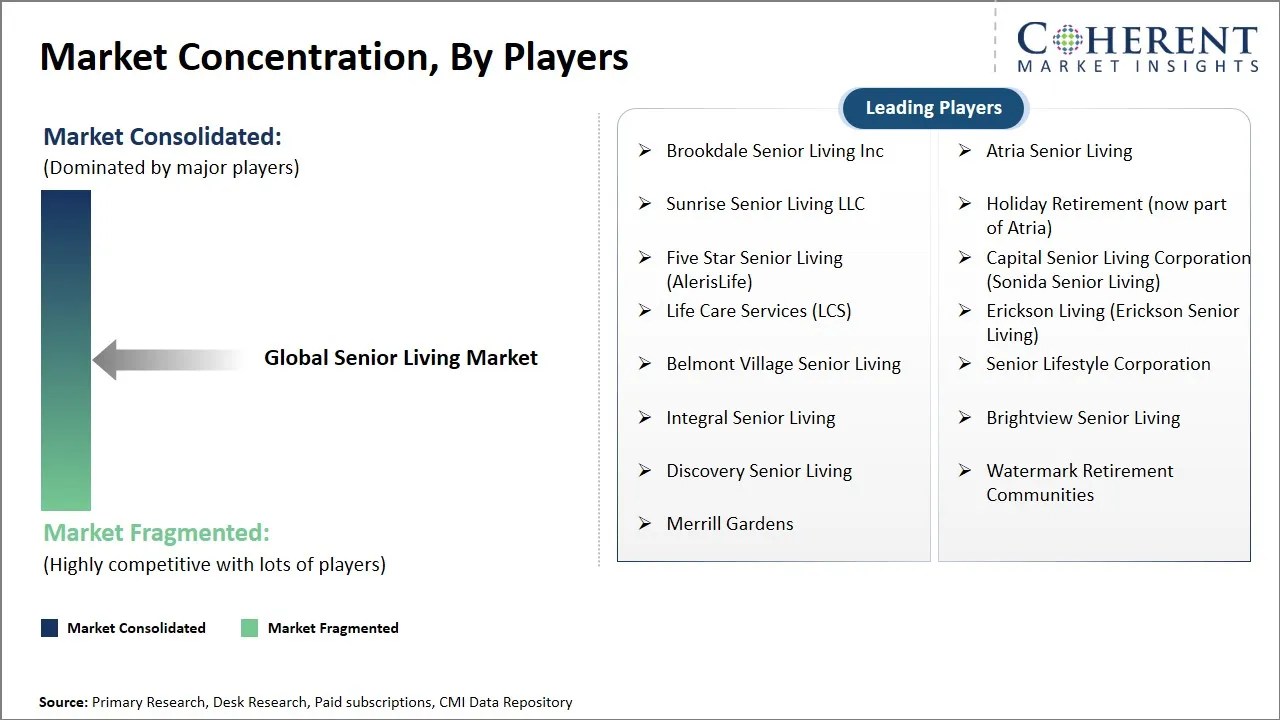
Major companies like Brookdale Senior Living, Life Care Services, and Sunrise Senior Living play pivotal roles by offering diversified senior housing solutions and pioneering innovations in care delivery. Furthermore, strong private and public sector partnerships facilitate continuous funding and infrastructure development. Trade dynamics reinforce steady supply chains for medical equipment and healthcare services essential to senior living communities.
Asia Pacific Senior Living Market Analysis and Trends
The Asia Pacific region is expected to exhibit the fastest growth in the global senior living market with 23.5% in 2026, due to its rapidly aging population and rising disposable incomes, particularly in countries like China, Japan, and India. Cultural shifts towards institutionalized senior care, though gradual, are gaining momentum as urbanization intensifies and traditional family structures evolve. Governments across the region are increasingly introducing policy frameworks and incentives to encourage private investment in senior living infrastructure and healthcare services. For instance, China’s supportive policies for elderly care development and Japan’s advanced eldercare robotics sector highlight growing commitment. Industry presence is expanding through both domestic enterprises and international companies establishing joint ventures to tap into this developing market.
In March 2026, Rustomjee Group, a prominent India-based real estate developer under Keystone Realtors, announced plans to expand into Tier 2 cities with new senior living and plotted development projects. Chairman and Managing Director Boman Irani noted that while some parts of the Mumbai market are seeing a cooling trend, overall the demand in the metropolitan region remains strong, and the company is preparing to launch its second plotted development project in Kasara near Mumbai, India.
Global Senior Living Market Outlook for Key Countries:
U.S. Senior Living Market Analysis and Trends
The U.S. senior living market is characterized by a robust network of senior living communities, encompassing independent living, assisted living, memory care, and nursing facilities. Companies like Brookdale Senior Living and Sunrise Senior Living dominate with extensive property portfolios and a focus on personalized care models. Government programs such as Medicare and Medicaid, alongside state-level regulations, influence service offerings and pricing structures. Technological adoption, including AI-based health monitoring and wellness programs, enhances resident care and operational efficiency. The presence of numerous private equity investors sustains the market innovation and capacity expansion.
In July 2026, Macquarie Asset Management, a global investment manager with deep expertise in real estate, launched a new U.S.-based investment firm called Health Wave Partners to focus on high-quality senior living and housing opportunities. The firm will be led by John Cobb, a veteran executive with experience at Ventas, Blueprint, Senior Lifestyle Corporation, and GE Capital, alongside a seasoned management team. Macquarie said the venture is well-positioned to tap into strong demographic demand, while Cobb emphasized that Health Wave Partners will work with experienced operators to deliver premium senior living communities in growth markets.
Japan Senior Living Market Analysis and Trends
Japan continues to lead with innovative senior living solutions driven by the world’s highest proportion of elderly citizens. The market benefits from strong governmental support through policies like the Long-Term Care Insurance system and substantial R&D investments in eldercare robotics and smart home technologies. Companies such as Sompo Holdings and Nichii Gakkan are at the forefront of integrating technology and personalized care services, often blending traditional caregiving with modern healthcare. The culturally ingrained respect for elderly care combined with advanced healthcare infrastructure shapes a unique market ecosystem.
In August 2026, Japan’s Health, Labor and Welfare Ministry announced plans to introduce a nationwide public support system for elderly people living alone without family support, aiming for rollout in fiscal 2027. The framework will cover essential needs such as hospital admission, nursing home placement, and even post-mortem arrangements like funerals, with services delivered through local social welfare councils and nonprofit groups.
China Senior Living Market Analysis and Trends
China senior living market is expanding swiftly, supported by government initiatives such as the 14th Five-Year Plan prioritizing eldercare infrastructure development. Rising middle-class income and increased urbanization drive the demand for modern, high-quality senior living facilities. Domestic companies like Country Garden Services have significantly advanced the market by introducing large-scale, mixed-use senior living communities that combine healthcare, wellness, and recreational amenities. Furthermore, international players are partnering locally to bring global standards of care and innovation. Government subsidies and relaxed foreign investment policies further stimulate the market growth.
In June 2023, Keppel, a Singapore-based global asset manager and operator, launched its new senior living brand Sindora Living in China with the aim of building high-quality elderly care institutions. The first facility, located in Nanjing’s Qixia district, spans nearly 20,000 square meters and offers around 400 beds across 224 apartments, featuring a Singapore-inspired landscape and a program of more than 100 activities for residents. Keppel said the concept focuses on empowering seniors to remain active, social, and engaged, with plans to expand Sindora Living to other major Chinese cities.
India Senior Living Market Analysis and Trends
India senior living market is emerging with growing awareness and shifting societal norms influencing the demand. Increasing life expectancy and urban migration of younger generations create a need for specialized senior care services. Government efforts aim to encourage private sector participation through incentives and regulatory frameworks, although challenges such as affordability and cultural acceptance remain. Key players like Antara Senior Living and LTH Healthcare are pioneering integrated senior care communities offering medical and lifestyle amenities tailored to India’s unique demographic. The market also attracts international investment, signaling future expansion and modernization.
In February 2026, Ashiana Housing, a pioneer in senior housing across India, unveiled its state-of-the-art clubhouse at Ashiana Amodh, a premium senior living project in Talegaon, Pune. Known for redefining senior living with thoughtfully designed communities, the company has created this vibrant clubhouse as the social heart of the project, offering residents a space for joy, connection, and active engagement. Surrounded by a serene landscape, Ashiana Amodh combines peaceful living with community-driven experiences, setting new benchmarks for senior living in India.
End User Feedback and Unmet Needs for the Senior Living Market
- End users of senior living communities consistently highlight the value of environments that combine comfort, safety, and social engagement. Families often share positive feedback about communities that integrate on-site healthcare with recreational and wellness activities, noting that such settings provide reassurance while preserving seniors’ independence. For example, independent living residents in premium facilities have expressed satisfaction with the inclusion of telehealth services and emergency response systems, which enhance peace of mind without disrupting daily routines. At the same time, many caregivers appreciate adult day care services that allow seniors to remain socially active while enabling families to balance professional and personal responsibilities. These experiences demonstrate that when facilities successfully blend medical support, lifestyle features, and convenience, the overall satisfaction among both seniors and their families is high.
- However, recurring concerns emphasize the gaps that still exist across regions and facility types. Affordability remains a pressing challenge, with many families pointing out that rising costs limit access to high-quality services, especially in middle-income communities. Accessibility is another concern, as not all facilities provide sufficient transportation options or designs tailored for individuals with limited mobility. Some residents also express frustration over the lack of personalized care, noting that standardized services do not always address diverse cultural, dietary, or medical needs. These unmet needs highlight opportunities for developers and policymakers to introduce tiered pricing models, expand community-based partnerships, and leverage technology for more personalized solutions. Addressing these gaps can not only enhance user satisfaction but also drive stronger adoption, open new market segments, and position senior living providers as long-term partners in aging well.
Market Players, Key Developments, and Competitive Intelligence
Key Developments
- On August 23, 2025, the Association of Senior Living India (ASLI), an industry body dedicated to improving senior housing, along with real estate consultancy JLL India, reported that nearly 15,000 senior living homes may be launched by 2030. The study highlighted that India’s organized senior living supply has grown from just over 7,000 units in 2014 to more than 22,000 units in 2025, with demand set to rise sharply as the senior population reaches 191.5 million by 2030.
- On August 05, 2025, Ashiana Housing, a listed real estate firm, announced a fresh investment in senior living for FY25–26 as it looks to expand into Mumbai, Bengaluru, and Delhi NCR in India. The company, which has already developed senior living projects in Bhiwadi, Chennai, Jaipur, Pune, and Lavasa, is targeting higher growth from this segment, which now contributes a significant share of its residential portfolio.
- In January 2025, Kolte Patil Developers, a leading real estate company known for its township projects, highlighted its Life Republic Township in Hinjewadi, Pune as a premier choice for senior living. The project is designed to combine comfort, accessibility, and wellness for retirees, with features such as senior-friendly apartments, anti-slip flooring, ramps, meditation gardens, and ample community spaces.
- In May 2025, Antara Senior Care, a subsidiary of Max India Limited focused on premium elder care services, launched its first assisted senior living facility in Chennai on East Coast Road. The new 43-bed, 30,000 sq. ft. care home is the company’s sixth in India and is designed with full wheelchair accessibility, 24/7 medical and nursing care, in-house physiotherapy, nutrition support, and mental wellness programs.
Top Strategies Followed by Global Senior Living Market Players
- Established market leaders typically command significant resources, enabling them to invest heavily in research and development and new launches. This commitment drives continuous innovation, resulting in high-performance products that meet the evolving needs of senior citizens. These players often form strategic partnerships with key industry participants, including Original Equipment Manufacturers (OEMs), to leverage specialized expertise and enhance product effectiveness. Such collaborations also help solidify their market presence by integrating complementary technologies and expanding their service offerings.
- In April 2025, PioneerUrban, a real estate developer known for premium residential projects, entered the senior living market with the launch of its luxury project ‘Advait’ in Sector 50, Nirvana Country, Gurgaon. Developed in partnership with J K Organization, the USD 3 billion project marks PioneerUrban’s foray into creating high-quality senior living communities, offering modern homes and amenities designed to combine comfort, safety, and lifestyle enrichment for older adults.
- Mid-level players operating in the senior living market often focus on carving out a competitive edge through cost-effective solutions that strike a balance between quality and affordability. Recognizing a sizable demographic of price-sensitive consumers, these companies prioritize product designs and service models that deliver reliable performance at accessible price points. This approach enables them to tap into market segments underserved by premium brands, creating strong demand in both developed and developing regions.
- In August 2025, Perennial Holdings, a Singapore-based real estate and healthcare group, launched Perennial Living, the country’s first privately operated luxury assisted senior living project at 28 Parry Avenue in the Rosyth estate. The development features 200 assisted living suites across 10 residential blocks alongside a 100-bed nursing home, with residence packages starting at USD 8,900 per month.
- Small-scale players in the senior living market differentiate themselves through specialization and innovation, focusing on niche areas that larger competitors might overlook. These companies typically concentrate on developing products with specialized features tailored to specific health conditions or lifestyle preferences of senior users, thereby creating unique value propositions. Additionally, they adopt cutting-edge technologies such as smart home integration, wearable health monitors, or AI-driven assistance platforms to remain competitive while maintaining a lean operational footprint.
- In April 2025, Casagrand, a leading South India-based real estate developer known for its residential townships, launched its first senior living project Casagrand Cheers at Pudupakkam, Chennai. with 331 fully furnished homes, the project is designed with senior-friendly features such as arthritis-friendly layouts, wheelchair access, and 24/7 medical support including a mini-clinic and physiotherapy room.
Market Report Scope
Senior Living Market Report Coverage
| Report Coverage | Details | ||
|---|---|---|---|
| Base Year: | 2025 | Market Size in 2026: | USD 275.99 Bn |
| Historical Data for: | 2020 To 2024 | Forecast Period: | 2026 To 2033 |
| Forecast Period 2026 to 2033 CAGR: | 6.1% | 2033 Value Projection: | USD 417.73 Bn |
| Geographies covered: |
| ||
| Segments covered: |
| ||
| Companies covered: | Brookdale Senior Living Inc, Atria Senior Living, Sunrise Senior Living LLC, Holiday Retirement (now part of Atria), Five Star Senior Living (AlerisLife), Sonida Senior Living, Inc, Life Care Services (LCS), Erickson Living (Erickson Senior Living), Belmont Village Senior Living, Senior Lifestyle Corporation, Integral Senior Living, Brightview Senior Living, Discovery Senior Living, Watermark Retirement Communities, and Merrill Gardens | ||
| Growth Drivers: |
| ||
| Restraints & Challenges: |
| ||
Senior Living Market Dynamics
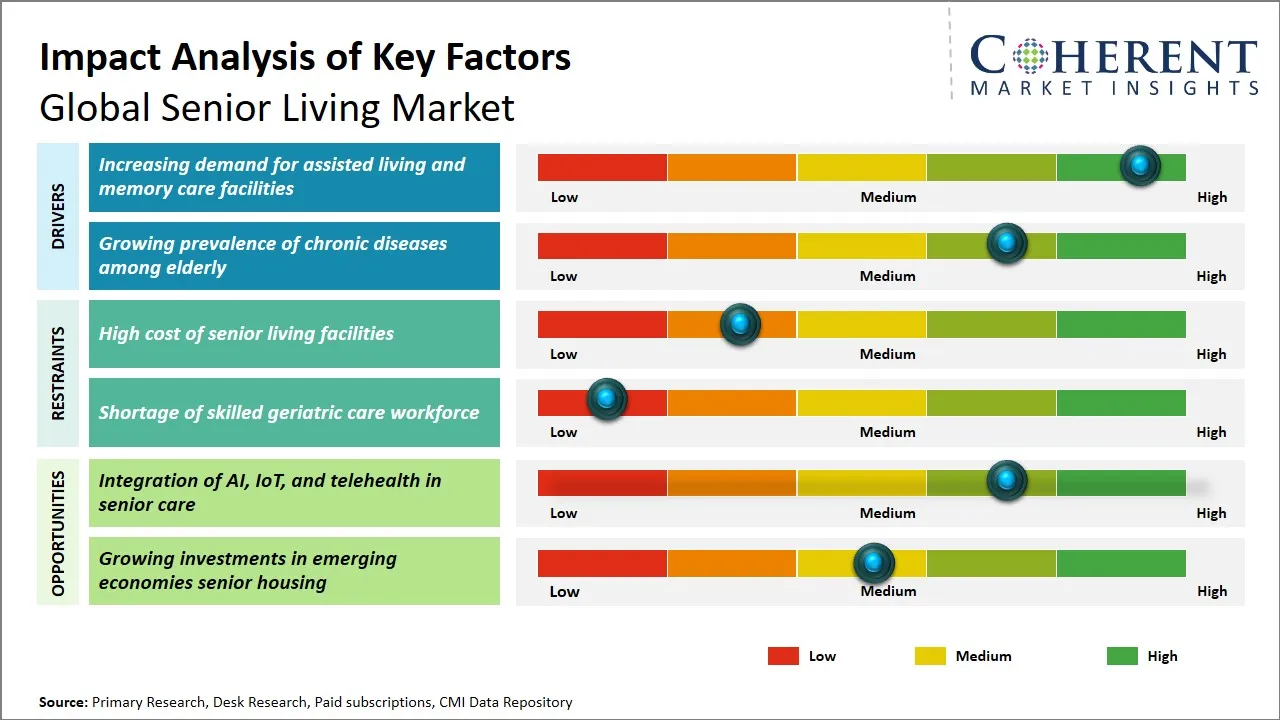
Senior Living Market Driver - Increasing Demand for Assisted Living and Memory Care Facilities
The growing preference for assisted living and specialized memory care facilities is a significant driver in the senior living market. As the elderly population continues to expand, there is a rising need for tailored support services that address both physical assistance and cognitive challenges such as dementia and Alzheimer’s disease. Assisted living communities offer a balanced environment where seniors can maintain a degree of independence while receiving help with daily activities, which appeals to families seeking safer, supportive alternatives to traditional home care. Simultaneously, the complexity of memory-related conditions has led to higher demand for facilities equipped with dedicated memory care units staffed by trained professionals who understand the unique needs of these residents. This shift is further influenced by increasing awareness among caregivers about the benefits of specialized care environments, which improve quality of life and safety outcomes.
In April 2025, Frontier Senior Living, a U.S.-based operator with 65 communities across the U.S., said its focus on innovation and staff training is driving growth in the memory care segment. CEO Mr. Greg Roderick highlighted that the company’s in-house training program has improved staff retention, boosted resident satisfaction, and raised occupancy, which now stands at 74%. With baby boomers increasingly entering senior living, Frontier plans to expand through third-party management, acquisitions, and new construction, positioning itself to meet rising the demand for personalized memory care.
Senior Living Market Opportunity - Integration of AI, IoT, and Telehealth in Senior Care
The integration of Artificial Intelligence (AI), Internet of Things (IoT), and telehealth technologies presents a significant growth opportunity in the global senior living market. With an increasing aging population worldwide, there is a growing the demand for innovative solutions that enhance the quality of care while optimizing operational efficiency. AI-powered analytics enable personalized care plans by processing vast amounts of health data to predict and prevent medical conditions. IoT devices, such as wearable health monitors and smart home systems, provide real-time tracking of seniors’ vital signs, activity levels, and environmental conditions, thereby improving safety and enabling immediate intervention when needed. Telehealth platforms facilitate remote consultations, reducing hospital visits and allowing seniors to access medical expertise from the comfort of their residences.
In November 2024, TMA Solutions, a global technology services company, launched new HealthTech solutions focused on senior living, home care, and remote health monitoring. By integrating AI, IoT, data analytics, and device connectivity, the company introduced a platform that tracks vital signs and lifestyle factors in real time, providing alerts during emergencies and generating detailed health reports. With this innovation, TMA Solutions aims to enhance safety, independence, and quality of care for seniors while supporting healthcare providers in delivering next-generation services.
Analyst Opinion (Expert Opinion)
- The senior living market is expanding steadily, supported by rising life expectancy, growing financial independence among older adults, and a strong push from both private developers and governments to create purpose-built communities. Technology is also reshaping the landscape, with health monitoring systems, AI-enabled care solutions, and smart infrastructure making senior living more comfortable and secure. At the same time, policy support in countries like India and the U.S. is encouraging structured retirement housing, while investors see long-term value in this space. However, the sector faces challenges around affordability, slow project approvals, and the lingering perception gap between modern senior living and traditional old-age homes. These hurdles present opportunities for innovation, transparent communication, and partnerships between healthcare providers, real estate players, and policymakers.
- In recent years, senior living has also been a prominent theme at global forums such as the Global Ageing Conference, the World Health Organization’s Healthy Ageing events, and regional expos like the India Senior Care Conclave, which bring together leaders to exchange best practices, shape policy directions, and showcase new technologies. On the ground, examples like Antara’s expansion of assisted care homes in India, Casagrand’s senior living project in Chennai, and Perennial’s luxury assisted living development in Singapore reflect the sector’s momentum. Government-led initiatives such as Haryana’s retirement housing policy and ongoing pilot projects in Europe and Asia further indicate that senior living is increasingly seen not just as housing, but as a holistic ecosystem that blends wellness, community, and healthcare support.
Speak to the analyst
Want personalized insights?
Take the findings above to one of our principal consultants, or have the report rebuilt around the segments, geographies and competitors you actually track.
Market Segmentation
- Facility Type Insights (Revenue, USD Bn, 2021 - 2033)
- Independent Living
- Assisted Living
- Memory Care/Personal Care (Standalone)
- Skilled Medical and Nursing Facility
- Continuing Care Retirement Community/Life-Plan Community
- Respite/Short-Stay Communities
- Adult Day Services (Center-based)
- Service Provider Insights (Revenue, USD Bn, 2021 - 2033)
- Private
- Public
- Service Type Insights (Revenue, USD Bn, 2021 - 2033)
- Adult Day Care
- Institutional Care
- Home Care
- Gender Insights (Revenue, USD Bn, 2021 - 2033)
- Male
- Female
- Age Group Insights (Revenue, USD Bn, 2021 - 2033)
- Below 65 Years
- 65–74 Years
- 75–85 Years
- 85+ Years
- Technology Insights (Revenue, USD Bn, 2021 - 2033)
- Smart Home Systems (e.g. Automated lighting, temperature control, and voice-activated devices)
- Health Monitoring Devices (e.g. Wearables and sensors for remote patient tracking)
- Safety and Security Systems (e.g. Emergency response systems and fall detection technology)
- Primary Payment Source Insights (Revenue, USD Bn, 2021 - 2033)
- Private Pay/Out-of-Pocket
- Public Funding (e.g., national/State schemes)
- Private Long-Term Care Insurance
- Charitable/Non-profit Subsidy
- Regional Insights (Revenue, USD Bn, 2021 - 2033)
- North America
- U.S.
- Canada
- Latin America
- Brazil
- Argentina
- Mexico
- Rest of Latin America
- Europe
- Germany
- U.K.
- Spain
- France
- Italy
- Russia
- Rest of Europe
- Asia Pacific
- China
- India
- Japan
- Australia
- South Korea
- ASEAN
- Rest of Asia Pacific
- Middle East
- GCC Countries
- Israel
- Rest of Middle East
- Africa
- South Africa
- North Africa
- Central Africa
- North America
- Key Players Insights
- Brookdale Senior Living Inc
- Atria Senior Living
- Sunrise Senior Living LLC
- Holiday Retirement (now part of Atria)
- Five Star Senior Living (AlerisLife)
- Sonida Senior Living, Inc.
- Life Care Services (LCS)
- Erickson Living (Erickson Senior Living)
- Belmont Village Senior Living
- Senior Lifestyle Corporation
- Integral Senior Living
- Brightview Senior Living
- Discovery Senior Living
- Watermark Retirement Communities
- Merrill Gardens
Sources
Primary Research Interviews
- Industry Stakeholders list
- Senior Living Facility Operators
- Healthcare Service Providers
- Real Estate Developers in Senior Housing
- Technology Solution Providers for Elder Care
- Insurance Companies
- Policy Makers in Aging Services
- End-users list
- Elderly Residents in Senior Living Communities
- Family Caregivers
- Geriatric Patients in Assisted Living
- Retired Professionals in Independent Living Facilities
- Long-term Care Residents
- Members of Senior Citizen Advocacy Groups
Government and International Databases
- World Health Organization (WHO)
- United Nations Department of Economic and Social Affairs (UNDESA)
- Organisation for Economic Co-operation and Development (OECD)
- Centers for Medicare & Medicaid Services (CMS)
- Eurostat (European Union Statistics)
- U.S. Census Bureau
Trade Publications
- Senior Housing News
- McKnight’s Senior Living
- The Gerontologist Newsletter
- Advance Senior Care
- Long-Term Living Magazine
- Healthcare Financial Management Journal
Academic Journals
- Journal of Aging & Social Policy
- The Gerontologist
- Journal of Housing for the Elderly
- Ageing & Society
- Journal of Applied Gerontology
- International Journal of Geriatric Psychiatry
Reputable Newspapers
- The New York Times (Health & Aging section)
- The Guardian (Society & Care section)
- The Wall Street Journal (Healthcare & Real Estate section)
- Financial Times (Healthcare & Property Markets section)
- The Washington Post (Health & Aging section)
- The Times of India (Senior Living and Healthcare coverage)
Industry Associations
- LeadingAge
- American Seniors Housing Association (ASHA)
- International Council on Active Aging (ICAA)
- Alzheimer’s Association
- National Investment Center for Seniors Housing & Care (NIC)
- Global Coalition on Aging
Public Domain Resources
- National Library of Medicine (NLM)
- World Bank Open Data
- U.S. National Institutes of Health (NIH)
- OpenAIRE (EU open access research)
- UNdata
Proprietary Elements
- CMI Data Analytics Tool: Proprietary analytics tool to analyze real-time market trends, consumer behavior, and technology adoption in market
- Proprietary CMI Existing Repository of Information for Last 8 Years
Get access to 250+ pages report
Every segment, forecast, competitor profile and data table behind the analysis above — available for instant download.
- ESOMAR Member
- ISO 9001:2015 Certified
- D-U-N-S Registered
- GDPR & CCPA Compliant
Missing comfort of reading report in your local language? Find your preferred language:
Transform your Strategy with Exclusive Trending Reports
Frequently Asked Questions
The global senior living market is estimated to be valued at USD 275.99 Bn in 2026 and is expected to reach USD 417.73 Bn by 2033.
The CAGR of the global senior living market is projected to be 6.1% from 2026 to 2033.
Increasing demand for assisted living and memory care facilities and growing prevalence of chronic diseases among elderly are the major factors driving the growth of the global senior living market.
High cost of senior living facilities and shortage of skilled geriatric care workforce are the major factors hampering the growth of the global senior living market.
In terms of facility type, the independent living segment is estimated to dominate the market revenue share in 2026.
Brookdale Senior Living Inc, Atria Senior Living, Sunrise Senior Living LLC, Holiday Retirement (now part of Atria), Five Star Senior Living (AlerisLife), Sonida Senior Living, Inc, Life Care Services (LCS), Erickson Living (Erickson Senior Living), Belmont Village Senior Living, Senior Lifestyle Corporation, Integral Senior Living, Brightview Senior Living, Discovery Senior Living, Watermark Retirement Communities, and Merrill Gardens are the major players.
Sustainability, technology-driven care, and wellness-focused communities will shape the next phase of senior living developments.