

Global Ship to Ship Transfer Service Market Size and Forecast – 2026-2033
The Global Ship to Ship Transfer Service Market is estimated to be valued at USD 1.47 Tn in 2026 and is expected to reach USD 2.010 Tn by 2033, exhibiting a compound annual growth rate (CAGR) of 4.5% from 2026 to 2033.
Key Takeaways of the Global Ship to Ship Transfer Service Market
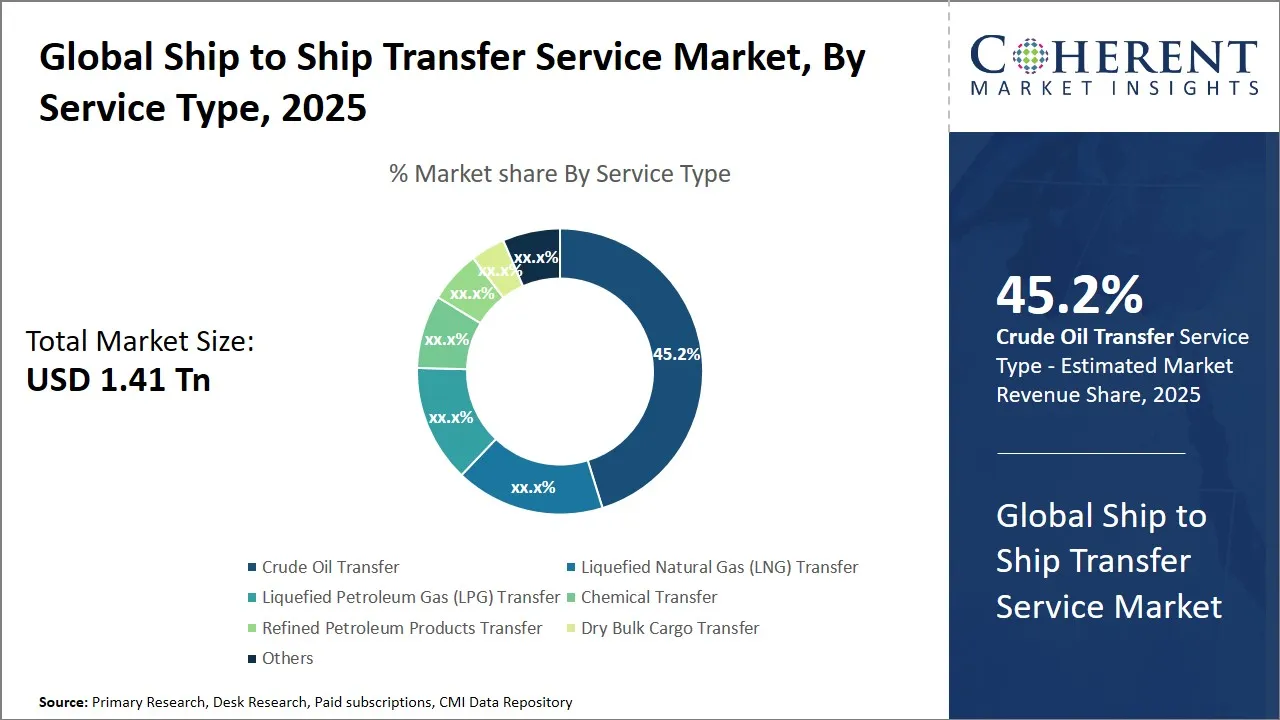
- The crude oil transfer segment leads the market holding an estimated share of 46.2 % in 2026.
- The lightering operations segment dominates with an estimated share of 75.6 % in 2026.
- The offshore segment leads the market holding an estimated share of 59.3 % in 2026.
- Asia Pacific, holding a share of 34.79 % in 2026, is expected to dominate the market.
- North America, holding a share of 23.53 % in 2026, is projected to show the fastest growth in the market.
Market Overview
The market is seeing a move towards more technologically advanced and environmentally sustainable ship-to-ship transfer services. Operators are increasingly using digitalization, automated transfer equipment, and real-time monitoring systems to improve safety and operational efficiency. Also, there is a growing focus on complying with stringent international environmental regulations by integrating eco-friendly practices, such as using low-emission vessels and implementing spill prevention technologies, which together drive the market's evolution and long-term expansion.
Current Events and Its Impact
Current Events | Description and its impact |
Geopolitical and Trade Developments |
|
Maritime Security & Regional Conflict |
|
Infrastructure & Channel Constraints |
|
Segmental Insights
- Current Industry Events of 2026
- Market Size Estimation
- Regional Breakdown
- Competitive Landscape
- Customer Intelligence
- Segmental Analysis
- Pricing Analysis
- Key Market Drivers, Challenges & Future Trends
- Customized Insights Section
Global Ship to Ship Transfer Service Market Insights, By Service Type – Crude Oil Transfer Leads Because of The Sustained Global Demand For Energy And The Integral Role Of Crude Oil In Various Industries
The crude oil transfer segment is expected to command 46.2% share in 2026, driven by strong global energy demand and the need for flexible logistics in areas with limited pipelines. STS transfers make possible fast offshore crude movement, reducing port congestion and turnaround times. In 2024, Fendercare Marine supported large-scale crude STS operations off Malaysia and West Africa for Petrobras and Shell, optimizing tanker use and export efficiency.
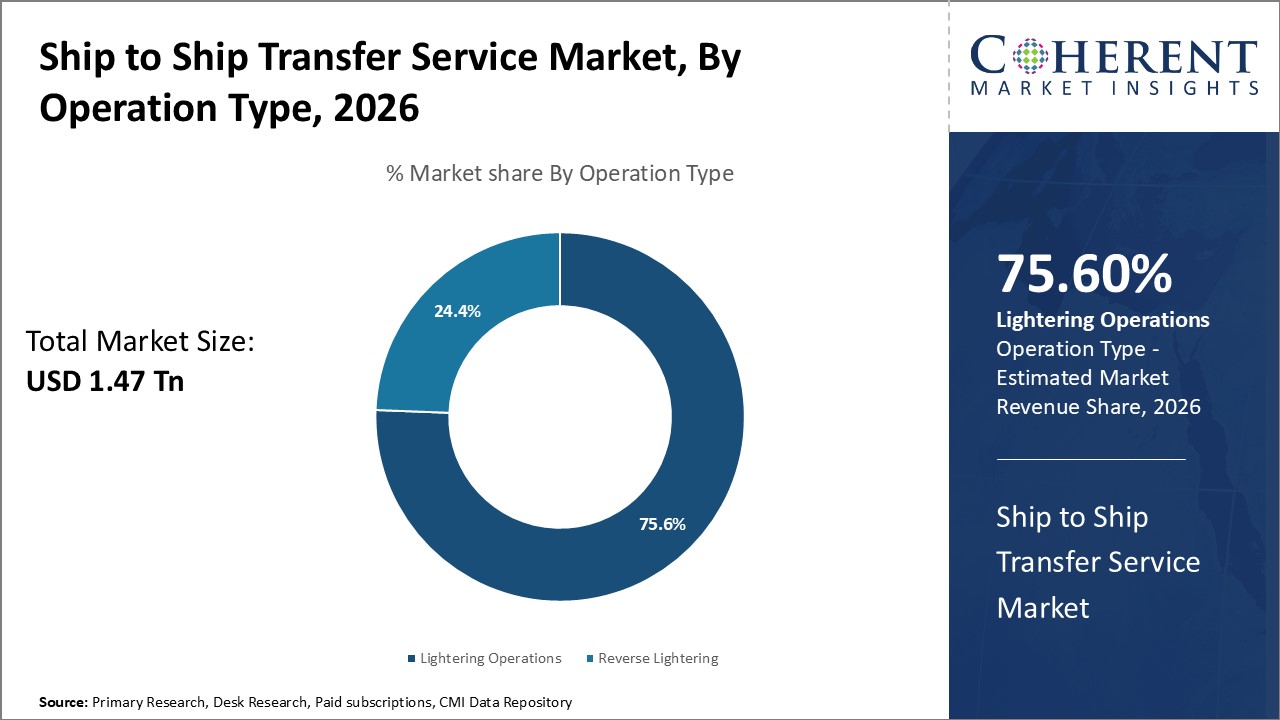
Global Ship to Ship Transfer Service Market Insights, By Operation Type – Lightering Operations Lead Because of Their Function In Optimizing Cargo Delivery
Lightering operations, holding an estimated 75.6% of the market share in 2026, remain very important for optimizing cargo offloading from Very Large Crude Carrier (VLCCs) unable to access shallow ports. These operations enhance delivery efficiency and reduce port dependence, especially in draft-restricted zones. The U.S. Gulf of Mexico lightering operations managed by AET Tankers and Teekay Offshore continue to be very important for handling crude exports from Texas and Louisiana.
Global Ship to Ship Transfer Service Market Insights, By Location - Offshore Transfers Lead Owing To Increasing Reliance On Offshore Maritime Zones For Global Cargo Handling
The offshore segment, with an estimated 59.3% of the market share in 2026, is expanding due to increased reliance on offshore energy zones and congestion at major ports. Offshore STS makes possible efficient cargo handling far from shore, cutting costs and reducing environmental impact. The Singapore Offshore STS Hub, managed by STL Marine Services, handles thousands of crude and product transfers annually, showcasing offshore efficiency and safety compliance.
Pricing Analysis of the Ship to Ship Transfer Service Market
Operation Type | Estimated Typical Fee (USD) |
Crude oil lightering (VLCC mother + daughter transfer offshore) | USD 80,000 – 150,000 |
In-port refined product STS (smaller tankers, sheltered waters) | USD 25,000 – 50,000 |
LNG/LPG STS cargo-transfer | USD 120,000 – 250,000 |
Bunkering via STS (fuel transfer between vessels) | USD 10,000 – 30,000 |
Specialty/alternative-fuel STS (ammonia/methanol pilot) | USD 150,000 – 300,000+ |
Regional Insights
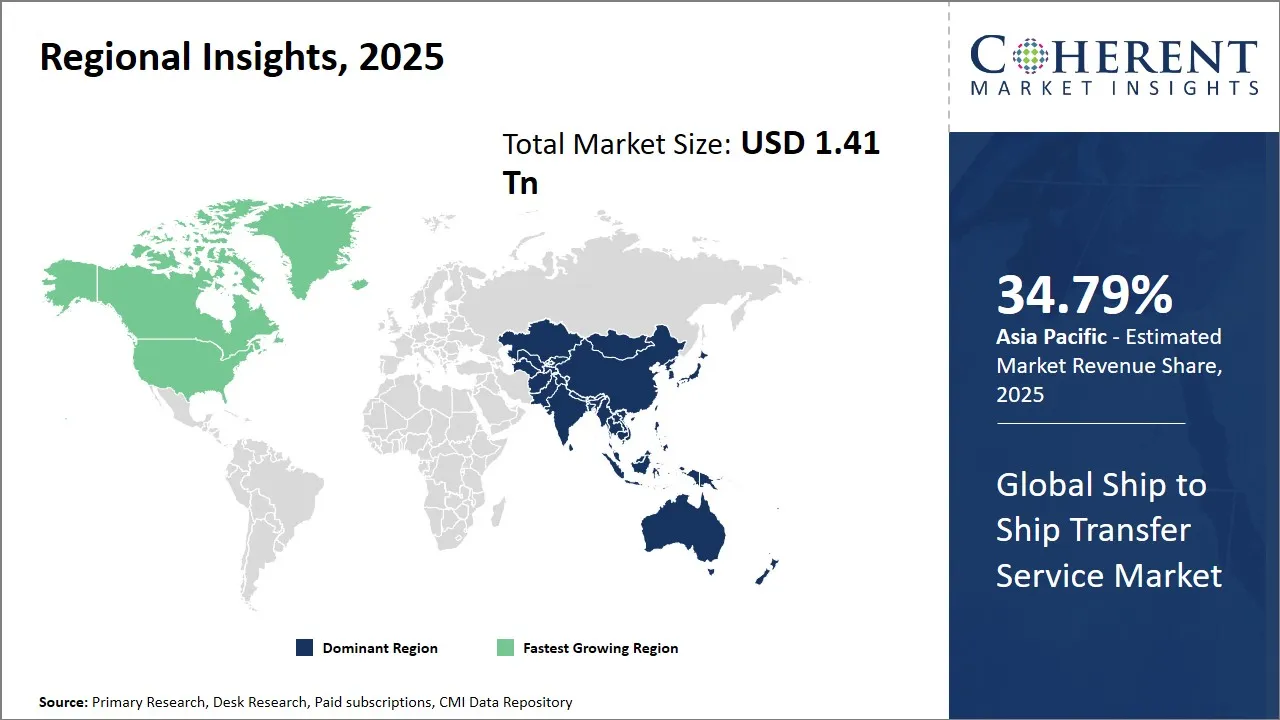
Asia Pacific Ship to Ship Transfer Service Market Analysis and Trends
The Asia Pacific region, holding a share of 34.79% in 2026, is expected to dominate the ship to ship transfer service market, propelled by the expanding industrialization, a surge in maritime trade activities, and increasing offshore oil and gas exploration across countries like China, India, Indonesia, and Malaysia. Increased government investments in port modernization and shipping fleet expansion push enhanced STS operations, particularly in Southeast Asia’s busy maritime corridors.
The growing demand for petroleum products combined with growing tanker traffic increases the reliance on STS as a flexible alternative to traditional port-to-port transfers. Big players such as China COSCO Shipping Corporation, Indian Oil Corporation, and Petronas actively contribute to market expansion through collaborations, technologically advanced vessel deployment, and sustainable transfer methodologies. Trade dynamics in the region, seeing a mix of import-export activities and transshipment hubs, further stimulate the market’s rapid development.
North America Ship to Ship Transfer Service Market Analysis and Trends
North America, holding a share of 23.53% in 2026, is projected to show the fastest growth in the global ship to ship transfer service market, supported by its robust crude oil export network, established offshore infrastructure, and the presence of leading energy corporations. The U.S. Gulf of Mexico serves as a big hub for lightering and STS operations, facilitating large-scale crude and refined product transfers to international markets. The region’s dominance is further added to by advancements in safety systems, regulatory compliance, and specialized service providers offering efficient offshore transfer solutions.
High participation from companies, such as AET Tankers, Teekay Offshore, and Fendercare Marine, has led to consistent operational excellence and high service reliability in U.S. coastal waters. Moreover, the surge in U.S. shale oil production and LNG exports has highly amplified the frequency of STS activities, as exporters depend on offshore lightering zones to accommodate VLCCs and optimize port logistics.
Ship to Ship Transfer Service Market Outlook for Key Countries
Saudi Arabia Ship to Ship Transfer Service Market Analysis and Trends
Saudi Arabia ship to ship transfer service market benefits from the country’s role as one of the world’s top crude oil exporters and a hub for energy logistics. The government’s focus on improving oil export infrastructure has led to improved STS capabilities, including investments in offshore transfer terminals. Big state-owned enterprises such as Saudi Aramco and Bahri have made innovative vessel designs and stringent safety protocols that support high-volume and efficient STS operations. Also, ongoing efforts towards economic diversification include upgrading the maritime sector, reinforcing Saudi Arabia’s position as a key STS market player.
U.A.E. Ship to Ship Transfer Service Market Analysis and Trends
The U.A.E., especially through Dubai and Abu Dhabi, has developed as a critical maritime trading gateway connecting global oil markets. Supportive regulatory policies and world-class port facilities add to STS activities across the country. ADNOC Logistics & Services dominates the local market with its integrated logistics solutions including ship-to-ship transfers, making possible smoother crude oil and LNG transshipment. The country’s strategic location at the crossroads of Asia Pacific, Europe, and Africa enhances STS demand, supported by a strong presence of international shipping firms and logistics operators.
China Ship to Ship Transfer Service Market Analysis and Trends
China ship to ship transfer service market is characterized by its substantial industrial demand for hydrocarbons and its strategic efforts to become a global shipping and maritime services hub. The government supports STS operations through continuous infrastructure development at key ports like Shanghai, Ningbo, and Shenzhen. Chinese giants such as COSCO Shipping invest in dedicated STS vessels and advanced transfer technology to increase operational efficiency. Also, China's increasing offshore oil production creates the need for reliable STS services. Collaborative ventures with international firms make possible knowledge transfer and the adoption of global best practices, adding to market growth.
India Ship to Ship Transfer Service Market Analysis and Trends
India continues to lead the Asia Pacific ship to ship transfer service market by capitalizing on its extensive coastline and growing energy consumption. Recent initiatives for port expansion and maritime safety standards provide a solid foundation for larger-scale and safer ship to ship transfers. Indian Oil Corporation and Essar Shipping play important roles by growing their STS service capabilities in the Arabian Sea and Bay of Bengal. Moreover, government efforts to streamline licensing and enhance coastal shipping regulations create a make conducive environment for STS service providers to flourish.
Nigeria Ship to Ship Transfer Service Market Analysis and Trends
Nigeria ship to ship transfer service market is closely tied to its oil export activities in the Gulf of Guinea, where offshore oil fields are substantial contributors to the economy. National and international players such as Nigerian National Petroleum Corporation (NNPC) and international offshore service providers facilitate frequent STS operations due to limited onshore export infrastructure. Challenging maritime security issues have prompted the adoption of advanced safety and monitoring technologies in STS activities. Government reforms for improving port efficiency and maritime security continue to make Nigeria’s standing stronger in the Ship to Ship Transfer Service market in Africa.
Market Players, Key Development, and Competitive Intelligence
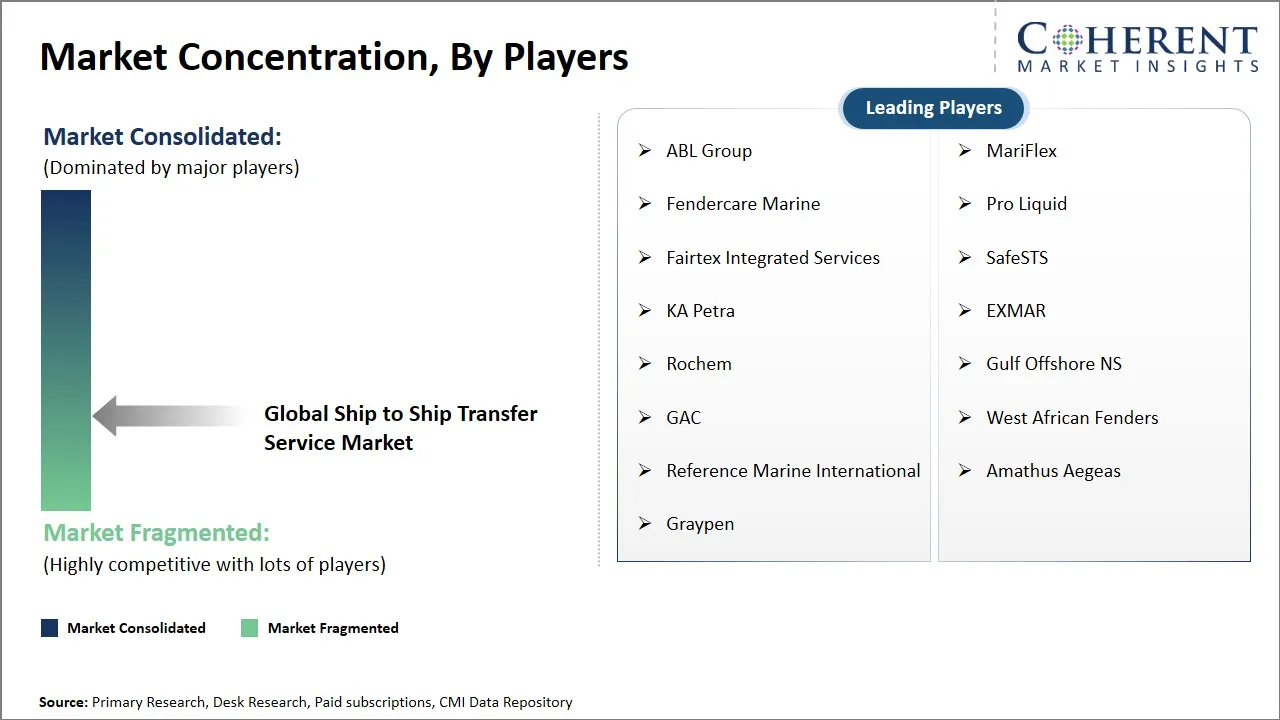
Key Developments
- In October 2025, a ship-to-ship bunkering service commenced at Vizhinjam International Seaport in India, making it easier for container ships to refuel locally.
- In September 2024, James Fisher Fendercare, a part of James Fisher and Sons plc, supported an industry consortium led by the Global Centre for Maritime Decarbonisation (GCMD) to undertake ammonia ship-to-ship transfers in Pilbara, Australia. The success of this operation helps to pave the way for ammonia to be used as a sustainable marine fuel.
- In September 2024, a Global Centre for Maritime Decarbonisation-led consortium successfully conducted ship-to-ship transfers of ammonia at anchorages within the Port of Dampier. Two transfers took place between the Green Pioneer (owner MOL), a 35,000 cubic meters (cbm) ammonia carrier, and the Navigator Global (owner Navigator Gas), a 22,500 cbm ammonia carrier. Yara Clean Ammonia (YCA) provided the ammonia used in the transfers.
- In May 2024, the Greek navy extended an advisory effectively banning ship traffic off the coast of the Southeastern Peloponnese, Greece.
Top Strategies Followed by Ship to Ship Transfer Service Market Players
- Established players in the market are investing a lot in research and development (R&D) to innovate high-performance, reliable, and safe STS solutions that meet stringent international regulations and customer expectations.
- Fendercare Marine (James Fisher Group) invested in advanced fender and hose technologies, digital STS planning tools, and participated in ammonia ship-to-ship transfer trials in 2024 with partners like Yara and the Global Centre for Maritime Decarbonisation.
- Mid-level players in the ship to ship transfer service market differentiate themselves by delivering cost-effective solutions that strike an optimal balance between quality and affordability.
- SafeSTS offers bundled, lower-cost STS services in emerging markets such as West Africa and Southeast Asia by optimizing local vessel availability and reducing mobilization costs.
- In contrast, small-scale players in the global ship to ship transfer service market make niche segments by focusing on specialized features or innovative products designed to meet unique or localized customer needs.
- KA Petra Energy (Malaysia) focuses on LNG and clean fuel ship-to-ship transfer operations in Malaysia and Southeast Asia.
Market Report Scope
Ship to Ship Transfer Service Market Report Coverage
| Report Coverage | Details | ||
|---|---|---|---|
| Base Year: | 2025 | Market Size in 2026: | USD 1.47 Tn |
| Historical Data for: | 2020 To 2024 | Forecast Period: | 2026 To 2033 |
| Forecast Period 2026 to 2033 CAGR: | 4.5% | 2033 Value Projection: | USD 2.010 Tn |
| Geographies covered: |
| ||
| Segments covered: |
| ||
| Companies covered: | ABL Group, MariFlex, Fendercare Marine, Pro Liquid, Fairtex Integrated Services, SafeSTS, KA Petra, EXMAR, Rochem, Gulf Offshore NS, GAC, West African Fenders, Reference Marine International, Amathus Aegeas, and Graypen | ||
| Growth Drivers: |
| ||
| Restraints & Challenges: |
| ||
Market Dynamics
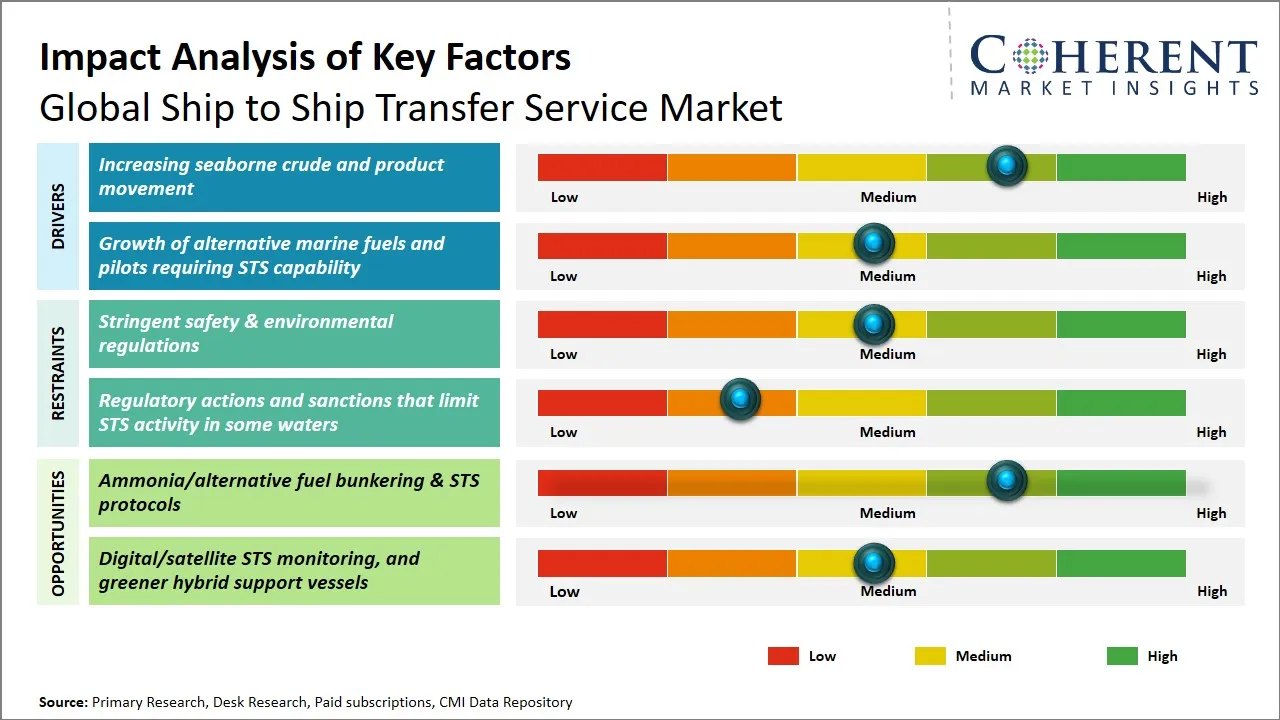
Global Ship to Ship Transfer Service Market Driver – Increasing Seaborne Crude And Product Movement
The surge in global seaborne trade of crude oil and refined products continues to propel STS service demand. As industrialization and energy consumption rise, offshore transfers provide a flexible, cost-effective solution to bypass port congestion and infrastructure limits. In 2024, AET Tankers expanded its STS operations in the U.S. Gulf of Mexico and Brazilian offshore zones to handle increasing crude exports efficiently.
Global Ship to Ship Transfer Service Market Opportunity – Ammonia and Alternative Fuel Bunkering & STS Protocols
The maritime shift toward decarbonization is opening major opportunities for STS operators to handle ammonia, hydrogen, and green fuels. These need advanced protocols, cryogenic systems, and stringent safety standards. In June 2025, Yara Clean Ammonia and Mitsui O.S.K. Lines (MOL) started joint trials in Singapore for ammonia bunkering via STS, setting new operational safety benchmarks.
Analyst Opinion (Expert Opinion)
- The ship to ship transfer service market is increasingly constrained by a patchwork of evolving international, regional, and port-specific regulations—ranging from environmental limits to sanctions enforcement. Operators must constantly adapt procedures and documentation, often at short notice. This regulatory volatility adds to compliance costs and discourages smaller entrants from expanding internationally.
- Insurance premiums, equipment maintenance, crew certification, and fuel costs have climbed sharply since 2023. While clients continue to demand competitive pricing, service providers are forced to absorb much of the inflationary impact. The result is a dangerous squeeze on profitability, particularly for mid-tier operators without scale economies.
- The market is under intense pressure to adopt new technologies—digital monitoring, emissions tracking, and readiness for ammonia and LNG transfers—but implementation is costly and complex. Many players are caught between the necessity to innovate and the reality of limited capital or technical capability, making the transition uneven and, at times, unsustainably expensive.
Speak to the analyst
Want personalized insights?
Take the findings above to one of our principal consultants, or have the report rebuilt around the segments, geographies and competitors you actually track.
Market Segmentation
- Service Type Insights (Revenue, USD Tn, 2021 - 2033)
- Crude Oil Transfer
- Liquefied Natural Gas (LNG) Transfer
- Liquefied Petroleum Gas (LPG) Transfer
- Chemical Transfer
- Refined Petroleum Products Transfer
- Dry Bulk Cargo Transfer
- Others
- Operation Type Insights (Revenue, USD Tn, 2021 - 2033)
- Lightering Operations
- Reverse Lightering
- Location Insights (Revenue, USD Tn, 2021 - 2033)
- Offshore
- Nearshore
- Port-based
- End-use Industry Insights (Revenue, USD Tn, 2021 - 2033)
- Oil & Gas Industry
- Chemical Industry
- Maritime Logistics
- Defense and Naval
- Energy and Power
- Others
- Regional Insights (Revenue, USD Tn, 2021 - 2033)
- North America
- U.S.
- Canada
- Latin America
- Brazil
- Argentina
- Mexico
- Rest of Latin America
- Europe
- Germany
- U.K.
- Spain
- France
- Italy
- Russia
- Rest of Europe
- Asia Pacific
- China
- India
- Japan
- Australia
- South Korea
- ASEAN
- Rest of Asia Pacific
- Middle East
- GCC Countries
- Israel
- Rest of Middle East
- Africa
- South Africa
- North Africa
- Central Africa
- North America
- Key Players Insights
- ABL Group
- MariFlex
- Fendercare Marine
- Pro Liquid
- Fairtex Integrated Services
- SafeSTS
- KA Petra
- EXMAR
- Rochem
- Gulf Offshore NS
- GAC
- West African Fenders
- Reference Marine International
- Amathus Aegeas
- Graypen
Sources
Primary Research Interviews
Stakeholders
- STS Service Operators and Marine Logistics Firms (e.g., Fendercare Marine, SafeSTS, MariFlex, AET Tankers)
- Oil & Gas Trading Companies (e.g., Vitol, Trafigura, BP Trading Divisions)
- Port Authorities and Maritime Administrations (e.g., Port of Singapore Authority, Rotterdam Port, Port Klang Authority)
- Vessel Owners, Charterers, and Tanker Fleet Managers (e.g., MOL, NYK Line, Teekay)
- Environmental and Safety Compliance Officers (IMO-certified inspectors, marine surveyors)
- Maritime Insurance and Risk Assessment Firms (e.g., Lloyd’s Register, Gard AS, DNV)
- Marine Equipment Manufacturers (e.g., Yokohama Fenders, Trelleborg Marine Systems)
- Alternative Fuel Developers and Clean Energy Logistics Experts (focused on LNG, ammonia, and methanol handling)
Databases
- International Maritime Organization (IMO) Databases
- UNCTAD Maritime Statistics
- MarineTraffic Database
- U.S. Energy Information Administration (EIA)
- European Maritime Safety Agency (EMSA) Data Portal
- Clarkson Research Shipping Intelligence Network
- IHS Markit Maritime & Trade Database
Magazines
- Marine Log
- The Maritime Executive
- Lloyd’s List
- Seatrade Maritime Review
- Offshore Engineer
- Ship Technology Global
Journals
- Journal of Marine Science and Engineering
- Maritime Policy & Management Journal
- Journal of Shipping and Trade
- Ocean Engineering Journal
- Energy Reports (Marine Transport Special Issues)
Newspapers
- TradeWinds
- The Maritime Standard
- The Straits Times (Singapore)
- Financial Times (Energy & Shipping Section)
- The Hindu Business Line (Shipping & Logistics)
Associations
- International Chamber of Shipping (ICS)
- Society of International Gas Tanker and Terminal Operators (SIGTTO)
- The Nautical Institute
- International Association of Ports and Harbors (IAPH)
- BIMCO (Baltic and International Maritime Council)
- INTERTANKO (International Association of Independent Tanker Owners)
Public Domain Sources
- United Nations Conference on Trade and Development (UNCTAD)
- World Bank Maritime Transport Statistics
- European Commission Directorate-General for Mobility and Transport
- International Energy Agency (IEA)
- U.S. Department of Transportation Maritime Administration (MARAD)
- ResearchGate Publications (Maritime Studies)
Proprietary Elements
- CMI Data Analytics Tool, Proprietary CMI Existing Repository of Information for the Last 8 Years
Get access to 250+ pages report
Every segment, forecast, competitor profile and data table behind the analysis above — available for instant download.
- ESOMAR Member
- ISO 9001:2015 Certified
- D-U-N-S Registered
- GDPR & CCPA Compliant
Missing comfort of reading report in your local language? Find your preferred language:
Transform your Strategy with Exclusive Trending Reports
Frequently Asked Questions
The global ship to ship transfer service market is estimated to be valued at USD 1.47 trillion in 2026 and is expected to reach USD 2.010 trillion by 2033.
The CAGR of global ship to ship transfer service market is projected to be 4.5% from 2026 to 2033.
Increasing seaborne crude and product movement and growth of alternative marine fuels and pilots requiring STS capability are the major factors driving the growth of the global ship to ship transfer service market.
Stringent safety & environmental regulations and regulatory actions and sanctions that limit STS activity in some waters are the major factors hampering the growth of the global ship to ship transfer service market.
In terms of service type, crude oil transfer is estimated to dominate the market revenue share in 2026.
It is the process of transferring cargo—usually oil, gas, or chemicals—between two vessels while at sea or anchored, instead of unloading at a terminal.
Technology is transforming STS operations through digital STS planning tools, remote monitoring, emission tracking, and new equipment for cryogenic and clean-fuel handling.