

Global Shore Power Market Size and Forecast – 2026-2033
The global shore power market is estimated to be valued at USD 2.40 Bn in 2026 and is expected to reach USD 5.54 Bn by 2033, exhibiting a compound annual growth rate (CAGR) of 12.7% from 2026 to 2033.
Key Takeaways of the Shore Power Market
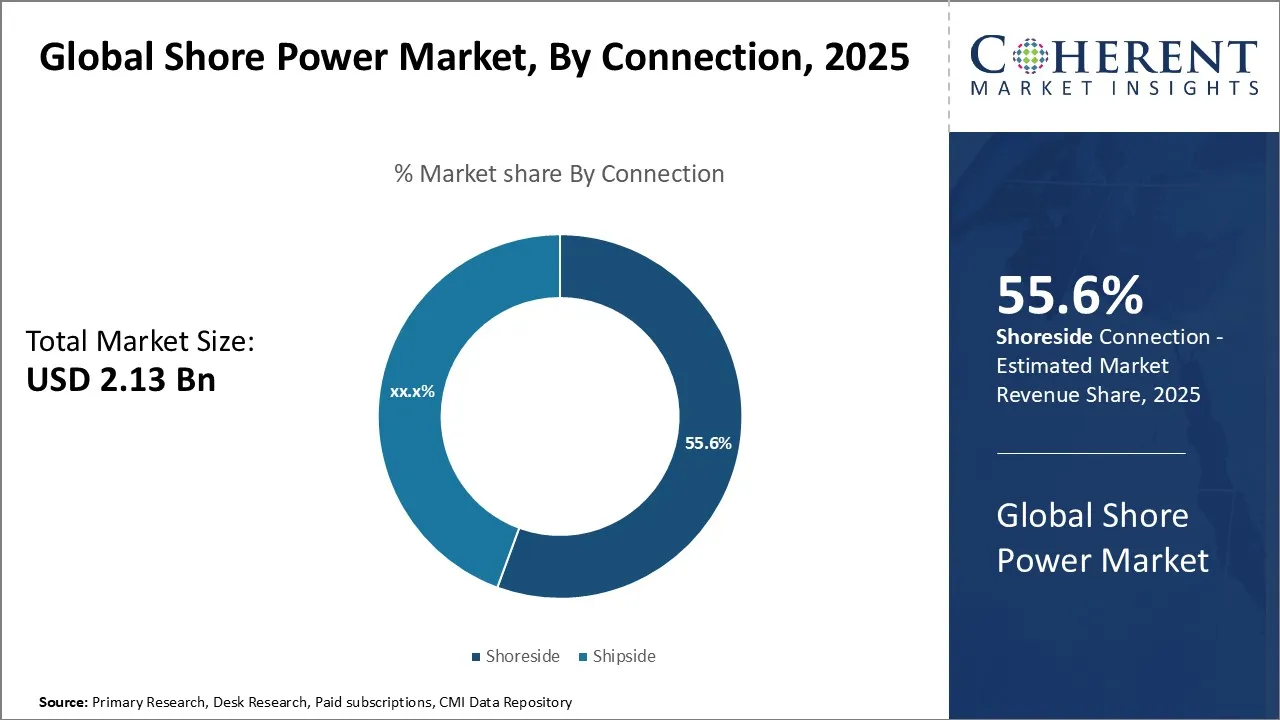
- The shoreside segment is projected to account for 56.6 % share in 2026.
- The new installation segment is expected to capture 68.8 % share in 2026.
- The transformer segment is projected to hold 35.9 % share in 2026.
- Asia Pacific is projected to dominate the global shore power market in 2026 with a 43.5 % share. Europe, holding an estimated share of 22.5% in 2026, is expected to be the fastest-growing region.
Market Overview
A prominent trend in the shore power market is the integration of advanced renewable energy sources, such as solar and wind, into shore power systems, enhancing sustainability and operational efficiency. Additionally, the adoption of smart grid technology for shore power infrastructure is gaining traction, allowing for optimized energy management and reduced operational costs. The inclusion of temporary power solutions and stronger links with the power grid system further improve flexibility and reliability, enabling ports to handle peak demand efficiently. Growing environmental awareness and government incentives supporting green port initiatives further drive market adoption, positioning shore power as a critical enabler of greener maritime transport.
Current Events and Its Impact
Current Events | Description and its Impact |
IMO Sulfur Cap & Stricter Emission Regulations (2020 onwards) |
|
Rising Investments in Asia Pacific Ports (2023–2025) |
|
Segmental Insights
- Current Industry Events of 2026
- Market Size Estimation
- Regional Breakdown
- Competitive Landscape
- Customer Intelligence
- Segmental Analysis
- Pricing Analysis
- Key Market Drivers, Challenges & Future Trends
- Customized Insights Section
Shore Power Market Insights, By Connection – Shoreside Segment Dominates the Market due to Increasing Environmental Regulations and Infrastructure Modernization
The shoreside segment holds an estimated share of 56.6% in 2026, attributed to the growing emphasis on reducing environmental pollution in port areas and coastal regions. Shoreside power, also known as cold ironing or alternative maritime power, refers to the provision of electrical power to ships at berth, allowing them to shut down their auxiliary engines. This capability is becoming increasingly critical amid tightening international and local regulations targeting emissions from ships while docked. Ports around the world are progressively adopting stringent air quality standards to combat air pollution caused by maritime vessels, which directly propels the demand for shoreside power solutions.
For example, the Port of Los Angeles (U.S.) has implemented one of the world’s most extensive shore power programs, requiring container, refrigerated cargo, and cruise ships to plug into shoreside electricity while berthed. This initiative has significantly reduced nitrogen oxide (NOx), sulfur oxide (SOx), and particulate matter emissions, aligning with California’s stringent air quality mandates and serving as a model for other global ports.
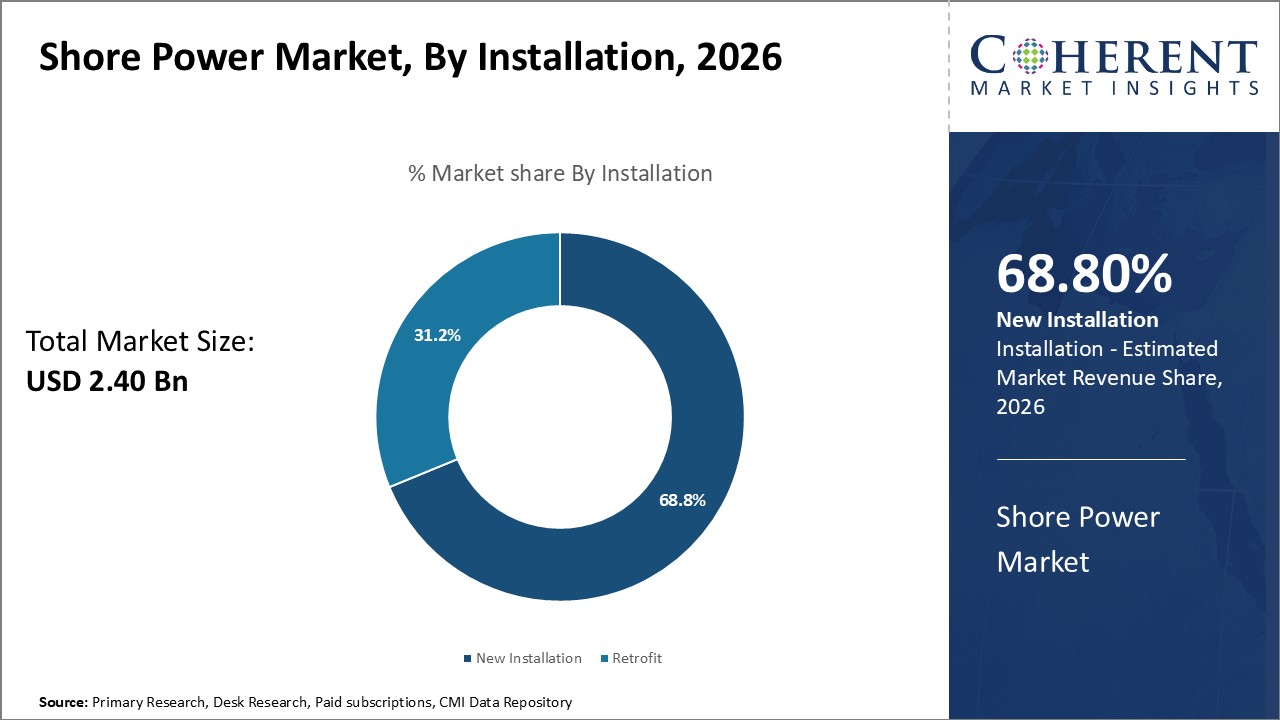
Shore Power Market Insights, by Installation - New Installation Segment Dominates the Market due to driven by Expanding Fleet Capacity and Enhanced Technological Adaptability
The new installation segment is expected to capture 68.8% share in 2026 due to continuous expansion and modernization of the global shipping fleet and port infrastructure. New vessels being commissioned today are increasingly designed with integrated shore power compatibility, enabling shipowners and operators to take advantage of the environmental and operational benefits right from the outset. By incorporating shore power features during the shipbuilding phase, manufacturers ensure smoother integration and functionality, which is challenging to achieve through post-delivery retrofitting.
This inclination towards new installations is further bolstered by the rising number of new port terminals being developed worldwide, especially in emerging economies experiencing a surge in maritime trade activity. These new terminals are often planned with contemporary environmental standards in mind, making shore power systems a baseline requirement rather than an upgrade. Consequently, ports and shipyards engage in collaborative planning to install shore power infrastructure alongside other electrical and logistical systems, facilitating a synchronized approach to energy supply at berths.
Shore Power Market Insights, by Component - Transformer Captures the Highest Share of the Market Propelled by Critical Role in Energy Conversion and System Safety
The transformer segment is projected to hold 35.9% share in 2026, due to their indispensable role in adapting and conditioning electricity for vessel consumption. Shore power systems require the conversion of local electrical supply — which often varies in voltage and frequency standards across ports — into the precise specifications needed by ships. Transformers efficiently perform this voltage transformation and isolation, ensuring the safe and stable delivery of power from shore to ship.
The critical importance of transformers extends beyond mere voltage conversion. They act as a safeguard protecting both the shore-side grid and onboard electrical systems from potential mismatches and electrical faults. This enhances system reliability and prevents damage to sensitive shipboard equipment, which is vital for uninterrupted port operations. The robustness and safety functions embedded in transformer design cater directly to the high standards demanded by the maritime sector.
Macro and Micro Economic Factors Impacting the Shore Power Market Growth
Macro-Economic Factors
- Global Trade Expansion: Maritime volume increases (including container, bulk, and cruise segments) require modernized port infrastructure, boosting overall demand for shore power.
- Government Incentives & Subsidies: Financial incentives in regions like Europe, Asia-Pacific, and North America lower entry barriers, making infrastructure investment more feasible.
- Regulatory-Driven Capital Flows: Stringent international and national emissions mandates (IMO, EU, US) justify allocation of public and private capital towards sustainable investments like shore power systems.
- Economic Policies & Market Stability: Geopolitical tensions, recession risks, inflation, and interest rate trends impact both public funding and private sector willingness to invest, especially in regions facing economic uncertainty.
- Maritime Recovery Post-Pandemic: As global shipping recovers from COVID-19 supply disruptions, there's a renewed push for capital expenditure on cleaner port-side solutions.
- Energy Market Trends: Shifts to renewables (solar/wind) and falling fossil fuel reliance motivate integration of clean grid electricity for ships, amplifying shore power as a “future-proof” solution.
Micro Economic Factors
- High Initial Capital Investment: The cost of retrofitting vessels, installing frequency converters, and upgrading port transformers poses major constraints for adoption—especially in emerging markets and for smaller ports and fleets.
- ROI and Utilization Rates: Ports and shipping lines focus on payback periods; low utilization or standardization gaps dampen financial returns, delaying investment decisions.
- Operational Cost Savings: Shore power reduces in-port fuel consumption and associated costs such as maintenance, offering ongoing operational savings for adopters.
- Infrastructure Availability: Ports with existing electrical grid capacity and modern dock engineering can adopt shore power faster, while those needing major upgrades face higher marginal costs.
- Stakeholder Alignment: Effective collaboration among port authorities, shipping giants, and technology vendors can optimize shared infrastructure, reduce per-user costs, and unlock economies of scale.
Regional Insights
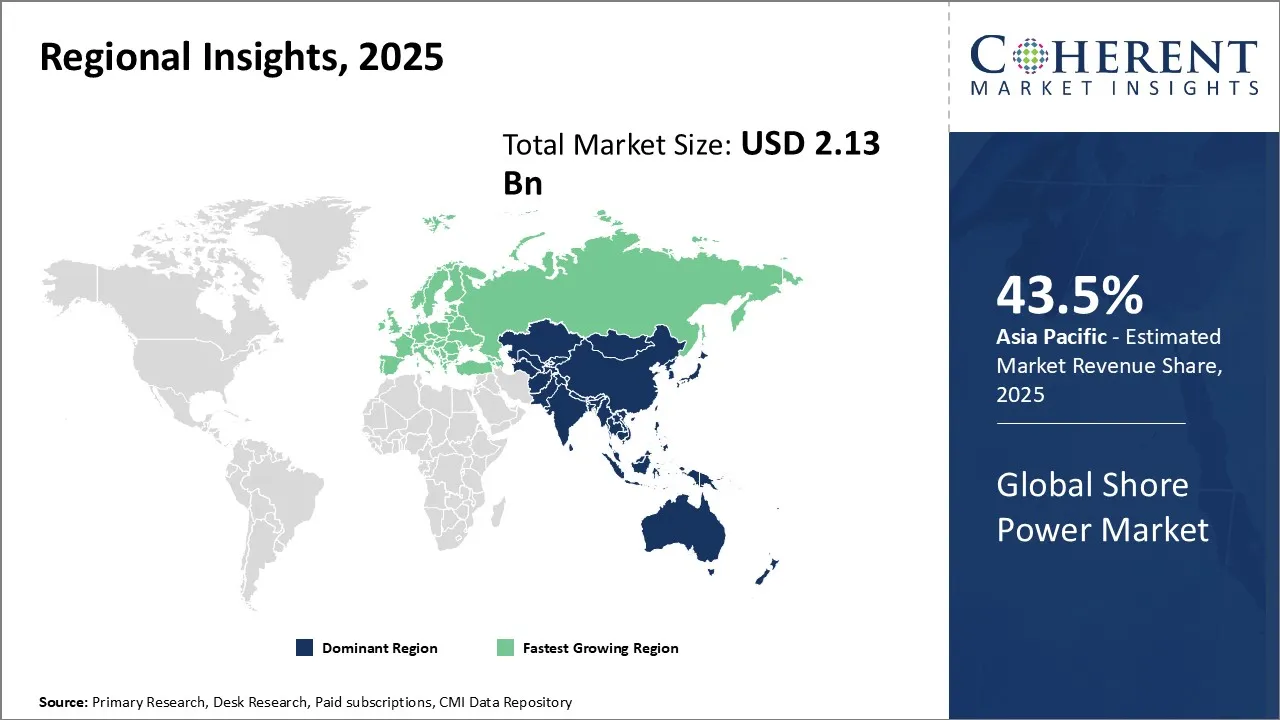
Asia Pacific Shore Power Market Analysis and Trends
The Asia Pacific region is projected to lead the market with a 43.5% share in 2026, fueled by burgeoning port development, rising environmental awareness, and government initiatives aimed at reducing carbon footprints in maritime operations. Countries like China, Japan, and South Korea are investing heavily in modernizing their port infrastructures and aligning with international emission reduction standards.
The region’s expanding trade volumes and increasing container throughput have necessitated enhanced energy-efficient solutions, positioning shore power as a viable alternative to reduce diesel-powered auxiliary engine emissions while docked. Leading companies such as Mitsubishi Electric, Nidec Corporation, and Hyosung Heavy Industries play pivotal roles in advancing shore power technologies in this region, often in partnership with national governments and port authorities.
Europe Shore Power Market Analysis and Trends
The Europe region is expected to exhibit the fastest growth in the market contributing 22.5% share in 2026, driven by the region’s proactive environmental regulations, extensive port infrastructure, and a mature maritime ecosystem. European governments have implemented stringent emission control directives such as the Sulphur Emission Control Areas (SECAs) and have incentivized the adoption of shore power technology to reduce port emissions. This regulatory environment, combined with the presence of major international shipping hubs like Rotterdam, Hamburg, and Antwerp, substantiates Europe’s leading role.
The region benefits from the active involvement of industry leaders such as ABB, Siemens Energy, and Cavotec, which have established comprehensive shore power solutions tailored for European ports. These companies not only supply hardware but also develop integrated systems for energy management aligned with Europe’s sustainability goals. Additionally, Europe’s strong maritime and shipping clusters foster innovation and collaboration between port authorities, shipping companies, and technology providers, creating a robust market ecosystem.
Shore Power Market Outlook for Key Countries
Germany Shore Power Market Analysis and Trends
Germany shore power market for shore power remains highly advanced due to the country’s robust maritime industry and its leadership in environmental policy enforcement. Major ports like Hamburg and Bremerhaven have implemented shore power infrastructure to comply with the country’s ambitious goals to reduce emissions in its logistics sectors.
German companies such as Siemens and Cavotec have contributed significantly to the development and deployment of shore-side electrical systems, offering turnkey solutions that integrate smart grid technologies and renewable energy components. Government subsidies and the country’s commitment to the Energy Transition (Energiewende) further support market activities, making Germany one of the critical hubs for shore power adoption in Europe.
China Shore Power Market Analysis and Trends
China shore power market growth is primarily driven by the rapid expansion of its port operations and increasing regulatory pressure to improve air quality around major coastal cities. The Chinese government has launched multiple green port initiatives, encouraging the incorporation of shore power to lessen pollution from docked vessels. Industry giants like China Shipbuilding Industry Corporation (CSIC) and State Grid Corporation of China are actively involved in the deployment of shore power infrastructure, focusing on integrating it into China’s broader electric grid modernization efforts. With key ports such as Shanghai and Shenzhen leading implementation, China is positioning itself as a dominant force in shore power adoption within Asia Pacific.
U.S. Shore Power Market Analysis and Trends
The U.S. shore power market benefits from government programs promoting cleaner port operations, especially for large container terminals and cruise ship ports along the West and East Coasts. Regulatory initiatives by the Environmental Protection Agency (EPA) and state-level policies, particularly in California, drive investments in shore power to mitigate emissions from vessels in ports like Los Angeles, Long Beach, and Seattle. Prominent companies like General Electric, Schneider Electric, and ABB contribute technology and infrastructure solutions tailored to the U.S. regulatory framework and port specifics. The U.S.’s complex regulatory landscape and growing public-private partnerships support steady market expansion despite moderate grid challenges.
Japan Shore Power Market Analysis and Trends
Japan continues to lead in the adoption of advanced shore power systems, bolstered by its commitment to cutting greenhouse gas emissions and reducing reliance on fossil fuels. The government supports shore power programs through regulatory incentives and funding mechanisms, particularly in busy ports such as Yokohama and Kobe. Japanese corporations, including Mitsubishi Electric and Hitachi, provide sophisticated power electronics and automation technologies that enhance the efficiency and reliability of shore power installations. The country’s strong shipbuilding industry and early integration of electrification technologies in port operations have positioned Japan as a frontrunner in the regional shore power market.
Singapore Shore Power Market Analysis and Trends
Singapore shore power market is driven by its status as one of the world’s busiest transshipment hubs and its active pursuit of sustainable port operations. The country has introduced policies encouraging the use of cleaner energy in maritime logistics, including shore power solutions for container and cruise terminals. Keppel Corporation and Sembcorp Industries are among key players investing in shore power infrastructure, often collaborating with the Maritime and Port Authority of Singapore (MPA). The nation’s strategic location, government support, and ambitious green initiatives accelerate shore power adoption, positioning Singapore as a major market within Southeast Asia.
Market Players, Key Development, and Competitive Intelligence
Key Developments
- In April 2024, Cavotec SA secured a contract valued at approximately USD 5 million with a leading global shipping company to supply shore power solutions.
- In February 2024, ABB won a contract with Portsmouth International Port to deliver a shore connection system for ferries and cruise ships docking at the port.
- In February 2024, HAROPA Port selected a consortium comprising subsidiaries of VINCI Energies and VINCI Construction to develop a high-voltage power supply system for cruise ships at the three berths of the Pointe de Floride terminal.
- In March 2023, EXMAR entered into an agreement with ABB to implement ABB’s shore connection solution, aiming to reduce dependence on traditional fuel sources and promote sustainable maritime practices.
Top Strategies Followed by Global Shore Power Market Players
- Established players dominate the scene through heavy investments in research and development (R&D), aiming to innovate and deliver high-performance shore power solutions that meet rigorous industry standards. These companies prioritize technological advancements that enhance energy efficiency, reliability, and environmental compliance, thus positioning themselves as leaders of innovation.
- For example, ABB’s shore connection systems at the Port of Long Beach enable cruise ships to drastically cut emissions by plugging into the grid while docked.
- Mid-level players in the shore power market primarily emphasize cost-effectiveness, targeting price-sensitive customer segments without compromising product quality. By providing solutions that offer a balanced trade-off between affordability and performance, these companies appeal to various commercial shipping operators and smaller ports looking to optimize operational expenses amid tightening budgets and regulatory pressures.
- For example, Wärtsilä provides modular shore connection systems that are especially attractive to medium-sized ports in Asia Pacific and the Middle East, which face tightening emissions regulations but have limited capital expenditure capacity. These players appeal strongly to price-sensitive customers while maintaining compliance with international standards.
- Small-scale players in the global shore power market operate with agility and innovation at the forefront, often focusing on specialized features or cutting-edge technology to differentiate themselves from industry giants. These niche players might concentrate on developing advanced, customizable shore power units or integrating smart grid and IoT capabilities to address specific customer pain points. By adopting pioneering technological approaches, they compete effectively despite limited resources and smaller operational scope.
- For instance, PowerCon AS (Denmark), developed containerized and modular shore power units that can be quickly installed in smaller ports or temporary harbor setups, offering flexibility that larger fixed installations cannot provide.
Market Report Scope
Shore Power Market Report Coverage
| Report Coverage | Details | ||
|---|---|---|---|
| Base Year: | 2025 | Market Size in 2026: | USD 2.40 Bn |
| Historical Data for: | 2020 To 2024 | Forecast Period: | 2026 To 2033 |
| Forecast Period 2026 to 2033 CAGR: | 12.7% | 2033 Value Projection: | USD 5.54 Bn |
| Geographies covered: |
| ||
| Segments covered: |
| ||
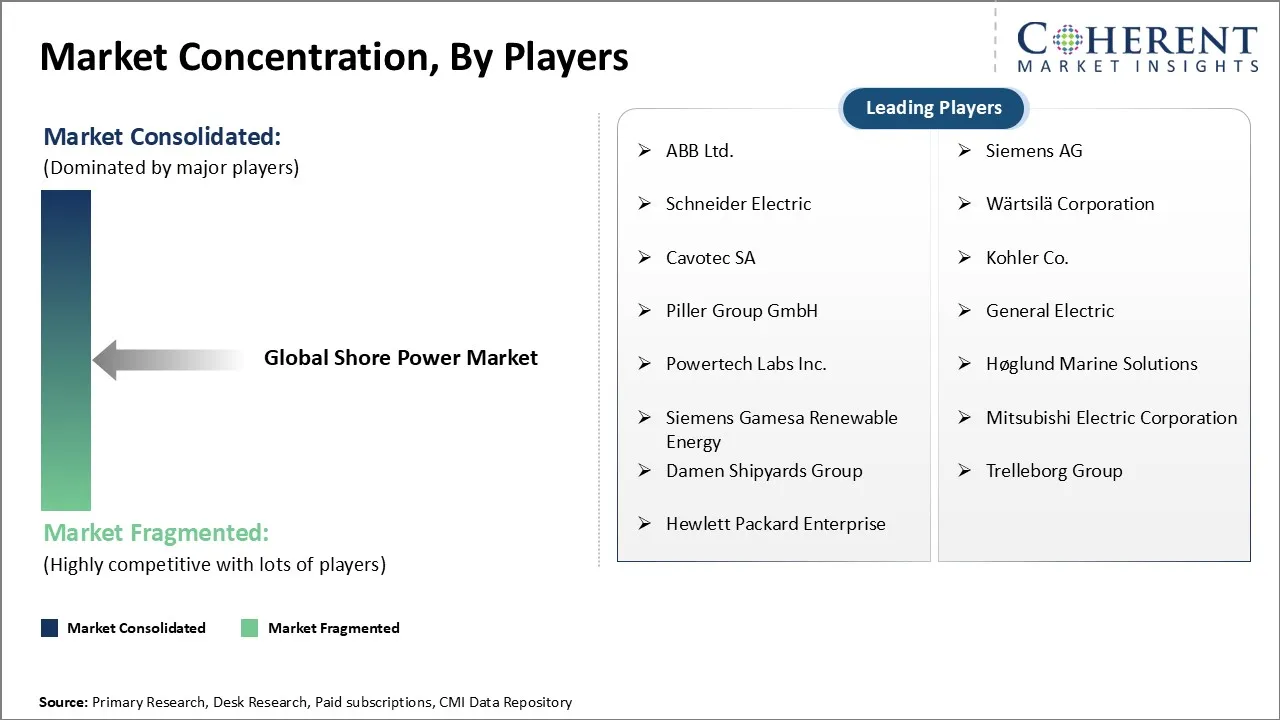
| Companies covered: | ABB Ltd., Siemens AG, Schneider Electric, Wärtsilä Corporation, Cavotec SA, Kohler Co., Piller Group GmbH, General Electric, Powertech Labs Inc., Høglund Marine Solutions, Siemens Gamesa Renewable Energy, Mitsubishi Electric Corporation, Damen Shipyards Group, Trelleborg Group, and Hewlett Packard Enterprise | ||
| Growth Drivers: |
| ||
| Restraints & Challenges: |
| ||
Shore Power Market Dynamics
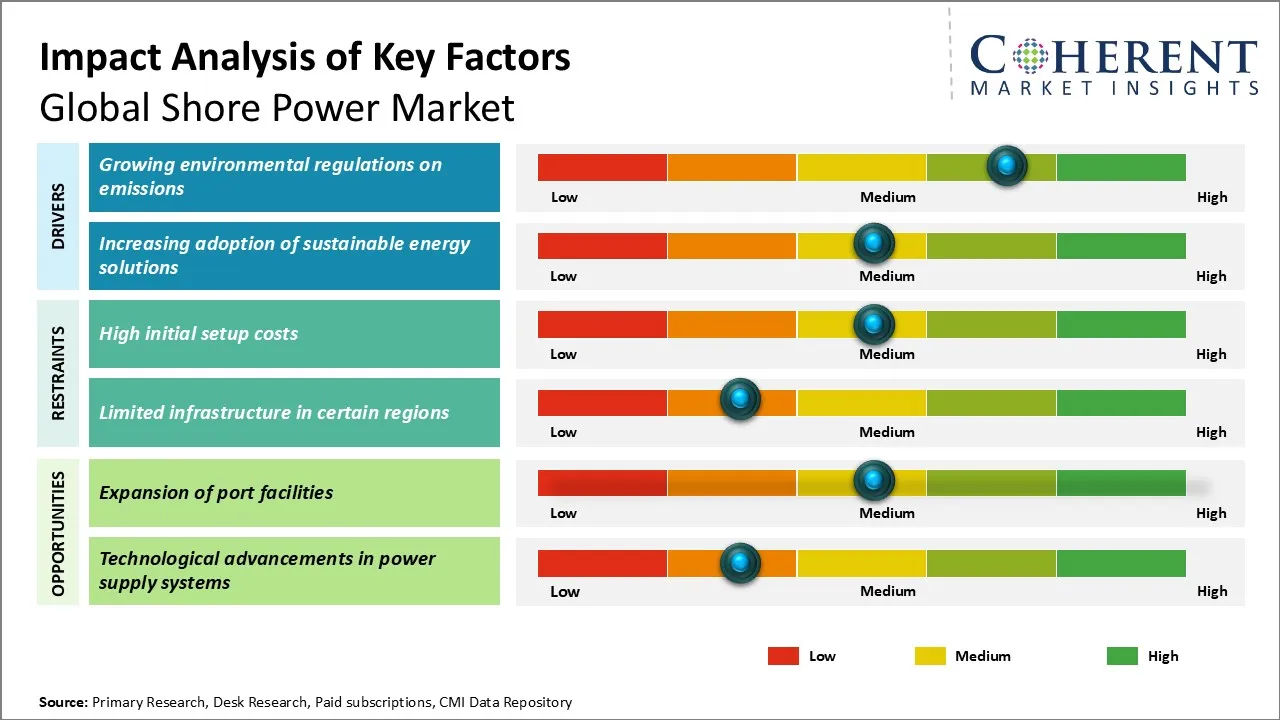
Shore Power Market Driver - Growing Environmental Regulations on Emissions
Increasingly stringent environmental regulations targeting emissions from maritime activities are significantly propelling the adoption of shore power solutions globally. Governments and international bodies have intensified efforts to curb air pollution generated by ships docked at ports, as vessels traditionally rely on auxiliary engines burning heavy fuel oil while anchored, leading to substantial emissions of Nitrogen Oxides (NOx), Sulfur Oxides (SOx), and particulate matter.
Regulatory frameworks such as the International Maritime Organization’s (IMO) sulfur cap and localized Emission Control Areas (ECAs) compel ports and shipping companies to seek cleaner alternatives to meet compliance standards. Shore power, enabling ships to connect to the electrical grid while berthed instead of running onboard engines, offers a practical solution to reduce the environmental footprint.
Shore Power Market Opportunity - Expansion of Port Facilities
The rapid growth in global maritime trade and increasing environmental regulations are driving significant expansion and modernization of port facilities worldwide, presenting a substantial opportunity for the global shore power market. As ports seek to reduce their carbon footprints and comply with stringent emission standards set by international bodies such as the International Maritime Organization (IMO), there is a growing the demand for shore power infrastructure to enable vessels to plug into the local electrical grid while docked, thereby reducing reliance on onboard diesel generators. This trend is particularly pronounced in major commercial hubs across Europe, North America, and Asia Pacific, where investments in port infrastructure are prioritized to accommodate larger, more environmentally friendly vessels.
For instance, Port of Los Angeles (U.S.), made extensive investments in shore power facilities, allowing nearly all container terminals to provide ships with access to grid electricity, which has helped the port cut more than 1,500 tons of NOx and 50 tons of particulate matter annually.
Analyst Opinion (Expert Opinion)
- The global shore power market is on the brink of substantial growth, driven by increasing regulatory pressures for emissions reduction and the shift toward sustainable port operations. Insights from the International Maritime Organization Conference (2023) and the World Ports Sustainability Conference (2022) highlighted significant developments, with companies like ABB and Cavotec leading innovations in electrification solutions for ships.
- ABB’s recent deployment of a high-capacity shore-to-ship power system in major ports showcases the industry’s commitment to reducing marine pollution and enhancing operational efficiency. Discussions at these conferences underscored the critical role of collaboration between ports, shipping companies, and regulatory bodies to establish standardized protocols for shore power use. However, challenges such as the high infrastructure investment and the need for universal compatibility among different vessel types were identified as potential barriers.
- Companies that focus on R&D to improve technology efficiency and forge strategic partnerships with port authorities will likely secure a competitive advantage. Ultimately, the future of the shore power market will depend on its ability to innovate while effectively addressing regulatory demands and operational challenges within the maritime industry.
Speak to the analyst
Want personalized insights?
Take the findings above to one of our principal consultants, or have the report rebuilt around the segments, geographies and competitors you actually track.
Market Segmentation
- Connection Insights (Revenue, USD Bn, 2021 - 2033)
- Shoreside
- Shipside
- Passenger Vessel
- Merchant Vessel
- Offshore Support Vessel
- Specialized Vessel
- Installation Insights (Revenue, USD Bn, 2021 - 2033)
- New Installation
- Retrofit
- Component Insights (Revenue, USD Bn, 2021 - 2033)
- Transformer
- Switchgear
- Cables and Accessories
- Static Frequency Converter
- Power Range up to 5 MVA
- Power Range Above 5MVA
- Others
- Regional Insights (Revenue, USD Bn, 2021 - 2033)
- North America
- U.S.
- Canada
- Latin America
- Brazil
- Argentina
- Mexico
- Rest of Latin America
- Europe
- Germany
- U.K.
- Spain
- France
- Italy
- Russia
- Rest of Europe
- Asia Pacific
- China
- India
- Japan
- Australia
- South Korea
- ASEAN
- Rest of Asia Pacific
- Middle East
- GCC Countries
- Israel
- Rest of Middle East
- Africa
- South Africa
- North Africa
- Central Africa
- North America
- Key Players Insights
- ABB Ltd.
- Siemens AG
- Schneider Electric
- Wärtsilä Corporation
- Cavotec SA
- Kohler Co.
- Piller Group GmbH
- General Electric
- Powertech Labs Inc.
- Høglund Marine Solutions
- Siemens Gamesa Renewable Energy
- Mitsubishi Electric Corporation
- Damen Shipyards Group
- Trelleborg Group
- Hewlett Packard Enterprise
Sources
Primary Research Interviews
- Port Infrastructure Development Manager – Major European Port Authority
- Sustainability Head – Leading Global Shipping Line
- Technical Director – Shore Power Equipment Manufacturer
- Policy Advisor – International Maritime Organization (IMO)
- Energy Transition Specialist – National Renewable Energy Agency
Stakeholders
- Manufacturers & Technology Providers: Shore power equipment suppliers, electrical grid integration solution providers
- End Use Sectors:
- Commercial Shipping (container ships, tankers, ferries, cruise lines)
- Port Authorities & Terminal Operators
- Regulatory & Certification Bodies: IMO, European Commission, U.S. Environmental Protection Agency (EPA)
- Energy Utilities: Regional grid operators, renewable energy suppliers
- E-commerce & Procurement Platforms: Marine equipment procurement and digital supply chain platforms
Databases
- UN Comtrade Database – International trade data on shore connection systems and electrical equipment
- Eurostat Maritime Transport Statistics
- U.S. Energy Information Administration (EIA) – Marine emissions and energy usage data
Magazines
- Port Technology International – Innovations in port electrification and shore connections
- Marine Link – Updates on shore power adoption by shipping companies
- The Maritime Executive – Policy changes and investment trends in maritime sustainability
- Ship Technology Global – Technological developments in onboard and port-side power solutions
- Cruise Industry News – Shore power adoption in cruise terminals
Journals
- Journal of Cleaner Production – Emission reduction technologies in maritime transport
- Transportation Research Part D: Transport and Environment – Environmental policies and shipping electrification
- Marine Policy Journal – Regulatory impacts on shore power adoption
- Energy Policy Journal – Role of grid integration in reducing maritime emissions
- Journal of Marine Engineering & Technology – Shore connection design and safety standards
Newspapers
- The Financial Times – Coverage of shipping decarbonization investments
- The Guardian – Reports on port sustainability initiatives
- South China Morning Post – Asia-Pacific shore power adoption trends
- Handelsblatt – German ports’ electrification projects
- The New York Times – U.S. ports’ shift to clean shore power
Associations
- International Maritime Organization (IMO)
- European Sea Ports Organization (ESPO)
- American Association of Port Authorities (AAPA)
- International Association of Ports and Harbors (IAPH)
- International Chamber of Shipping (ICS)
- Clean Shipping Coalition
Public Domain Sources
- IMO – MARPOL Annex VI & Emission Control Areas (ECAs) regulations
- European Commission – “Fit for 55” package & Alternative Fuels Infrastructure Regulation (AFIR)
- U.S. Environmental Protection Agency (EPA) – Clean Air Act regulations for ports and ships
- California Air Resources Board (CARB) – Shore power requirements for California ports
Proprietary Elements
- CMI Data Analytics Tool, Proprietary CMI Existing Repository of information for last 8 years.
Get access to 250+ pages report
Every segment, forecast, competitor profile and data table behind the analysis above — available for instant download.
- ESOMAR Member
- ISO 9001:2015 Certified
- D-U-N-S Registered
- GDPR & CCPA Compliant
Missing comfort of reading report in your local language? Find your preferred language:
Transform your Strategy with Exclusive Trending Reports
Frequently Asked Questions
The global shore power market is estimated to be valued at USD 2.40 Bn in 2026 and is expected to reach USD 5.54 Bn by 2033.
The CAGR of global shore power market is projected to be 12.7% from 2026 to 2033.
Growing environmental regulations on emissions and increasing adoption of sustainable energy solutions are the major factors driving the growth of the global shore power market.
High initial setup costs and limited infrastructure in certain regions are the major factors hampering the growth of the global shore power market.
In terms of connection, the shoreside segment is estimated to dominate the market revenue share in 2026.
ABB Ltd., Siemens AG, Schneider Electric, Wärtsilä Corporation, Cavotec SA, Kohler Co., Piller Group GmbH, General Electric, Powertech Labs Inc., Høglund Marine Solutions, Siemens Gamesa Renewable Energy, Mitsubishi Electric Corporation, Damen Shipyards Group, Trelleborg Group, and Hewlett Packard Enterprise are the major players.
Asia Pacific is expected to lead the global shore power market in 2026.