

Global Silicone Scar Treatment Products Market Size and Forecast – 2026 To 2033
The global silicone scar treatment products market is expected to grow from USD 1.28 Bn in 2026 to USD 1.96 Bn by 2033, registering a compound annual growth rate (CAGR) of 6.3%. The global silicone scar treatment products market is poised for significant expansion, fueled by the increasing incidence of burns and subsequent scarring that need prolonged treatment.
According to the World Health Organization, an estimated 180,000 deaths occur every year due to burns, with the vast majority occur in low- and middle-income countries. Additionally, non-fatal injuries are the leading cause of morbidity.
(Source: World Health Organization)
Key Takeaways of the Global Silicone Scar Treatment Products Market
- Silicone gels are projected to hold 44.0 % of the global silicone scar treatment products market share in 2026, making it the dominant product type segment, particularly driven by North America and Europe, which are characterized by the widespread use of non-invasive dermatological procedures. The inclination towards using silicone gel is due to its simple application, accessibility as an over-the-counter product, and the high endorsement rate among dermatologists as a post-procedural scar treatment option. For instance, the American Academy of Dermatology recommends the use of silicone gel and silicone sheets to help minimize and manage scars as part of dermatological care. (Source: American Academy of Dermatology)
- Post-Surgical scars are projected to hold 35.5 % of the global silicone scar treatment products market share in 2026, making it the dominant scar type segment, with North America spearheading demand facilitated by the rising importance of post-surgical treatment and aesthetic results. The need to reduce scar visibility and promote wound healing has contributed to the regular use of products such as silicone gels and patches in the post-procedure process. Moreover, the increased knowledge about the use of these products to manage scars at an early stage contributes to this trend. For instance, silicone-based gel dressings are frequently included in post-operative care plans after operations including caesareans and cosmetic surgery to enhance scar recovery.
- Hospitals segment is projected to hold 35.0 % of the global silicone scar treatment products market share in 2026, making it the dominant end user segment especially in the developed regions like North America and Europe, where there are well-established medical facilities and standard postoperative care guidelines, which promote the application of silicone-based scar treatments. Hospitals will continue to be the main site for surgery and burns, where immediate scar management is initiated, thus giving rise to market dominance. For instance, according to Agency for Healthcare Research and Quality, 17.2 million hospital visits (ambulatory or inpatient) included invasive, therapeutic surgeries. Over half of these visits (57.8%) occurred in a hospital-owned ambulatory surgery (AS) setting, and the remaining (42.2%) were inpatient. (Source: National Library of Medicine)
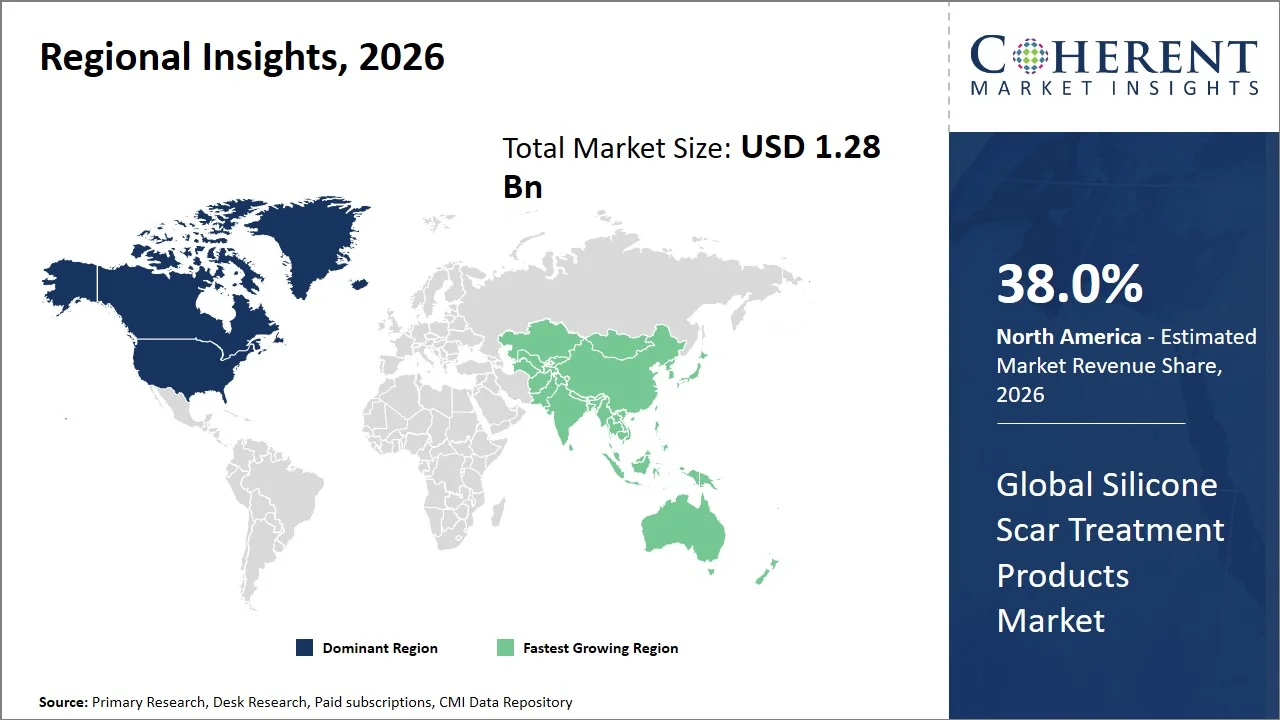
- North America maintains dominance with an expected share of 38.0% in 2026, owing to advanced healthcare infrastructure and higher usage rates of post-operative care products. The existence of organizations like the Agency for Healthcare Research and Quality shows that numerous surgeries take place every year in the U.S., leading to an abundance of patients who have undergone surgery and require scar treatment post-operatively. Also, high consumer awareness about aesthetics and the availability of silicone-based products add to the region's dominance. For instance, products like Kelo-Cote Silicone Gel, manufactured by Alliance Pharma plc, have been approved by the U.S. FDA for use in the treatment and prevention of hypertrophic and keloid scars. The broad usage and application of such U.S. FDA-approved products in hospitals and retail environments emphasize the high rate of acceptance of scar treatment methods in North America. (Source: U.S. Food and Drug Administration)
- Asia Pacific is expected to exhibit the fastest growth with an estimated contribution of 32.0% share in 2026, attributed to the expansion of medical tourism, upgrading the healthcare system, and increasing awareness of aesthetic outcomes post-surgery. Countries including India and China have observed an increase in the number of individuals requiring cosmetic and reconstructive surgeries owing to their huge number of patients and improved healthcare facilities. For instance, according to the Government of India, over 131,856 foreign patients visited India for medical treatment between January and April 2025, accounting for 4.1% of total foreign tourist arrivals, reflecting the strong inflow of medical tourists driving procedural volumes. (Source: Ministry of Tourism)
- Growing Demand from Post-Aesthetic and Minimally Invasive Procedures: The increasing incidence of cosmetic surgeries like laser surgery, cesarean delivery, and minor surgical procedures has resulted in a growing requirement for efficient scar treatment products. The silicone-based gel and sheet are more commonly being prescribed during post-surgery treatment as they are non-invasive and easy to apply. This opens up a premium niche for clinic-dispensed products.
- Increasing Adoption in Long-Term Burn and Pediatric Scar Care: Silicone scar treatment products are becoming popular among burn treatment and pediatric applications as they are safe to use and can be applied to sensitive skin. The long-term scar treatment regimen promotes repeat purchases, providing constant product demand. The popularity of this niche market will increase with growing consciousness about preventive scar treatment.
Segmental Insights
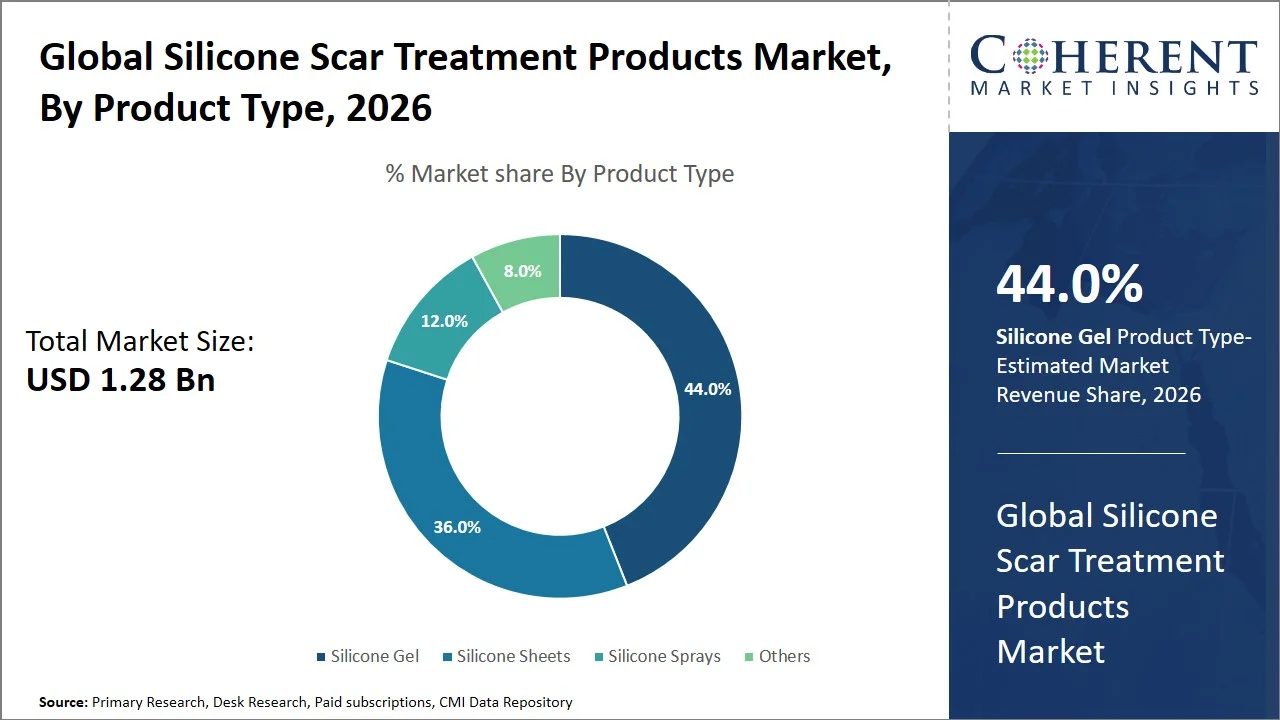
Why Does the Silicone Gels Segment Dominate the Global Silicone Scar Treatment Products Market?
Silicone gels are projected to hold the market share of 44.0% in 2026, attributed to its high efficiency in the medical field and patient compliance relative to other treatment approaches. A study published by National Library of Medicine has shown that the application of silicone gel results in positive changes concerning several factors related to scars including their color, height, and pliability. Thus, silicone gel can be recommended as the first-line therapy against the mentioned scar characteristics in comparison with no treatment. (Source: National Library of Medicine)
Concurrently, a research study published by Korean Academy of Medical Sciences found that topical silicone gel is effective for the prevention of hypertrophic scars in the same way as silicone sheets, but the application of this product is easier and more convenient. (Source: Korean Academy of Medical Sciences) Moreover, a systematic review published by ScienceDirect have demonstrated that liquid silicone gels have protective as well as therapeutic value when it comes to scar formation, further emphasizing their extensive use in post-operative and burn injury scenarios (Source: ScienceDirect). The proven clinical effectiveness of the product, in addition to high usability and the ability to be used on different types of scars, makes silicone gels the most dominating product type.
- Current Industry Events of 2026
- Market Size Estimation
- Regional Breakdown
- Competitive Landscape
- Customer Intelligence
- Segmental Analysis
- Pricing Analysis
- Key Market Drivers, Challenges & Future Trends
- Customized Insights Section
Why are Post-Surgical Scars the Most Preferred Scar Type in Global Silicone Scar Treatment Products Market ?
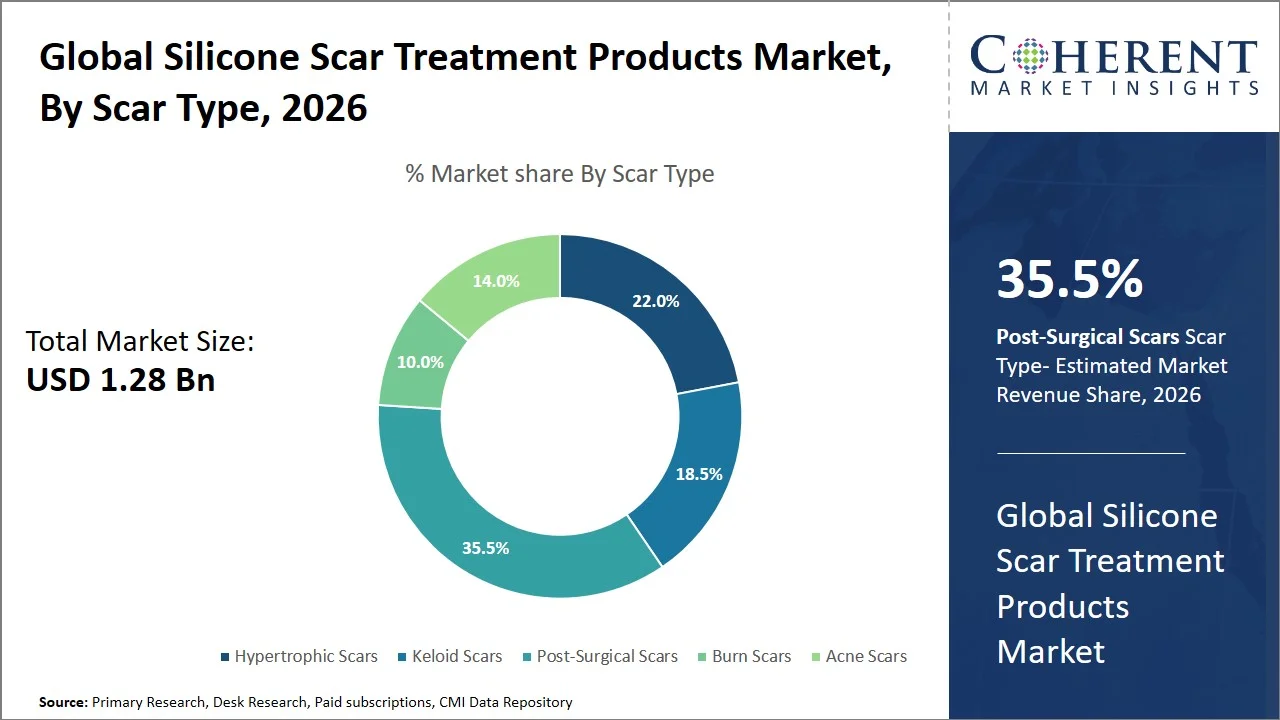
Post-surgical scars are projected to hold a market share of 35.5% in 2026, because they constitute the biggest scar type that is more systematically controlled, with scar prevention beginning right after the surgical process. As opposed to accidental scars, surgical wounds are planned wounds, hence the ease of applying silicone-related products right after the wound in order to prevent abnormal scars. The American Academy of Dermatology gives clinical recommendations supporting silicone application in preventing abnormal scars as an initial strategy (such as, use of silicone gel sheets on newly healed wounds to flatten keloids, application of silicone-based dressings to minimize scar formation, and adherence to proper wound care practices including covering healing skin with silicone or hydrogel sheets).
A study published by National Library of Medicine shows that hypertrophic scarring arises in approximately 40% to 70% of the time right after the surgical process. Hence, there is always a high probability that a scar will form, necessitating its preventive measures (Source: National Library of Medicine). Moreover, another study published by ScienceDirect suggests that about 35% of surgical skin wounds result in hypertrophic scars after 1 year (Source: ScienceDirect). The high incidence rate, coupled with the rising importance of aesthetics, has led to the widespread use of silicone-based scar treatment products in post-operative procedures.
Hospitals Segment Dominates the Global Silicone Scar Treatment Products Market
The hospitals segment is projected to hold a market share of 35.0% in 2026, as they are primary setting for surgery, traumatic injuries, and burn management. These types of injuries require immediate attention from the moment of healing to prevent formation of scars. Since hospitals carry out a large number of operations, it makes sure that there will always be a stream of patients who need scar treatments. The presence of health practitioners also means that there is an opportunity to monitor post-operative activities in order to prevent scars. For instance, studies indicate that hypertrophic scars develop in 30%–50% of surgical wounds, leading to the routine adoption of preventive treatments such as silicone gels and sheets in hospital settings. (Source: National Library of Medicine)
Currents Events and their Impact
Current Events | Description and its Impact |
U.S. Regulatory Classification Reinforces OTC Medical Device Positioning (Ongoing) |
|
Global Medical Device Regulatory Alignment & Classification Expansion (2024–2026) |
|
(Source: U.S. Food and Drug Administration, National Library of Medicine)
Global Silicone Scar Treatment Products Market Dynamics
Market Drivers
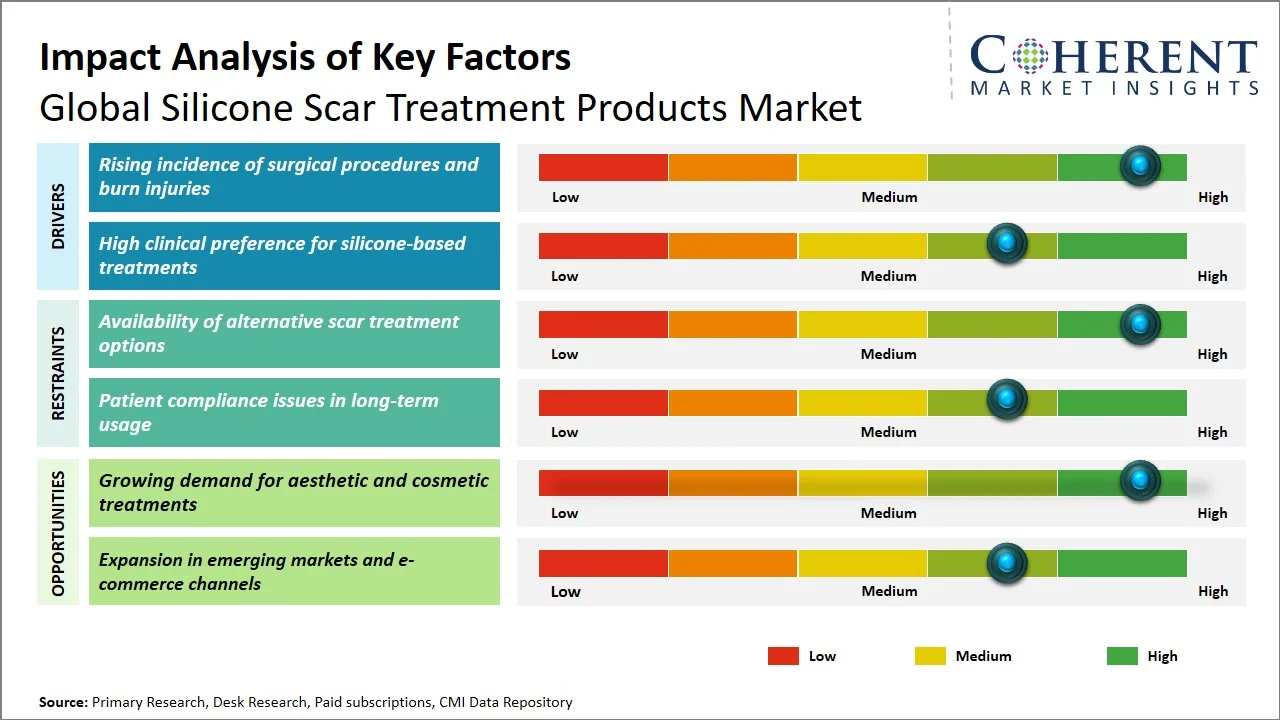
- Rising incidence of surgical procedures and burn injuries: The number of surgeries and burn-related injuries are rising, which means that more people need help with their scars. Every year, more than 300 million major surgeries are performed annually worldwide, and approximately 50 million are performed yearly in the U.S. (Source: National Library of Medicine). Moreover, the World Health Organization estimated that India has more than 1 million moderates to severe burn cases every year, and many of these cases leave long-lasting scars and disfigurement (Source: World Health Organization). This often requires prompt and continuous scar management to prevent complications such as hypertrophic and keloid scars. This has resulted in increased demand for scar treatment products based on silicone as a consequence of the increasing number of patients requiring surgery or suffering from burns.
- High clinical preference for silicone-based treatments: Products based on silicone is greatly appreciated in clinical practice because they are highly effective in terms of prevention and treatment of hypertrophic and keloid scars. Silicone is able to keep the stratum corneum moisturized, balance fibroblasts’ activity, and minimize collagen production. These features are crucial for the normal development of abnormal scarring. Besides, silicone gel and silicone sheets are completely non-invasive, convenient for use, and have a high level of tolerability, which increases the compliance of patients with therapy compared to invasive approaches. Versatility in the treatment of old and fresh scars, whether surgical or burn-related, also contributes to the widespread use of silicone products in clinical practice. For instance, clinical international guidelines like that of the International Advisory Panel on Scar Management advocate the use of silicone gel sheeting and silicone cream as first-line treatment modalities for hypertrophic scar and keloid formation, further underlining their well-established status in clinical practice. (Source: National Library of Medicine)
Emerging Trends
- Integration of advanced formulations and combination therapies: There is an ongoing trend among manufacturers to develop innovative silicone-containing products with active components like vitamin E, onion extract, and sunscreen to ensure better results in treating scars. Such products combine the effects on the texture and look of a scar while protecting the skin, which raises their popularity.
- Rising demand for at-home and OTC scar management solutions: A move towards self-care is emerging, as many patients now prefer over-the-counter products such as silicone gel and silicone sheets in the treatment of scars for more convenient scar care. Such an approach is made possible through greater knowledge about aesthetics as well as products that make self-application easier.
Regional Insights
Why is North America a Strong Market for Silicone Scar Treatment Products?
North America leads the global silicone scar treatment products market, accounting for an estimated 38.0% share in 2026, owing to the region’s matured regulatory framework, high product availability, and clinical acceptance of non-invasive treatments. The role played by regulatory authorities such as the U.S. Food and Drug Administration ensures the widespread availability and use of silicone scar products. For instance: multiple silicone scar treatment products, including silicone scar therapy gel, have been cleared by the U.S. FDA through the 510(k) procedure, which indicates their safety and efficacy as scar treatment options. (Source: Food and Drug Administration)
Moreover, treatments like ScarAway belong to U.S. FDA Class I medical devices that reduce scar appearances and are commonly used for the purpose (Source: Alliance Pharmaceuticals Ltd.). In addition, U.S. FDA also considers silicone scar sheets in the category of regulated medical devices, reconfirming its efficacy in treatment of hypertrophic and keloid scars (Source: Food and Drug Administration). This solid regulatory backing, along with ease of access in pharmacies and online stores, greatly boosts patient confidence and ensures uniform application of silicone scar treatment products in North America.
Why Does Asia Pacific Silicone Scar Treatment Products Market Exhibit High Growth?
The Asia Pacific silicone scar treatment products market is expected to exhibit the fastest growth with an estimated contribution of 32.0% share to the market in 2026, owing to the fast development of aesthetic surgeries, enhanced access to dermatology services, and increased concern about the results after the procedure. Countries like India, China, and South Korea have been experiencing increased demand for cosmetic and reconstructive surgeries. This is fuelled by the evolution of the health care sector and the rise in urban populations.
For instance, the International Society of Aesthetic Plastic Surgery reports that the Asia Pacific region has played a crucial role in the overall number of global aesthetic surgeries. China and India rank amongst the highest in terms of numbers of surgeries performed around the world (Source: International Society of Aesthetic Plastic Surgery). The increasing number of procedures, alongside increased knowledge about scar prevention and increased availability of silicone-based products, contributes to the market growth in Asia Pacific.
The U.S. is one of the key market for silicone scar treatment products owing to the well-developed dermatological care environment and the use of scientifically-proven treatments. The regulatory control exercised by the U.S. Food and Drug Administration helps make available safe and clinically-tested silicone-based products, thus boosting consumer confidence. The U.S. also enjoys high consumer knowledge levels regarding scars, along with proactive post-surgical scar management techniques.
Is China a Favorable Market for Silicone Scar Treatment Products?
The China represents an excellent opportunity for silicone scar treatment products due to the fast-changing environment of dermatology services in the country, growing popularity of aesthetic services, and availability of more advanced solutions. With large number of patients receiving cosmetic and reconstructive surgeries, the demand for effective scar reduction treatments are growing. In addition, growing healthcare infrastructure development and proliferation of clinics in cities will make it easier for patients to try more advanced solutions for treating their scars, such as silicone products. Such a strong procedural basis, along with an increasing consciousness about appearance and skin, make China a high growth market.
Is Japan Emerging as a Key Growth Hub for the Silicone Scar Treatment Products Market?
Japan stands out as a growth hub for the silicone scar treatment products market, largely attributed to the growing popularity of aesthetic treatments in the region, coupled with an increased acceptance of cosmetic procedures among Japanese people. Indeed, there have been considerable growths in the number of people seeking facial and minimally invasive procedures, hence driving up the demand for scar management solutions after these procedures. For instance, according to a survey of medical facilities recently released by the Ministry of Health, Labor, and Welfare, the number of cosmetic surgery clinics in Japan rose by 43.6% between 2020 and 2023 to 2,016. (Source: Nippon Communications Foundation)
Why Does Germany Top the Europe Silicone Scar Treatment Products Market?
Germany is at the forefront of European countries owing to its highly developed healthcare system and a thriving dermatological care environment. The country demonstrates high levels of clinical acceptance of non-invasive silicone scar therapies based on medical knowledge. Furthermore, high consumer awareness about aesthetic results and skin condition is another factor contributing to steady demand for scar management products.
India is turning into a potential market for silicone scar treatment products due to increased dermatological treatment awareness and an emphasis on aesthetics. There is an increased demand for the solution owing to the number of patients having scars as a result of surgeries, burns, and trauma. Increased accessibility to healthcare facilities, alongside new dermatological clinics, is also enhancing the uptake of the solutions. Moreover, there is an increasing number of silicone gel and sheet-based options available over the counter.
Regulatory Landscape Governing the Global Silicone Scar Treatment Products Market
Region | Regulatory Environment | Key Characteristics |
North America | Highly regulated framework with strict product classification under medical devices and over-the-country categories. Pre-market approvals and safety compliance are mandatory. | Strong emphasis on clinical validation, labeling standards, and post-market surveillance. High transparency and well-defined approval pathways drive product credibility. |
Europe | Governed by comprehensive medical device regulations with mandatory CE marking for market entry. Focus on safety, performance, and risk management. | Stringent compliance requirements under updated regulations increase approval timelines but enhance product reliability and consumer trust. |
Asia Pacific | Diverse regulatory frameworks varying by country, with evolving policies in emerging economies. Developed markets have structured approval systems. | Regulatory heterogeneity creates complexity for manufacturers, but ongoing harmonization efforts and reforms are improving market accessibility. |
Latin America | Moderately regulated environment with country-specific approval processes. Increasing alignment with international standards. | Gradual regulatory strengthening and improving compliance frameworks support market expansion, though approval timelines may vary. |
Middle East & Africa | Developing regulatory landscape with varying levels of enforcement across countries. Reliance on international certifications in several markets. | Growing regulatory standardization and adoption of global guidelines are enhancing product quality control, though infrastructure gaps remain. |
How is the growing demand for aesthetic and cosmetic treatments creating new growth opportunities in the global silicone scar treatment products market?
Increased demand for aesthetic and cosmetic treatments are generating considerable growth potential in the silicone scar treatment products market owing to higher instances of treatments where there is a requirement for structured post-operative scar management as well as increased focus on obtaining near invisible healing results. With cosmetic surgeries and minimally invasive treatments gaining global popularity, post-treatment care is being increasingly recognized as an essential aspect of attaining optimum aesthetic results from a procedure, which is making silicone gels and sheets an essential part of any cosmetic treatment process. According to guidelines provided by the American Academy of Dermatology, the early management of scars is essential in improving their appearance through the use of silicone gel/sheets (Source: American Academy of Dermatology). The trend towards the greater awareness of aesthetics, and increased focus within clinical settings on after-surgery care is pushing for the adoption of silicone scar treatment products into standard cosmetic therapy procedures.
Market Players, Key Development, and Competitive Intelligence
Key Developments
- In March 2025, Mölnlycke Health Care AB committed USD 15 million to MediWound Ltd. towards the development of new enzymatic therapeutics to treat wounds and burns. This is meant to aid in innovation in wound therapy treatments in their initial stages. Although indirect, this can be seen to be contributing towards increased focus in the development of ways to prevent scars and wound treatments.
- In April 2024, Nuance Medical acquired the BIOCORNEUM line of silicone gel for scar treatment. This acquisition was made via a court-supervised process since the parent company of BIOCORNEUM filed under Chapter 11. This further enriches the product line of Nuance Medical and adds to its capabilities in the realm of silicone scar treatments.
Competitive Landscape
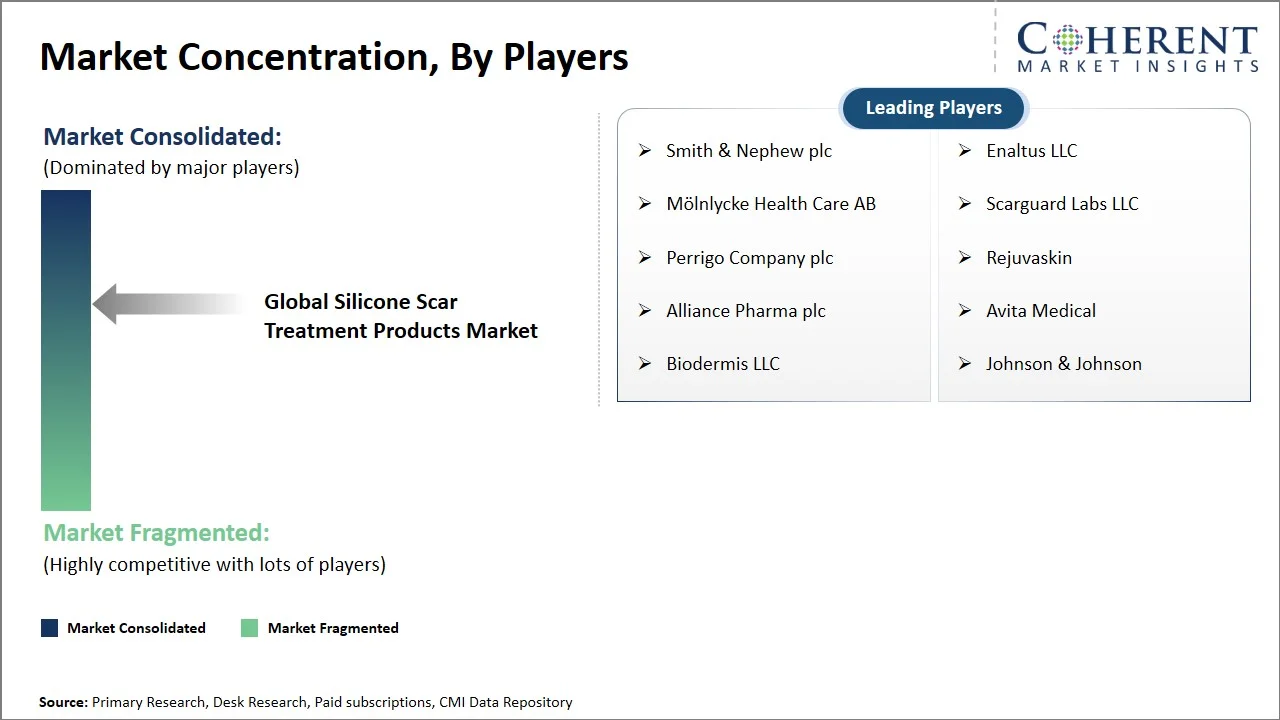
The global silicone scar treatment products market exhibits moderate concentration yet geographical fragmentation where major players focused on dermatological solutions fight local competitors. The competition is based on product differentials, efficiency, and convenience, as well as widening distribution channels through hospital and clinic chains and even retail stores. For advanced countries, compliance with regulations and credibility of brands play an important role in competing, whereas for emerging regions, cost and accessibility become determining aspects. Key focus areas include:
- Product innovation focusing on advanced silicone formulations and improved patient convenience
- Expansion across dermatology clinics, hospitals, and e-commerce distribution channels
- Strengthening presence in aesthetic and post-surgical care segments
- Pricing strategies to enhance penetration in cost-sensitive and emerging markets
Market Report Scope
Silicone Scar Treatment Products Market Report Coverage
| Report Coverage | Details | ||
|---|---|---|---|
| Base Year: | 2025 | Market Size in 2026: | USD 1.28 Bn |
| Historical Data for: | 2020 To 2024 | Forecast Period: | 2026 To 2033 |
| Forecast Period 2026 to 2033 CAGR: | 6.3% | 2033 Value Projection: | USD 1.96 Bn |
| Geographies covered: |
| ||
| Segments covered: |
| ||
| Companies covered: | Smith & Nephew plc, Mölnlycke Health Care AB, Perrigo Company plc, Alliance Pharma plc, Biodermis LLC, Enaltus LLC, Scarguard Labs LLC, Rejuvaskin, Avita Medical, and Johnson & Johnson | ||
| Growth Drivers: |
| ||
| Restraints & Challenges: |
| ||
Analyst Opinion (Expert Opinion)
- The silicone scar treatment products market is set to move towards becoming an aesthetic category rather than a clinically oriented one. In addition to the treatment of scars, there is going to be an emphasis on preventing the formation of such skin conditions and making the skin look better aesthetically. The future development in the market is likely to be influenced by the desire for non-surgical approaches to scar management, increased interest in cosmetic procedures, and the inclination towards self-treatment.
- The biggest growth opportunity will be seen in home care silicone gel and sheets in Asia Pacific, specifically in China and India, due to the presence of a large consumer base with rising aesthetic awareness along with growing distribution networks, leading to a rapid uptake of such products. Such markets present significant volume opportunities for consumers dealing with acne scars, and for patients who require cheaper options to manage post-procedural scars.
- In order to create an effective strategy, players must stop at mere silicone products and work towards offering differentiated products with better efficacy. Innovation in terms of advanced formulations will help create more demand in the market, along with focusing on building an extensive distribution network that includes pharmaceutical stores, dermatology clinics, as well as digital media. Education of consumers are vital for establishing an effective presence in such markets, as well as building the brand image in terms of delivering results and making the product more consumer-friendly by offering attractive pricing.
Speak to the analyst
Want personalized insights?
Take the findings above to one of our principal consultants, or have the report rebuilt around the segments, geographies and competitors you actually track.
Market Segmentation
- Product Type Insights (Revenue, USD Bn, 2021 - 2033)
- Silicone Gels
- Silicone Sheets
- Silicone Sprays
- Others
- Scar Type Insights (Revenue, USD Bn, 2021 - 2033)
- Hypertrophic Scars
- Keloid Scars
- Post-Surgical Scars
- Burn Scars
- Acne Scars
- End User Insights (Revenue, USD Bn, 2021 - 2033)
- Hospitals
- Dermatology Clinics
- Homecare Settings
- Others
- Distribution Channel Insights (Revenue, USD Bn, 2021 - 2033)
- Hospital Pharmacies
- Retail Pharmacies
- Online Pharmacies
- Regional Insights (Revenue, USD Bn, 2021 - 2033)
- North America
- U.S.
- Canada
- Latin America
- Brazil
- Argentina
- Mexico
- Rest of Latin America
- Europe
- Germany
- U.K.
- Spain
- France
- Italy
- Russia
- Rest of Europe
- Asia Pacific
- China
- India
- Japan
- Australia
- South Korea
- ASEAN
- Rest of Asia Pacific
- Middle East
- GCC Countries
- Israel
- Rest of Middle East
- Africa
- South Africa
- North Africa
- Central Africa
- North America
- Key Players Insights
- Smith & Nephew plc
- Mölnlycke Health Care AB
- Perrigo Company plc
- Alliance Pharma plc
- Biodermis LLC
- Enaltus LLC
- Scarguard Labs LLC
- Rejuvaskin
- Avita Medical
- Johnson & Johnson
Sources
Primary Research Interviews
- Dermatologists and plastic surgeons specializing in scar management and aesthetic procedures
- Medical device companies manufacturing silicone-based scar treatment products
- Hospital procurement managers and wound care specialists
- Skincare professionals and aesthetic clinic practitioners
Stakeholders
- Providers of silicone scar treatment products and dermatology solutions
- End-use Sectors
- Hospitals
- Dermatology and aesthetic clinics
- Online pharmacies and retail distribution channels
- Regulatory & Health Bodies: U.S. Food and Drug Administration (FDA), European Medicines Agency (EMA), World Health Organization (WHO)
Databases
- U.S. Food and Drug Administration – Medical device approvals and safety databases
- World Health Organization – Global Health Observatory (GHO)
- National Institutes of Health – ClinicalTrials.gov database
- OECD Health Statistics – Healthcare access and expenditure data
Magazines
- Dermatology Times – Trends in scar treatment technologies and product innovation
- Aesthetic Medicine – Insights into cosmetic procedure growth and aftercare solutions
- MedTech Insight – Developments in medical-grade silicone products
Journals
- American Academy of Dermatology – Clinical guidance on scar management and treatment approaches
- National Institutes of Health – Research studies on scar formation, healing, and silicone-based treatments
- Journal of Clinical and Aesthetic Dermatology – Studies on scar prevention and non-invasive treatment solutions
- Plastic and Reconstructive Surgery Journal – Clinical outcomes of post-surgical scar therapies
Newspapers
- The New York Times – Trends in cosmetic procedures and skincare awareness
- The Guardian – Coverage on aesthetic treatment demand and healthcare shifts
- The Washington Post – Insights on healthcare regulations and medical innovations
Associations
- American Society of Plastic Surgeons
- International Society of Aesthetic Plastic Surgery
- Wound Healing Society
Public Domain Sources
- World Health Organization – Guidelines on wound care and skin health
- U.S. Food and Drug Administration – Regulatory framework for medical devices
- European Medicines Agency – Medical product safety and evaluation reports
Proprietary Elements:
- CMI Data Analytics Tool, Proprietary CMI Existing Repository of information for last 10 years.
Get access to 250+ pages report
Every segment, forecast, competitor profile and data table behind the analysis above — available for instant download.
- ESOMAR Member
- ISO 9001:2015 Certified
- D-U-N-S Registered
- GDPR & CCPA Compliant
Missing comfort of reading report in your local language? Find your preferred language:
Transform your Strategy with Exclusive Trending Reports
Frequently Asked Questions
The global silicone scar treatment products market is estimated to be valued at USD 1.28 Bn in 2026 and is expected to reach USD 1.96 Bn by 2033.
Silicone gels dominates due to their ease of application, quick drying formulation, and suitability for use on visible and irregular body areas such as the face and joints.
Silicone scar treatment products are topical medical-grade formulations (gels, sheets, or sprays) made from silicone polymers used to hydrate, protect, and reduce the appearance of scars.
The CAGR of global silicone scar treatment products market is projected to be 6.3% from 2026 to 2033.
Rising incidence of surgical procedures and burn injuries and high clinical preference for silicone-based treatments are the major factors driving the growth of the global silicone scar treatment products market.
Availability of alternative scar treatment options and patient compliance issues in long-term usage are the major factors hampering the growth of the global silicone scar treatment products market.
Yes, they are widely recommended in dermatology for preventing and managing hypertrophic and keloid scars due to their proven safety and effectiveness.