

Global Sodium Gluconate Market Size and Forecast – 2026-2033
The Global Sodium Gluconate Market is estimated to be valued at USD 646.1 Mn in 2026 and is expected to reach USD 838.8 Mn by 2033, exhibiting a compound annual growth rate (CAGR) of 3.8% from 2026 to 2033.
Key Takeaways of the Sodium Gluconate Market
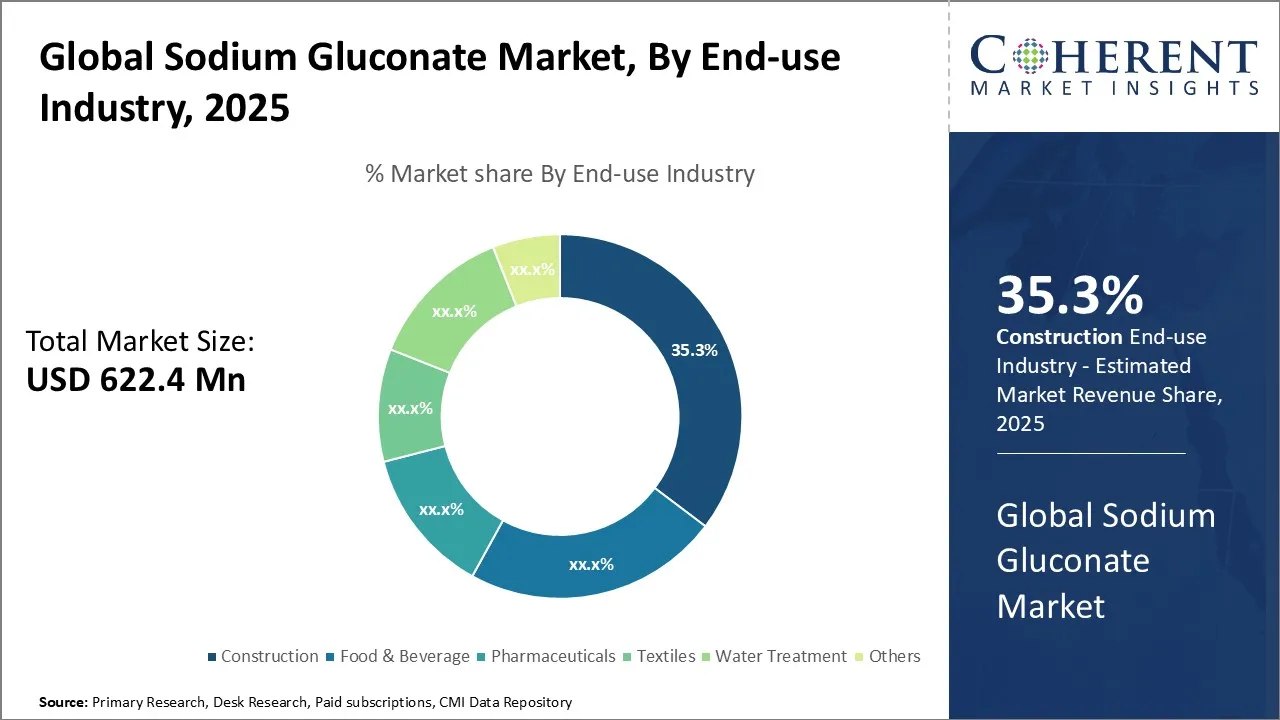
- The construction sector is expected to account for 36.3 % of the global sodium gluconate market in 2026.
- The powder segment is projected to hold a 42.5 % share of the market in 2026.
- Asia Pacific is set to lead the global sodium gluconate market in 2026 with a 37.2 % share. North America, with a 21.5% share, will be the fastest-growing region.
Market Overview
Current market trends indicate a rising preference for sustainable and biodegradable chelating agents, positioning sodium gluconate as a favorable alternative to conventional chemicals. Additionally, advancements in green chemistry and growing regulations against toxic additives are boosting its adoption. The construction sector’s expansion, particularly in emerging economies, further fuels demand due to sodium gluconate's effectiveness in concrete admixtures, enhancing durability and reducing corrosion. This alignment with environmental and industrial needs highlights a positive trajectory for the market.
Current Events and Its Impact
Current Events | Description and its impact |
Surge in Asia-Pacific Construction Projects |
|
Supply Chain Improvements and Market Rebound |
|
Segmental Insights
- Current Industry Events of 2026
- Market Size Estimation
- Regional Breakdown
- Competitive Landscape
- Customer Intelligence
- Segmental Analysis
- Pricing Analysis
- Key Market Drivers, Challenges & Future Trends
- Customized Insights Section
Sodium Gluconate Market Insights, By End-use Industry – Construction Segment Dominates Due to Its Extensive Demand for Effective Concrete Admixtures and Corrosion Prevention Agents
The construction segment is expected to hold 36.3% share of the global sodium gluconate market in 2026, due to its significant application as a concrete admixture. Sodium gluconate acts as an effective water-reducing agent and retarder in concrete, which improves workability, enhances durability, and prevents corrosion of steel reinforcements. The increasing global infrastructure development and urbanization have expedited the demand for high-quality construction materials, directly benefiting the sodium gluconate market in this sector.
One of the primary factors driving the segment growth is the compound's ability to improve concrete strength while reducing water content. This property is critically important in constructing durable structures, especially in regions with extreme weather conditions. Developers and contractors prefer materials that ensure longevity and reduce maintenance costs, and sodium gluconate meets these needs by preventing cracks, shrinkage, and corrosion-related damages.
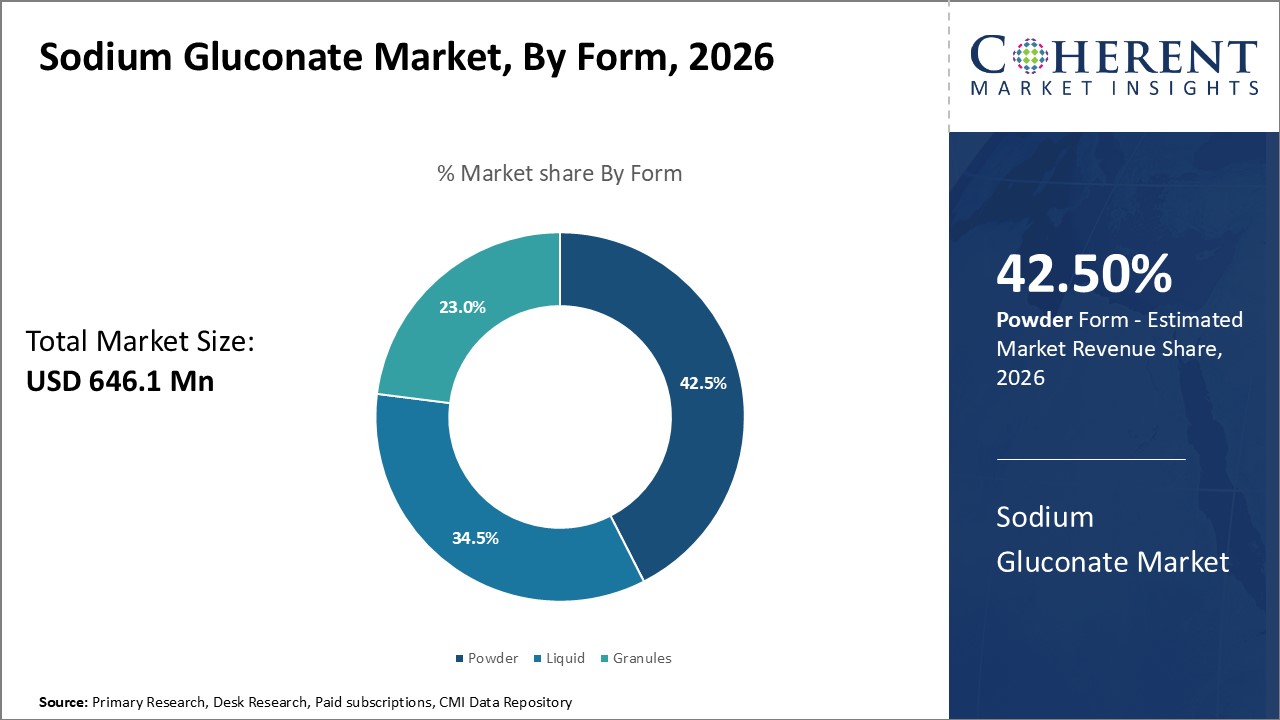
Sodium Gluconate Market Insights, By Form – Powder Segment Dominates Due to Its Ease of Handling, Longer Shelf Life, and Broad Industrial Applicability
The powder segment is expected to hold 42.5% share of the market in 2026, due to its versatility and convenience in multiple industrial applications. Powdered sodium gluconate is preferred for its stability and ease of transportation and storage, making it highly suitable for industries requiring precise dosing such as construction, pharmaceuticals, and food processing.
One major factor behind the powder segment’s growth is its longer shelf life compared to liquid forms. Being in a dry form, the powder is less prone to microbial contamination and chemical degradation, which makes it reliable for both immediate and long-term use. This aspect is crucial for industries like food and beverage, where ingredient purity and consistent quality are non-negotiable.
Regional Insights
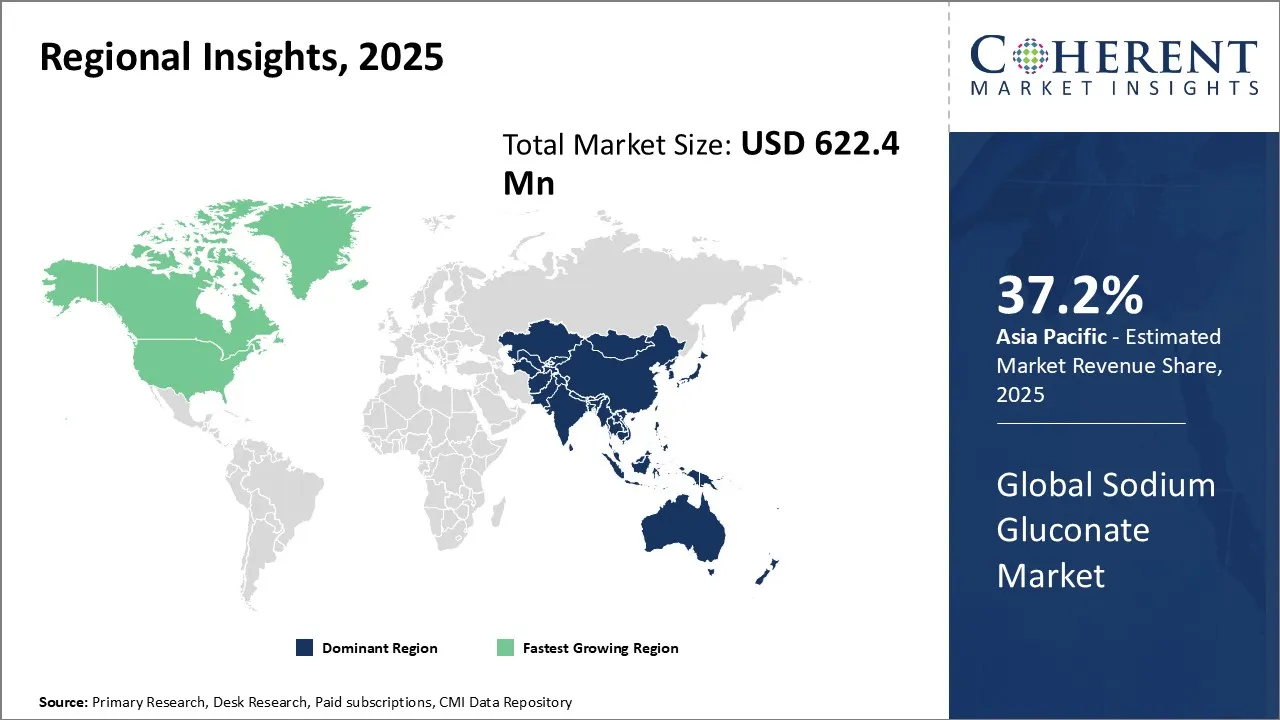
Asia Pacific Sodium Gluconate Market Analysis and Trends
The Asia Pacific region is projected to lead the market with a 37.2% share in 2026, due to the region's extensive industrial base and rapid urbanization. Countries like China and India have robust chemical manufacturing sectors, creating significant demand for sodium gluconate as a chelating agent, concrete admixture, and in cleaning products. Government initiatives aimed at fostering industrial growth and supporting innovation in the chemical sector further bolster the market.
Asia Pacific benefits from a well-established supply chain ecosystem, with numerous local manufacturers contributing to competitive pricing and widespread availability. Notable companies such as RX Chemicals are prominent players driving the regional market by focusing on product quality and expanding production capacities. Additionally, the export-oriented policies of several countries facilitate trade flows, positioning Asia Pacific as a hub for both consumption and distribution.
North America Sodium Gluconate Market Analysis and Trends
The North America region is expected to exhibit the fastest growth in the market contributing 21.5% share in 2026, driven by the region's strong presence in the construction and infrastructure sectors. The demand for sodium gluconate in concrete admixtures is particularly prominent, as the region focuses on enhancing the durability and performance of construction materials. The growing emphasis on sustainable building practices and green construction also contributes to the increasing adoption of sodium gluconate, given its environmentally friendly properties.
Government policies promoting infrastructure development and investments in renewable energy and industrial activities further boost market prospects. North America's advanced manufacturing capabilities, coupled with strong logistics and transportation networks, ensure efficient supply chain operations, facilitating the integration of sodium gluconate into global trade. Key players in the region, such as Cargill and The Dow Chemical Company, are also focusing on expanding their sodium gluconate product portfolios to cater to rising demand in diverse industrial sectors.
Sodium Gluconate Market Outlook for Key Countries
China Sodium Gluconate Market Trends
China’s sodium gluconate market is characterized by high production capacities supported by a vast chemical manufacturing infrastructure. The country benefits from government policies encouraging industrial innovation and expansions, fostering strong domestic consumption especially in construction and cleaning sectors. Major players like Anhui Xingzhou Pharma Co., Ltd. contribute significantly by enhancing quality standards and scaling operations for both domestic use and exports. The integration of advanced manufacturing technologies further strengthens China’s competitive edge in this market.
India Sodium Gluconate Market Trends
India's sodium gluconate market is expanding due to rapid urban development and industrialization, with a strong demand from sectors such as construction, textiles, and pharmaceuticals. Government initiatives focused on “Make in India” and infrastructure development boost market dynamics, encouraging local manufacturing and import substitution. The growing presence of multinational corporations also fosters competitive practices and market diversification in the country.
U.S. Sodium Gluconate Market Trends
The U.S. continues to lead in innovation and technological advancement within the sodium gluconate market. The demand is driven by industrial applications including food processing, pharmaceuticals, and construction. Regulatory frameworks emphasizing safety and environmental sustainability shape product development and manufacturing processes. Prominent companies such as Jungbunzlauer and BASF invest heavily in high-purity sodium gluconate production, catering both to domestic and international markets. The strong presence of research institutions accelerates product innovation and specialization.
Germany Sodium Gluconate Market Trends
Germany’s sodium gluconate market for sodium gluconate benefits from its sophisticated chemical manufacturing ecosystem and strong emphasis on environmental standards. Industrial use in construction and metal cleaning industries is prominent, supported by stringent government regulations promoting sustainable materials. Companies like Dr. Paul Lohmann GmbH & Co. KGaA play crucial roles by introducing high-performance sodium gluconate variants suited for advanced industrial applications. Germany’s position as a European trade hub also facilitates exports and cross-border market expansion within the EU.
U.A.E Sodium Gluconate Market Trends
The U.A.E’s sodium gluconate market is rapidly growing owing to its expansive construction and infrastructure projects fueled by government economic diversification plans. Its strategic position as a logistics and trade center enhances access to regional markets in Africa and Asia. Companies such as Emirates Chemical Industries and strategic partnerships with global manufacturers enable the country to meet growing demand efficiently. Investments in chemical manufacturing facilities along with favorable trade policies stimulate local production and import activities.
Macro and Micro factors affecting on Sodium Gluconate Market Growth
Macro Factors
- Economic Trends: Increasing global urbanization, rising infrastructure and construction projects, especially in emerging economies, drive significant demand for sodium gluconate as a concrete admixture. Investments in clean water and wastewater treatment projects also bolster demand.
- Regulatory Environment: Environmental regulations and consumer preferences for eco-friendly and sustainable products push manufacturers toward producing biodegradable and non-toxic sodium gluconate formulations.
- Raw Material and Supply Chain: Fluctuations in raw material prices (notably glucose), supply chain disruptions, and global geopolitical issues like conflicts make production costs volatile, affecting market stability.
- Technological Advances: Innovations in production processes improve product quality and enable the development of new applications, fostering market expansion.
- Global Events: Geopolitical tensions and economic slowdowns can impact production and demand patterns by disrupting trade and raw material availability.
Micro Factors
- Industry Demand: Construction remains the largest end-use industry, driven by sodium gluconate's role in improving concrete workability, strength, and setting time. Additional demand stems from food and beverage (as a flavor enhancer and stabilizer), pharmaceuticals, personal care, textiles, detergents, and metal surface treatment.
- Competition and Substitutes: Availability of alternative chemicals such as citric acid and phosphates, often at lower costs, increases competitive pressure. This can lead to pricing constraints and margin compression.
- Production Costs: High manufacturing costs due to fermentation-based production methods limit affordability and market penetration, particularly in cost-sensitive regions.
- Supply Chain and Logistics: Rising freight costs and transportation challenges affect the consistent supply of sodium gluconate, influencing overall market dynamics.
Market Players, Company Insights, and Competitive Intelligence
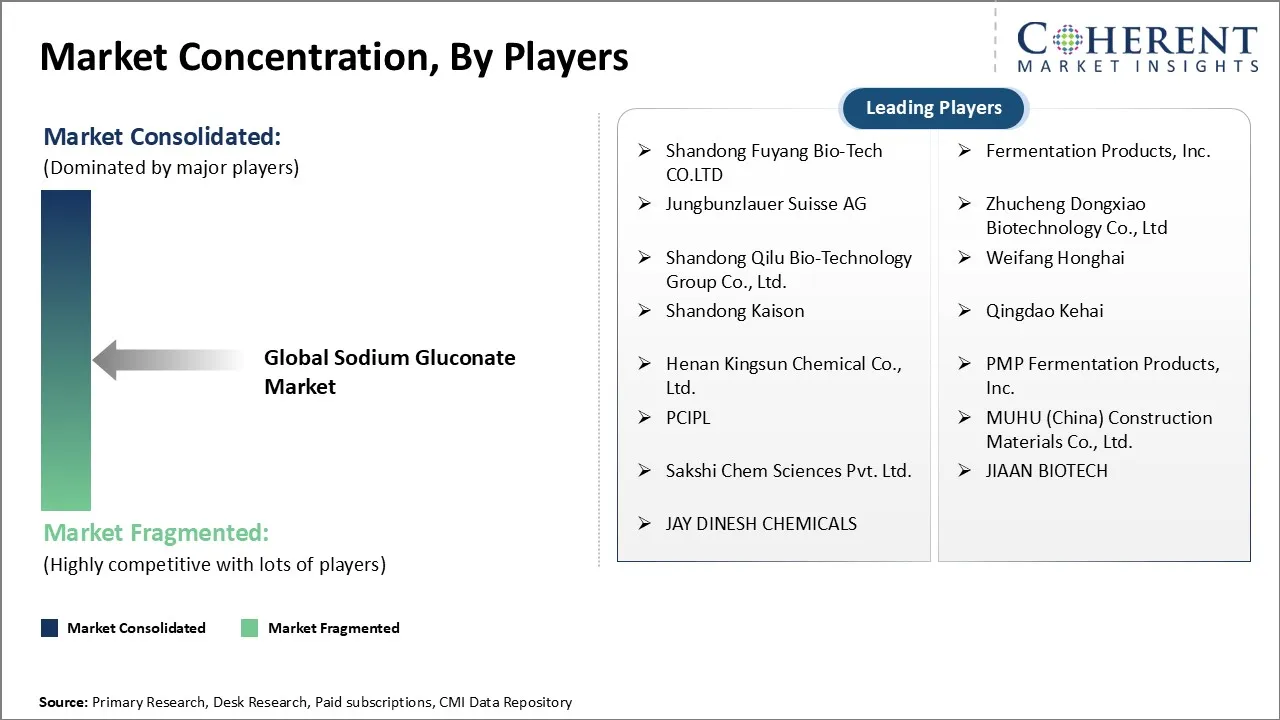
Company Insights
- PMP Fermentation Products is a prominent U.S.-based manufacturer specializing in gluconate derivatives, including sodium gluconate. This company plays a significant role in the global sodium gluconate market by offering high-quality, eco-friendly, and versatile products tailored for various industrial applications. Granular and Powdered Forms: These are ideal for applications requiring dry materials, such as cement admixtures, metal surface treatments, and cleaning formulations. The granular form offers excellent solubility and is non-corrosive and non-toxic.
- Prakash Chemicals International Pvt. Ltd. (PCIPL) is an Indian chemical company that offers sodium gluconate as part of its diverse product portfolio. Sodium gluconate is a sodium salt of gluconic acid, produced through the fermentation of glucose. It appears as a white to tan, granular to fine crystalline powder that is highly soluble in water. Notably, it is non-corrosive, non-toxic, and readily biodegradable (98% after 2 days), making it an increasingly popular choice as a chelating agent.
Top Strategies Followed by Global Sodium Gluconate Market Players
- Established market leaders invest significantly in research and development (R&D) to drive innovation and create high-performance sodium gluconate products. These companies focus on formulating advanced variants that meet evolving industry standards, such as enhanced chelating abilities and improved biodegradability, to address stringent environmental regulations and customer demands.
- For example, Roquette Frères, a global leader in starch-based products, has invested extensively in R&D to enhance the biodegradability and chelating capabilities of their sodium gluconate products, catering to the increasing demand for environmentally friendly solutions
- Mid-level companies in the sodium gluconate market primarily differentiate themselves through cost-effective offerings that strike a balance between quality and affordability. These players aim to capture price-sensitive segments, including small and medium-sized enterprises that require reliable yet economical raw materials for applications such as construction admixtures, food additives, and cleaning agents. To enhance competitiveness, mid-tier firms increasingly pursue collaborations with contract manufacturers and technology providers, enabling them to scale production capacities and improve product quality without overly burdening their investment budgets.
- For example, Henan Kingsun Chemical Co., Ltd. manufactures sodium gluconate to various industries, including food processing and pharmaceuticals, at competitive prices. It focuses on serving small and medium-sized enterprises (SMEs), especially in Asia Pacific, where companies seek reliable but affordable raw materials.
- Small-scale manufacturers approach the sodium gluconate market by carving out niche segments that allow them to compete effectively despite limited resources. Their strategy revolves around specialization through the development of innovative products tailored for specific industrial uses or compliance with unique certification requirements. Many small players adopt cutting-edge technologies such as green manufacturing processes and biotechnological synthesis methods to improve product differentiation and sustainability credentials.
- For example, Jungbunzlauer Suisse AG specializes in producing high-purity sodium gluconate tailored to pharmaceutical applications. This specialization allows them to cater to markets with more stringent product quality demands, such as personal care and food safety.
Market Report Scope
Sodium Gluconate Market Report Coverage
| Report Coverage | Details | ||
|---|---|---|---|
| Base Year: | 2025 | Market Size in 2026: | USD 646.1 Mn |
| Historical Data for: | 2020 To 2024 | Forecast Period: | 2026 To 2033 |
| Forecast Period 2026 to 2033 CAGR: | 3.8% | 2033 Value Projection: | USD 838.8 Mn |
| Geographies covered: |
| ||
| Segments covered: |
| ||
| Companies covered: | Shandong Fuyang Bio-Tech CO.LTD, PMP Fermentation Products, Inc., Jungbunzlauer Suisse AG, Zhucheng Dongxiao Biotechnology Co., Ltd, Shandong Qilu Bio-Technology Group Co., Ltd., Weifang Honghai, Shandong Kaison, Qingdao Kehai, Henan Kingsun Chemical Co., Ltd., PMP Fermentation Products, Inc., PCIPL, MUHU (China) Construction Materials Co., Ltd., Sakshi Chem Sciences Pvt. Ltd., JIAAN BIOTECH, and JAY DINESH CHEMICALS | ||
| Growth Drivers: |
| ||
| Restraints & Challenges: |
| ||
Sodium Gluconate Market Dynamics
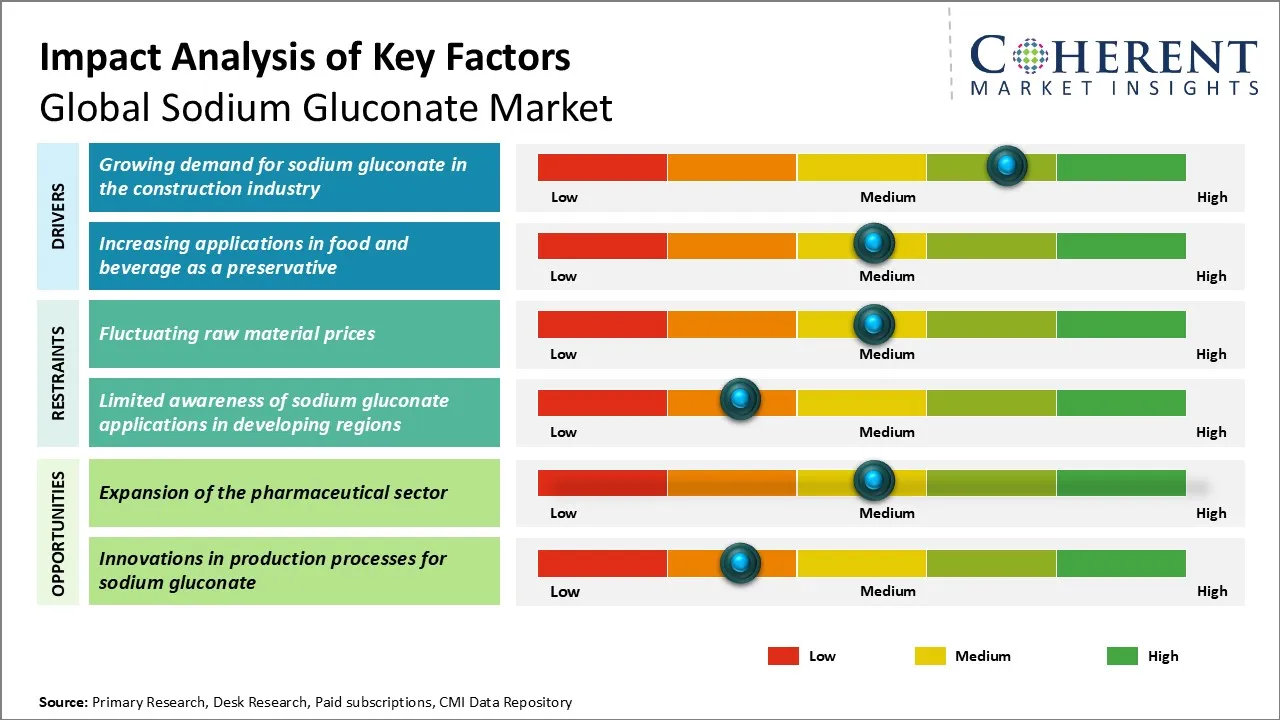
Sodium Gluconate Market Driver - Growing Demand for Sodium Gluconate in the Construction Industry
The construction industry’s increasing emphasis on enhancing the durability and performance of concrete has significantly driven the demand for sodium gluconate. As an effective concrete admixture, sodium gluconate acts as a powerful water reducer and set retarder, improving the workability and strength of concrete without compromising its curing time. This additive helps in reducing water content, thereby enhancing the density and longevity of concrete structures, which is crucial for infrastructure projects, commercial buildings, and residential developments.
For example, use of sodium gluconate in the construction of the Shanghai Tower in China, one of the tallest buildings in the world. By incorporating sodium gluconate, the concrete used in this project exhibited enhanced durability and resistance to cracking, which is essential for such large structures subjected to varying weather conditions and heavy loads.
Sodium Gluconate Market Opportunity - Expansion of the Pharmaceutical Sector
The global sodium gluconate market is poised to benefit significantly from the rapid expansion of the pharmaceutical sector, which presents a considerable growth opportunity. Sodium gluconate, known for its excellent chelating properties, acts as an essential additive in various pharmaceutical formulations, enhancing the stability and efficacy of medicinal products. With the increasing prevalence of chronic diseases and rising health awareness globally, pharmaceutical manufacturers are intensifying research and development activities to innovatively utilize excipients like sodium gluconate.
For instance, AbbVie utilizes sodium gluconate in the formulation of Humira, a medication used to treat autoimmune diseases, enhancing the product’s stability and ensuring its shelf life.
Analyst Opinion (Expert Opinion)
- The global sodium gluconate market is poised for substantial growth, fueled by its versatile applications in various industries, including food, pharmaceuticals, and construction. Insights from the International Conference on Food Additives and Ingredients (2023) and the Global Chemical Conference (2022) highlighted the increasing demand for sodium gluconate as a natural preservative and a stabilizing agent.
- Companies like Jungbunzlauer and Shandong Qilu Biotechnology are leading innovations in production methods, focusing on enhancing purity and sustainability. For instance, Jungbunzlauer's commitment to bio-based production processes not only meets regulatory requirements but also appeals to environmentally conscious consumers. Additionally, discussions at these conferences emphasized the growing trend of clean label products, with sodium gluconate serving as a favorable alternative to synthetic additives.
- As industries seek to improve product quality and safety, the market for sodium gluconate is expected to expand further. Companies that invest in research and development while addressing sustainability concerns will likely gain a competitive edge. Ultimately, the future of the sodium gluconate market will hinge on its ability to adapt to evolving consumer preferences and regulatory landscapes.
Speak to the analyst
Want personalized insights?
Take the findings above to one of our principal consultants, or have the report rebuilt around the segments, geographies and competitors you actually track.
Market Segmentation
- End-use Industry Insights (Revenue, USD Mn, 2021 - 2033)
- Construction
- Food & Beverage
- Pharmaceuticals
- Textiles
- Water Treatment
- Others
- Form Insights (Revenue, USD Mn, 2021 - 2033)
- Powder
- Liquid
- Granules
- Regional Insights (Revenue, USD Mn, 2021 - 2033)
- North America
- U.S.
- Canada
- Latin America
- Brazil
- Argentina
- Mexico
- Rest of Latin America
- Europe
- Germany
- U.K.
- Spain
- France
- Italy
- Russia
- Rest of Europe
- Asia Pacific
- China
- India
- Japan
- Australia
- South Korea
- ASEAN
- Rest of Asia Pacific
- Middle East
- GCC Countries
- Israel
- Rest of Middle East
- Africa
- South Africa
- North Africa
- Central Africa
- North America
- Key Players Insights
- Shandong Fuyang Bio-Tech CO.LTD
- PMP Fermentation Products, Inc.
- Jungbunzlauer Suisse AG
- Zhucheng Dongxiao Biotechnology Co., Ltd
- Shandong Qilu Bio-Technology Group Co., Ltd.
- Weifang Honghai
- Shandong Kaison
- Qingdao Kehai
- Henan Kingsun Chemical Co., Ltd.
- PMP Fermentation Products, Inc.
- PCIPL
- MUHU (China) Construction Materials Co., Ltd.
- Sakshi Chem Sciences Pvt. Ltd.
- JIAAN BIOTECH
- JAY DINESH CHEMICALS
Sources
Primary Research Interviews
- R&D Director – Leading Sodium Gluconate Manufacturer
- Procurement Manager – Major Chemical Distributor (specializing in food additives)
- Product Development Head – Well-Known Construction Chemical Brand
- Sustainability Manager – Certification Body for Green Construction Materials
Stakeholders
- Manufacturers
- End-use Sectors:
- Construction (concrete admixtures)
- Food & Beverage (chelator and stabilizer)
- Pharmaceuticals (medicine formulation, renal care)
- Personal Care & Cosmetics
- Regulatory & Certification Bodies (e.g., FDA, European Commission, BIS, China Food Additives Association)
- E-commerce Platforms & Chemical Retailers
- Technology Integration Companies (digital supply chain, product traceability)
Databases
- UN Comtrade Database
- India Import Export (EXIM) Database
Magazines
- Chemical Market Reporter – Pricing and demand analysis in sodium gluconate
- Global Construction Review – Trends in concrete admixtures
- Food Ingredients First – Functional food additives trends
- Pharma Ingredients Journal – Sodium gluconate applications in medicine
- Nutrition & Wellness Magazine – Sodium gluconate in supplementation
Journals
- International Journal of Chemical Engineering – Applications in construction admixtures
- Journal of Food Science & Technology – Sodium gluconate’s chelating role in food products
- Journal of Applied Polymer Science – Role in polymer modification and detergents
- Food Research International – Safety, absorption, and efficacy in food uses
Newspapers
- The Financial Times – Market growth and investment in chemical additives
- The Guardian – Regulatory moves and green chemistry in construction
- Asia Chemical Journal – Sodium gluconate manufacturing in China and APAC
- European Chemical News – Regulatory trends impacting food and pharma chemicals
Associations
- European Chemical Industry Council (Cefic)
- American Chemical Society (ACS)
- Indian Chemical Council (ICC)
- China Food Additive Association (CFAA)
Public Domain Sources
- FDA – Food additive regulations for sodium gluconate
- European Commission – E-number and food supplement guidelines
- World Health Organization – Safety assessments of sodium gluconate
- OECD – Chemical safety and environmental regulations
- Bureau of Indian Standards (BIS) – Product standards for Indian market
Proprietary Elements
- CMI Data Analytics Tool, Proprietary CMI Existing Repository of information for last 8 years.
Get access to 250+ pages report
Every segment, forecast, competitor profile and data table behind the analysis above — available for instant download.
- ESOMAR Member
- ISO 9001:2015 Certified
- D-U-N-S Registered
- GDPR & CCPA Compliant
Missing comfort of reading report in your local language? Find your preferred language:
Transform your Strategy with Exclusive Trending Reports
Frequently Asked Questions
The global sodium gluconate market is estimated to be valued at USD 646.1 Mn in 2026 and is expected to reach USD 838.8 Mn by 2033.
The CAGR of global sodium gluconate market is projected to be 3.8% from 2026 to 2033.
Growing demand for sodium gluconate in the construction industry and increasing applications in food and beverage as a preservative are the major factors driving the growth of the global sodium gluconate market.
Fluctuating raw material prices and limited awareness of sodium gluconate applications in developing regions are the major factors hampering the growth of the global sodium gluconate market.
In terms of End-use Industry, Construction is estimated to dominate the market revenue share in 2026.
Sodium gluconate should be stored in a cool, dry place, away from moisture, direct sunlight, and high temperatures, in its original, tightly sealed packaging.
The shelf life of sodium gluconate is typically around 2 to 3 years when stored in a cool, dry place in its original, unopened packaging.