
SPERM COUNT TEST MARKET SIZE AND SHARE ANALYSIS - GROWTH TRENDS AND FORECASTS (2026 - 2033)
Sperm Count Test Market, By Offering (Product (Home Based Testing Kits, Diagnostic Devices, Laboratory Testing Services) and Software), By Test Type (Semen Analysis, Sperm Motility Test, Sperm Morphology Test, and Sperm DNA Fragmentation Test), By Age Group (35-40 Years, 41 Years and Above, and 34 and Below 34 Years), By End User (Fertility Centers, Diagnostic Laboratories, Hospitals, Forensic Laboratories, and Others (Academic and Research Institutes and Others)), By Geography (North America, Europe, Asia Pacific, Latin America, Middle East, and Africa)
- Published In : 24 Mar, 2026
- Code : CMI6427
- Page number : 168
- Formats :
Excel and PDF
- Industry : Clinical Diagnostic
- Historical Range : 2020 - 2024
- Base Year : 2025
- Estimated Year : 2026
- Forecast Period : 2026 - 2033
Global Sperm Count Test Market Size and Forecast – 2026 to 2033
The global sperm count test market is estimated to be valued at USD 2,439.6 Mn in 2026 and is expected to reach USD 3,323.8 Mn by 2033, exhibiting a compound annual growth rate (CAGR) of 6.3% from 2026 to 2033. This steady growth can be attributed to increasing awareness around male fertility issues, rising infertility rates, and advancements in diagnostic technologies that enable more accurate and accessible sperm count testing worldwide.
Key Takeaways of the Global Sperm Count Test Market
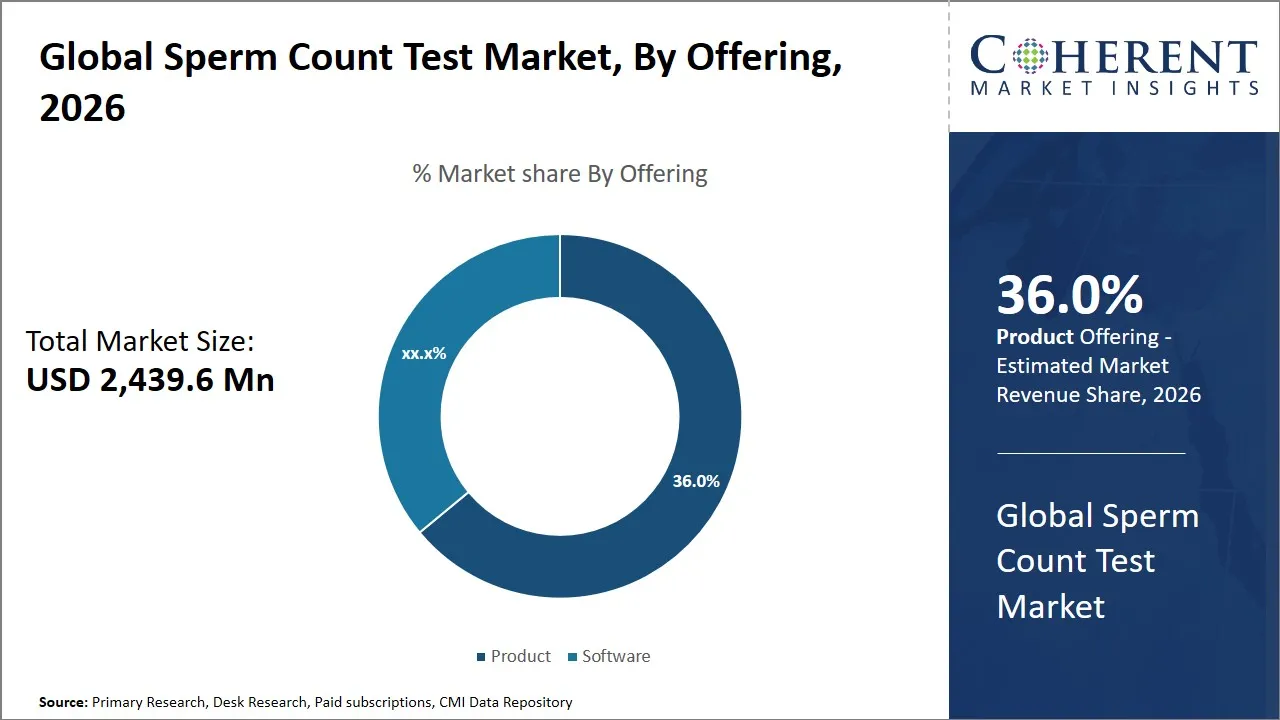
- Product segment is expected to lead the global sperm count test market, capturing 36.0% share in 2026.
- Semen analysis segment is estimated to represent 36.7% of the global sperm count test market share in 2026.
- 35-40 years segment is projected to dominate with 45.0% of the global sperm count test market share in 2026.
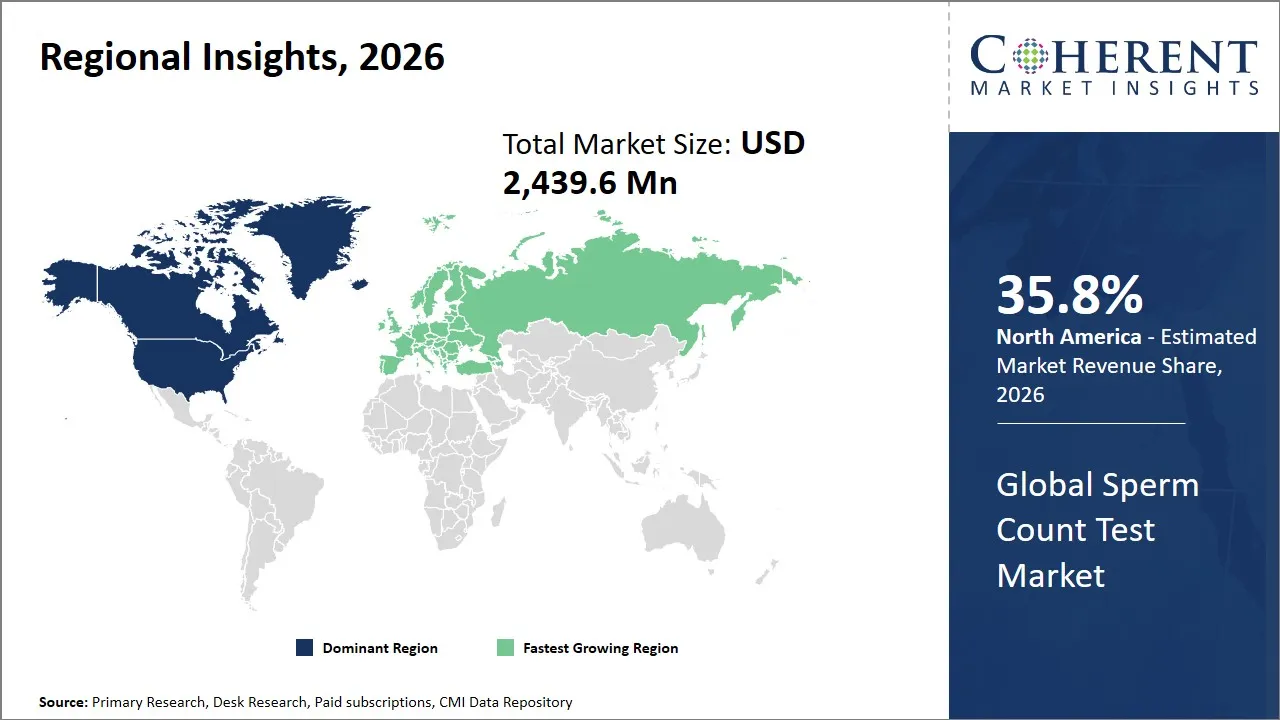
- North America is expected to lead the market, holding a share of 35.8% in 2026. Europe is anticipated to be the fastest-growing region, with 28.7% share in 2026.
Market Overview
- The global sperm count test market is fundamentally driven by the high global burden of infertility. WHO states that about 1 in 6 people of reproductive age experience infertility in their lifetime, which keeps semen analysis relevant as a core first line diagnostic tool in male fertility assessment.
- The market is shifting from purely lab-based testing toward home based, smartphone enabled, and app connected platforms.
- A major growth opportunity lies in earlier screening and wider consumer access. Home testing products can bring in men who may avoid clinic visits because of stigma, cost, or convenience, which expands the addressable market beyond traditional fertility treatment settings. This is where digital platforms have a real edge.
- The market benefits from repeat testing rather than one time utilization. Current male infertility guidance continues to position semen analysis as part of the initial evaluation, and abnormal findings often require follow up testing, which supports recurring demand across fertility clinics, andrology labs, and urology settings.
Currents Events and their Impact
|
Current Events |
Description and its Impact |
|
Rising adoption of home-based and app-connected sperm testing |
|
|
Stronger clinical focus on male infertility evaluation |
|
Uncover macros and micros vetted on 75+ parameters: Get instant access to report
Why Does the Product Segment Dominate the Global Sperm Count Test Market in 2026?
The product segment is expected to hold the largest market share of 36.0% in 2026, driven by a growing consumer preference for direct-access testing solutions that offer privacy, convenience, and real-time results. Home-based tests kits have gained significant popularity, owing to the growing awareness of male infertility in addition to the growing urge of the male population to test their reproductive health without stepping to the clinic in the immediate future. Privacy to carry out tests helps in the eradication of cultural stigma and social unwillingness towards fertility issues, which will advance more men to undertake routine sperm health checks.
There are also diagnostic tools that advance this market even further, offering more advanced and accurate diagnostic tools and can include digital technology like smartphone connectivity and AI analysis. These machines can achieve a higher accuracy than the conventional techniques and also, they can easily trace the changes over time. There are new cellular devices to measure sperm in a smaller area, thereby providing services to a broader population. Implementing software in these products is also an addition to user experience by making interpretation easier and provides personal advice based on outcome.
For instance, in April 2025, China BaseCare Medical officially unveiled its portable home sperm quality analyzer, marking the launch of one of the first consumer-facing at-home sperm testing devices in China. The company confirmed that the device had secured regulatory approval and was designed to deliver lab-grade sperm analysis within 15 seconds using built-in imaging and advanced algorithms.
Why Does the Semen Analysis Segment Dominate the Global Sperm Count Test Market in 2026?
The semen analysis segment is expected to hold 36.7% of the market share in 2026, as it offers a holistic view of male reproductive health by assessing various parameters such as sperm concentration, motility, volume, and morphology. It forms the basis of most fertility assessments and it gives very important information to both the patients and the clinicians concerning the cause of infertility or subfertility.
The market share of semen analysis is mainly reported to have been motivated by the widespread clinical acceptance of semen analysis. It is considered to be the standard first-line diagnostic instrument, which is usually followed by more specific tests in case the preliminary results indicate some abnormalities. Its capability of providing reproducible and actionable information aids in treatment planning and decision making in assisted reproductive technologies (ART), which has made its determination of wide application in fertility clinics across the world.
For instance, in May 2025, Bonraybio received U.S. FDA 510(k) clearance for the LensHooke X3 PRO SE Semen Quality Analyzer, a self-testing diagnostic system for human semen analysis used with the LensHooke Semen Test Cassette. The device is designed for at home semen analysis and provides direct and calculated measurements for sperm concentration, total motility, progressive motility, non-progressive motility, immotility, morphology, and pH value.
(Source - U.S. FDA)
The 35-40 Years Segment Dominates the Global Sperm Count Test Market
The 35-40 years segment is expected to hold the largest market share of 45.0% in 2026, as this demographic increasingly prioritizes fertility health amid social and biological considerations. Late childbearing has been a sharp trend all across the world where a couple prefers to have children later on because of their career interests, financial concepts, and lifestyle preferences. Such a delay increases the sensitivity to the possible fertility issues, prompting men of this age group to actively determine the quality of their sperm and their reproductive health.
Males between 35 and 40 experience natural decreases in sperm parameters such as decreased motility, increased fragmentation of DNA, which increases concern and the demand of the tests in this age group. This age susceptibility leads to the adoption of sperm count tests as a form of preventive action before conception efforts are made to make sure couples are in a position to detect and remedy any problems at an early stage.
Moreover, primary caregivers recommend more and more reproductive screenings as a preventive measure among men belonging to this population as a part of an overall wellness check, which is in line with preventive care theories.
Fertility Care Pathway Insights for the Global Sperm Count Test Market
- Percentage of IVF and ART Cycles Requiring Sperm Analysis- Sperm tests are still used in the vast majority of IVF and ART cycles utilizing partner sperm, as it is one of the initial diagnostic tests in the evaluation of male fertility. According to clinical advice on ASRM, early male infertility diagnosis should include a semen analysis (1-3) and therefore, sperm testing is an integral aspect of treatment planning prior to IVF or ICSI. Market wise, this makes sperm count testing a good standing in the fertility care pathway, as the demand is not only dependent on diagnosis, but also on the choice of treatment and lab preparation preceding the assisted reproduction procedures.
- Role of Sperm Testing in Pre IVF Diagnostics vs Post Vasectomy Monitoring- Sperm testing is done before IVF to determine the level of concentration, motility and morphology and thus a decision on whether the patient is to be supported to conceive naturally, by IUI, IVF or by ICSI can be made. Post vasectomy follow up is also of relevance, but it is the smaller follow up part in which the primary objective is to ascertain the success of the procedure after vasectomy by testing the semen. It implies that pre-treatment fertility testing generates more widespread and more repetitive commercial demand whereas the post vasectomy test generates a smaller but more stable volume base.
- Number of Repeat Tests per Patient During Fertility Treatment- Repeat testing is the norm in the fertility treatment arena and the market cannot be considered as a single test per patient market segment. According to ASRM, male infertility assessment must entail a single or numerous seminars, whereas European standards suggest at minimum two sequential tests whenever the initial finding is pathological. Practically, repeat tests need to be taken quite frequently since sperm parameters could change over time and they might require re-evaluation after a treatment, lifestyle change, or prior to transitioning to more advanced fertility treatments. Such a pattern of repeat utilization enhances demand of long-term testing in fertility clinics and diagnostics.
Regional Insights
To learn more about this report, Download Free Sample
North America Sperm Count Test Market Analysis and Trends
The North America region is projected to lead the market with a 35.8% share in 2026, driven by a robust healthcare infrastructure, high awareness regarding male infertility, and widespread availability of advanced diagnostic facilities. The region enjoys great healthcare technology investments and active partnerships between the government and the business section that strengthens research and development.
The market ecosystem is further reinforced by favorable government policies in support of reproductive health, and more funds in research of infertility cases. The existence of the major players in the industry, including CooperSurgical, Inc., and Natera, Inc., strengthens the presence of competitive dynamics due to the ongoing innovations and strategic partnerships.
For instance, in November 2025, Femasys partnered with Medical Electronic Systems to launch the FemSperm Analysis Kit for use with FemaSeed, expanding in-office sperm analysis and fertility testing capabilities for gynecologists in the U.S. markets.
(Source - Femasys)
Europe Sperm Count Test Market Analysis and Trends
The Europe region is expected to exhibit the fastest growth in the sperm count test market contributing 28.7% share in 2026, developing on the back of stronger male infertility awareness, established clinical use of semen analysis, and gradual adoption of digital and home-based testing tools. Seminal analysis in Europe is a fundamental component of male fertility assessment taking place within the confines of European Association of Urology, which validates stable demand among fertility clinics, hospitals, and andrology laboratories.
Meanwhile, the market is becoming accessible to newer smartphone assisted and apps linked testing formats, and is indicative of a broader expansion into more affordable and privacy conscious fertility screening. Europe in general is a clinically oriented market although the next developmental aspect will be through integration of laboratory credibility and easy to use consumer facing tests.
For instance, in October 2025, Sapyen launched its at-home male fertility testing kit in the U.K., allowing men to collect samples at home and send them to a laboratory for semen analysis. The product is relevant to the Europe sperm count test market because it expands access to clinical-grade sperm testing in a major European market and uses its SPX72 medium to preserve sperm viability for up to 72 hours during transit.
(Source - MedTech innovator)
Global Sperm Count Test Market Outlook for Key Countries
How is the U.S. Helping in the Growth of the Sperm Count Test Market?
The U.S sperm count test market is leading the pack in both the wide availability of technologically advanced sperm count test kits as well as high consumer awareness on male infertility. Such leading companies as CooperSurgical or Natera are constantly providing new innovative molecular and automated analysis solutions, which have a significant effect on the market. Patient access to testing is also stimulated by government support in terms of health insurance coverage enhancement and fertility treatment funding programs. U.S. has the advantage of having a highly developed network of fertility clinics and reproductive health professionals, and it is the country with one of the most developed sperm diagnostic environments in the world.
How is Germany Helping in the Growth of the Sperm Count Test Market?
The market of Germany is featured by the developed healthcare system and the high level of acceptance of the male infertility diagnostics with the help of the complete health insurance plans. These companies as such as DRK-Blutspenden-Dienst and Mediagnost, Inc. have allowed the availability of high quality and reliable ways of testing sperm count. The market trust is reinforced by government regulation that focuses on quality control and privacy of data in medical diagnostics. The position of Germany as a center of medical device innovation and a high level of export-import trade balance in the healthcare industry makes it a dominant player in the region in Europe.
Key Drivers for the Growth of the Brazil Sperm Count Test Market
The sperm count test market is also expanding in Brazil with more male population being aware of their reproductive health and better access to healthcare. Demand is directly supported by the healthcare policies of the government in increasing the coverage of fertility treatment by the government health programs. The multinational corporations are collaborating with local companies to introduce high-technology and cost-effective sperm diagnostic technologies to capture the urban and rural market segments. The rapid growth of fertility clinics and diagnostic laboratories in Brazil is an indicator of a dynamic market that is reacting to the changing social norms and the better appreciation of male infertility.
China Sperm Count Test Market Trends
The Asia Pacific sperm count test market is still dominated by China with the government efforts to counter the decreasing birth rates and the issues of male infertility attributed to environmental and lifestyle factors. The major investments in the healthcare infrastructure and regulatory reforms that promote innovation in medical devices help to expand the market. Chinese giant corporations and multinational corporations are involved in partnership to create a localized sperm count testing to be affordable and in line with the high domestic standards. The rapidly growing adoption rates in urban and semi-urban regions are based on the evolving consumer consciousness and the proliferation of fertility clinics.
Digital Health and Tele Andrology Trends in the Global Sperm Count Test Market
- Telehealth Fertility Consultations Involving Male Testing- Telehealth is becoming a highly valued access point of male fertility assessment especially during first interactions, follow up conversations, and semen analysis results. With fertility care becoming increasingly digitally organized, starting to become a more digitally coordinated approach, male testing is increasingly becoming a part of virtual care pathways and not an offline procedure. This is assisting access to fertility testing, enhance early interaction in male patients and aid in moving more quickly between consult and diagnostic decision making.
- Integration of AI Based Sperm Analysis Tools- AI based sperm analysis devices are enhancing the speed, uniformity and scalability of semen evaluation in fertility and andrology practices. More standardized measurement of parameters like the sperm concentration, motility and morphology have been supported by the technology, eliminating the need to rely on a complete manual interpretation process. Market-wise, this enhances the value of the advanced diagnostic systems by enhancing the efficiency in workflow and facilitating more accurate results of tests in large-scale clinical settings.
- Adoption of App Connected Sperm Testing Devices- App connected sperm testing devices are also becoming popular since they help to make fertility screening more affordable, confidential and repeatable. These applications are aiding in the transformation of sperm testing where the users are able to interact with testing in a more accessible and friendly manner, as opposed to the conventional clinics. This trend is broadening the consumer base, justifying previous fertility screening and driving the market to more digitally empowered and patient focused diagnostic solutions.
Market Players, Key Developments, and Competitive Intelligence
To learn more about this report, Download Free Sample
Key Developments
- In October 2025, ExSeed Health announced expansion of its AI-powered home sperm testing device and app platform in Europe and select global markets, improving real-time sperm analysis and digital fertility tracking.
- In February 2025, Hamilton Thorne announced the 2025 edition of its external quality control program for SCA and SCA SCOPE computer assisted semen analysis systems, aimed at improving consistency and reliability in semen analysis workflows. This matters because accuracy and standardization are major competitive factors for established sperm testing system manufacturers.
- In November 2024, Medical Electronic Systems Ltd. received U.S. FDA 510(k) clearance for the YO Home Sperm Test (K241628), a smartphone-based semen analysis device intended for lay users.
Top Strategies Followed by Global Sperm Count Test Market Players
|
Player Type |
Strategic Focus |
Examples |
|
Established Market Leaders |
Established players in the global sperm count test market stay ahead by investing in R&D, improving test accuracy, and adding digital capabilities such as automated analysis and app connectivity. They also strengthen their position through partnerships with fertility clinics, healthcare providers, and technology firms, while expanding distribution into emerging markets where male fertility awareness is rising. |
On November 4, 2024, Suzhou Basecare Medical announced the market launch of its Intelligent Sperm Analyzer (BKA210) after receiving NMPA approval in China. The product uses AI to analyze live unstained sperm and assess parameters such as morphology, concentration, and vitality more quickly than traditional CASA based workflows. |
|
Mid-Level Players |
Mid-level players compete by offering reliable sperm testing solutions at a more affordable price point, which helps them attract cost conscious users and clinics that want quality without premium pricing. They usually strengthen their position through partnerships with research groups, fertility specialists, or regional channels to improve service reach, scale operations, and add credibility without spending like top tier players. |
In October 2024, Legacy partnered with Posterity Health to expand access to male fertility care across the U.S. Under the partnership, Legacy provided at home sperm testing, including baseline semen analysis, while Posterity Health added specialist evaluation and treatment through telehealth and in person care. |
|
Small-Scale Players |
Small scale players compete by targeting niche user needs with more specialized and flexible sperm testing solutions. They usually differentiate through smartphone compatibility, AI driven analysis, or user-friendly designs that appeal to privacy conscious and tech-oriented consumers, while relying on local partnerships and focused regional outreach to build credibility faster than larger firms. |
ExSeed Health is a good example of this strategy. The company built its position around a smartphone based at home sperm testing platform that combines semen analysis with app- based guidance and personalized fertility support, showing how smaller players can stand out through focused innovation rather than scale. |
Uncover macros and micros vetted on 75+ parameters: Get instant access to report
Market Report Scope
Sperm Count Test Market Report Coverage
| Report Coverage | Details | ||
|---|---|---|---|
| Base Year: | 2025 | Market Size in 2026: | USD 2,439.6 Mn |
| Historical Data for: | 2020 To 2024 | Forecast Period: | 2026 To 2033 |
| Forecast Period 2026 to 2033 CAGR: | 6.3% | 2033 Value Projection: | USD 3,323.8 Mn |
| Geographies covered: |
|
||
| Segments covered: |
|
||
| Companies covered: |
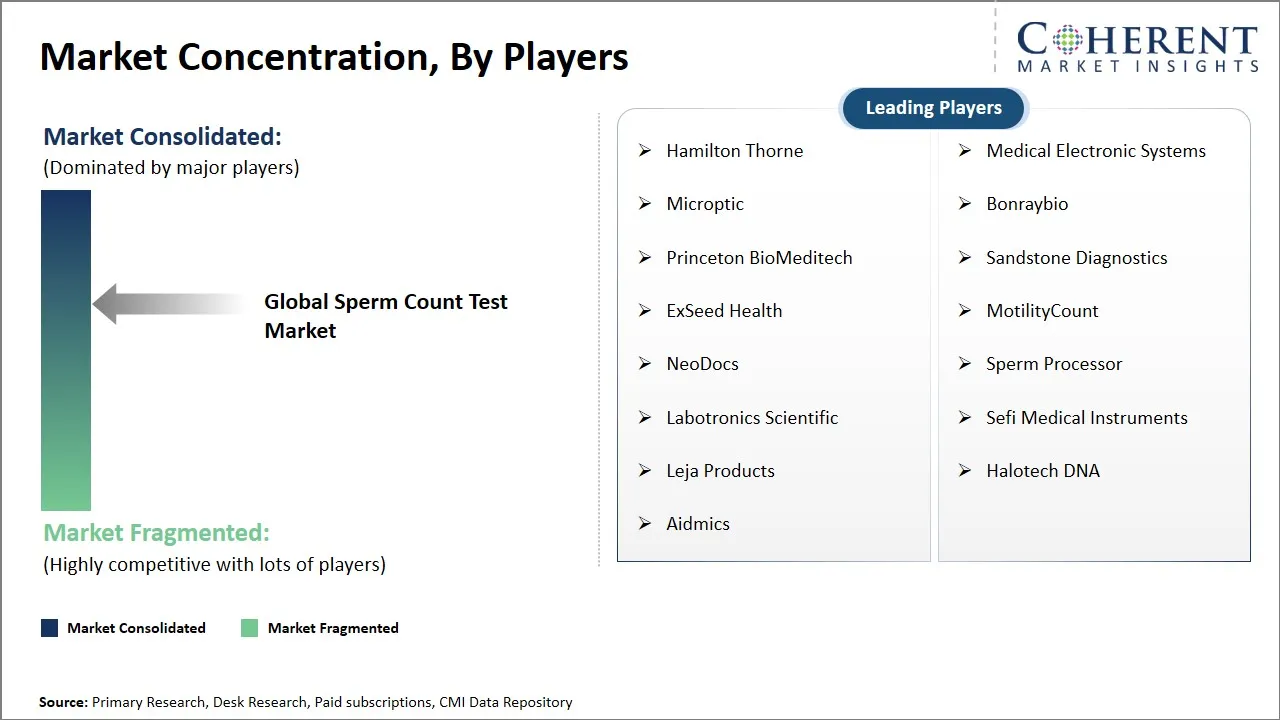
Hamilton Thorne, Medical Electronic Systems, Microptic, Bonraybio, Princeton BioMeditech, Sandstone Diagnostics, ExSeed Health, MotilityCount, NeoDocs, Sperm Processor, Labotronics Scientific, Sefi Medical Instruments, Leja Products, Halotech DNA, and Aidmics |
||
| Growth Drivers: |
|
||
| Restraints & Challenges: |
|
||
Uncover macros and micros vetted on 75+ parameters: Get instant access to report
Global Sperm Count Test Market Dynamics
To learn more about this report, Download Free Sample
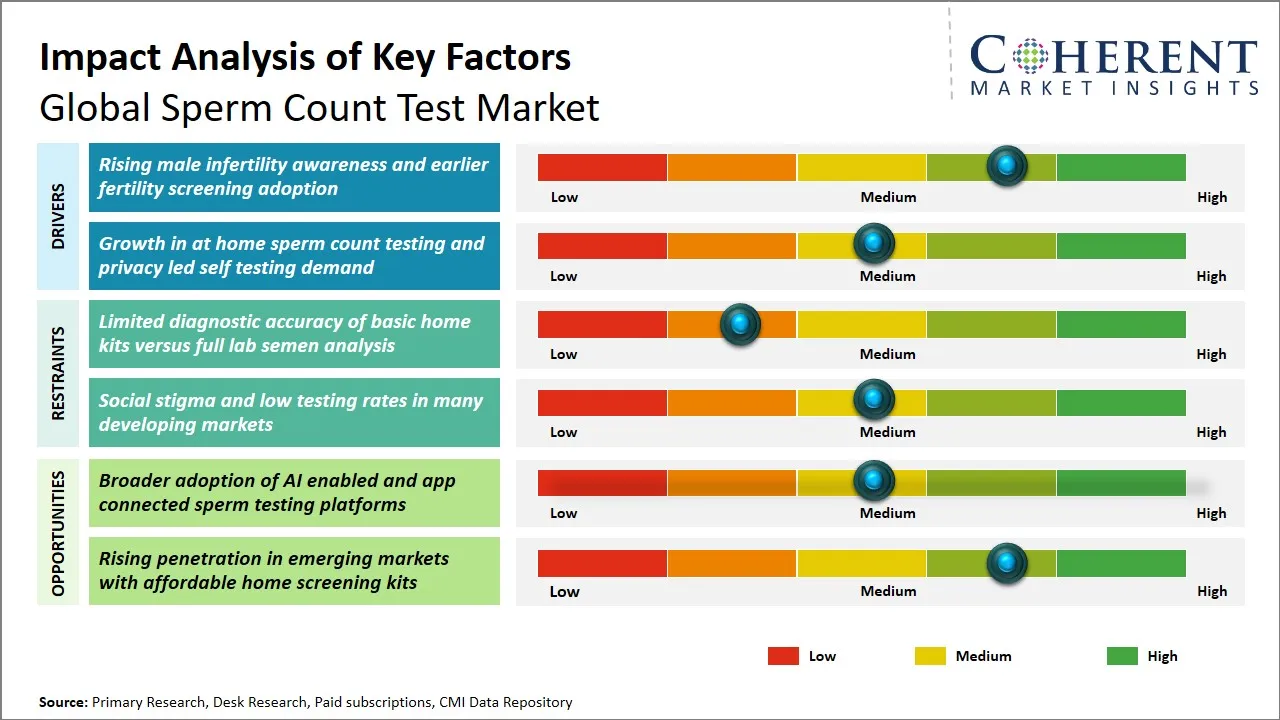
Global Sperm Count Test Market Driver - Rising Male Infertility Awareness and Earlier Fertility Screening Adoption
The awareness on the subject of male infertility has gone drastically over the past years and this has led to the demand for sperm count testing. The change in society and awareness about reproductive health has led to the men coming out to establish their fertility stand rather than respond when women have difficulties conceiving. A cultural shift of age of fertility check has been observed to accompany this heightened awareness often as an end of preconception planning or a routine check-up. The men are even being educated about the factors that can affect the quality of sperm such as lifestyle, exposure to environmental factors, and illnesses that might need immediate testing. Besides, medical professionals have been increasingly prescribing sperm count tests in order to identify potential fertility issues at the earliest possible stage so as to be able to administer medical treatment or change lifestyles in good time.
For instance, in January 2023, BUZUD launched its Male Fertility Sperm Test for self-testing, introducing cassette and strip based at home sperm screening kits aimed at making early male fertility checks more accessible and convenient. The company positioned the product as a fast and private self-test that users can perform at home, which directly aligns with the trend of rising male infertility awareness and earlier fertility screening adoption.
(Source- BUZUD)
Global Sperm Count Test Market Opportunity - Broader Adoption of AI-Enabled and App-Connected Sperm Testing Platforms
The global sperm count test market will undergo a substantial increase due to the increased use of AI-based and application-linked sperm testing interfaces. These state-of-the-art technologies provide greater precision, real time data analysis, and individualized results, overcoming some of the drawbacks of the conventional sperm testing systems. The algorithms of AI can process huge amounts of data in a short time, revealing patterns and anomalies that would otherwise go unnoticed by the human eye, thus enhancing the accuracy of the diagnosis and allowing to detect the problem of male infertility earlier.
The ability to integrate with mobile applications also enables more powerful consumers offering convenient and user-friendly interfaces that can be used to conduct tests at home and constantly monitor the results. This convenience can remove the hindrances of stigma and inconvenience among the population, influencing a greater number of people to participate in routine reproductive health evaluation.
Analyst Opinion (Expert Opinion)
- The sperm count test market is expanding globally as male infertility is gaining increasing attention and semen analysis is still one of the earliest tests applied in fertility testing. WHO estimates that approximately 1 out of every 6 individuals become infertile at some point in their lifetime, and this continues to give high demand to both laboratory and home-based sperm testing solutions. It is also being enhanced by the improved digital tools, AI enabled analysis and easy at home testing formats, such as in the U.S. FDA approved YO Home Sperm Test 3.0 in November 2024. The additional opportunity is broader access by using private, less expensive and faster screening whereas the fundamental problem remains accuracy and the necessity to meet clinical lab standards.
- Recent activities, including the ESHRE annual meetings and IFFS World Congress 2025, have ensured that the issue of male fertility diagnostics remains in the limelight by facilitating scientific and clinical discourse as well as policy debate, including sessions associated with the Tokyo Declaration. These forums are important in the sense that they will shift the sperm testing into a localized laboratory to a more overt reproductive health dialogue. Generally, the market picture is bright, although it is the companies that will be able to integrate convenience with clinical credibility and win.
Market Segmentation
- Offering Insights (Revenue, USD Mn, 2021 - 2033)
- Product
- Home Based Testing Kits
- Diagnostic Devices
- Laboratory Testing Services
- Software
- Product
- Test Type Insights (Revenue, USD Mn, 2021 - 2033)
- Semen Analysis
- Sperm Motility Test
- Sperm Morphology Test
- Sperm DNA Fragmentation Test
- Age Group Insights (Revenue, USD Mn, 2021 - 2033)
- 35-40 Years
- 41 Years and Above
- 34 And Below 34 Years
- End User Insights (Revenue, USD Mn, 2021 - 2033)
- Fertility Centers
- Diagnostic Laboratories
- Hospitals
- Forensic Laboratories
- Others (Academic and Research Institutes and Others)
- Regional Insights (Revenue, USD Mn, 2021 - 2033)
- North America
- U.S.
- Canada
- Latin America
- Brazil
- Argentina
- Mexico
- Rest of Latin America
- Europe
- Germany
- U.K.
- Spain
- France
- Italy
- Russia
- Rest of Europe
- Asia Pacific
- China
- India
- Japan
- Australia
- South Korea
- ASEAN
- Rest of Asia Pacific
- Middle East
- GCC Countries
- Israel
- Rest of Middle East
- Africa
- South Africa
- North Africa
- Central Africa
- North America
- Key Players Insights
- Hamilton Thorne
- Medical Electronic Systems
- Microptic
- Bonraybio
- Princeton BioMeditech
- Sandstone Diagnostics
- ExSeed Health
- MotilityCount
- NeoDocs
- Sperm Processor
- Labotronics Scientific
- Sefi Medical Instruments
- Leja Products
- Halotech DNA
- Aidmics
Sources
Primary Research Interviews
Industry Stakeholders list
- Reproductive urologists
- Andrology laboratory directors
- IVF clinic medical directors
- Embryologists and semen analysis specialists
- Hospital fertility diagnostics procurement managers
- Digital health and tele fertility platform consultants
End Users list
- Fertility clinic administrators
- Diagnostic laboratory managers
- Urology center physicians
- ART and IVF patients
- Post vasectomy monitoring patients
- Home fertility test users
Government and International Databases
- World Health Organization
- U.S. Centers for Disease Control and Prevention
- Eurostat
- OECD Data Explorer
- International Committee for Monitoring Assisted Reproductive Technologies
Trade Publications
- Fertility and Sterility
- AUA News
- Andrology News
- Reproductive BioMedicine Online
- IVF Worldwide newsletters and reports
- Lab Medicine
Academic Journals
- Human Reproduction
- Fertility and Sterility
- Andrology
- Asian Journal of Andrology
- Reproductive BioMedicine Online
- Journal of Urology
Reputable Newspapers
- Financial Times
- The Wall Street Journal
- The New York Times
- The Guardian
- The Washington Post
Industry Associations
- American Society for Reproductive Medicine
- American Urological Association
- European Society of Human Reproduction and Embryology
- European Association of Urology
- International Committee for Monitoring Assisted Reproductive Technologies
- International Federation of Fertility Societies
Public Domain Resources
- WHO infertility prevalence reports
- WHO laboratory manual for the examination and processing of human semen
- CDC ART National Summary Reports
- ESHRE registry publications
- AUA and ASRM male infertility guidelines
Proprietary Elements
- CMI Data Analytics Tool: Proprietary analytics tool to analyze real-time market trends, consumer behavior, and technology adoption in market
- Proprietary CMI Existing Repository of Information for Last 8 Years
Share
Share
About Author
Manisha Vibhute is a consultant with over 5 years of experience in market research and consulting. With a strong understanding of market dynamics, Manisha assists clients in developing effective market access strategies. She helps medical device companies navigate pricing, reimbursement, and regulatory pathways to ensure successful product launches.
Missing comfort of reading report in your local language? Find your preferred language :
Transform your Strategy with Exclusive Trending Reports :
Frequently Asked Questions
EXISTING CLIENTELE
Joining thousands of companies around the world committed to making the Excellent Business Solutions.
View All Our Clients