

Global Therapeutic Pet Robots Market Size and Forecast – 2026 to 2033
The Global Therapeutic Pet Robots Market is estimated to be valued at USD 1.73 Bn in 2026 and is expected to reach USD 5.60 Bn by 2033, exhibiting a compound annual growth rate (CAGR) of 18.3% from 2026 to 2033. This significant growth reflects rising adoption of robotic companions in healthcare and eldercare, driven by the increasing demand for non-pharmacological interventions and technological advancements in robotics.
Key Takeaways of the Global Therapeutic Pet Robots Market
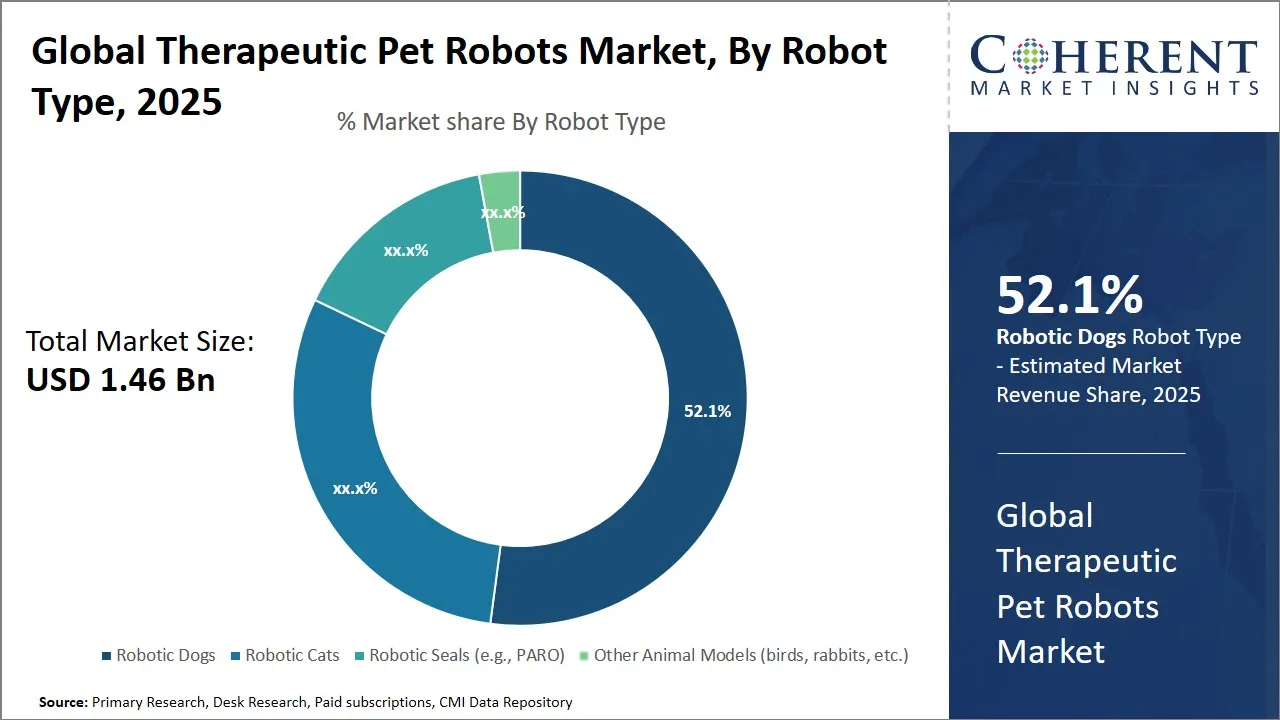
- By robot type, robotic dogs are expected to account for the largest share of the global therapeutic pet robots market at 53.1% in 2026.
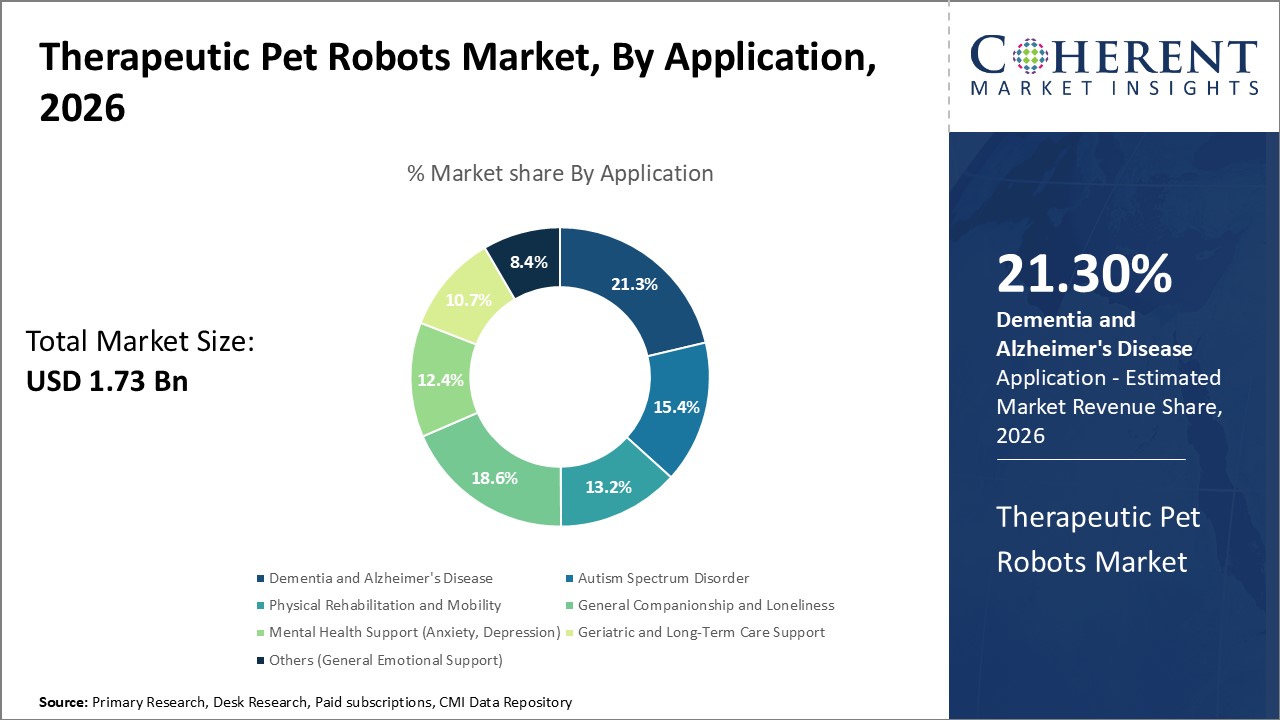
- By application, dementia and Alzheimer's disease is projected to represent the leading segment, capturing 21.3% of the market share in 2026.
- By technology, sensor-based interactive systems are anticipated to hold the dominant position, contributing 31.3% of the total market share in 2026.
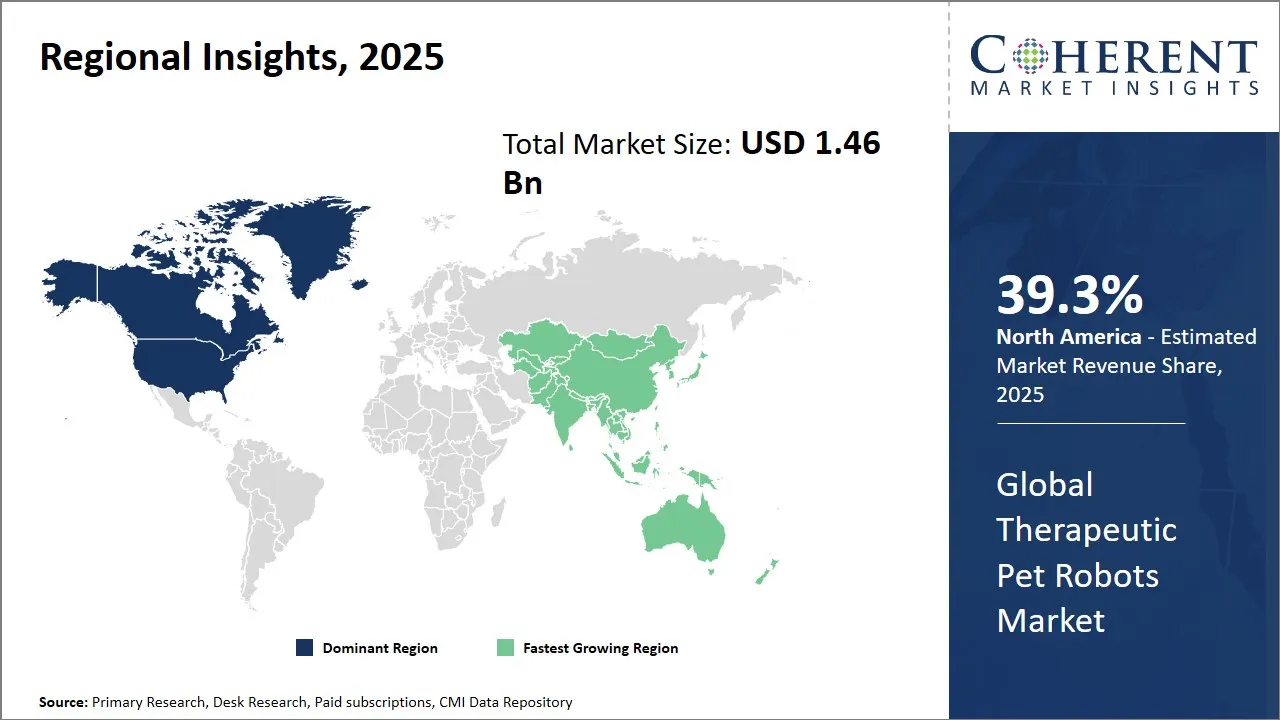
- North America is expected to lead the market, holding a share of 39.3% in 2026. Asia Pacific is anticipated to be the fastest-growing region, with a market share of 24.5% in 2026.
Market Overview
A key market trend is the integration of AI and machine learning to enhance the interactivity and responsiveness of therapeutic pet robots, making them more effective in providing emotional support and therapy. Additionally, growing awareness about mental health and the benefits of pet robots among aging populations and healthcare institutions is fueling market expansion. The trend towards personalized therapeutic solutions and increasing investments by technology firms further underscore the promising outlook of this market.
Currents Events and their Impact
Current Events | Description and its Impact |
Advancements in AI & Emotional Robotics |
|
Rising Neurodegenerative and Chronic Diseases |
|
Segmental Insights
- Current Industry Events of 2026
- Market Size Estimation
- Regional Breakdown
- Competitive Landscape
- Customer Intelligence
- Segmental Analysis
- Pricing Analysis
- Key Market Drivers, Challenges & Future Trends
- Customized Insights Section
Therapeutic Pet Robots Market Insights, By Robot Type - Leading Role of Robotic Dogs in Therapeutic Pet Robots Market Due to High Emotional Engagement, Familiarity, and Proven Efficacy in Elderly Care
Based on robot type, robotic dogs form the biggest percentage of the worldwide therapeutic pets robot market, accounting for an estimated 53.1% in 2026 due to their intense emotional communication and extremely interactive features. Dogs have long been counted as good companions and have a special capability of forming emotional connections with human beings, and it is reflected in the robotic counterparts that passively replicate them.
The robotic dogs are set to imitate the behavior of real dogs, such as tail wagging, receptive barking and playful movements, which are meant to attract the user attention and ensure maximum therapeutic value of the robot. This resemblance to a pet dog has led to robotic dogs especially being useful to users who may want a company pet but find it difficult to keep a real one because of allergies or other physical restrictions.
Therapeutic Pet Robots Market Insights, By Application - Dominance of Dementia and Alzheimer’s Disease Applications is Driven by Cognitive Support Needs
In 2026, the dementia and Alzheimer’s disease segment is expected to account for the largest share of the global therapeutic pet robots market at 21.3%, driven by the growing demand for non-pharmacological interventions that help ease symptoms and improve patient well-being. The neurodegenerative disorders cause memory loss, confusion, and emotional discomfort, and caregivers and medical practitioners are interested in identifying therapeutic options that will not have any negative side effects but instead enhance the quality of life.
In April 2020, Florida Department of Elder Affairs gave 375 robotic pets from Ageless Innovation, a U.S.-based company specializing in interactive products for older adults to the seniors with Alzheimer’s and dementia, to reduce isolation during COVID-19. The lifelike companions helped improve mood and social connection, with support from the Association on Aging in New York to expand the effort.
Therapeutic Pet Robots Market Insights, By Technology - Sensor-Based Interactive Systems Fuel Market Leadership within the Technology Segment
By technology, sensor-based interactive systems hold the largest market share in the global therapeutic pet robots with an estimated 31.3% in 2026 due to the fact that they provide real-time, intuitive feedback that creates a degree of engagement with the user.
These systems include different sensors like touch, movement, audio and proximity sensors that help the robot sense the presence of human beings and their activities so as to produce naturalistic responses promoting a natural interactive response. The flexibility of sensor-based robots is critical in the therapeutic environment that encourages emotional well-being and mental activity through positive reinforcement in the form of interaction.
Role of Artificial Intelligence (AI) in the Global Therapeutic Pet Robots Market
- The global therapeutic pet robots market is changing with AI as the smarter, more responsive, and emotionally adaptive robots are being developed. AI-based robots can customize their interactions, react to mood changes, and offer customized therapeutic interactions to people with dementia, autism, or emotional disorders through machine learning, natural language processing, and computer vision. The technology improves efficiency and lowers costs of operations and enables data-driven insights to provide better care outcomes. Sony (Aibo) and PARO Therapeutic Robots are companies that apply AI to replicate realistic behavior, which enhances user interaction and treatment outcomes.
- Innovation is also propelled by AI in predictive analytics, remote monitoring and cloud-based health management, which are developing novel business models and increased clinical applications. Yet, the issues with the privacy of the data, its ethical usage, and emotional dependence remain. To maintain the growth, companies should provide transparency, safe data processing, and accountable AI implementation. Altogether, the contribution of AI is mostly positive to the increase of therapeutic, scalability, and user experience in the marketplace.
Regional Insights
North America Therapeutic Pet Robots Market Analysis and Trends
In North America, the dominance in the global therapeutic pet robots market with an estimated share of 39.3% in 2026 is driven by high investments in the field of robotics and artificial intelligence, and a high rate of adoption in a therapeutic and eldercare environment. The region has got favorable government policies that support innovation in healthcare technology and the aging population care initiatives that support the market development.
For example, in September 2020, Northern Illinois Hospice, a leading end-of-life care provider in the U.S., introduced a robotic golden puppy to comfort patients amid suspended in-person pet therapy due to COVID-19. The lifelike robotic dog, equipped with motion sensors, heartbeat, and voice response, was funded through the hospice’s Pet Peace of Mind donor program.
Asia Pacific Therapeutic Pet Robots Market Analysis and Trends
The fastest growing market in the therapeutic pet robots product with an estimated share of 24.5% in 2026 will be Asia Pacific, driven by the growing awareness about the eldercare solutions, the growing disposable income, and the modernization of the health care infrastructure in the countries such as Japan, China and South Korea.
The high rate of urbanization and rising ages among citizens are triggering a high demand of the companion robots that offer mental and emotional comfort as well as therapeutic care. The governments in this region are being more encouraging with the help of financial assistance and programs to incorporate technology in senior care.
Therapeutic Pet Robots Market Outlook for Key Countries
U.S. Therapeutic Pet Robots Market Trends
The therapeutic pet robots market in the U.S. exhibits a high level of adoption because of the high-level healthcare centers and well-grounded consumerism of the therapeutic robotic assistance. Large companies, such as Intuition Robotics, have launched advanced AI-enabled pet robots to help older users, encouraging interaction and preventing loneliness. Due to the large investment in healthcare R&D in the country, and the positive health policy on elderly care, the innovation is sustained and therapeutic pet robots are available to meet the needs of a variety of patients.
For example, New York City Department for the Aging (DFTA), the largest agency for older adults in the U.S., joined the New York State Office for the Aging in a robotic pet pilot program to reduce loneliness and depression among seniors. The initiative distributed robotic cats and dogs from Ageless Innovation, known for its companion pets for dementia patients, to socially isolated older adults.
Japan Therapeutic Pet Robots Market Trends
The market of therapeutic pet robots in Japan is highly technological and culturally open to the use of robotics in everyday activities. Aibo robotic pet by Sony has specifically had an impact on this market as it had the ability to provide both entertainment and therapeutic value, and in a country where the population is rapidly aging, this product is more than desirable in terms of companionship. Market growth is highly motivated by the aggressive policies implemented by the Japanese government to ensure that the country has robot friendly policies to deal with labor shortages and aging issues.
For example, Japan’s National Institute of Advanced Industrial Science and Technology (AIST), a pioneer in robotics and automation research, introduced PARO, an advanced therapeutic robot created to deliver the benefits of animal-assisted therapy in hospitals and long-term care facilities where live pets are impractical. Shaped like a baby harp seal, PARO helps reduce stress, improve relaxation, and promote social interaction among patients and caregivers.
China Therapeutic Pet Robots Market Trends
The therapeutic pet robots market in China is advancing very fast because of an intersection of a rising number of elderly care and a focus on modernization of healthcare put across by the government. Home-based firms such as UBTECH Robotics are developing technological systems to support emotional therapy and companionship based on the interaction of robotic pets. The high manufacturing foundation and assistance of innovation-oriented startups in China create a favorable market growth and export potential in the region.
For example, in China, UBTECH Robotics, headquartered in Shenzhen, leads innovation in emotional therapy and companionship robots. Its humanoid and pet-like robots, such as Alpha Mini and Walker X, are increasingly used in healthcare settings for elderly interaction and cognitive stimulation.
Germany Therapeutic Pet Robots Market Trends
Germany currently occupies a particularly large niche in the therapeutic pet robots market in Europe, which has the advantage of having a well-developed healthcare and a borrowing of the latest assistive technologies. Fraunhofer Institute and European operations of Hasbro are companies that are concerned with the combination of biomedical research and robot design to achieve therapeutic requirements. Enabling technologies Digital health and eldercare policies promote the use of therapeutic pet robots as supplementary care methods by the institutions and consumers.
For example, in Germany, the Fraunhofer Institute for Manufacturing Engineering and Automation (IPA) has developed assistive and therapeutic robotic systems such as Care-O-bot and Roberta, used in hospitals and senior care facilities to support patient well-being and staff efficiency.
Market Players, Key Developments, and Competitive Intelligence
Key Developments
- In January 2025, Tombot Inc., a U.S.-based firm creating lifelike robotic dogs, showcased AI therapy pets at CES Las Vegas to aid seniors and those unable to own real pets. King Abdullah University of Science and Technology’s Mr. Imed Gallouzi said these AI companions can offer real-time emotional support, while IBM Saudi Arabia’s Mrs. Noor Al-Faraj stressed the need for emotional intelligence and data privacy. Despite promise, adoption in the Middle East faces cultural, cost, and connectivity barriers.
- In July 2024, New Jersey Institute of Technology (NJIT), a leading U.S. research university, launched a project with Ben-Gurion University of the Negev to train robotic dogs using AI and edge computing under the Institute for Future Technologies program. Led by Assistant Professor Kasthuri Jayarajah, the research aims to make the Unitree Go2 robotic dog “Snowy” socially assistive by adapting its behavior to human emotions and physical states detected via wearable sensors.
- In July 2022, Singapore Polytechnic, a leading institution for applied learning, developed a pet robot dog named SParkle to motivate seniors during rehabilitation exercises and help caregivers track progress through cloud-based data
- In February 2022, University of Cincinnati, a leading public research university in Ohio, U.S. began a pilot study exploring how art therapy via a mobile app and robotic dog interactions affect mental health in patients with hearing loss
Top Strategies Followed by Global Therapeutic Pet Robots Market Players
- Established players dominate the market with long-term R&D investment with a focus on state-of-the-art AI, sensory feedback, and personalization to enhance therapeutic performance and user experience. The strategic collaborations with large manufacturers and health professionals enhance their technological capabilities and increase their presence in the market.
- Established players, such as PARO Robots (Japan), Sony Corporation (Japan), and Ageless Innovation (U.S.), dominate the market through continuous investment in R&D and large-scale commercialization efforts. PARO’s seal-shaped therapeutic robot, validated in over 30 clinical studies, is approved as a certified medical device in Japan. Sony’s Aibo leverages AI-based facial recognition and emotional response systems, blending consumer robotics with therapeutic interaction.
- Mid-level players primarily offer affordable companion and assistive robotic solutions such as simplified therapeutic pet robots, basic AI-enabled interaction systems, and cost-efficient robotic companions designed for eldercare and rehabilitation centers. These models typically feature limited but essential functionalities voice response, motion sensors, and emotional feedback balancing performance and affordability to meet the needs of cost-sensitive care facilities and home users.
- Mid-level players such as Tombot Inc. (U.S.), JustoCat AB (Sweden), and Hyodol Co. Ltd. (South Korea) target cost-effective segments while maintaining performance and emotional connectivity. Tombot’s Jennie robot, designed with feedback from dementia patients, offers affordable therapeutic value using realistic touch sensors and expressive behavior patterns.
- Small-scale players work in niche segments, and they include unusual features of biometric sensing, machine-learning customization, or interactive behavior modeling. Being flexible enables them to be quick with innovations and more responsive to new therapeutic and consumer trends.
- Small-scale players like Yukai Engineering Inc. (Japan), Vanguard Industries (Japan), and Consequential Robotics (U.K.) focus on niche and experimental designs to capture unique therapeutic use cases. Yukai’s “Qoobo” and “Petit Qoobo” cushion robots use minimalistic design with haptic feedback for stress relief, while Vanguard’s “Moflin” employs emotional AI to simulate lifelike bonding behavior.
Market Report Scope
Therapeutic Pet Robots Market Report Coverage
| Report Coverage | Details | ||
|---|---|---|---|
| Base Year: | 2025 | Market Size in 2026: | USD 1.73 Bn |
| Historical Data for: | 2020 To 2024 | Forecast Period: | 2026 To 2033 |
| Forecast Period 2026 to 2033 CAGR: | 18.3% | 2033 Value Projection: | USD 5.60 Bn |
| Geographies covered: |
| ||
| Segments covered: |
| ||
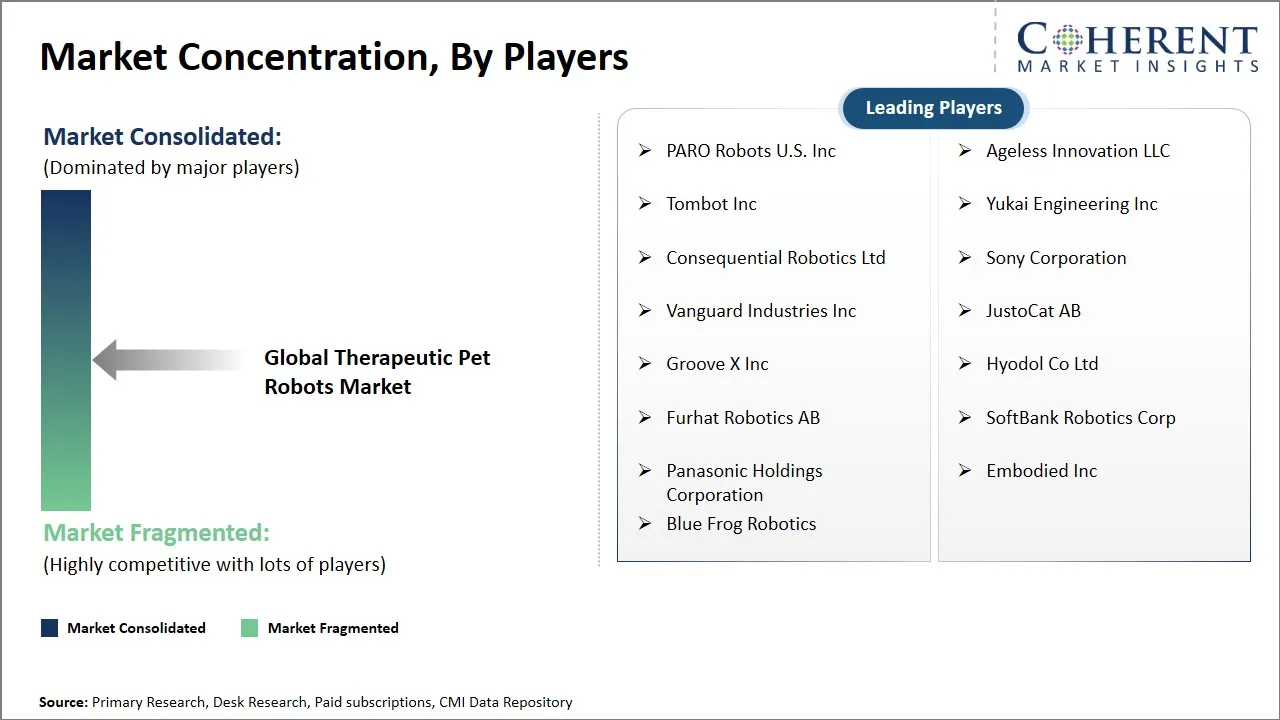
| Companies covered: | PARO Robots U.S. Inc, Ageless Innovation LLC, Tombot Inc, Yukai Engineering Inc, Consequential Robotics Ltd, Sony Corporation, Vanguard Industries Inc, JustoCat AB, Groove X Inc, Hyodol Co Ltd, Furhat Robotics AB, SoftBank Robotics Corp, Panasonic Holdings Corporation, Embodied Inc, and Blue Frog Robotics | ||
| Growth Drivers: |
| ||
| Restraints & Challenges: |
| ||
Therapeutic Pet Robots Market Dynamics
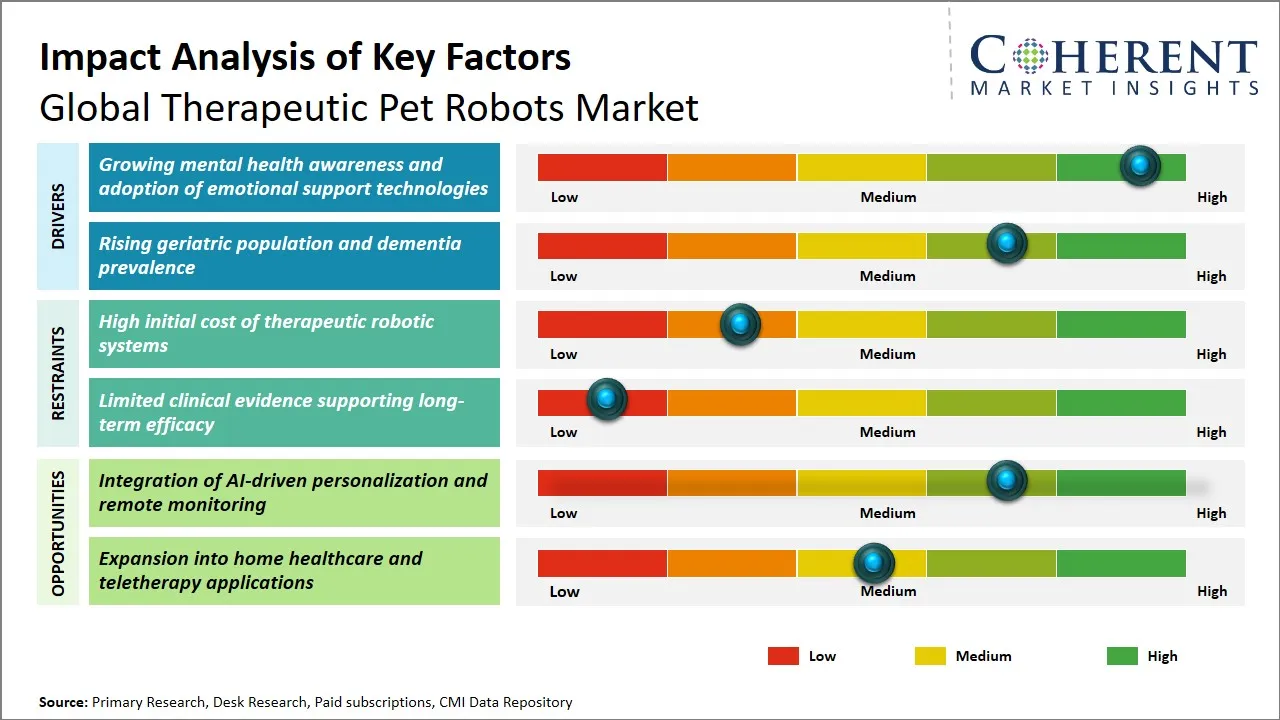
Therapeutic Pet Robots Market Driver - Growing Mental Health Awareness and Adoption of Emotional Support Technologies
The growing interest in mental health as an important part of the overall well-being has been a major driver in the ever-growing demand of therapeutic pet robots. Due to the decrease in societal stigma related to mental health, an increasing number of people and medical professionals are moving towards new technologies to find new ways of dealing with anxiety, depression, and loneliness. Therapeutic pet robots provide a special combination of companionship and emotional support without the duties and restrictions of living animals, and this makes them especially attractive to the various groups of the population such as the elderly, children, and people with disabilities.
In April 2022, a review published in the Journal of Medical Internet Research (JMIR) Mental Health highlighted how social robots are supporting mental health awareness and emotional well-being worldwide. Researchers from the University of Montreal examined 30 studies showing that robots like PARO, a therapeutic seal by Japan’s Intelligent System Co., Sony’s AIBO, a robotic dog, and SoftBank Robotics’ Pepper, a humanoid robot, help reduce loneliness, anxiety, and depression while improving engagement in dementia and autism care. These emotionally supportive robots are being increasingly adopted in hospitals and eldercare facilities to promote companionship and mental health awareness.
Therapeutic Pet Robots Market Opportunity - Integration of AI-Driven Personalization and Remote Monitoring
The market of global therapeutic pet robots is expected to grow very fast due to personalization, which is AI-driven, and remote monitoring. The technologies allow the robots to change their behavior and responses to the feelings and actions of users on the spot, enhancing interaction and treatment effectiveness. Remote monitoring also enables caregivers to monitor mental health and activity to assist in providing personalized care and early interventions.
In December 2024, Sony Corporation, a global tech innovator, showcased the rising popularity of its Aibo Robot Dog, an AI-powered pet offering emotional support and companionship through facial recognition and adaptive learning. It was featured by Moonpreneur, a U.S.-based edtech company promoting robotics.
Analyst Opinion (Expert Opinion)
- The global therapeutic pet robots market is developing a strong momentum since the healthcare systems across the globe are adapting to non-pharmacological interventions to deal with loneliness, dementia, autism, and post-stroke healing. The implementation of AI, haptic sensors, and emotional recognition technologies together is making robots provide more realistic experiences that can improve patient experience and minimize workload on caregivers.
- The increasing credibility of the market is driven by the growing clinical validation, government support programs in the field of elderly and mental health care, and increased investment by manufacturers of healthcare robots. These loopholes are opening opportunities to the companies with the ability to provide affordable evidence-based models that are optimized to fit the healthcare setting.
- The presence of industry in conferences like the International Conference on Social Robotics (ICSR), IEEE International Conference on Robotics and Biomimetics (ROBIO), and the Global Summit on Assistive Technologies has helped to increase the rate of interaction between academia, policy makers and the developers of devices. These forums have played a critical role in popularizing ethics, information guidelines, and safety protocols of social and therapeutic robotics.
- There have been significant advancements, with PARO expanding its dementia care programs across Europe and Japan, Tombot conducting trials with U.S. veterans’ hospitals, and Ageless Innovation integrating its robotic pets into senior living facilities through public–private partnerships in North America.
Speak to the analyst
Want personalized insights?
Take the findings above to one of our principal consultants, or have the report rebuilt around the segments, geographies and competitors you actually track.
Market Segmentation
- Robot Type Insights (Revenue, USD Bn, 2021 - 2033)
- Robotic Dogs
- Robotic Cats
- Robotic Seals (e.g., PARO)
- Other Animal Models (birds, rabbits, etc.)
- Application Insights (Revenue, USD Bn, 2021 - 2033)
- Dementia and Alzheimer's Disease
- Autism Spectrum Disorder
- Physical Rehabilitation and Mobility
- General Companionship and Loneliness
- Mental Health Support (Anxiety, Depression)
- Geriatric and Long-Term Care Support
- Others (General Emotional Support)
- Technology Insights (Revenue, USD Bn, 2021 - 2033)
- Sensor-Based Interactive Systems
- Artificial Intelligence (AI)-Driven Adaptive Systems
- Cloud-Connected/IoT-Enabled Systems
- Basic Interactive (motion, sound response only)
- Autonomous Learning Systems
- Degree Of Autonomy Insights (Revenue, USD Bn, 2021 - 2033)
- Manual/Semi-Autonomous
- Fully Autonomous
- End User Insights (Revenue, USD Bn, 2021 - 2033)
- Hospitals and Clinics
- Nursing Homes
- Distribution Channel Insights (Revenue, USD Bn, 2021 - 2033)
- Online
- Offline
- Regional Insights (Revenue, USD Bn, 2021 - 2033)
- North America
- U.S.
- Canada
- Latin America
- Brazil
- Argentina
- Mexico
- Rest of Latin America
- Europe
- Germany
- U.K.
- Spain
- France
- Italy
- Russia
- Rest of Europe
- Asia Pacific
- China
- India
- Japan
- Australia
- South Korea
- ASEAN
- Rest of Asia Pacific
- Middle East
- GCC Countries
- Israel
- Rest of Middle East
- Africa
- South Africa
- North Africa
- Central Africa
- North America
- Key Players Insights
- PARO Robots U.S. Inc
- Ageless Innovation LLC
- Tombot Inc
- Yukai Engineering Inc
- Consequential Robotics Ltd
- Sony Corporation
- Vanguard Industries Inc
- JustoCat AB
- Groove X Inc
- Hyodol Co Ltd
- Furhat Robotics AB
- SoftBank Robotics Corp
- Panasonic Holdings Corporation
- Embodied Inc
- Blue Frog Robotics
Sources
Primary Research Interviews
Industry Stakeholders List
- Robotics Engineers and Product Developers
- Healthcare Technology Manufacturers
- Hospital Procurement Managers
- Rehabilitation Center Administrators
- Clinical Psychologists and Therapists
- Senior Care Facility Directors
End Users List
- Dementia and Alzheimer’s Patients
- Autism Therapy Centers
- Home Healthcare Providers
- Elderly Care Residents
- Rehabilitation Patients
- Family Caregivers
Government and International Databases
- World Health Organization (WHO)
- Organisation for Economic Co-operation and Development (OECD)
- United Nations Department of Economic and Social Affairs (UNDESA)
- U.S. Food and Drug Administration (FDA)
- European Commission – Digital Health and Care Directorate
- Ministry of Health, Labour and Welfare (Japan)
Trade Publications
- Robotics Business Review
- MedTech Dive
- Healthcare IT News
- Robotics Tomorrow
- The Robot Report
- Medical Device Network
Academic Journals
- Journal of Rehabilitation Robotics
- International Journal of Social Robotics
- IEEE Transactions on Medical Robotics and Bionics
- Gerontology and Geriatric Medicine
- Frontiers in Robotics and AI
- Journal of Medical Internet Research
Reputable Newspapers
- The Guardian
- The New York Times
- The Washington Post
- Financial Times
- The Japan Times
- The Wall Street Journal
Industry Associations
- International Federation of Robotics (IFR)
- Robotics Industries Association (RIA)
- European Robotics Association (euRobotics)
- Japan Robot Association (JARA)
- Association for Advancing Automation (A3)
- International Society for Gerontechnology (ISG)
Public Domain Resources
- National Center for Biotechnology Information (NCBI)
- ResearchGate
- OpenAIRE
- ScienceDirect (open-access section)
- Directory of Open Access Journals (DOAJ)
Proprietary Elements
- 1CMI Data Analytics Tool: Proprietary analytics tool to analyze real-time market trends, consumer behavior, and technology adoption in market
- Proprietary CMI Existing Repository of Information for Last 8 Years
Get access to 250+ pages report
Every segment, forecast, competitor profile and data table behind the analysis above — available for instant download.
- ESOMAR Member
- ISO 9001:2015 Certified
- D-U-N-S Registered
- GDPR & CCPA Compliant
Missing comfort of reading report in your local language? Find your preferred language:
Transform your Strategy with Exclusive Trending Reports
Frequently Asked Questions
The global therapeutic pet robots market is estimated to be valued at USD 1.73 Bn in 2026 and is expected to reach USD 5.60 Bn by 2033.
The CAGR of global therapeutic pet robots market is projected to be 18.3% from 2026 to 2033.
Growing mental health awareness and adoption of emotional support technologies and rising geriatric population and dementia prevalence are the major factors driving the growth of the global therapeutic pet robots market.
High initial cost of therapeutic robotic systems and limited clinical evidence supporting long-term efficacy are the major factors hampering the growth of the global therapeutic pet robots market.
In terms of robot type, robotic dogs are estimated to dominate the market revenue share in 2026.
PARO Robots U.S. Inc, Ageless Innovation LLC, Tombot Inc, Yukai Engineering Inc, Consequential Robotics Ltd, Sony Corporation, Vanguard Industries Inc, JustoCat AB, Groove X Inc, Hyodol Co Ltd, Furhat Robotics AB, SoftBank Robotics Corp, Panasonic Holdings Corporation, Embodied Inc, and Blue Frog Robotics are the major players.
North America is expected to lead the global therapeutic pet robots market in 2026.