

Global Thymus Cancer Market Size and Forecast – 2026 to 2033
The global thymus cancer market is estimated to be valued at USD 1.28 Bn in 2026 and is expected to reach USD 2.62 Bn by 2033, exhibiting a compound annual growth rate (CAGR) of 10.7% from 2026 to 2033. Increasing diagnostic advancements, rising prevalence of thymus cancer, and growing research initiatives aimed at developing targeted therapies are driving the market growth. The market expansion is also supported by improved healthcare infrastructure and rising patient awareness globally.
Key Takeaways of the Global Thymus Cancer Market
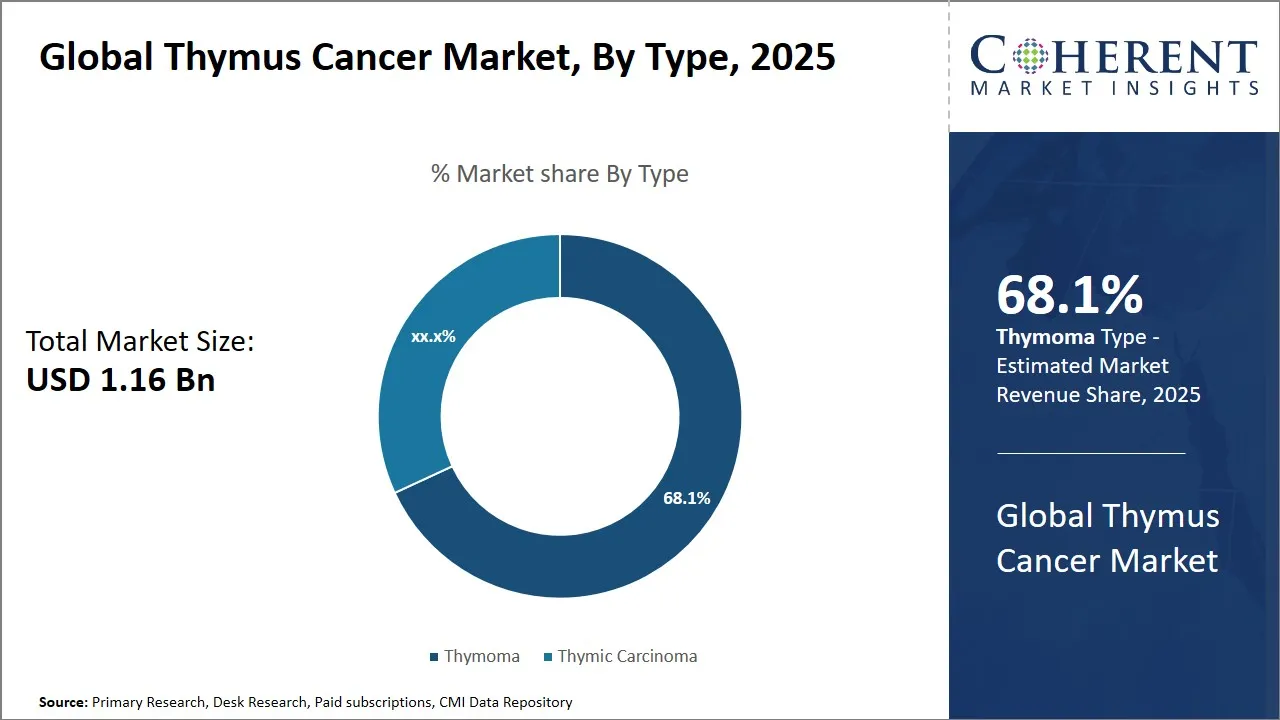
- Thymoma segment is expected to dominate the global thymus cancer market, with a share of 69.1 % in 2026.
- The Stage I segment is estimated to account for 35.5 % of the market share in 2026.
- Chemotherapy segment is projected to hold 43.4 % of the thymus cancer market share in 2026.
- North America is expected to lead the market, holding a share of 38.3 % in 2026. Asia Pacific is anticipated to be the fastest-growing region, with an estimated market share of 23.5% in 2026.
Market Overview
Current trends in the thymus cancer market emphasize the development of personalized medicine and immunotherapy treatments, which are increasingly being adopted to enhance patient outcomes. Additionally, there is a growing focus on early detection through advanced imaging techniques and molecular diagnostics (biomarkers). Strategic collaborations between pharmaceutical companies and research institutions are accelerating innovation, while increasing investments in clinical trials further propel the market growth. The integration of AI and machine learning for diagnostic and treatment optimization is also significantly shaping the market landscape.
Current Events and Its Impact
Current Events | Description and its Impact |
Surge in immuno‑oncology and targeted‑therapy clinical trials for thymic malignancies |
|
Rare ‑ disease regulatory incentives (orphan ‑ drug designations) applied to thymus cancer treatments |
|
Segmental Insights
- Current Industry Events of 2026
- Market Size Estimation
- Regional Breakdown
- Competitive Landscape
- Customer Intelligence
- Segmental Analysis
- Pricing Analysis
- Key Market Drivers, Challenges & Future Trends
- Customized Insights Section
Thymus Cancer Market Insights, By Type - Dominance of Thymoma in the Market Driven by Prevalence and Diagnostic Advances
Thymoma is expected to be the largest segment of the global thymus cancer market with 69.1% share in 2026, because of its prevalence compared to other thymic malignancies including thymic carcinoma. Thymoma is the most widespread tumor characterized by a slow growth rate, which begins with the epithelial cells of the thymus, and its prognosis is better in comparison to more aggressive ones.
In April 2022, Phosplatin began a Phase 2 trial of PT-112 in patients with thymoma and thymic carcinoma, in collaboration with the NCI. It will also undergo testing regarding its safety, efficacy, and immune response in 53 patients, and it is hoped that it will help to fill the unmet need regarding treatments in recurrent thymic cancers.
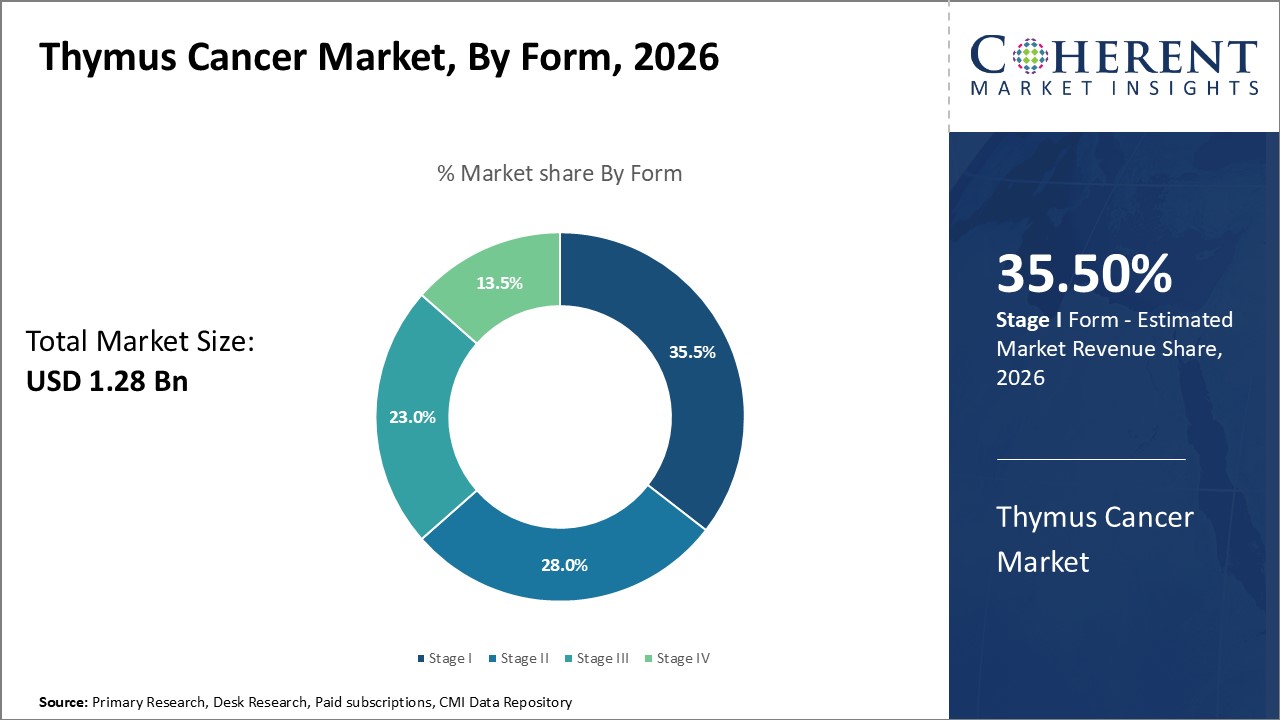
Thymus Cancer Market Insights, By Stage - Stage I Segment Growth Influenced by Early Detection and Treatment Opportunities
Stage I segment is expected to capture 35.5% of the market share in 2026, shows the importance of early diagnosis in treatment and outcomes in therapeutic management.
The growing use of routine imaging and screening in at-risk groups or on patients presenting with nonspecific thoracic complaints drives the prevalence of Stage I disease in market segmentation and allows the earlier clinical presentation and treatment.
Thymus Cancer Market Insights, By Therapy Type - Chemotherapy Segment Expansion Fueled by Broad Therapeutic Applicability and Combination Regimens
The chemotherapy segment is projected to account for 43.4% of the global thymus cancer market share in 2026, where it is extensively applicable in different stages and types of thymic cancer particularly in conditions when surgery is not an option or as complement to other therapies.
The flexibility of chemotherapy, coupled with recent advances in the treatment, has significantly increased its application and market share. Some anti-cancer agents such as alkylating agents, such as cyclophosphamide and cisplatin, and antimetabolites, such as pemetrexed, are at the core of systemic treatment of thymic cancer.
Epidemiology & Disease Burden for Thymus Cancer Market
Parameter | Data | Notes |
Incidence (U.S.) | ~1.3 cases per million people per year | Equivalent to ~0.13 per 100,000/year. |
Incidence (Europe) | ~0.13–0.26 per 100,000/year for thymoma; thymic carcinoma ~0.03–0.06 per 100,000/year | Rare disease regionally. |
Incidence (China) | Age‑standardized incidence ~0.40 per 100,000 person‑years (2007‑16) with upward trend ~4.1% annually | Higher than many Western estimates; geographic variation within China. |
Global incidence estimate (TETs) | ASR ~0.26 per 100,000 (2013‑17). | TETs = thymic epithelial tumors (includes thymoma + thymic carcinoma). |
Proportion of all cancers | ~0.2–1.5% of all malignancies are thymoma. | Underlines rarity. |
Age at diagnosis | Mean/median age ~59‑61 years (US/Germany) for TETs. | Peak incidence around 60‑70 years. |
Race/ethnicity patterns | Higher incidence among Asian/Pacific Islanders compared to White populations (in U.S.). | Suggests possible genetic/ethnic factors. |
Survival / prognosis | 5‑year survival for thymoma improved to ~90.6% (2013‑17) in one U.S. study. For thymic carcinoma ~46.2%. | Prognosis much better for thymoma than carcinoma. |
Disease trend | Some countries/regions show increasing incidence over time (e.g., China APC ~4.1%). | May reflect improved diagnostics or real increase. |
Regional Insights
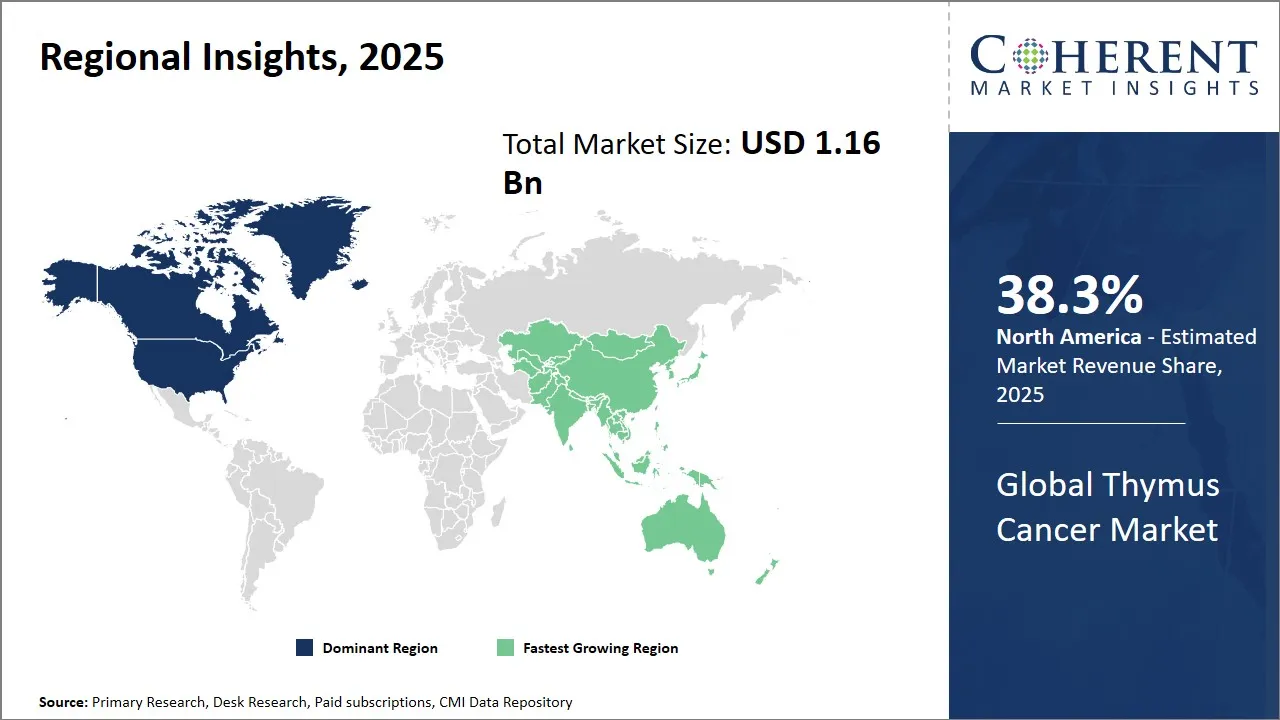
North America Thymus Cancer Market Analysis and Trends
North America thymus cancer market dominates globally with an estimated share of 38.3% due to mature healthcare infrastructure, developed research and development, and industry presence. The area is a beneficiary of heavy investments of both the government and the private sector in cancer research such as thymus cancer.
Indicatively, such companies as Pfizer, Bristol-Myers Squibb, and Merck are actively working on cancer research, including thymus cancer and enjoy good regulatory climate in the U.S. The FDA has been accelerating the certification of medications by these firms like the popular immunotherapy Keytruda created by Merck, which finds application in many cancer therapies and is promising in thymic malignancies.
Asia Pacific Thymus Cancer Market Analysis and Trends
Asia Pacific thymus cancer market is set to witness the fastest growth with a share of 23.5% in 2026, owing to growing awareness and government efforts to fight cancer.
The nations in this area are improving their diagnostic systems and spending a lot of money on the oncology-oriented healthcare provision. The availability of huge number of patients and increased disposable income has made the Asia Pacific a prime area among the global pharmaceutical companies.
Global Thymus Cancer Market Outlook for Key Countries
U.S. Thymus Cancer Market Trends
The U.S. is a critical market for thymus cancer and is marked with numerous industry biggies such as Pfizer, Merck and Bristol Myers Squibb. These firms are strongly investing in the next-generation therapies, such as target molecular therapies and new immunotherapy candidates that specifically target thymus tumors. Cancer research centers and special hospitals have a long history of operations in the country, which contributes to the convenience of conducting clinical trials and accelerated the integration of new therapies.
In the U.S., cancer research being conducted by Pfizer is spearheaded in immunotherapies and targeted treatment of thymus cancer. Merck, which has immunotherapy drug Keytruda, is developing new therapies against rare cancers, such as thymus cancer. Bristol Myers Squibb has invested quite heavily in immune oncolytic therapies which may change the treatment environment of thymus cancer.
Japan Thymus Cancer Market Trends
The advanced healthcare system and high-quality medical research environment remain in the control of Japan, which still dominates the Asia Pacific thymus cancer market. The regulatory authorities of the government, including the Pharmaceuticals and Medical Devices Agency (PMDA) strive to provide prompt registration of new medicines, making pharmaceutical organizations enter their products into the market in time in this market. Such companies as Takeda Pharmaceutical and Chugai Pharmaceutical are also actively involved in the market in terms of their research and development.
Takeda Pharmaceutical is one of the leading pharmaceutical companies in Japan which focuses on oncology and finds the cure against rare cancers (such as thymus cancer) through years of research. Chugai Pharmaceutical also is involved in advancing cancer treatment with targeted therapeutic interventions and immunotherapies, which could also help in cancer treatment of thymus cancer.
China Thymus Cancer Market Trends
The thymus cancer market in China is defined by the fast growth as the healthcare spending is increasing and access to healthcare facilities is also increasing in both urban and rural regions. A powerful desire of the government to curb cancer by engaging in programs like Healthy China 2030 ensures that cancer is diagnosed early and modern treatment is embraced. Home-based firms such as Hengrui Medicine and BeiGene have also entered the thymus cancer treatment market developing innovative treatment options that are specific to the demographics of patients in the country.
Hengrui Medicine, a giant pharmaceutical firm in China, is leading the way in cancer therapy, including targeted therapy and biologics of thymus cancer. BeiGene is making a notable impact in the Chinese cancer treatment sector, which targets next-generation therapy, including immunotherapy against thymus cancer.
Germany Thymus Cancer Market Trends
The thymus cancer market in Germany is also dominating the European market because of the well-developed healthcare practice, well integrated oncology centers, and the strong pharmaceutical sector. In the country, there is high level of R&D work by companies like the Bayer and Boehringer Ingelheim, whose main aim is to come up with specific treatment and biomarker-based therapies to complement treatment of thymus cancer. Moreover, the policies on reimbursing and high coverage of health insurance in Germany allows the access of innovative drugs to patients.
Bayer, a German-based firm, is a global leader in the oncology sector, with a solid focus on creating targeted and immunotherapy therapies to rare types of cancer such as thymus cancer. Boehringer Ingelheim is also developing customized treatment and biomarker-based treatments which can be applied to thymus cancer.
Market Players, Key Developments, and Competitive Intelligence
Key Developments
- In October 2025, a study at the ESMO Congress 2025 revealed that better thymic health, assessed through AI-driven CT scans, is linked to improved immunotherapy outcomes in cancer patients. Patients with higher thymic health had a 35% lower risk of cancer progression and 44% lower risk of death, particularly in non-small cell lung cancer. The findings suggest thymic health could serve as a valuable biomarker for precision oncology.
- In August 2025, Shanghai Henlius Biotech, Inc., announced the initiation of a Phase 1 clinical trial for HLX43, a PD-L1 antibody-drug conjugate (ADC) targeting thymic carcinoma (TC). This study, approved by the U.S. FDA, marks the first-ever PD-L1 ADC development for TC treatment. HLX43 demonstrated encouraging results in thymic squamous cell carcinoma (TSCC) with a 75% overall response rate in early trials.
- In August 2022, Weill Cornell Medicine announced the development of a new preclinical mouse model for thymic cancer. This model, engineered with the GTF2I L424H mutation, mirrors the most common mutation found in thymic epithelial tumors. The model revealed insights into tumor formation and gene expression alterations, potentially accelerating the development of targeted therapies.
- In January 2021, Alphamab Oncology announced the first patient dosed in the Phase II ENREACH-Thymic trial, evaluating KN046 for advanced thymic carcinoma. This open-label, multi-center study aims to assess the safety and efficacy of KN046, a PD-L1/CTLA-4 bispecific antibody. Thymic carcinoma, a rare and aggressive cancer, lacks approved treatments after first-line chemotherapy.
Top Strategies Followed by Global Thymus Cancer Market Players
- The established players in the industry spend heavily in research and development to come up with more sophisticated diagnostic equipment and targeted treatment of thymus cancer to stay competitive. They tend to enter into strategic alliances with important stakeholders and OEMs to increase technological competencies and increase products range, to reinforce the market presence.
- Novartis has put a lot of funds into R&D of specific cancer therapies and has collaborated with other organizations such as the National Cancer Institute (NCI) to develop thymic cancer treatments. Its portfolio consists of the state-of-the-art immunotherapies which are aimed at the enhancement of patient outcomes.
- Mid-level firms: The mid-level firms are concerned with the cost-efficient therapy and diagnostics and are creating a balance between the quality and affordability to attract price-conscious groups. They serve unmet segments and cooperate with bigger companies to enhance technological and production capacity.
- Karyopharm Therapeutics is involved in coming up with cost-effective treatments to cancer patients, even the thymic cancer patients. Through their partnership with Eli Lilly, they enhance their therapeutic services and address the underserved groups especially in the emerging markets.
- Small-scale entrants can also cut their niches with a unique product and use technologies such as AI-based diagnostics and personalized medicine. They establish local partnerships with startups, educational settings, and local manufacturers to become more visible in the market and reach specific groups of patients.
- OncoOne is a small firm that is a good example of a company that is establishing a niche in the market of thymus cancer. OncoOne is the first to develop AI-based diagnostic solutions and individualized therapy that is uniquely designed to address the cancer type, including thymic cancer.
Market Report Scope
Thymus Cancer Market Report Coverage
| Report Coverage | Details | ||
|---|---|---|---|
| Base Year: | 2025 | Market Size in 2026: | USD 1.28 Bn |
| Historical Data for: | 2020 To 2024 | Forecast Period: | 2026 To 2033 |
| Forecast Period 2026 to 2033 CAGR: | 10.7% | 2033 Value Projection: | USD 2.62 Bn |
| Geographies covered: |
| ||
| Segments covered: |
| ||
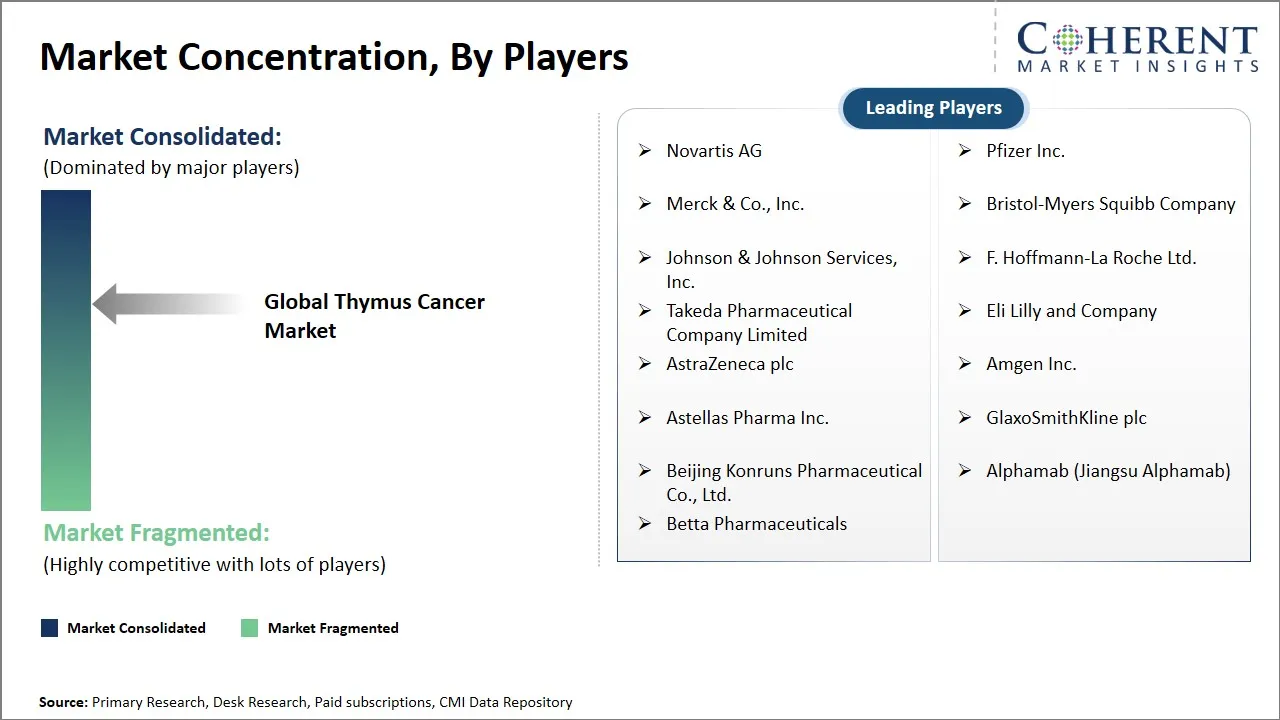
| Companies covered: | Novartis AG, Pfizer Inc., Merck & Co., Inc., Bristol‑Myers Squibb Company, Johnson & Johnson Services, Inc., F. Hoffmann‑La Roche Ltd., Takeda Pharmaceutical Company Limited, Eli Lilly and Company, AstraZeneca plc, Amgen Inc., Astellas Pharma Inc., GlaxoSmithKline plc, Beijing Konruns Pharmaceutical Co., Ltd., Alphamab (Jiangsu Alphamab), and Betta Pharmaceuticals | ||
| Growth Drivers: |
| ||
| Restraints & Challenges: |
| ||
Thymus Cancer Market Dynamics
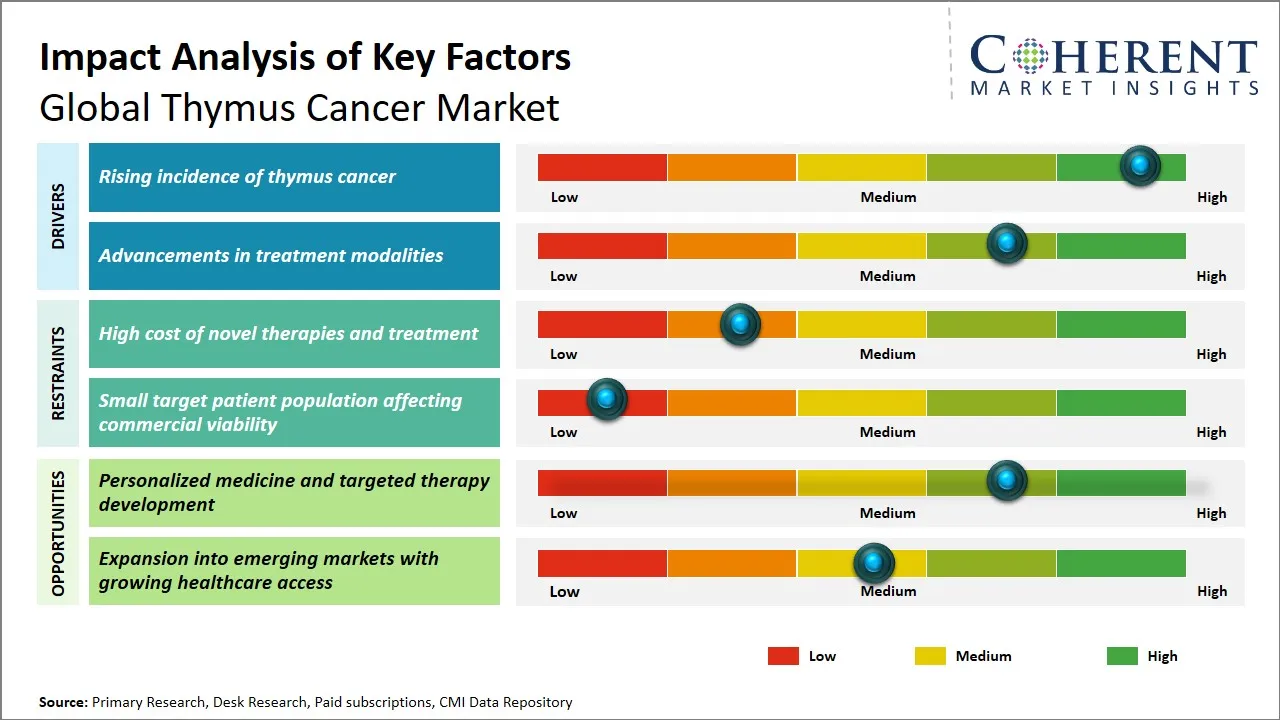
Thymus Cancer Market Driver - Rising Incidence of Thymus Cancer
The rising levels of thymus cancer among different populations in the world is a huge force that is injecting the thymus cancer market. The discovery of more cases than ever diagnosed has been contributed by several factors such as the improved diagnostic abilities and increased awareness about the disease. The increased rate of diagnosis has caused an increased demand of effective therapeutic options, diagnostic instruments, and new methods of treatment. Also, the combination of the increased aging population that is prone to malignancies like thymus cancer increases the level of patients seeking medical care.
For example, in December 2024, American Cancer Society reported that thymus cancers, including thymomas and thymic carcinomas, are the most common tumors in the anterior mediastinum but remain rare, with an incidence rate of 1.3 cases per million people annually in the US, translating to about 400 cases each year. Moreover, In June 2024, a study by Tiemo Sven Gerber and colleagues, published in The Journal of Thoracic Disease, found that thymic epithelial tumors (TETs) were the most common anterior mediastinal tumors, making up 63% of cases in the US and 64% in Germany. The annual incidence of thymomas was 2.2 per million in the U.S. and 2.64 per million in Germany, while thymic carcinomas occurred at 0.48 and 0.42 per million, respectively.
Thymus Cancer Market Opportunity - Personalized Medicine and Targeted Therapy Development
A major opportunity in the global thymus cancer market is the availability of personalized medication and targeted therapy due to the increased development in the genomic profiling and molecular diagnostics. The heterogeneity and rarity of thymus cancer pose a challenge to the traditional method of curing cancer and this underscores the need to find more personalized methods of curing cancer. Individualized medicine will allow the detection of particular genetic mutations and biomarkers related to malignancies of the thymus and the creation of the individual regimen of treatment that will be more effective and have fewer side effects than the existing chemotherapy and radiotherapy
For example, AstraZeneca is exploring targeted therapies for thymic cancer, including its PD-L1 inhibitor Imfinzi, which is being tested in clinical trials for thymic malignancies, offering a personalized immunotherapy approach. Bristol-Myers Squibb is also advancing Opdivo (nivolumab), a PD-1 inhibitor, in trials for thymoma and thymic carcinoma, aiming to enhance immune response against these cancers.
Analyst Opinion (Expert Opinion)
- Thymus cancer market is expanding because of the use of improved diagnostics and targeted therapies with the help of the positive regulation. The advancements in personalized medicine and AI-based diagnostics allow detecting the problem earlier and more accurately, which enhances the treatment outcome. Nevertheless, there are still problems like the lack of specialized treatment and high prices of development of the rare cancer treatment.
- Things could go better with the collaboration of both biotech companies and research institutions with oncology centers to accelerate the process of developing the therapy. Knowledge sharing and policy making through conferences such as the ASCO Annual Meeting and ITMIG events have been important in setting policies and creating knowledge. Funding and awareness are also growing in regional programs, particularly in Europe, which also is likely to promote the growth of the market even more.
Speak to the analyst
Want personalized insights?
Take the findings above to one of our principal consultants, or have the report rebuilt around the segments, geographies and competitors you actually track.
Market Segmentation
- Type Insights (Revenue, USD Bn, 2021 - 2033)
- Thymoma
- Thymic Carcinoma
- Stage Insights (Revenue, USD Bn, 2021 - 2033)
- Stage I
- Stage II
- Stage III
- Stage IV
- Therapy Type Insights (Revenue, USD Bn, 2021 - 2033)
- Chemotherapy
- Alkylating Agents (e.g., Cyclophosphamide, Cisplatin)
- Antimetabolites (e.g., Pemetrexed)
- Corticosteroids (e.g., Prednisone)
- Targeted Therapy
- mTOR Inhibitors (e.g., Everolimus)
- Tyrosine Kinase Inhibitors (e.g., Sunitinib)
- Immunotherapy
- Immune Checkpoint Inhibitors (e.g., Pembrolizumab)
- Hormonal Therapy
- Somatostatin Analogs (e.g., Octreotide)
- Supportive Care
- Growth Factors (e.g., G-CSF)
- Antiemetics
- Analgesics
- Route Of Administration Insights (Revenue, USD Bn, 2021 - 2033)
- Oral
- Parenteral
- Others
- Age Group Insights (Revenue, USD Bn, 2021 - 2033)
- Pediatric
- Adult
- Geriatric
- Gender Insights (Revenue, USD Bn, 2021 - 2033)
- Male
- Female
- End User Insights (Revenue, USD Bn, 2021 - 2033)
- Hospitals
- Specialty Cancer Centers
- Ambulatory Surgical Centers
- Research and Academic Institutes
- Distribution Channel Insights (Revenue, USD Bn, 2021 - 2033)
- Hospital pharmacies
- Retail pharmacies
- Online pharmacies
- Regional Insights (Revenue, USD Bn, 2021 - 2033)
- North America
- U.S.
- Canada
- Latin America
- Brazil
- Argentina
- Mexico
- Rest of Latin America
- Europe
- Germany
- U.K.
- Spain
- France
- Italy
- Russia
- Rest of Europe
- Asia Pacific
- China
- India
- Japan
- Australia
- South Korea
- ASEAN
- Rest of Asia Pacific
- Middle East
- GCC Countries
- Israel
- Rest of Middle East
- Africa
- South Africa
- North Africa
- Central Africa
- North America
- Key Players Insights
- Novartis AG
- Pfizer Inc.
- Merck & Co., Inc.
- Bristol‑Myers Squibb Company
- Johnson & Johnson Services, Inc.
- Hoffmann‑La Roche Ltd.
- Takeda Pharmaceutical Company Limited
- Eli Lilly and Company
- AstraZeneca plc
- Amgen Inc.
- Astellas Pharma Inc.
- GlaxoSmithKline plc
- Beijing Konruns Pharmaceutical Co., Ltd.
- Alphamab (Jiangsu Alphamab)
- Betta Pharmaceuticals
Sources
Primary Research Interviews
- Industry Stakeholders
- Oncology equipment OEM executives
- Diagnostic platform makers for thoracic cancers
- End Users
- Head of thoracic oncology departments
- Lead investigators in thymic carcinoma trials
- Pathology lab directors
- Oncology nurse managers
Government & International Databases
- National Cancer Institute (NCI)
- IARC CancerBase / GLOBOCAN
- CDC / SEER database
- WHO Global Cancer Observatory
- National cancer registries (e.g., UK NCRAS)
- Government health ministry cancer statistics
Trade Publications
- “Thoracic Oncology International”
- “Oncology Diagnostics Review”
- “Rare Cancers & Therapies”
- “Medical Devices for Oncology”
- “Immuno‑Oncology Technology”
- “MediTech Insights”
Academic Journals
- Journal of Thoracic Disease
- Cancer Epidemiology
- Frontiers in Oncology
- Journal of Thoracic Oncology
- Scientific Reports
- Medscape eMedicine
Reputable Newspapers / Media Outlets
- The New York Times (health)
- The Guardian (medicine)
- Financial Times (healthcare)
- The Wall Street Journal (oncology)
- Reuters Health
- Bloomberg (healthcare)
Industry Associations
- International Thymic Malignancy Interest Group (ITMIG)
- American Society of Clinical Oncology (ASCO)
- European Society for Medical Oncology (ESMO)
- Radiological Society of North America (RSNA)
- American Association for Thoracic Surgery (AATS)
- Society of Thoracic Surgeons (STS)
Public Domain Resources
- NCI/NIH open access data
- SEER public datasets
- WHO GLOBOCAN
- ClinicalTrials.gov
- PubMed Central (PMC)
- Country-specific health portals
Proprietary Elements
- CMI Data Analytics Tool: Proprietary analytics tool to analyze real-time market trends, consumer behavior, and technology adoption in market
- Proprietary CMI Existing Repository of Information for Last 8 Years
Get access to 250+ pages report
Every segment, forecast, competitor profile and data table behind the analysis above — available for instant download.
- ESOMAR Member
- ISO 9001:2015 Certified
- D-U-N-S Registered
- GDPR & CCPA Compliant
Missing comfort of reading report in your local language? Find your preferred language:
Transform your Strategy with Exclusive Trending Reports
Frequently Asked Questions
The global thymus cancer market is estimated to be valued at USD 1.28 Bn in 2026 and is expected to reach USD 2.62 Bn by 2033.
The CAGR of the global thymus cancer market is projected to be 10.7% from 2026 to 2033.
Rising incidence of thymus cancer and advancements in treatment modalities are the major factors driving the growth of the global thymus cancer market.
High cost of novel therapies and treatment and small target patient population affecting commercial viability are the major factors hampering the growth of the global thymus cancer market.
In terms of type, the thymoma segment is estimated to dominate the market revenue share in 2026.
Novartis AG, Pfizer Inc., Merck & Co., Inc., Bristol‑Myers Squibb Company, Johnson & Johnson Services, Inc., F. Hoffmann‑La Roche Ltd., Takeda Pharmaceutical Company Limited, Eli Lilly and Company, AstraZeneca plc, Amgen Inc., Astellas Pharma Inc., GlaxoSmithKline plc, Beijing Konruns Pharmaceutical Co., Ltd., Alphamab (Jiangsu Alphamab), and Betta Pharmaceuticals are the major players.
North America is expected to lead the global thymus cancer market in 2026.