

Global Tight Gas Market Size and Forecast – 2026 - 2033
The Global Tight Gas Market is estimated to be valued at USD 56.26 Bn in 2026 and is expected to reach USD 80.76 Bn by 2033, exhibiting a compound annual growth rate (CAGR) of 5.3% from 2026 to 2033.
Key Takeaways of the Tight Gas Market
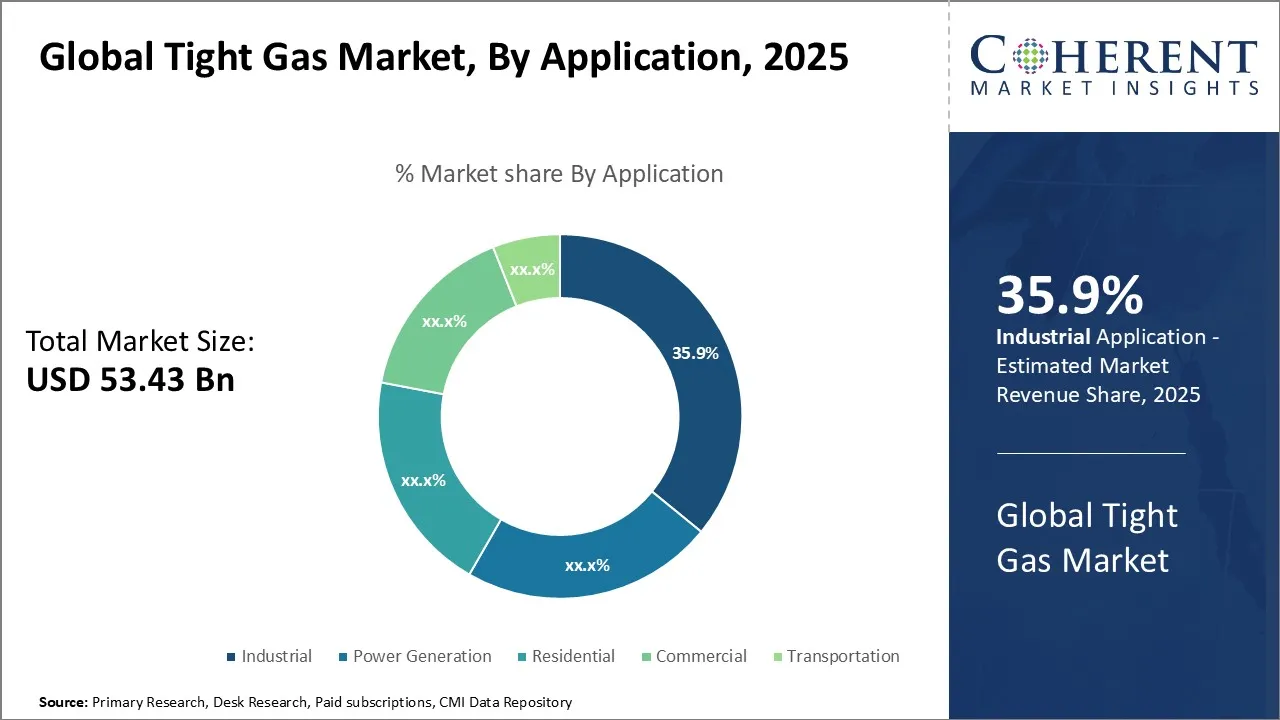
- The industrial segment is expected to account for 36.9 % of the global tight gas market in 2026.
- The hydraulic fracturing segment is projected to capture 43.7 % of the market in 2026.
- North America is set to lead the global tight gas market in 2026 with a 32.4 % share.
- Asia Pacific, with a 26.5 % share in 2026, will be the fastest-growing region.
Market Overview
In terms of market trends, the tight gas sector is witnessing a significant shift towards sustainable and environmentally friendly extraction processes. Innovations in hydraulic fracturing and horizontal drilling have substantially improved gas recovery rates while minimizing environmental footprint. Additionally, tightening regulations on carbon emissions and growing energy security concerns are propelling the adoption of tight gas as a reliable alternative to conventional fossil fuels. The increasing integration of digital technologies and automation in exploration and production is further enhancing operational efficiency and cost-effectiveness across the value chain.
Current Events and Its Impact
Current Events | Description and its impact |
Geopolitical Tensions Affecting European Gas Supplies |
|
U.S. Natural Gas Production and Export Growth |
|
Segmental Insights
- Current Industry Events of 2026
- Market Size Estimation
- Regional Breakdown
- Competitive Landscape
- Customer Intelligence
- Segmental Analysis
- Pricing Analysis
- Key Market Drivers, Challenges & Future Trends
- Customized Insights Section
Tight Gas Market Insights, By Application – Industrial Segment Dominates Owing to Expanding Energy Needs and Manufacturing Growth
Industrial segment is expected to hold 36.9% share of the global tight gas market in 2026, primarily driven by the ever-increasing energy demand in various manufacturing and processing industries. Tight gas, recognized for its high calorific value and relative abundance, serves as an efficient and reliable fuel source for industrial operations, fueling processes such as chemical manufacturing, metal processing, cement production, and other energy-intensive activities.
One key driver of the industrial segment’s dominance is the accelerated pace of industrialization, especially in emerging economies. As these regions continue to develop infrastructure and expand manufacturing capabilities, their dependence on stable and affordable energy sources like tight gas has surged. Industrial sectors benefit from tight gas because of its consistent supply, lower emissions compared to coal and other fossil fuels, and cost-effectiveness, all of which make it an attractive option for reducing operational costs while aligning with environmental regulations.
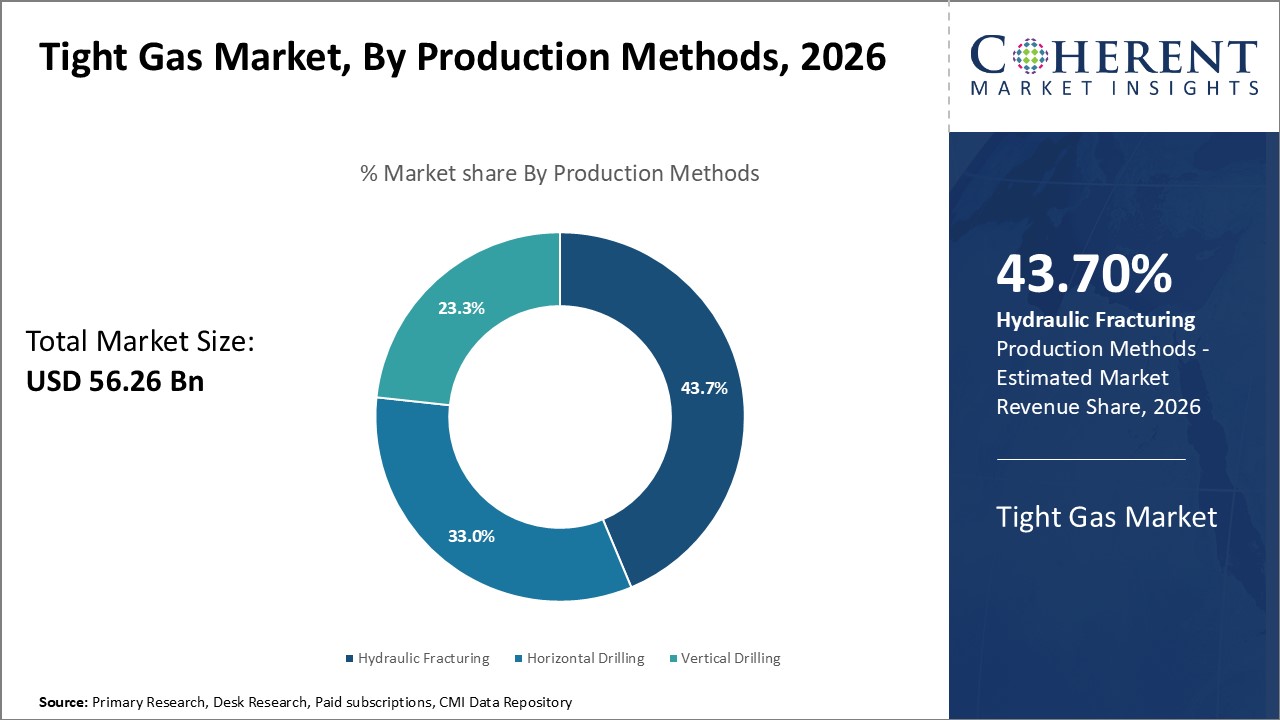
Tight Gas Market Insights, By Production Methods - Hydraulic Fracturing Propels Tight Gas Production through Enhanced Extraction Efficiency
Hydraulic fracturing segment is projected to hold 43.7% share of the market in 2026, fueled by its ability to unlock previously inaccessible gas reserves efficiently and economically. Tight gas reservoirs, characterized by low permeability, pose significant challenges to conventional extraction methods. Hydraulic fracturing, commonly known as fracking, overcomes these barriers by creating intricate fracture networks in the rock formations, allowing gas to flow more freely and in larger volumes.
Regional Insights
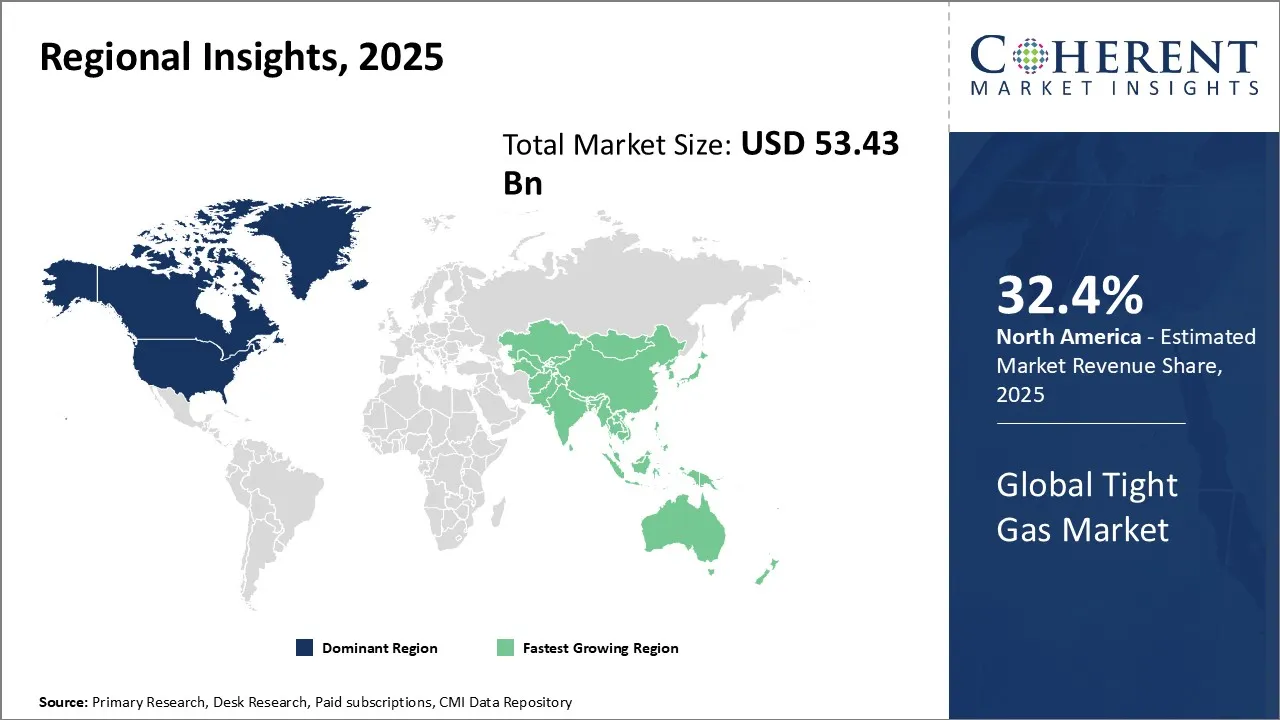
North America Tight Gas Market Analysis and Trends
The North America region is projected to lead the market with a 32.4% share in 2026, driven by a well-established ecosystem consisting of advanced extraction technologies, robust infrastructure, and a strong presence of key industry players. The United States, particularly, benefits from vast reserves in regions such as the Appalachian Basin and the Rocky Mountains, making it a cornerstone for tight gas production.
Favorable government policies that encourage exploration and production, coupled with supportive regulatory frameworks, have further strengthened the market position. The region is home to prominent companies like Chevron Corporation, ConocoPhillips, and Devon Energy, which invest heavily in research and development (R&D) and infrastructure to optimize tight gas recovery and maintain competitive advantage. Additionally, extensive pipeline networks and export capabilities enhance trade dynamics, making North America a vital supplier to global markets.
Asia Pacific Tight Gas Market Analysis and Trends
The Asia Pacific region is expected to exhibit the fastest growth in the market contributing 26.5% share in 2026. Countries such as China and Australia are leading the charge, supported by policies encouraging domestic exploration and development of unconventional resources, including tight gas. The market ecosystem in the region is being strengthened by foreign investments and partnerships with global oil and gas companies that bring expertise and capital. Major players such as PetroChina, Santos Ltd, and Origin Energy are pivotal in expanding tight gas operations, while infrastructure developments and improvements in drilling techniques contribute to accelerated growth trajectories. Growing energy import needs and efforts to achieve energy security are also key drivers shaping the Asia Pacific market.
Global Tight Gas Market Outlook for Key Countries
U.S. Tight Gas Market Trends
The U.S.' market remains a powerhouse in tight gas production due to technological leadership and significant reserves across multiple basins. Major companies such as ExxonMobil, Occidental Petroleum, and EOG Resources dominate the landscape, employing state-of-the-art hydraulic fracturing and horizontal drilling techniques. Government policies aimed at deregulating the energy sector and fostering independent production further bolster the market. The country's extensive midstream infrastructure supports efficient distribution, enabling it to meet both domestic demand and export commitments.
China Tight Gas Market Trends
China's market is rapidly expanding as the country intensifies efforts to diversify its energy mix and reduce air pollution. State-owned enterprises like PetroChina and Sinopec actively pursue tight gas projects in basins such as the Sichuan Basin. The government supports tight gas development as part of its broader energy transition strategy, providing subsidies and fostering joint ventures with international firms. Infrastructure investment and technology transfer agreements are enhancing production capacities, positioning China as a key player in the Asia Pacific tight gas market.
Australia Tight Gas Market Trends
Australia’s growth in the tight gas market is supported by abundant natural resources and a favorable investment climate. Companies such as Santos Ltd and Origin Energy leverage advanced extraction technologies to harness reserves efficiently. Regulatory frameworks in Australia emphasize environmental sustainability, promoting responsible development of tight gas resources. Additionally, the country’s strategic location near growing Asian markets aids in export opportunities and regional trade integration.
Canada Tight Gas Market Trends
Canada continues to lead in tight gas production with a stable market environment and developed resource base, especially in Alberta and British Columbia. Key players such as Encana Corporation (now Ovintiv) and Canadian Natural Resources Limited contribute significantly by implementing cost-effective and environmentally sustainable extraction methods. The Canadian government encourages development through favorable regulatory policies and incentives for clean energy projects. Cross-border trade agreements with the U.S. ensure seamless movement of resources across North America.
India Tight Gas Market Trends
India’s tight gas market is emerging, fueled by increasing energy demands and government initiatives to boost unconventional gas exploration. National Oil Companies like Oil and Natural Gas Corporation (ONGC) are actively participating in pilot projects and collaborations with international firms to tap into domestic tight gas reserves. Policy reforms aimed at attracting foreign investment and improving ease of doing business are pivotal in facilitating growth. Infrastructure development remains a focus to support production and distribution capabilities, as India seeks to reduce import dependence and enhance energy security.
Macro and Micro Economic Factors Impacting on Tight Gas Market Growth
Macroeconomic Factors Impacting Tight Gas Market Growth
- Rising Global Energy Demand: Increasing energy needs driven by population growth, urbanization, and expanding industrial activities in developing economies place higher demand on natural gas, especially as a cleaner alternative to coal and oil.
- Government Policies and Regulations: Supportive government initiatives promoting clean fuel generation, stricter environmental regulations to reduce carbon emissions, subsidies, and investment in unconventional gas extraction technologies positively impact the market. Countries adopting policies favoring natural gas over coal fuel tight gas demand growth.
- Economic Growth and Energy Security: Expanding economies, especially in North America and Asia Pacific, increase the need for stable energy supplies. Energy security concerns lead to diversification efforts that include tight gas as a reliable domestic energy source.
- Global LNG Price Volatility: Fluctuating liquefied natural gas prices affect competitiveness and investment in alternative natural gas sources like tight gas, influencing overall market dynamics.
Microeconomic Factors Impacting Tight Gas Market Growth
- Extraction Cost and Efficiency: The economics of tight gas production rely heavily on effective application of advanced drilling and fracturing technologies. The decline in drilling and completion costs directly improves profitability and market growth prospects.
- Market Supply and Demand Dynamics: The balance between tight gas supply capabilities (e.g., U.S. tight gas reserves in Permian Basin, Anadarko, etc.) and consumer demand (industrial, residential, commercial sectors) drives pricing and investment decisions.
- Investment and Capital Availability: Increased investment in exploration, development, production, transportation, and storage infrastructure propels market expansion and operational scale-up.
- Infrastructure Development: Expansion of pipelines, LNG export terminals, and natural gas distribution networks enhances accessibility and market penetration. For instance, infrastructure investments like the Sabine Pass LNG terminal improve export capacity and market reach.
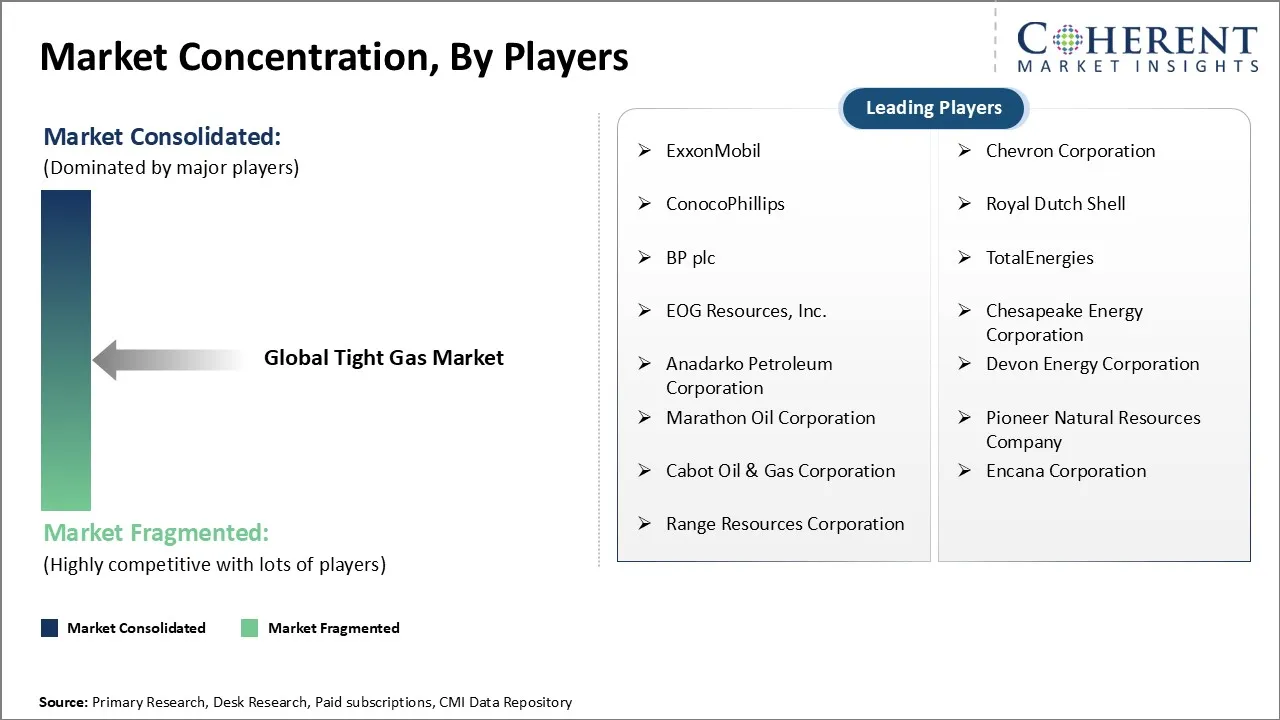
Market Players, Key Development, and Competitive Intelligence
Key Developments
- In February 2025, EOG Resources made a significant move in expanding its international presence by entering Bahrain. The company is set to develop an onshore unconventional tight gas prospect in collaboration with local partner Bapco Energies. This venture highlights EOG's commitment to increasing its global footprint and enhancing its production capacity in the tight gas sector.
- In November 2024, Oil and Gas Development Company Limited (PSX: OGDC) embarked on an extensive study to evaluate the tight gas potential in key areas of the Lower Indus Basin, Sindh. This initiative is a part of the company's efforts to tap into Pakistan's unconventional hydrocarbon resources, aligning with the Government of Pakistan's newly introduced Tight Gas Policy 2024. OGDC’s move marks a significant step toward advancing the country’s energy landscape.
- In October 2023, ExxonMobil unveiled a transformative merger with Pioneer Natural Resources through an all-stock deal that will significantly expand its presence in the Permian Basin, effectively doubling its footprint in the region. The merger combines Pioneer’s vast Midland Basin acreage with ExxonMobil’s holdings, resulting in an estimated 16 Bn barrels of oil equivalent. The strategic collaboration is aimed at optimizing production efficiency while accelerating the achievement of net-zero emissions targets, thereby enhancing U.S. energy security and fostering economic stability.
- In August 2023, Sinopec made a major breakthrough in its Project Deep Earth, announcing the discovery of 30.55 Bn cubic meters of proven geological reserves at the Bazhong gas field in Sichuan, China. This field, characterized by tight sandstone gas found at depths ranging from 4,550 to 5,225 meters, presents significant exploration challenges. Sinopec has developed innovative models to improve gas production in the area and will continue to assess and expand its tight gas reserves in the region.
Top Strategies Followed by Global Tight Gas Market Players
- Established market leaders primarily focus on substantial investments in research and development (R&D), driving innovation to create high-performance products that meet the complex requirements of tight gas extraction and processing. These companies leverage their significant capital reserves to pioneer advanced technologies that enhance efficiency, safety, and environmental compliance. To further solidify their dominance, they strategically form partnerships with major industry players and original equipment manufacturers (OEMs), creating synergies that enhance product portfolios and expand service offerings.
- For instance, ExxonMobil and Shell invest heavily in R&D to pioneer advanced technologies, such as hydraulic fracturing and enhanced gas recovery methods, improving efficiency, safety, and environmental compliance.
- Mid-level players in the tight gas market adopt a more cost-conscious approach, emphasizing the balance between product quality and affordability to attract price-sensitive consumers. Understanding that many buyers seek reliable yet economical solutions, these companies design and market cost-effective products that do not compromise essential performance parameters. They often optimize manufacturing processes and source competitive materials to maintain this balance.
- For instance, ConocoPhillips’ partnership with Halliburton for advanced drilling and fracking technologies has helped the company expand its operational capacity while keeping costs competitive.
- Small-scale players differentiate themselves by focusing on innovation and specialization within the tight gas segment. These players often develop niche products with unique features tailored to specific customer requirements, such as enhanced adaptability to regional geological conditions or eco-friendly extraction techniques. Staying competitive demands the adoption of cutting-edge technologies, including digital tools and automation, which help improve operational efficiency and product quality at smaller scales.
Market Report Scope
Tight Gas Market Report Coverage
| Report Coverage | Details | ||
|---|---|---|---|
| Base Year: | 2025 | Market Size in 2026: | USD 56.26 Bn |
| Historical Data for: | 2020 To 2024 | Forecast Period: | 2026 To 2033 |
| Forecast Period 2026 to 2033 CAGR: | 5.3% | 2033 Value Projection: | USD 80.76 Bn |
| Geographies covered: |
| ||
| Segments covered: |
| ||
| Companies covered: | ExxonMobil, Chevron Corporation, ConocoPhillips, Royal Dutch Shell, BP plc, TotalEnergies, EOG Resources, Inc., Chesapeake Energy Corporation, Anadarko Petroleum Corporation, Devon Energy Corporation, Marathon Oil Corporation, Pioneer Natural Resources Company, Cabot Oil & Gas Corporation, Encana Corporation, and Range Resources Corporation | ||
| Growth Drivers: |
| ||
| Restraints & Challenges: |
| ||
Tight Gas Market Dynamics
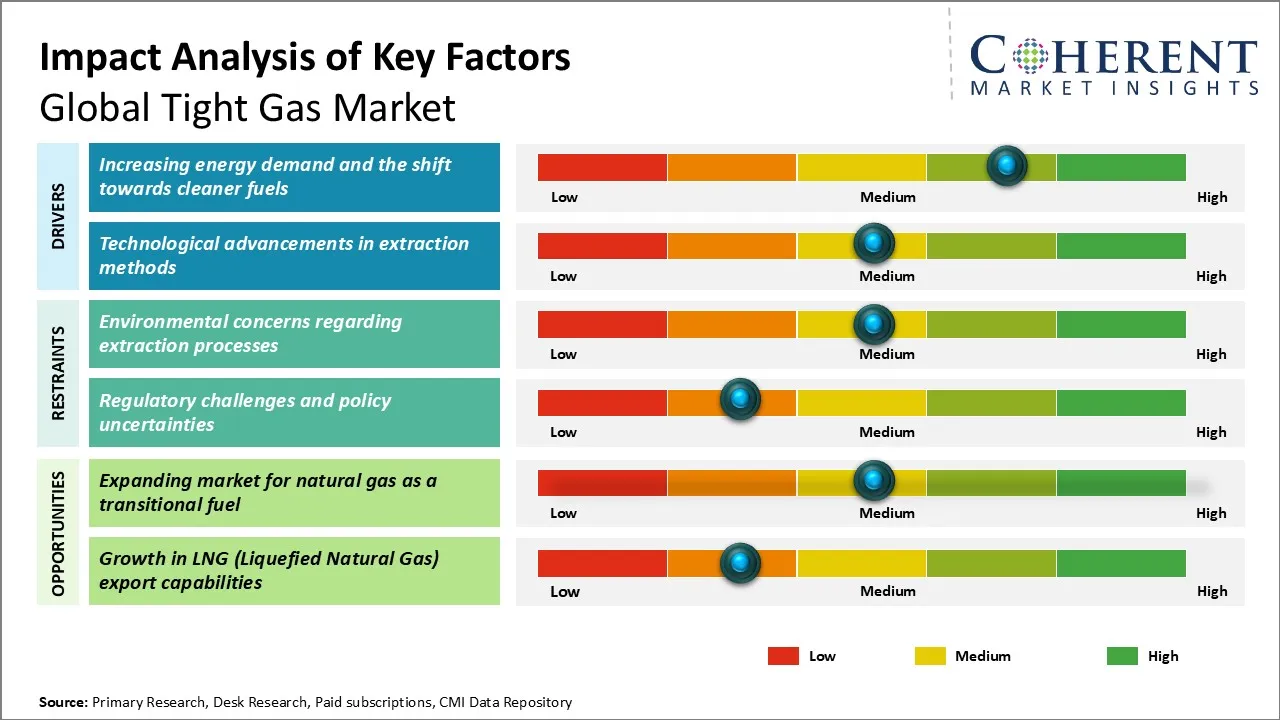
Tight Gas Market Driver - Increasing Energy Demand and the Shift towards Cleaner Fuels
The global tight gas market is increasingly propelled by the burgeoning need for energy worldwide coupled with a strategic shift towards cleaner fuel alternatives. As economies expand and populations grow, the demand for reliable and efficient energy sources intensifies, compelling energy providers to explore unconventional gas reserves like tight gas formations. Unlike traditional fossil fuels, tight gas offers a relatively cleaner-burning option, emitting fewer greenhouse gases compared to coal and oil, which aligns well with global initiatives aimed at reducing carbon footprints.
For instance, in the U.S., companies like EOG Resources and Chesapeake Energy are investing heavily in tight gas exploration, especially in regions like the Permian Basin, to meet rising energy demands while reducing their environmental impact. Tight gas, which is trapped in rock formations with low permeability, is considered a cleaner energy source compared to coal and oil, as it produces fewer CO2 emissions.
Tight Gas Market Opportunity - Expanding Market for Natural Gas as a Transitional Fuel
The global tight gas market stands to benefit significantly from the expanding role of natural gas as a transitional fuel in the ongoing shift toward cleaner and more sustainable energy sources. As governments and industries worldwide intensify efforts to reduce carbon emissions and combat climate change, natural gas emerges as a crucial bridge between high-emission fossil fuels like coal and more intermittent green energy sources such as solar and wind.
For instance, according to the International Energy Agency's Global Energy Review 2023, natural gas consumption for electricity generation increased by 2% globally in 2022, with particularly strong growth in Asia-Pacific regions where countries like India and Southeast Asian nations are replacing coal plants with gas-fired alternatives. This transition is creating substantial demand for unconventional gas sources, including tight gas formations, as conventional reserves become increasingly constrained.
Analyst Opinion (Expert Opinion)
- The global tight gas market is experiencing significant momentum, driven by technological advancements and the increasing demand for cleaner energy sources. Industry leaders like Chesapeake Energy and EOG Resources are leveraging hydraulic fracturing and horizontal drilling to unlock previously inaccessible reserves, showcasing the effectiveness of these methods at conferences such as the North American Gas Forum (2023) and the International Tight Gas Symposium (2022).
- Presentations highlighted successful case studies demonstrating how companies have optimized production techniques, leading to substantial cost reductions and enhanced recovery rates. Additionally, discussions emphasized the role of tight gas as a bridge fuel in the transition to a low-carbon future, particularly as countries strive to reduce reliance on coal.
- The integration of carbon capture technologies is also gaining traction, with industry stakeholders exploring ways to mitigate emissions associated with tight gas extraction. As global energy policies increasingly favor natural gas over more carbon-intensive fuels, the tight gas market is set for sustained growth, driven by innovation, strategic partnerships, and a collective push towards achieving energy security and environmental sustainability.
Speak to the analyst
Want personalized insights?
Take the findings above to one of our principal consultants, or have the report rebuilt around the segments, geographies and competitors you actually track.
Market Segmentation
- Application Insights (Revenue, USD Bn, 2021 - 2033)
- Industrial
- Power Generation
- Residential
- Commercial
- Transportation
- Production Method Insights (Revenue, USD Bn, 2021 - 2033)
- Hydraulic Fracturing
- Horizontal Drilling
- Vertical Drilling
- Regional Insights (Revenue, USD Bn, 2021 - 2033)
- North America
- U.S.
- Canada
- Latin America
- Brazil
- Argentina
- Mexico
- Rest of Latin America
- Europe
- Germany
- U.K.
- Spain
- France
- Italy
- Russia
- Rest of Europe
- Asia Pacific
- China
- India
- Japan
- Australia
- South Korea
- ASEAN
- Rest of Asia Pacific
- Middle East
- GCC Countries
- Israel
- Rest of Middle East
- Africa
- South Africa
- North Africa
- Central Africa
- North America
- Key Players Insights
- ExxonMobil
- Chevron Corporation
- ConocoPhillips
- Royal Dutch Shell
- BP plc
- TotalEnergies
- EOG Resources, Inc.
- Chesapeake Energy Corporation
- Anadarko Petroleum Corporation
- Devon Energy Corporation
- Marathon Oil Corporation
- Pioneer Natural Resources Company
- Cabot Oil & Gas Corporation
- Encana Corporation
- Range Resources Corporation
Sources
Primary Research Interviews
- R&D Director – Leading Tight Gas Extraction Technology Provider
- Procurement Manager – Major Natural Gas Distributor
- Product Development Head – Global Energy Company specializing in natural gas
- Sustainability Manager – Environmental Certification Body for Energy Sector
Stakeholders
- Manufacturers: Natural gas field operators, equipment manufacturers for tight gas extraction (e.g., hydraulic fracturing, drilling technologies)
- End-use Sectors:
- Power Generation (electric utilities using natural gas)
- Industrial (chemical feedstock, manufacturing)
- Residential & Commercial Heating and Cooling Systems
- Regulatory & Certification Bodies: Environmental Protection Agencies, Geological Survey Institutes, Energy Regulatory Authorities
- E-commerce Platforms and Retailers: Industrial equipment and technology vendors enabling tight gas extraction
- Technology Integration Players: AI and digital analytics providers for optimizing extraction and monitoring tight gas fields
Databases
- UN Comtrade Database
- India Import Export (EXIM) Database
Magazines
- Energy & Fuels Magazine: Trends and technologies in unconventional gas extraction
- Natural Gas World: Market updates and policy developments in natural gas sectors
- Oil & Gas Journal: Innovations in drilling and extraction technology targeting tight gas reservoirs
- Gas Processing & LNG Industry: Insights on gas processing techniques and economic factors affecting tight gas production
Journals
- Journal of Petroleum Science and Engineering: Advances in tight gas reservoir engineering and extraction methods
- International Journal of Coal Geology: Geological characterization and recovery factors for tight gas formations
- Energy Economics: Market impacts and price analyses for natural gas including tight gas resources
- Environmental Science & Technology: Sustainability and environmental impact assessments related to tight gas development
Newspapers
- The Financial Times: Market growth, investments, and geopolitical factors affecting global tight gas markets
- The Guardian: Environmental debates and policy changes impacting tight gas extraction
- Asia Energy Journal: Growth trends and regulatory developments in Asia-Pacific tight gas markets
- European Energy News: EU regulatory frameworks and health/environmental policies related to tight gas
Associations
- American Petroleum Institute (API)
- International Association of Oil & Gas Producers (IOGP)
- European Gas Research Group (GERG)
- Society of Petroleum Engineers (SPE)
- Clean Energy Council
Public Domain Sources
- U.S. Energy Information Administration (EIA): Data and forecasts on tight gas production and consumption
- International Energy Agency (IEA): Reports on global natural gas markets and tight gas technology trends
- Environmental Protection Agency (EPA): Guidelines and regulations on emissions and safety in tight gas operations
- World Bank – Energy Sector Reports: Investment and policy frameworks for natural gas development, including tight gas
Proprietary Elements
- CMI Data Analytics Tool, Proprietary CMI Existing Repository of information for last 8 years
Get access to 250+ pages report
Every segment, forecast, competitor profile and data table behind the analysis above — available for instant download.
- ESOMAR Member
- ISO 9001:2015 Certified
- D-U-N-S Registered
- GDPR & CCPA Compliant
Missing comfort of reading report in your local language? Find your preferred language:
Transform your Strategy with Exclusive Trending Reports
Frequently Asked Questions
The global tight gas market is estimated to be valued at USD 56.26 Bn in 2026 and is expected to reach USD 80.76 Bn by 2033.
Tight gas refers to natural gas trapped in low-permeability rock formations, making it difficult to extract without advanced drilling techniques.
Tight gas is produced through hydraulic fracturing (fracking) and horizontal drilling to release gas trapped in low-permeability rock formations.
The CAGR of global tight gas market is projected to be 5.3% from 2026 to 2033.
Increasing energy demand and the shift towards cleaner fuels and technological advancements in extraction methods are the major factors driving the growth of the global tight gas market.
Environmental concerns regarding extraction processes and regulatory challenges and policy uncertainties are the major factors hampering the growth of the global tight gas market.
In terms of Application, Industrial subsegment is estimated to dominate the market revenue share in 2026.