

Global Transgenic Animal Market Size and Forecast – 2026 to 2033
The Global Transgenic Animal Market is estimated to be valued at USD 4.38 Bn in 2026 and is expected to reach USD 8.87 Bn by 2033, reflecting a compound annual growth rate (CAGR) of 10.6% from 2026 to 2033. This robust growth is driven by increasing investments in biotechnology, advancements in genome engineering techniques, and rising demand for enhanced disease models and therapeutic protein production within pharmaceutical and agricultural sectors.
Key Takeaways of the Global Transgenic Animal Market
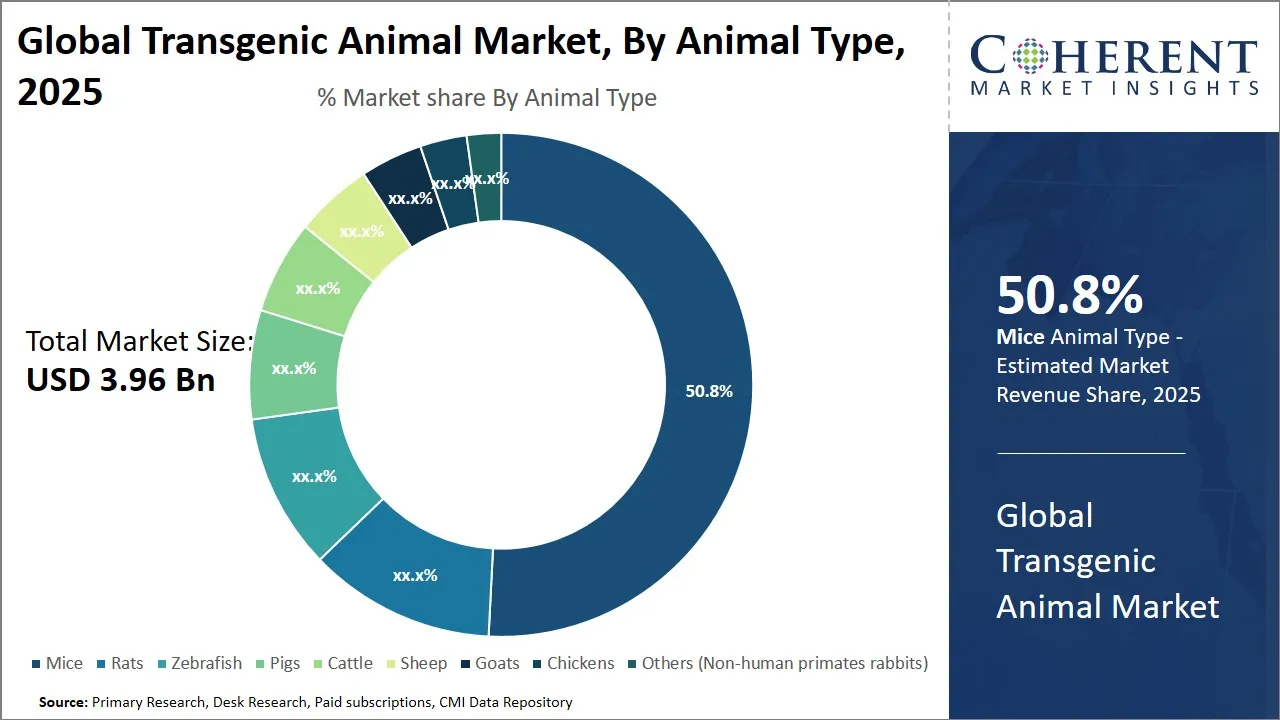
- By animal type, the mice segment is expected to account for 51.8 % of the market share in 2026.
- The microinjection segment is estimated to lead the market with a 24.4 % share in 2026.
- By application, the biomedical research segment is projected to capture 33.4 % of the global transgenic animal market share in 2026.
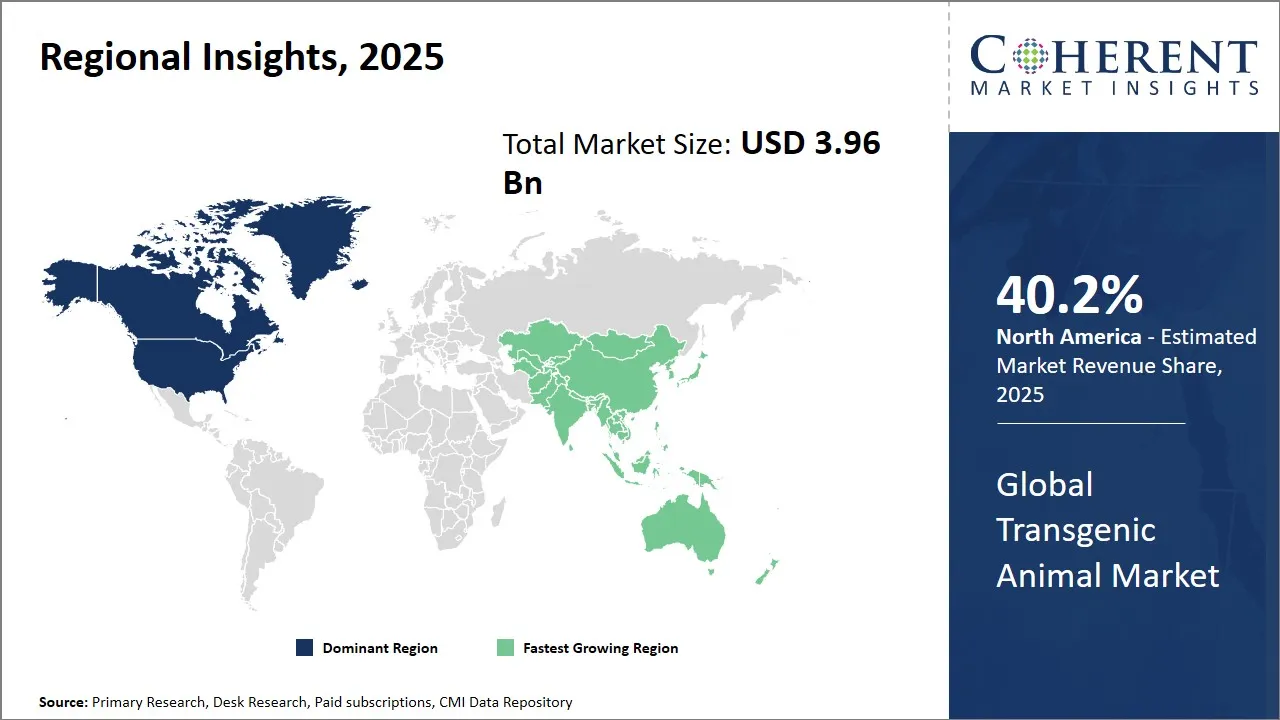
- North America is expected to lead the market, holding a share of 40.2 % in 2026. Asia Pacific is anticipated to be the fastest-growing region, with 23.5% share in 2026.
Market Overview
- A key market trend is the growing adoption of transgenic animals for biomedical research and drug development, which allows for more precise disease modeling and personalized medicine
- Moreover, regulatory support and collaborations between academic institutions and biotech companies are accelerating innovation in this space.
- The integration of CRISPR and other gene-editing technologies is further streamlining the development process, making transgenic animals more accessible and cost-effective, fueling market expansion worldwide.
Current Events and Its Impact
Current Events | Description and its Impact |
FDA formalizes a clearer pathway for heritable genomic alterations in animals (U.S.) |
|
Resolution of CRISPR-Cas9 Patent Disputes (e.g., Broad Institute vs. CVC) |
|
Segmental Insights
- Current Industry Events of 2026
- Market Size Estimation
- Regional Breakdown
- Competitive Landscape
- Customer Intelligence
- Segmental Analysis
- Pricing Analysis
- Key Market Drivers, Challenges & Future Trends
- Customized Insights Section
Why Does the Mice Segment Dominate the Global Transgenic Animal Market in 2026?
Regarding the animal type, mice dominate the market because of a number of inherent biological and practical benefits that have a share of 51.8% in 2026. First and foremost, mice have served as the basis of genetic research over the decades, due to their genome that has been extensively mapped, short reproduction cycles, and because they are genetically easy to handle. These characteristics allow the mice to be good models in the development of transgenic lines which can enable faster research which would have taken many years in bigger animals.
In July 2026, Biocytogen Pharmaceuticals, a Beijing-based global biotechnology company strengthened its transgenic animal platform and preclinical services. The company expanded its portfolio of transgenic and humanized mice to support advanced biomedical research. Biocytogen introduced enhanced efficacy, PK/PD, biomarker, and non-GLP toxicology services for drug development.
(Source: biocytogen.com)
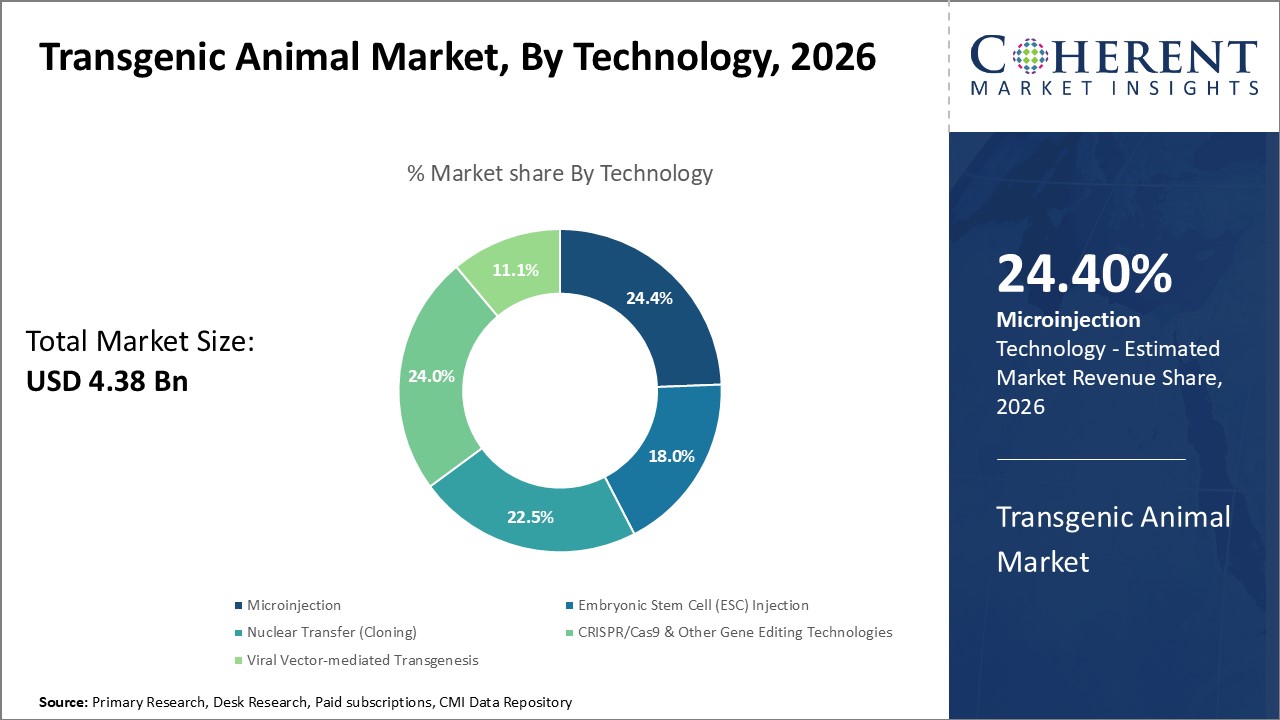
Why is Microinjection the Most Widely Used Technology in Transgenic Animal Production?
The microinjection segment is expected to dominate with a share of 24.4% in 2026 due to its accuracy and reliability over time. The method is a direct injection of foreign DNA into fertilized eggs and targeted genetic modification is achieved using the technique, with a relatively high success rate.
The benefit of microinjection is that it has been able to deliver specific gene constructs into the genome with spatial and time control that is essential in the development of complex disease models or animals possessing a desired trait.
What Makes Biomedical Research the Largest Application Area for Transgenic Animals?
The biomedical research appears as the most active use that drives the transgenic animal market growth with a share of 32.4% in 2025. Increasing complexity of human diseases and the necessity to have more detailed knowledge about their molecular basis have increased the importance of using transgenic animals as research tools.
They allow the scientists to investigate how genes work in vivo, which could provide the understanding of pathophysiological processes that are not entirely modeled in in vitro. This has increased with the groundswell of personalized medicine and targeted therapies.
Pipeline Mapping of Transgenic Animal-Based Biologics for the Transgenic Animal Market
- Pipeline mapping for transgenic animal-based biologics tracks how engineered animals generate therapeutic proteins. It links each asset to animal species, expression system, and intended indication. The map should tag development stage, CMC readiness, and regulatory pathway. It should also flag IP position, lead sponsor type, and partnering activity.
- For the transgenic animal market, pipeline mapping exposes where demand will form first. Highest momentum typically sits in antibodies, plasma proteins, and complex enzymes. The key filters are yield stability, herd scalability, and downstream purification feasibility. The output is a ranked list of near-term winners and capability gaps to invest in.
Regional Insights
North America Transgenic Animal Market Analysis and Trends
North America will account for a 40.2% share in 2026, driven by a robust biotechnology ecosystem marked by intensive research and development activity. The availability of high-level genetic engineering centers and leading animal biotechnology companies has led to the region being a center of transgenic animal breakthroughs.
The U.S. FDA and the USDA is concentrated on transparent regulatory systems on the genetically modified organisms which promote more confidence in the industry. Some of the most prominent companies like Genzyme (a subsidiary of Sanofi), Regeneron Pharmaceuticals and Genus plc play a key role in coming up with transgenic animals to enable pharmaceutical manufacturing, biomedical and agricultural improvements.
(Source: https://www.regeneron.com/science/technology)
(Source: https://www.genusplc.com/)
Asia Pacific Transgenic Animal Market Analysis and Trends
Asia Pacific region is expected to exhibit the fastest growth contributing 23.5% share in 2026, due to growth in biotechnology infrastructure, government programs encouraging life sciences, and growing awareness of the benefits of genetically modified animal in healthcare and agriculture.
The regulatory environment of some of the Asia Pacific countries is changing to facilitate the production and commercialization of transgenic animals. The regional innovation is spearheaded by notable companies like Beijing Genomics Institute (BGI), Nanjing Medical University, and the Bioved Research Institute in India.
Transgenic Animal Market Outlook for Key Countries
U.S. Transgenic Animal Market Trends
The U.S. market is leading in the transgenic animal market owing to its full investment in biotech policy support and R&D. The U.S. based companies such as Regeneron Pharmaceuticals are innovative in transgenic mouse models that speed up the drug target validation and production of monoclonal antibodies. Government agencies are one of the means by which advanced research takes place by funding organizations like the NIH, which gives funding to projects that focus on genetic modification and animal models.
In March 2026, the White House noted that transgenic animal research was being funded by National Institutes of Health one of the largest U.S. biomedical funding agencies. The grants were used to fund hormone related research with transgenic animal mouse models on various institutions. The projects analyzed the impact of hormones on immunity cancer reproduction neuroendocrine signaling and asthma outcomes.
(Source: whitehouse.gov)
China Transgenic Animal Market Trends
The increased biotechnology industries in China are concentrating more on the transgenic animal technologies to enhance healthcare and agricultural yields. Research institutes and companies such as BGI are the first to make efforts on gene-editing in animals to model diseases and advance agricultural sustainability, which is supported by the state. The regulatory environment and the development of infrastructure has been hastened with the powerful drive by the government towards innovation in such programs as Made in China 2026 which has turned the country into an up-and-coming leader.
In November 2026, to enhance its ambition to dominate the world in biotech, China, accelerated experiments on transgenic animals. Gene edited large animal models were introduced in Chinese research institutions in addition to the mice to pigs and primates. These animal transgenic studies were used to discover drugs in complex diseases such as ALS.
Germany Transgenic Animal Market Trends
The presence of developed pharmaceutical sector, as well as commitment to scientific research, supports the presence of a robust transgenic animal market in Germany. Famous institutions, like the Max Planck Institute and universities in Munich and Berlin, collaborate with other companies, like Evotec, to come up with transgenic animals that are used in the study of the neurological and immunological research.
Favorable EU regulation systems and the accuracy of engineering in Germany enrich product development and commercialization.
Japan Transgenic Animal Market Trends
Japan uses its high technologies and effective regulatory system to facilitate the development of its transgenic animal market. Such companies like AnGes Inc. are proactive in advancing gene therapy through transgenic animals models. Biomedical research and regenerative medicine allows competition because the government supports biotech growth using grants and through public-private collaborations.
Regulatory Approval Timelines, Ethical Acceptance & Public Policy Risk Index in the Transgenic Animal Market
- Regulatory approval timelines in the transgenic animal market vary sharply by end use. Research models often clear institutional and biosafety reviews in months, not years. Food, agriculture, and environmental releases face multi-agency assessments, extending timelines to years. Clinical uses add preclinical packages, GMP biology, and trial approvals, lengthening further.
- Ethical acceptance is the swing factor, because public policy can change faster than science. Use a Public Policy Risk Index scoring welfare scrutiny, transparency demands, and political volatility. Add weights for activism intensity, trade exposure, labeling rules, and precedent of moratoria. High scores push firms toward contained bioproduction and R&D markets, not open-field launches.
Market Players, Key Developments, and Competitive Intelligence
Key Developments
- On December 16, 2025, OmniAb, a U.S. based antibody discovery technology company, launched a Transgenic Animal platform. The OmniUltra system uses a transgenic chicken to generate ultralong human antibody domains. The platform expands antibody discovery into peptides and complex therapeutic targets. The launch at the AET Conference strengthens OmniAb’s leadership in next generation biologics.
- In September 2025, Ablexis a U.S. based antibody discovery biotechnology company announced validation and availability of AlivaMab Mouse. The platform expands its next generation transgenic animal mouse portfolio for fully human antibody discovery. Ablexis stated the transgenic animal models support faster therapeutic development and improved antibody quality.
- In December 2024, CSIRO, Australia’s national science agency, partnered with Oxitec, a U.K. biological pest control company, to launch Oxitec Australia. The initiative uses transgenic animal mosquito technology to control disease-spreading Aedes species. Genetically engineered male mosquitoes reduce female populations without biting humans. The program targets dengue and Zika risks threatening mainland Australia.
- In March 2024, the University of Illinois, a leading U.S. public research university, announced a Transgenic Animal breakthrough. Scientists led by Professor Matt Wheeler created the first transgenic cow producing human insulin in milk. The research targets global insulin shortages amid rising diabetes cases worldwide. Using genetic engineering, human DNA was integrated into the cow’s mammary cells. The cow acts as a biological bioreactor for cost-effective insulin production.
Top Strategies Followed by Global Transgenic Animal Market Players
Player Type | Strategic Focus | Example |
Established Market Leaders | Heavy R&D investment in high-precision transgenic and humanized animal models strict compliance with ethical and regulatory standards strategic alliances with pharma biotech firms and research institutes global expansion through breeding facilities and distribution networks | Taconic Biosciences Charles River Laboratories Envigo and genOway expand CRISPR based model portfolios and scale global research services |
Mid-Level Players | Cost-effective and reliable transgenic models for research institutions collaborations with CROs and academic labs to share development costs capacity expansion through joint ventures focus on emerging markets and regional demand | Crown Bioscience Cyagen Biosciences and PolyGene compete on value driven models and regional partnerships |
Small-Scale Players | Niche innovation using advanced CRISPR cloning and custom gene editing agile development of specialized models localized alliances with universities and biotech startups focus on unmet research needs and customization | Emerging biotech startups and university spin-offs offering disease-specific or rare mutation transgenic models |
Market Report Scope
Transgenic Animal Market Report Coverage
| Report Coverage | Details | ||
|---|---|---|---|
| Base Year: | 2025 | Market Size in 2026: | USD 4.38 Bn |
| Historical Data for: | 2020 To 2024 | Forecast Period: | 2026 To 2033 |
| Forecast Period 2026 to 2033 CAGR: | 10.6% | 2033 Value Projection: | USD 8.87 Bn |
| Geographies covered: |
| ||
| Segments covered: |
| ||
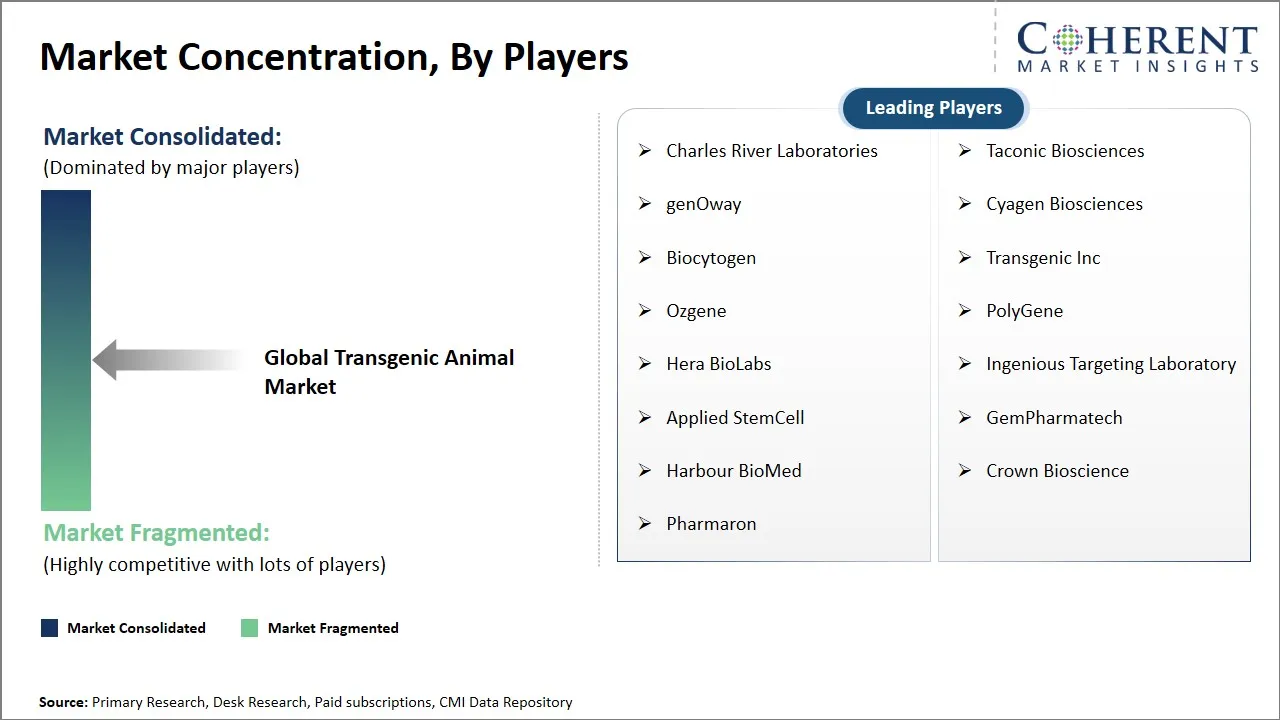
| Companies covered: | Charles River Laboratories, Taconic Biosciences, genOway, Cyagen Biosciences, Biocytogen, Transgenic Inc, Ozgene, PolyGene, Hera BioLabs, Ingenious Targeting Laboratory, Applied StemCell, GemPharmatech, Harbour BioMed, Crown Bioscience, and Pharmaron | ||
| Growth Drivers: |
| ||
| Restraints & Challenges: |
| ||
Transgenic Animal Market Dynamics
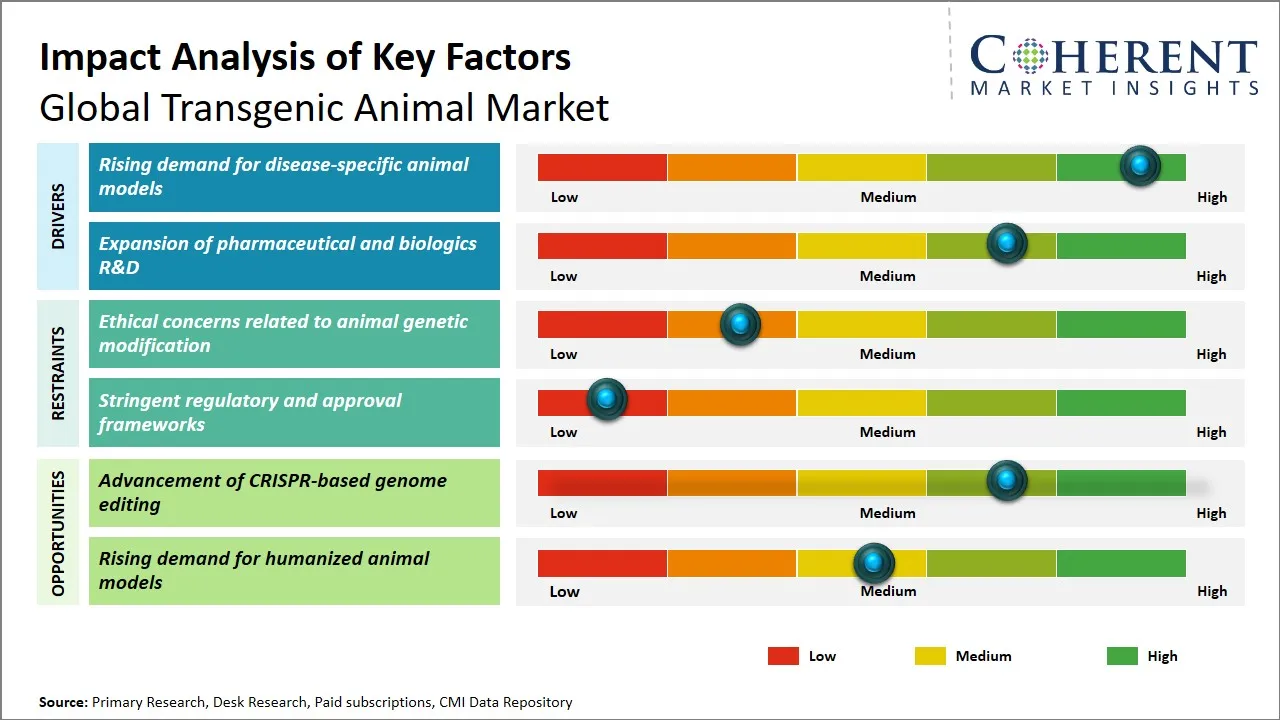
Transgenic Animal Market Driver - Rising Demand for Disease-Specific Animal Models
The need to have animal models, which are disease specific is another important factor that is driving the transgenic animal market in the world. The recent progress in biomedical studies has led to the need to create accurate animal models that simulate human pathologies to understand sophisticated pathological processes and measure the effectiveness and safety of novel therapeutics. Transgenic animals are those that have been engineered to possess certain genetic alterations and are important in offering a priceless understanding of the conditions like cancer, neurodegenerative diseases, cardiovascular diseases, and infectious diseases. Such models allow the researcher to recapitulate disease progression and genetic forces more precisely than the conventional models, making preclinical studies more reliable.
In August 2025, U.S. regulators signaled a shift impacting Transgenic Animal research in rare disease development. NIH, the leading U.S. biomedical funder, and U.S. FDA, the drug regulator, encouraged alternatives to animal models. Phase Advance, an AI drug development company, highlighted poor human translation from animal data. Certara, a drug development consulting firm, and Medera, a regenerative medicine company, supported human model approaches. Experts said animal studies remain relevant but flexibility will accelerate rare disease therapies.
(Source: fda.gov)
Transgenic Animal Market Opportunity - Advancement of CRISPR-Based Genome Editing
The recent development of CRISPR based genome editing technologies is a huge opportunity in the expansion of global transgenic animal market. CRISPR (Clustered Regularly Interspaced Short Palindromic Repeats) provides an unprecedented precision, efficiency, and cost-efficiency in editing animal genomes in comparison with the conventional genetic engineering techniques. The technology allows the production of transgenic animals with extremely fine specifications, which will speed up the genetics to develop disease models, xenotransplantation solutions, and livestock that is genetically enhanced. CRISPR is useful in biomedical studies where it is easy to quickly develop animal models with human disease mutations; this will help in the process of drug discovery and designing therapeutic interventions.
In June 2025, Taconic Biosciences, a global provider of transgenic animal models, signed an exclusive CRISPR license. Helmholtz Munich, a leading German biomedical research institute, contributed patented CRISPR gene editing technology. The partnership strengthens advanced transgenic animal model generation for faster and more precise biomedical research. The agreement supports accelerated disease research and improved translation of genetic discoveries into therapies.
(Source: taconic.com)
Analyst Opinion (Expert Opinion)
- Gene-editing technologies, including CRISPR Cas9, are enhancing the transgenic animal market by making these technologies more accurate and rapid to develop and easier to enter than research and pharmaceutical applications. There is an increasing demand of humanized animal models, which will improve the drug discovery outcomes in oncology, immunology, and rare diseases. Better regulatory frameworks in the U.S., Japan and certain European regions favor organized adoption whereas ethical issues, high costs of operation and global disparities in regulations are major limitations.
- Recent conferences such as Cold spring harbors genome engineering meetings, EMBO genome editing conferences, and annual meetings of American Society of human Genetics have enhanced knowledge sharing and ethical correspondence. Further market development is conditioned by the ongoing NIH funding, the development of government-supported transgenic research institutes in China, and increased cooperation in the creation of more sophisticated humanized models, which predicts the transition to practicable and scalable applications.
Speak to the analyst
Want personalized insights?
Take the findings above to one of our principal consultants, or have the report rebuilt around the segments, geographies and competitors you actually track.
Market Segmentation
- Animal Type Insights (Revenue, USD Bn, 2021 - 2033)
- Mice
- Rats
- Zebrafish
- Pigs
- Cattle
- Sheep
- Goats
- Chickens
- Others (Non-human primates rabbits)
- Technology Insights (Revenue, USD Bn, 2021 - 2033)
- Microinjection
- Embryonic Stem Cell (ESC) Injection
- Nuclear Transfer (Cloning)
- CRISPR/Cas9 and Other Gene Editing Technologies
- Viral Vector-mediated Transgenesis
- Application Insights (Revenue, USD Bn, 2021 - 2033)
- Biomedical Research
- Drug Discovery and Development
- Toxicology and Safety Testing
- Disease Modeling
- Regenerative Medicine
- Xenotransplantation
- Biopharmaceutical Production
- Agricultural Trait Enhancement
- Disease Area Insights (Revenue, USD Bn, 2021 - 2033)
- Oncology
- Neurological Disorders
- Cardiovascular Diseases
- Metabolic Disorders
- Immunological and Autoimmune Diseases
- Genetic and Rare Diseases
- Infectious Diseases
- End User Insights (Revenue, USD Bn, 2021 - 2033)
- Academic and Research Institutes
- Pharmaceutical Companies
- Biotechnology Companies
- Contract Research Organizations (CROs)
- Agricultural Research Organizations
- Government and Regulatory Laboratories
- Regional Insights (Revenue, USD Bn, 2021 - 2033)
- North America
- U.S.
- Canada
- Latin America
- Brazil
- Argentina
- Mexico
- Rest of Latin America
- Europe
- Germany
- U.K.
- Spain
- France
- Italy
- Russia
- Rest of Europe
- Asia Pacific
- China
- India
- Japan
- Australia
- South Korea
- ASEAN
- Rest of Asia Pacific
- Middle East
- GCC Countries
- Israel
- Rest of Middle East
- Africa
- South Africa
- North Africa
- Central Africa
- North America
- Key Players Insights
- Charles River Laboratories
- Taconic Biosciences
- genOway
- Cyagen Biosciences
- Biocytogen
- Transgenic Inc
- Ozgene
- PolyGene
- Hera BioLabs
- Ingenious Targeting Laboratory
- Applied StemCell
- GemPharmatech
- Harbour BioMed
- Crown Bioscience
- Pharmaron
Sources
Primary Research Interviews
Industry Stakeholders List
- Chief Scientific Officers of biotech firms
- Heads of transgenic core facilities
- Directors of animal model development units
- Regulatory affairs leaders in life sciences
- Gene editing platform leads
- Senior translational research scientists
End Users List
- Principal investigators in biomedical research
- Preclinical research heads in pharma companies
- Toxicology study directors
- Academic laboratory heads
- Clinical research scientists
- Government research laboratory scientists
Government and International Databases
- National Institutes of Health (NIH)
- U.S. Food and Drug Administration (FDA)
- European Medicines Agency (EMA)
- World Health Organization (WHO)
- Organization for Economic Co-operation and Development (OECD)
- Food and Agriculture Organization (FAO)
Trade Publications
- Nature Biotechnology
- BioWorld
- The Scientist
- Genetic Engineering & Biotechnology News (GEN)
- Science Translational Medicine
- PharmaTimes
Academic Journals
- Nature
- Science
- Proceedings of the National Academy of Sciences (PNAS)
- Trends in Biotechnology
- Cell
- EMBO Journal
Reputable Newspapers
- The New York Times
- The Guardian
- The Wall Street Journal
- Financial Times
- The Washington Post
- Nikkei Asia
Industry Associations
- International Society for Transgenic Technologies (ISTT)
- American Association for Laboratory Animal Science (AALAS)
- Federation of European Laboratory Animal Science Associations (FELASA)
- Biotechnology Innovation Organization (BIO)
- European Society of Gene and Cell Therapy (ESGCT)
- International Council for Laboratory Animal Science (ICLAS)
Public Domain Resources
- ClinicalTrials.gov
- EU CORDIS Database
- USPTO Patent Database
- European Patent Office Espacenet
- WHO Global Health Library
Proprietary Elements
- CMI Data Analytics Tool: Proprietary analytics tool to analyze real-time market trends, consumer behavior, and technology adoption in market
- Proprietary CMI Existing Repository of Information for Last 8 Years
Get access to 250+ pages report
Every segment, forecast, competitor profile and data table behind the analysis above — available for instant download.
- ESOMAR Member
- ISO 9001:2015 Certified
- D-U-N-S Registered
- GDPR & CCPA Compliant
Missing comfort of reading report in your local language? Find your preferred language:
Transform your Strategy with Exclusive Trending Reports
Frequently Asked Questions
The global transgenic animal market is estimated to be valued at USD 4.38 Bn in 2026 and is expected to reach USD 8.87 Bn by 2033.
The CAGR of global transgenic animal market is projected to be 10.6% from 2026 to 2033.
Rising demand for disease-specific animal models and expansion of pharmaceutical and biologics R&D are the major factors driving the growth of the global transgenic animal market.
Ethical concerns related to animal genetic modification and stringent regulatory and approval frameworks are the major factors hampering the growth of the global transgenic animal market.
In terms of animal type, mice is estimated to dominate the market revenue share in 2026.
They enable precise testing of drug efficacy, toxicity, and gene-specific responses.
The market will increasingly align with precision medicine and advanced biologics research.