

UK Burn Care and Wound Care Market Size and Forecast – 2026 To 2033
The UK burn care and wound care market is expected to grow from USD 1,616.0 Mn in 2026 to USD 2,455.8 Mn by 2033, registering a compound annual growth rate (CAGR) of 6.2%. The UK burn care and wound care market is poised for significant expansion, fueled by the rising incidence of burn injuries and chronic wounds that continues to generate considerable demand for advanced wound management solutions.
According to the National Health Services (NHS) England, approximately 120,000 people with burn injuries visit Emergency Departments (ED) each year and approximately 8,000 are admitted to hospital, emphasizing the continuous need for effective burn treatment and wound care products.
(Source: NHS England)
Key Takeaways of the UK Burn Care and Wound Care Market
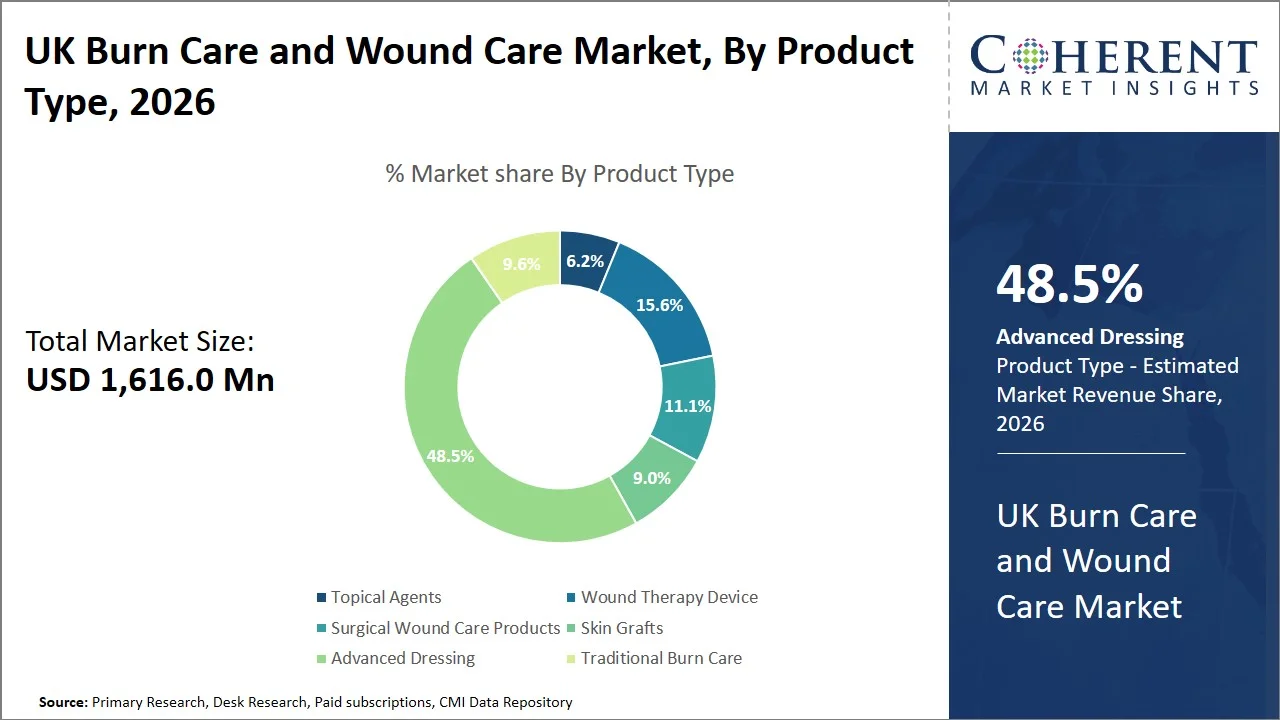
- Advanced dressing is projected to hold 48.5 % of the UK burn care and wound care market share in 2026, making it the dominant product type segment, due to their potential to enhance faster healing, control exudate, and decrease the infection rate in both chronic and acute wounds. The segment continues to benefit from innovation in antimicrobial and silicone-based dressing technologies. For instance, in March 2026, Smith+Nephew unveiled its latest ALLEVYN COMPLETE CARE Foam Dressing, aimed at optimizing wound care and pressure injury prevention with greater absorption capacity, conformability, and patient protection. (Source: Smith+Nephew) These product innovations encourage the wider use of sophisticated dressings across UK healthcare settings.
- Wound type is projected to hold 68.4 % of the UK burn care and wound care market share in 2026, making it the dominant application segment, due to the soaring burden of chronic wounds, diabetic foot ulcers, pressure ulcers, and surgical wounds requiring ongoing treatment. The segment is further validated by healthcare efforts to optimize wound evaluation and outcomes. For instance, the National Wound Care Strategy Programme (NWCSP) commissioned by NHS England, developed a series of evidence-based recommendations for practice to address inequalities and optimize outcomes in wound care with particular attention to leg and foot ulcers, surgical wounds and pressure ulcers. (Source: NHS England) These initiatives are driving the implementation of efficacious wound care products and best-practice treatment pathways across UK.
- Hospitals and clinics are projected to hold 65.9 % of the UK burn care and wound care market share in 2026, making it the dominant end user segment. The segment’s growth is driven by the presence of specialized burn centers, a comprehensive framework for advanced wound management, and multidisciplinary care teams. Their dominance is reinforced by the high volume of burn-related admissions and complex wound cases requiring professional treatment. For instance, NHS England reports that approximately 350 patients are admitted to hospital each year with severe burn injuries requiring fluid resuscitation and specialist care. (Source: NHS England) Such complex cases necessitate advanced wound management capabilities, supporting the continued dominance of hospitals and clinics in the UK burn care and wound care market.
- Rising Adoption of AI-Based Burn and Wound Assessment Technologies: The integration of AI and advanced imaging technologies is revolutionizing wound assessment and is now enabling more objective quantification of wound depth, tissue viability, and rates of healing. This facilitates faster, more accurate treatment decisions by clinicians, leading to more consistent care. The expanding use of AI-powered wound diagnosis technologies in burn care centers and hospitals are expected to yield positive patient results and fuel market growth.
- Expansion of Advanced Wound Care in Community and Home-Based Settings: This transition of wound care from acute settings to community health and home care is generating the demand for simple, high-technology dressings, mobile negative pressure wound therapy (NPWT) systems and remote monitoring technology. As healthcare professionals focus on reducing hospital stay durations and preventing readmissions through effective outpatient wound care, manufacturers have significant opportunities to develop and supply products that support the growing demand for decentralized wound management.
Segmental Insights
Why Does Advanced Dressing Dominate the UK Burn Care and Wound Care Market?
Advanced dressing is projected to hold a market share of 48.5% in 2026, because they offer an optimum healing environment and reduce the number of dressing changes and facilitate wound management of complex wounds. These dressings offer better management of moistness and exudate control, infection prevention, chronic wounds, burns and post-operative wounds. The preference for clinical outcomes, which shorten healing time and lower resource utilization, is driving this segment growth. For instance, the National Institute for Health and Care Excellence has published evidence summary on chronic wounds, and the report recognizes the clinical importance of both advanced wound dressings and antimicrobial dressings, particularly in the management of complicated wounds and the minimization of the risk of infections. The guidelines encourage application of advanced dressing technologies when necessary and confirms the increasing implementation in the UK health systems. (Source: NICE)
- Current Industry Events of 2026
- Market Size Estimation
- Regional Breakdown
- Competitive Landscape
- Customer Intelligence
- Segmental Analysis
- Pricing Analysis
- Key Market Drivers, Challenges & Future Trends
- Customized Insights Section
Why Does Wound Type Represent the Largest Application Segment in the UK Burn Care and Wound Care Market?
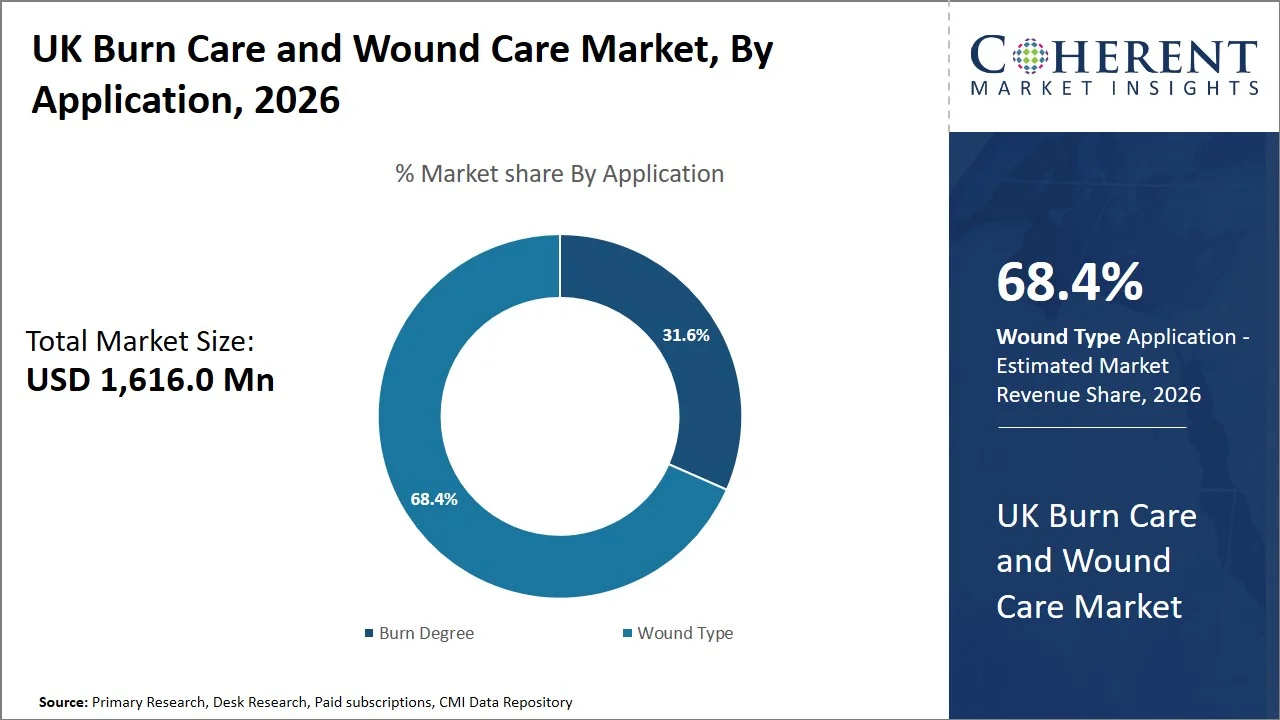
Wound type is projected to hold 68.4% of the market share in 2026, fueled by the growing prevalence of acute and chronic wounds that need continuous management and follow-up care. Wounds, such as those that appear in diabetic feet, legs and on bedridden patients and post-surgery, need particular treatments, such as modern dressings, the control of infections, and management in the long run. The increasing incidences of these wounds continue to stimulate the demand for wound care products in the market. For instance, a UK NHS burden study identified that approximately 3.8 million patients are being treated for wounds annually, representing an increase of 71% since 2012/2013. The considerable number of acute and chronic wounds needing treatment, observation and follow-up emphasize the growing clinical need for wound management solutions, supporting the large wound type segment size. (Source: National Library of Medicine)
Hospitals and Clinics Segment Dominates the UK Burn Care and Wound Care Market
The hospitals and clinics segment is expected to hold 65.9% of the UK burn care and wound care market share in 2026, as they enable the effective management of serious burns, chronic wounds, surgical wounds, and others. Hospitals and clinics have facilities that cater to specialized treatment and continuous monitoring and can provide expert care. Multidisciplinary care teams, specialized wound management technologies and specific facilities available for burn care at hospitals and clinics help the segment to continue its domination. The number of individuals seeking professional wound assessment, control over infection and advanced therapies is constantly on the rise. For instance, The NHS England Burn Clinical Network Specification provides a description of an integrated, nation-wide network of Burn Facilities, Units and Centers, providing appropriate level of burns care for severity of burn. The establishment of this organized network of specialized burns services reinforces the fact that hospitals and clinical centers are core in providing sophisticated burns care and wound management services throughout the UK. (Source: NHS England)
Currents Events and their Impact
Current Events | Description and its Impact |
MHRA Post-Market Surveillance (PMS) Requirements for Medical Devices (January 2025) |
|
MHRA Future Medical Device Regulatory Framework Implementation (March 2026) |
|
(Source: Medicines and Healthcare products Regulatory Agency, Government of UK)
UK Burn Care and Wound Care Market Dynamics
Market Drivers
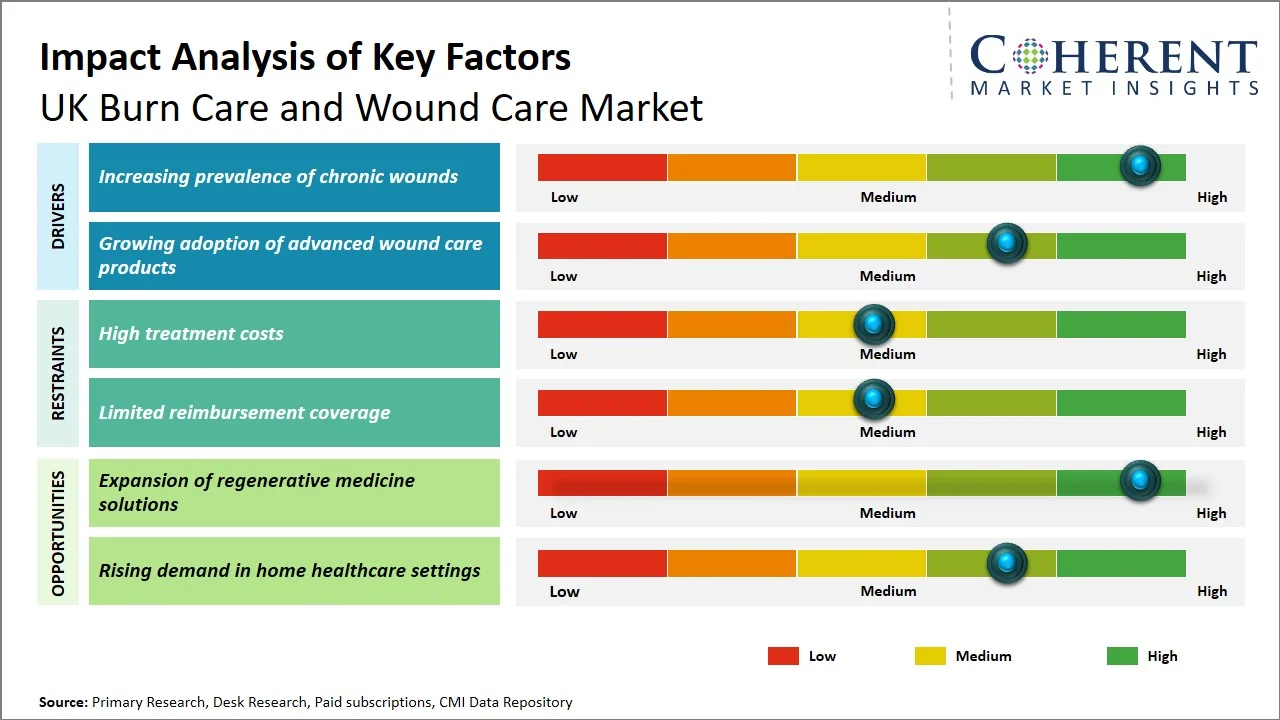
- Increasing prevalence of chronic wounds: Increasing prevalence of chronic wounds and burn injuries is expected to be one of the most significant factors fueling the demand for advanced wound care products and specific burn care solutions within the UK. With increasing instances of diabetes, obesity, vascular diseases, an increased elderly population are leading to the escalating number of individuals with chronic wound care needs and ongoing follow up treatment. The demand for innovative dressings, biologics, and regenerative medicines is expected to increase. For instance, burn injuries are among the most distressing injuries, affecting approximately 250,000 people annually in the UK. (Source: National Library of Medicine) The rising volume of patients requiring acute treatment and ongoing wound management is reinforcing sustained demand for burn care and wound care products across UK.
- Growing adoption of advanced wound care products: The growth in the UK burn care and wound care market is attributed to the growing use of advanced wound care products as health care professionals explore more effective methods to treat intricate and chronic wounds. In terms of benefits, advanced dressings, antimicrobial products, NPWT, and bioactive wound care, healing outcomes are enhanced, and the risk of infection decreases, leading to an accelerated healing period. Evidence-based care and NHS cost implications are among the major driving factors pushing for the adoption of advanced wound therapies. For instance, NICE supports the implementation of clinically effective wound management that promotes the healing process and reduces the ongoing long-term commitment required of the health care system. With the management of chronic wounds being expensive in terms of length of time the patient is on therapy and need for healthcare intervention, the use of advanced wound care to promote healing, and allow patients to return to a normal lifestyle while promoting efficient use of the resources within the NHS. (Source: NICE)
Emerging Trends
- Growing Adoption of Antimicrobial and Infection-Management Dressings: The growing emphasis on reducing the incidence of wound infection, burn wounds and chronic ulcers are necessitating the use of newer generation antimicrobials in wound dressings (e.g. Silver, iodine, bioactive materials). These materials help to minimize bacterial load, accelerate healing and reduce risk of infections. Growing fears about antimicrobials resistance is prompting research into further innovative approaches for the control of infections.
- Increasing Use of Regenerative Biomaterials and Bioengineered Skin Substitutes: Wound care providers are increasingly examining regenerative biomaterials, tissue-engineered scaffolds and bio-engineered skin substitutes to promote wound healing and reduce scarring. These technologies are proving to be a benefit in hard-to-heal and burns where many conventional therapies may be insufficient. Ongoing studies and clinical trials should increase their usage in specific wound care environments.
Regulatory and Reimbursement Framework Shaping the UK Burn Care and Wound Care Market
Category | Policy/Framework | Description | Impact on Market |
Medical Device Regulation | UK Medical Devices Regulations 2002 (as amended) | Governs safety, performance, conformity assessment, and post-market surveillance of wound care products, dressings, and NPWT devices. | Ensures product quality and patient safety while influencing product approvals and market entry. |
Clinical Guidelines | NICE Guidelines for Chronic Wounds & Pressure Ulcers | Provides evidence-based recommendations on wound assessment, prevention, and treatment practices. | Promotes adoption of clinically proven wound care products and standardized treatment pathways. |
Burn Care Framework | NHS England Burns Clinical Network Specification | Establishes standards for specialized burn services, referral pathways, and patient management. | Supports demand for advanced burn care products and specialized treatment solutions. |
National Wound Care Initiative | National Wound Care Strategy Programme (NWCSP) | Aims to reduce variation in wound care management and improve healing outcomes across NHS services. | Drives utilization of advanced wound care products and best-practice care models. |
Reimbursement & Procurement | NHS Supply Chain & Integrated Care Board (ICB) Funding Pathways | Guides procurement and funding decisions for wound care technologies and services. | Facilitates adoption of cost-effective wound care solutions and influences purchasing behavior. |
How is the expansion of regenerative medicine solutions creating new growth opportunities in the UK burn care and wound care market?
The development and adoption of regenerative medicine treatments in the UK burn and wound care market represents a growing segment for treatment and are beneficial in accelerated tissue repair, minimal scarring and positive outcomes in burn injuries and non-healing wounds. There is a rising use of bioengineered skin grafts, cell therapies and regenerative matrices, increasing the demand for sophisticated wound treatments. For instance, in December 2024, scientists at the University of Brighton announced that a new wound dressing material is capable of improving the rate at which wounds heal by recreating the native tissue environment and encouraging the tissue regeneration process, was discovered. The research may lead to revolutionary, new-generation regenerative wound-healing materials to revolutionize burns and chronic wounds treatments. (Source: University of Brighton) These new developments are likely to boost investment in bioengineered wound treatment and provide new commercial prospects in the UK burn care and wound care market.
Market Players, Key Development, and Competitive Intelligence
Key Developments
- In June 2025, Spectral AI's DeepView System was presented at the British Burn Association (BBA) Conference in the UK, signifying the increase of AI and sophisticated imaging solutions to the field of burn care. It uses AI multispectral imaging to determine the potential healing ability of burn wounds, enabling support to clinical decisions to be made. These advances are continuing to drive burn assessment toward objective and data-driven solutions, further improving accurate treatments and overall outcomes within the UK burn care and wound care market.
- In March 2025, Mölnlycke Health Care AB entered a partnership with the Phoenix Society for Burn Survivors to work together to provide education, advocacy, and support services to burn survivors. This partnership exemplifies a shift in burn care toward a focus on complete patient care and a patient's entire recovery journey- beyond the initial wound care. Partnerships such as this enhance the burn care ecosystem and benefit patients.
Competitive Landscape
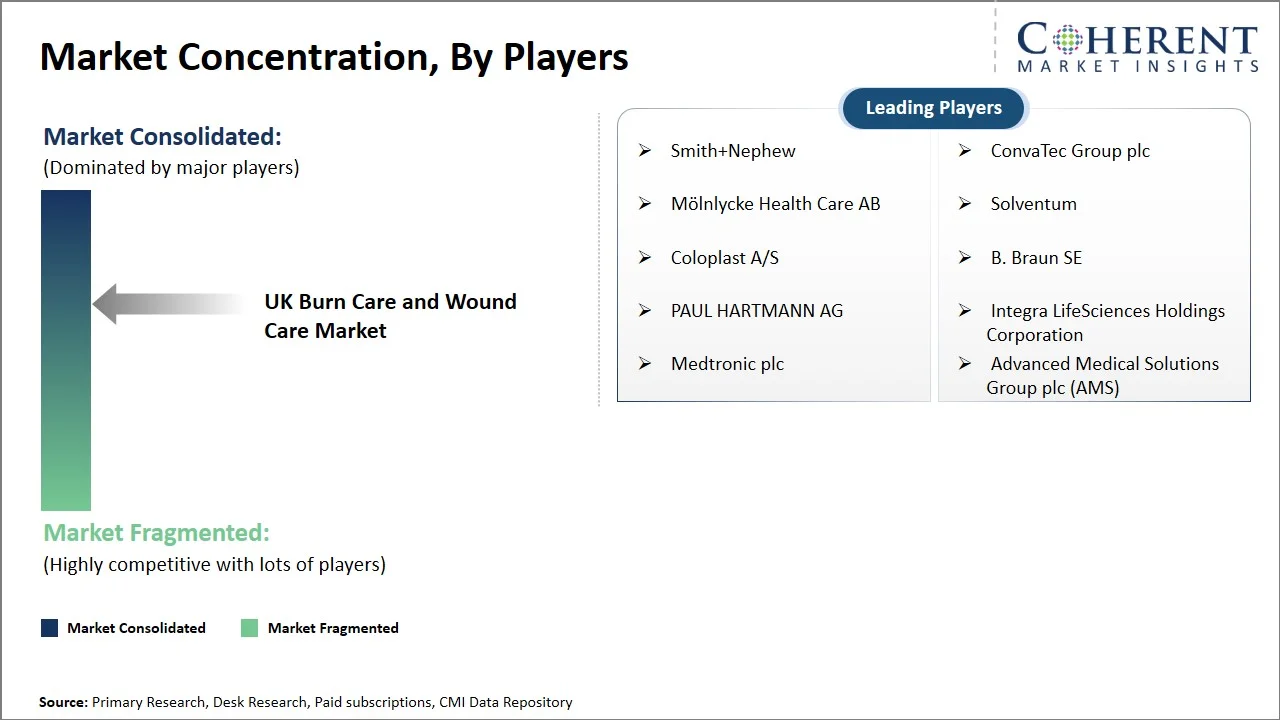
The UK burn care and wound care market is highly competitive, characterized by the existence of well-established companies with strong competition occurring as a result of constant innovations in advanced wound dressings, NPWT (negative pressure wound therapy devices) systems, antimicrobial wound care, and regenerative wound care. Companies are keenly involved in the process of improving the wound healing rates and minimizing infection risks along with the comfort of the patients both for chronic and acute wounds. Key focus areas include:
- Development of advanced foam, silicone, hydrofiber, and antimicrobial dressings
- Expansion of negative pressure wound therapy (NPWT) and portable wound care solutions
- Integration of digital wound assessment, AI-enabled diagnostics, and remote monitoring technologies
- Strengthening partnerships with healthcare providers and NHS initiatives
- Investment in biologics, tissue regeneration, and skin substitute
Market Report Scope
UK Burn Care and Wound Care Market Report Coverage
| Report Coverage | Details | ||
|---|---|---|---|
| Base Year: | 2025 | Market Size in 2026: | USD 1,616.0 Mn |
| Historical Data for: | 2020 To 2024 | Forecast Period: | 2026 To 2033 |
| Forecast Period 2026 to 2033 CAGR: | 6.2% | 2033 Value Projection: | USD 2,455.8 Mn |
| Segments covered: |
| ||
| Companies covered: | Smith+Nephew, ConvaTec Group plc, Mölnlycke Health Care AB, Solventum, Coloplast A/S, B. Braun SE, PAUL HARTMANN AG, Integra LifeSciences Holdings Corporation, Medtronic plc, and Advanced Medical Solutions Group plc (AMS) | ||
| Growth Drivers: |
| ||
| Restraints & Challenges: |
| ||
Analyst Opinion (Expert Opinion)
- In the coming years, UK burn and wound care will be driven by adoption of emerging advanced wound management technologies, rising incidences of chronic wounds and incorporation of digital healthcare. The innovation in antimicrobial dressings, negative pressure wound therapy (NPWT), regenerative medicines and AI driven wound assessment is anticipated to enhance the healing rates and reduce hospital stay and treatment costs. The demand for evidence-based wound care solutions is estimated to escalate in coming years as the health service is adopting the value-based care approaches and the importance of early diagnosis of chronic wounds will grow in the future.
- The maximum growth opportunity lies within the advanced dressing category for the UK market within the scope of chronic wound care and specifically the indications of diabetic foot ulcers, pressure ulcers, and venous leg ulcers. The increasing prevalence of the aging population and chronic disease provides a continued demand for products which reduce healing time and minimize complications. Further growth opportunities lie in the home-based wound management trend as enabled by portable NPWT devices and remote monitoring solutions.
- In order to create an advantage for themselves, the competitors must establish a range of clinically proven and cost-effective advanced wound care products which will lead to quantifiable benefits in patient care. Strategic partnerships with the NHS and significant investment into digital wound assessment technology and home-care friendly devices will all contribute to successful market differentiation. Those who offer well evidenced products in combination with engagement from healthcare professionals will be well placed to develop over the next few years.
Speak to the analyst
Want personalized insights?
Take the findings above to one of our principal consultants, or have the report rebuilt around the segments, geographies and competitors you actually track.
Market Segmentation
- Product Type Insights (Revenue, USD Mn, 2021 - 2033)
- Topical Agents
- Wound Therapy Device
- Surgical Wound Care Products
- Skin Grafts
- Advanced Dressing
- Traditional Burn Care
- Application Insights (Revenue, USD Mn, 2021 - 2033)
- Burn Degree
- Wound Type
- End User Insights (Revenue, USD Mn, 2021 - 2033)
- Hospitals and Clinics
- Burn Care Centers
- Others
- Key Players Insights
- Smith+Nephew
- ConvaTec Group plc
- Mölnlycke Health Care AB
- Solventum
- Coloplast A/S
- Braun SE
- PAUL HARTMANN AG
- Integra LifeSciences Holdings Corporation
- Medtronic plc
- Advanced Medical Solutions Group plc (AMS)
Sources
Primary Research Interviews
- Burn Surgeons and Plastic & Reconstructive Surgeons – burn treatment pathways, skin grafting procedures, and advanced wound care adoption
- Directors of Burns Units and Wound Care Centers – patient management trends and treatment protocols
- Tissue Viability Nurses and Wound Care Specialists – advanced dressing utilization and chronic wound management
- Hospital Procurement Managers – purchasing trends for wound dressings, NPWT devices, and burn care products
- Home Healthcare Providers – adoption of portable wound care solutions and outpatient wound management
- Clinical Researchers and Regenerative Medicine Experts – biologics, skin substitutes, and emerging wound healing technologies
Stakeholders
- Burn Care and Wound Care Manufacturers (e.g., Smith+Nephew, ConvaTec Group plc, Mölnlycke Health Care AB, Solventum, Coloplast A/S)
- End-use Sectors
- Hospitals and Specialized Burn Centers
- Wound Care Clinics and Tissue Viability Services
- Ambulatory Surgical Centers (ASCs)
- Community Healthcare and Home Care Providers
- Regulatory & Health Bodies
- NHS England
- Medicines and Healthcare products Regulatory Agency (MHRA)
- National Institute for Health and Care Excellence (NICE)
Databases
- NHS England – burn injury admissions, wound care initiatives, and healthcare utilization data
- Office for National Statistics (ONS) – demographic and disease prevalence statistics
- National Wound Care Strategy Programme (NWCSP) – chronic wound management and treatment outcomes
- ClinicalTrials.gov – ongoing trials involving wound dressings, NPWT, biologics, and regenerative therapies
- MHRA Medical Device Safety Information – wound care device approvals and safety monitoring
Magazines
- Wounds UK – wound management practices, clinical guidance, and product innovations
- British Journal of Nursing (Wound Care Supplement) – wound care technologies and treatment trends
- Med-Tech Innovation News – medical device developments and wound care innovations
- European Medical Journal (EMJ) Wound Care – advancements in wound healing and burn management
- Health Tech World – digital health and AI-enabled wound care development
Journals
- International Wound Journal – wound healing research and clinical outcomes
- Journal of Wound Care – advanced dressings, NPWT, and chronic wound management
- Burns – burn injury treatment, skin substitutes, and reconstructive care
- Wound Repair and Regeneration – tissue regeneration and wound healing mechanisms
- Advances in Skin & Wound Care – evidence-based wound management and clinical practice
Newspapers
- The Guardian (Health Section) – healthcare system developments and chronic wound care coverage
- The Telegraph Health – NHS innovations and medical technology adoption
Associations
- British Burn Association (BBA)
- Wounds UK
- Tissue Viability Society (TVS)
- European Wound Management Association (EWMA)
- British Association of Plastic, Reconstructive and Aesthetic Surgeons (BAPRAS)
Public Domain Sources
- NHS England – burn care services, admissions data, and wound care programs
- Medicines and Healthcare products Regulatory Agency (MHRA) – medical device approvals and safety updates
- National Institute for Health and Care Excellence (NICE) – clinical guidelines and wound care recommendations
- Office for National Statistics (ONS) – demographic and disease burden data
- UK Health Security Agency (UKHSA) – infection prevention and healthcare-associated wound management guidance
Proprietary Elements
- CMI Data Analytics Tool, Proprietary CMI Existing Repository of information for last 10 years.
Get access to 250+ pages report
Every segment, forecast, competitor profile and data table behind the analysis above — available for instant download.
- ESOMAR Member
- ISO 9001:2015 Certified
- D-U-N-S Registered
- GDPR & CCPA Compliant
Missing comfort of reading report in your local language? Find your preferred language:
Transform your Strategy with Exclusive Trending Reports
Frequently Asked Questions
The UK burn care and wound care market is estimated to be valued at USD 1,616.0 Mn in 2026 and is expected to reach USD 2,455.8 by 2033.
Advanced dressing dominates due to its ability to maintain an optimal wound healing environment, manage exudate, reduce infection risk, and accelerate tissue repair across a wide range of acute and chronic wounds.
Burn care and wound care refer to the prevention, assessment, treatment, and management of burns and other acute or chronic wounds to promote healing, prevent infection, and improve patient outcomes.
The CAGR of UK burn care and wound care market is projected to be 6.2% from 2026 to 2033.
NPWT is an advanced wound treatment technique that applies controlled suction to a wound to remove excess fluid, promote tissue growth, and accelerate healing.
Antimicrobial dressings contain agents such as silver, iodine, or PHMB that help reduce microbial burden in the wound, lowering infection risk and supporting faster healing.
Increasing prevalence of chronic wounds, and growing adoption of advanced wound care products are the major factors driving the growth of the UK burn care and wound care market.