

U.S. Clostridium Difficile Testing Market Size and Forecast – 2026 To 2033
The U.S. clostridium difficile testing market is expected to grow from USD 305.3 Mn in 2026 to USD 483.3 Mn by 2033, registering a compound annual growth rate (CAGR) of 6.8% from 2026 to 2033. The U.S. clostridium difficile testing market is poised for significant expansion, fueled by the increasing incidence of Clostridioides difficile infections, thus driving the demand for rapid and accurate diagnostic testing across healthcare settings.
The U.S. Centers for Disease Control and Prevention (CDC) estimated that C. difficile caused approximately 500,000 infections and 15,000 deaths each year in the U.S (based on 2015 estimates). Nearly two-thirds of the estimated C. difficile infections are healthcare associated and 82% of the patients had recent exposure to healthcare settings, highlighting the need for early diagnosis and effective infection control measures.
(Source: Washington State Department of HEALTH)
Key Takeaways of the U.S. Clostridium Difficile Testing Market
- Assay kits and reagents are projected to hold 71.0 % of the U.S. clostridium difficile testing market share in 2026, making it the dominant product segment, owing to their extensive use in laboratory diagnostic workflows. For instance, the U.S. Centers for Disease Control and Prevention recommend a multistep testing algorithm that combines glutamate dehydrogenase antigen assays and toxin enzyme immunoassays, followed by nucleic acid amplification testing when required, driving the sustained demand for assay kits and reagents used in routine Clostridioides difficile diagnosis.
- Molecular / NAAT testing is projected to hold 62.8 % of the U.S. clostridium difficile testing market share in 2026, making it the dominant testing technology segment, driven by its high diagnostic accuracy and rapid turnaround time. For instance, the U.S. Centers for Disease Control and Prevention identify Food and Drug Administration-approved polymerase chain reaction-based nucleic acid amplification tests as highly sensitive diagnostic methods capable of delivering same-day results and recommends their use within appropriate diagnostic algorithms for Clostridioides difficile infection.
- Hospitals are projected to hold 45.7 % of the U.S. clostridium difficile testing market share in 2026, making it the dominant testing setting segment, supported by stringent infection surveillance and reporting requirements. For instance, the U.S. Centers for Disease Control and Prevention require hospitals to report C. difficile infections through the National Healthcare Safety Network (NHSN) and recommends rapid testing, patient isolation, and laboratory-supported infection prevention measures, driving sustained demand for CDI diagnostics in hospital settings.
- Rising Adoption of Diagnostic Stewardship Programs: Healthcare providers across the U.S. are increasingly implementing diagnostic stewardship programs to ensure appropriate Clostridioides difficile test utilization and improve diagnostic accuracy. Standardized testing protocols help minimize unnecessary testing, reduce false-positive diagnoses, and optimize patient management. This trend is encouraging healthcare facilities to adopt advanced testing algorithms and high-performance molecular diagnostic solutions, supporting market growth.
- Advancements in Molecular Diagnostics Platforms: Continuous advancements in molecular diagnostics are creating significant growth opportunities for Clostridioides difficile testing. Innovations such as fully-automated nucleic acid amplification systems, multiplex molecular assays, and integrated sample-to-result platforms are improving diagnostic accuracy while reducing turnaround time. As healthcare providers increasingly invest in next-generation molecular diagnostic technologies, the adoption of advanced Clostridioides difficile molecular tests is expected to accelerate.
Segmental Insights
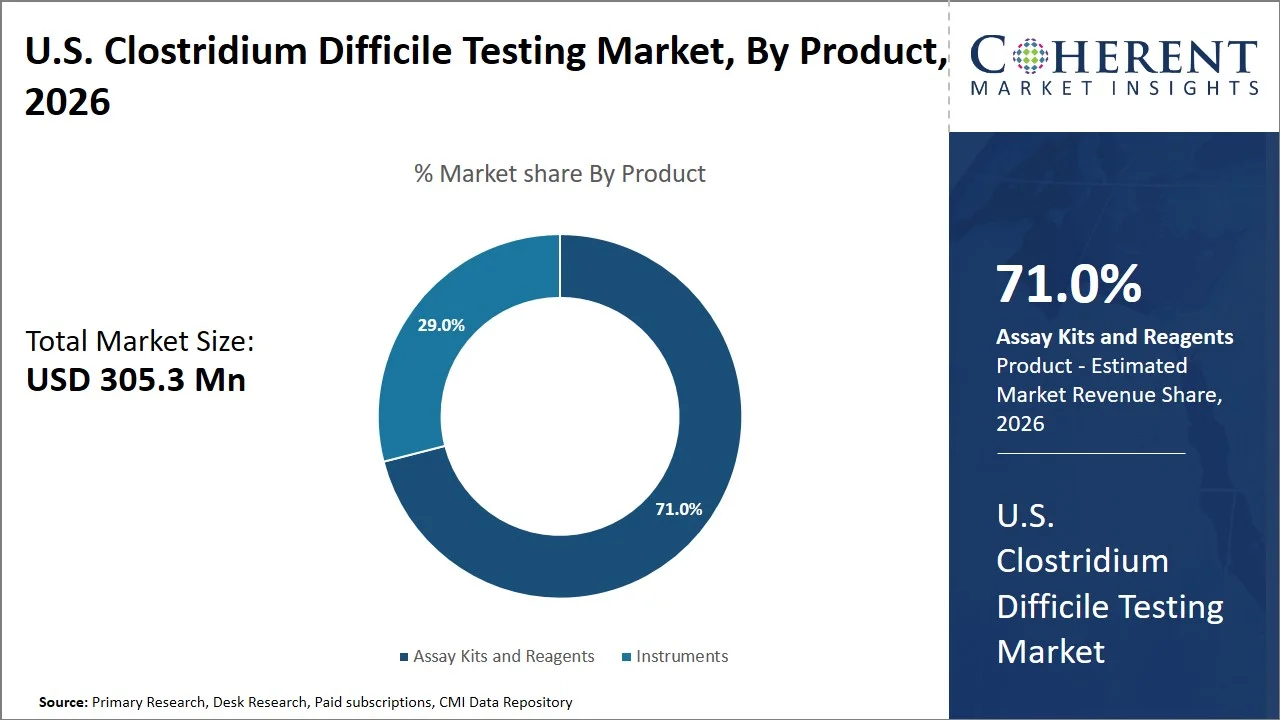
Why Do Assay Kits and Reagents Dominate the U.S. Clostridium Difficile Testing Market?
Assay kits and reagents are projected to hold a market share of 71.0% in 2026, due to their consistent demand as they are economical and play a critical role in providing rapid, sensitive, and uniform diagnosis based on molecular and immunoassay. The products are widely applicable in automated labs and point-of-care setups. Moreover, U.S. FDA-cleared assay kits are increasingly used by hospitals to increase diagnostic accuracy and enable prompt infection control. For instance, in February 2025, the U.S. Food and Drug Administration granted 510(k) clearance to Cepheid’s Xpert C. Difficile/Epi assay for use on the GeneXpert platform. The molecular assay is intended for the rapid qualitative detection of toxigenic C. Difficile and presumptive identification of the hypervirulent 027/NAP1/BI strain, highlighting continuous development and strong demand for new assay kits and clinical diagnostics reagents.
- Current Industry Events of 2026
- Market Size Estimation
- Regional Breakdown
- Competitive Landscape
- Customer Intelligence
- Segmental Analysis
- Pricing Analysis
- Key Market Drivers, Challenges & Future Trends
- Customized Insights Section
Why Does Molecular / NAAT Testing Represent the Largest Testing Technology Segment in the U.S. Clostridium Difficile Testing Market?
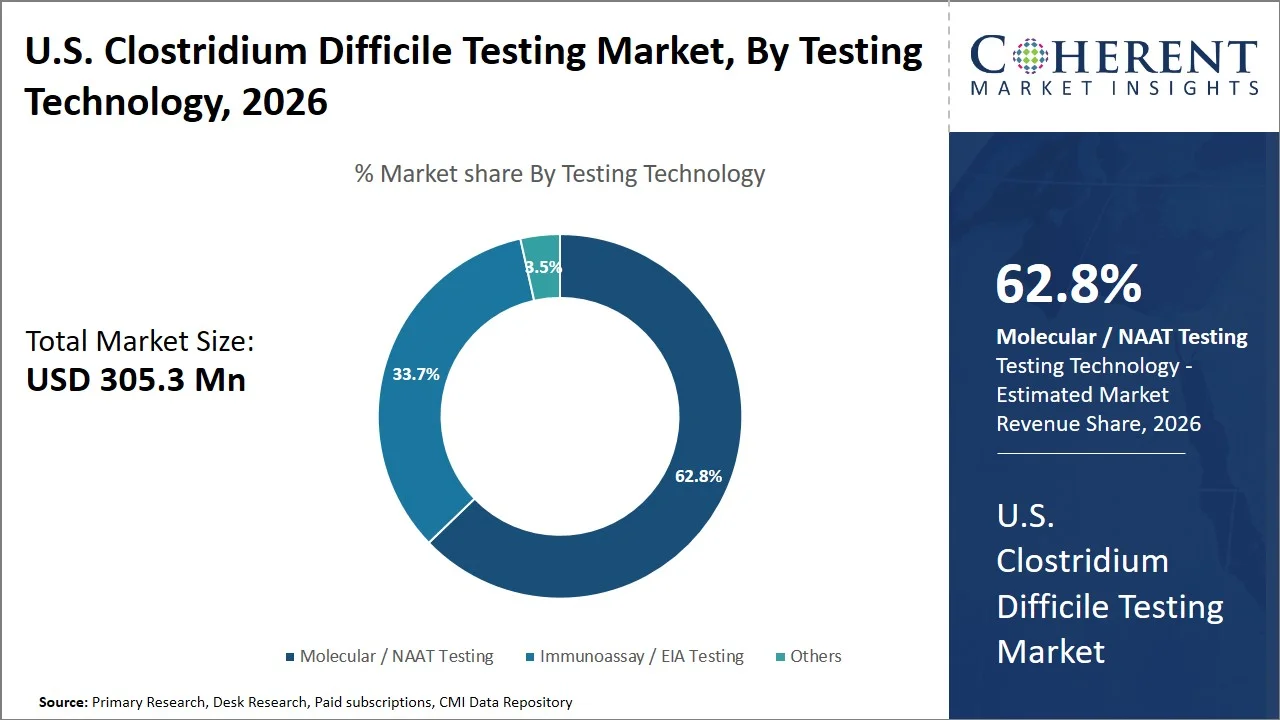
Molecular / NAAT testing is projected to hold 62.8% of the market share in 2026, as these assays offer the highest specificity and sensitivity for toxigenic strains of Clostridium difficile as well as deliver rapid test turnaround time, which allows early identification of the toxigenic C. Difficile strain. Integration with automated PCR-based platforms provides a highly efficient method for performing NAAT tests in a lab setup and facilitate early clinical decision and also helps in controlling the infection. Growing usage of NAAT tests in hospital settings and reference laboratories further reinforce the segment's market leadership. For instance, in November 2023, Vela Diagnostics’ Great Basin Toxigenic C. Difficile Direct Test (CDF2) received U.S Food and Drug Administration 510(k) clearance. The molecular assay detects toxigenic C. Difficile toxin genes directly from stool samples, highlights the increasing shift towards rapid NAAT based diagnostics for the precise detection of Clostridioides difficile infection (CDI).
Hospitals Segment Dominates the U.S. Clostridium Difficile Testing Market
The hospitals segment is expected to hold 45.7% of the U.S. clostridium difficile testing market share in 2026, owing to the high burden of healthcare-associated infections, requirement of faster diagnosis for prompt treatment and the implementation of stringent hospital-associated infection prevention measures. The availability of established lab infrastructure, prevalent testing across hospitals, routine monitoring, implementation of antimicrobial stewardship programs, and ongoing reporting mandate continue to contribute to the growth of hospitals segment. For instance, in March 2024, a Centers for Disease Control and Prevention (CDC)-funded study published by JAMA Network reported a successful rollout of the CDC Hospital-Onset Clostridioides difficile Prevention Framework among U.S. Hospitals in a regional health network. This initiative improved hospital-based surveillance of Clostridioides difficile infection (CDI), testing practices and infection prevention, making hospitals the main testing setting of C. difficile testing.
Current Events and their Impact
Current Events | Description and its Impact |
U.S. Centers for Disease Control and Prevention Updates National Healthcare Safety Network Clostridioides difficile Infection Surveillance Protocol (January 2026) |
|
U.S. Centers for Medicare & Medicaid Services Continues Hospital Quality Reporting Requirements for Clostridioides difficile Infection Surveillance (2025) |
|
U.S. Clostridium Difficile Testing Market Dynamics
Market Drivers
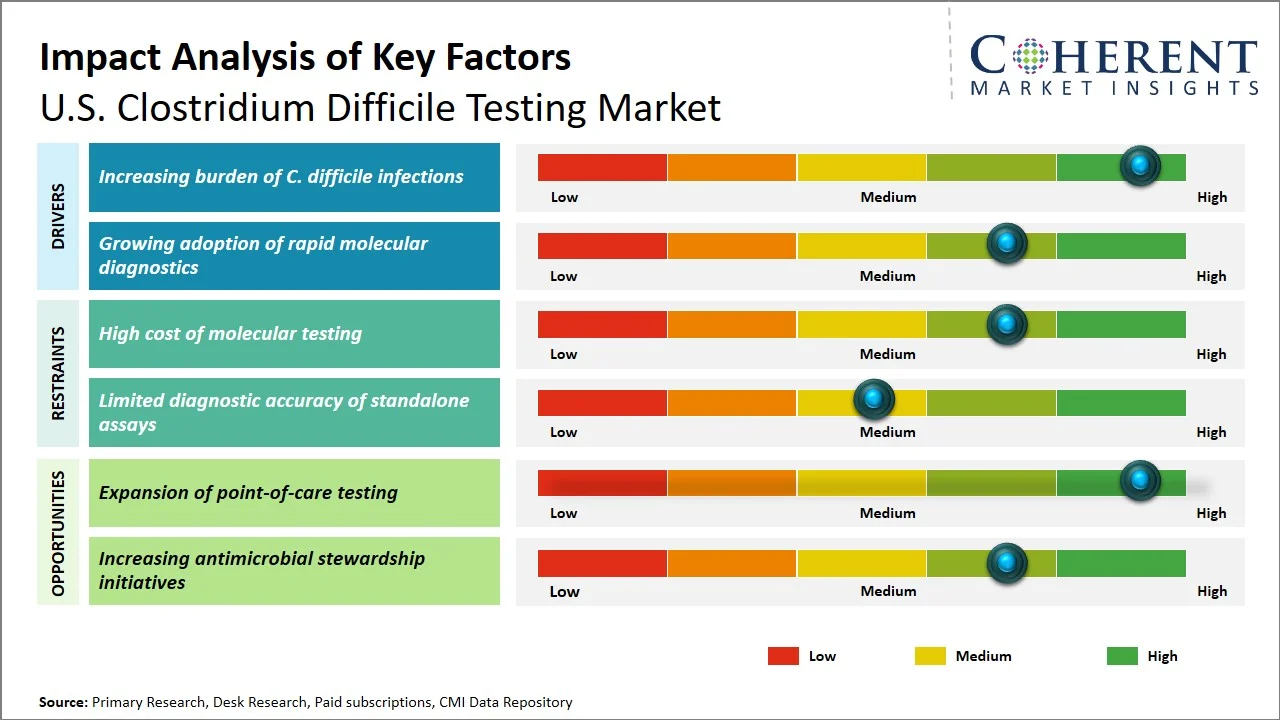
- Increasing burden of C. difficile infections: The increasing burden of clostridium difficile infections in the U.S. is driving the demand for rapid and highly accurate diagnostic testing to support timely treatment and infection control. Growing hospitalization rates, an aging population, and widespread antibiotic exposure continue to increase the need for sensitive diagnostic technologies. For instance, the U.S. Centers for Disease Control and Prevention reported that 70% of individuals diagnosed with Clostridioides difficile infection had used antibiotics within the previous 12 weeks, underscoring the need for prompt diagnosis and appropriate antimicrobial stewardship
- Growing adoption of rapid molecular diagnostics: The increasing adoption of rapid molecular diagnostics is accelerating growth in the U.S. clostridium difficile testing market by enabling highly sensitive detection with shorter turnaround times compared to conventional diagnostic methods. Healthcare providers are increasingly incorporating molecular assays into routine diagnostic algorithms to improve clinical decision-making and infection control. For instance, the U.S. Centers for Disease Control and Prevention recommend nucleic acid amplification tests as part of multistep diagnostic algorithms for patients meeting appropriate clinical criteria, supporting wider adoption of molecular testing in clinical laboratories.
Emerging Trends
- Increasing Adoption of Artificial Intelligence-Enabled Clinical Decision Support: Healthcare providers are increasingly using artificial intelligence-enabled clinical decision support tools with laboratory information systems to better interpret Clostridioides difficile test results. These solutions help tell the difference between infection and colonization, make sure tests are used correctly, and support evidence-based treatment decisions, which improves diagnostic efficiency and patient outcomes.
- Growing Integration of Automated Laboratory Workflow Solutions: Clinical laboratories are increasingly adopting automated sample processing, result interpretation, and data management systems to improve operational efficiency in Clostridioides difficile testing. Automation minimizes manual errors, enhances laboratory throughput, and enables faster reporting, supporting the growing demand for high-volume diagnostic services across hospitals and reference laboratories.
Key Regulatory Programs and Policies Influencing the U.S. Clostridioides Difficile Testing Market
Governing Authority | Regulation / Framework | Key Requirement | Impact on Market |
U.S. Food and Drug Administration | In Vitro Diagnostic Device Regulations | Premarket review and performance validation for diagnostic assays | Ensures commercialization of safe and accurate Clostridioides difficile diagnostic tests |
Centers for Medicare & Medicaid Services | Clinical Laboratory Improvement Amendments (CLIA) Certification | Laboratory quality standards and test complexity requirements | Drives adoption of validated molecular and immunoassay testing in certified laboratories |
Centers for Medicare & Medicaid Services | National Healthcare Safety Network CDI Surveillance Program | Standardized reporting of healthcare-associated Clostridioides difficile infections | Increases routine testing and strengthens infection surveillance |
American Medical Association / Centers for Medicare & Medicaid Services | Current Procedural Terminology (CPT) Coding & Medicare Reimbursement | Standardized coding and reimbursement for laboratory testing | Improves reimbursement and encourages broader diagnostic adoption |
How is the expansion of point-of-care testing creating new growth opportunities in the U.S. clostridium difficile testing market?
The increasing availability and adoption of point-of-care testing has become a substantial growth trend for the U.S clostridium difficile testing market due to rapid test results that optimize clinical and treatment decision-making. Furthermore, the emergence of portable molecular diagnostic technologies has accelerated their use in hospitals, physician’s offices, long-term care settings, and clinic facilities for more efficient diagnosis and care management for the management of clostridium difficile infections. For instance, in January 2025, the U.S. Food and Drug Administration granted Clinical Laboratory Improvement Amendments waiver for Roche Diagnostics cobas liat molecular assays, allowing their use in decentralized healthcare settings This move reflects the growing regulatory support for rapid point-of-care molecular diagnostics applicable across infectious disease testing.
Market Players, Key Development, and Competitive Landscape
Key Developments
- In July 2026, Acurx Pharmaceuticals announced the presentation of scientific data demonstrating ibezapolstat's microbiome-preserving effects in patients with multiply recurrent Clostridioides difficile infection. The findings reinforce the therapeutic potential of ibezapolstat and underscore the importance of accurate diagnostic testing for identifying and managing patients with recurrent CDI.
- In September 2025, LPOXY secured USD 28 million in funding to initiate the pivotal STOP-C. diff clinical trial for the prevention of Clostridioides difficile infection. The financing supports late-stage clinical development of a preventive therapy, highlighting growing investment in CDI management and reinforcing the importance of accurate diagnostic testing for patient identification and trial enrollment.
- In December 2024, Acurx Pharmaceuticals announced positive regulatory communications with the U.S. Food and Drug Administration (FDA) and the European Medicines Agency (EMA), confirming Phase 3 readiness for ibezapolstat, its investigational treatment for Clostridioides difficile infection. The milestone reflects continued progress in CDI management and is expected to support the demand for accurate diagnostic testing to enable timely patient identification and treatment selection.
Competitive Landscape
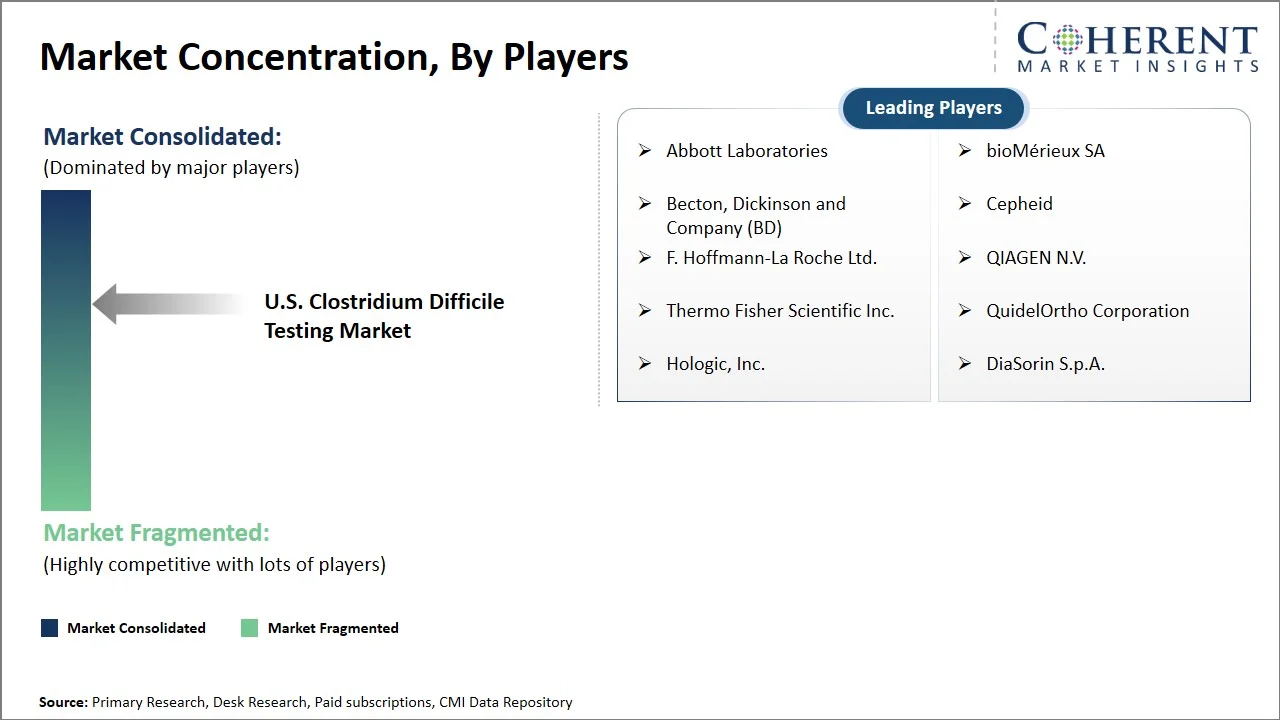
The U.S. clostridium difficile testing market is moderately consolidated, with leading in vitro diagnostics manufacturers competing through continuous innovation in molecular diagnostics, immunoassays, and automated laboratory solutions. Companies are focused on expanding regulatory approvals, strengthening hospital and reference laboratory partnerships, and enhancing syndromic testing capabilities to improve diagnostic accuracy and turnaround time. Key focus areas include:
- Expansion of molecular diagnostic and multiplex gastrointestinal testing portfolios
- Development of automated sample-to-result and high-throughput laboratory platforms
- Strengthening partnerships with hospitals, clinical laboratories, and integrated healthcare networks
- Securing U.S. Food and Drug Administration approvals and expanding Clinical Laboratory Improvement Amendments-waived diagnostic offerings to support decentralized testing
Market Report Scope
U.S. Clostridium Difficile Testing Market Report Coverage
| Report Coverage | Details | ||
|---|---|---|---|
| Base Year: | 2025 | Market Size in 2026: | USD 305.3 Mn |
| Historical Data for: | 2020 To 2024 | Forecast Period: | 2026 To 2033 |
| Forecast Period 2026 to 2033 CAGR: | 6.8% | 2033 Value Projection: | USD 483.3 Mn |
| Segments covered: |
| ||
| Companies covered: | Abbott Laboratories, bioMérieux S, Becton, Dickinson and Company (BD), Cepheid, F. Hoffmann-La Roche Ltd., QIAGEN N.V., Thermo Fisher Scientific Inc., QuidelOrtho Corporation, Hologic, Inc., and DiaSorin S.p.A. | ||
| Growth Drivers: |
| ||
| Restraints & Challenges: |
| ||
Analyst Opinion (Expert Opinion)
- The future of the U.S. clostridium difficile testing market is expected to witness sustained growth, driven by the increasing adoption of molecular diagnostics, stringent infection prevention initiatives, and the growing burden of healthcare-associated infections. Future innovation will center on rapid, automated, and multiplex diagnostic platforms that enable faster clinical decision-making while supporting antimicrobial stewardship and improved patient outcomes.
- The maximum growth opportunity lies within molecular diagnostic testing within hospital and reference laboratory settings, where the demand for highly sensitive, rapid, and standardized diagnostic solutions continues to rise. Increasing adoption of syndromic gastrointestinal panels and automated sample-to-result systems will further strengthen this segment over the forecast period.
- In order to create an advantage for themselves, competitors should focus on expanding U.S. Food and Drug Administration-approved molecular testing portfolios, investing in automation and multiplex assay development, and strengthening collaborations with hospitals, integrated healthcare networks, and reference laboratories. Enhancing decentralized testing capabilities and generating robust clinical evidence to support reimbursement and guideline inclusion will further improve market positioning.
Speak to the analyst
Want personalized insights?
Take the findings above to one of our principal consultants, or have the report rebuilt around the segments, geographies and competitors you actually track.
Market Segmentation
- Product Insights (Revenue, USD Mn, 2021 - 2033)
- Assay Kits and Reagents
- Instruments
- Testing Technology Insights (Revenue, USD Mn, 2021 - 2033)
- Molecular / NAAT Testing
- Immunoassay / EIA Testing
- Others
- Testing Setting Insights (Revenue, USD Mn, 2021 - 2033)
- Hospitals
- Commercial and Reference Laboratories
- Long-Term Care and Skilled Nursing Facilities
- Others
- Key Players Insights
- Abbott Laboratories
- bioMérieux SA
- Becton, Dickinson and Company (BD)
- Cepheid
- F. Hoffmann-La Roche Ltd.
- QIAGEN N.V.
- Thermo Fisher Scientific Inc.
- QuidelOrtho Corporation
- Hologic, Inc.
- DiaSorin S.p.A.
Sources
Primary Research Interviews
- In Vitro Diagnostic Manufacturers (Molecular & Immunoassay Business Units)
- Hospital Clinical Microbiology Laboratory Directors and Infectious Disease Specialists
- Reference Laboratory Executives (Quest Diagnostics, Labcorp, Regional Laboratories)
- Healthcare Procurement and Group Purchasing Organization Representatives
- Point-of-Care Diagnostic Developers and Clinical Laboratory Improvement Amendments
Stakeholders
- In Vitro Diagnostic Manufacturers (e.g., Abbott Laboratories, bioMérieux SA, Becton, Dickinson and Company, Cepheid, F. Hoffmann-La Roche Ltd.)
- Hospital and Health System Clinical Laboratories
- Independent and Reference Diagnostic Laboratories
- Infectious Disease Physicians and Clinical Microbiologists
- End-use Sectors
- Hospitals
- Commercial and Reference Laboratories
- Long-Term Care Facilities
- Outpatient Clinics and Ambulatory Care Centers
- Public Health Laboratories
- Regulatory & Health Bodies
- U.S. Food and Drug Administration (FDA)
- Centers for Disease Control and Prevention (CDC)
- Centers for Medicare & Medicaid Services (CMS)
- Clinical and Laboratory Standards Institute (CLSI)
- Association for Diagnostics & Laboratory Medicine (ADLM)
- American Society for Microbiology (ASM)
Databases
- Centers for Disease Control and Prevention (CDC) – Clostridioides difficile infection surveillance, diagnostic guidelines, and healthcare-associated infection data.
- U.S. Food and Drug Administration (FDA) – in vitro diagnostic device approvals, 510(k) clearances, and regulatory guidance for molecular and immunoassay diagnostics.
- Centers for Medicare & Medicaid Services (CMS) – Clinical Laboratory Improvement Amendments (CLIA) regulations, Medicare reimbursement policies, and laboratory quality standards.
- Clinical and Laboratory Standards Institute (CLSI) – laboratory testing standards, quality management guidelines, and diagnostic best practices for clinical microbiology.
Magazines
- Infection Control Today
- Medical Laboratory Observer (MLO)
- Diagnostic Imaging Magazine
Journals
- Journal of Clinical Microbiology
- Infection Control & Hospital Epidemiology
- Journal of Hospital Infection
- Clinical Infectious Diseases
Associations
- Infectious Diseases Society of America (IDSA)
- American Society for Microbiology (ASM)
- Association for Professionals in Infection Control and Epidemiology (APIC)
- College of American Pathologists (CAP)
Public Domain Sources
- U.S. Centers for Disease Control and Prevention (CDC)
- U.S. Food and Drug Administration (FDA)
- National Institutes of Health (NIH)
- ClinicalTrials.gov
Proprietary Elements
- CMI Data Analytics Tool, Proprietary CMI Existing Repository of information for last 10 years.
Get access to 250+ pages report
Every segment, forecast, competitor profile and data table behind the analysis above — available for instant download.
- ESOMAR Member
- ISO 9001:2015 Certified
- D-U-N-S Registered
- GDPR & CCPA Compliant
Missing comfort of reading report in your local language? Find your preferred language:
Transform your Strategy with Exclusive Trending Reports
Frequently Asked Questions
The U.S. clostridium difficile testing market is estimated to be valued at USD 305.3 Mn in 2026 and is expected to reach USD 483.3 Mn by 2033.
Assay kits and reagents dominate due to their recurring use in routine diagnostic workflows, high testing volumes, and compatibility with molecular and immunoassay platforms.
Clostridium difficile testing is a laboratory diagnostic process used to detect Clostridioides difficile toxins or genetic material in stool samples to confirm infection.
The CAGR of the U.S. clostridium difficile testing market is projected to be 6.8% from 2026 to 2033.
Increasing burden of C. difficile infections, and growing adoption of rapid molecular diagnostics are the major factors driving the growth of the U.S. clostridium difficile testing market.
High cost of molecular testing, and limited diagnostic accuracy of standalone assays are the major factors hampering the growth of the U.S. clostridium difficile testing market.
Multistep algorithms improve diagnostic accuracy by combining antigen, toxin, and molecular tests to distinguish active infection from asymptomatic colonization.