

U.S., U.K. and Rest of the World Pelvic Floor Health App Market Size and Forecast – 2026 To 2033
The U.S., U.K. and Rest of the World pelvic floor health app market is expected to grow from USD 282.0 Mn in 2026 to USD 1,001.0 Mn by 2033, registering a compound annual growth rate (CAGR) of 19.8% from 2026 to 2033. The U.S., U.K. and Rest of the World pelvic floor health app market is poised for significant expansion, fueled by the high prevalence of urinary incontinence and related pelvic floor conditions.
The U.S. National Institute of Diabetes and Digestive and Kidney Diseases (NIDDK) reports that approximately 54% of women aged 20 years and older experience urinary incontinence annually, creating a substantial addressable population for digital pelvic floor management solutions.
Key Takeaways of the U.S., U.K. and Rest of the World Pelvic Floor Health App Market
- Menstrual and pregnancy tracking apps are projected to hold a market share of 35.4 % of the U.S., U.K. and Rest of the World pelvic floor health app market share in 2026, making it the dominant type segment, supported by growing demand for digital tools that combine reproductive-cycle monitoring with pregnancy and women’s health management. For instance, the U.S. Food and Drug Administration (FDA) granted Natural Cycles clearance as a software-based contraceptive, demonstrating the regulatory acceptance of app-based menstrual-cycle tracking for reproductive health management
- Female is projected to hold 75.6 % of the U.S., U.K. and Rest of the World pelvic floor health app market share in 2026, making it the dominant gender segment, owing to the higher clinical emphasis on pelvic floor muscle training and urinary incontinence management among women. For instance, the FDA cleared X6 Innovations’ Perifit as a Class II perineometer for adult females with stress, mild-to-moderate urge, or mixed urinary incontinence, using smartphone-based biofeedback to support pelvic floor muscle strengthening.
- Pregnancy is projected to hold 24.8 % of the U.S., U.K. and Rest of the World pelvic floor health app market share in 2026, making it the dominant application segment, driven by the recognized importance of pelvic floor muscle training during pregnancy and after childbirth to prevent pelvic floor dysfunction. For instance, NICE Guideline NG210 recommends pelvic floor muscle training for pregnant women and women who have recently given birth, including a supervised three-month program for certain higher-risk pregnant women, reinforcing the clinical basis for pregnancy-focused digital pelvic floor interventions.
Segmental Insights
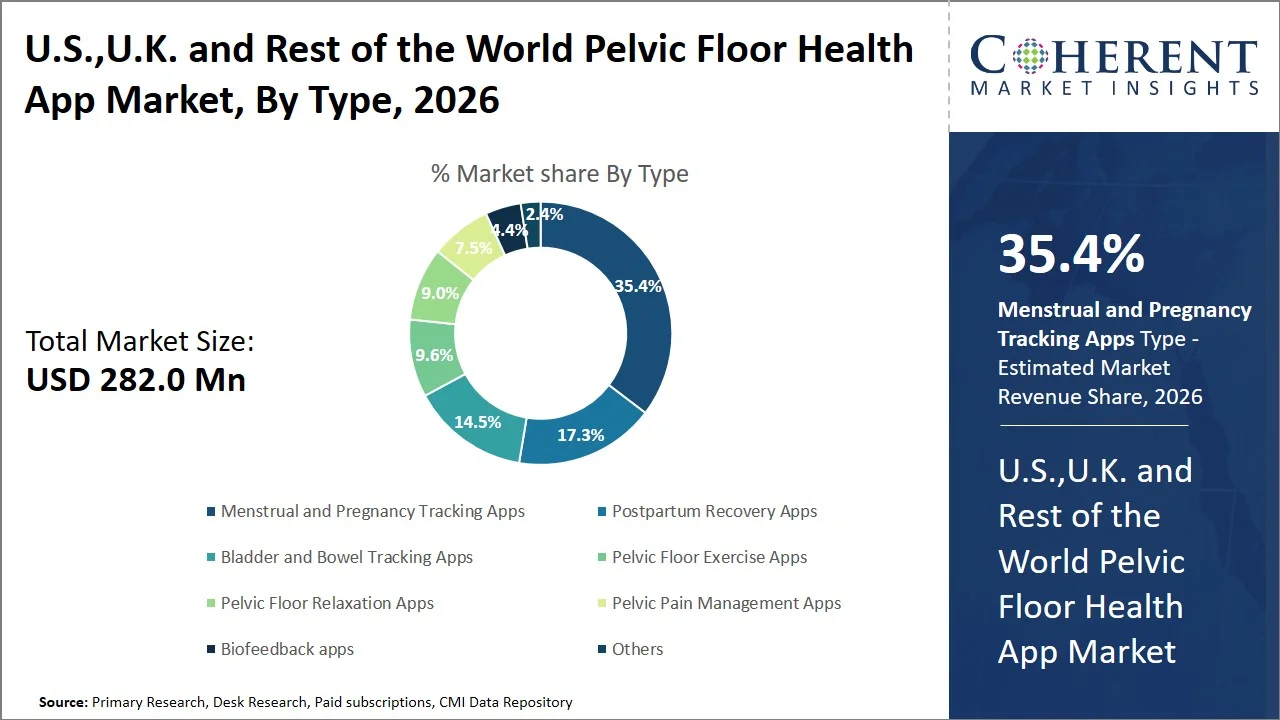
Why Do Menstrual and Pregnancy Tracking Apps Dominate the U.S., U.K. and Rest of the World Pelvic Floor Health App Market?
Menstrual and pregnancy tracking apps are projected to hold a market share of 35.4% in 2026, as consumers desire multifaceted applications that manage their menstrual cycle and pregnancy. These apps provide broader functions than simple pelvic floor routine tracking apps as they enable cycle logging, pregnancy tracking and symptom spotting and also offer personalized health information. For instance, Flo Health, Inc. pregnancy mode offers weekly information for the pregnancy duration, daily personalized reminders, and a tracker for symptoms and lessons verified by health experts, reinforcing the increasing integration of reproductive and pregnancy management within digital health platforms.
- Current Industry Events of 2026
- Market Size Estimation
- Regional Breakdown
- Competitive Landscape
- Customer Intelligence
- Segmental Analysis
- Pricing Analysis
- Key Market Drivers, Challenges & Future Trends
- Customized Insights Section
Why Does Female Represent the Largest Gender Segment in the U.S., U.K. and Rest of the World Pelvic Floor Health App Market?
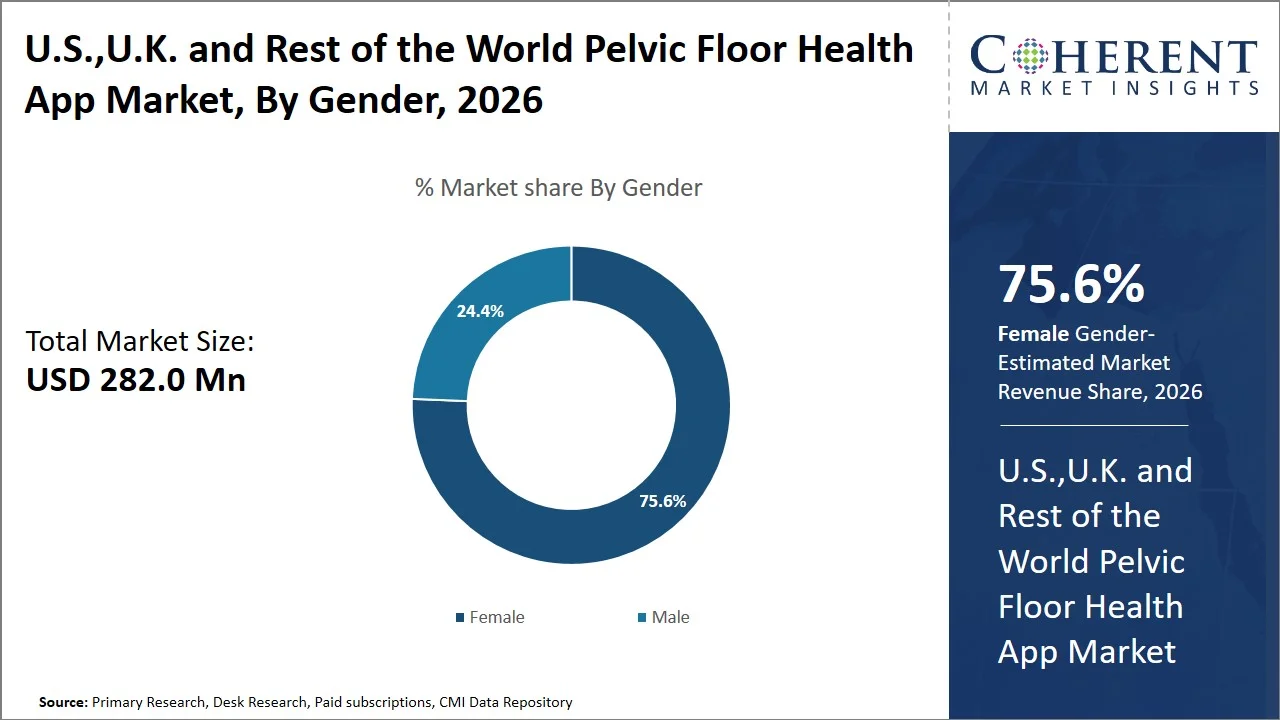
Female is projected to hold 75.6% of the market share in 2026, due to the increased burden of pelvic floor disorders among women and the greater access to female-oriented digital pelvic health programs for urinary health during pregnancy and the postpartum period. The growing desire for readily available personalized self-management practices are expected to increase adoption rates. For instance, in April 2022, Hinge Health, Inc. unveiled nationwide women’s pelvic health program that uses the app for pelvic pain, urinary/ bowel dysfunction, prolapse and pregnancy-related pain, or urinary incontinence. These apps give guided digital exercise sessions coupled with health coaching and guidance from women’s pelvic specialists.
Pregnancy Segment Dominates the U.S., U.K. and Rest of the World Pelvic Floor Health App Market
Pregnancy segment is expected to hold 24.8% of the U.S., U.K. and Rest of the World pelvic floor health app market share in 2026, due to physiological changes during pregnancy that necessitate strengthening of the pelvic floor, management of symptoms and postpartum preparation. App-based interventions allow for easily accessible and structured support within routine prenatal care. For instance, in august 2024, National Health Service (NHS) South Yorkshire launched a locally developed app for women to provide supported pelvic floor exercises during their pregnancy and in the postnatal period including short guided videos and connections to local physiotherapy. The app also offers a range of accessibility functions to ensure the app meets the needs of women and includes resources in various languages.
Current Events and their Impact
Current Events | Description and its Impact |
U.S. FDA Clears Stella BIO for Pelvic Floor Incontinence Treatment (February 2025) |
|
U.K. Introduced New Post-Market Surveillance Requirements for Medical Devices (June 2025) |
|
U.S., U.K. and Rest of the World Pelvic Floor Health App Market Dynamics
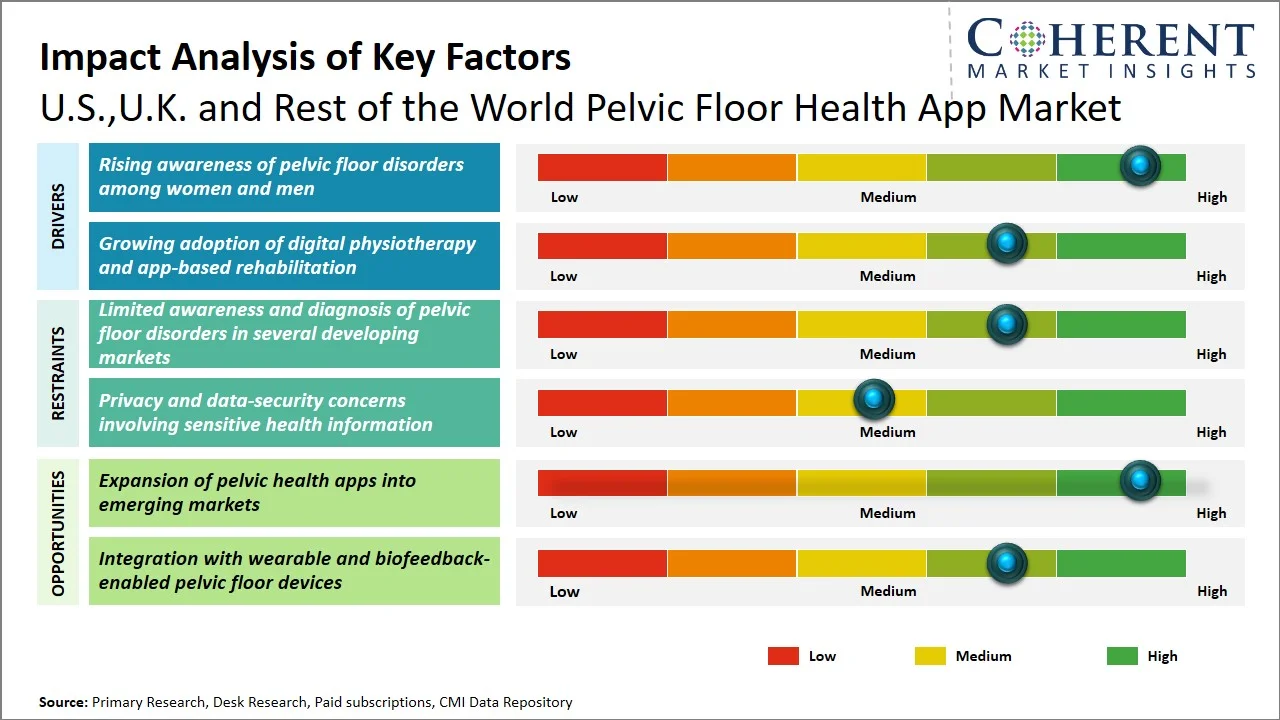
Market Drivers
- Rising awareness of pelvic floor disorders among women and men: Growing awareness of pelvic floor disorders is expanding the addressable user base for pelvic floor health apps, as urinary incontinence, pelvic pain, and pelvic floor weakness are increasingly recognized as manageable health conditions rather than issues to be concealed. Greater access to digital health information is also encouraging users to seek convenient, self-managed pelvic floor support. For instance, in 2024, University Hospitals Dorset NHS Foundation Trust highlighted a three-month #DryByChristmas social-media campaign that used humorous pelvic floor training reminders to improve awareness and engagement. The campaign reached more than 22,000 users, with 96% of those engaging being women, demonstrating the role of digital channels in increasing awareness and participation in pelvic floor health.
- Growing adoption of digital physiotherapy and app-based rehabilitation: The adoption of digital physiotherapy and app-based rehabilitation is expanding access to guided pelvic floor care by enabling patients to perform structured exercises at home while receiving digital education and progress support. Integration with healthcare pathways is also strengthening this trend, particularly for pregnancy and postpartum pelvic health. For instance, in January 2024, Doncaster and Bassetlaw Teaching Hospitals NHS Foundation Trust introduced the getUBetter app for perinatal pelvic health, providing clinician-written advice, progressive pelvic floor exercises, access to local treatment services, and guidance on when to seek further care.
- Increasing Integration of Pelvic Health Apps into Insurer and Employer-Sponsored Care: The integration of pelvic floor digital care into health insurance and employer health benefits is creating a new route for app adoption beyond direct-to-consumer subscriptions. Coverage through established healthcare programs can reduce cost barriers and connect users with clinicians, strengthening recurring utilization. For instance, in February 2025, Highmark added Sword Health’s Virtual Pelvic Health program to eligible members’ benefits, providing app-based care, specialist support, and an FDA-listed pelvic-floor device at no additional cost.
Emerging Trends
- Gamification and Interactive Pelvic Floor Training: Pelvic floor apps are increasingly using gamified exercise sessions and interactive feedback to make repetitive pelvic floor muscle training more engaging and encourage consistent participation. Recent digital pelvic-health programs combine game-based exercises with personalized training and real-time performance feedback.
- Integration of App-Based Care with Connected Biofeedback Technologies: The market is moving toward integrated solutions that combine smartphone apps with intravaginal sensors, real-time biofeedback, cloud platforms, and remote physiotherapist monitoring. This enables objective measurement of muscle performance and allows treatment programs to be adjusted remotely.
- Shift Toward Clinically Integrated Pelvic Health Applications: Pelvic floor apps are increasingly incorporating structured clinical content, symptom tracking, and professional involvement rather than functioning solely as exercise-reminder tools. This shift is particularly important as research has identified limited medical involvement in many existing pelvic floor apps, creating scope for more clinically integrated solutions.
Digital Pelvic Health Adoption and Clinical Need by Country/Region
Country/Region | Urinary Incontinence Burden | Pelvic Floor Training Recommendation | Digital Health Infrastructure | Market Opportunity |
U.S. | High | Established | Highly developed | High |
U.K. | High | NHS-supported | Highly developed | High |
Europe | High | Established | Developed | High |
Asia Pacific | Significant | Increasing | Rapidly developing | High Potential |
Rest of the World | Variable | Developing | Uneven | Emerging |
How is the expansion of pelvic health apps into emerging markets creating new growth opportunities in the U.S., U.K. and Rest of the World pelvic floor health app market?
The market for pelvic health apps has immense opportunities by moving beyond basic Kegel exercise apps to develop a total digital pelvic health journey managing pregnancy, postpartum, urinary incontinence, pelvic pain, menopause and holistic pelvic well-being. Key growth levers include AI-driven personalization, multi-lingual content and offerings, wearable devices and digital therapeutics integrations, strategic partnerships with medical providers, and expanding to penetrate into growing and more established markets. For instance, in January 2025, getUBetter developed and implemented the first module on the online women’s pelvic health programme with additional features added for menopause to extend support to the complete continuum: menopause; incontinence; prolapse and pelvic pain. The programme has been developed with language capabilities and can be readily translated and tailored in 14 languages.
Market Players, Key Development, and Competitive Landscape
Key Developments
- In July 2026, Wildflower Health acquired Every Mother, a digital pelvic floor and core health platform offering personalized, on-demand exercise programs developed with pelvic floor physical therapists. The acquisition adds clinically validated pelvic floor programs covering pregnancy, postpartum recovery, surgical recovery, and midlife to Wildflower’s women’s health platform.
- In July 2025, Axena Health, Inc. enhanced its Leva Pelvic Health System smartphone app by adding Mayo Clinic’s educational content on overactive bladder, urinary incontinence, urgency control, constipation, and bladder health. The content is integrated into Leva’s 12-week at-home pelvic floor muscle training program, alongside personalized coaching and progress tracking.
- In March 2024, Kaia Health announced the launch of pelvic floor support within its digital pain management app, offering pelvic floor exercises and health education for pelvic pain, bowel and bladder dysfunction, and postpartum recovery. The program was developed using clinical evidence and includes support from health coaches and physical therapists.
Competitive Landscape
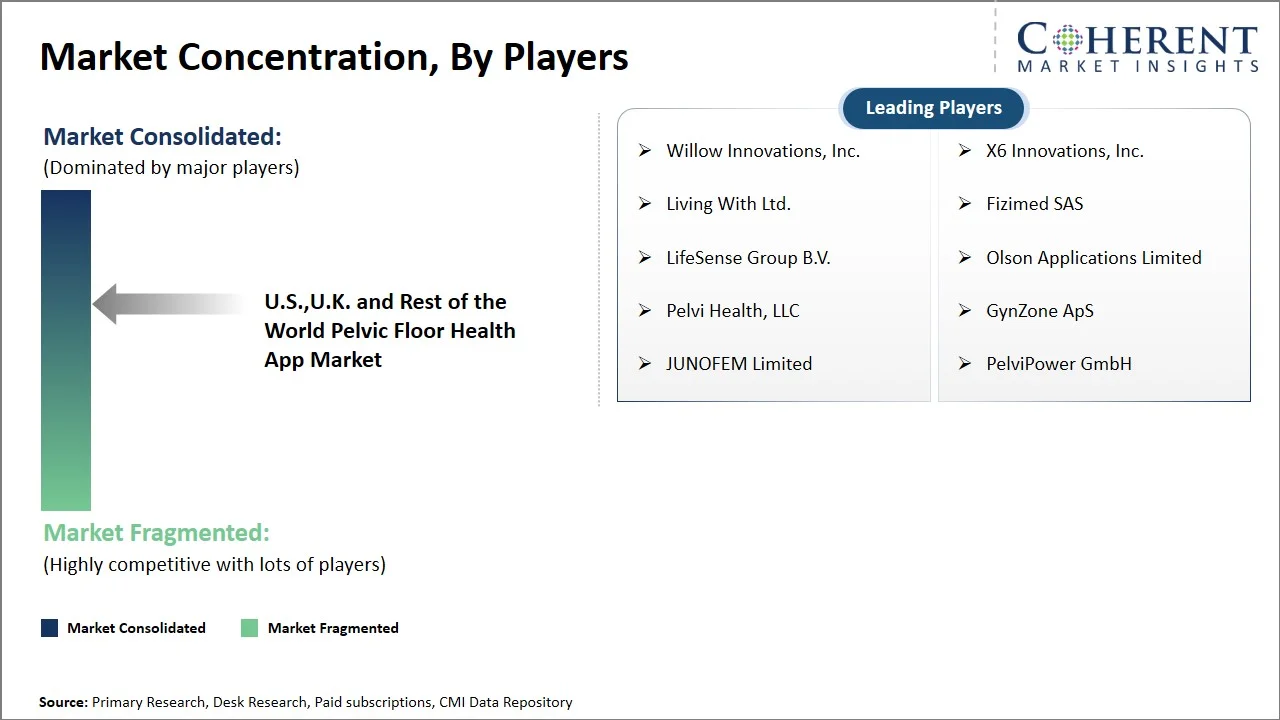
The U.S., U.K. and Rest of the World pelvic floor health app market is moderately fragmented, with leading companies competing through clinical validation, personalized pelvic floor training, biofeedback technology, and digital health integration. Market participants are increasingly focusing on evidence-based pelvic floor programs, real-time exercise feedback, and user engagement features to improve treatment adherence. Key focus areas include:
- Development of clinically validated pelvic floor muscle training and personalized exercise programs for urinary incontinence, pelvic pain, and postpartum recovery.
- Integration of biofeedback, connected pelvic floor devices, gamification, and AI-based personalization to improve exercise accuracy and user adherence.
- Expansion of digital pelvic health platforms and app-based solutions across women's health, pregnancy, postpartum, and midlife care.
- Strengthening healthcare-provider partnerships, remote monitoring, and digital care delivery channels to improve access to pelvic floor management.
Market Report Scope
U.S., U.K. and Rest of the World Pelvic Floor Health App Market Report Coverage
| Report Coverage | Details | ||
|---|---|---|---|
| Base Year: | 2025 | Market Size in 2026: | USD 282.0 Mn |
| Historical Data for: | 2020 To 2024 | Forecast Period: | 2026 To 2033 |
| Forecast Period 2026 to 2033 CAGR: | 19.8% | 2033 Value Projection: | USD 1,001.0 Mn |
| Segments covered: |
| ||
| Companies covered: | Willow Innovations, Inc., X6 Innovations, Inc., Living With Ltd., Fizimed SAS, LifeSense Group B.V., Olson Applications Limited, Pelvi Health, LLC, GynZone ApS, JUNOFEM Limited, PelviPower GmbH | ||
| Growth Drivers: |
| ||
| Restraints & Challenges: |
| ||
Analyst Opinion (Expert Opinion)
- In the coming years, U.S., U.K. and Rest of the World pelvic floor health app market is expected to move beyond basic exercise reminders toward clinically integrated digital pelvic health platforms that combine personalized pelvic floor muscle training, biofeedback, symptom tracking, and remote professional support. Integration with connected devices and evidence-based digital therapeutics is expected to further strengthen clinical adoption and user engagement.
- Most opportunities can be foreseen within female-focused pelvic floor training apps targeting pregnancy and postpartum care in the U.S. and U.K. markets. These markets offer a favorable environment because pelvic floor muscle training is incorporated into established clinical care pathways, creating demand for digital solutions that extend guidance and monitoring beyond healthcare facilities.
- To strengthen their competitive position, market players should prioritize clinical validation, healthcare-provider partnerships, and personalized digital therapy rather than competing solely on basic app functionality. Integrating real-time biofeedback, outcome tracking, clinician connectivity, and evidence-based programs can improve differentiation, user adherence, and credibility.
Speak to the analyst
Want personalized insights?
Take the findings above to one of our principal consultants, or have the report rebuilt around the segments, geographies and competitors you actually track.
Market Segmentation
- Type Insights (Revenue, USD Mn, 2021 - 2033)
- Menstrual and Pregnancy Tracking Apps
- Postpartum Recovery Apps
- Bladder and Bowel Tracking Apps
- Pelvic Floor Exercise Apps
- Pelvic Floor Relaxation Apps
- Pelvic Pain Management Apps
- Biofeedback apps
- Others
- Gender Insights (Revenue, USD Mn, 2021 - 2033)
- Female
- Male
- Application Insights (Revenue, USD Mn, 2021 - 2033)
- Pregnancy
- Pelvic Pain
- Postpartum
- Sexual Health
- Bowel and Bladder Disorders
- Others
- Platform Insights (Revenue, USD Mn, 2021 - 2033)
- App Store
- Google play Store
- Key Players Insights
- Willow Innovations, Inc.
- X6 Innovations, Inc.
- Living With Ltd.
- Fizimed SAS
- LifeSense Group B.V.
- Olson Applications Limited
- Pelvi Health, LLC
- GynZone ApS
- JUNOFEM Limited
- PelviPower GmbH
Sources
Primary Research Interviews
- Urogynecologists and Pelvic Health Physicians – pelvic floor disorders, treatment pathways, clinical adoption of digital pelvic health solutions
- Pelvic Floor Physiotherapists – pelvic floor muscle training, patient adherence, app-based rehabilitation, and clinical usability
- Digital Health and Digital Therapeutics Specialists – app development, remote monitoring, personalization, and digital therapeutic adoption
- Women’s Health Specialists and Obstetricians – pregnancy, postpartum recovery, urinary incontinence, and pelvic health management
- Urologists and Urogynecologists – urinary incontinence, overactive bladder, pelvic floor dysfunction, and technology-assisted treatment
Stakeholders
- Pelvic Floor Health App Developers and Digital Therapeutics Companies
- Connected Pelvic Health Device Manufacturers
- Pelvic Floor Physiotherapy Clinics and Rehabilitation Centers
- Hospitals and Women’s Health Centers
- Telehealth and Remote Patient Monitoring Providers
- App Store and Digital Health Distribution Platforms
- Health Insurance Providers and Employer Health Programs
- End-use Sectors
- Hospitals
- Retail Pharmacies
- Specialty Nutrition Clinics
- Fitness & Wellness Centers
- E-commerce Platforms
- Regulatory & Health Bodies
- U.S. Food and Drug Administration (FDA)
- National Institute for Health and Care Excellence (NICE), U.K.
- NHS England
- Medicines and Healthcare products Regulatory Agency (MHRA), U.K.
- National Institute of Diabetes and Digestive and Kidney Diseases (NIDDK), U.S.
- European Commission – Directorate-General for Health and Food Safety (DG SANTE)
- European Medicines Agency (EMA)
- Health Canada
- Australian Therapeutic Goods Administration (TGA)
Databases
- FDA 510(k) Premarket Notification Database
- FDA Medical Device Databases
- ClinicalTrials.gov
- Cochrane Library
- NICE Evidence Search
- NHS England Digital Health Resources
- European Union Medical Device Database (EUDAMED)
Associations
- American Urogynecologic Society (AUGS)
- International Urogynecological Association (IUGA)
- International Continence Society (ICS)
- American Physical Therapy Association (APTA) – Academy of Pelvic Health
- Pelvic, Obstetric and Gynaecological Physiotherapy (POGP)
- European Urogynecological Association (EUGA)
- American Urological Association (AUA)
- European Association of Urology (EAU)
Public Domain Sources
- National Library of Medicine (NLM)
- Centers for Disease Control and Prevention (CDC)
- National Center for Health Statistics (NCHS)
- Office for National Statistics (ONS), U.K.
- World Health Organization (WHO)
Proprietary Elements
- CMI Data Analytics Tool, Proprietary CMI Existing Repository of information for last 10 years.
Get access to 250+ pages report
Every segment, forecast, competitor profile and data table behind the analysis above — available for instant download.
- ESOMAR Member
- ISO 9001:2015 Certified
- D-U-N-S Registered
- GDPR & CCPA Compliant
Missing comfort of reading report in your local language? Find your preferred language:
Transform your Strategy with Exclusive Trending Reports
Frequently Asked Questions
The U.S., U.K. and Rest of the World pelvic floor health app market is estimated to be valued at USD 282.0 Mn in 2026 and is expected to reach USD 1,001.0 Mn by 2033.
Pregnancy dominates due to routine recommendation of pelvic floor muscle training during pregnancy and evidence that it can help prevent pelvic floor dysfunction and urinary incontinence.
A pelvic floor health app is a digital application that guides users through pelvic floor exercises, tracks progress and symptoms, and supports pelvic health management through personalized training and feedback.
The CAGR of U.S., U.K. and Rest of the World pelvic floor health app market is projected to be 19.8% from 2026 to 2033.
Pelvic floor health apps are used to guide pelvic floor muscle exercises, monitor symptoms, track progress, and support conditions such as urinary incontinence and postpartum pelvic floor dysfunction.
Common features include guided exercises, personalized training plans, reminders, progress tracking, symptom monitoring, educational content, and biofeedback.
These apps support urinary incontinence management primarily by guiding users through structured pelvic floor muscle training and tracking exercise adherence and progress.