

Global Smart Ward Market Size and Forecast – 2026 to 2033
The Global Smart Ward Market is estimated to be valued at USD 3.70 Bn in 2026 and is expected to reach USD 13.42 Bn by 2033, exhibiting a compound annual growth rate (CAGR) of 20.2% from 2026 to 2033.
Key Takeaways of the Global Smart Ward Market
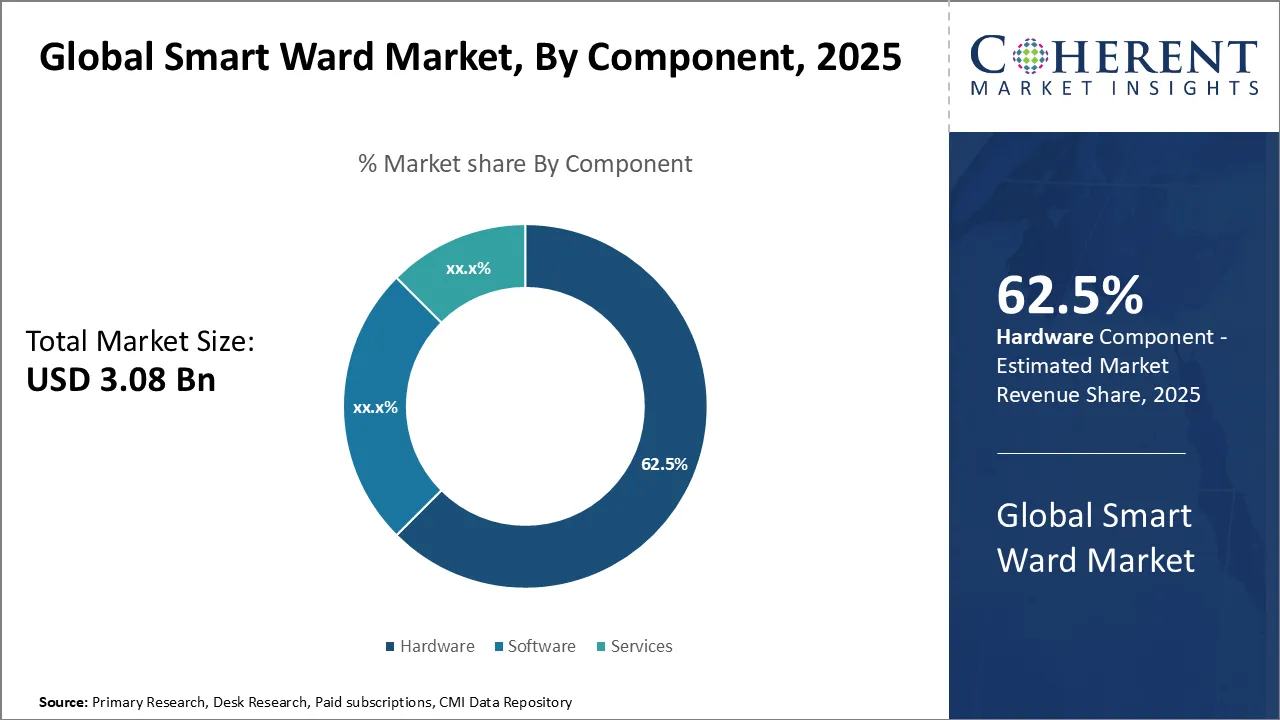
- In terms of component, hardware is expected to hold the largest market share at 63.5% in 2026, driven by the growing adoption of advanced medical devices and technologies in healthcare facilities.
- Based on application, patient monitoring & management is projected to dominate the market with a share of 33.4% in 2026.
- In terms of technology, the Internet of Things (IoT) segment is expected to lead the market with a 37.2 % share in 2026.
- North America is expected to lead the market, holding a share of 37.3 % in 2026. Asia Pacific is anticipated to be the fastest-growing region, with a market share of 26.3% in 2026.
Market Overview
The smart ward market is experiencing significant growth due to the increasing adoption of digital technologies in healthcare facilities. The trend towards patient-centric care, coupled with the need for efficient hospital management and improved patient outcomes, is driving the demand for smart ward solutions. Healthcare providers are investing in advanced technologies such as IoT, AI, and remote patient monitoring devices to streamline operations, reduce costs, and enhance patient care. Furthermore, the COVID-19 pandemic has accelerated the adoption of smart ward technologies to minimize physical contact and ensure the safety of patients and healthcare workers alike.
Current Events and Its Impact
Current Events | Description and its impact |
Increased Focus on Patient-Centric Care |
|
Technological Advancements |
|
Segmental Insights
- Current Industry Events of 2026
- Market Size Estimation
- Regional Breakdown
- Competitive Landscape
- Customer Intelligence
- Segmental Analysis
- Pricing Analysis
- Key Market Drivers, Challenges & Future Trends
- Customized Insights Section
Smart Ward Market Insights, By Component - Hardware dominates due to the growing adoption of advanced medical devices, including smart beds, wearable devices, and connected medical equipment
In terms of by component, hardware is expected to contribute the highest share of the market with 63.5% in 2026 owing to the increasing adoption of advanced medical devices and technologies in healthcare facilities. The demand for smart beds and mattresses has been on the rise as they offer enhanced patient comfort, pressure relief, and real-time monitoring capabilities. These intelligent beds can adjust their settings based on patient needs and provide valuable data to healthcare providers for better decision-making.
Wearable devices, such as smart wristbands and patches, have also gained popularity in smart wards. These devices enable continuous monitoring of vital signs, activity levels, and other health parameters, allowing for early detection of potential complications and timely interventions. Connected ventilators and infusion pumps have become essential components of smart wards, as they facilitate remote monitoring and control, ensuring precise and personalized patient care.
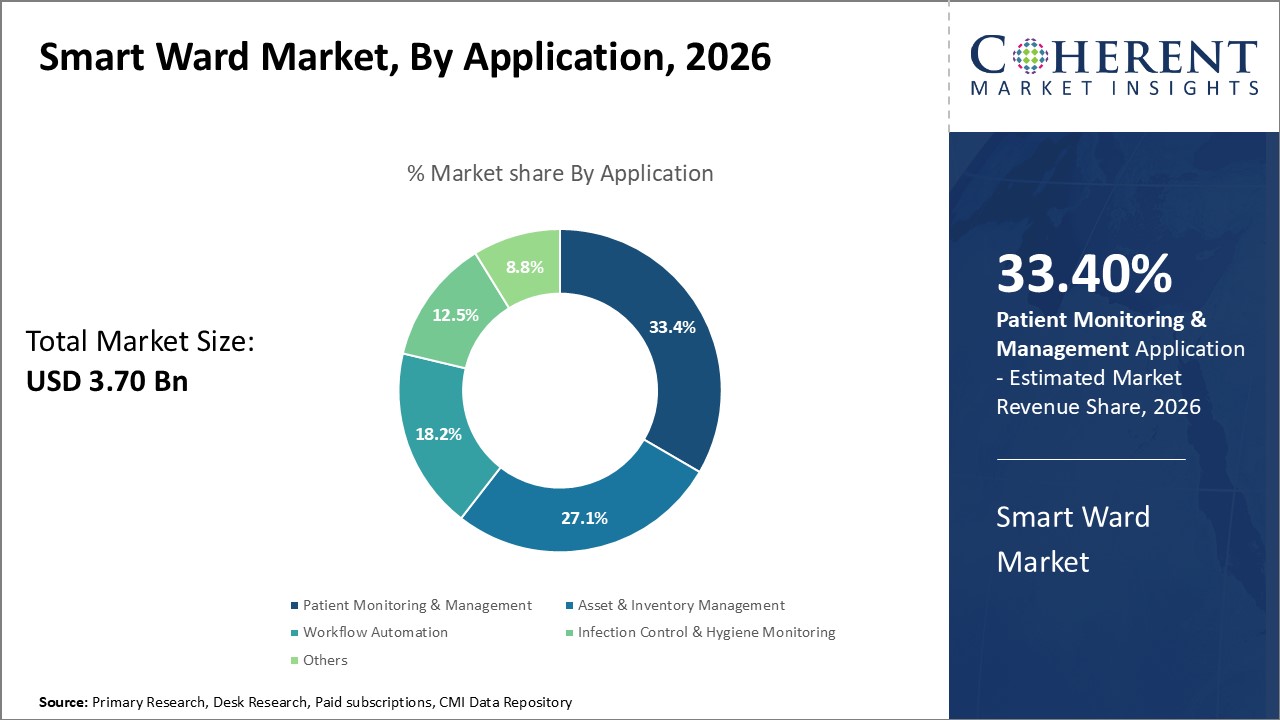
Smart Ward Market Insights, By Application - Patient monitoring and management dominates due to rising demand for continuous monitoring and personalized care for chronic disease
In terms of by application, patient monitoring & management is expected to contribute the highest share of the market with a share of 33.4% in 2026. The increasing prevalence of chronic diseases has necessitated the adoption of advanced patient monitoring and management solutions in smart wards. These applications leverage IoT-enabled devices and sensors to continuously collect and analyze patient data, enabling healthcare providers to make informed decisions and deliver personalized care.
Smart ward applications for patient monitoring and management include remote monitoring platforms that allow healthcare professionals to track patients' vital signs, medication adherence, and overall health status from a centralized location. These platforms facilitate early detection of potential complications, reduce readmission rates, and improve patient outcomes. Additionally, patient’s clinical data management systems have become crucial in smart wards, enabling secure storage, analysis, and sharing of patient information across healthcare teams.
Smart Ward Market Insights, By Technology - Internet of Things (IoT) dominates due to its ability to connect devices, enable real-time data analysis, and improve patient care and operational efficiency
In terms of technology, the Internet of Things (IoT) segment is expected to contribute the highest share of the market with 37.2% in 2026. IoT has emerged as a transformative force in the healthcare industry, enabling the creation of connected and intelligent environments in smart wards. By leveraging a network of interconnected devices, sensors, and systems, IoT technology allows for seamless data collection, analysis, and exchange, leading to improved patient care, operational efficiency, and cost savings.
In smart wards, IoT-enabled devices such as wearables, smart beds, and medical equipment continuously collect patient data, including vital signs, activity levels, and medication adherence. This data is transmitted in real-time to centralized platforms, where it can be analyzed using advanced analytics and machine learning algorithms. Healthcare providers can access this information through user-friendly dashboards and mobile applications, enabling them to monitor patients remotely, make informed decisions, and respond promptly to any changes in patient conditions.
Role of Artificial Intelligence (AI) in the Global Smart Ward Market
- Artificial Intelligence (AI) is significantly transforming the global smart ward market by enhancing efficiency, reducing costs, and automating healthcare processes. AI’s role in predictive analytics enables hospitals to anticipate patient needs, optimize bed management, and streamline operations for better resource allocation. AI also facilitates process automation, from real-time patient monitoring to personalized treatment plans, enhancing customer experiences while improving overall hospital efficiency. The growing integration of AI technologies allows healthcare providers to implement data-driven decision-making, leading to faster responses and improved patient care, while also offering emerging opportunities like new business models and competitive advantages.
- An example of AI’s impact in the smart ward market is Care.ai, an AI-driven platform that integrates into smart hospitals to automate real-time patient monitoring and predictive decision-making. The company's AI solutions help hospitals improve patient outcomes by reducing hospital readmissions, preventing falls, and enhancing resource utilization. Care.ai’s AI-driven platform provides a personalized experience, enabling caregivers to proactively manage patient health through real-time data and predictive analytics. This innovation not only drives operational improvements but also establishes a competitive advantage for healthcare providers by increasing scalability and enhancing patient care.
Regional Insights
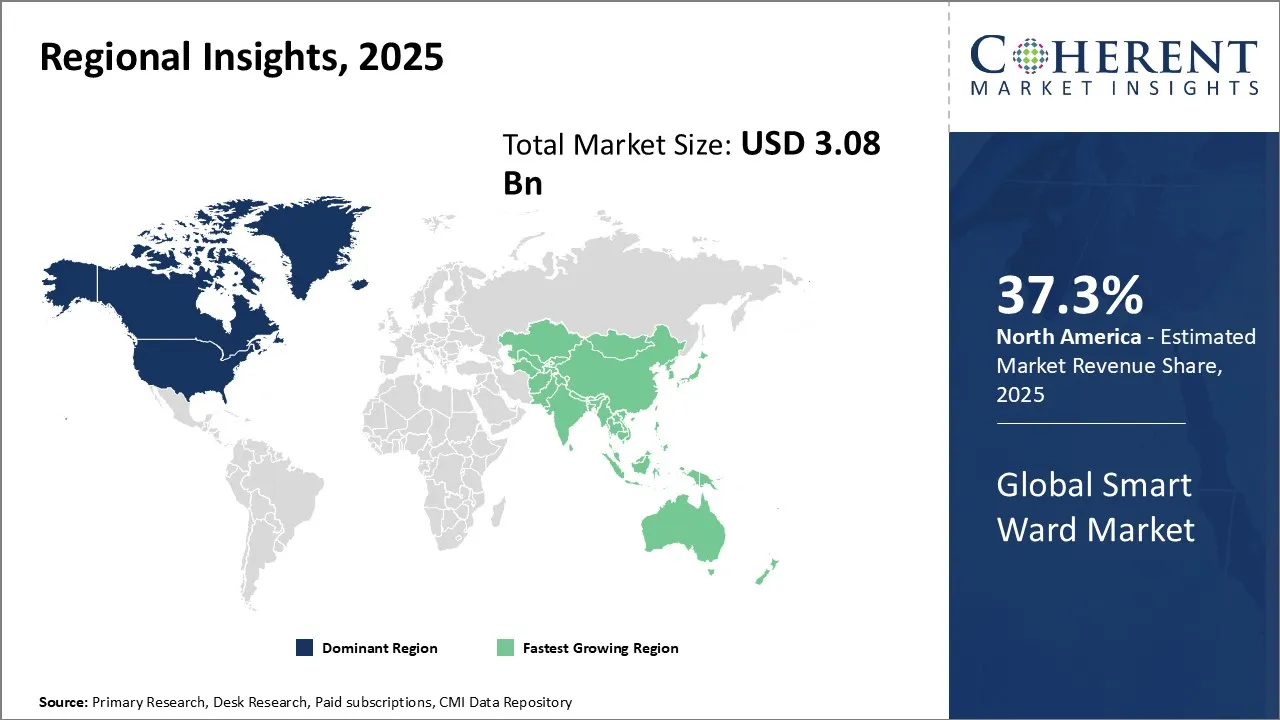
North America Smart Ward Market Analysis and Trends
In North America, the dominance in the global smart ward market can be attributed to several factors with an estimated share of 37.3% in 2026. The region boasts a robust healthcare infrastructure, with advanced medical facilities and a strong emphasis on technological adoption. The presence of leading healthcare IT companies and a favorable regulatory environment have further fueled the growth of the smart ward market in North America. Government initiatives promoting the digitalization of healthcare services and the increasing demand for patient-centric care have also contributed to the market's dominance.
For instance, in May 2026, recent federal initiatives published by DLA Piper, a global law firm, including the reintroduction of the Access to Prescription Digital Therapeutics Act on May 8, 2026, and the CMS's request for public input on digital health products, underscore a growing government focus on expanding digital health access for Medicare beneficiaries. These efforts aim to leverage modern technology to improve care accessibility, though reimbursement for digital health solutions remains limited.
Notable companies in the region, such as Cerner Corporation, a leader in healthcare IT solutions, provides smart ward technologies that integrate patient management systems with advanced data analytics, enabling real-time monitoring and better care delivery. The company has been instrumental in advancing digital healthcare solutions, particularly in North America.
Asia Pacific Smart Ward Market Analysis and Trends
Meanwhile, the Asia Pacific region is expected to exhibit the fastest growth in the global smart ward market with a share of 26.3% in 2026. The region's rapidly expanding healthcare sector, coupled with increasing government investments in healthcare infrastructure, has created a fertile ground for smart ward adoption. Countries like China, Japan, and India are witnessing a surge in the implementation of digital health technologies, driven by the need to improve patient outcomes and streamline healthcare processes.
Moreover, the presence of a large pool of skilled healthcare professionals and the emergence of local technology companies have contributed to the rapid growth of the smart ward market in Asia Pacific. For example, Fujifilm Medical Systems, based in Japan, provides innovative smart ward technologies that focus on imaging and data integration for patient care. The company has been expanding its footprint in Asia Pacific with solutions that address the growing demand for digital health technologies in hospitals.
Global Smart Ward Market Outlook for Key Countries:
U.S. Smart Ward Market Trends
The U.S. market for smart wards is characterized by a strong emphasis on patient-centric care and the adoption of advanced technologies. Leading healthcare providers in the country have been at the forefront of implementing smart ward solutions, leveraging IoT devices, AI-powered monitoring systems, and electronic health records to enhance patient care and streamline operations.
The presence of major technology companies and a supportive regulatory environment have further propelled the growth of the smart ward market in the U.S. For example, Kaiser Permanente, as one of the largest integrated health systems in the U.S., has been a pioneer in adopting smart ward technologies. The organization utilizes AI-driven predictive analytics to monitor patient conditions and optimize care delivery.
India Smart Ward Market Trends
The smart ward market in India is experiencing significant transformation, driven by the integration of advanced technologies aimed at enhancing patient care and operational efficiency. Hospitals are increasingly adopting AI-powered systems for real-time patient monitoring, enabling early detection of health deteriorations and reducing the need for manual interventions. For instance, Pune's Sancheti Advanced Orthocare Hospital has implemented Dozee's AI-based remote monitoring system, which uses Ballistocardiography technology to track vital parameters and provide early warning alerts to healthcare staff.
For instance, in March 2023, Amala Hospital in Kerala, India has introduced the state’s first smart ward in collaboration with Chennai-based health-tech startup LifeSigns. This initiative integrates LifeSigns’ iMS technology across the hospital’s cardiology and medicine departments. The smart ward features wireless, wearable biosensor patches that provide continuous real-time monitoring of vital signs such as heart rate, blood pressure, and oxygen saturation.
Singapore Smart Ward Market Trends
Singapore smart ward market is advancing rapidly, driven by the nation's commitment to integrating technology into healthcare to address challenges such as an aging population and workforce shortages. Hospitals like Tan Tock Seng Hospital (TTSH) and Alexandra Hospital are at the forefront, implementing smart technologies to enhance patient care and operational efficiency.
For instance, in April 2023, Tan Tock Seng Hospital (TTSH) in Singapore has introduced a 'Smart Ward' to enhance patient care and address workforce challenges. The initiative integrates digital tools, robotics, and AI to improve service efficiency and reduce staff workload. Innovations include falls-preventing smart beds, delivery robots, predictive sensors, and assisted shower devices, all aimed at streamlining operations and optimizing patient outcomes.
China Smart Ward Market Trends
China’s market for smart wards is experiencing rapid growth, driven by the government's focus on healthcare reform and the increasing adoption of digital health technologies. The country's large population and the rising prevalence of chronic diseases have created a significant demand for smart ward solutions. Chinese healthcare providers are actively embracing IoT devices, telemedicine, and AI-powered analytics to improve patient care and optimize resource utilization. The emergence of local technology companies and collaborations with international players have further accelerated the development of the smart ward market in China.
For instance, in December 2024, Mr. Daniel Rossouw, Head of Service and Operations at Stiegelmeyer South Africa, attended the 2024 Healthcare+ Expo in Taiwan to explore advanced smart ward and long-term care technologies. With South Africa facing growing healthcare challenges, particularly for the elderly, Rossouw sought innovative AI-driven solutions from Taiwan to improve patient care and create partnerships for better healthcare delivery.
Germany Smart Ward Market Trends
Germany's market for smart wards is characterized by a focus on precision medicine and the integration of advanced technologies. The country's well-established healthcare system and strong emphasis on research and innovation have created a conducive environment for the adoption of smart ward solutions. German healthcare providers are leveraging IoT devices, real-time monitoring systems, and data analytics to optimize patient care and streamline workflows. The presence of leading medical technology companies and a skilled workforce have further contributed to the growth of the smart ward market in Germany.
For instance, in February 2026, the University Medical Center Magdeburg (UMMD) launched a pilot project for digital ward rounds on its gastroenterology ward, aiming to enhance patient care. The initiative enables doctors and nursing staff to access digital patient files, document examinations using voice recognition, and record vital signs in real time via smart ward round trolleys. Tablets at the bedside allow for direct access to digital information and electronic treatment contracts, optimizing processes and improving treatment quality and patient safety.
Market Players, Key Developments, and Competitive Intelligence
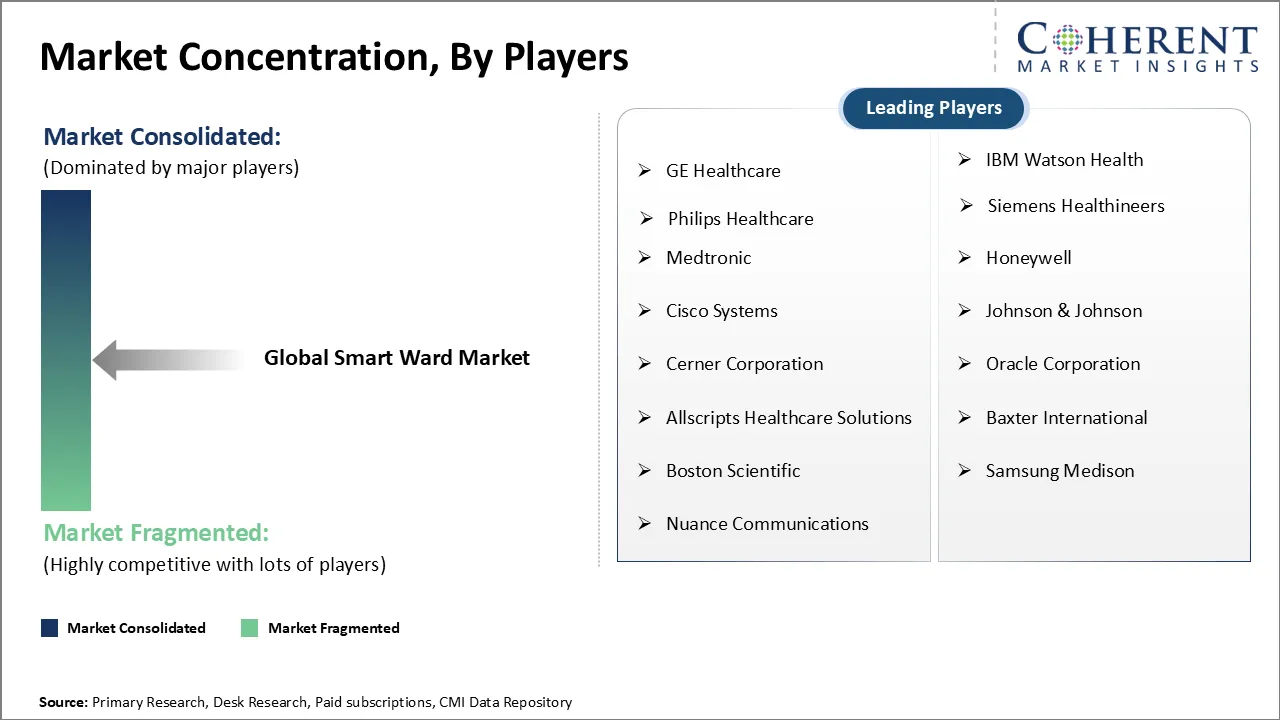
Top Strategies Followed by Global Smart Ward Market Players
- Established players in the global smart ward market are focusing on extensive research and development to innovate high-performance products. These companies are investing heavily in R&D to develop cutting-edge technologies, such as AI-powered patient monitoring systems and advanced medical devices, to enhance patient care and streamline hospital operations.
- For example, in September 2024, at HUAWEI CONNECT 2024, Huawei, a technology company, unveiled its Medical Technology Digitalization 2.0 Solution, designed to enhance precision healthcare through AI-assisted diagnosis and intelligent quality control. The solution utilizes AI to analyze medical image data, which accounts for 80% of clinical data, significantly improving diagnosis, decision-making, and disease prevention. Huawei’s solution integrates AI, computing, storage, and networking to deliver better quality and efficiency in healthcare services.
- Mid-level players in the global smart ward market are concentrating on delivering cost-effective solutions to target price-sensitive consumers. Mid-level players focus on providing smart ward technologies that are both high-quality and cost-effective, allowing smaller and budget-conscious healthcare facilities to adopt advanced solutions.
- For example, Honeywell Healthcare, a mid-sized player, offers connected health solutions, such as remote patient monitoring and automated alarm systems for hospitals, making it easier for healthcare providers to manage patient care and hospital workflows. Another example is Olympus Corporation, which provides cost-effective imaging solutions for smart wards, helping healthcare facilities optimize their diagnostic and monitoring capabilities.
- Small-scale players continue to innovate by offering specialized, niche products and solutions that meet specific healthcare needs. For example, Zebra Medical Vision, a small-scale company, utilizes AI and machine learning to analyze medical imaging and provide predictive insights into patient health, assisting healthcare providers in making faster, more accurate decisions. Similarly, VitalConnect, a small player known for wearable health monitoring devices, offers a real-time monitoring system for hospitalized patients, helping doctors and nurses keep track of their patients' health metrics continuously.
Key Developments
- In January 2024, KIMS Hospitals in Hyderabad, India introduced the "Enhanced Patient Safety with Smart Wards" program, integrating advanced AI-based contactless Remote Patient Monitoring (RPM) and Early Warning System (EWS) into 25% of its ward beds. Developed in collaboration with Indian health-tech company, Dozee, this initiative aims to elevate patient safety and care standards. The program utilizes Dozee's AI-driven Ballistocardiography (BCG) technology to remotely monitor vital parameters such as heart rate, respiration rate, blood pressure, SpO₂ levels, temperature, and ECG. The system's EWS alerts healthcare providers to potential clinical deterioration, enabling timely medical intervention.
- In November 2024, Sancheti Advanced Orthocare Hospital unveiled its 300-bed facility with Pune’s first "Smart Ward," integrating Dozee’s AI-based Remote Monitoring System (RMS) and Early Warning System (EWS). This innovative system tracks vital parameters like heart rate, blood pressure, temperature, and ECG continuously, offering contactless monitoring and early alerts for patient deterioration up to 16 hours in advance. Dozee, a leading provider of AI-powered healthcare solutions, utilizes Ballistocardiography (BCG) technology to enhance patient safety and operational efficiency. The system shifts care from reactive to preventive, improving patient outcomes.
- In November 2024, Mahkota Medical Centre (MMC), part of HMI Medical, launched Malaysia's first Next-Gen Smart Ward to mark its 30th anniversary. The Smart Ward integrates real-time monitoring, automated tools, and IoT devices to enhance patient care and decision-making. This initiative accelerates digital adoption in healthcare, improving responsiveness and efficiency for healthcare professionals.
Market Report Scope
Smart Ward Market Report Coverage
| Report Coverage | Details | ||
|---|---|---|---|
| Base Year: | 2025 | Market Size in 2026: | USD 3.70 Bn |
| Historical Data for: | 2020 To 2024 | Forecast Period: | 2026 To 2033 |
| Forecast Period 2026 to 2033 CAGR: | 20.2% | 2033 Value Projection: | USD 13.42 Bn |
| Geographies covered: |
| ||
| Segments covered: |
| ||
| Companies covered: | Philips Healthcare, Siemens Healthineers, GE Healthcare, IBM Watson Health, Medtronic, Honeywell, Cisco Systems, Johnson & Johnson, Cerner Corporation, Oracle Corporation, Allscripts Healthcare Solutions, Baxter International, Boston Scientific, Samsung Medison, and Nuance Communications | ||
| Growth Drivers: |
| ||
| Restraints & Challenges: |
| ||
Smart Ward Market Dynamics
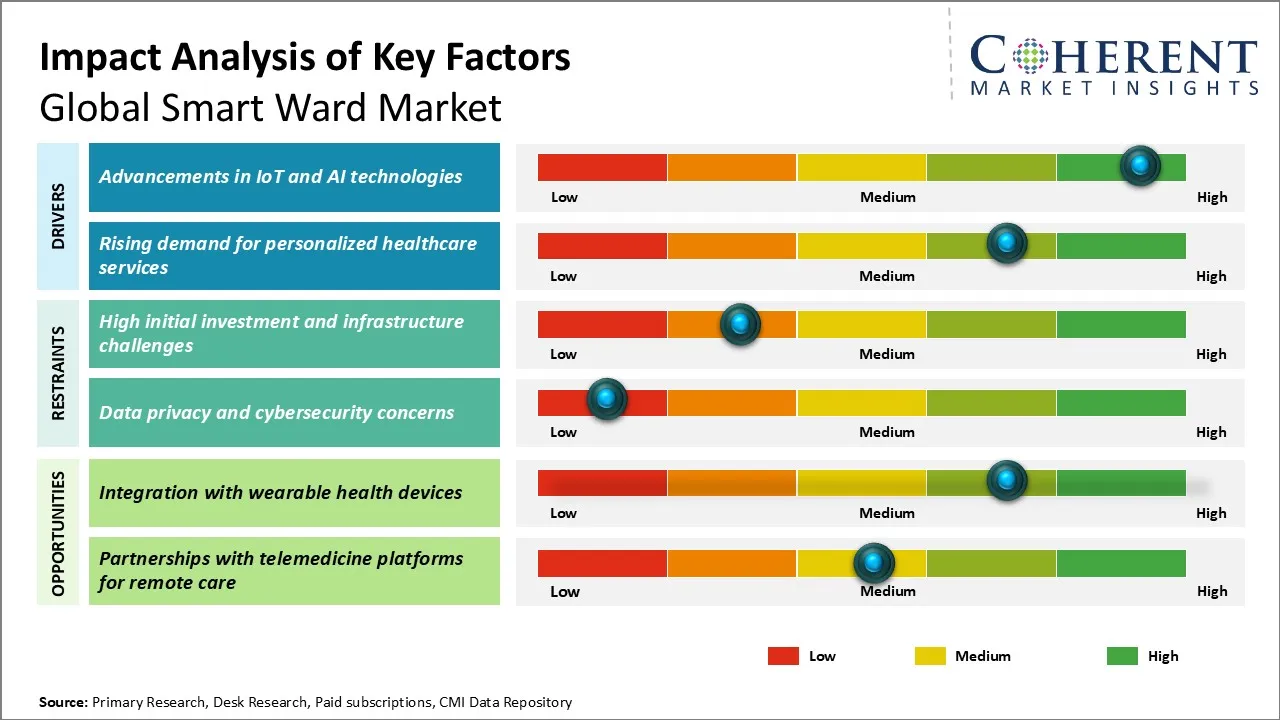
Smart Ward Market Driver - Advancements in IoT and AI technologies
Rapid advancements in Internet of Things (IoT) and Artificial Intelligence (AI) technologies are significantly driving the growth of the global smart ward market. IoT devices and sensors enable real-time monitoring of patients, medical equipment, and hospital infrastructure, allowing for efficient data collection and analysis. This data-driven approach enhances patient care, streamlines workflows, and optimizes resource utilization within smart wards. Moreover, AI algorithms and machine learning techniques leverage the collected data to provide predictive insights, assist in clinical decision-making, and improve overall patient outcomes. The integration of IoT and AI technologies in smart wards facilitates remote monitoring, early detection of potential complications, and personalized treatment plans. As these technologies continue to evolve and mature, their increasing adoption in healthcare settings is expected to fuel the expansion of the smart ward market, revolutionizing patient care delivery and transforming the healthcare landscape
For example, Artisight offers a Smart Hospital Platform that automates tasks, optimizes processes, and simplifies communication, enabling healthcare teams to streamline clinical workflows and elevate bedside care. Futurism Technologies offers an IoT-based Intelligent Ward Optimization solution designed to improve patient safety and reduce prescription errors. Its solution streamlines ward operations by managing key patient data, such as location, bed status, and room occupancy, through TV dashboards. This enables caregivers to focus more on patient care rather than administrative tasks, enhancing operational efficiency and patient outcomes.
Smart Ward Market Opportunity - Integration with Wearable Health Devices
The increasing popularity and advancement of wearable health devices present a significant opportunity for the global smart ward market. By integrating smart ward technologies with wearable devices, healthcare providers can enhance patient monitoring, improve personalized care, and streamline clinical workflows. Wearable devices, such as smartwatches, fitness trackers, and biosensors, can continuously collect vital patient data, including heart rate, blood pressure, oxygen levels, and activity levels. The integration of wearable devices enables early detection of potential health issues, facilitates timely interventions, and helps prevent complications.
For instance, in July 2024, KORE and mCare Digital, a software company, launched the mCareWatch 241, an advanced personal emergency alarm smartwatch. This IoT-powered device enables remote patient monitoring, offering enhanced connectivity for patients in homes or healthcare facilities. The mCareWatch 241 launch aligns with the smart ward market opportunity by integrating wearable health devices into patient monitoring. Wearables like the mCareWatch enable real-time health data collection, allowing for remote patient monitoring and enhancing the patient-centric care model within smart wards. This integration supports continuous monitoring, early detection of health issues, and more efficient resource management in healthcare facilities, contributing to the growth of the smart ward market.
Analyst Opinion (Expert Opinion)
- The global smart ward market is experiencing significant growth driven by technological advancements, particularly in AI, IoT, and automation. The increasing demand for efficient healthcare delivery, the aging population, and the need for enhanced patient care are the primary factors fueling this market. Regulatory support for digital healthcare initiatives is also pivotal in promoting the adoption of smart technologies in hospitals. Notably, smart wards equipped with IoT devices, AI-driven patient monitoring, and automated systems are improving both the quality of care and operational efficiency. These advancements are further bolstered by the growing emphasis on preventive healthcare, shifting the focus from reactive to proactive care models.
- Emerging opportunities in the market include the integration of wearable devices and AI for real-time patient monitoring, which enhances decision-making and patient outcomes. However, challenges such as high initial investment, data privacy concerns, and the complexity of system integration remain significant barriers. Recent global conferences like the International Conference on Smart Hospitals (2023) and the World Health Summit (2022) have facilitated important discussions on policy formulation, technology adoption, and knowledge sharing in smart healthcare. Additionally, initiatives like Dozee's collaboration with Tan Tock Seng Hospital and Mahkota Medical Centre's Next-Gen Smart Ward are excellent examples of how innovation and cross-sector collaboration are shaping the future of smart healthcare. These pilot projects are setting the stage for widespread adoption and offering insights into the practical benefits of smart ward technologies.
Speak to the analyst
Want personalized insights?
Take the findings above to one of our principal consultants, or have the report rebuilt around the segments, geographies and competitors you actually track.
Market Segmentation
- Component Insights (Revenue, USD Bn, 2021 - 2033)
- Hardware
- Smart Beds & Mattresses
- Wearable Devices
- Medical Devices
- Connected Ventilators
- Infusion Pumps
- Others (Monitor, etc.)
- RFID & Tracking Systems
- Others (Smart lighting, etc.)
- Software
- Patient Data Management Systems
- Hospital Management Systems
- Remote Monitoring Platforms
- Others (AI & Analytics Solutions, etc.)
- Services
- Consulting & Implementation
- Others (Maintenance & Support, etc.)
- Hardware
- Application Insights (Revenue, USD Bn, 2021 - 2033)
- Patient Monitoring & Management
- Asset & Inventory Management
- Workflow Automation
- Infection Control & Hygiene Monitoring
- Others (Fall Detection & Prevention, etc.)
- Technology Insights (Revenue, USD Bn, 2021 - 2033)
- Internet of Things (IoT)
- Artificial Intelligence (AI) & Machine Learning (ML)
- Cloud Computing
- Big Data Analytics
- Augmented Reality (AR) & Virtual Reality (VR) (Training & diagnostics)
- Blockchain etc.
- End User Insights (Revenue, USD Bn, 2021 - 2033)
- Hospitals
- Large Hospitals (500+ beds)
- Mid-sized Hospitals (200-500 beds)
- Small Hospitals (<200 beds)
- Clinics
- Outpatient Clinics
- Specialty Clinics
- Long-term Care Facilities
- Nursing Homes
- Assisted Living Facilities
- Home Care Settings
- Others (Rehabilitation Centers, etc.)
- Hospitals
- Regional Insights (Revenue, USD Bn, 2021 - 2033)
- North America
- U.S.
- Canada
- Latin America
- Brazil
- Argentina
- Mexico
- Rest of Latin America
- Europe
- Germany
- U.K.
- Spain
- France
- Italy
- Russia
- Rest of Europe
- Asia Pacific
- China
- India
- Japan
- Australia
- South Korea
- ASEAN
- Rest of Asia Pacific
- Middle East
- GCC Countries
- Israel
- Rest of Middle East
- Africa
- South Africa
- North Africa
- Central Africa
- North America
- Key Players Insights
- Philips Healthcare
- Siemens Healthineers
- GE Healthcare
- IBM Watson Health
- Medtronic
- Honeywell
- Cisco Systems
- Johnson & Johnson
- Cerner Corporation
- Oracle Corporation
- Allscripts Healthcare Solutions
- Baxter International
- Boston Scientific
- Samsung Medison
- Nuance Communications
Sources
Primary Research Interviews
- Interviews with hospital administrators
- Interviews with healthcare IT professionals
- Interviews with medical technology experts
Databases
- World Health Organization (WHO)
- U.S. Centers for Disease Control and Prevention (CDC)
- European Commission Health and Food Safety Directorate
- National Institutes of Health (NIH)
- National Health Service (NHS) Digital
Magazines
- Manufacturing Today
- Automation World
- Industry Week
Journals
- Journal of Medical Internet Research (JMIR)
- International Journal of Medical Informatics
- Healthcare Technology Letters
- Journal of Healthcare Engineering
- Journal of Digital Health
Newspapers
- The New York Times (Health Section)
- The Guardian (Healthcare Section)
- The Washington Post (Health Section)
- The Wall Street Journal (Health Section)
Associations
- American Hospital Association (AHA)
- Healthcare Information and Management Systems Society (HIMSS)
- International Hospital Federation (IHF)
- National Health Service Providers
- European Society of Health Information Management (ESHIM)
Public Domain Sources
- United Nations (UN) Health Reports
- World Bank Health Data
- OECD Health Statistics
- U.S. National Library of Medicine
Proprietary Elements
- CMI Data Analytics Tool: Proprietary analytics tool to analyze real-time market trends, consumer behavior, and technology adoption in market
- Proprietary CMI Existing Repository of Information for Last 8 Years
Get access to 250+ pages report
Every segment, forecast, competitor profile and data table behind the analysis above — available for instant download.
- ESOMAR Member
- ISO 9001:2015 Certified
- D-U-N-S Registered
- GDPR & CCPA Compliant
Missing comfort of reading report in your local language? Find your preferred language:
Transform your Strategy with Exclusive Trending Reports
Frequently Asked Questions
The global smart ward market is estimated to be valued at USD 3.70 Bn in 2026 and is expected to reach USD 13.42 Bn by 2033.
The CAGR of the global smart ward market is projected to be 20.2% from 2026 to 2033.
Advancements in IoT and AI technologies and rising demand for personalized healthcare services are the major factors driving the growth of the global smart ward market.
High initial investment and infrastructure challenges and data privacy and cybersecurity concerns are the major factor hampering the growth of the global smart ward market.
In terms of component, hardware is estimated to dominate the market revenue share in 2026.
Philips Healthcare, Siemens Healthineers, GE Healthcare, IBM Watson Health, Medtronic, Honeywell, Cisco Systems, Johnson & Johnson, Cerner Corporation, Oracle Corporation, Allscripts Healthcare Solutions, Baxter International, Boston Scientific, Samsung Medison, and Nuance Communications are the major players.
North America is expected to lead the global smart ward market in 2026.