

Global Wood Veneers Market Size and Forecast – 2026-2033
The Global Wood Veneers Market is estimated to be valued at USD 4.95 Bn in 2026 and is expected to reach USD 7.39 Bn by 2033, reflecting a compound annual growth rate (CAGR) of 5.9% from 2026 to 2033.
Key Takeaways of the Wood Veneers Market
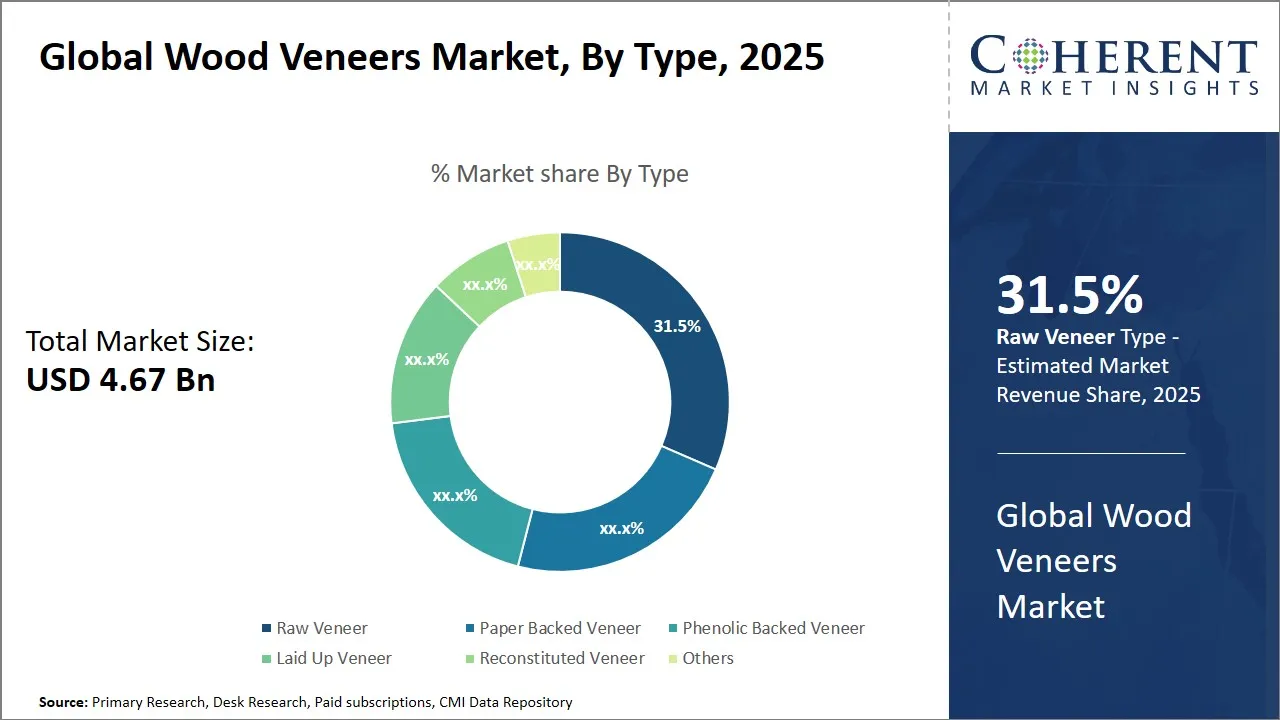
- Raw veneer segment is expected to hold 32.5 % of the market share in 2026.
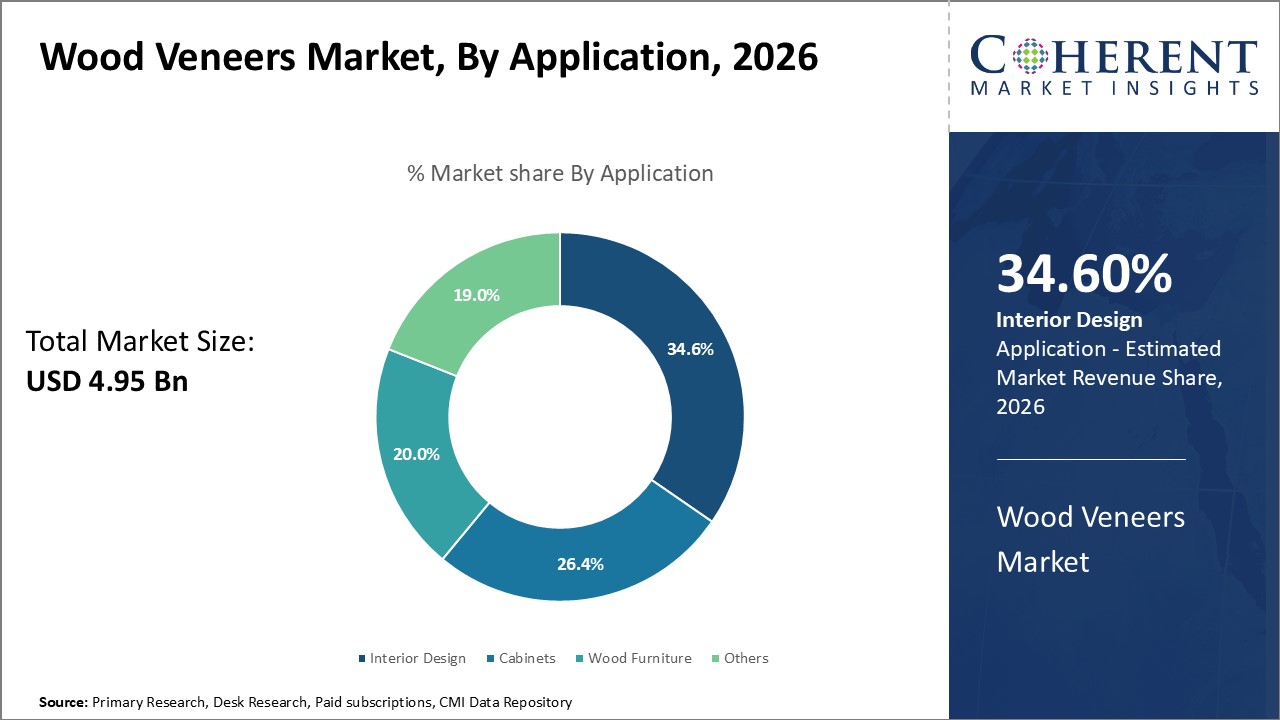
- The interior design segment is projected to hold 24.6 % share in 2026.
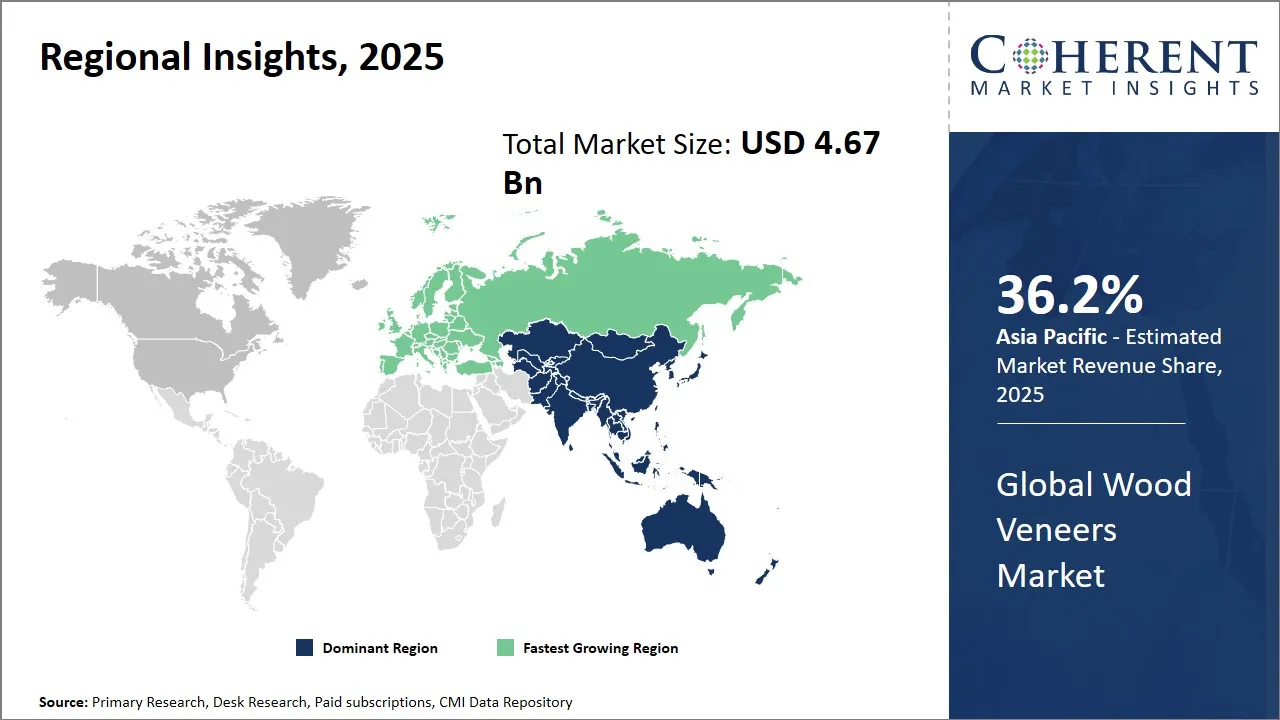
- Asia Pacific will dominate the wood veneers market in 2026 with an estimated 36.2 % share.
- Europe will hold 15.3% share in 2026 and record the fastest growth.
Market Overview
- The recent tendencies in the market for wood veneers reveal the beginner of more environmentally conscious sourcing and manufacturing practices as consumers and producers seem to focus on the environmentally conscious decisions.
- Due to technological innovation in the form of engineered wood veneers and digital printing, both design opportunities and the availability of more convenient and tailored solutions are expected to increase.
- Further, increasing demand for high aesthetic finish in commercial and residential buildings is also contributing to its growth which has also seen luxury and high-quality wood veneer products gaining substantial momentum across the globe.
Current Events and Its Impact
Current Events | Description and its Impact |
Rising demand for sustainable and certified timber |
|
Growth of engineered wood and panel-based furniture manufacturing |
|
Segmental Insights
- Current Industry Events of 2026
- Market Size Estimation
- Regional Breakdown
- Competitive Landscape
- Customer Intelligence
- Segmental Analysis
- Pricing Analysis
- Key Market Drivers, Challenges & Future Trends
- Customized Insights Section
Why Does Raw Veneer Dominates the Wood Veneers Market in 2026?
Raw veneer segment is expected to hold 32.5% of the global wood veneers market share in 2026, due to its inherent nature which fits the growing requirement of consumers to their need of sustainable and natural building materials. The natural thinly cut wood is known as raw veneer which gives a natural wood grain look and this is much sought after both in residential and commercial applications. This is a natural visual value that contrasts with the other types of veneers which usually involve artificial support or treatment hence providing the architects, designers, and users with unparalleled touch on nature through their furnishings and interior.
For example, several hotel chains in Europe expanded their refurbishment programs using raw walnut and oak veneers for lobby wall panels and room furniture to meet sustainability certification criteria such as BREEAM and LEED. This single shift increased demand for raw veneer because engineered and reconstituted alternatives could not deliver the natural appearance required for high-touch luxury spaces.
(Source: https://www.chantawood.com/what-is-natural-veneers/)
Interior Design Dominates the Wood Veneers Market
Interior design segment is projected to represent 24.6% of the wood veneers market share in 2026, due to the growing speed of the global trend of sophisticated, warm, and personalized interiors in both residential and commercial buildings. Wood veneers provide a distinctive visual and tactile depth to spaces that other materials might not be able to provide, and thus are also favored by designers as a way to enhance ambiance and comfort of experience.
The increased role played by the interior design as a market expansion driver can be attributed to the increased consumer disposable income and an increased concern with beautification of the home and workplace. There is an increase in demand of high-quality decorative finishes by homeowners and businesses to ensure they upgrade their interiors to mirror their personal style and brand awareness. The custom use of wood veneers allows a wide choice of grain patterns, textures, and wood species to suit a wide range of interior themes such as rustic and traditional to sleek and modern.
Regional Trade Flows
Regional trade flows in this dataset map wood veneers movement between key areas like Asia Pacific (e.g., Vietnam, China), North America, and Europe, highlighting hubs such as Vietnam's role in processing imported timber for re-export. It details directional flows, such as high exports from Southeast Asia to the U.S. and EU, influenced by furniture and interior applications. Disruptions from policy shifts, like U.S. tariffs on Canadian (35%) and Brazilian (50%) goods, reroute these flows, boosting alternative suppliers while straining costs.
Import/Export Volumes & Tariff Impacts
Import/export volumes capture annual tonnage or value metrics, with top exporters like Vietnam holding ~7% global wood product share amid a USD 230 Bn import market; tariffs elevate pricing by 20-30% for uncertified goods and reshape supply chains. Tariff impacts are modeled via scenarios showing cost hikes, reduced competitiveness (e.g., Vietnam furniture to U.S.), and shifts toward certified products for exemptions under agreements like USMCA. Volumes fluctuate with housing demand and threats, as seen in rising U.S. plywood imports despite downturns.
Regional Insights
Asia Pacific Wood Veneers Market Analysis and Trends
The Asia Pacific region is projected to lead the market with a 36.2% share in 2026, due to its high rate of urbanization, and the growing number of building projects, as well as growing consumer sensitivity to the aesthetics of an interior. Latin countries such as China, India and the Southeast Asian countries are pumping money in infrastructure and residential developments where wood veneers are increasingly getting used.
This tendency is supported by governmental programs of housing construction and exports of wood products. Besides, the region has had a large supply of raw materials and low-cost manufacturing options which attracts global investments. Some of the firms such as Dongwha Enterprises, Greenply Industries, and Century Plyboards have played a key role in the expansion of the regional market due to innovative nature and expansive distribution network.
Europe Wood Veneers Market Analysis and Trends
The Europe region is expected to exhibit the fastest growth in the market contributing 15.3% share in 2026, due to the fact that the region has a well-established wood processing ecosystem, traditional experience that is well established in veneer manufacturing, and the high standards of sustainability. The European countries are closely associated with intense governmental assistance on the topic of sustainable forestry and environmentally friendly building materials which contributes to developing the innovation of wood veneer implementation.
The existence of an established furniture manufacturing industry particularly in Germany, France, and Italy supports the demand of high-quality Veneers. Moreover, strong trade system and regional coordination of the EU make sourcing and distributing of raw materials easier, which consolidates the dominance of Europa. The main industries like Kaindl, Pfleiderer Group and Sonae Aarauco play an important role with their developed portfolios and sustainable production.
Global Wood Veneers Market Outlook for Key Countries
Germany Wood Veneers Market Trends
The market in Germany booms on its reputation in engineering of precision and furniture manufacture. Its strict environmental policies have compelled firms to implement certified sustainable veneers and this has boosted the credibility of its products across borders. Key manufacturers such as Kaindl and Richter Furniertechnik use modern technology in the manufacture of special veneers to satisfy the needs of luxury furniture and car interiors. The presence of these companies worldwide is supported by export-oriented economy of Germans that helps to strengthen the powerful position of this country in the market.
Why China Emerging as a Competitive Producer of Wood Veneers?
The wood veneers market in China is characterized by huge domestic consumption which is backed by high levels of residential and commercial construction. The huge forest resources, as well as the government policies that promote sustainable forestry, ensure that the raw materials are available on a continuous basis. A major player like Dongwha Enterprises and Sun Wood Corporation invest in R and D to enhance the quality of veneers and also to diversify. China is an important strategic location in exportation as well, having a hub to supply veneers to other markets around the world.
U.S. Wood Veneers Market Trends
The U.S. is an advance market and has sound end-use industries which include furniture, cabinetry, and automotive interiors. This trend of focusing on the design and environmentally-approved products in the U.S. coincides with the increased consumer interest in sustainable material. Such large firms as Columbia Forest Products and Roseburg Forest Products have been the first to develop sustainable veneer technology such as the formaldehyde-free adhesives. Favorable government policies regarding green building and LEED certification also promote the use of wood veneer in construction and renovation industry.
India Wood Veneers Market Trends
The India market for wood veneers is on the increase path and it has been driven by the growing rates of urbanization and income level of middle classes. Affordable housing programs and Make in India are some of the government campaigns promoting the development of manufacturing in the country. Major manufacturers such as Greenply industries and Century plyboards have diversified product range and increased their manufacturing, which serves the local market and foreign markets. These resources of hardwoods available in the country and the fact that the woodworking sector was developing predetermines the constant expansion of the market, overcoming certain difficulties connected with the sustainability of raw materials.
Italy Wood Veneers Market Trends
Italy maintains a prestigious position in the wood veneers market, renowned for its luxury furniture and interior design segments. Italian manufacturers emphasize craftsmanship and innovation, often integrating veneers with other premium materials. Companies such as Marazzi Group and Fantoni contribute to the market through customized veneer solutions that appeal to high-end consumers worldwide. Government policies supporting artisanal industries and export incentives enhance Italy’s capacity to influence global veneer trends while maintaining traditional expertise.
Market Players, Key Development, and Competitive Intelligence
Key Development
- In November 2025, The Wood Veneer Hub (WVH), a manufacturer of wood wall panels and decorative surfaces, announced an exclusive collaboration with Drew & Jonathan Home, the home lifestyle products brand founded by design experts and Property Brothers hosts Drew and Jonathan Scott. Together, the brands pair WVH craftsmanship with the brothers’ signature design vision to bring natural texture, warmth, and modern character to everyday spaces.
Top Strategies Followed by Global Wood Veneers Market Players
Player Type | Strategic Focus | Example |
Established Market Leaders | Heavy investment in R&D and innovation | Firms like Alpi SpA, Greenlam industries and Samling group invest in advanced coating systems, ultra-thin slicing technology, and low-VOC adhesive processes. They are driving forward new product lines such as Alpis reconstituted veneers, consistent grain, sustainable source, and Greenlams antimicrobial veneers finishes, which focus on luxury hospitality and commercial interiors. |
Mid-Level Players | Cost-effective solutions with balanced quality | Companies like Flexible Materials Inc. and Oakwood Veneer Company are concerned with the efficient usage of resources, cutting yield optimization, and the line of finishing simplification so that the input wastes were decreased, and the price was stabilized. |
Small-Scale Players | Niche specialization & innovative variants | Surely Wood (U.S.), Sven Nielsen Veneers (Europe), or custom craft Japanese veneer shops have rare species (burl veneers, curly maple, zebrawood), custom-selected flitches, custom-cut grain sets, and artisans veneer environments certified organic. Others embrace high-tech equipment such as digital veneer printing, making it possible to have custom designs to match the luxury interior or yacht. |
Market Report Scope
Wood Veneers Market Report Coverage
| Report Coverage | Details | ||
|---|---|---|---|
| Base Year: | 2025 | Market Size in 2026: | USD 4.95 Bn |
| Historical Data for: | 2020 To 2024 | Forecast Period: | 2026 To 2033 |
| Forecast Period 2026 to 2033 CAGR: | 5.9% | 2033 Value Projection: | USD 7.39 Bn |
| Geographies covered: |
| ||
| Segments covered: |
| ||
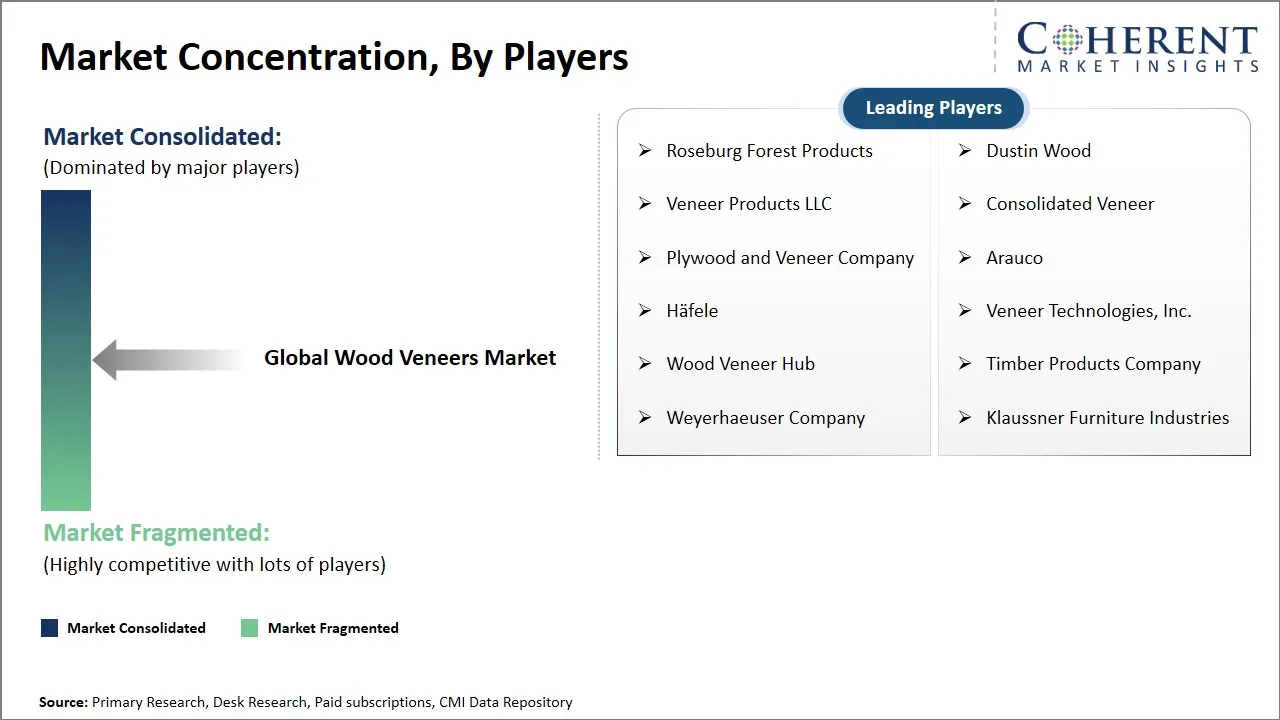
| Companies covered: | Roseburg Forest Products, Dustin Wood, Veneer Products LLC, Consolidated Veneer, Plywood and Veneer Company, Arauco, Häfele, Veneer Technologies, Inc., Wood Veneer Hub, Timber Products Company, Weyerhaeuser Company, and Klaussner Furniture Industries | ||
| Growth Drivers: |
| ||
| Restraints & Challenges: |
| ||
Wood Veneers Market Dynamics
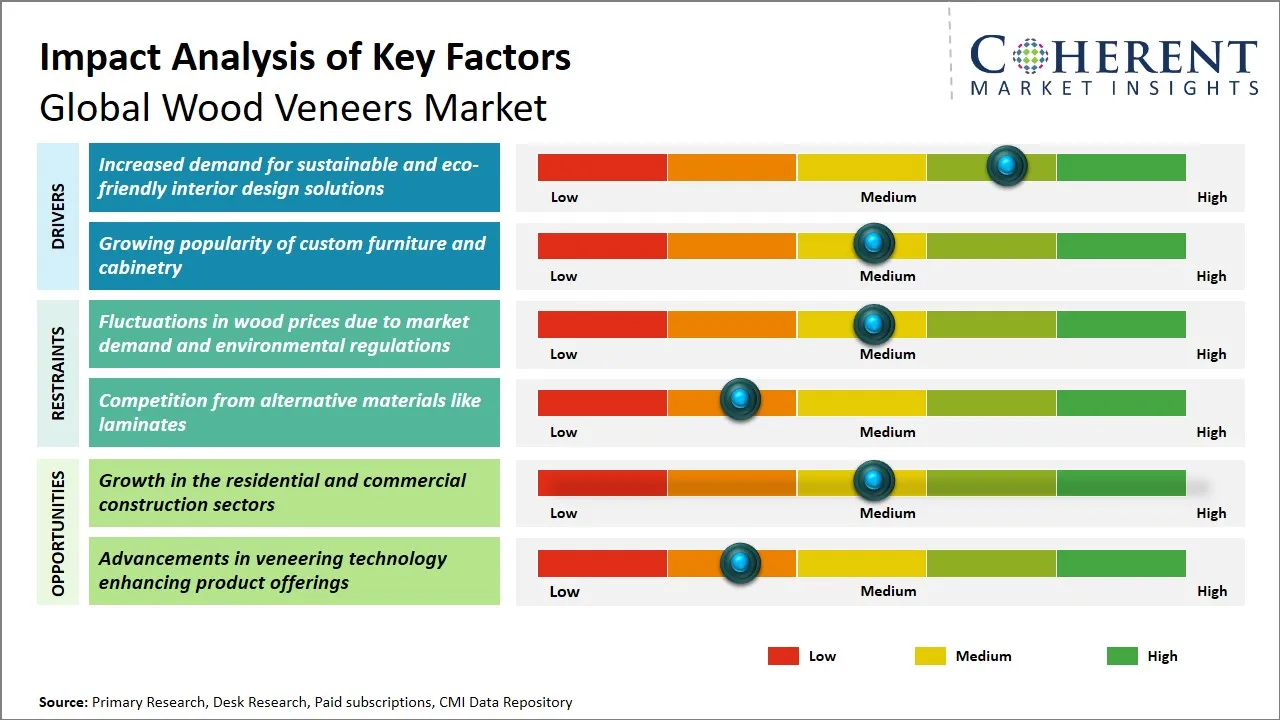
Wood Veneers Market Driver - Increased Demand for Sustainable and Eco-Friendly Interior Design Solutions
The increasing awareness of environmental sustainability that has been experienced by the world has been of great influence in boosting demands for wood veneers in interior design. Since consumers and companies are increasingly seeking greener material resources, wood veneers represent a good alternative choice because they provide the warmth and beauty of natural wood, with a significantly decreased amount of solid timber utilization.
This would not only aid in saving on the valuable forest resources, but also, minimizing environmental impact by reducing carbon footprints in the sourcing and manufacturing. Architects and interior designers are also embarking on using wood veneers in furniture, wall paneling, and decorating items without necessarily reducing style and quality in order to satisfy the demands of the ecologically conscious customers.
For example, large hospitality companies, such as Marriott and Accor, are more and more adopting engineered veneers in paper and case goods in new hotel buildings as a way of complying with environmental scoring requirements.
Wood Veneers Market Opportunity - Growth in Residential and Commercial Construction Sectors
The booming real estate and housing building industries offer a major market challenge to the world wood veneers industry. As urbanization continues to gain momentum both in the emerging and developed economies, the demand for new housing projects, office buildings, hotels, and retail areas is increasing. Wood veneers, which are more economical than solid wood, eco-friendly, and have a higher aesthetic value, are being used more and more in the interior design of wall paneling, cabinetry, furniture, and industrial flooring.
The shift towards high-quality wood veneer finish which delivers the appearance of natural wood but has a reduced environmental footprint increases the popularity of the veneer in the residential sector as a result of the move towards premium and customized interior finishes of the home. In the meantime, commercial building is a source of demand that consists of mass fit-outs involving the use of materials that are both sturdy and have a beautiful design solution.
India (e.g. PMAY) and Southeast Asian schemes to build affordable and mid-income housing use veneer-based interior modules because of their cheaper prices than hardwood and require a faster production of plywood and veneers as a result.
Analyst Opinion (Expert Opinion)
- The wood veneers market has a high potential of growing significantly, owing to the revived interests in construction by using sustainable building materials, as well as, aesthetic interior design solutions. The experience of the International Woodworking Fair (2023) and the Furniture Manufacturing Expo (2022) revealed the great progress made: such companies as Aarauco and Kronospan became the pioneers of the innovations in the sphere of the green veneer products.
- The recent introduction of a line with FSC-certified veneers by Aarucos is a demonstrate of the industry being focused on sustainability and concerned with customer desires to consume sustainable materials. At these conferences, it was pointed out that the quality and consistency of the veneers through the technological advancements in the production processes were important because these can expand the opportunities of the use in the production of furniture, cabinetry, and architectural design.
- The problematic issues with changing availability of raw materials and regulatory constraint on deforestation were, however, commonly mentioned as the possible obstacles. Companies which are preoccupied with disclosure when it comes to sourcing and investing in research and development to invent new methods of finishes will likely attain a competitive advantage. Finally, the development of the wood veneers market will be pegged on its ability to be in tandem to the objective of sustainability as well as the requirements of the architects, designers, and consumers who need beauty as well as functionality in their projects.
Speak to the analyst
Want personalized insights?
Take the findings above to one of our principal consultants, or have the report rebuilt around the segments, geographies and competitors you actually track.
Market Segmentation
- Type Insights (Revenue, USD Bn, 2021 - 2033)
- Raw Veneer
- Paper Backed Veneer
- Phenolic Backed Veneer
- Laid Up Veneer
- Reconstituted Veneer
- Others
- Application Insights (Revenue, USD Bn, 2021 - 2033)
- Interior Design
- Cabinets
- Wood Furniture
- Others
- Regional Insights (Revenue, USD Bn, 2021 - 2033)
- North America
- U.S.
- Canada
- Latin America
- Brazil
- Argentina
- Mexico
- Rest of Latin America
- Europe
- Germany
- U.K.
- Spain
- France
- Italy
- Russia
- Rest of Europe
- Asia Pacific
- China
- India
- Japan
- Australia
- South Korea
- ASEAN
- Rest of Asia Pacific
- Middle East
- GCC Countries
- Israel
- Rest of Middle East
- Africa
- South Africa
- North Africa
- Central Africa
- North America
- Key Players Insights
- Roseburg Forest Products
- Dustin Wood
- Veneer Products LLC
- Consolidated Veneer
- Plywood and Veneer Company
- Arauco
- Häfele
- Veneer Technologies, Inc.
- Wood Veneer Hub
- Timber Products Company
- Weyerhaeuser Company
- Klaussner Furniture Industries
Sources
Primary Research Interviews
- CEO – Leading Wood Veneer Producer
- Supply Chain Director – Major Wood Veneers Distributor
- Production Lead – Specialty Veneer Manufacturer
- Sustainability Officer – Wood Veneer Certification Authority
Stakeholders
- Manufacturers
- End-use Sectors
- Furniture Industry (Residential, Commercial)
- Interior Design & Construction
- Flooring Producers
- Cabinetry & Millwork Manufacturers
- Regulatory & Certification Bodies
- E-commerce Platforms and Retailers (Alibaba, Industrial Suppliers)
- Technology Integration Players: Engineered wood and decorative veneer producers
Databases
- UN Comtrade Database (HS Code 44: Wood and articles of wood, including veneers)
- India Import Export (EXIM) Database
- USGS Mineral Commodity Summaries (adapted for forest products)
- Eurostat Trade Statistics for Wood Products
Magazines
- Woodworking Network – Trends in wood veneers supply
- Fine Woodworking – Innovations in veneer applications
- Wood & Panel Business – Market dynamics for wood veneers
- Interiors & Sources – Veneers in interior design
Journals
- Journal of Wood Science – Wood veneers durability and modification
- BioResources – Decorative wood veneers in design
- Forest Products Journal – Veneer manufacturing techniques
- Wood Science and Technology – Sustainability in veneer production
- Minerals Engineering – (Adapted for wood resources)
Newspapers
- The Wall Street Journal – Global demand for wood products
- Business Standard (India) – Wood veneer imports and Asia market growth
- Reuters – Price volatility in wood veneers
- Financial Times – Sustainability in timber trade
Associations
- Decorative Hardwoods Association (formerly HPVA)
- Composite Panel Association (CPA)
- Canadian Hardwood Plywood Veneer Association
- Forest Stewardship Council (FSC)
- Programme for the Endorsement of Forest Certification (PEFC)
- Sustainable Forestry Initiative (SFI)
Public Domain Sources
- EPA – Guidelines for wood products handling
- European Commission – Timber regulations (EUTR)
- World Health Organization – Safety standards for wood dust exposure
- U.S. Forest Service – Veneer statistics and trade assessments
Proprietary Elements
- CMI Data Analytics Tool, Proprietary CMI Existing Repository of information for last 8 years.
Get access to 250+ pages report
Every segment, forecast, competitor profile and data table behind the analysis above — available for instant download.
- ESOMAR Member
- ISO 9001:2015 Certified
- D-U-N-S Registered
- GDPR & CCPA Compliant
Missing comfort of reading report in your local language? Find your preferred language:
Transform your Strategy with Exclusive Trending Reports
Frequently Asked Questions
The global wood veneers market is estimated to be valued at USD 4.95 Bn in 2026 and is expected to reach USD 7.39 Bn by 2033.
The CAGR of global wood veneers market is projected to be 5.9% from 2026 to 2033.
Increased demand for sustainable and eco-friendly interior design solutions and growing popularity of custom furniture and cabinetry are the major factors driving the growth of the global wood veneers market.
Fluctuations in wood prices due to market demand and environmental regulations and competition from alternative materials like laminates are the major factors hampering the growth of the global wood veneers market.
In terms of type, the raw veneer is estimated to dominate the market revenue share in 2026.
Roseburg Forest Products, Dustin Wood, Veneer Products LLC, Consolidated Veneer, Plywood and Veneer Company, Arauco, Häfele, Veneer Technologies, Inc., Wood Veneer Hub, Timber Products Company, Weyerhaeuser Company, and Klaussner Furniture Industries are the major players.
Asia Pacific is expected to lead the global wood veneers market in 2026.