Medical Robotic System Market Analysis & Forecast: 2026-2033

Global medical robotic system market is estimated to be valued at USD 29.21 Bn in 2026 and is expected to reach USD 88.71 Bn by 2033, exhibiting a compound annual growth rate (CAGR) of 17.2% from 2026 to 2033.
The rising demand for automation in the healthcare sector and rising investment in medical robot research and development can drive the market growth over the forecast period. The market is witnessing several innovations that are expanding medical robot applications in areas like surgery, rehabilitation and elderly assistance. Surgical robots have emerged as a vital part of minimally invasive surgery and their use is being explored for applications beyond gynecology and urology. With continuous technological advancements, medical robotic systems are becoming more affordable and user-friendly.
To learn more about this report, Download Free Sample
|
Current Events |
Description and its impact |
|
US Export Controls on Advanced Semiconductors
|
|
|
Medical Device Tariffs and Trade Policies |
|
Uncover macros and micros vetted on 75+ parameters: Get instant access to report
To learn more about this report, Download Free Sample
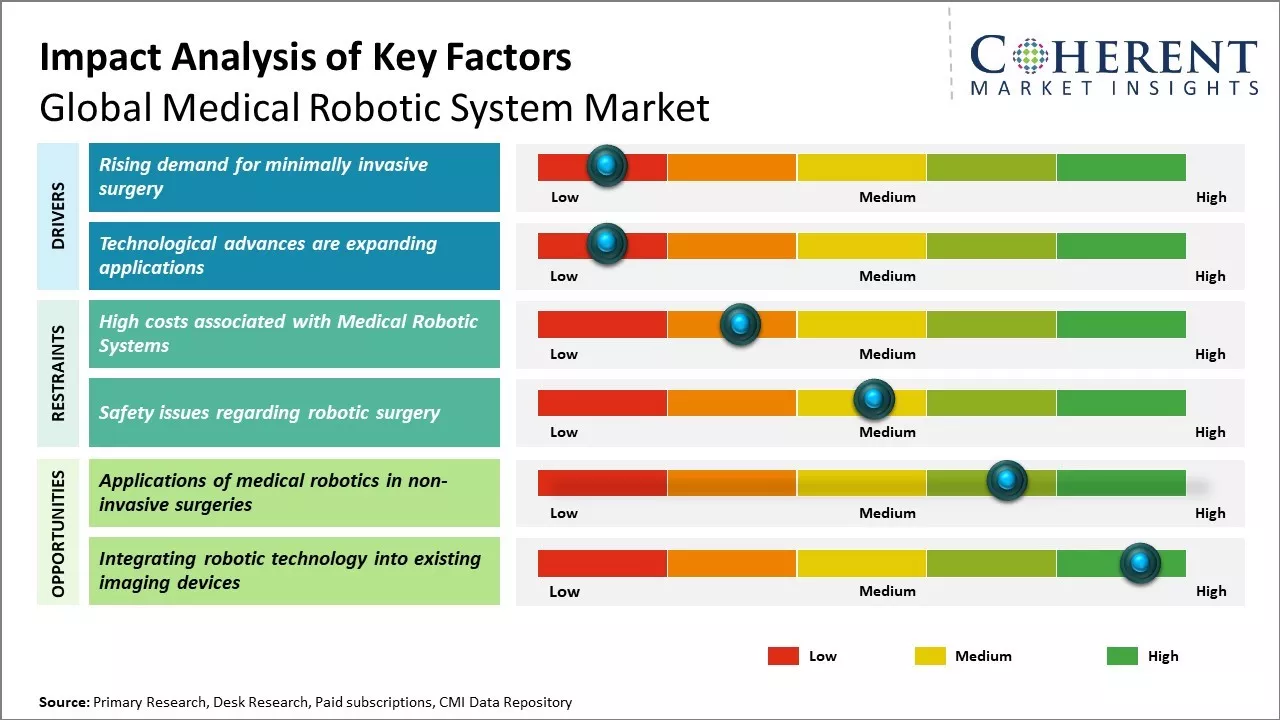
Growing aging population and rising prevalence of chronic diseases can boost the demand for surgical procedures. Patients prefer surgical options that reduce treatment time and promote faster recovery. Minimally invasive surgery addresses both these needs by utilizing specialized robotic systems that allow surgeons to perform complex operations through small incisions instead of conventional open surgery. Robotic systems provide surgeons with enhanced visualization, improved dexterity and accuracy through their automated surgical arms. This translates to less post-surgical pain and trauma for patients, shorter hospital stays and lower risks of surgical site infections as compared to open surgeries. The benefits of robotic surgery have been widely recognized in procedures like organ transplants, cardiac bypass, prostatectomy for prostate cancer treatment and hysterectomies. More hospitals and healthcare facilities are now equipping their operating rooms with robotic surgical systems to meet the growing demand and stay competitive.
For instance, in March 2023, Apollo Hospitals completed 10,000 surgeries using robotic assistance. A recent press statement reveals a remarkable surge, with a more than 400% increase in robotic-assisted procedures performed over the past two years across their hospitals in India. The healthcare provider has also expanded robotic-assisted procedures to more than 20 specialties, solidifying its position as a leader in advanced surgical solutions in the country.
Constant technological innovation broadens the scope of medical robotic systems. Newer generations of robotic platforms feature more sophisticated sensory and imaging capabilities, more dexterous surgical tools as well as built-in intelligence and machine learning. Advancements in areas like computer vision, virtual reality simulation, autonomous navigation and human-robot interface design empowers robots to take on increasingly complex surgical tasks Areas witnessing expanding roles of robotics include transoral surgeries, natural orifice translumenal endoscopic surgery (NOTES), less invasive brain surgeries and interventional radiology procedures. Robotics assist rehabilitation therapies through tasks like stroke recovery training. With continuous evolution in robotics and AI, entirely new medical procedures and treatment paradigms are expected to emerge.
For instance, the advent of Transoral Robotic Surgery (TORS) exemplifies how technological advances expand applications. Previously, accessing tumors deep in the throat or at the base of the tongue often required extensive open surgery, involving jaw-splitting incisions. However, with sophisticated robotic systems featuring miniaturized, dexterous tools and high-definition 3D visualization, surgeons can now perform these complex resections through the patient's mouth, leading to less pain, faster recovery, and better functional outcomes.
Medical robotics has immense potential in revolutionizing the field of minimally invasive surgeries. As robotics and computer technologies become more sophisticated, medical robots are increasingly being used in complex non-invasive surgical procedures with great accuracy and consistency. Robotic surgical systems have enabled doctors to perform several complex surgical procedures like organ transplants, colon cancer surgeries and repairs of brain aneurysms through small incisions instead of conventional open surgery.
This significantly reduces recovery time for patients, preserves tissue integrity and minimizes surgical trauma and blood loss compared to traditional open surgeries. For example, robotic systems for colon cancer surgery have led to comparatively shorter hospital stays and fewer complications for patients, according to research studies published by leading hospitals.
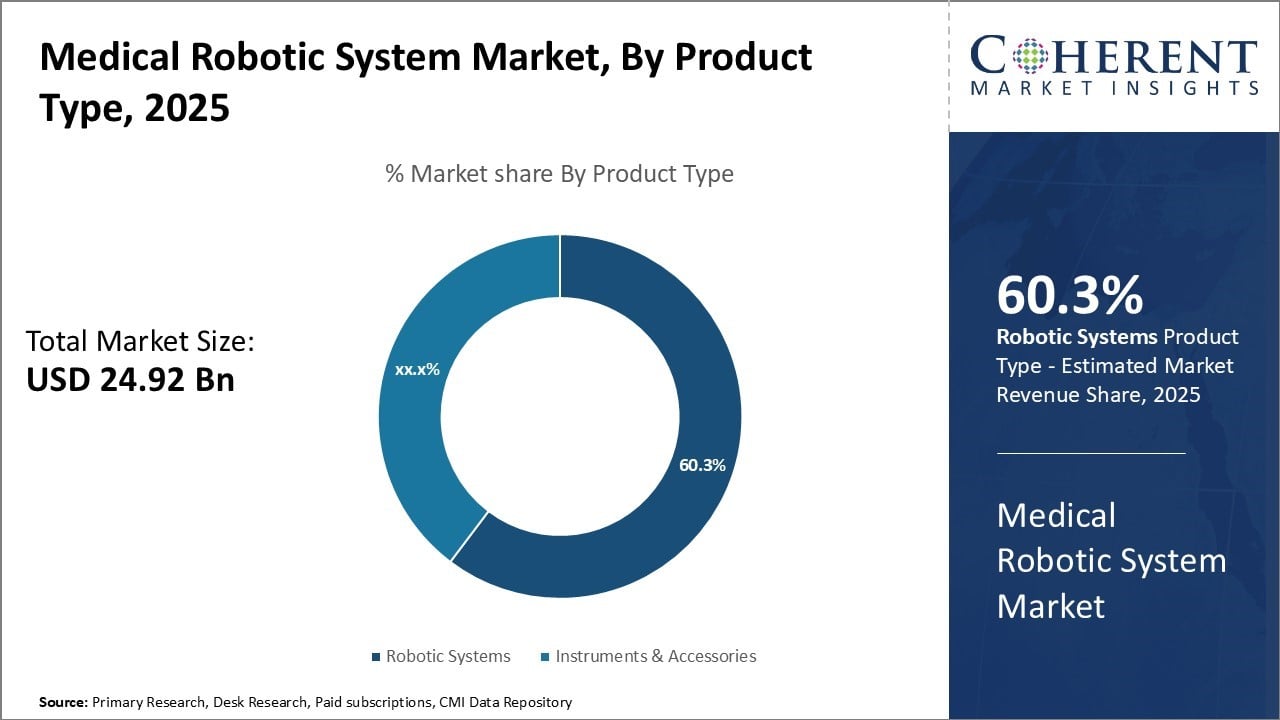
By product type, robotic systems segment is estimated to contribute the highest market share of 61.3% in 2026, due to ongoing technological advancements. Robotic systems have witnessed widespread adoption in surgery due to their ability to perform complex procedures with unmatched accuracy and minimal invasive techniques. Robot-assisted surgery provides surgeons with a high-definition 3D view of the surgical area and filters out hand tremors to ensure precision down to the millimeter. This level of precision is especially valuable for procedures like prostatectomies which require delicate maneuvering near critical organs and nerves. The da Vinci surgical system continues to be the gold standard platform, having performed over 5 million procedures globally.
For example, the latest da Vinci Xi and SP surgical platforms feature multi-quadrant anatomy visualization, augmented intelligence capabilities, and robotic arm enhancements. Their user interfaces also provide an more immersive experience that many surgeons prefer over traditional laparoscopy. Rise company is also developing MRI-compatible robotic arms to enable minimally invasive tumor resections guided by real-time MRI.
To learn more about this report, Download Free Sample
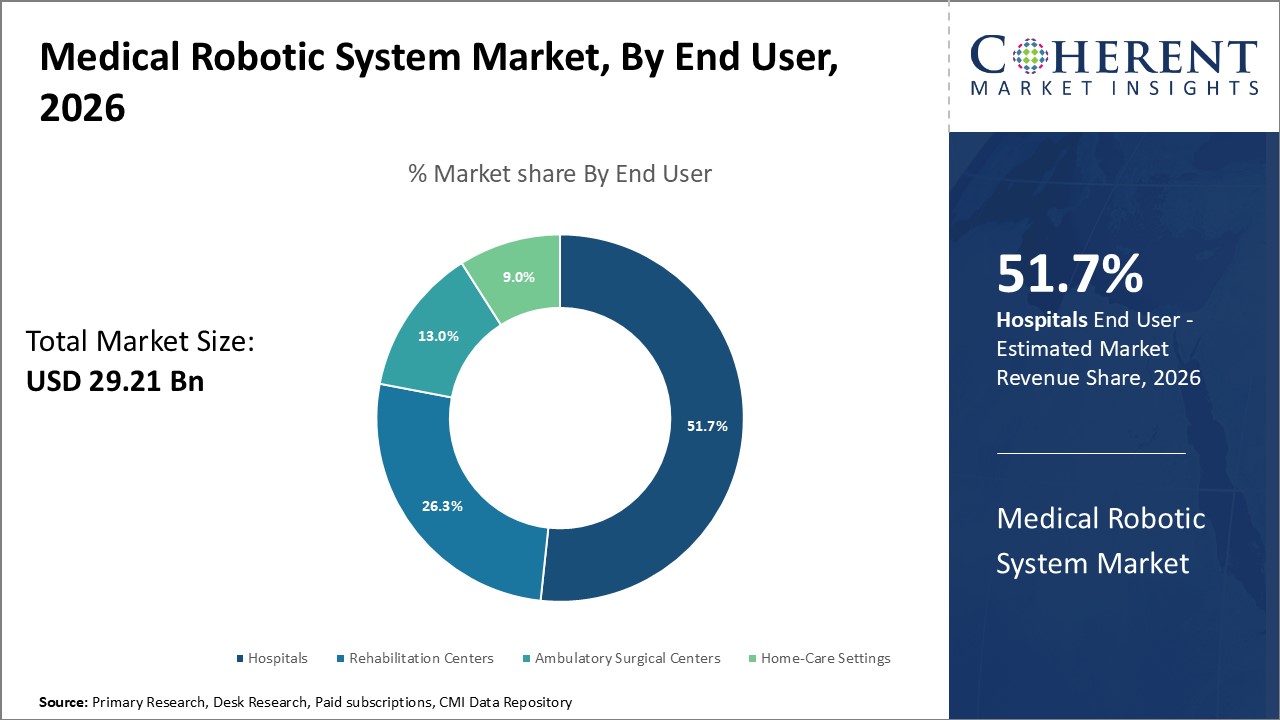
By end user, hospitals segment is estimated to contribute the highest market share of 51.7% in 2026, due to hospitals' role as primary points of access for surgical, rehabilitation, and acute care. The majority of robotic-assisted surgeries still occur in hospital operating rooms where specialized infrastructure and well-trained operating teams are readily available. Due to their scale, hospitals can also more readily invest in the high upfront costs of robotic platforms that are expensive. As reimbursement models evolve, more hospitals are looking to share the cost and utilization of expensive robotic equipment with ambulatory surgical centers and partner clinics. Rehabilitation centers are also seeing increased adoption of robotic exoskeletons which help patients progress more quickly from assisted walking to full independence.
For instance, large hospital networks such as the Mayo Clinic in the U.S. and Apollo Hospitals in India have integrated advanced surgical robotic systems like the da Vinci Surgical System to perform complex minimally invasive procedures. These hospitals often partner with nearby ambulatory centers to extend robotic surgery access while optimizing equipment utilization and cost-efficiency.
|
Segment |
System (Manufacturer) |
Estimated Cost (USD) |
Recurring Costs (USD) |
|
Surgical Robots
|
da Vinci Xi, X, SP (Intuitive Surgical) |
1,500,000 – 2,500,000 per unit |
Instruments: 1,500 – 3,000 per procedure; |
|
Orthopedic Surgical Robots
|
MAKO Robotic-Arm (Stryker) |
1,000,000 – 1,800,000 |
Disposables: 1,000 – 2,500 per procedure |
|
Modular Surgical Systems
|
Hugo RAS (Medtronic) |
750,000 – 1,200,000 |
Disposables: 500 – 1,000 per procedure |
|
Hospital Logistics Robots
|
Aethon TUG |
30,000 – 60,000 |
Service/Contracts: approximately 10,000 per year |
|
Pharmacy Delivery Robots
|
Omron LD Series |
30,000 – 50,000 (estimated) |
- |
|
Rehab/Assistive Robots
|
EksoNR (Ekso Bionics) |
100,000 – 150,000 (neurological rehab) |
- |
|
Radiosurgery Systems
|
CyberKnife S7 (Accuray) |
3,500,000 – 4,500,000 |
Service: approximately 300,000 per year |
|
Endoscopic/Diagnostic Robots
|
MONARCH Platform (Auris Health/J&J)
|
700,000 – 1,100,000 |
Disposables: 1,500 – 2,500 per use |
Uncover macros and micros vetted on 75+ parameters: Get instant access to report
To learn more about this report, Download Free Sample
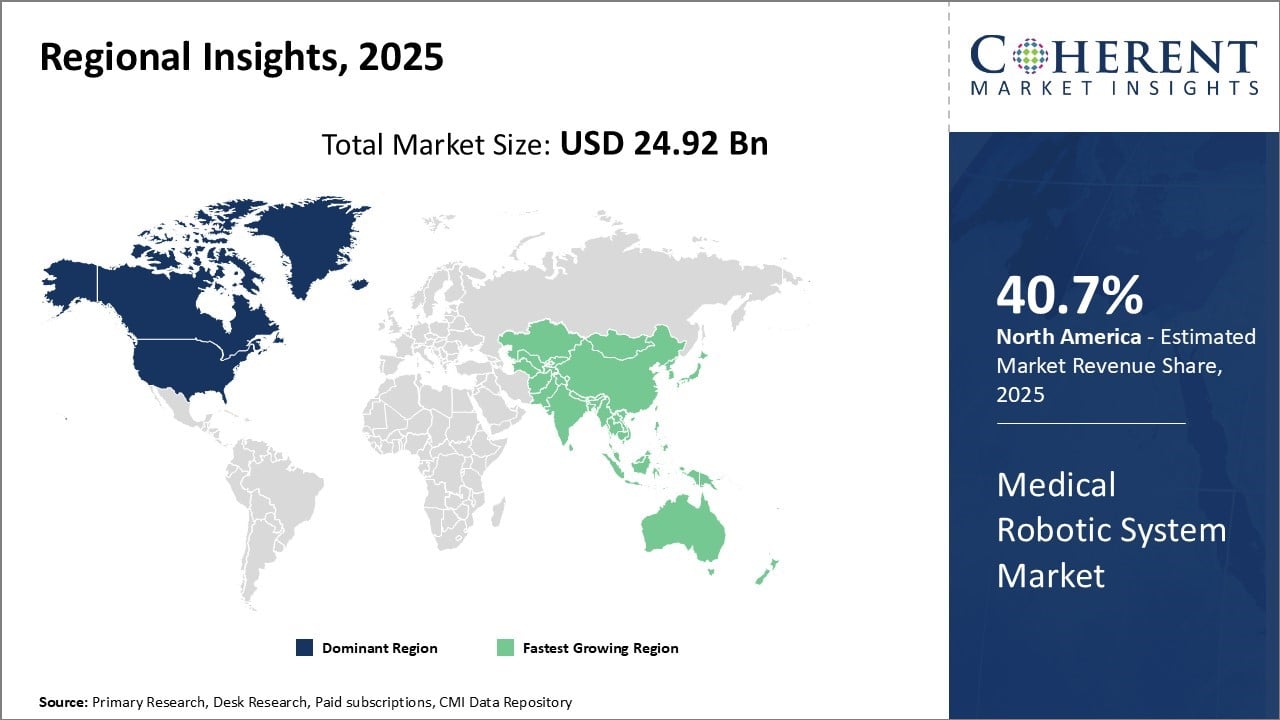
North America has established itself as the dominant regional market for medical robotic systems with an estimated market share of 40.7% in 2026. The region enjoys strong industry presence from key players like Intuitive Surgical, Stryker and Medtronic who have their headquarters and major manufacturing facilities located in the U.S. This allows them to cater to domestic demand as well as export to other regions promptly. With a well-developed healthcare infrastructure and high healthcare expenditure, the U.S. accounts for the largest share of the regional market.
The reimbursement policies and regulatory approval processes are well-defined in North America, enabling faster uptake of new medical robotic technologies. Moreover, the availability of skilled surgeons highly trained in robot-assisted procedures has increased demand for surgical robots over the last decade. Leading hospitals in the U.S. have made huge investments to establish robot-assisted surgery departments, adopting premium robotic systems from major suppliers. Given the widespread industry presence, North America also accounts for significant manufacturing and export of medical robot parts.
In March 2026, Baylor St. Luke’s Medical Center in Houston performed the first fully robotic heart transplant in the U.S., using robotic arms via a small abdominal incision. This innovation reduced infection risk, blood loss, and recovery time for the patient, strongly underscoring North America’s leadership in advanced robotic surgical care
The Asia Pacific region is projected to be the fastest-growing market for medical robotic systems during the forecast period. Rapidly improving healthcare infrastructure, policies encouraging medical tourism along with rising disposable incomes are driving heavy demand. In particular, China and Japan have strong manufacturing capabilities and represent major production and export hubs for medical robotics. With a huge patient population and lower treatment costs, countries like India and Singapore are attracting significant medical tourists opting for robot-assisted surgeries.
For instance, in June 2026, TORC Ortho Care in Madurai, India, introduced the first Johnson & Johnson VELYS robotic-assisted knee replacement in the region—enhancing surgical precision, reducing recovery time, and offering more affordable advanced care to patients.
The Middle East is witnessing rapid growth in the adoption of medical robotic systems, fueled by significant investments in healthcare infrastructure and supportive government initiatives. Nations such as the U.A.E and Saudi Arabia are increasingly deploying robotic-assisted procedures in specialties like urology, cardiology, and organ transplantation. The expansion of advanced hospitals and a growing preference for minimally invasive surgeries are further accelerating market acceptance.
For instance, in November 2024, Cleveland Clinic Abu Dhabi performed its first robotic mitral valve repair, utilizing a state-of-the-art robotic system to enhance surgical precision and reduce patient recovery time a landmark event that highlights the region’s commitment to cutting-edge medical innovation.
Latin America is witnessing steady growth in the medical robotic system market, driven by rising demand for minimally invasive procedures, increased government and private sector healthcare investments, and growing awareness of robotic-assisted surgery benefits. Brazil and Mexico are emerging as key markets due to their expanding healthcare infrastructure and surgical training programs. Although high costs and limited reimbursement frameworks remain barriers, increased availability of robotic platforms and local surgeon expertise are gradually overcoming adoption challenges.
For instance, in January 2026, Vera Cruz Hospital in Campinas, São Paulo, Brazil, became the first in Latin America to perform a total knee replacement using MicroPort MedBot’s SkyWalker orthopedic surgical robot, marking a significant step in robotic orthopedic surgery in the region.
Europe's medical robotic system market is expanding steadily, supported by structured regulatory frameworks, growing healthcare infrastructure investments, and technological innovation. While certification under EU Medical Device Regulation (MDR) and the CE marking process ensures safety and quality, it often delays product launches and hinders market momentum. Financial incentives vary widely across countries Germany’s lack of consistent reimbursement models contrasts with Poland’s emerging schemes creating uneven adoption rates. Advanced applications such as telesurgery and neurosurgical robotics are gaining traction, although legal clarity around cross-border procedures and cybersecurity remains necessary for their wider deployment.
For instance, in June 2026, Belgium became the first European nation to conduct remote robotic telesurgery using the Toumai system performing both a radical prostatectomy and a total hysterectomy across separate locations with ultra-low latency connectivity underscoring Europe's leadership in advanced robotic surgery capabilities.
| Report Coverage | Details | ||
|---|---|---|---|
| Base Year: | 2025 | Market Size in 2026: | USD 29.21 Bn |
| Historical Data for: | 2020 To 2024 | Forecast Period: | 2026 To 2033 |
| Forecast Period 2026 to 2033 CAGR: | 17.2% | 2033 Value Projection: | USD 88.71 Bn |
| Geographies covered: |
|
||
| Segments covered: |
|
||
| Companies covered: |
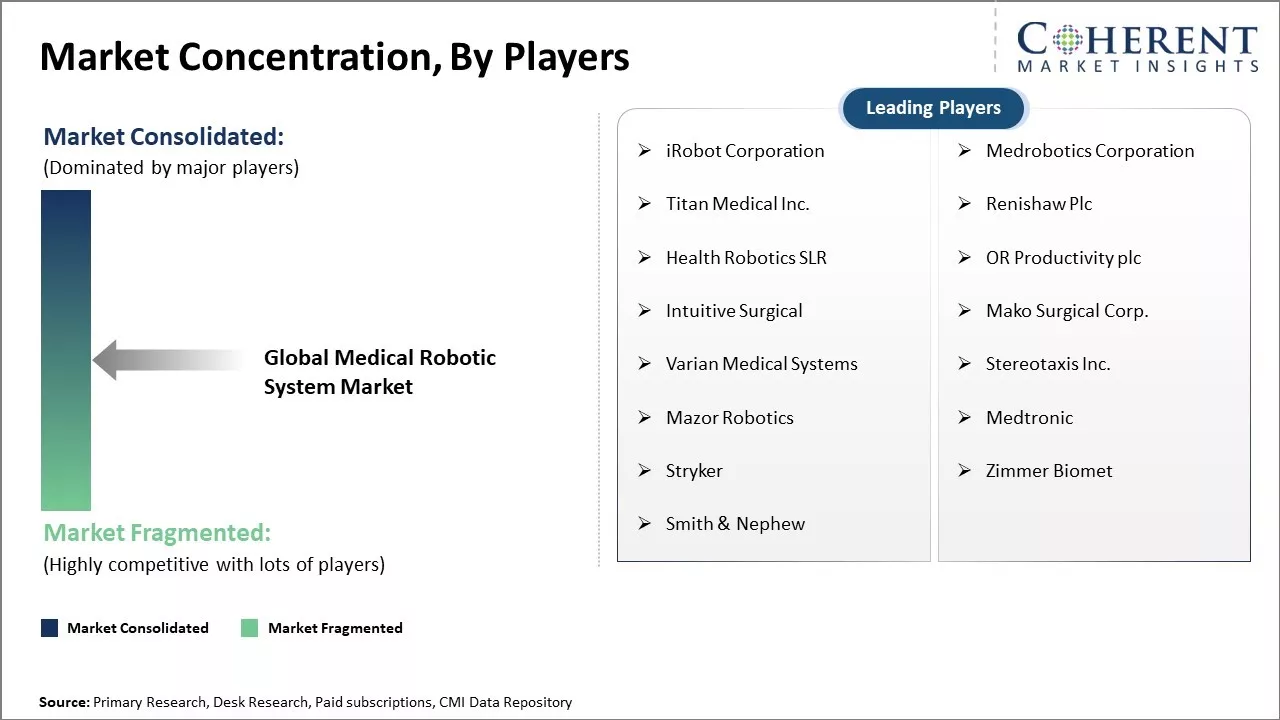
iRobot Corporation, Medrobotics Corporation, Titan Medical Inc., Renishaw Plc, Health Robotics SLR, OR Productivity plc, Intuitive Surgical, Mako Surgical Corp., Varian Medical Systems, Stereotaxis Inc., Mazor Robotics, Medtronic, Stryker, Zimmer Biomet, and Smith & Nephew |
||
| Growth Drivers: |
|
||
| Restraints & Challenges: |
|
||
Uncover macros and micros vetted on 75+ parameters: Get instant access to report
Medical robotics is expanding beyond traditional surgery into new areas like endoluminal diagnostics, socially assistive rehabilitation, and remote telemedicine, addressing critical healthcare gaps.
*Definition Medical robotic system consists of computer controlled robotic devices used to assist in surgical procedures and for other medical applications. These robotic systems allow for minimally invasive surgeries and can provide greater precision, flexibility and control than traditional procedures. Medical robotic systems may include surgical robots for tasks like suturing or remote surgery equipment that allows surgeons to operate on patients from remote locations. These robotic technologies aim to improve surgical outcomes for patients and help overcome limits of conventional techniques.
Share
Share
Manisha Vibhute is a consultant with over 5 years of experience in market research and consulting. With a strong understanding of market dynamics, Manisha assists clients in developing effective market access strategies. She helps medical device companies navigate pricing, reimbursement, and regulatory pathways to ensure successful product launches.
Joining thousands of companies around the world committed to making the Excellent Business Solutions.
View All Our Clients