

Intracranial Stents Market Size and Forecast: 2026-2033
The Intracranial Stents Market is anticipated to grow at a CAGR of 9.3% with USD 13.7 Bn in 2026 and is expected to reach USD 22.8 Bn in 2033. Rising cases of ischemic strokes and aneurysms drive demand in the intracranial stents market. Globally, stroke incidence has increased by 70%, with ischemic strokes representing nearly 87% of all cases. Rising metabolic disorders and sedentary lifestyles are driving higher stroke rates among adults under 40. In India, a stroke occurs approximately every 30 seconds, with a growing burden among younger populations.
Key Takeaways
- Self-Expanding Intracranial Stents hold the largest market share of 52.8% in 2026 owing to the rising prevalence of neurovascular diseases. Neurological and neurovascular disorders are the leading global cause of illness and disability, affecting more than 3.4 billion people.
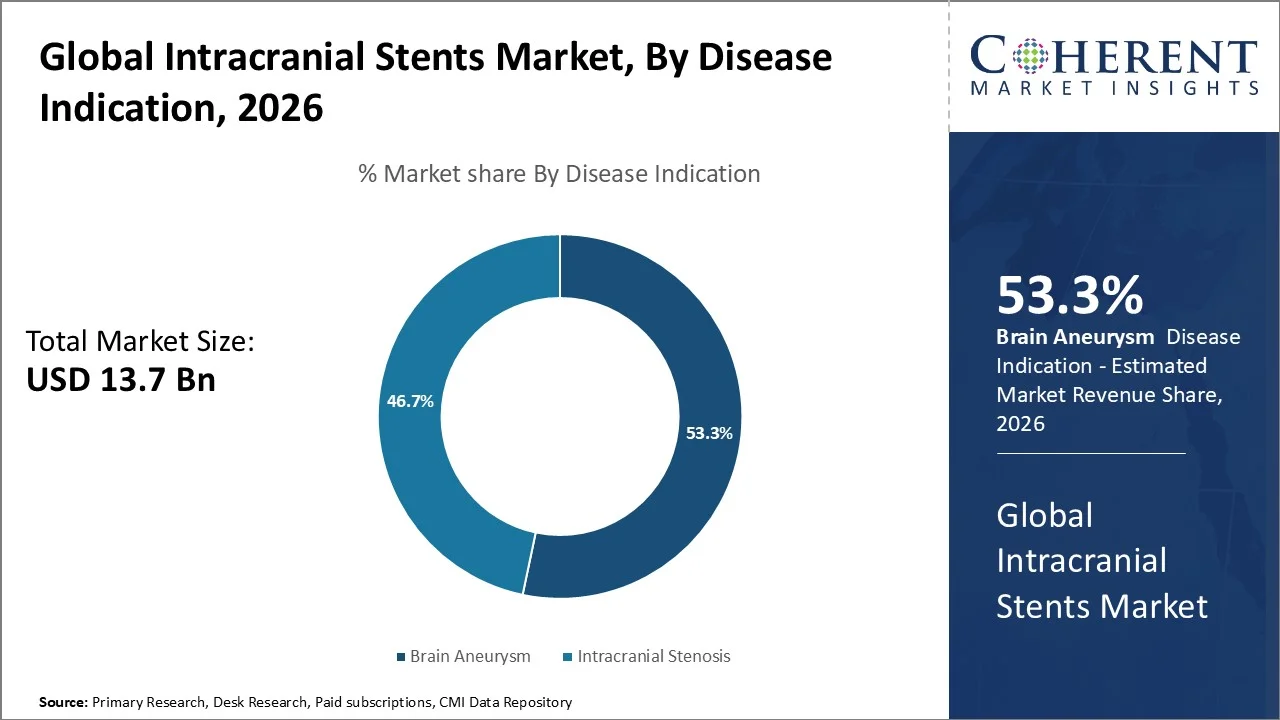
- Brain Aneurysm expected to hold the largest market share of 53.3% in 2026 owing to its increasing detection due to advanced imaging.
- Hospitals acquired the largest market share of 52.9% in 2026 owing to the high concentration of neurointerventional procedures in hospital settings. More than 75% of complex neurovascular surgeries and emergency stroke interventions are performed in tertiary-care and multi-specialty hospitals equipped with advanced imaging and catheterization laboratories.
- North America is expected to acquire the dominant share of 39.2% in 2026 owing to its high prevalence of neurovascular disorders and strong healthcare infrastructure. The region records nearly 800,000 stroke cases annually in the United States alone, while rising adoption of minimally invasive neurovascular procedures continues to support market growth.
Current Events and Their Impact on the Intracranial Stents Market
Current Event | Description and its Impact |
FDA Approval Expansion for Medtronic’s Neurovascular Portfolio (2024–2025) |
|
European Union MDR Compliance Deadlines Affect Neurovascular Device Makers |
|
Segmental Insights
- Current Industry Events of 2026
- Market Size Estimation
- Regional Breakdown
- Competitive Landscape
- Customer Intelligence
- Segmental Analysis
- Pricing Analysis
- Key Market Drivers, Challenges & Future Trends
- Customized Insights Section
Brain Aneurysm expected to hold the largest market share
Brain Aneurysm expected to hold the largest market share of 53.3% in 2026 owing to its advancements in neurointerventional devices. Rising cases of brain aneurysms drive demand for intracranial stents as physicians increasingly adopt minimally invasive endovascular treatments. Advanced imaging techniques help clinicians detect both ruptured and unruptured aneurysms more effectively, resulting in more diagnosed cases that require intervention. Clinicians choose stent-assisted coiling for complex and wide-neck aneurysms because it improves coil stability and supports vessel reconstruction. Growing awareness, better healthcare access, and expanding neurovascular treatment facilities further encourage the use of intracranial stents in aneurysm management worldwide. For instance, Kaneka Corporation has started selling its i-ED COIL brain aneurysm embolisation coil in Europe as of October 2025. The company secured EC certification under the EU Medical Device Regulation in July, enabling market entry. Kaneka is distributing the product mainly across Europe through its subsidiary, Kaneka Medical Europe N.V.
Why is Self-Expanding Intracranial Stents Acquiring the Largest Market Share?
Self-Expanding Intracranial Stents hold the largest market share of 52.8% in 2026. Rising cases of intracranial aneurysms, stroke, and intracranial arterial stenosis drive demand for self-expanding intracranial stents, as clinicians increasingly use minimally invasive neurointerventional treatments. Physicians prefer endovascular procedures over open neurosurgery because they reduce recovery time and complications. Ongoing advancements in nitinol-based stents, enhanced flexibility, and improved delivery systems improve procedural success in complex cerebral vessels. The growing number of specialized stroke centers and skilled neurointerventional also increases the use of these stents in hospitals globally. For instance, Abbott has launched its Xience Skypoint drug-eluting stent platform globally. The company has secured regulatory approvals, including FDA clearance, the CE mark, and PMDA approval in Japan, enabling wider international use.
Which End User segment dominates the market?
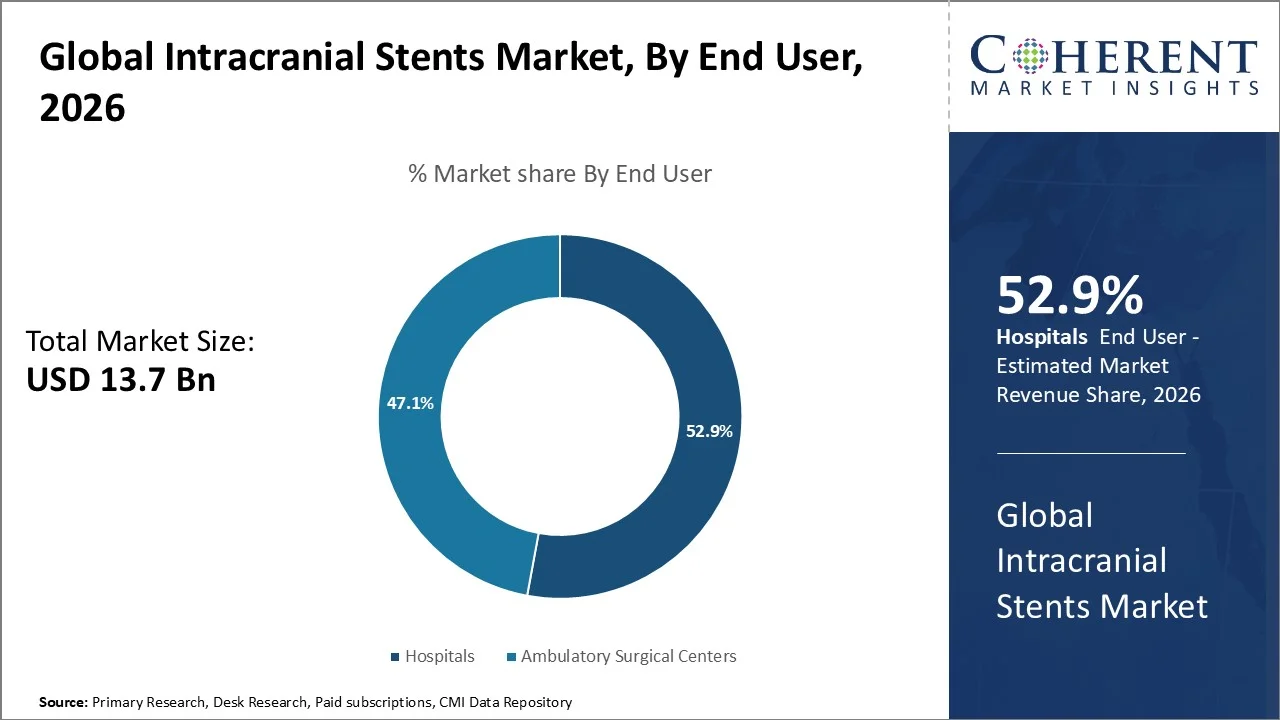 Hospitals acquired the largest market share of 52.9% in 2026. Hospitals increase demand for intracranial stents as they function as primary centers for neurointerventional procedures such as aneurysm repair and stroke management. Rising patient admissions for acute neurovascular conditions drive greater use of stent-based therapies. Hospitals invest in advanced imaging systems, hybrid operating rooms, and endovascular equipment to support complex procedures. Skilled neurosurgeons and interventional radiologists improve treatment outcomes. Expanding stroke centers and strong reimbursement support further reinforce hospital adoption of intracranial stents worldwide.
Intracranial Stents Market Trends
- Increasing adoption of advanced neuroimaging techniques such as CT angiography, MR angiography, and digital subtraction angiography enhances early detection of intracranial aneurysms and stenosis, supporting timely stent-based interventions worldwide. More than 80% of intracranial aneurysms are now detected using advanced non-invasive imaging technologies, significantly improving diagnostic accuracy and treatment planning.
- Rising prevalence of intracranial aneurysms and stroke continues to drive demand for intracranial stents, with aneurysms affecting approximately 5% of the global population and significantly increasing with age and comorbidities such as hypertension and smoking. Additionally, stroke remains one of the leading causes of death globally, accounting for nearly 12 million new cases annually.
- Expanding geriatric population increases susceptibility to neurovascular disorders, as the risk of stroke and aneurysm formation rises sharply with age due to vessel wall degeneration and long-term vascular disease burden. By 2050, the global population aged 60 years and older is projected to exceed 2 billion, substantially increasing demand for neurovascular interventions and intracranial stenting procedures.
Regional Insights
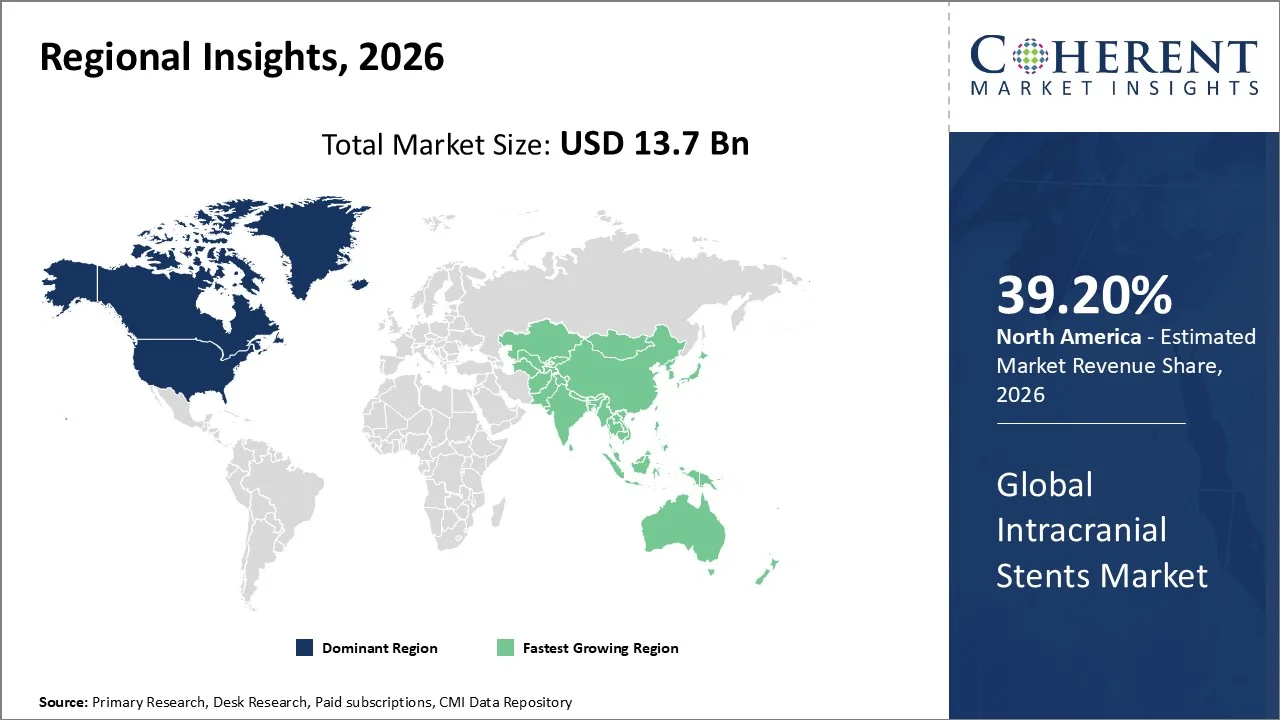
North America dominates owing to high healthcare expenditure and favorable reimbursement
North America is expected to acquire the dominant share of 39.20% in 2026. North America drives the intracranial stents market with a high burden of neurovascular disorders such as stroke, intracranial aneurysms, and arterial stenosis. Advanced healthcare infrastructure supports the widespread adoption of minimally invasive endovascular procedures. Hospitals and stroke centers invest in cutting-edge imaging systems and hybrid operating rooms to perform complex stent-based interventions. Skilled neurointerventional specialists improve treatment outcomes across the region. Favorable reimbursement systems and rapid adoption of innovative stent technologies further strengthen regional market growth. For instance, in June 2024, MicroVention, Inc., a global neurovascular company and subsidiary of Terumo Corporation, launched the LVIS EVO Intraluminal Support Device in the United States. The company now offers the device commercially for treating wide-neck intracranial aneurysms.
Asia Pacific Intracranial Stents Market Trends
Asia Pacific intracranial stents market trends reflect strong growth as rising cases of stroke, intracranial aneurysms, and intracranial stenosis affect aging populations and lifestyle-related risk factors. Healthcare systems across emerging economies expand access to advanced neurointerventional procedures and increase adoption of minimally invasive treatments. Hospitals invest in modern imaging systems and endovascular technologies to improve procedural outcomes. Growing awareness of early diagnosis, along with improving healthcare infrastructure and expanding stroke care centers, further accelerates the use of intracranial stents across the region. For instance, India Medtronic Private Limited has launched its CE-marked fourth-generation flow diverter, Pipeline Vantage with Shield Technology, for the endovascular treatment of brain aneurysms. The company has introduced the device with upgraded design features in both the delivery system and the implant to improve procedural performance and treatment outcomes.
United States Intracranial Stents Market Trends
Rising cases of cerebrovascular disorders such as aneurysms and ischemic stroke drive growth in the US intracranial stents market, while clinicians increasingly adopt minimally invasive neurointerventional procedures. Manufacturers develop advanced flow diverters and self-expanding stents that improve safety and patient outcomes, encouraging broader use across neurovascular centers. An expanding elderly population and supportive reimbursement policies in the United States boost procedure volumes. FDA approvals and strong competition among device companies further expand product availability and accelerate innovation. For instance, Abbott Vascular has initiated the international rollout of its Absorb coronary stent, the first drug-eluting bioresorbable vascular scaffold (BVS) globally. The company has made the device available across Europe, select Asia Pacific markets, and parts of Latin America. Abbott has positioned Absorb as a pioneering treatment option for coronary artery disease (CAD).
China Intracranial Stents Market Trends
China’s intracranial stents market is developing steadily as neurovascular disorders rise and more healthcare providers adopt minimally invasive procedures. Hospitals are expanding their neurointerventional capabilities by upgrading infrastructure and increasing physician awareness. Domestic companies are introducing innovative, cost-effective stent solutions, while international players are strengthening their market position through strategic partnerships. Advances in imaging technologies and catheter-based delivery systems are improving treatment precision and outcomes, and urban medical centers across China are increasingly integrating these modern neurointerventional approaches into routine clinical practice.
Who are the Major Companies in Intracranial Stents Industry
Some of the major key players in Intracranial Stents are Medtronic Plc, Balt Extrusion S.A., MicroPort Scientific Corporation, Abbott Laboratories, Stryker Corporation, Admedes Schuessler GmbH, Cardiatis, S.A, DePuy Synthes, Acandis GmbH, and Penumbra, Inc.
Key News
- In March 2026, Serenity Medical, a NeuroTechnology Investors (NTI) portfolio company, received FDA humanitarian device exemption (HDE) approval for its River stent. The company has introduced the device as the first FDA-approved, purpose-built cerebral venous stent in the United States.
Market Report Scope
Intracranial Stents Market Report Coverage
| Report Coverage | Details | ||
|---|---|---|---|
| Base Year: | 2025 | Market Size in 2026: | USD 13.7 Bn |
| Historical Data for: | 2020 To 2024 | Forecast Period: | 2026 To 2033 |
| Forecast Period 2026 to 2033 CAGR: | 9.3% | 2033 Value Projection: | USD 22.8 Bn |
| Geographies covered: |
| ||
| Segments covered: |
| ||
| Companies covered: | Medtronic Plc, Balt Extrusion S.A., MicroPort Scientific Corporation, Abbott Laboratories, Stryker Corporation, Admedes Schuessler GmbH, Cardiatis, S.A, DePuy Synthes, Acandis GmbH, and Penumbra, Inc. | ||
Analyst Opinion
- Intracranial stents are increasingly used because the clinical burden of cerebrovascular disease remains extremely high, with stroke affecting over 12 million people globally each year and ischemic stroke accounting for nearly 80% of cases. This creates a sustained procedural demand rather than a cyclical market trend, particularly in high-risk intracranial atherosclerotic disease cases where medical therapy alone often fails.
- Intracranial atherosclerotic stenosis contributes to a significant share of recurrent strokes, with studies showing recurrence rates exceeding 10% per year in medically managed severe cases, which has pushed neurointerventionalists to consider stenting in carefully selected patients despite procedural risks. This real-world recurrence pressure is a key driver of selective but increasing stent adoption in tertiary stroke centers.
- Clinical trials such as SAMMPRIS highlighted peri-procedural complication concerns, yet real-world registry data and improved device iterations show that newer-generation intracranial stents and balloon-mounted systems have reduced complication rates compared to early-generation devices. For example, contemporary studies report improved technical success rates above 95% in experienced centers, reinforcing gradual clinician confidence and expanding usage in complex intracranial lesions.
Speak to the analyst
Want personalized insights?
Take the findings above to one of our principal consultants, or have the report rebuilt around the segments, geographies and competitors you actually track.
Market Segmentation
- By Product Type (Revenue, USD Bn, 2021-2033)
- Self-Expanding Intracranial Stents
- Embolization Coil Support Intracranial Stents
- By Disease Indication (Revenue, USD Bn, 2021-2033)
- Brain Aneurysm
- Intracranial Stenosis
- By End User (Revenue, USD Bn, 2021-2033)
- Hospitals
- Ambulatory Surgical Centers
- By Region (Revenue, USD Bn, 2021-2033)
- North America
- U.S.
- Canada
- Latin America
- Brazil
- Mexico
- Argentina
- Rest of Latin America
- Europe
- Germany
- U.K.
- France
- Italy
- Spain
- Russia
- Rest of Europe
- Asia Pacific
- China
- India
- Japan
- Australia
- South Korea
- ASEAN
- Rest of Asia Pacific
- Middle East
- GCC
- Israel
- Rest of Middle East
- Africa
- South Africa
- Central Africa
- North Africa
- North America
- Key Players
- Medtronic Plc
- Balt Extrusion S.A.
- MicroPort Scientific Corporation
- Abbott Laboratories
- Stryker Corporation
- Admedes Schuessler GmbH
- Cardiatis, S.A
- DePuy Synthes
- Acandis GmbH
- Penumbra, Inc.
Sources
Primary Research interviews
- Neurointerventional surgeons and interventional radiologists in tertiary stroke centers
- Hospital procurement heads and cath lab directors specializing in neurovascular devices
- Key opinion leaders involved in intracranial stenting clinical trials and registries
Databases
- PubMed clinical literature database
- Embase biomedical and pharmacological database
- ClinicalTrials.gov registry for ongoing and completed intracranial stent studies
- World Health Organization (WHO) stroke and neurological disorder datasets
Magazines
- Neurovascular-focused medical device magazines
- Interventional neuroradiology trade publications
- Hospital technology and surgical innovation magazines
Journals
- Journal of NeuroInterventional Surgery
- Stroke (American Heart Association journal)
- Neurosurgery journal publications
- Journal of Cerebrovascular and Endovascular Neurosurgery
Newspapers
- Health and science sections of major international newspapers covering medical device innovations
- National healthcare policy and hospital infrastructure updates in leading financial newspapers
Associations
- World Stroke Organization (WSO)
- American Heart Association (AHA)
- Society of Neurointerventional Surgery (SNIS)
- European Society of Minimally Invasive Neurological Therapy (ESMINT)
Public Domain sources
- Government health ministry reports on stroke burden and neurovascular care
- Hospital annual reports and public clinical outcome disclosures
- WHO global health observatory datasets on cerebrovascular diseases
Proprietary Elements
- CMI Data Analytics Tool
- Proprietary CMI Existing Repository of information for last 10 years
Get access to 250+ pages report
Every segment, forecast, competitor profile and data table behind the analysis above — available for instant download.
- ESOMAR Member
- ISO 9001:2015 Certified
- D-U-N-S Registered
- GDPR & CCPA Compliant
Missing comfort of reading report in your local language? Find your preferred language:
Transform your Strategy with Exclusive Trending Reports
Frequently Asked Questions
The global intracranial stents market is estimated to surpass USD 22.8 Bn by 2033.
Major players operating in the global intracranial stents market include Medtronic Plc, Balt Extrusion S.A., MicroPort Scientific Corporation, Abbott Laboratories, Stryker Corporation, Admedes Schuessler GmbH, Cardiatis, S.A, DePuy Synthes, Acandis GmbH, and Penumbra, Inc.
Among end user, hospitals segment accounts for largest market share, owing to increasing volume of brain surgery procedures conducted at the healthcare setting
Increasing incidence of stroke and brain aneurysm is one of the major factors that is expected to propel growth of the market over the forecast period.
The global intracranial stents market is estimated to exhibit a CAGR of 9.3% over the forecast period.
Among regions, North America is expected to hold dominant position in the market over the forecast period.