

Platelet Aggregation Devices Market Size and Forecast — 2026-2033
Platelet aggregation devices market is estimated to be valued at USD 699.1 Mn in 2026 and is expected to reach USD 1,122.7 Mn by 2033, exhibiting a compound annual growth rate (CAGR) of 7.0% from 2026 to 2033.
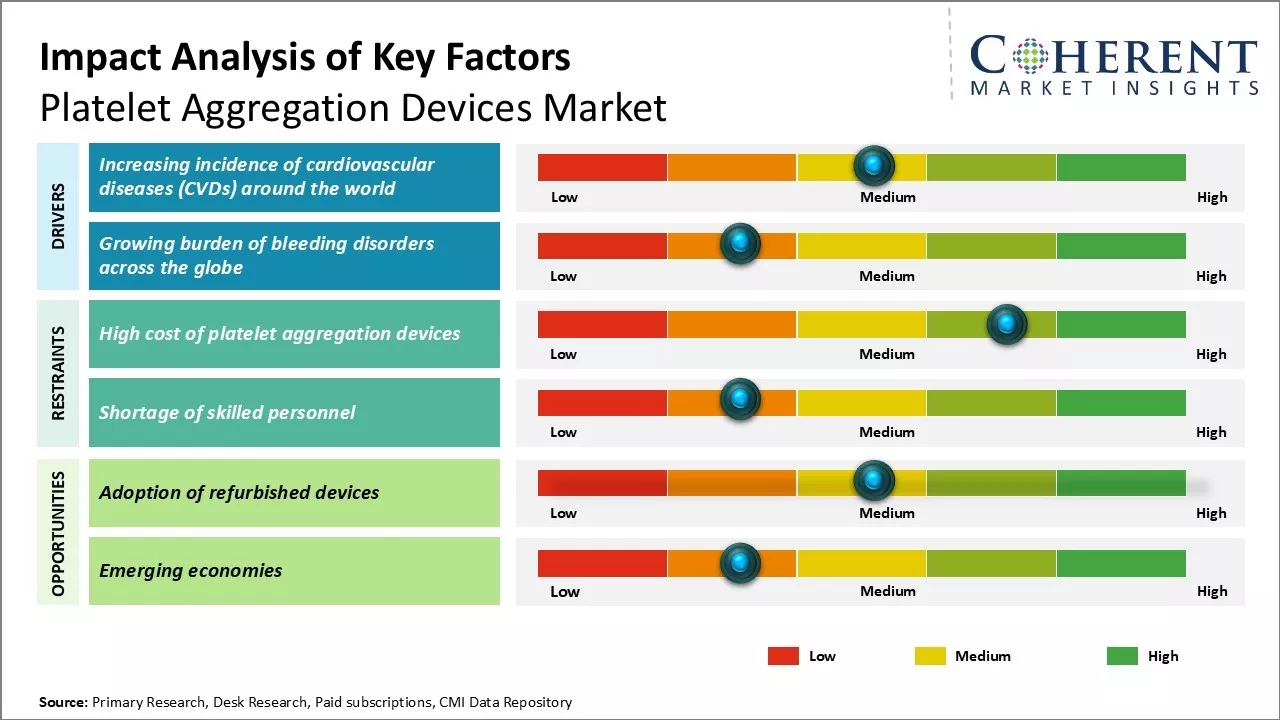
The global platelet aggregation devices market is projected to grow significantly, driven by the increasing prevalence of chronic diseases, technological advancements, and heightened awareness of platelet-related disorders. These devices are crucial for diagnosing conditions related to hemostasis and thrombosis, enabling healthcare professionals to identify defects in platelet function. However, market growth may be restrained by high costs of devices and a shortage of skilled professionals.
Insights By Product
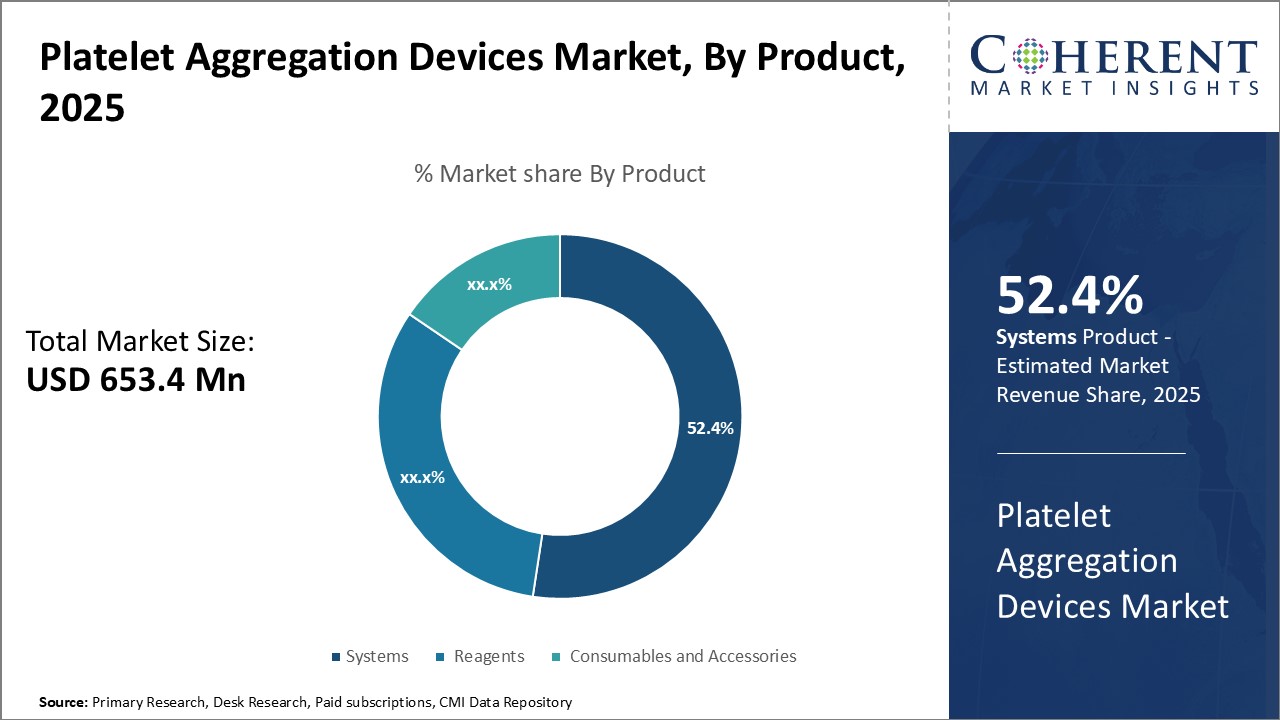
Insights By Product- Systems segment dominates due to their versatility and advanced functionality
The systems segment of the platelet aggregation devices market is projected to hold the largest market share of 53.4% in 2026, attributed to their versatility and advanced functionality. These fully integrated devices automate the entire testing process, from preparation to analysis, providing reproducible results with minimal manual intervention. With features like onboard protocol storage, automated quality control, and customizable reporting options, they streamline workflows and save time for operators.
Insights By Application
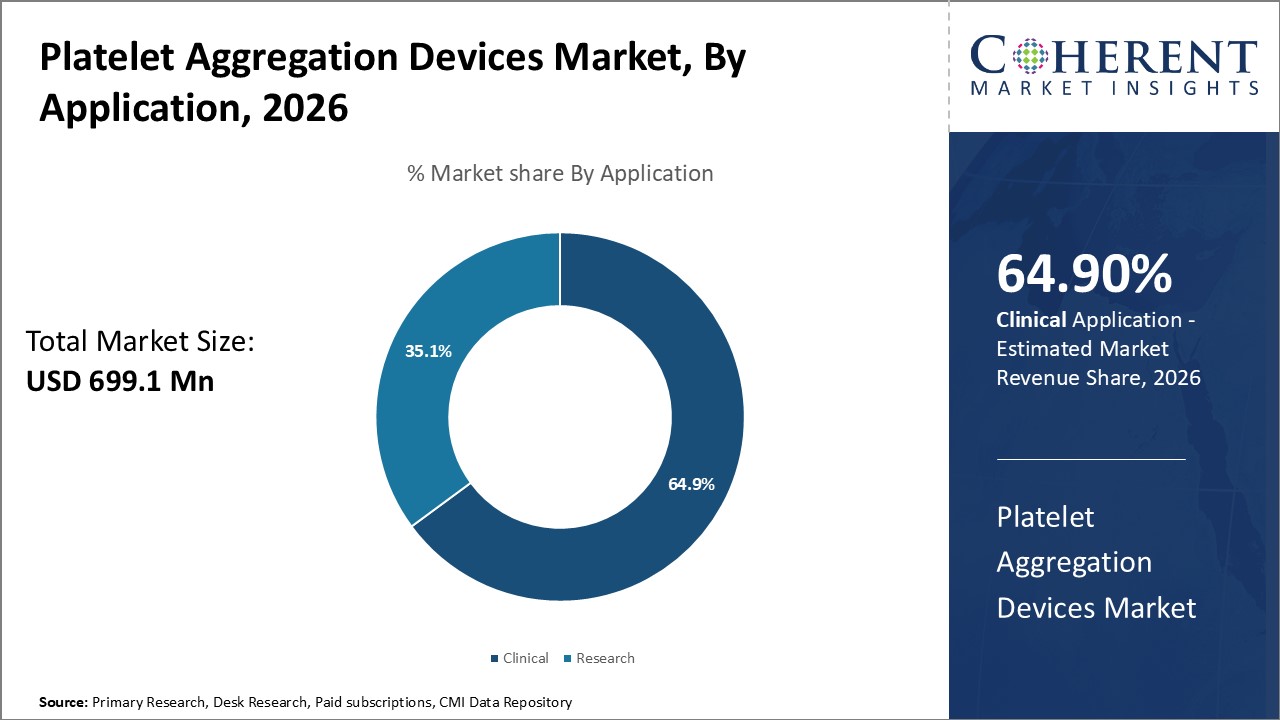
Insights By Application- The critical need for testing in diagnosis and treatment monitoring drives clinical segment growth
In terms of application, clinical segment is estimated to contribute the highest market share of 64.9% in 2026, primarily due to critical need for platelet function testing in diagnosis and treatment monitoring. This testing is vital for diagnosing bleeding disorders, assessing the efficacy of anti-platelet therapies, and managing surgical risks, making it an essential tool for clinicians treating patients on anti-platelet medications or undergoing invasive procedures.
Insights By End User
Insights By End User- Availability of advanced testing facilities and expertise drives the hospitals segment growth
In terms of end user, hospitals segment is estimated to contribute the highest market share of 49.7% in 2026, owing to availability of advanced testing facilities and expertise. Most hospitals have specialized hemostasis and thrombosis laboratories equipped with advanced platelet function analyzers to provide efficacious diagnostic evaluation and management of bleeding disorders as well as cardiovascular patients. These also have expertise in standardized test protocols and interpretation of results.
Regional Insights
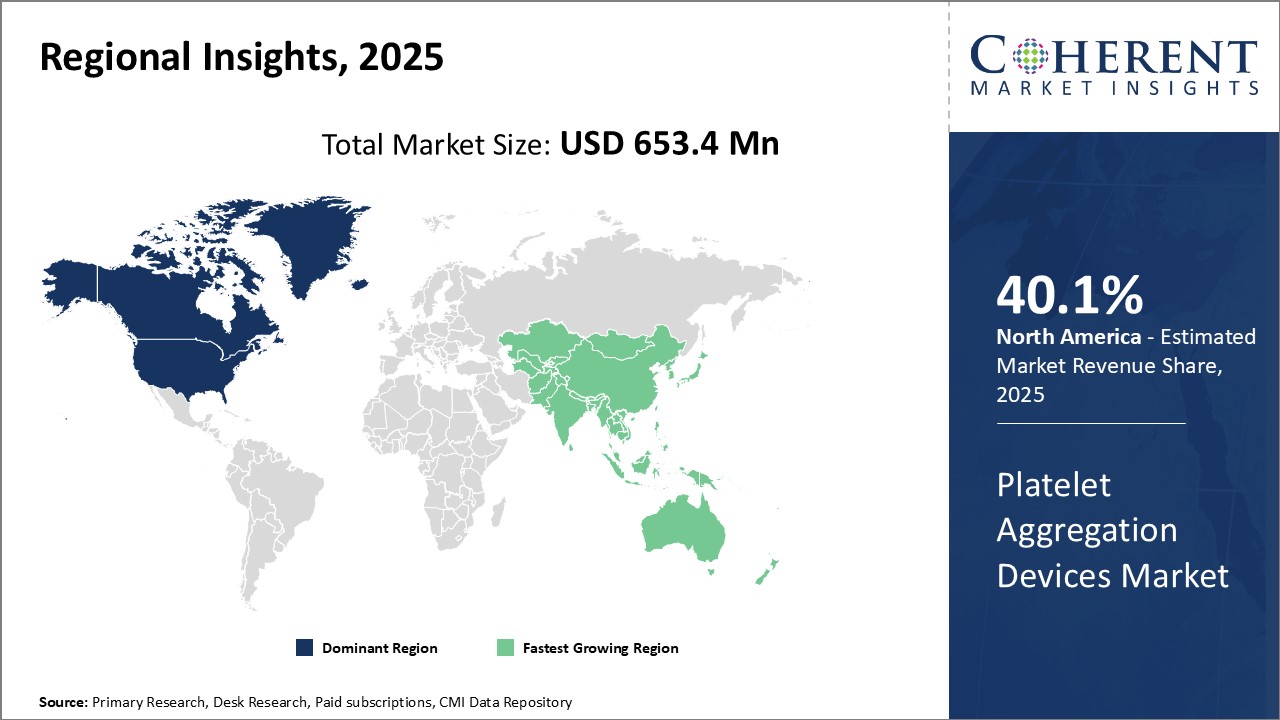
Dominating Region- North America
North America is expected to dominate the market, with an estimated market share of 40.1% in 2026, due to well-established healthcare infrastructure, high healthcare expenditure, and presence of leading market players. The region has witnessed significant technological advancements and adoption of advanced devices.
Fastest-Growing Region- Asia Pacific
Asia Pacific region exhibits the fastest growth, accounting for 22.9% share in 2026, owing to increasing patient population, rising medical tourism, and growing healthcare spending across developing countries. Emerging economies in the region provide lucrative opportunities for market expansion.
Platelet Aggregation Devices Market Outlook for Key Countries
Presence of key market players in the U.S.
The U.S. platelet aggregation devices industry is influenced by the presence of global players. Companies like Aggredyne Inc., a medical diagnostic company in the U.S., plays a crucial role in driving the market growth through continuous innovations. Its advancements in technology and product offerings enhance diagnostic capabilities, addressing the rising demand for effective platelet function testing in clinical settings and contributing to improved patient outcomes.
China’s favorable government initiatives
China platelet aggregation devices industry growth is driven by favorable government initiatives aimed at modernizing the healthcare system. These reforms enhance access to advanced medical technologies and improve overall healthcare delivery. Local manufacturers have solidified their position by leveraging these initiatives, contributing to the increased adoption of platelet aggregation testing and improving patient outcomes across the country.
Availability of low-cost products in India
India is emerging as a leading market for platelet aggregation devices due to the availability of low-cost products that enhance access to essential diagnostic tools. This affordability allows more healthcare facilities to implement platelet function testing, crucial for managing bleeding disorders and cardiovascular diseases. As awareness about these conditions grows, there will be huge demand for effective platelet aggregation devices, further solidifying India's position in the market.
Rising awareness about platelet disorders in Germany
Germany platelet aggregation devices industry is characterized by rising awareness about platelet disorders and the availability of reimbursement options, which significantly enhance access to diagnostic testing. Increased public and professional education about the importance of platelet function testing has led to more diagnoses and treatments. Favorable reimbursement policies encourage healthcare providers to adopt advanced platelet aggregation devices, ultimately improving patient care and outcomes in managing bleeding disorders.
Market Players, Key Development, and Competitive Intelligence
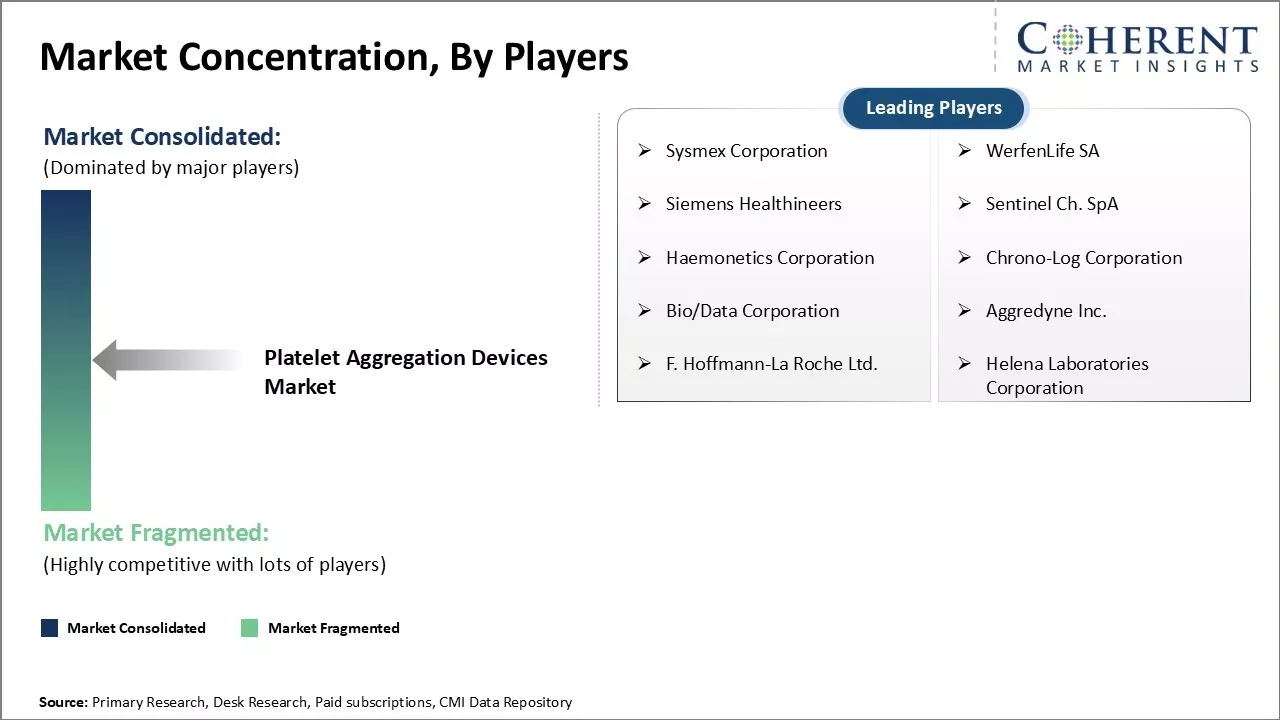
Top Strategies Followed by Platelet Aggregation Devices Market Players
- Established players in platelet aggregation devices industry focuses heavily on research and development to drive innovation. Companies like Abbott, Haemonetics, and Siemens invest over 10% of annual revenues for creating new and improved products. These utilize cutting-edge technologies like artificial intelligence, 3D printing, and nanotechnology to develop advanced devices with high-performance testing capabilities. Leading companies form strategic partnerships with other major industry players and original equipment manufacturers to enhance their capabilities.
- Mid-sized market players focus on delivering cost-effective solutions to target price-sensitive customer segments. Companies prioritize affordable care by optimizing production processes and sourcing lower-cost materials. These also collaborate with local manufacturers, startups, and research institutions to boost technological abilities and production capacities on tighter budgets.
- Smaller players usually specialize in niche areas or adopt new technologies to compete against larger corporations. Local partnerships help these companies gain visibility and market share.
Emerging Startups in the Platelet Aggregation Devices Market
- Several startups are driving technological innovation in the industry. Firms like AggreLife and ThromboDx are developing smart sensor platforms combined with artificial intelligence. These advanced systems can automate testing, accelerate diagnostics, and provide more accurate, real-time coagulation data to clinicians. Such innovations could transform workflow processes and significantly impact market trends.
- Other startups focus on sustainable manufacturing. SpiroChem produces biodegradable microfluidic chips from plant-based materials like sugarcane to reduce plastic waste. Maryland-based Greenphires recycles over 95% of materials from retired medical devices to minimize environmental footprint.
- Startups also fill critical needs overlooked by larger companies. Companies like PlaCor Diagnostics are designing portable devices tailored for urgent care centers and emergency medical service vehicles. New lifesaving technologies ensure people in remote areas receive fast coagulation assessment.
Key Developments
- In February 2023, Terumo Corporation, a healthcare company, announced the launch of IMUGARD WB Platelet Pooling Set, which extends the shelf life of whole blood-derived platelets from five days to seven days. This is the first platelet pooling set approved for seven-day storage in the U.S., providing an alternative source of platelet supply amid increasing demand and challenges in blood donation.
- In May 2022, Precision BioLogic, a life science company, launched its CRYOcheck Chromogenic Factor IX assay for monitoring hemophilia B across Europe, the U.K., Australia, Canada, and New Zealand after receiving regulatory approvals. This assay offers a wide testing range, user-friendly design, and compatibility with automated analyzers, significantly enhancing the capabilities for hemophilia testing in these regions.
- Current Industry Events of 2026
- Market Size Estimation
- Regional Breakdown
- Competitive Landscape
- Customer Intelligence
- Segmental Analysis
- Pricing Analysis
- Key Market Drivers, Challenges & Future Trends
- Customized Insights Section
Market Report Scope
Platelet Aggregation Devices Market Report Coverage
| Report Coverage | Details | ||
|---|---|---|---|
| Base Year: | 2025 | Market Size in 2026: | USD 699.1 Mn |
| Historical Data for: | 2020 To 2024 | Forecast Period: | 2026 To 2033 |
| Forecast Period 2026 to 2033 CAGR: | 7.0% | 2033 Value Projection: | USD 1,122.7 Mn |
| Geographies covered: |
| ||
| Segments covered: |
| ||
| Companies covered: | Sysmex Corporation, WerfenLife SA, Siemens Healthineers, Sentinel Ch. SpA, Haemonetics Corporation, Chrono-Log Corporation, Bio/Data Corporation, Aggredyne Inc., F. Hoffmann-La Roche Ltd., and Helena Laboratories Corporation | ||
| Growth Drivers: |
| ||
| Restraints & Challenges: |
| ||
Market Dynamics
Market Driver- Increasing incidence of cardiovascular diseases (CVDs) around the world
The rising burden of cardiovascular diseases over the past few decades can drive the market growth. According to the WHO, in 2021, cardiovascular diseases (CVDs) are the leading cause of death globally. An estimated 17.9 million people died from CVDs in 2019, representing 32% of all global deaths responsible for over 17 million deaths annually, with 75% occurring in low- and middle-income countries. Rising prevalence of CVDs boosts demand for platelet aggregation devices from healthcare providers.
Market Challenge- High cost of platelet aggregation devices
Platelet aggregation devices market growth can be hampered due to high cost of these devices. This expense makes it difficult for small laboratories, research institutes, and hospitals in developing countries to acquire these devices. The significant capital needed for setup and maintenance hinders the widespread adoption of platelet function testing. Manufacturers must focus on value engineering and innovative financing options to make these devices more accessible.
Market Opportunity- Adoption of refurbished devices
High cost of new platelet aggregation devices creates an opportunity for refurbished or pre-owned models in the market. Hospitals and laboratories upgrading to newer models can sell their well-maintained devices at significantly reduced prices, enabling other users to conduct platelet function testing affordably, as increased acceptance can expand the customer base and boost the adoption of testing methods.
Analyst Opinion (Expert Opinion)
Key Takeaways from Analyst
The platelet aggregation devices industry is expected to experience steady growth over the forecast period driven by the increasing demand for platelet function testing across hospitals and diagnostic labs. Rising prevalence of cardiovascular diseases along with growing geriatric population prone to chronic conditions will also augment the adoption of platelet aggregation devices.
The market prospects are likely to be challenged by the high costs associated with platelet function testing in contrast to conventional coagulation tests. Additionally, limitations regarding the standardization and validation of test results obtained from various platelet analyzers can negatively impact the market expansion to an extent.
North America commands the largest share in the platelet aggregation devices space supported by well-established healthcare infrastructure and early technology adoption. Meanwhile, Asia Pacific shows most lucrative opportunities for market players owing to increasing healthcare spending, expanding medical tourism industry, and continuous economic development in countries like China and India.
Speak to the analyst
Want personalized insights?
Take the findings above to one of our principal consultants, or have the report rebuilt around the segments, geographies and competitors you actually track.
Market Segmentation
- Product Insights (Revenue, USD Mn, 2021 - 2033)
- Systems
- Reagents
- Consumables and Accessories
- Application Insights (Revenue, USD Mn, 2021 - 2033)
- Clinical
- Research
- End User Insights (Revenue, USD Mn, 2021 - 2033)
- Hospitals
- Diagnostic Laboratories
- Others (Research Institutes, etc.)
- Regional Insights (Revenue, USD Mn, 2021 - 2033)
- North America
- U.S.
- Canada
- Latin America
- Brazil
- Argentina
- Mexico
- Rest of Latin America
- Europe
- Germany
- U.K.
- Spain
- France
- Italy
- Russia
- Rest of Europe
- Asia Pacific
- China
- India
- Japan
- Australia
- South Korea
- ASEAN
- Rest of Asia Pacific
- Middle East
- GCC Countries
- Israel
- Rest of Middle East
- Africa
- South Africa
- North Africa
- Central Africa
- North America
- Key Players Insights
- Sysmex Corporation
- WerfenLife SA
- Siemens Healthineers
- Sentinel Ch. SpA
- Haemonetics Corporation
- Chrono-Log Corporation
- Bio/Data Corporation
- Aggredyne Inc.
- F.Hoffmann-La Roche Ltd.
- Helena Laboratories Corporation
Get access to 250+ pages report
Every segment, forecast, competitor profile and data table behind the analysis above — available for instant download.
- ESOMAR Member
- ISO 9001:2015 Certified
- D-U-N-S Registered
- GDPR & CCPA Compliant
Missing comfort of reading report in your local language? Find your preferred language:
Transform your Strategy with Exclusive Trending Reports
Frequently Asked Questions
The Platelet Aggregation Devices Market is estimated to be valued at USD 699.1 Mn in 2026, and is expected to reach USD 1,122.7 Mn by 2033.
The CAGR of the Platelet Aggregation Devices Market is projected to be 7.0% from 2026 to 2033.
Increasing incidence of cardiovascular diseases (CVDs) around the world and growing burden of bleeding disorders across the globe are the major factors driving the growth of platelet aggregation devices market.
High cost of platelet aggregation devices and shortage of skilled personnel are the major factors hampering the growth of platelet aggregation devices market.
In terms of product, systems segment is estimated to dominate the market in 2026.
Sysmex Corporation, WerfenLife SA, Siemens Healthineers, Sentinel Ch. SpA, Haemonetics Corporation, Chrono-Log Corporation, Bio/Data Corporation, Aggredyne Inc., F. Hoffmann-La Roche Ltd., and Helena Laboratories Corporation are the major players.
North America is expected to lead the platelet aggregation devices market in 2026.