

Cardiac Ablation Catheters Market Size and Share Analysis- 2026 To 2033
The Cardiac Ablation Catheters Market size is anticipated to grow at a CAGR of 12.8%, with a market value of USD 6.8 Bn in 2026, and is expected to reach approximately USD 15.8 Bn by 2033. The primary drivers are largely defined by the rising prevalence of cardiac arrhythmias, particularly atrial fibrillation, increasing adoption of minimally invasive catheter-based ablation procedures, technological advancements in radiofrequency and cryoablation catheters, and growing utilization of advanced cardiac mapping and navigation systems. According to Boston Scientific, its FARAPULSE Pulsed Field Ablation System had been used to treat more than 200,000 patients globally by 2025, demonstrating the speed at which non-thermal ablation technology is being incorporated into electrophysiology practice.
Key Takeaways
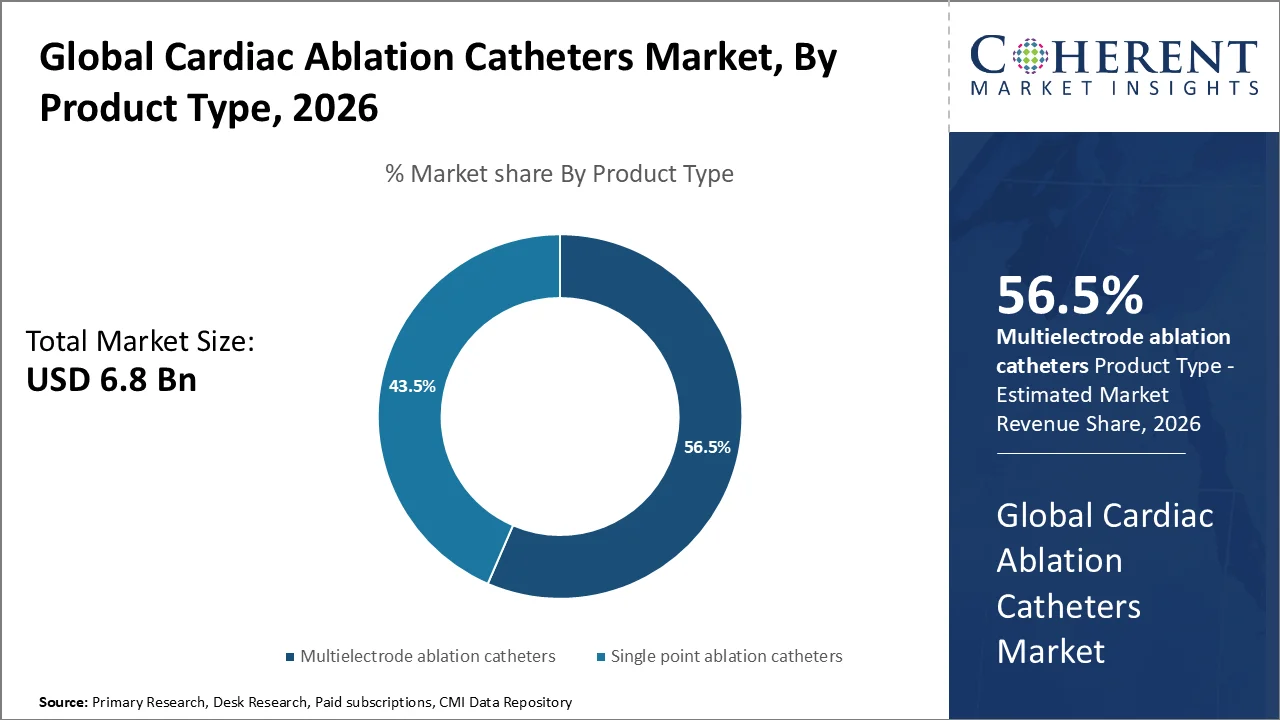
- The multielectrode ablation catheters segment is likely to dominate the market with approximately 56.5% in 2026. The segment’s growth is owing to increasing adoption of multi-electrode designs for pulmonary vein isolation, simultaneous sensing and energy delivery, reduced catheter repositioning, and growing integration with next-generation PFA platforms. Boston Scientific’s FARAWAVE PFA catheter incorporates 20 electrodes arranged across five splines, demonstrating the movement toward multi-electrode catheter architectures for advanced atrial fibrillation procedures.
- The radiofrequency ablation segment is anticipated to dominate the market share, accounting for 56.0% in 2026, backed by its proven clinical efficacy, widespread awareness among electrophysiologists, presence of RF generators and mapping systems, and use in treating both atrial and ventricular arrhythmias. As per a report by Johnson & Johnson, the RF/PF enabled THERMOCOOL SMARTTOUCH SF system demonstrated 86.9% success rate at 12 months in patients with high procedural compliance in March 2025.
- The atrial fibrillation segment is expected to be the largest market segment of the global ablation technology market in 2026 with about 54.5%, due to high number of AF patients, increased procedures of pulmonary vein isolation, catheter ablation procedures for rhythm control and advanced ablation technologies like radiofrequency ablation, cryo-ablation, and PFA technologies which are designed for treatment of A It was estimated by UCSF in 2024 that there are about 10.5 million adults in the United States who suffer from atrial fibrillation.
- The hospitals segment is anticipated to dominate the end-user market with approximately 60.0% in 2026. The segment’s dominance is owing to the concentration of electrophysiology laboratories, availability of advanced 3D mapping and navigation systems, trained electrophysiologists, management capabilities for complex arrhythmias, and high procedural volumes in tertiary cardiac hospitals. According to the Spanish Society of Cardiology’s 2025 National Catheter Ablation Registry, participating cardiac arrhythmia centers performed 32,406 catheter ablation procedures in 2024, representing a 23% year-on-year increase.
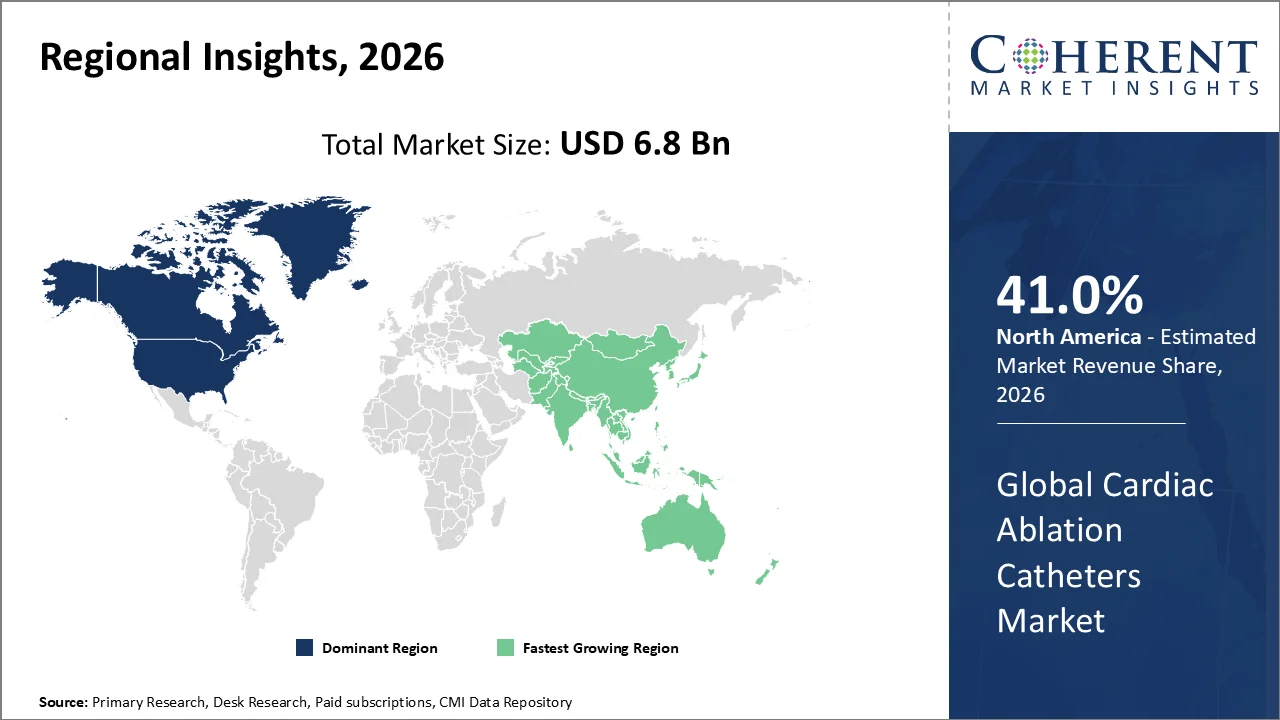
- North America is expected to dominate the global cardiac ablation catheters market with approximately 41.0% market share in 2026. The region’s dominance is supported by its large electrophysiology procedure base, widespread availability of advanced EP laboratories, favorable adoption of catheter-based arrhythmia treatments, and rapid uptake of next-generation RF and pulsed-field ablation technologies. A strong recent clinical indicator comes from the American College of Cardiology’s National Cardiovascular Data Registry (NCDR). A 2025 analysis evaluated 75,527 U.S. patients undergoing first-time atrial fibrillation catheter ablation.
Market Drivers
Growing Clinical Preference for Earlier Catheter Ablation is Expanding the Addressable Patient Pool
The cardiac ablation catheters market is benefiting from the increasing use of catheter ablation earlier in the atrial fibrillation treatment pathway. Stronger evidence for the effectiveness of rhythm control, safer procedures, and lesser need for the use of antiarrhythmic medication have led electrophysiologists to favor ablation over prolonged drug therapy.
The clinical value of successful ablation was further supported by the 2025 OCEAN randomized trial involving 1,284 patients across multiple countries. After successful AF ablation, the three-year stroke risk remained low at 0.8% among patients receiving rivaroxaban and 1.4% among those receiving aspirin. Such evidence strengthens confidence in catheter-based rhythm management and is likely to support greater referral and procedural penetration.
Rapid Advancement of Pulsed Field and Dual-Energy Ablation Catheters is Accelerating Market Growth
Technological innovation is becoming a major growth driver for the cardiac ablation catheters market. The transition from conventional thermal-only ablation toward pulsed field ablation (PFA), integrated high-density mapping, and dual-energy RF/PF catheters is improving procedural workflows while giving electrophysiologists greater flexibility in treating complex arrhythmias.
In July 2025, the U.S. FDA expanded the indication of Boston Scientific's FARAPULSE system to include drug-refractory symptomatic persistent atrial fibrillation. In the FDA-reviewed ADVANTAGE AF study, 259 of 260 treated patients, or 99.6%, achieved acute procedural success. The study also reported a 63.5% primary effectiveness success rate at 360 days and 85.3% freedom from symptomatic arrhythmia recurrence, supporting broader adoption of PFA-based catheter technology.
Current Events and Their Impact on the Cardiac Ablation Catheters Market
Current Event | Description and its Impact |
U.S. FDA Broadens Regulatory Acceptance of Pulsed Field Ablation Catheters (2025–2026) |
|
CMS Updates U.S. Hospital Outpatient and Ambulatory Surgical Center Payment Policies for 2026 |
|
- Current Industry Events of 2026
- Market Size Estimation
- Regional Breakdown
- Competitive Landscape
- Customer Intelligence
- Segmental Analysis
- Pricing Analysis
- Key Market Drivers, Challenges & Future Trends
- Customized Insights Section
Segmental Insights
Why are Multielectrode Ablation Catheters Acquiring the Largest Share?
On the basis of product type, the multielectrode ablation catheters segment is projected to account for the largest Cardiac Ablation Catheters Market share of approximately 56.5% in 2026. The segment’s growth is owing to the ability of multielectrode designs to combine cardiac mapping, electrical sensing, and ablation across multiple tissue-contact points, thereby reducing repeated catheter repositioning and supporting efficient pulmonary vein isolation. Their importance is increasing further with the commercialization of large-footprint pulsed-field ablation catheters.
A major recent example is the Globe Pulsed Field System, approved by the U.S. FDA in August 2025. Its multielectrode catheter incorporates 122 electrodes in a 30-mm array, with individual electrodes capable of recording intracardiac electrograms, measuring tissue contact and impedance, and delivering ablation energy. The system can deliver PFA energy through up to 64 electrodes simultaneously, demonstrating the increasing technological capability of multielectrode catheter architectures.
Why is Radiofrequency Ablation Acquiring the Largest Share?
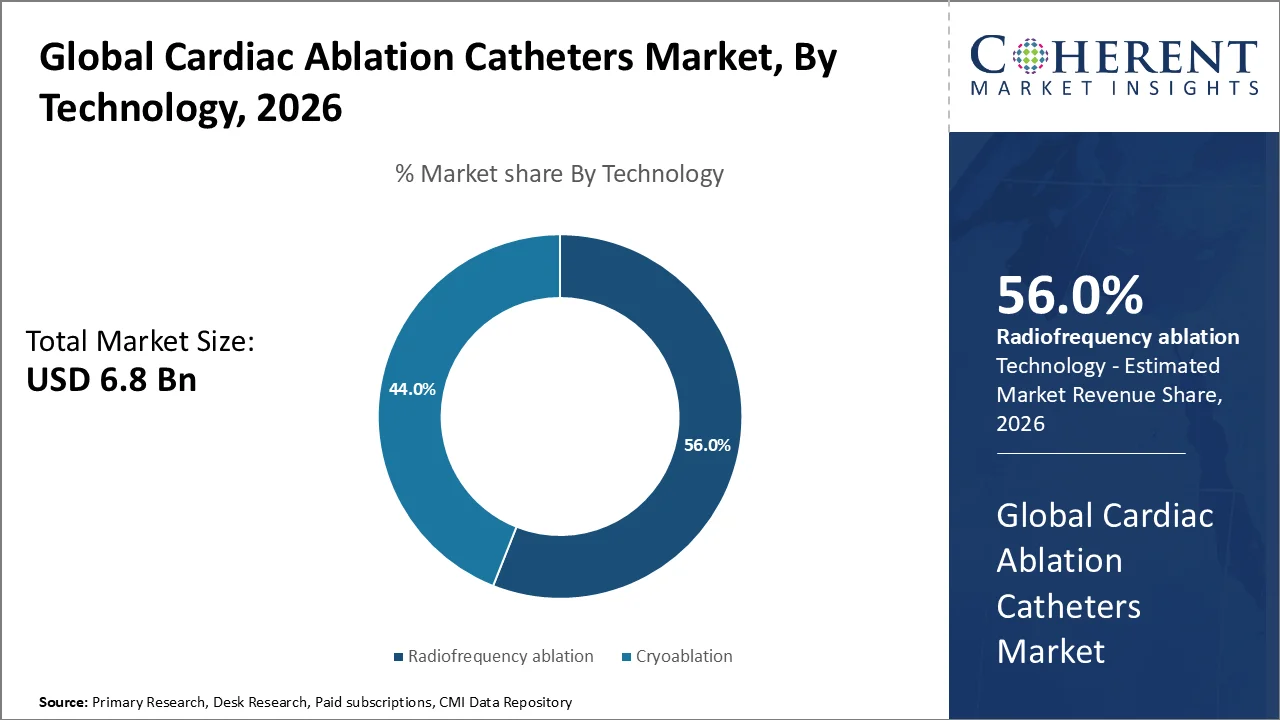
On the basis of technology, the radiofrequency ablation segment is expected to lead with approximately 56.0% share in 2026. The segment’s dominance is owing to its established clinical use across atrial and ventricular arrhythmias, extensive physician experience, compatibility with three-dimensional mapping systems, and continued improvements in contact-force sensing and high-power, short-duration RF delivery.
In May 2025, Abbott launched its TactiFlex Sensor Enabled radiofrequency ablation catheter in India. Abbott reported that the catheter achieved more than 99% acute procedural success in the TactiFlex AF IDE study.
Why is Atrial Fibrillation Acquiring the Largest Share?
On the basis of application, the atrial fibrillation segment is projected to account for the largest market share of approximately 54.5% in 2026. The segment’s growth is driven by the large global AF patient population, increasing diagnosis of rhythm disorders, expanding use of pulmonary vein isolation, and the availability of multiple catheter-ablation modalities specifically developed for paroxysmal and persistent AF.
A June 2026 EP Europace study assessed 158 patients with persistent AF treated using a multielectrode PFA catheter. All targeted pulmonary veins were successfully isolated, with a mean procedure time of 82 minutes, and no major periprocedural complications were reported.
Why do Hospitals Hold the Largest Market Share?
On the basis of end user, the hospitals segment is anticipated to dominate the Cardiac Ablation Catheters Market with approximately 60.0% share in 2026. The segment’s dominance is owing to the concentration of electrophysiology laboratories, advanced three-dimensional mapping and navigation platforms, specialized electrophysiologists, anesthesia and imaging infrastructure, and capabilities required to manage complex cardiac ablation procedures and potential procedural complications. The 2025 ESC-EHRA Atlas on Heart Rhythm Disorders, covering 51 ESC member countries, reported approximately 3.3 hospitals performing electrophysiology or cardiac implantable electronic-device procedures per million population.
In April 2026, Johnson & Johnson launched the VARIPULSE Pro PFA Platform in Europe following CE Mark approval. Initial cases were performed as part of the VARIPURE multicenter post-market study, with early hospital use reported by the electrophysiology team at OLV Hospital in Aalst, Belgium.
Cardiac Ablation Catheters Market Trends
- The rising adoption of single-shot and large-footprint pulsed field ablation catheters is transforming cardiac ablation workflows by enabling faster circumferential lesion creation with fewer catheter manipulations. In January 2026, Medtronic received CE Mark for its Sphere-360 PFA catheter, which uses an adjustable 34-mm lattice to provide circumferential ablation without catheter rotation and integrates navigation, mapping, and ablation into a single catheter.
- The increasing development of dual-energy cardiac ablation catheters is allowing electrophysiologists to switch between radiofrequency and pulsed-field energy depending on patient anatomy and arrhythmogenic substrate. In July 2026, the U.S. FDA approved Johnson & Johnson’s Dual Energy THERMOCOOL SMARTTOUCH SF Platform, which delivers both RF and PF energy through the same catheter. The underlying THERMOCOOL SMARTTOUCH SF platform has already been used to treat more than one million patients in the U.S., providing an established base for adoption of dual-energy technology.
- The growing integration of three-dimensional electroanatomical mapping with cardiac ablation catheters is reducing dependence on fluoroscopy and radiation exposure during electrophysiology procedures. A prospective study published for 2026 involving 121 consecutive AF patients achieved a 98.4% zero-fluoroscopy procedure rate, while the mean total procedure time was only 44.5 minutes. Complete pulmonary vein isolation was achieved in 100% of patients, demonstrating the potential of mapping-integrated catheter workflows
Regional Insights
North America Dominates Owing to High Adoption of Advanced Electrophysiology and Cardiac Ablation Technologies
The North America region is expected to account for approximately 41.0% of the global Cardiac Ablation Catheters Market in 2026. The region’s dominance is owing to the large electrophysiology procedure base, advanced hospital and cardiac-center infrastructure, favorable reimbursement environment, presence of major cardiac ablation manufacturers, and rapid clinical adoption of next-generation radiofrequency and pulsed field ablation catheters
Recent company performance further demonstrates the strength of cardiac ablation demand in the region. In June 2026, Medtronic reported that its Cardiac Ablation Solutions revenue increased 78% globally during fiscal Q4 2026, while U.S. revenue increased 124% year-over-year. The company also reported gaining an additional 8 percentage points of U.S. market share, primarily supported by increasing adoption of its PFA and Affera cardiac ablation portfolio.
Asia Pacific Cardiac Ablation Catheters Market Trends
Asia Pacific is expected to emerge as the fastest-growing regional market over the forecast period. The region’s growth is owing to the rapidly expanding arrhythmia patient pool, improving access to electrophysiology laboratories, increasing physician training, healthcare infrastructure development, and accelerating introduction of advanced RF and PFA catheter systems across China, Japan, India, South Korea, and Australia.
In November 2025, Johnson & Johnson reported that its VARIPULSE pulsed field ablation platform had been used in more than 25,000 procedures globally, with commercial use spanning major Asia Pacific markets including Japan, Hong Kong, mainland China, South Korea, Taiwan, and Australia. This demonstrates the rapid regional penetration of next-generation cardiac ablation catheter systems across APAC.
Expanding Electrophysiology Procedure Base and Rapid Technology Approvals are Strengthening the U.S. Cardiac Ablation Catheters Market
The U.S. Cardiac Ablation Catheters Market is growing at a rapid pace due to the high presence of electrophysiology procedure cases in the United States, availability of dedicated EP centers, usage of catheter ablation in complex atrial fibrillation patients, and fast FDA clearance of new ablation technologies.
In a recent study by the American College of Cardiology in 2026, there were 140,051 patients who underwent AFib ablation in 195 hospitals in the USA from January 2016 to June 2023. The percentage of urgent AF ablations increased from 0.5% to 2.0%. Also, each increase of 100 AF ablations in the volume of a hospital is linked to 22% higher likelihood of doing an urgent ablation.
Domestic Innovation and Accelerating NMPA Approvals are Driving the China Cardiac Ablation Catheters Market
The China Cardiac Ablation Catheters Market is expected to witness strong growth owing to increasing clinical adoption of pulsed-field ablation, expansion of domestic electrophysiology technology development, rising availability of 3D mapping-integrated catheters, and faster regulatory commercialization of international and locally manufactured PFA systems.
A 2026 prospective multicenter NOVA-AF study involving 161 patients across seven medical centers in China evaluated a domestically developed PFA platform incorporating circular and contact-force-sensing ablation catheters. Acute electrical isolation was achieved in 100% of treated lesions, while the 12-month primary effectiveness rate reached 83.0% and clinical success reached 94.9%. No device- or procedure-related major adverse events were reported during the three-month safety evaluation.
Who are the Major Companies in Cardiac Ablation Catheters Industry
Some of the major key players in Cardiac Medtronic, St. Jude Medical, Boston Scientific and Biosense Webste, Atricure, CardioFocus, Biotronik, Spectranetics and PLC Medical Systems.
Key News
- In February 2026, CardioFocus announced major advancements across its pulsed field ablation catheter portfolio, including the OptiShot single-shot PFA balloon catheter and the QuickShot Nav large-area focal map-and-ablate catheter.
- In December 2025, AtriCure announced the first successful patient treatments using its novel dual-energy cardiac ablation platform, combining pulsed field ablation and advanced radiofrequency ablation with the EnCompass system.
Market Report Scope
Cardiac Ablation Catheters Market Report Coverage
| Report Coverage | Details | ||
|---|---|---|---|
| Base Year: | 2025 | Market Size in 2026: | USD 6.8 Bn |
| Historical Data for: | 2020 To 2024 | Forecast Period: | 2026 To 2033 |
| Forecast Period 2026 to 2033 CAGR: | 12.8% | 2033 Value Projection: | USD 15.8 Bn |
| Geographies covered: |
| ||
| Segments covered: |
| ||
| Companies covered: | Medtronic, St. Jude Medical, Boston Scientific and Biosense Webste, Atricure, CardioFocus, Biotronik, Spectranetics and PLC Medical Systems. | ||
| Growth Drivers: |
| ||
| Restraints & Challenges: |
| ||
Analyst Opinion
- The Cardiac Ablation Catheters Market is entering a strong technology-replacement cycle, driven by rapid adoption of pulsed field ablation, integrated mapping, and dual-energy catheter platforms. Abbott reported that its electrophysiology business grew 13.4% on a comparable basis in Q2 2026, supported by the U.S. launch of the Volt PFA System and international expansion of Volt and TactiFlex Duo technologies. innovation into meaningful commercial growth.
- Increasing evidence in practice is bolstering the confidence of physicians in the use of advanced cardiac ablation catheters. Johnson & Johnson announced in April 2026 the results of interim VARIPURE data with regard to 1,023 patients across 22 sites in Europe, achieving 84.2% freedom from recurrence of atrial arrhythmias at one year with 0.8 percent primary adverse event rate after VARIPULSE PFA.
- The market also benefits from an increasingly mature and high-volume electrophysiology ecosystem. A June 2026 American College of Cardiology analysis covering 212,345 AF ablation patients in the U.S. NCDR registry found low procedural complication rates, including 1.47%–2.09% with single transseptal access, depending on AF type.
Speak to the analyst
Want personalized insights?
Take the findings above to one of our principal consultants, or have the report rebuilt around the segments, geographies and competitors you actually track.
Market Segmentation
- By Product Type (Revenue, USD Bn, 2021-2033)
- Multielectrode ablation catheters
- Single point ablation catheters
- By Technology (Revenue, USD Bn, 2021-2033)
- Radiofrequency ablation
- Cryoablation
- By Application (Revenue, USD Bn, 2021-2033)
- Supraventricular tachycardia (SVT)
- Wolff-Parkinson-White (WPW) syndrome
- Ventricular tachycardia
- Others
- By End User (Revenue, USD Bn, 2021-2033)
- Hospitals
- Ambulatory Surgical Centers
- Cardiac Centers
- Others
- By Region (Revenue, USD Bn, 2021-2033)
- North America
- U.S.
- Canada
- Latin America
- Brazil
- Mexico
- Argentina
- Rest of Latin America
- Europe
- Germany
- U.K.
- France
- Italy
- Spain
- Russia
- Rest of Europe
- Asia Pacific
- China
- India
- Japan
- Australia
- South Korea
- ASEAN
- Rest of Asia Pacific
- Middle East
- GCC
- Israel
- Rest of Middle East
- Africa
- South Africa
- Central Africa
- North Africa
- North America
Sources
Primary Research Interviews
- Cardiac electrophysiologists and interventional cardiologists
- Electrophysiology laboratory directors and managers
- Cardiac ablation catheter manufacturers and product managers
- R&D and clinical affairs professionals from electrophysiology device companies
- Hospital procurement and medical-device purchasing managers
- Cardiac mapping and navigation system specialists
- Distributors and suppliers of electrophysiology and cardiac ablation devices
- Key opinion leaders (KOLs) in atrial fibrillation and cardiac electrophysiology
Databases
- U.S. Food and Drug Administration (FDA) – PMA and Medical Device Databases
- Centers for Medicare & Medicaid Services (CMS)
- ClinicalTrials.gov
- World Health Organization (WHO)
- Centers for Disease Control and Prevention (CDC)
- Organisation for Economic Co-operation and Development (OECD)
- Eurostat
- U.S. National Cardiovascular Data Registry (NCDR)
Magazines
- EP Lab Digest
- Cardiovascular Business
- TCTMD
- MedTech Dive
- Medical Device Network
- Cardiovascular News
Journals
- Heart Rhythm
- EP Europace
- Journal of Cardiovascular Electrophysiology
- JACC: Clinical Electrophysiology
- Circulation: Arrhythmia and Electrophysiology
- Journal of Interventional Cardiac Electrophysiology
- European Heart Journal
Newspapers / Business News Sources
- The Wall Street Journal
- Financial Times
- Reuters
- The New York Times
- The Economic Times
- Bloomberg
Associations
- Heart Rhythm Society (HRS)
- European Heart Rhythm Association (EHRA)
- European Society of Cardiology (ESC)
- American College of Cardiology (ACC)
- American Heart Association (AHA)
- Asia Pacific Heart Rhythm Society (APHRS)
- Japanese Heart Rhythm Society (JHRS)
Public Domain Sources
- Company Annual Reports and Investor Presentations
- Company Product Portfolios and Regulatory Announcements
- FDA PMA Approvals and Product Approval Documents
- Clinical Trial Registries and Published Clinical Study Results
- Government Healthcare and Cardiovascular Disease Statistics
- Hospital and National Cardiac Ablation Registries
- Reimbursement and Procedure Coding Publications from CMS and Other Payers
- Patent Databases such as WIPO, USPTO, and Google Patents
- Regulatory Publications from FDA, European Commission, NMPA, PMDA, and TGA
- Scientific Conference Proceedings from HRS, EHRA, ESC, ACC, and APHRS
Proprietary Elements
- CMI Data Analytics Tool
- Proprietary CMI Existing Repository of Information for the Last 10 Years
Get access to 250+ pages report
Every segment, forecast, competitor profile and data table behind the analysis above — available for instant download.
- ESOMAR Member
- ISO 9001:2015 Certified
- D-U-N-S Registered
- GDPR & CCPA Compliant
Missing comfort of reading report in your local language? Find your preferred language:
Transform your Strategy with Exclusive Trending Reports
Frequently Asked Questions
The global Cardiac Ablation Catheters Market is expected to reach approximately USD 15.8 Bn by 2033, increasing from USD 6.8 Bn in 2026.
Major players operating in the global Cardiac Ablation Catheters Market include Medtronic, St. Jude Medical, Boston Scientific, Biosense Webster, AtriCure, CardioFocus, BIOTRONIK, Spectranetics, and PLC Medical Systems.
The high cost of cardiac ablation procedures and advanced catheter systems, along with the risk of procedural complications and adverse events, are the major factors challenging market growth.
The market growth is primarily driven by the increasing prevalence of cardiac arrhythmias and atrial fibrillation and the rising adoption of minimally invasive catheter ablation procedures. Technological developments in radiofrequency, cryoablation, PFA, and advanced cardiac mapping systems are further supporting market expansion.
The Cardiac Ablation Catheters Market is anticipated to grow at a CAGR of 12.8% between 2026 and 2033.
North America is expected to dominate the global Cardiac Ablation Catheters Market with approximately 41.0% market share in 2026, supported by its large electrophysiology procedure base, advanced EP infrastructure, and rapid adoption of next-generation RF and pulsed-field ablation technologies.
Asia Pacific is expected to emerge as the fastest-growing regional market over the forecast period, owing to expanding electrophysiology infrastructure, increasing physician training, rising arrhythmia burden, and accelerating adoption of advanced RF and PFA catheter systems across China, Japan, India, South Korea, and Australia.