Wheelchairs Market Analysis & Forecast: 2026-2033

Wheelchairs Market is estimated to be valued at USD 7.98 Bn in 2026 and is expected to reach USD 13.23 Bn in 2033, exhibiting a compound annual growth rate (CAGR) of 7.5% from 2026 to 2033.
To learn more about this report, Download Free Sample
The wheelchairs market is expected to witness significant growth over the forecast period. The growing geriatric population globally and rising cases of road accidents and sports injuries are expected to drive the demand for wheelchairs. According to estimates, more than 50 million people in the world require a wheelchair. Hence, with rising aging population and disabling conditions, the need for wheelchairs is anticipated to increase substantially. Additionally, advancements in wheelchair designs aimed at improving mobility and comfort are also contributing to the growth of this market. Lightweight foldable wheelchairs and power-assisted wheelchairs are some examples of innovative products gaining traction.
|
Event |
Description and Impact |
|
Aging Population in Europe |
|
|
Government Policies and Disability Awareness |
|
Uncover macros and micros vetted on 75+ parameters: Get instant access to report
The European wheelchair market is experiencing active development of new and advanced products, with a strong pipeline focused on intelligent and powered wheelchairs. Innovations include incorporation of smart technologies such as IoT connectivity, automated controls, and eco-friendly materials, aligned with EU sustainability mandates.
Market players and research institutions are collaborating to accelerate product development and commercialization. The growth in research investments and emergence of startups is fueling a robust pipeline of next-generation wheelchairs designed to improve mobility, ergonomics, and user safety.
This innovation pipeline supports the expected strong market growth at a CAGR of around 6-7% through the 2025-2035 period, with powered wheelchairs showing the fastest expansion.
The patent landscape in the European wheelchair market reveals active filings related to technology enhancements like battery technology, lightweight yet durable frames, electronic control systems, and safety features. Wheelchairs of post-surgery recovery are also a significant focus, with innovations aimed at improving patient comfort and mobility during the rehabilitation process.
Manufacturers are increasingly seeking patents to protect innovations tied to intelligent wheelchair functions such as gesture control, adaptive seating, and emergency connectivity. The regulatory environment, including adherence to EU Medical Device Regulations, influences patent strategies as companies aim to ensure compliance and market exclusivity.
Competitive patent wars between key players, alongside collaborations with academic institutions, highlight a dynamic IP environment aimed at securing technological leadership and supporting long-term market positioning.
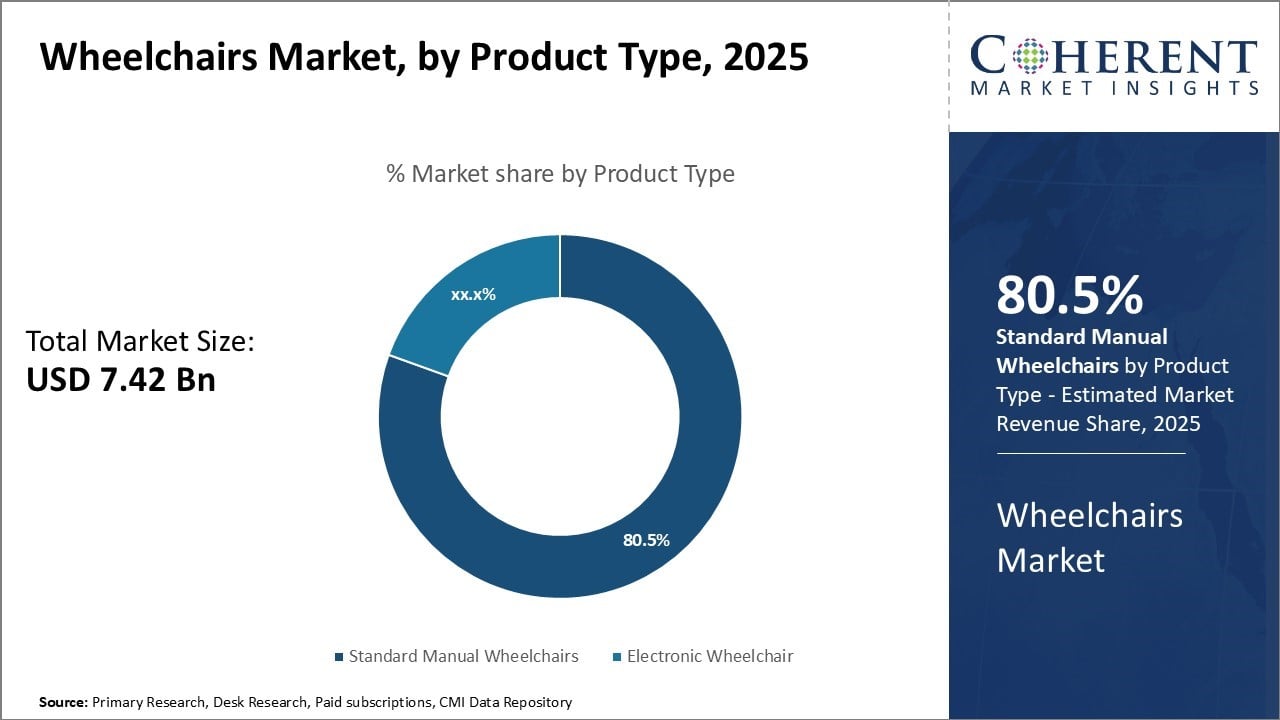
In terms of Product Type, the Standard Manual Wheelchairs segment is estimated to hold the highest market share of 81.5% in 2026 owing to its affordability and ability to meet basic mobility needs. Standard manual wheelchairs are a cost-effective option for outdoor mobility compared to powered wheelchairs. Their simple push rim operated design keeps the production cost low.
This makes them accessible for people with limited financial resources to maintain an acceptable level of independence and quality of life. They are particularly popular in developing nations where healthcare budgets are constrained. The compact, lightweight folding design of standard manual wheelchairs also makes them portable and easy to store or transport via public transportation when not in use.
This enables independent travel even within constraints of living spaces typically found in low- and middle-income countries. Their easy maneuverability and stable structure allow navigation on diverse outdoor terrains with basic physical support. Overall, the optimal balance between functionality and affordability continues to drive the massive demand for standard manual wheelchairs globally.
To learn more about this report, Download Free Sample
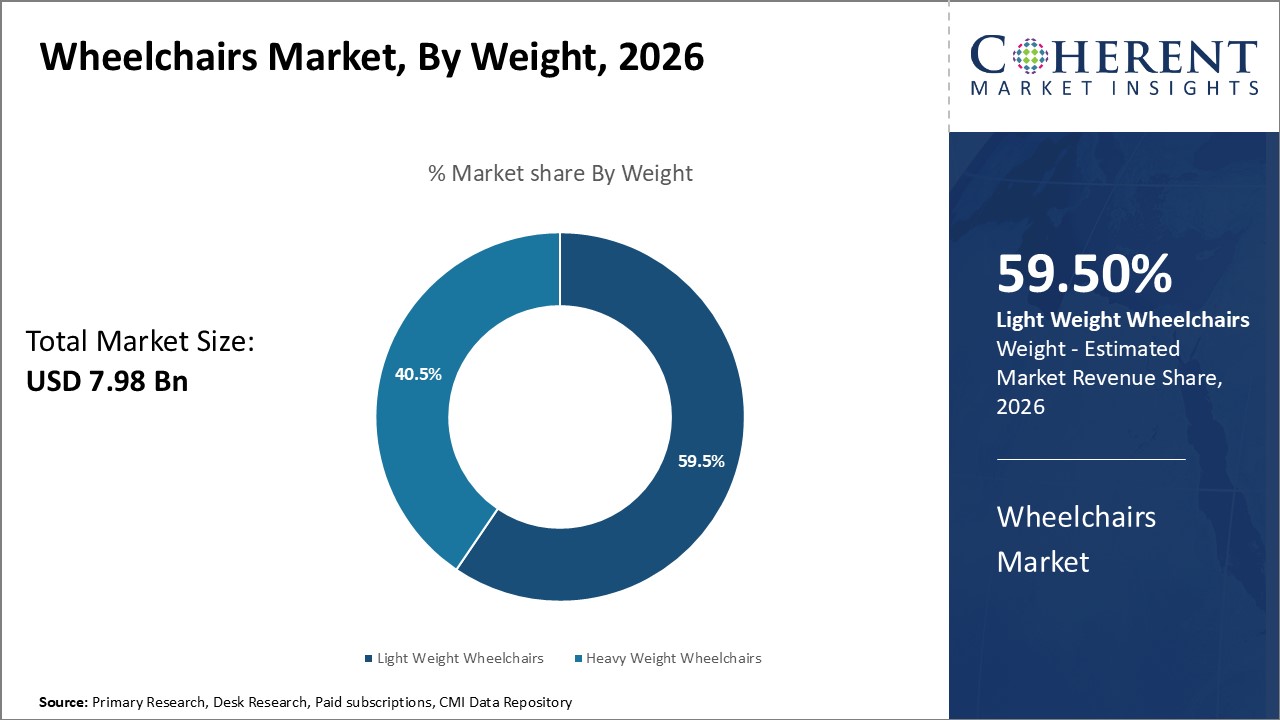
In terms of Weight, the Light Weight Wheelchairs segment is estimated to hold the highest market share of 59.5% in 2026 due to prioritizing user comfort and convenience. Lighter wheelchairs weighing around 15 pounds or less are easy to self-propel and transport. This promotes independence as it negates dependence on additional people or equipment for pushing, lifting or loading the wheelchair. The low weight also places minimal stress on the upper body of the user during maneuvering.
Lighter wheelchairs are particularly beneficial for elderly users and people suffering from conditions weakening muscles. Their uncompromised indoor and outdoor mobility helps uphold active engagement in social and community activities. The versatility of light weight wheelchairs has resulted in wider acceptance beyond traditional user groups.
Features like foldable and transportable designs have further expanded their appeal among travelers and outdoor enthusiasts.
In terms of Modality, the Pediatric Powered Wheelchairs segment is estimated to hold the highest market share of 63.5% in 2026 owing to the critical needs of young users. Powered wheelchairs for children aim to facilitate independent mobility at par with peers. They are designed with joystick or other child-friendly controls within comfortable reach. Features like specialized seating with harness or trays add safety.
Appropriate wheel sizes and suspension setting provide stability over varied surfaces. The motorized propulsion allows child users to keep up with the active pace of school, play and social participation on their own. It plays a key role in their holistic development, confidence building and social skills.
Compact sizes with transportation features support participation in community programs and events. Overall, the transformative impact driven by pediatric powered wheelchairs in empowering youth mobility and inclusion has fueled their mass adoption.
To learn more about this report, Download Free Sample
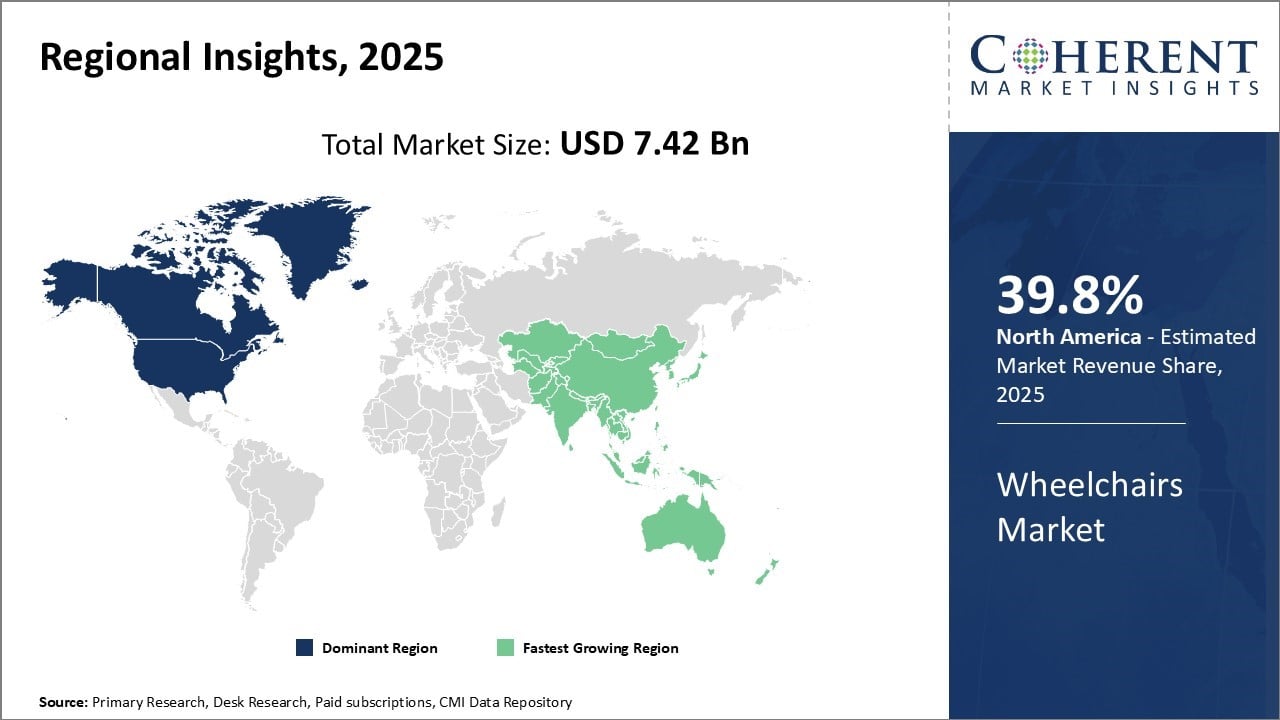
North America has remained the largest regional market for wheelchairs globally with an estimated share of 39.8% in 2026. The presence of prominent manufacturers along with the advancements in technology has given North America an edge over other regions. Countries like the U.S. and Canada have witnessed growing needs for mobility assistance owing to a rapidly aging population as well as rising incidence of disability.
The U.S. alone accounts for over half of the wheelchair users globally. According to estimates, around 4 million Americans depend on wheelchairs for their daily mobility needs. Majority of wheelchairs used in the country are imported from other nations.
However, local manufacturers such as Invacare Corp., Sunrise Medical, Pride Mobility, and Ottobock dominate the domestic wheelchair industry through distribution of both complex rehab and basic mobility devices. Over the years, these players have invested heavily in R&D to develop innovative product designs and lightweight materials for enhanced user comfort and functionality.
Rising at a quicker pace, the Asia Pacific region has emerged as one of the fastest growing markets for wheelchairs worldwide. Countries like China, Japan, and India boast of having huge patient pool requiring assistive devices. This has attracted global market leaders to increase distribution networks and establish manufacturing facilities for catering to the rising demand. Moreover, lower production costs and availability of medical reimbursements have further boosted the adoption of wheelchairs across Asia Pacific.
China specially has played a pivotal role in expanding export of wheelchairs to other global destinations on back of abundant skilled labor and presence of component suppliers. Meanwhile, manufacturers are also targeting younger demographics through launch of high-performance sports wheelchairs and custom designs in line with cultural influences. This will likely aid further penetration of wheelchairs for recreational uses rather than just medical needs.
Manual wheelchairs continue to dominate this market in terms of revenue, holding a majority share, while powered/electric wheelchairs are the fastest-growing sector, driven by advancements such smart connection features, lightweight ergonomic designs, and IoT integration.
The need for electric wheelchairs is particularly supported by the aging populations of important nations like Germany, which dominates the European market because of its sizable senior population and robust healthcare system, as well as the UK and France.
The market growth is largely driven by the aging population requiring long-term care, increasing spinal cord injuries, accidents, and chronic diseases leading to mobility challenges. Innovations in assistive technology, including powered and smart wheelchairs, further stimulate demand. Additionally, with over 17,000 new spinal cord injuries annually and a high incidence of falls among seniors, the need for wheelchairs is substantial.
The market for wheelchairs in India is expanding significantly as a result of growing government and non-government assistance for people with disabilities, increased prevalence of disabilities resulting from injuries and chronic diseases, and growing awareness of mobility impairments. Growing initiatives to increase the affordability and accessibility of assistive equipment are supporting the market.
The demand for sophisticated mobility aids like powered and intelligent wheelchairs has surged due to the nation's fast urbanization and expanding middle class. State policies that support inclusive healthcare are in line with technological developments and investments in assistive technologies.
| Report Coverage | Details | ||
|---|---|---|---|
| Base Year: | 2025 | Market Size in 2026: | USD 7.98 Bn |
| Historical Data for: | 2020 To 2024 | Forecast Period: | 2026 To 2033 |
| Forecast Period 2026 to 2033 CAGR: | 7.5% | 2033 Value Projection: | USD 13.23 Bn |
| Geographies covered: |
|
||
| Segments covered: |
|
||
| Companies covered: |
Invacare Corporation, Sunrise Medical, Ottobock, 21st Century Scientific, Inc., Permobil, Pride Mobility Products Corp, GF Health Products, Inc., MEYRA GmbH, Drive DeVilbiss Healthcare, Hoveround Corporation, Karma Medical Products, RehaCare GmbH, Chinesport Srl, Medline Industries, Inc., and Apex Medical Corp. |
||
| Growth Drivers: |
|
||
| Restraints & Challenges: |
|
||
Uncover macros and micros vetted on 75+ parameters: Get instant access to report
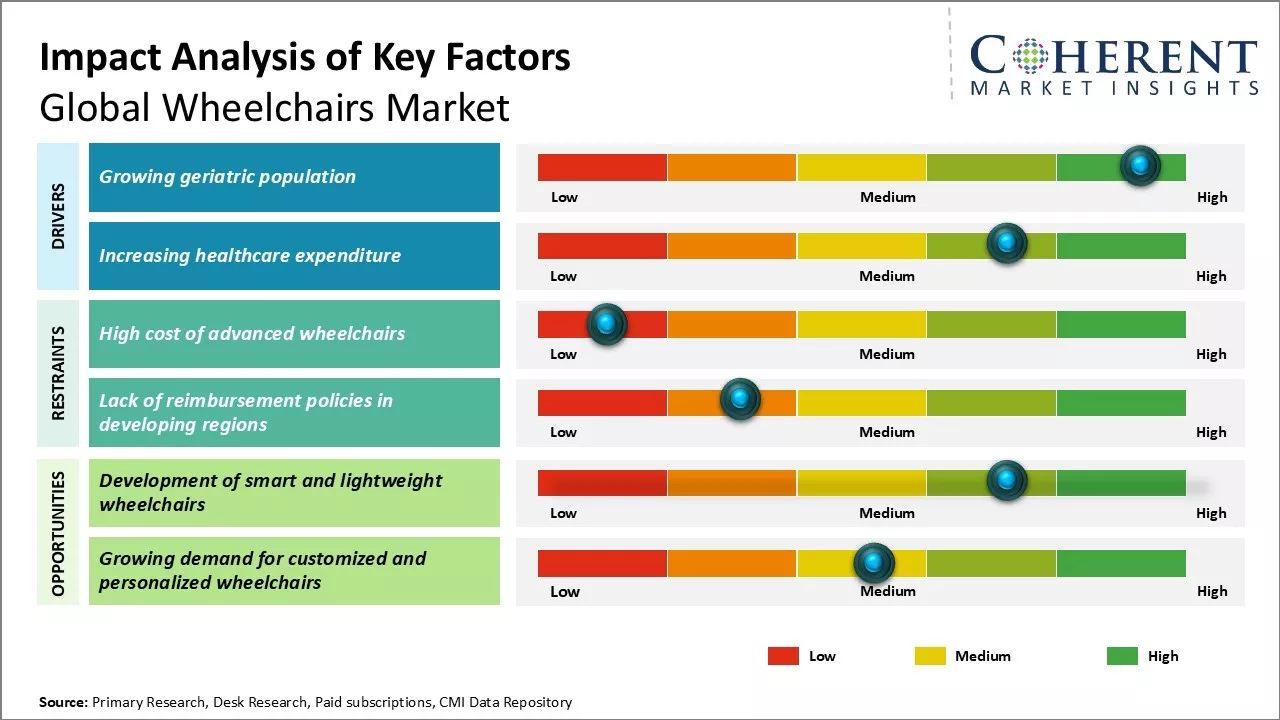
As life expectancy increases globally due to advancements in healthcare and improved living standards, the geriatric population is expanding at an unprecedented rate. Old age brings along several mobility issues and diseases that make it difficult for senior citizens to carry out their daily activities independently without assistance.
The number of people aged 65 years and above is projected to grow from about 524 million in 2010 to nearly 1.5 billion in 2050, according to UN population projections. Advanced countries in western Europe and North America already have a major chunk of their population in the geriatric bracket whereas developing regions of Asia and Latin America are witnessing a massive growth in the senior demographic.
Mobility issues arise amongst the elderly due to arthritis, joint pains, weak bones and muscles from age-related degeneration. Diseases like paralysis, stroke and other neuropathic disorders also greatly hinder independent movement. With advance in age, even minor illnesses and injuries take a longer time to heal and recovery becomes difficult without support.
Wheelchairs provide the perfect low impact solution to enable independent mobility even for those suffering from severe joint stiffness or impaired locomotion abilities. They allow senior citizens to freely navigate inside homes, hospitals and other indoor environments without relying on caregivers for assistance with every small movement.
Furthermore, wheelchairs have opened up the opportunity for the elderly to actively participate in social and community events where extensive walking may not be possible. This has led to improved quality of life and overall well-being for many in their silver years.
The growing geriatric population worldwide is thus a major driver bolstering the demand for wheelchairs to support independent living and mobility of seniors. With life expectancy projected to rise further, this consumer segment will continue expanding rapidly thereby acting as a sustained growth driver for the global wheelchair market in the coming decades.
Rising income levels and greater priority on healthcare have led to a surge in national expenditure on medical and assistive devices globally. Developed economies already spend a substantial share of their GDP on healthcare whereas developing countries are also incrementally elevating budget allocation for citizen wellness. This expansion in healthcare budgets benefits patient assistive devices manufacturers as countries aim to provide aids and equipment to support disabilities.
The World Health Organization has further brought the medical device sector into strategic focus with guidelines on universal healthcare coverage. Nations are keen to provide critical assistive products like wheelchairs, walkers, hospital beds to the needy through public health programs. Private insurance inclusion of such devices and medical reimbursements have also improved access tremendously.
Citizens can now avail mobility aids with partial or full coverage support whereas earlier the financial burden lay entirely with patients. However, what is driving this increased allocation in healthcare spend is the growing disease burden faced by populations. Non-communicable chronic diseases like diabetes, cancers, cardiac ailments requiring long-term care are rising sharply.
Accidents and injuries due to rapid motorization in developing countries have also elevated total disability cases. All such pathological conditions may necessitate prolonged or permanent assistive device support like wheeled mobility over the patient lifetime. Hence, higher healthcare budgets are a necessity to address this growing needs-based requirement for assistive technologies. With such expenditure set to rise further worldwide, wheelchair manufacturers can expect expanded market opportunities.
There is a strong push towards technological innovation, with intelligent and powered wheelchairs featuring wheelchairs with joystick control, IoT connectivity, advanced controls, eco-friendly materials, and digital health integration gaining traction. These innovations not only improve user comfort and independence but also align with stringent EU sustainability and regulatory standards.
Government policies and reimbursement frameworks across Europe are becoming more supportive, encouraging wider adoption through subsidies and disability rights awareness. This is complemented by growing consumer demand for highly customizable and ergonomic solutions prescribed by healthcare professionals. Lastly, market expansion into specialized segments like pediatric wheelchairs highlights increasing inclusivity and tailored accessibility solutions.
One of the major opportunities for the global wheelchairs market is the development of smart and lightweight wheelchairs. With continuous advancements in materials science and embedded technologies, there is a scope to design wheelchairs that are significantly lighter without comprising on durability, comfort or functionality.
Lightweight wheelchairs will not only make long term use easier on the users but also expand the market into newer application areas. Similarly, the integration of smart technologies opens up opportunities to introduce wheelchairs with new features like remote monitoring, predictive maintenance, enhanced maneuverability, and more.
This could address unmet needs as well as attract more users. Manufacturers who are able to successfully develop smart, connected and lightweight wheelchair designs are projected to gain a competitive edge in the market. It will also boost the image of wheelchairs as a modern assistive product.

To learn more about this report, Download Free Sample
*Definition: The global wheelchairs market consists of wheelchairs intended to assist individuals with limited mobility issues. This includes manual wheelchairs that are propelled by physical force and powered wheelchairs that use batteries or alternative power sources for self-propulsion. The market covers a wide range of wheelchair types including basic, bariatric, sports, pediatric, and standing wheelchairs that are sold through various distribution channels such as medical supply stores, online retailers, and direct sales to meet the mobility needs of people with disabilities.
Share
Share
Manisha Vibhute is a consultant with over 5 years of experience in market research and consulting. With a strong understanding of market dynamics, Manisha assists clients in developing effective market access strategies. She helps medical device companies navigate pricing, reimbursement, and regulatory pathways to ensure successful product launches.
Joining thousands of companies around the world committed to making the Excellent Business Solutions.
View All Our Clients