

Acrolein Market Size and Forecast — 2026-2033
The Global Acrolein Market size is estimated to be valued at USD 1.55 billion in 2026 and is expected to reach USD 2.25 billion by 2033, exhibiting a compound annual growth rate (CAGR) of 7.0% from 2026 to 2033.
Overview
Acrolein is a highly reactive, unsaturated aldehyde (C₃H₄O) characterized by its pungent odor, colorless appearance, and strong electrophilic properties. It is typically produced through the oxidation of propylene or the dehydration of glycerol and is valued as a versatile chemical intermediate. Due to its high reactivity toward nucleophiles, acrolein is used in manufacturing methionine, specialty polymers, biocides, and various chemical compounds. The substance is volatile, flammable, and toxic, requiring controlled handling, corrosion-resistant storage materials, and strict occupational safety measures.
Key Takeaways
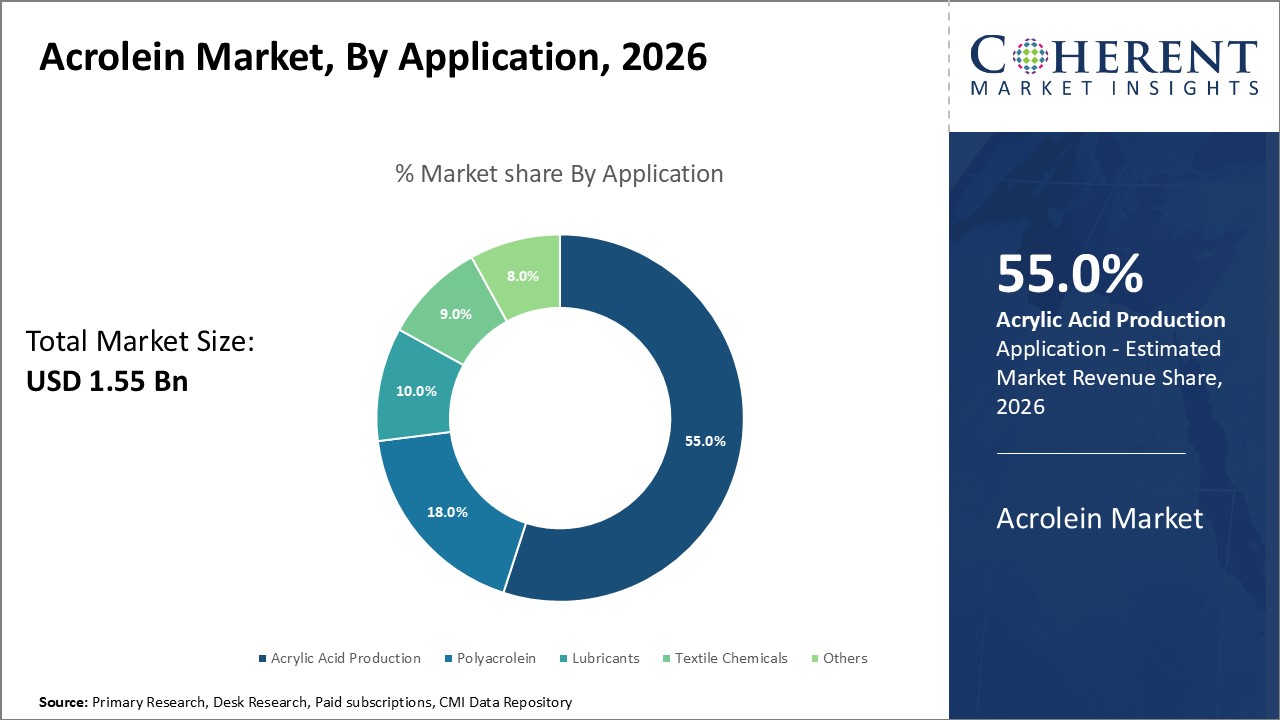
The acrylic acid production segment maintains dominance with over half of the acrolein market share, driven by consistent demand in packaging and automotive applications.
Catalytic oxidation remains the preferred production process due to its cost-efficiency and scalability, underpinning faster growth relative to alternative methods.
Plastics & polymers comprise the largest end-use industry segment, reflecting broader industry trends in lightweight materials and sustainability.
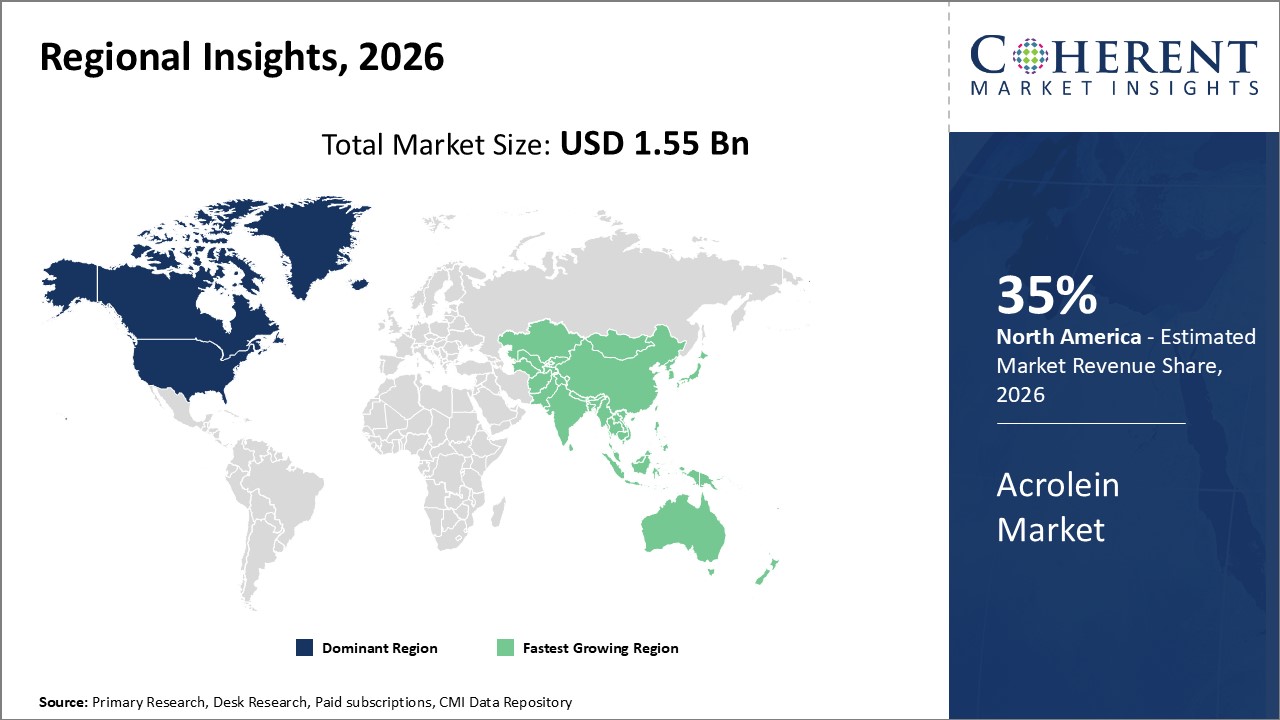
North America leads in industry share owing to robust production infrastructure and regulatory incentives favoring innovation.
Asia Pacific is the fastest-growing region, witnessing double-digit CAGR mainly due to rapid industrialization and expanding end-use sectors in China and India.
Acrolein Market Segmentation Analysis
Acrolein Market Insights, By Application
Acrylic Acid Production dominates the market share with 55%. Acrylic acid’s continuous demand in polymer manufacturing, adhesives, and coatings underpins this dominance. Enhanced demand from the packaging and automotive sectors maintains its stronghold, supported by innovations in acrylic acid polymer composites. The fastest-growing subsegment is Polyacrolein, driven by niche applications in adhesives and water treatment chemicals, registering growth beyond 7% annually due to increasing environmental regulations demanding improved water purification techniques. Lubricants, though smaller in share, serve specialized industrial applications, while Textile Chemicals contribute regional significance, particularly in the Asia Pacific’s textile hubs.
Acrolein Market Insights, By Production Process
Catalytic Oxidation dominates with a commanding market share owing to its efficiency and cost-effectiveness in large-scale commercial operations. Recent process optimizations in this method have improved yields and reduced energy consumption. The fastest-growing production route is the Glycerol-Based Process, gaining momentum as a bio-based alternative contributing to sustainability targets, particularly in Europe. Although currently representing a smaller fraction, technological advances and regulatory push towards bio-renewables will likely increase its market prominence.
Acrolein Market Insights, By End-User Industry
Plastics & Polymers dominate the market by market share, owing to expanding applications in packaging, automotive components, and construction materials that rely heavily on acrolein-derived acrylic acid. The segment's growth is propelled by global packaging demand, expected to rise steadily as environmental standards push for lightweight and recyclable materials. The fastest-growing end-use segment is Pharmaceuticals, where derivatives of acrolein find application in drug synthesis, showing annual growth exceeding 6%, highlighting innovation within this industry. Agrochemicals retain steady demand due to increasing farming mechanization and input modernization. Personal Care & Cosmetics segment is emerging with moderate growth, reflecting growing consumer health consciousness and specialty product development.
Acrolein Market Trends
The Acrolein market exhibits several evolving trends reshaping its competitive landscape. Firstly, sustainable and bio-based acrolein production is gaining momentum with companies piloting glycerol as an alternative feedstock, supported by favorable environmental policies in Europe.
Moreover, digitalization and automation are enhancing manufacturing precision and throughput, reducing waste and operational costs, as documented in 2025 production facility upgrades across North America.
Thirdly, growing end-user diversification, especially within pharmaceuticals and biodegradable plastics, indicates broader industrial alignment with sustainability and innovation priorities.
Regionally, North America dominates the market, holding around 35% of the industry share, due to well-established chemical manufacturing infrastructure, stringent environmental frameworks prompting cleaner technologies, and strong domestic demand.
Asia Pacific emerges as the fastest-growing region with a CAGR exceeding 8%, fueled by rapid industrialization in China and India, government incentives promoting chemical production, and expanding automotive and electronics sectors.
Europe maintains steady growth, leveraging advanced technological integration and bio-based chemical initiatives.
Acrolein Market Insights, By Geography
North America Acrolein Market Analysis and Trends
In North America, the dominance in the Acrolein market is driven by large-scale production facilities and innovation in catalytic technologies. The region’s regulatory environment incentivizes cleaner production techniques, while domestic application demand, particularly in plastics and pharmaceuticals, underpins steady revenue growth. Leading companies such as Dow Chemical and BASF have significant manufacturing footprints, strengthening market stability.
Asia Pacific Acrolein Market Analysis and Trends
Meanwhile, the Asia Pacific exhibits the fastest growth due to burgeoning manufacturing hubs, especially in China and India. Governments fostering industrial expansion and investments in chemical parks have accelerated market advancement. The rise in automotive production and the packaging industry expansion support market growth, creating extensive opportunities for acrolein-based intermediates.
Acrolein Market Outlook for Key Countries
USA Acrolein Market Analysis and Trends
The United States market benefits from advanced production technology and a rigorous regulatory framework promoting environmentally sustainable processes. In 2025, U.S.-based manufacturers expanded acrolein production capacities by approximately 10%, responding to increased domestic and export demand. The presence of top market companies with integrated supply chains contributes significantly to market revenue, supporting innovation-led growth strategies.
China Acrolein Market Analysis and Trends
China emerges as a pivotal player in the acrolein market with rapid industrialization and government efforts to modernize chemical manufacturing. Chinese companies have invested heavily in catalytic oxidation plants, increasing output by over 15% in 2025. The country’s expanding downstream sectors, including pharmaceuticals and plastics, accelerate demand, positioning China as a critical growth driver in the Asia Pacific region.
Analyst Opinion
The demand-side dynamics reveal a substantial uptick in industrial utilization, particularly in acrylic acid synthesis, which accounts for the majority of acrolein consumption globally. Data from 2025 indicates that acrylic acid production dependent on acrolein rose by approximately 9.3%, directly influencing market revenue growth. This downstream dependency underscores the critical role acrolein holds within the value chain.
On the supply front, enhancements in catalytic oxidation processes have led to improved production efficiencies and reduced operational costs. In 2026, several producers reported an average 13% increase in output capacity without proportional cost hikes, contributing positively to market supply metrics and pricing stability.
Import-export trends demonstrate growing trade volume between North America and Asia Pacific, with import quantities from the U.S. to China increasing by 9% in 2025, reflecting shifting global supply chains and emerging market demand centers. This inter-regional trade dynamic substantially influences market share allocation strategies.
Micro-indicator analysis, including inventory turnover ratios and raw material price fluctuations (such as propylene costs), indicates tight market dynamics that can cause short-term price volatility yet support overall market growth. For instance, propylene price stability in early 2026 helped stabilize acrolein market price indices, encouraging steady demand among industrial consumers.
- Current Industry Events of 2026
- Market Size Estimation
- Regional Breakdown
- Competitive Landscape
- Customer Intelligence
- Segmental Analysis
- Pricing Analysis
- Key Market Drivers, Challenges & Future Trends
- Customized Insights Section
Market Scope
| Report Coverage | Details | ||
|---|---|---|---|
| Base Year: | 2025 | Market Size in 2026: | USD 1.55 billion |
| Historical Data for: | 2020 To 2024 | Forecast Period: | 2026 To 2033 |
| Forecast Period 2026 to 2033 CAGR: | 7.0% | 2033 Value Projection: | USD 2.25 billion |
| Geographies covered: |
| ||
| Segments covered: |
| ||
| Companies covered: | BASF SE, The Dow Chemical Company, OXEA GmbH, Shell Chemicals, SABIC, Mitsui Chemicals, Inc., Eastman Chemical Company, Arkema Group, Jiangsu Sopo (Group) Chemical Co., Ltd., Wanhua Chemical Group Co., Ltd., Celanese Corporation. | ||
| Growth Drivers: |
| ||
Acrolein Market Growth Factors
The mounting global demand for acrylic acid, especially from the plastics and adhesives sectors, remains the key driver for acrolein market expansion. For example, the adhesives segment grew by over 8% in revenue terms in 2025 due to increased construction activities worldwide. Innovations in process technology, such as improved catalytic oxidation methods reducing energy consumption by up to 11%, boost production efficiency and market scalability. Policy shifts towards eco-friendly manufacturing, including stricter VOC regulations across Europe and North America, have incentivized manufacturers to adopt greener acrolein production methods. Finally, the increasing penetration of acrolein derivatives in emerging fields like pharmaceutical intermediates has opened additional revenue streams, with pharmaceutical applications rising by more than 7% annually in recent years.
Acrolein Market Development
In 2022, Arkema expanded its portfolio of sustainable performance solutions by increasing manufacturing capacity and advancing the development of lower-carbon specialty materials aimed at reducing environmental footprints. The initiative aligned with the company’s long-term climate strategy, focusing on bio-based chemistries, recycling-enabling polymers, and high-efficiency additives.
In 2022, Spex acquired NSI Lab Solutions to significantly expand its capabilities in certified reference materials, proficiency testing products, and laboratory quality-assurance solutions. The acquisition brought complementary expertise in analytical standards supporting pharmaceutical, environmental, food safety, and forensic testing. By integrating NSI’s product portfolio and distribution network, Spex aimed to enhance service responsiveness and broaden global customer reach. This strategic move strengthened its role in ensuring analytical accuracy and regulatory compliance across critical testing industries.
Key Players
Leading Companies of the Market
BASF SE
The Dow Chemical Company
OXEA GmbH
Shell Chemicals
SABIC
Mitsui Chemicals, Inc.
Eastman Chemical Company
Arkema Group
Jiangsu Sopo (Group) Chemical Co., Ltd.
Wanhua Chemical Group Co., Ltd.
Celanese Corporation
Several leading companies have adopted strategies such as capacity expansion, strategic acquisitions, and sustainable technology integration. For example, BASF SE expanded its catalytic production facilities in Germany, resulting in a 15% production increase in 2025. Dow Chemical’s collaboration with Asian manufacturers focused on technology-sharing has enabled cost reductions and enhanced regional market penetration.
Acrolein Market Future Outlook
In the coming years, the market growth will be shaped by expanding methionine production for animal feed, rising polymer manufacturing in developing economies, and increased investment in industrial water treatment infrastructure. Sustainability will drive interest in glycerol-based acrolein synthesis, especially as biodiesel production scales and companies seek lower-carbon feedstocks. While regulatory restrictions on hazardous chemicals may restrain consumption in certain regions, technological advancements in closed-loop systems, emission control, and safer derivative applications are expected to strengthen long-term adoption and diversify end-use industries.
Acrolein Market Historical Analysis
Historically, the acrolein market evolved alongside petrochemical expansion, primarily driven by propylene-based oxidation processes. During the 1980s and 1990s, demand was largely concentrated in industrial biocides, water treatment operations, and chemical intermediates used for methionine and acrylic derivatives. Growth remained steady as agricultural productivity increased and oil & gas pipeline operators relied on acrolein-based antimicrobials to control biofouling. However, regulatory scrutiny around toxicity, emissions, and worker exposure created compliance-driven operational adjustments, shifting the industry toward controlled manufacturing practices, improved handling standards, and safer logistical frameworks.
Sources
Primary Research Interviews:
Chemical Process Engineers
Industrial Water Treatment Managers
Petrochemical Plant Supervisors
Regulatory Compliance Officers
Databases:
ICIS Chemical Pricing Database
Magazines:
Chemical & Engineering News
Process Worldwide
Treatment Plant Operator Magazine
Hydrocarbon Processing
Journals:
Journal of Hazardous Materials
Industrial & Engineering Chemistry Research
Environmental Science & Technology
Chemical Research in Toxicology
Newspapers:
The Wall Street Journal (Chemicals)
The Economic Times (Industry)
Financial Times (Manufacturing)
The Hindu BusinessLine (Industrial Materials)
Associations:
American Chemical Society (ACS)
European Chemicals Agency (ECHA)
American Water Works Association (AWWA)
Responsible Care®
Get access to 250+ pages report
Every segment, forecast, competitor profile and data table behind the analysis above — available for instant download.
- ESOMAR Member
- ISO 9001:2015 Certified
- D-U-N-S Registered
- GDPR & CCPA Compliant
Missing comfort of reading report in your local language? Find your preferred language:
Transform your Strategy with Exclusive Trending Reports
Frequently Asked Questions
The market leaders include BASF SE, The Dow Chemical Company, OXEA GmbH, and Shell Chemicals, each holding significant market share due to their extensive production capacities and technological advancements.
The Acrolein market size is projected to grow from approximately USD 1.55 billion in 2026 to USD 2.25 billion by 2033, with a CAGR of 7.0%.
The plastics and polymers end-use segment offers the largest growth opportunity, primarily driven by demand in packaging, automotive, and adhesives industries.
Market trends indicate a shift towards bio-based production routes, digital-integrated manufacturing, and expansion into pharmaceutical and biodegradable polymer applications.
The competitive landscape is marked by capacity expansions, technology-driven cost efficiencies, and sustainability initiatives. Challenges include raw material price volatility and stringent environmental regulations.
Strategies include strategic partnerships, capacity ramp-up, innovation investment, and regional market penetration focusing on emerging economies.