Adipic Acid Market Analysis & Forecast: 2025-2032
The Adipic Acid Market Size is estimated to be valued at USD 6.73 Bn in 2025 and is expected to reach USD 9.11 Bn by 2032, exhibiting a compound annual growth rate (CAGR) of 4.4% from 2025 to 2032.
To learn more about this report, Download Free Sample
The Adipic Acid Market growth is primarily driven by increasing demand from the nylon production industry along with demand from polyurethanes and other end-use industries. The increasing usage of nylon 66 in end-use applications like engineering plastics and fibers will drive the demand for adipic acid. Additionally, the rising consumption of polyurethanes in industries like furniture, insulation, automotive, and footwear is also expected to support the market growth during the forecast years.
|
Event |
Description and Impact |
|
Geopolitical Tensions in Key Production Regions |
|
|
Technological Advancements in Bio-Based Alternatives |
|
|
Macroeconomic Downturn in Automotive Sector |
|
Uncover macros and micros vetted on 75+ parameters: Get instant access to report
The global annual production of adipic acid is estimated at 2.5 million metric tons. Its primary application is in the production of nylon 6,6, a polyamide formed through a reaction with 1,6-hexamethylenediamine. Nylon 6,6, which was developed by W. H. Carothers is widely used in a variety of products, including carpets, tire cords, airbags, clothing, upholstery, automotive components, and numerous other everyday applications.
Between June 2024 and May 2025, the world imported 4,794 shipments of adipic acid from 505 exporters to 614 buyers, reflecting a 14% increase from the previous year. In May 2025 alone, there were 435 shipments.
China, the U.S., and South Korea are the main suppliers, while India, Turkey, and the U.S. are the top importers. India leads with 5,461 shipments, followed by Turkey (1,880) and the U.S. (1,521).
The growth of end-use industries, such as nylon production, polyurethanes, and plasticizers, is presenting significant opportunities for the Adipic Acid Market outlook. Adipic acid finds wide usage as a precursor in the production of nylon 6,6 fibers, resins, and engineered plastics.
Nylon polymers have become the material of choice for a variety of applications including brushes, gears, conveyor belts, carpet fibers, clothing, and upholstery due to their impressive strength, flexibility, and resistance to wear and tear. The burgeoning demand from the textile and automotive industries for nylon is expected to drive volumes in the adipic acid market.
The development of lightweight and high-performance nylon formulations is gaining traction. Nylon polymers blended with glass fibers are being increasingly adopted in manufacturing equipment and electrical components on account of their self-lubricating properties, fatigue resistance, and dimensional stability. This is presenting promising prospects for adipic acid manufacturers.
In addition, nylon is also witnessing incremental usage in 3D printing applications such as prototyping, tooling and functional parts production owing to benefits such as high strength, low friction, and UV resistance. The emerging avenues in additive manufacturing are likely to supplement the sales of adipic acid.
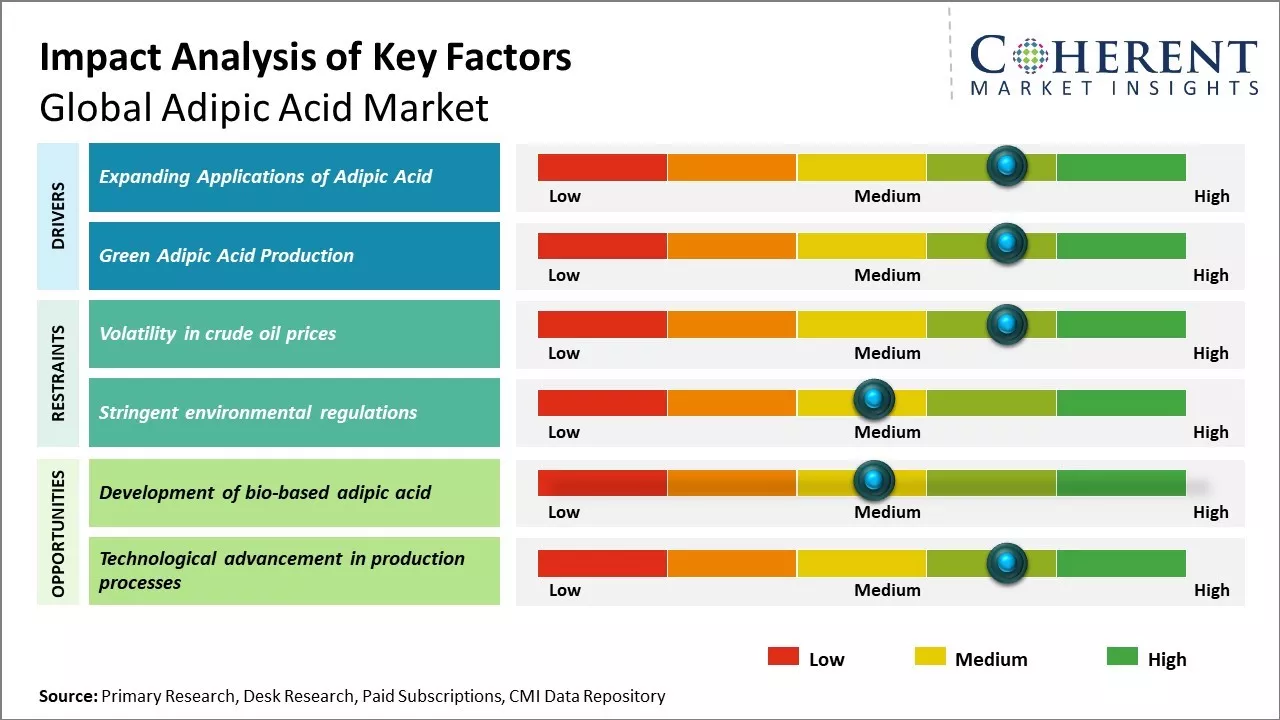
While adipic acid has prospered as a key industrial chemical intermediary, its traditional production route via oxidation of cyclohexanol/cyclohexanone with nitric acid is energy-intensive and leads to the generation of Nitrogen oxides (NOx). Stringent environmental regulations curbing NOx emissions have led adipic acid producers to invest in alternative bio-based and low-carbon production pathways. Several companies are engaged in developing yeast and enzymatic fermentation based technologies to manufacture adipic acid from renewable feedstocks such as glucose, sucrose, and lignocellulosic biomass. These novel production methods can help reduce dependence on non-renewable petroleum sources and lower greenhouse gas emissions substantially.
Governments across regions are offering incentives for the adoption of green technologies and encouraging the application of industrial biotechnology towards sustainable chemical production. The availability of policy support is convincing more players in the adipic acid market to fund R&D activities in biocatalytic routes. Additionally, the certainty of crude oil supply and fluctuating prices make renewable adipic acid an attractive option for end-use industries.
The development of bio-based adipic acid production holds great potential as an opportunity for future growth in the Adipic Acid Market forecast. Currently, almost all commercially produced adipic acid is made from non-renewable petroleum-based feedstocks. However, biobased production using renewable sources such as corn could provide a more sustainable alternative. Shifting even a portion of adipic acid production to biobased methods would significantly reduce dependence on petrochemicals and lower emissions. This environmental benefit has attracted interest from major companies as consumers increasingly demand green chemicals.
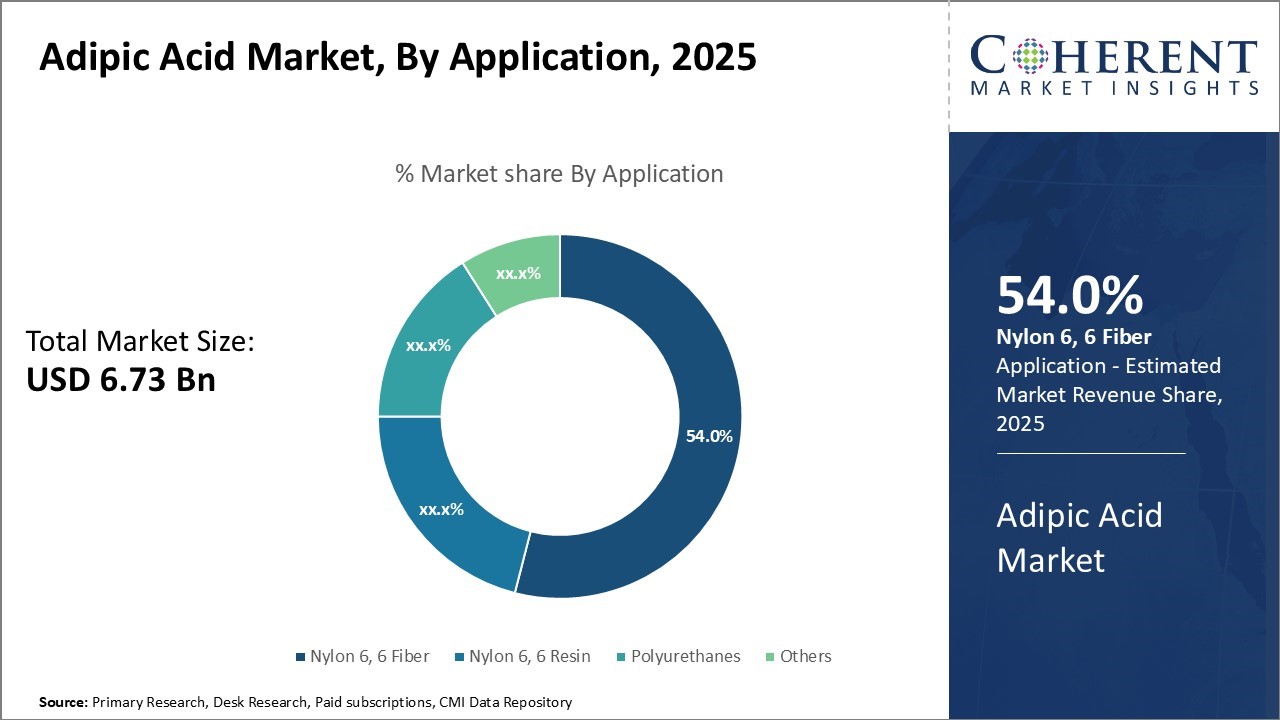
In terms of application, nylon 6, 6 fiber is expected to contribute 54.0% share of the Adipic Acid market value in 2025. Nylon 6, 6 fiber is the most common type of nylon used in textile applications due to its excellent durability, elasticity, and moisture-wicking properties.
The fabric is widely employed in clothing like socks, underwear, sportswear, and outerwear due to its ability to retain shape over repeated washing and wearing. Its resilient nature makes it suitable for technical textiles as well. Nylon 6, 6 fiber is commonly used to produce automotive carpet fibers that can withstand high heat and abrasion inside vehicles. It is also favored for producing durable rope, twine, and netting for industrial and marine applications.
The textile industry has continued to rely heavily on nylon 6, 6 fibers to manufacture a variety of apparel and home textiles. Popular athletic brands prefer the material for moisture-management properties to keep athletes dry during exercise.
Many outdoors companies use nylon 6, 6 to make lightweight and long-lasting tents, backpacks and gear. The fiber also finds application in the production of durable wetsuits for water sports. Its reputation for strength and crease-resistance has boosted its use in workwear manufacturing. Strong demand from these end-user industries ensures steady consumption of adipic acid for nylon 6, 6 fiber production.
In terms of end-use industry, the automotive sector is anticipated to hold 41.8% market share in 2025. Adipic acid-derived polymers are heavily consumed in the automobile industry for various interior and exterior parts. Engine covers, air intake manifolds, and fan shrouds are some of the under-hood plastic parts made of Nylon 6, 6 resin which require high-temperature strength.
With the ability to withstand hot and cold temperatures, polyurethanes made with adipic acid are used as rigid and flexible foams in automobile headliners, dashboards, door panels, and arms rests. Their great energy absorbing properties without adding weight make them favorable for use in automobiles.
The polymers are also used in essential automotive wires and cables material that transmit power and data throughout the vehicle. Nylon 6, 6 and polyurethane coated cables excel at enduring heat, abuse, and solvents, positions them well under the hood.
Strong regulatory demands for improved fuel economy will increase consumption even more. With these materials constantly being integrated into new vehicles for weight reduction and performance improvement, the need for the upstream chemical adipic acid will continue for this sector.
To learn more about this report, Download Free Sample
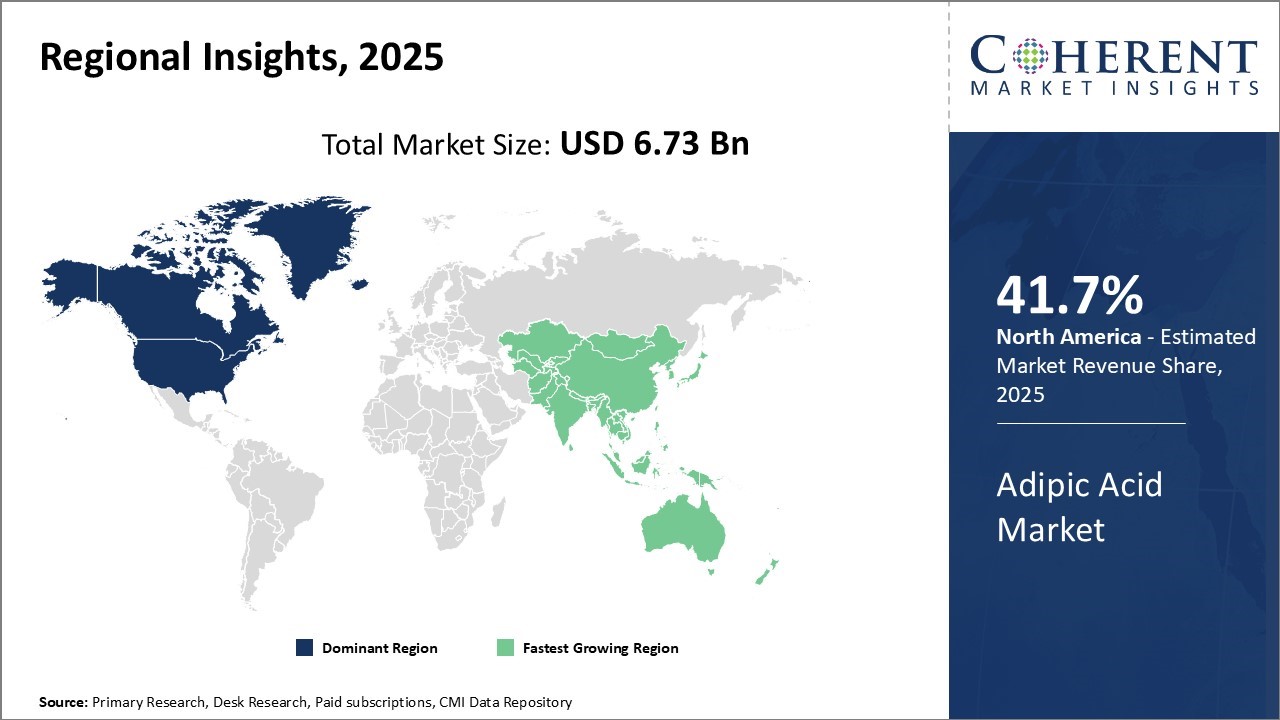
North America has dominated the global Adipic Acid Market trend for many years owing to robust demand from the region's well-established end-use industries. The region is expected to account for 41.7% of the market share in 2025. The region is home to several major automobile manufacturers that require adipic acid for producing nylon which is used in various interior and exterior automotive parts.
In addition, North America has significant presence of textile and carpet industries that utilize nylon produced from adipic acid. Many adipic acid producers have established production facilities as well as supply chain networks in the region to cater to the stable demand. The availability of raw materials along with ease of logistics and transportation further strengthens North America's position as a market leader.
However, over the past decade Asia Pacific has emerged as the fastest growing regional market for adipic acid. With expanding GDP and growing population, countries like China and India have seen rapid industrialization which is fueling demand for various end-use products that use adipic acid. The rapidly developing automobile and textile sectors particularly in China have boosted Asia Pacific's share in the global adipic acid consumption.
Additionally, the region is witnessing heavy investments from adipic acid manufacturers to set up or expand production units. This is allowing the region to become more self-sufficient and less import-dependent. The strategic location of Asia Pacific makes it an attractive hub for serving the increasing local as well as exports demand. Relative availability of raw materials, affordable labor, and supportive government policies have made the region a manufacturing powerhouse for adipic acid. These factors combined with projected economic growth indicate Asia Pacific will continue dominating market trends going forward.
| Report Coverage | Details | ||
|---|---|---|---|
| Base Year: | 2024 | Market Size in 2025: | USD 6.73 Bn |
| Historical Data for: | 2020 To 2024 | Forecast Period: | 2025 To 2032 |
| Forecast Period 2025 to 2032 CAGR: | 4.4% | 2032 Value Projection: | USD 9.11 Bn |
| Geographies covered: |
|
||
| Segments covered: |
|
||
| Companies covered: |
Asahi Kasei Corporation, Ascend Performance Materials, BASF SE, Invista, Lanxess Ag, PetroChina Liaoyang Petrochemical, Radici Group, Rhodia, Shandong Haili Chemical Industry Company Ltd., Shandong Hongye Chemical Company Ltd, DOMO Chemicals, Sumitomo Chemical Co., Ltd., Solvay, Liaoyang Tianhua Chemical Co., Ltd, Meru Chem Pvt. Ltd, EMCO Dyestuff, and JPM Pharma & Chemicals Pvt. Ltd. |
||
| Growth Drivers: |
|
||
| Restraints & Challenges: |
|
||
Uncover macros and micros vetted on 75+ parameters: Get instant access to report
*Definition: The adipic acid market involves the production, trade, and sale of adipic acid as a chemical commodity globally. Adipic acid is an important organic compound that is primarily used in the manufacturing of nylon fibers, nylon 6,6 resins for the production of engineering plastics, polyurethanes, and various other industrial products. The key end-use industries driving the demand for adipic acid are automotive, electrical and electronics, consumer goods, textiles, etc. The major producers and suppliers of adipic acid actively participate in this established global market to cater to the growing requirements from downstream industries.
Share
Share
About Author
Yash Doshi is a Senior Management Consultant. He has 12+ years of experience in conducting research and handling consulting projects across verticals in APAC, EMEA, and the Americas.
He brings strong acumen in helping chemical companies navigate complex challenges and identify growth opportunities. He has deep expertise across the chemicals value chain, including commodity, specialty and fine chemicals, plastics and polymers, and petrochemicals. Yash is a sought-after speaker at industry conferences and contributes to various publications on topics related commodity, specialty and fine chemicals, plastics and polymers, and petrochemicals.
Missing comfort of reading report in your local language? Find your preferred language :
Transform your Strategy with Exclusive Trending Reports :
Frequently Asked Questions
Joining thousands of companies around the world committed to making the Excellent Business Solutions.
View All Our Clients
 Schedule a meeting with report Author