

Ophthalmology Pacs Market Analysis & Forecast: 2026-2033
The Ophthalmology PACS market is estimated to be valued at USD 200.3 Mn in 2026 and is expected to reach USD 356.8 Mn by 2033, growing at a compound annual growth rate (CAGR) of 8.6% from 2026 to 2033.
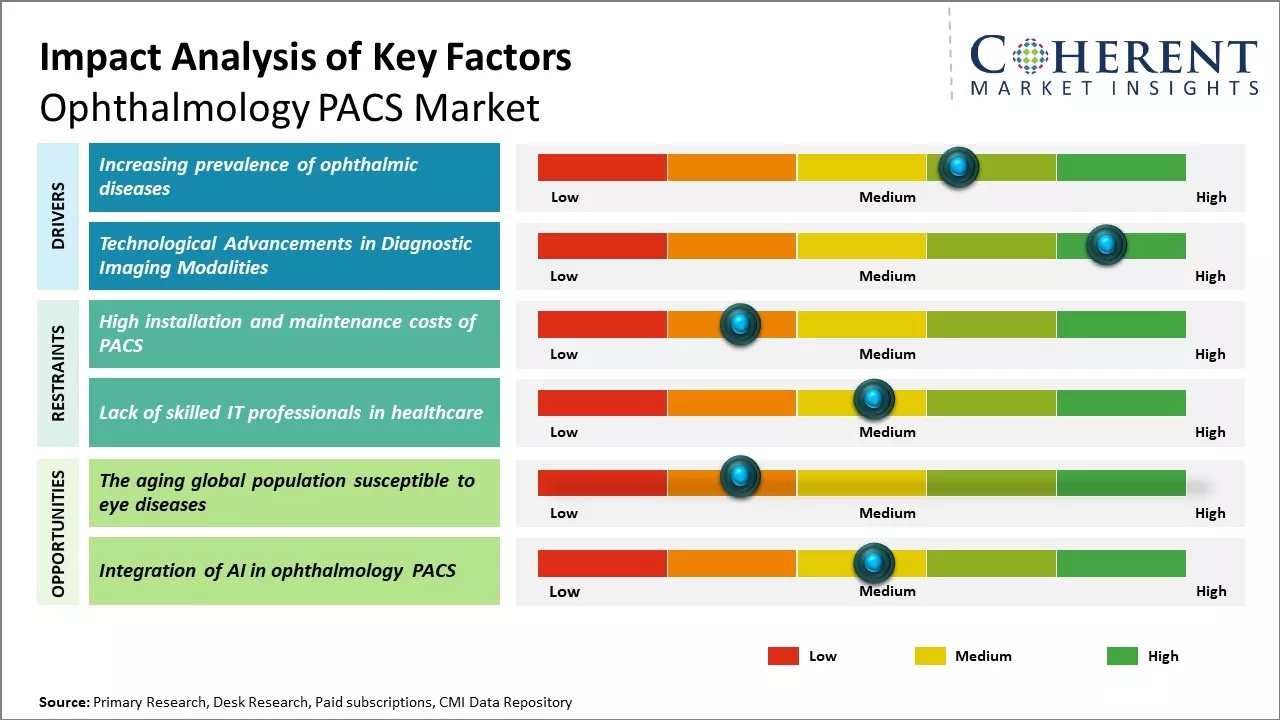
Key Takeaways
- By Type, Integrated PACS segment is projected to lead the ophthalmology PACS market with a 62.8% share in 2026.
- By Delivery Model, Cloud-based PACS division is expected to dominate the market with a 60.7% share in 2026.
- By End User, Hospital Segment are projected to lead the end-user segment with a 46.82% share in 2026.
- North America is set to dominate the ophthalmology PACS market with a 40.2% share in 2026.
Market Overview
The global ophthalmology PACS market is witnessing steady growth driven by the rising need for advanced eye imaging solutions and streamlined diagnostic workflows. Key growth factors include the increasing prevalence of vision-related disorders, growing demand for integrated imaging platforms, and the global shift toward digital healthcare systems.
Hospitals and specialty clinics are rapidly adopting ophthalmology PACS to enhance data accessibility, improve diagnostic accuracy, and reduce administrative workload. The shift from traditional film-based systems to cloud service and integrated PACS platforms is enabling real-time data sharing and remote consultations.
Current Events and its Impact on the Ophthalmology Pacs Market
Current Event | Description and its impact |
Surge in Demand for Teleophthalmology and Remote Diagnostics |
|
AI Integration in Diagnostic Imaging |
|
Increasing Government Investments in Digital Healthcare Infrastructure |
|
Government Regulations: Ophthalmology PACS Market
Government regulations play a crucial role in shaping the ophthalmology PACS market, particularly concerning data security, interoperability, and patient privacy. In the United States, the Health Insurance Portability and Accountability Act (HIPAA) set stringent standards for the storage, access, and transmission of electronic medical records, including ophthalmic images. PACS providers must ensure end-to-end data encryption, secure user authentication, and audit trails to comply with HIPAA requirements.
Similarly, the European Union enforces the General Data Protection Regulation (GDPR), which mandates strict controls on personal health data processing and storage. Ophthalmology PACS vendors operating in Europe must design systems that allow data minimization, user consent, and the right to data access and deletion.
- Current Industry Events of 2026
- Market Size Estimation
- Regional Breakdown
- Competitive Landscape
- Customer Intelligence
- Segmental Analysis
- Pricing Analysis
- Key Market Drivers, Challenges & Future Trends
- Customized Insights Section
Ophthalmology Pacs Market Trends
- Increasing prevalence of ophthalmic diseases
The increasing prevalence of various ophthalmic diseases across the globe is one of the primary factors fueling the growth of the ophthalmology PACS market. Eye disorders such as age-related macular degeneration, diabetic retinopathy, glaucoma, cataract, and others have been rising steadily over the past few years.
For instance, according to projections by the WHO, the number of people suffering from age-related macular degeneration globally is expected to increase from 195 million in 2020 to 288 million by 2030. Diabetic retinopathy also affects over one-third of the growing diabetic population worldwide.
- Technological Advancements in Diagnostic Imaging Modalities
Ophthalmic diagnostic technologies have witnessed rapid technological upgrades in recent years. Advanced imaging modalities such as optical coherence tomography, fundus camera, and ultrasound biomicroscopy enable high-resolution visualization of internal ocular structures. These technologies generate high volume digital images and scans which need to be systematically archived, compared and evaluated by retinal specialists and ophthalmologists.
Traditional film-based data storage is no longer sufficient to handle these digitally captured images effectively. PACS, Picture Archiving and Communication Systems solutions provide a digital platform to efficiently store, retrieve, share and analyse voluminous retina imaging data online. This streamlines clinical workflow and supports timely diagnosis. Continuous technological upgrades in ophthalmic imaging coupled with the need for digital image management will propel the uptake of PACS systems globally in the coming years.
Opportunities in the Ophthalmology Pacs Market
The aging global population susceptible to eye diseases
The aging global population susceptible to eye diseases represents increased demand. Advancing digital healthcare and government incentives for healthcare IT adoption are boosting investments. Cloud-based teleradiology solutions allow remote image sharing and consultations. Integration of artificial intelligence and analytics provides chance for predictive diagnostics and workflow improvements.
Segmental Insights
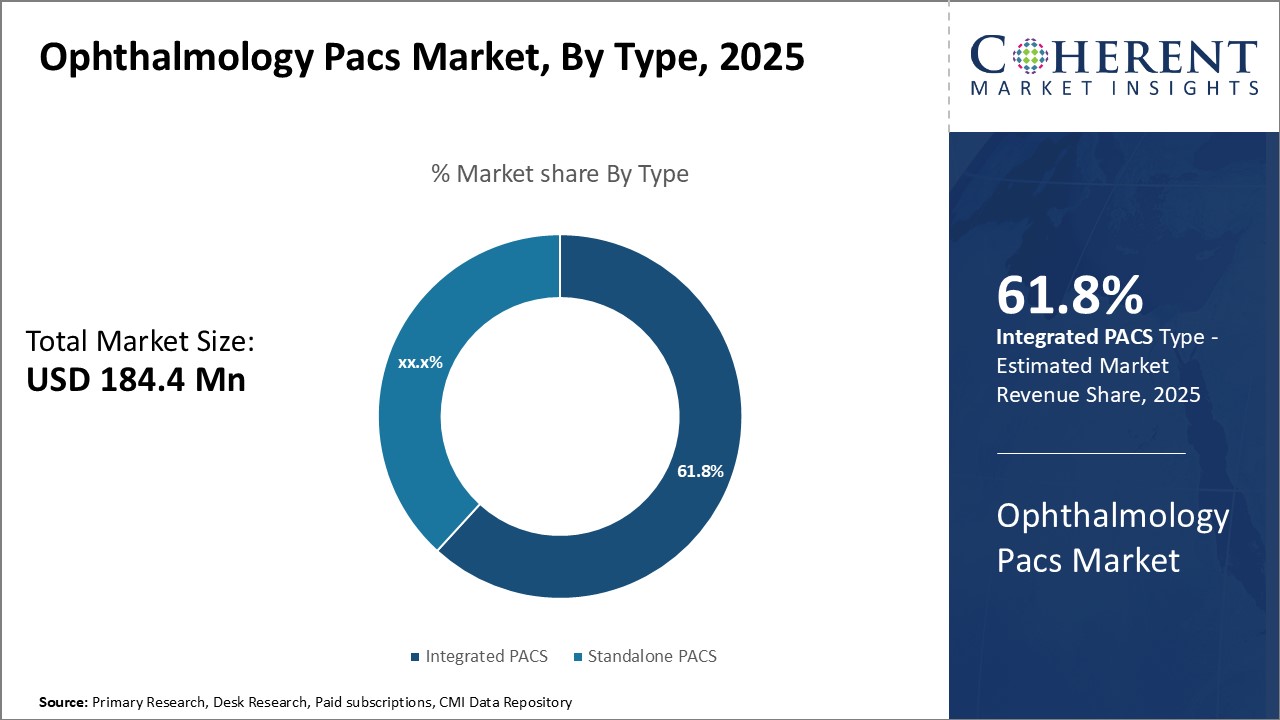
Ophthalmology Pacs Market Insights, By Type
Integrated PACS is expected to dominate the ophthalmology PACS market with a 62.8% share in 2026. These systems offer a unified imaging environment that streamlines data sharing, retrieval, and archiving within a single platform. Healthcare facilities prefer integrated solutions due to their ability to enhance workflow efficiency and reduce operational redundancies.
By centralizing image management across ophthalmology departments, integrated PACS reduces infrastructure costs and simplifies system maintenance, making it a highly cost-effective and operationally efficient option for hospitals and eye care networks.
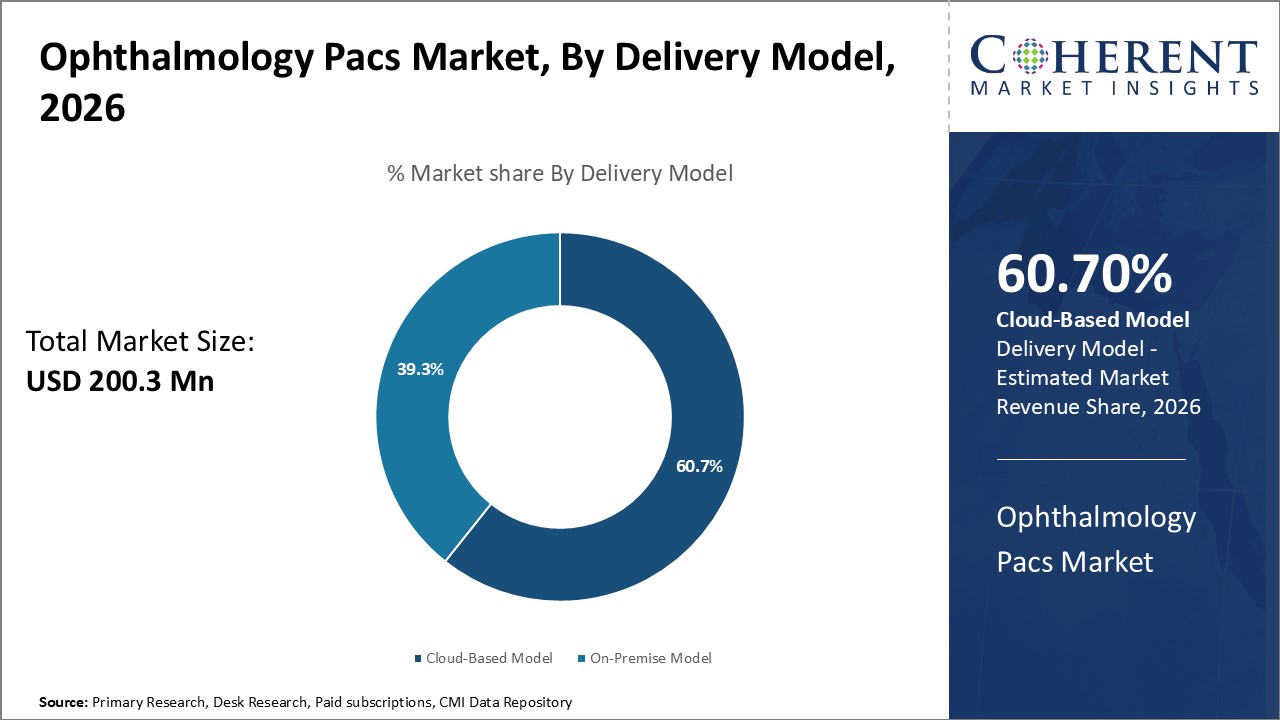
Ophthalmology Pacs Market Insights, By Delivery Model
Cloud-based delivery models are set to lead the ophthalmology PACS market with a 60.7% share in 2026. The shift is driven by the growing need for scalable, flexible, and cost-efficient healthcare IT infrastructure. Cloud PACS allow real-time access to ophthalmic images and patient data from remote locations, improving collaboration between healthcare providers.
Ophthalmology Pacs Market Insights, By End User
Hospitals are projected to lead the end-user segment of the ophthalmology PACS market with a 46.82% share in 2026. As key providers of comprehensive eye care services, hospitals handle a large volume of ophthalmic imaging procedures. The need for efficient data management, quicker diagnostics, and integrated patient care has driven hospitals toward PACS adoption
Regional Insight
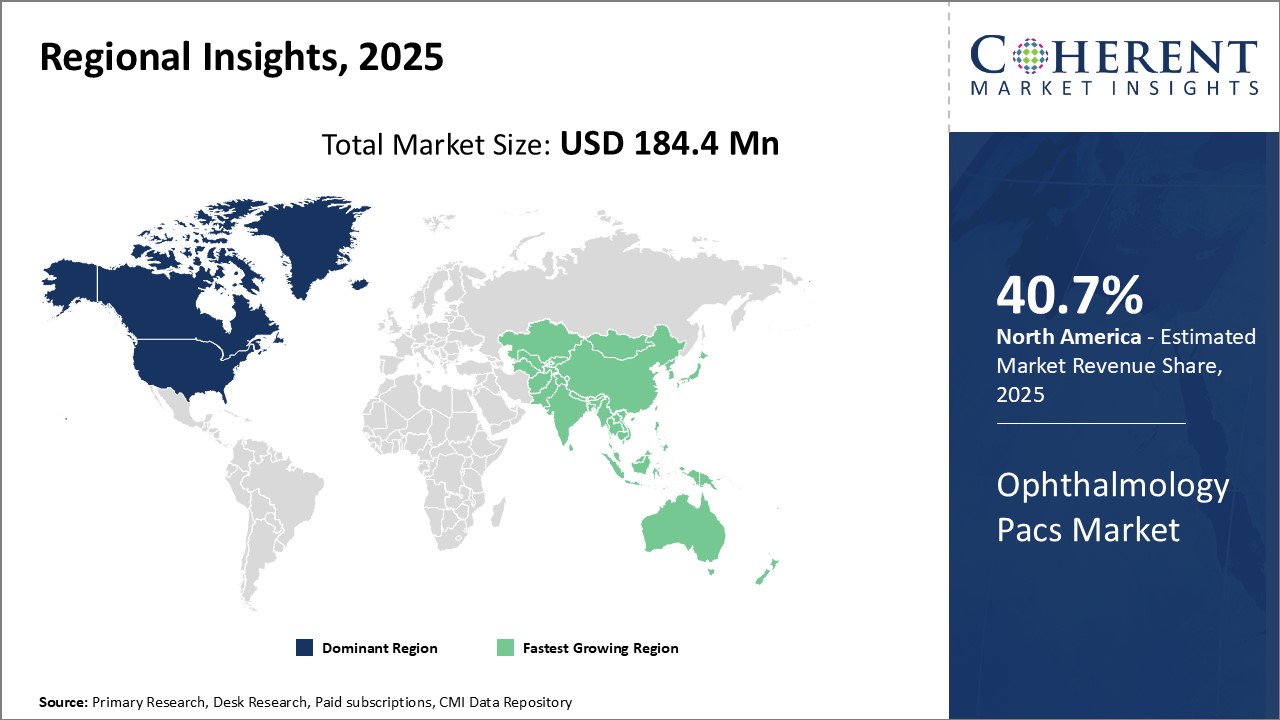
North America Ophthalmology PACS Market Trends and Analysis
North America is projected to dominate the global ophthalmology PACS market, capturing approximately 40.2% of the market share in 2026. This leadership stems from a well-developed healthcare infrastructure, high healthcare spending, and the early adoption of digital imaging technologies.
Europe Ophthalmology PACS Market Trends and Analysis
Europe is expected to be the second-largest regional market for ophthalmology PACS in 2026, fuelled by strong public healthcare systems and rising emphasis on digital transformation in medical imaging. Countries like Germany, France, and the UK are actively upgrading legacy PACS systems to integrated and cloud-based platforms.
Ophthalmology Pacs Market Dominating Countries:
United States and Canada Ophthalmology PACS Market Trends and Analysis
The United States and Canada are poised to lead the global ophthalmology PACS market, with North America projected to hold a 40.2% market share in 2026. The U.S. dominates due to its advanced healthcare infrastructure, high adoption of digital health technologies, and strong regulatory support. Canada complements this growth with national health IT initiatives and widespread use of cloud-based PACS. Both countries prioritize efficient patient data management, driving demand for integrated and scalable ophthalmic imaging systems across hospitals and specialty eye care centers.
Market Report Scope
Ophthalmology PACS Market Report Coverage
| Report Coverage | Details | ||
|---|---|---|---|
| Base Year: | 2025 | Market Size in 2026: | USD 200.3 Mn |
| Historical Data for: | 2020 To 2024 | Forecast Period: | 2026 To 2033 |
| Forecast Period 2026 to 2033 CAGR: | 8.6% | 2033 Value Projection: | USD 356.8 Mn |
| Geographies covered: |
| ||
| Segments covered: |
| ||
| Companies covered: | Carl Zeiss Meditec AG, Topcon Corporation, Heidelberg Engineering GmbH, Sonomed Escalon, Visbion, EyePACS, LLC, VersaSuite, Merge Healthcare Inc (IBM Watson Health), ScImage, Inc., Agfa-Gevaert N.V., Carl Zeiss Meditec AG, IBM Corporation , Medical Standard Co, Ltd, Topcon Operation, and Canon Usa Inc. | ||
| Growth Drivers: |
| ||
| Restraints & Challenges: |
| ||
Analyst Viewpoint – Ophthalmology PACS Market
- The ophthalmology PACS market is experiencing robust growth driven by increasing adoption of digital imaging solutions in eye care. Analysts highlight that the rising demand for efficient image management, enhanced diagnostic accuracy, and streamlined clinical workflows are key factors fueling market expansion.
- The shift towards integrated and cloud-based PACS systems reflects the healthcare sector’s emphasis on accessibility, data security, and cost-effectiveness.
- Technological advancements such as AI-powered image analysis, improved interoperability with EHR systems, and enhanced data storage capabilities are significantly improving diagnostic workflows and patient outcomes. These innovations enable healthcare providers to deliver faster and more accurate diagnoses while facilitating multi-disciplinary collaboration. Furthermore, teleophthalmology’s rise is driving demand for cloud-based PACS solutions that support remote consultations and care delivery.
- Regulatory support and increasing reimbursement policies for digital health technologies are also shaping market dynamics, particularly in developed regions like North America and Europe. These areas lead in adopting sophisticated ophthalmology PACS systems due to favorable healthcare infrastructure and strong IT integration.
- Geographically, North America dominates the market owing to advanced healthcare ecosystems, while Asia Pacific is emerging rapidly due to expanding healthcare access and technological investments. Europe emphasizes regulatory compliance and innovation, whereas Latin America and MEA regions are growing steadily with increasing healthcare modernization.
Ophthalmology PACS Market: Key Development
- In March 2025, Zeiss launched an upgraded ophthalmology PACS platform integrating advanced AI-driven diagnostic tools, enhancing image analysis accuracy and workflow automation for eye care professionals. This development highlights Zeiss’s focus on combining cutting-edge technology with user-friendly interfaces.
- In February 2025, Nikon introduced a cloud-based ophthalmology PACS solution featuring enhanced cybersecurity protocols and remote access capabilities, aiming to support teleophthalmology and improve data management across multiple healthcare facilities.
- In May 2025, Topcon Healthcare partnered with a leading hospital network to implement integrated PACS systems that streamline patient data sharing across ophthalmology departments, facilitating faster diagnosis and multi-specialty collaboration.
Market Segmentation
- By Type (Revenue, USD Mn, 2021 - 2033)
- Integrated PACS
- Standalone PACS
- By Delivery Model
- Cloud-Based Model
- On-Premise Model
- By End User (Revenue, USD Mn, 2021 - 2033)
- Hospitals
- Speciality Clinics
- Ambulatory Surgical Centres
- Others (Academic & Research Institutes) etc.
- By Region (Revenue, USD Mn, 2021 - 2033)
- North America
- U.S.
- Canada
- Latin America
- Brazil
- Argentina
- Mexico
- Rest of Latin America
- Europe
- Germany
- U.K.
- Spain
- France
- Italy
- Russia
- Rest of Europe
- Asia Pacific
- China
- India
- Japan
- Australia
- South Korea
- ASEAN
- Rest of Asia Pacific
- Middle East
- GCC Countries
- Israel
- Rest of Middle East
- Africa
- South Africa
- North Africa
- Central Africa
- North America
- Company Profiles
- Carl Zeiss Meditec AG
- Topcon Corporation
- Heidelberg Engineering GmbH
- Sonomed Escalon
- Visbion
- EyePACS, LLC
- VersaSuite
- Merge Healthcare Inc (IBM Watson Health)
- ScImage, Inc.
- Agfa-Gevaert N.V.
- Carl Zeiss Meditec AG
- IBM Corporation
- Medical Standard Co, Ltd
- Topcon Operation
- Canon Usa Inc.
Sources
The Stakeholders Consulted
- Ophthalmologists and clinical imaging specialists
- Hospital IT managers and radiology department heads
- PACS system manufacturers and software developers
- Healthcare technology consultants and digital health strategists
- Regulatory and compliance authorities in medical imaging
- Research institutions specializing in ophthalmic diagnostics and imaging
- Healthcare providers and end-users across hospitals, eye clinics, and diagnostic centers
Databases Accessed
- U.S. Food and Drug Administration (FDA) – Medical Device Databases
- National Institutes of Health (NIH) – Medical Imaging Research
- World Health Organization (WHO) – Global Health Statistics
- Centers for Medicare & Medicaid Services (CMS) – Reimbursement and Healthcare Utilization Data
Magazines & Trade Publications
- Healthcare IT News – Imaging & Diagnostics Section
- Radiology Today
- Ophthalmology Times
- Medical Imaging Technology Magazine
- Health Management Technology
Scientific and Industry Journals
- Journal of Ophthalmic & Vision Research
- Investigative Ophthalmology & Visual Science
- Journal of Digital Imaging
- IEEE Transactions on Medical Imaging
- Ophthalmology Retina
Newspapers & Media Outlets
- The New York Times – Health & Science
- Reuters Health News
- Bloomberg Healthcare
- The Guardian – Medical Technology Updates
Associations and Regulatory Bodies
- American Academy of Ophthalmology (AAO)
- Radiological Society of North America (RSNA)
- U.S. Food and Drug Administration (FDA)
- European Medicines Agency (EMA)
- Health Level Seven International (HL7)
Public Domain Sources
- World Bank – Healthcare Infrastructure Reports
- OECD Health Data – Medical Technology Usage
- Centers for Disease Control and Prevention (CDC) – Ophthalmic Health Data
- International Telecommunication Union (ITU) – Digital Health Reports
Proprietary Research Elements
- Advanced Market Analytics Platform
- Custom Surveys and Interviews with Ophthalmology PACS End Users
- Expert Panel Consultations on Market Trends and Technology Adoption
- Comprehensive Historical Market Data and Forecast Models
Get access to 250+ pages report
Every segment, forecast, competitor profile and data table behind the analysis above — available for instant download.
- ESOMAR Member
- ISO 9001:2015 Certified
- D-U-N-S Registered
- GDPR & CCPA Compliant
Missing comfort of reading report in your local language? Find your preferred language:
Transform your Strategy with Exclusive Trending Reports
Frequently Asked Questions
The Ophthalmology Pacs Market size is estimated to be valued at USD 200.3 Mn in 2026, and is expected to reach USD 356.8 Mn by 2033.
The CAGR of the Ophthalmology Pacs Market is projected to be 8.6% from 2026 to 2033.
Increasing prevalence of ophthalmic diseases and technological advancements in diagnostic imaging modalities are the major factors driving the growth of the ophthalmology PACS market.
High installation and maintenance costs of PACS and lack of skilled IT professionals in healthcare are the major factors hampering the growth of global market.
In terms of type, integrated pacs is estimated to dominate the market revenue share in 2026.
Carl zeiss meditec ag, topcon corporation, heidelberg engineering gmbh, sonomed escalon, visbion, eyepacs, llc, versasuite, merge healthcare inc (ibm watson health), scimage, inc., agfa-gevaert n.v., carl zeiss meditec ag, ibm corporation, medical standard co, ltd, topcon operation, and canon usa inc. are the major players.
North America is expected to lead the global market.