

Light Blue Tube Phlebotomy Market Size and Forecast – 2026 To 2033
The Light Blue Tube Phlebotomy Market is anticipated to grow at a CAGR of 7.1% with USD 17.3 Bn in 2026 and is expected to reach USD 22.5 Bn in 2033. Rising demand for coagulation testing, including prothrombin time and activated partial thromboplastin time assessments, drives the Light Blue Tube Phlebotomy Market.
Key Takeaways
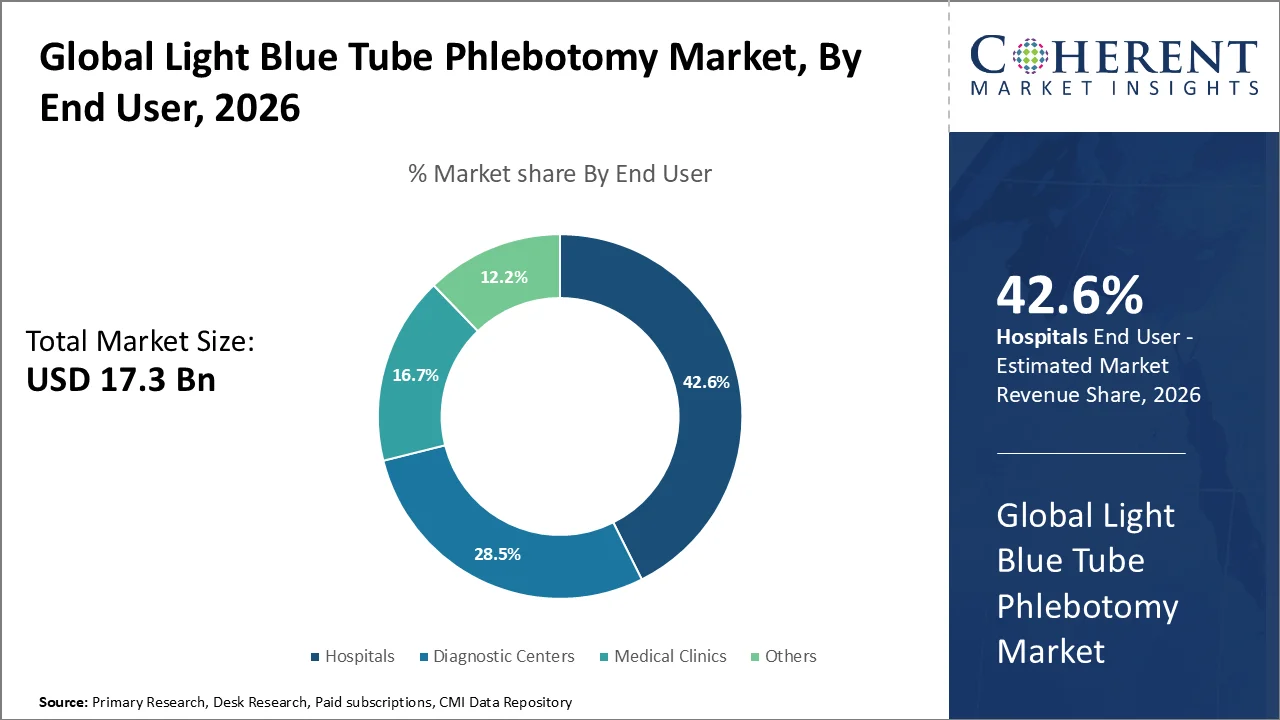
- Hospitals hold the largest market share of 42.6% in 2026 owing to the growing volume of coagulation testing.
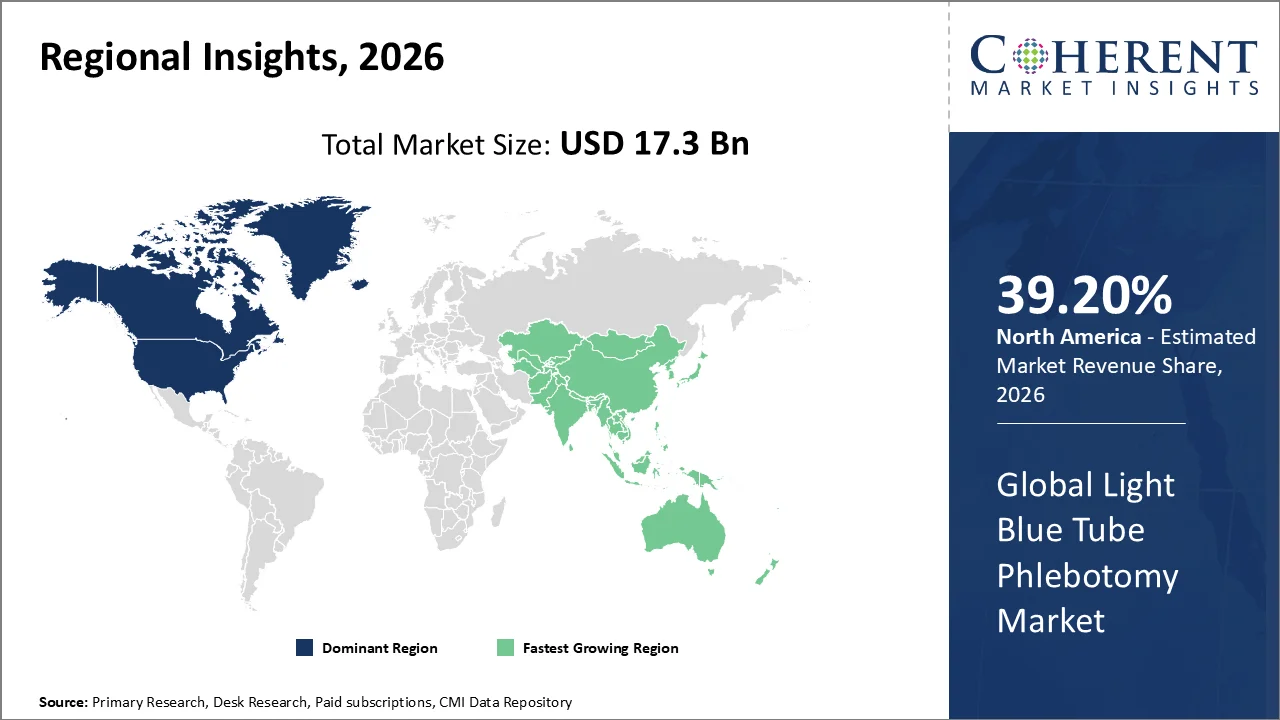
- North America is expected to acquire the dominant share of 39.2% in 2026 owing to its high burden of venous thromboembolism (VTE). Each year, venous thromboembolism (VTE), a condition caused by blood clots, affects up to 900,000 people in the United States.
Current Events and Their Impact
Current Event | Description and its Impact |
FDA Clearance of BD Vacutainer Citrate Blood Collection Tube |
|
FDA Recall of Greiner Bio-One Blood Collection Tubes |
|
Segmental Insights
- Current Industry Events of 2026
- Market Size Estimation
- Regional Breakdown
- Competitive Landscape
- Customer Intelligence
- Segmental Analysis
- Pricing Analysis
- Key Market Drivers, Challenges & Future Trends
- Customized Insights Section
Why is Hospitals Acquiring the Largest Market Share?
Hospitals hold the largest market share of 42.6% in 2026. Hospitals drive the Light Blue Tube Phlebotomy Market by increasing coagulation testing across emergency care, surgery, critical care, preoperative evaluations, and anticoagulation monitoring. Healthcare professionals use light blue sodium-citrate tubes for PT/INR, aPTT, D-dimer, fibrinogen, and coagulation-factor tests. Rising hospital admissions, greater detection of bleeding and clotting disorders, and expanding laboratory services increase tube consumption. U.S. community hospitals record more than 33.5 million inpatient admissions annually, highlighting the substantial volume of hospital-based care utilization. Hospitals also prioritize accurate specimen collection and maintain standardized tube supplies to ensure the correct blood-to-anticoagulant ratio and reliable test results.
Light Blue Tube Phlebotomy Market Trends
- Growing demand for coagulation testing in emergency and hospital settings: In 2022, the U.S. recorded approximately 155.4 million emergency department visits, and CDC/NCHS data specifically tracked prothrombin time (PT/PTT/INR) among blood tests ordered or provided during ED visits. This substantial volume of acute-care testing supports continued utilization of sodium-citrate collection tubes for coagulation testing.
- Hospitalization remains an important setting for blood-clot risk: According to the CDC, approximately one-half of blood clots occur during or soon after a hospital stay or surgery. This reinforces the importance of coagulation-related laboratory testing in hospital settings and, consequently, the role of appropriate specimen-collection products such as light-blue sodium-citrate tubes.
- Persistent clinical burden of bleeding disorders: The CDC estimates that as many as 33,000 males in the United States are living with hemophilia. The ongoing management of bleeding disorders requires laboratory assessment, although the CDC does not quantify light-blue tube consumption specifically.
Regional Insights
North America dominates owing to strong awareness of laboratory supply continuity
North America is expected to acquire the dominant share of 39.20% in 2026. North America’s Light Blue Tube Phlebotomy Market benefits from strong demand for coagulation testing in hospitals, emergency departments, surgical facilities, and diagnostic laboratories. Healthcare providers leverage advanced medical infrastructure and laboratory automation, increasing the regular use of sodium-citrate tubes. The growing incidence of cardiovascular and thrombotic conditions, expanded anticoagulant monitoring, and increased preoperative testing further drive demand. Additionally, healthcare facilities follow strict laboratory quality standards and use standardized light blue tubes to maintain accurate blood-to-citrate ratios and ensure dependable coagulation test results. Light blue-top tubes require strict pre-analytical control to maintain the correct blood-to-sodium citrate ratio, which is critical for reliable coagulation test results.
Asia Pacific Light Blue Tube Phlebotomy Market Trends
The Asia Pacific light blue tube phlebotomy market gains momentum from rising demand for coagulation testing and the growing prevalence of cardiovascular disorders, thrombosis, and blood-related diseases. Cardiovascular diseases (CVDs) affect approximately 626 million people worldwide and remain the leading global cause of death. Governments and healthcare providers in China, India, Japan, and South Korea continue to invest in diagnostic infrastructure and laboratory capacity. Hospitals and laboratories increasingly adopt advanced blood-collection technologies to support surgical procedures, preventive care, and early disease detection. Expanding hospital networks, diagnostic centers, and healthcare access further strengthen market demand across the region.
United States Light Blue Tube Phlebotomy Market Trends
The United States light blue tube phlebotomy market is driven by increasing demand for coagulation testing in hospitals, diagnostic laboratories, surgical centers, and anticoagulation clinics. The growing burden of liver, bleeding, and chronic disorders increases the need for routine blood analysis. Chronic conditions affect approximately 76.4% of U.S. adults and are the leading causes of death and disability in the United States. Rising surgical procedures and preoperative testing further support sodium citrate tube demand. Expanding outpatient diagnostics, laboratory automation, and preventive healthcare also contribute to market growth, while stringent specimen-quality requirements and accurate blood-to-anticoagulant ratios promote standardized tube adoption.
China Light Blue Tube Phlebotomy Market Trends
China’s light blue tube phlebotomy market is expanding as hospitals and laboratories increase coagulation testing for surgeries, cardiovascular care, anticoagulant monitoring, and chronic diseases. Healthcare infrastructure investment is raising demand for blood collection products, while standardized laboratory practices encourage reliable tube quality. Growing laboratory automation also supports adoption by improving testing efficiency and maintaining specimen integrity.
Who are the Major Companies in Light Blue Tube Phlebotomy Industry
Some of the major key players in Light Blue Tube Phlebotomy are Greiner BioOne, Medical Expo, CML Biotech Pvt. Ltd., Ajosha BioTeklik Pvt. Ltd., New MicroMed International Pvt. Ltd., FL Medical, Gosselin, and Advacare Pharma.
Key News
- In March 2025, Vitestro launched Aletta, an autonomous robotic phlebotomy device that automates venous blood draws, helping phlebotomists and nurses spend more time on patient care while easing staffing shortages.
Market Report Scope
Light Blue Tube Phlebotomy Market Report Coverage
| Report Coverage | Details | ||
|---|---|---|---|
| Base Year: | 2025 | Market Size in 2026: | USD 17.3 Bn |
| Historical Data for: | 2020 To 2024 | Forecast Period: | 2026 To 2033 |
| Forecast Period 2026 to 2033 CAGR: | 7.1% | 2033 Value Projection: | USD 22.5 Bn |
| Geographies covered: |
| ||
| Segments covered: |
| ||
| Companies covered: | Greiner BioOne, Medical Expo, CML Biotech Pvt. Ltd., Ajosha BioTeklik Pvt. Ltd., New MicroMed International Pvt. Ltd., FL Medical, Gosselin, and Advacare Pharma. | ||
Analyst Opinion
- Coagulation testing is the core demand driver. Light blue-top tubes, which contain sodium citrate, remain essential for PT/INR and aPTT testing. In my view, demand is fundamentally tied to the clinical necessity of monitoring bleeding and clotting disorders rather than discretionary laboratory spending. The rising use of anticoagulants such as warfarin further reinforces this requirement, as PT/INR monitoring remains critical for dose management and patient safety.
- Specimen accuracy gives light blue tubes an unusually strong position in routine diagnostics. The standard blood-to-citrate ratio is 9:1, making correct tube filling critical for reliable coagulation results. Underfilling can alter the citrate-to-plasma ratio and produce clinically misleading results. This technical requirement favors standardized, quality-controlled tubes and limits substitution by lower-quality collection products, particularly in hospitals with stringent laboratory protocols.
- High-volume clinical applications provide a durable demand base. PT/INR and aPTT are among the most frequently performed coagulation assays, supporting recurring consumption of light blue tubes across emergency departments, surgical units, intensive-care settings, and anticoagulation clinics. Venous thromboembolism causes millions of events globally each year, while atrial fibrillation affects more than 40 million people worldwide. These patient populations create sustained demand for coagulation monitoring and, consequently, citrate-based blood collection tubes.
- Preanalytical quality is becoming a competitive differentiator. Coagulation testing is particularly sensitive to collection and handling errors, with preanalytical factors accounting for a substantial share of laboratory errors. Manufacturers that improve tube vacuum stability, citrate formulation, labeling, and compatibility with automated laboratory systems to gain an advantage. In my assessment, laboratories will increasingly prioritize consistency and specimen integrity over simply selecting the lowest-cost tube, particularly where inaccurate coagulation results can directly affect treatment decisions.
Speak to the analyst
Want personalized insights?
Take the findings above to one of our principal consultants, or have the report rebuilt around the segments, geographies and competitors you actually track.
Market Segmentation
- By End User: (Revenue, USD Bn, 2021-2033)
- Hospitals
- Diagnostic Centers
- Medical Clinics
- Others
- By Region: (Revenue, USD Bn, 2021-2033)
- North America
- U.S.
- Canada
- Latin America
- Brazil
- Mexico
- Argentina
- Rest of Latin America
- Europe
- Germany
- U.K.
- France
- Italy
- Spain
- Russia
- Rest of Europe
- Asia Pacific
- China
- India
- Japan
- Australia
- South Korea
- ASEAN
- Rest of Asia Pacific
- Middle East
- GCC
- Israel
- Rest of Middle East
- Africa
- South Africa
- Central Africa
- North Africa
- North America
- Key Players
- Greiner BioOne
- Medical Expo
- CML Biotech Pvt. Ltd.
- Ajosha BioTeklik Pvt. Ltd.
- New MicroMed International Pvt. Ltd.
- FL Medical
- Gosselin
- Advacare Pharma
Sources
Primary Research interviews
- Clinical laboratory directors
- Hematologists and coagulation specialists
- Hospital laboratory managers
- Phlebotomy supervisors and technicians
- Procurement managers for hospitals and diagnostic laboratories
- Blood collection tube distributors and laboratory suppliers
- Medical device quality and regulatory professionals
Databases
- U.S. FDA Medical Device Databases
- CDC Laboratory Data and Publications
- WHO Global Health Observatory
- National Center for Biotechnology Information (NCBI/PubMed)
- National health and hospital statistics databases
- Government healthcare and laboratory databases
Magazines
- MLO – Medical Laboratory Observer
- ADVANCE for Laboratory
- Lab Manager
- CAP Today
- Medical Design & Outsourcing
Journals
- International Journal of Laboratory Hematology
- Clinical Chemistry and Laboratory Medicine
- Journal of Thrombosis and Haemostasis
- Blood Coagulation & Fibrinolysis
- American Journal of Clinical Pathology
- Clinical Chemistry
- Journal of Clinical Laboratory Analysis
Newspapers
- The New York Times
- The Wall Street Journal
- Financial Times
- The Guardian
- The Economic Times
- China Daily
Associations
- Clinical and Laboratory Standards Institute (CLSI)
- International Council for Standardization in Haematology (ICSH)
- College of American Pathologists (CAP)
- International Society on Thrombosis and Haemostasis (ISTH)
- World Health Organization (WHO)
Public Domain sources
- U.S. Food and Drug Administration (FDA) device clearances, safety communications, and laboratory guidance
- Centers for Disease Control and Prevention (CDC) laboratory alerts and publications
- WHO guidelines on blood collection and phlebotomy
- National health ministry and public-health laboratory guidelines
- Government hospital and healthcare utilization statistics
- Publicly available clinical laboratory standards and regulatory documents
Proprietary Elements
- CMI Data Analytics Tool, and Proprietary CMI Existing Repository of information for last 10 years
Get access to 250+ pages report
Every segment, forecast, competitor profile and data table behind the analysis above — available for instant download.
- ESOMAR Member
- ISO 9001:2015 Certified
- D-U-N-S Registered
- GDPR & CCPA Compliant
Missing comfort of reading report in your local language? Find your preferred language:
Transform your Strategy with Exclusive Trending Reports
Frequently Asked Questions
The Light Blue Tube Phlebotomy Market is anticipated to grow at a CAGR of 7.1% with USD 17.3 Billion in 2026 and is expected to reach USD 22.5 Billion in 2033.
Demand is primarily linked to coagulation testing, including PT/INR, aPTT, fibrinogen, D-dimer, and coagulation factor assays.
Light blue tubes are widely used for PT/INR, aPTT, fibrinogen, D-dimer, and individual coagulation factor testing.
Preanalytical accuracy strongly affects demand because coagulation tests are sensitive to collection conditions.
Automation encourages laboratories to adopt standardized tubes that provide consistent specimen quality and compatibility with automated processing.