

Anti-Ageing Products Services and Devices Market Size and Trends Forecast – 2026 - 2033
The anti-ageing products services and devices market is estimated to be valued at USD 319.60 Bn in 2026 and is expected to reach USD 544.20 Bn by 2033, exhibiting a compound annual growth rate (CAGR) of 7.9% from 2026 to 2033.
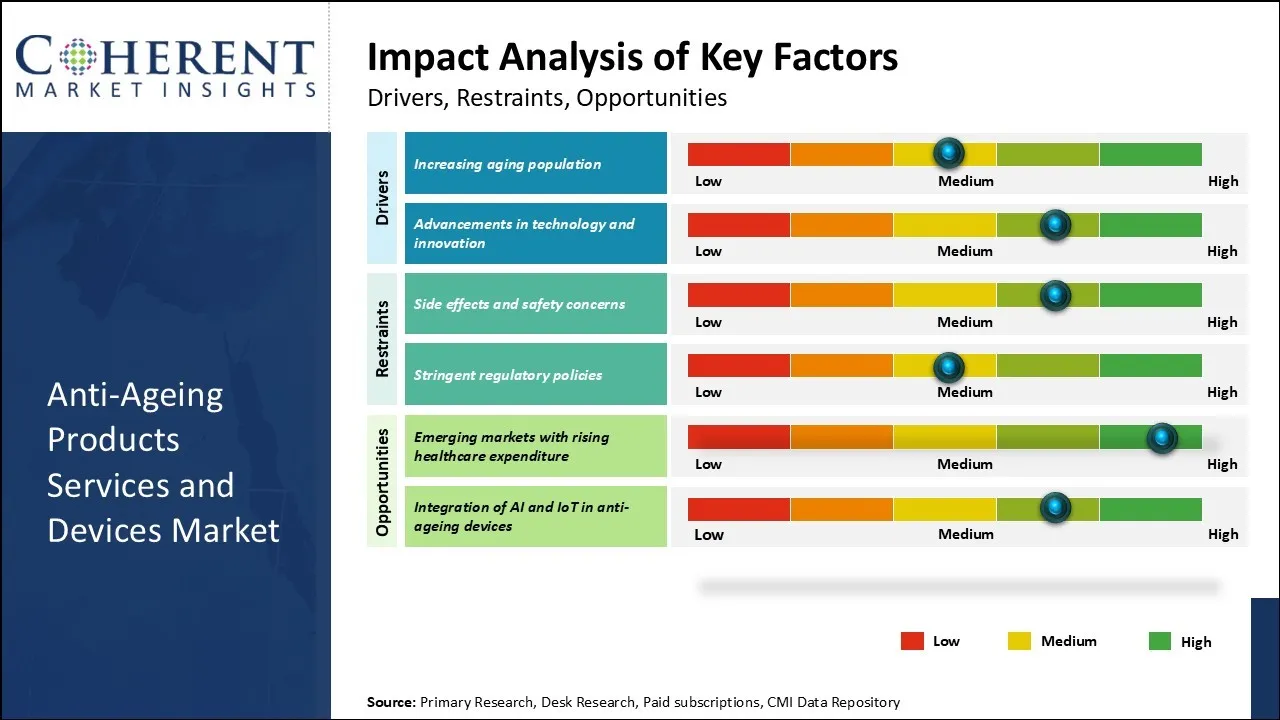
Key Takeaways of the Anti-Ageing Products Services and Devices Market
- By demographics, the generation X segment is expected to contribute the highest share of 71% to the anti-ageing products services and devices market in 2026.
- North America is expected to be the dominant region in the anti-ageing products services and devices market and hold 34% of the market share in 2026.
Market Overview
The anti-ageing products services and devices market is expected to experience significant growth in the coming years. Technological developments, and new market entrants in the anti-ageing products, services, and devices industry are utilizing technological advancements to create unique products and gain a competitive edge. These companies invest in research and development (R&D) to keep up with changing customer preferences and demands.
However, the growing demand for minimally invasive surgeries restricts the adoption of corrective cosmetic surgeries, which hampers the market growth.
Market Concentration and Competitive Landscape
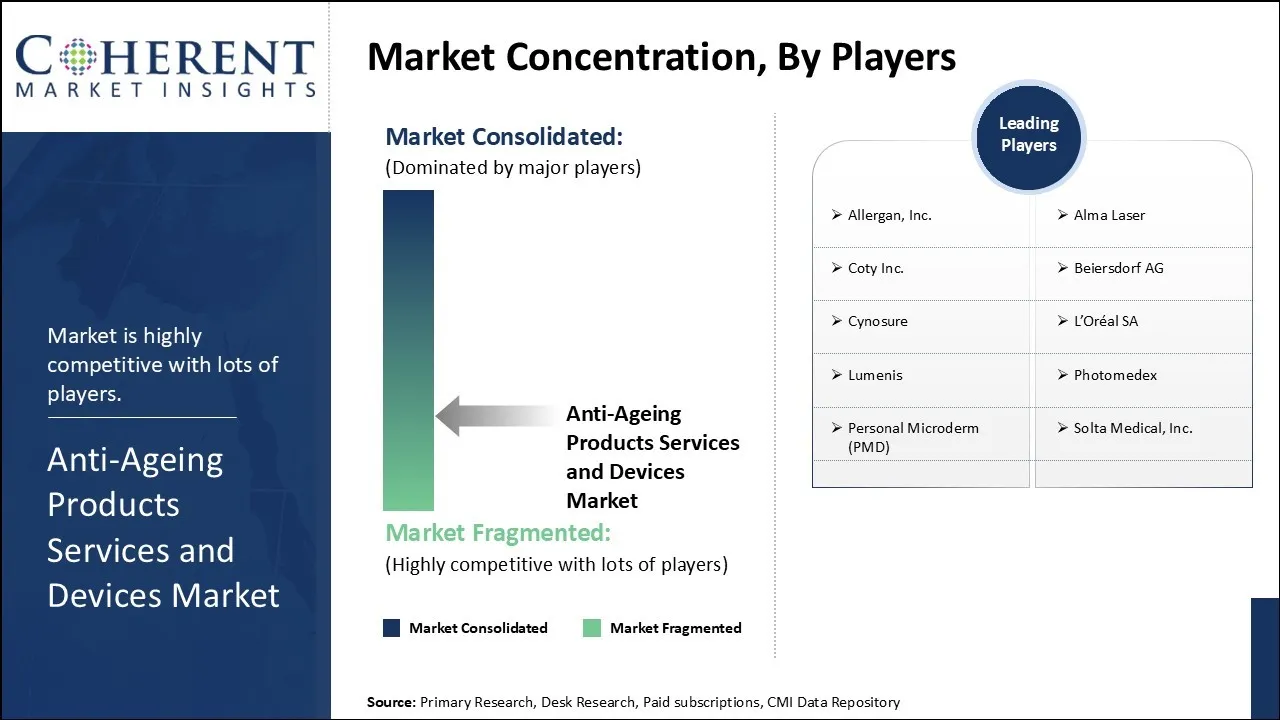
Current Events and their Impact on the Anti-Ageing Products Services and Devices Market
Current Events | Description and its impact |
Geopolitical and Regulatory Developments |
|
Socio-Cultural and Consumer Behavior Shifts |
|
- Current Industry Events of 2026
- Market Size Estimation
- Regional Breakdown
- Competitive Landscape
- Customer Intelligence
- Segmental Analysis
- Pricing Analysis
- Key Market Drivers, Challenges & Future Trends
- Customized Insights Section
Market Trends
Increasing Aging Population Globally
The global increase in the aging population is a significant driving force behind the expanding demand for anti-aging products, services, and devices. This has fueled consumer interest in a myriad of anti-aging solutions, ranging from topical skincare formulations with advanced peptides and antioxidants to minimally invasive cosmetic procedures such as laser therapies and injectables, as well as high-tech devices like LED light therapy and microcurrent tools.
For instance, according to the World Health Organization (WHO), it is expected that between 2015 and 2050, the proportion of the world's population over 60 years will nearly double from 12% to 22%. This demographic shift presents a heightened focus on health, wellness, and maintaining youthful appearances, as older adults are increasingly motivated to preserve vitality and combat age-related changes.
Segmental Insights
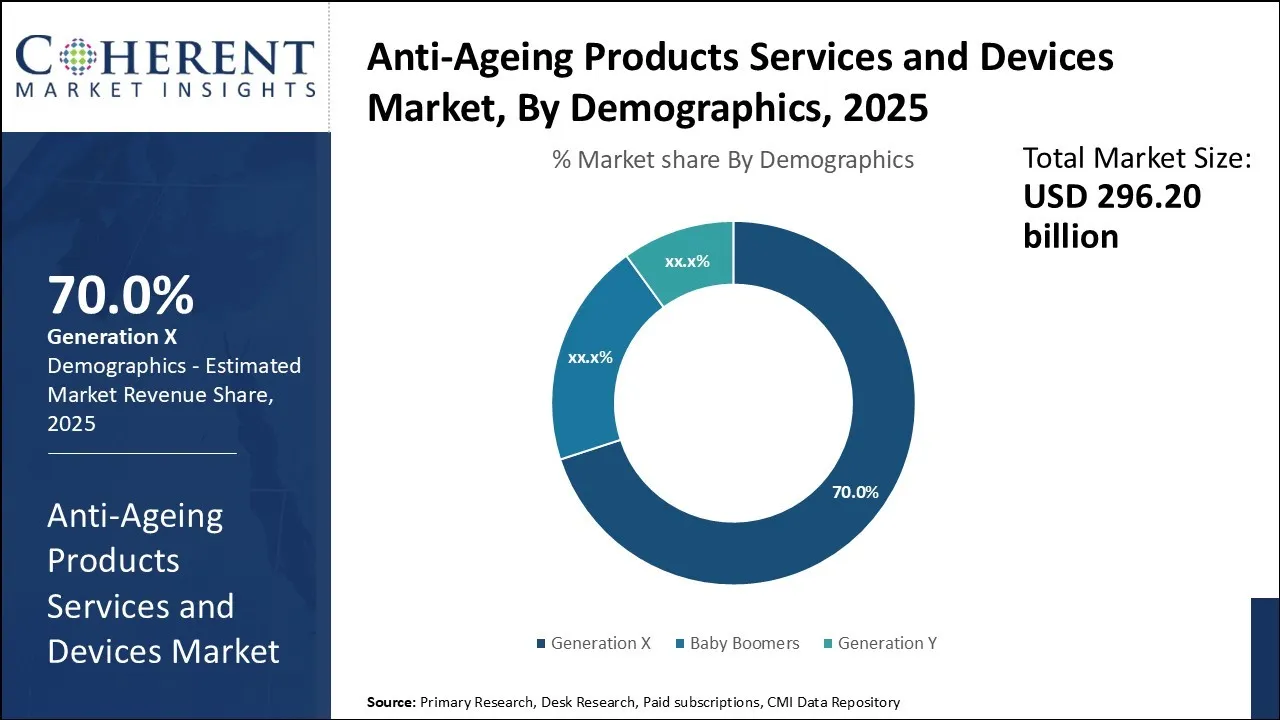
Anti-Ageing Products Services and Devices Market Insights, by Demographics: The Generation X Dominates Due to a Profound Inclination Towards Preventive and Corrective Anti-Ageing Measures
In terms of demographics, the generation X segment is estimated to contribute the highest market share of 71% in 2026, owing to their increased purchasing power, and heightened health consciousness.
Generation X, typically defined as individuals born between the mid-1960s and early 1980s, is often characterized by their pragmatic approach to health and wellness. Unlike Baby Boomers who primarily witnessed the birth of modern dermatology and cosmetic interventions as more reactive measures, Generation X has grown amid rapid technological advancements, becoming savvier consumers of health and wellness information. Government health initiatives, such as those advocated by the World Health Organization emphasizing the importance of healthy aging and lifestyle modifications, have resonated deeply with this group.
Emerging Innovations in the Anti-Ageing Products Services and Devices Market
- The Development and Adoption of Personalized Skincare Products
- Advances in genomics, microbiome analysis, and artificial intelligence (AI) enable companies to offer customized formulations tailored to an individual’s unique skin condition, lifestyle, and genetic predisposition. Consumers can now access online platforms or in-store diagnostics that analyze their skin type, hydration levels, pigmentation, and aging markers to recommend specific anti-ageing regimens. This precision approach enhances product efficacy, fostering higher customer satisfaction and loyalty.
- Non-Invasive and Minimally Invasive Instruments that Deliver Anti-Ageing Effects
- Microneedling devices combined with radiofrequency (RF) energy or laser technologies are becoming widely used in clinical and home settings to promote collagen remodeling and improve skin texture without significant downtime. RF microneedling enhances penetration depth and facilitates controlled skin injury, prompting natural regeneration.
Impacts of Artificial Intelligence (AI) on the Anti-Ageing Products Services and Devices Market
By leveraging AI’s capabilities, companies in this industry are revolutionizing how products are designed, personalized, and delivered, ultimately enhancing consumer outcomes and experiences.
- L’Oréal, a global leader in beauty and personal care, has embraced AI extensively. Its AI-powered platform, Modiface, uses augmented reality (AR) and machine learning to analyze skin conditions, simulate potential results of anti-ageing treatments, and recommend personalized products. This integration not only enhances product design and development but also fuels strategic initiatives aimed at delivering bespoke skincare solutions that meet individual needs more effectively.
- Neutrogena’s Skin360 app, which uses AI to assess users’ skin health through smartphone selfies. The app evaluates factors such as moisture, pore size, and wrinkles, enabling precise tracking of skin ageing signs. By combining AI insights with expert recommendations, Neutrogena has enhanced the functionality and value of its anti-ageing products, leading to improved user adherence and skin health outcomes. This application illustrates how AI can extend beyond traditional products to provide ongoing, dynamic skincare management.
Regional Insights
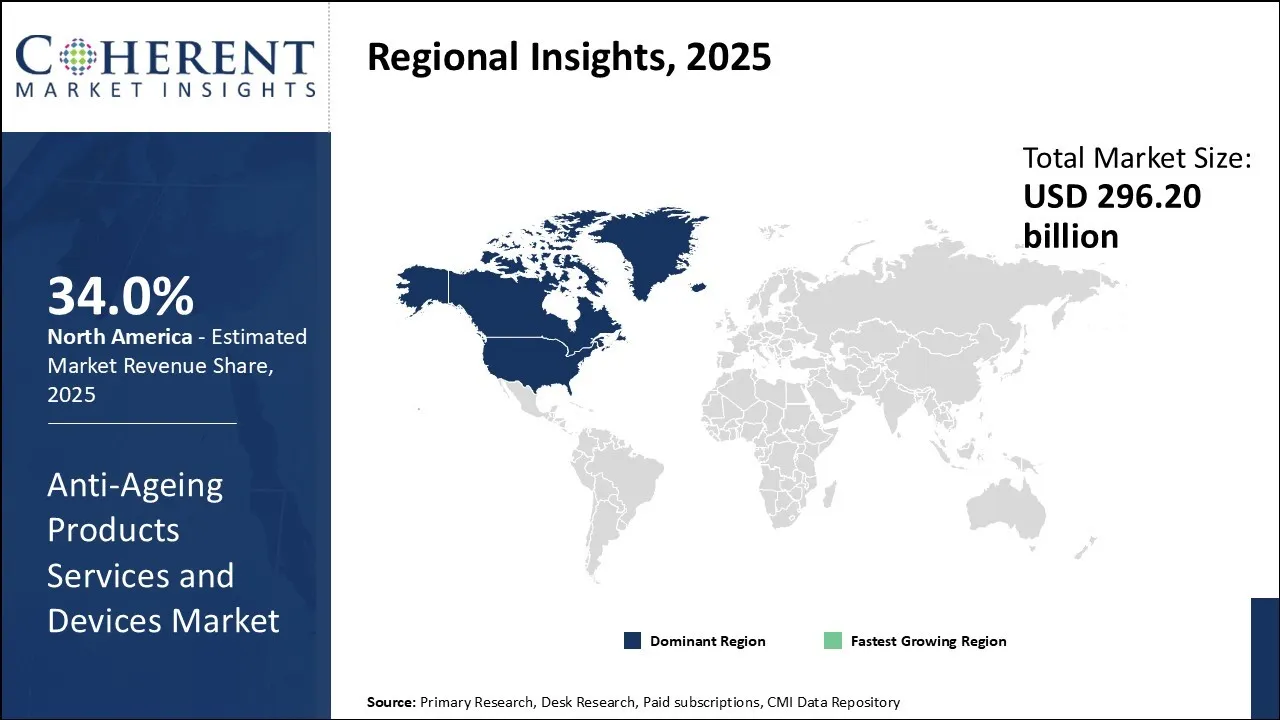
North America Anti-Ageing Products Services and Devices Market Analysis and Trends
North America is expected to dominate the anti-ageing products services and devices market in 2026, accounting for a market share of 34% in 2026. American consumers have demonstrated a robust preference for topical products such as serums, creams, and lotions infused with active ingredients like retinol, peptides, and hyaluronic acid—components scientifically proven to diminish visible signs of ageing. Additionally, regulatory frameworks through agencies like the U.S. Food and Drug Administration (FDA) ensure product safety and efficacy, boosting consumer confidence and fostering market growth.
For instance, according to the American Society of Plastic Surgeons, in 2023, facial procedures were in high demand. Blepharoplasty (eyelid surgery) saw a 5% increase, possibly reflecting the trend towards less-invasive options, such as procedures performed under local anesthesia.
Anti-Ageing Products Services and Devices Market Outlook for Key Countries
U.S. Anti-Ageing Products Services and Devices Market Analysis and Trends
The U.S. dominates the anti-ageing products services and devices market due to its high healthcare spending, advanced aesthetic technologies, and strong consumer demand for cosmetic procedures and premium skincare products. The aging Baby Boomer population, combined with a growing acceptance of non-invasive treatments like Botox, dermal fillers, and laser therapy, continues to drive market expansion. Moreover, celebrity influence and social media trends fuel demand for age-defying solutions across all age groups.
Japan Anti-Ageing Products Services and Devices Market Analysis and Trends
Japan’s anti-ageing products services and devices market is propelled by its rapidly aging population and strong cultural emphasis on skincare and longevity. Japanese consumers prioritize prevention and early intervention, driving demand for advanced skincare formulations, nutraceuticals, and wellness services. Technological innovation and the integration of traditional and modern beauty solutions also position Japan as a leader in both product development and consumer adoption.
South Korea Anti-Ageing Products Services and Devices Market Analysis and Trends
South Korea stands out as a global trendsetter in anti-ageing skincare and cosmetic innovation. Known for its advanced research & development (R&D) in dermatology and aesthetics, South Korea has popularized multi-step skincare routines, anti-wrinkle creams, and cutting-edge beauty devices. The country’s vibrant beauty culture, combined with a youth-centric society and aggressive marketing, makes it a key driver in the global market for anti-ageing products and technologies.
Germany Anti-Ageing Products Services and Devices Market Analysis and Trends
Germany leads the European anti-ageing products services and devices market with strong demand for medically backed aesthetic treatments and high-quality skincare products. The country’s robust healthcare infrastructure supports growth in minimally invasive cosmetic procedures, while an aging yet affluent population seeks advanced anti-wrinkle solutions and wellness therapies. German consumers also show increasing interest in anti-ageing supplements and science-based cosmeceuticals.
Pricing Analysis of the Anti-Ageing Products Services and Devices Market
Service Type | Price Range (USD) |
Botox (per unit) |
USD 12 – USD 20 per unit |
Dermal Fillers |
USD 600 – USD 1,200 per syringe |
Laser Skin Resurfacing | USD 1,000 – USD 3,000 per session |
Chemical Peels | USD 150 – USD 500 per session |
Microneedling | USD 200 – USD 700 per session |
Facials (anti-ageing focus) | USD 100 – USD 400 per session |
Macro & Micro- Economic Factors Impacting the Growth of Anti-Ageing Products Services and Devices Market
Macro-Economic Factors | Micro-Economic Factors |
Aging Global Demographics & Increased Life Expectancy: The rapidly aging population globally represents the most significant macroeconomic driver. By 2050, individuals aged 60+ are projected to exceed 21% of the global population (vs. 13% in 2020), creating sustained demand for anti-aging products For instance, in North America, the largest regional market, sedentary lifestyles and rising obesity further amplify demand for preventative skincare and wellness solutions | Competitive Strategies & Market Saturation: In mature markets like North America, companies are diversifying into niche segments (e.g., The Ordinary’s affordable retinoid creams vs. high-end SkinCeuticals C E Ferulic), highlighting price-point diversification. Conversely, emerging regions prioritize education-driven marketing to build brand trust.
|
Rising Disposable Incomes in Developed Economies: Elevated consumer spending on premium skincare and aesthetic treatments is fuelled by higher disposable incomes. | Consumer Preferences for Natural & Organic Products: Shifting preferences toward clean beauty have spurred demand for natural collagen boosters like marine algae extracts and vitamin C serums free from synthetic additives. Brands such as clearColor Vitamin C Serum exemplify this trend, gaining traction through eco-conscious positioning. |
Market Report Scope
Anti-Ageing Products Services and Devices Market Report Coverage
| Report Coverage | Details | ||
|---|---|---|---|
| Base Year: | 2025 | Market Size in 2026: | USD 319.60 Bn |
| Historical Data for: | 2020 To 2024 | Forecast Period: | 2026 To 2033 |
| Forecast Period 2026 to 2033 CAGR: | 7.9% | 2033 Value Projection: | USD 544.20 Bn |
| Geographies covered: |
| ||
| Segments covered: |
| ||
| Companies covered: | Allergan, Inc., Alma Laser, Coty Inc., Beiersdorf AG, Cynosure, L’Oréal SA, Lumenis, Photomedex, Personal Microderm (PMD), and Solta Medical, Inc. | ||
| Growth Drivers: |
| ||
| Restraints & Challenges: |
| ||
Anti-Ageing Products Services and Devices Industry News
- In July 2025, Casmara, a Spain-based dermo-cosmetic company, unveiled its latest range of professional skin treatments and skin care range at Skinomics 2025.
- In May 2025, Fraunhofer-Gesellschaft introduced anti-aging face mask stimulates natural collagen production. The two-component system consists of a mask or pads made of silica gel nonwoven fabric that, when exposed to an activation solution designed specifically for this purpose, dissolve on the surface of the skin, releasing ortho-silicic acid.
- In March 2025, Allergan Aesthetics, an AbbVie company, demonstrated to elevate the patient experience and achieve optimal treatment outcomes with new AA Signature program at the Anti-Aging and Aesthetics Medicine World Congress (AMWC) in Monaco. Allergan Aesthetics is a major player in the aesthetic and anti-ageing space, known for products like Botox, dermal fillers, and medical aesthetic devices.
An alyst View
- The anti-ageing products services and devices market is witnessing significant momentum driven by increasing consumer focus on wellness, longevity, and a youthful appearance. Growing awareness about skincare and preventative health measures has propelled demand across diverse demographics, especially among the aging population and younger consumers seeking early intervention.
- Key drivers include rising disposable incomes, advancements in technology such as non-invasive cosmetic procedures, and an expanding product portfolio featuring organic and clinically proven ingredients. Additionally, the surge in e-commerce platforms has made anti-ageing solutions more accessible, further fueling market penetration.
- However, regulatory challenges and concerns over product safety and efficacy remain notable restraints, potentially limiting widespread adoption in certain regions. Moreover, the high cost associated with advanced treatments and devices may deter price-sensitive consumers, especially in developing markets.
- Opportunities lie in the integration of AI and personalized solutions, allowing companies to offer tailored skincare regimens and treatments that maximize individual benefits. Emerging markets in the Asia Pacific region are rapidly becoming the fastest-growing segment, driven by increasing urbanization, expanding middle-class populations, and heightened beauty consciousness.
- North America continues to dominate the market due to sophisticated healthcare infrastructure, strong research & development (R&D) capabilities, and high consumer expenditure on anti-ageing solutions.
Speak to the analyst
Want personalized insights?
Take the findings above to one of our principal consultants, or have the report rebuilt around the segments, geographies and competitors you actually track.
Market Segmentation
- By Product Type Insights (Revenue, USD Bn, 2021 - 2033)
- UV Absorbers
- Anti-wrinkle Products
- Dermal Fillers
- Botox
- Anti-Stretch Mark Products
- Hair Color
- By Services Type Insights (Revenue, USD Bn, 2021 - 2033)
- Anti-Pigmentation Therapy
- Anti-adult Acne Therapy
- Breast Augmentation
- Liposuction
- Abdominoplasty
- Chemical Peel
- Eye Lid Surgery
- Hair Restoration Treatment
- Sclerotherapy
- By Devices Type Insights (Revenue, USD Bn, 2021 - 2033)
- Anti-Cellulite Treatment Devices
- Microdermabrasion Devices
- Laser Aesthetic Devices
- Radio Frequency Devices
- By Demographics Insights (Revenue, USD Bn, 2021 - 2033)
- Baby Boomers
- Generation X
- Generation Y
- Regional Insights (Revenue, USD Bn, 2021 - 2033)
- North America
- U.S.
- Canada
- Latin America
- Brazil
- Argentina
- Mexico
- Rest of Latin America
- Europe
- Germany
- U.K.
- Spain
- France
- Italy
- Russia
- Rest of Europe
- Asia Pacific
- China
- India
- Japan
- Australia
- South Korea
- ASEAN
- Rest of Asia Pacific
- Middle East
- GCC Countries
- Israel
- Rest of Middle East
- Africa
- South Africa
- North Africa
- Central Africa
- Key Players Insights
- Allergan, Inc.
- Alma Laser
- Coty Inc.
- Beiersdorf AG
- Cynosure
- L’Oréal SA
- Lumenis
- Photomedex
- Personal Microderm (PMD)
- Solta Medical, Inc.
Sources
Primary Research Interviews
- Dermatologists
- Cosmetic Surgeons
- Anti-Ageing Product Manufacturers
- Online Retailers
- Others
Magazines
- Anti-Aging Magazine
- Cosmopolitan
- Vogue
- Harper’s Bazaar
- Others
Journals
- Journal of Cosmetic Dermatology
- Journal of Anti-Aging Medicine
- International Journal of Cosmetic Science
- Others
Newspapers
- The New York Times (Health Section)
- The Guardian (Lifestyle)
- The Financial Times (Healthcare)
- The Times of India (Health & Wellness)
- Others
Associations
- American Academy of Dermatology (AAD)
- International Association for Physicians in Aesthetic Medicine (IAPAM)
- Personal Care Products Council (PCPC)
- Cosmetic Executive Women (CEW)
- Others
Public Domain Sources
- World Health Organization (WHO)
- U.S. Food and Drug Administration (FDA)
- Centers for Disease Control and Prevention (CDC)
- National Health Service (NHS UK)
- Others
Proprietary Elements
- CMI Data Analytics Tool – Anti-Ageing Products Services and Devices Market
- CMI Existing Repository of Information for the Last 8 Years
*Definition: Anti-ageing products, services, and devices are products used to reduce masking and prevent the sign of skin ageing. These products are used in acne treatment, skin resurfacing, and anti-pigmentation. These products help to treat the ageing of the skin and also other skin-related problems such as acne and wrinkles.
Get access to 250+ pages report
Every segment, forecast, competitor profile and data table behind the analysis above — available for instant download.
- ESOMAR Member
- ISO 9001:2015 Certified
- D-U-N-S Registered
- GDPR & CCPA Compliant
Missing comfort of reading report in your local language? Find your preferred language:
Transform your Strategy with Exclusive Trending Reports
Frequently Asked Questions
The anti-ageing products services and devices market is estimated to be valued at USD 319.60 Billion in 2026, and is expected to reach USD 544.20 Billion by 2033.
The CAGR of the anti-ageing products services and devices market is projected to be 7.9% from 2026 to 2033.
Increasing Ageing population and technological advancement in anti-ageing products are the factors fueling the growth of the anti-ageing products services and devices market.
Growing demand for invasive cosmetic procedures is expected to hinder the growth of the anti-ageing products services and devices market.
In terms of demographics, generation X segment is estimated to dominate the market in 2026.
Allergan, Inc., Alma Laser, Coty Inc., Beiersdorf AG, Cynosure, L’Oréal SA, Lumenis, Photomedex, Personal Microderm (PMD), and Solta Medical, Inc. are operating in the anti-ageing products services and devices market.
Collagen plays a key role in anti-ageing products and devices by improving skin elasticity, reducing wrinkles, and promoting a youthful appearance.