

Anti Beta Alzheimer Therapies Market Size and Forecast – 2026 to 2033
The Anti Beta Alzheimer Therapies Market is anticipated to grow at a CAGR of 19.7% with USD 5.3 Bn share in 2026 and is expected to reach USD 18.6 Bn in 2033. The rising prevalence of Alzheimer's disease, and increasing pharmaceutical investments in disease-modifying therapies and precision medicine are driving the Anti-Beta Alzheimer Therapies Market. An estimated 7.4 million Americans are living with Alzheimer’s dementia.
Key Takeaways
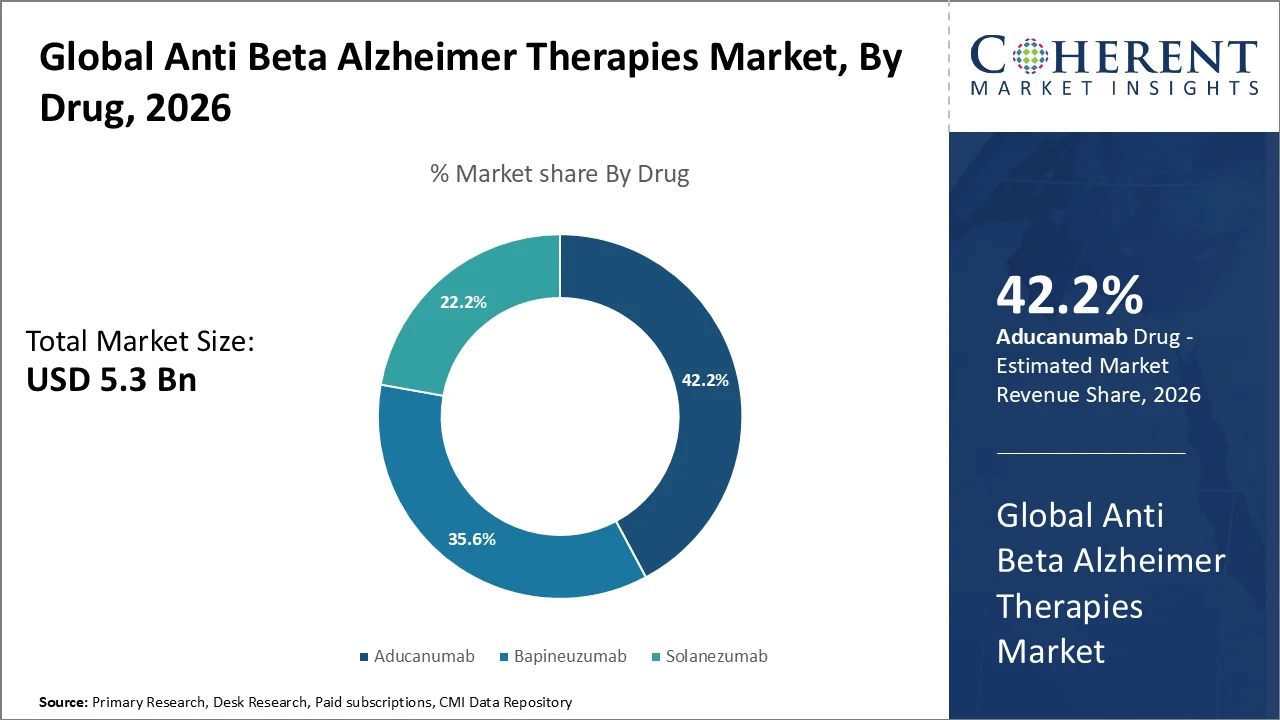
- Aducanumab hold the largest market share of 42.2% in 2026 owing to the rising prevalence of Alzheimer’s disease.
- Hospital Pharmacies expected to hold largest market share of 38.9% in 2026 owing to its preference for hospital-based intravenous infusion.
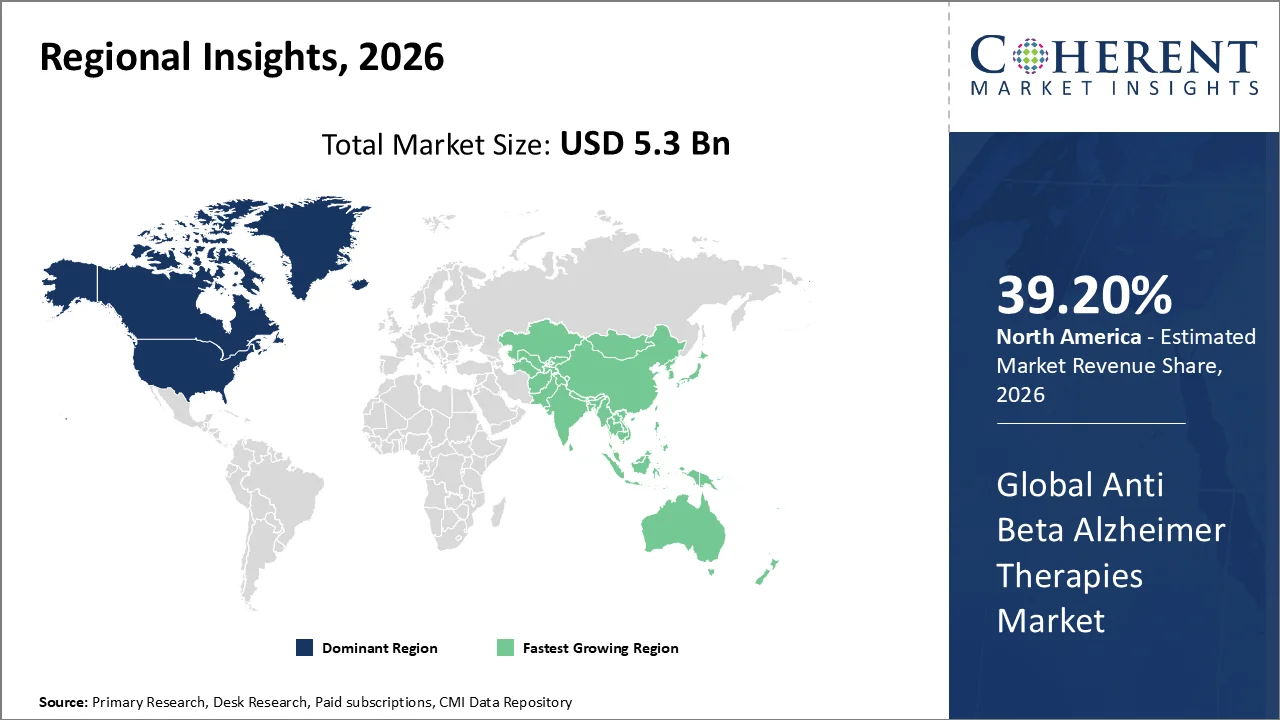
- By Region, North America is expected to acquire the dominant share of 39.2% in 2026 owing to the early adoption of innovative therapies. In July 2026, the FDA approved a subcutaneous (under-the-skin) loading dose of lecanemab for the treatment of early-stage Alzheimer’s disease.
Current Events and Their Impact on the Anti Beta Alzheimer Therapies Market
Current Event | Description and its Impact |
FDA Full Approval of Lecanemab (Leqembi) for Early Alzheimer’s Disease |
|
CMS National Coverage Decision for Anti-Amyloid Monoclonal Antibodies |
|
Segmental Insights
- Current Industry Events of 2026
- Market Size Estimation
- Regional Breakdown
- Competitive Landscape
- Customer Intelligence
- Segmental Analysis
- Pricing Analysis
- Key Market Drivers, Challenges & Future Trends
- Customized Insights Section
Why is Aducanumab Acquiring the Largest Market Share?
Aducanumab hold the largest market share of 42.2% in 2026. Aducanumab has driven the anti-beta amyloid Alzheimer's therapies market by introducing one of the first disease-modifying treatments that directly targets amyloid-beta plaques. Its approval encouraged researchers to develop similar monoclonal antibodies, prompted pharmaceutical companies to increase investments in Alzheimer's drug development, and reinforced the use of biomarker-guided treatment strategies. Advances in amyloid imaging, blood-based biomarkers, and early diagnostic techniques, along with expanding neurology care infrastructure, continue to support this therapeutic approach and stimulate innovation across the next generation of Alzheimer's therapies. For instance, Biogen received GMP certification for its CHF 1 billion monoclonal antibody manufacturing facility in Solothurn, Switzerland, ahead of a regulatory decision on aducanumab for Alzheimer’s disease. The facility, commissioned in 2015, provides 144,000 L of production capacity through eight 18,000 L bioreactors with an annual output of 10 metric tons.
Hospital Pharmacies expected to hold largest market share
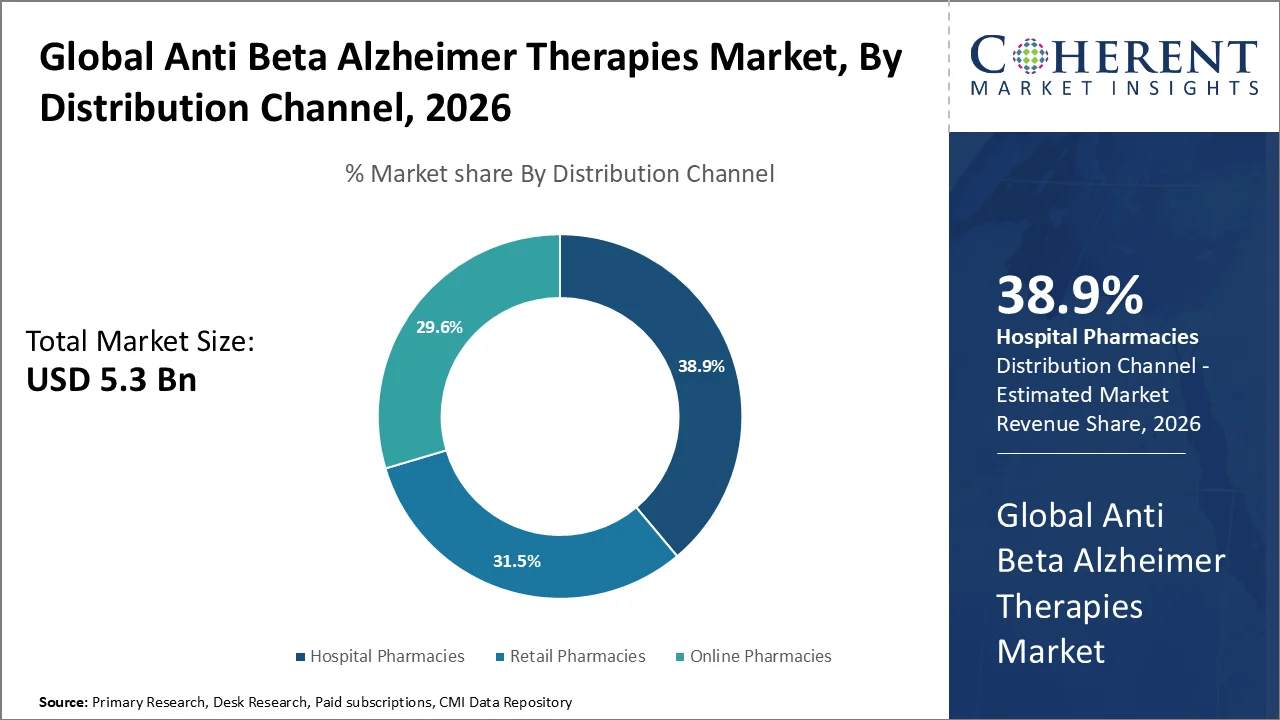
Hospital Pharmacies expected to hold largest market share of 38.9% in 2026 owing to its increasing adoption of high-cost biologic therapies. Hospital pharmacies play a vital role in advancing the anti-beta amyloid Alzheimer's therapies market by managing the storage, preparation, and dispensing of specialized biologic medications. They work closely with infusion centers, neurology teams, and diagnostic imaging departments to provide coordinated care and monitor patients throughout treatment. Healthcare organizations are expanding Alzheimer's specialty services, implementing biomarker-based diagnostic approaches, and increasing the use of disease-modifying therapies, which further elevates the role of hospital pharmacies. Their expertise in handling complex biologics and supporting treatment protocols helps improve patient access and therapy delivery.
Anti Beta Alzheimer Therapies Market Trends
- Growing demand for disease-modifying Alzheimer’s therapies accelerates the adoption of anti-beta amyloid treatments, offering the potential to slow disease progression rather than only manage symptoms. The FDA has approved multiple anti-amyloid monoclonal antibody therapies, including Eisai/Biogen’s lecanemab (Leqembi) and Eli Lilly and Company’s donanemab (Kisunla), for patients with early Alzheimer’s disease, reflecting a shift toward disease-modifying treatment approaches.
- Increasing focus on biomarker-based diagnosis, including amyloid PET imaging, cerebrospinal fluid testing, and emerging blood-based biomarkers, improves early patient identification and supports timely treatment initiation. Medicare coverage frameworks recognize amyloid confirmation as an important component of treatment eligibility; current Medicare guidance requires confirmation of beta-amyloid pathology for coverage of FDA-approved anti-amyloid monoclonal antibodies in eligible early Alzheimer’s patients.
- Expansion of monoclonal antibody therapies targeting amyloid-beta plaques strengthens the market, with newer therapies driving innovation in efficacy, safety monitoring, and patient treatment pathways. Donanemab received FDA approval in 2024 for adults with early symptomatic Alzheimer’s disease (mild cognitive impairment or mild dementia stage), expanding the approved anti-amyloid treatment landscape.
Regional Insights
North America dominates owing to expanding reimbursement and patient access programs
North America is expected to acquire the dominant share of 39.20% in 2026. North America advances the anti-beta amyloid Alzheimer's therapies market by leveraging its advanced healthcare infrastructure, robust research capabilities, and rapid adoption of innovative neurological treatments. Leading pharmaceutical companies, specialized memory clinics, and advanced diagnostic centers in the region support therapy development and improve patient care. Rising Alzheimer's disease prevalence, broader implementation of biomarker-based diagnostic methods, supportive regulatory frameworks, and increased investment in clinical research actively promote the adoption and availability of anti-beta amyloid therapies throughout the region. For instance, Eisai Co., Ltd. and Biogen Inc. announced that the U.S. FDA approved a supplemental Biologics License Application (sBLA) for a once-weekly subcutaneous formulation of lecanemab-irmb (LEQEMBI IQLIK) as an initiation treatment for patients with early Alzheimer’s disease.
Asia Pacific Anti Beta Alzheimer Therapies Market Trends
The rising prevalence of Alzheimer’s disease, a growing aging population, increased awareness of early diagnosis, and advancements in neurological research drive the Asia Pacific anti-beta Alzheimer therapies market. India’s senior citizen population is projected to reach approximately 230 million by 2036, accounting for nearly 15% of the country’s total population. Healthcare providers and governments are expanding infrastructure, improving access to innovative treatments, and implementing supportive initiatives that promote market development. Pharmaceutical companies are also investing in disease-modifying therapies, while healthcare systems adopt advanced diagnostic technologies to enhance the region’s capacity to develop and deliver beta-amyloid-targeting therapeutic solutions.
United States Anti Beta Alzheimer Therapies Market Trends
The United States anti-beta Alzheimer therapies market gains momentum as healthcare providers and patients increasingly recognize the importance of early diagnosis and seek disease-modifying treatment options. Researchers, biotechnology companies, and institutions drive innovation through increased neurological research funding, advanced biomarker development, and expanded clinical trials. Strong healthcare infrastructure and rising acceptance of novel therapies further accelerate the development and adoption of beta-amyloid-targeting treatments, helping address the evolving needs of individuals affected by Alzheimer’s disease. In July 2024, Alzheimer’s disease is a progressive neurodegenerative disorder and the most common form of dementia, causing a gradual decline in cognitive and functional abilities that eventually affects daily independence.
China Anti Beta Alzheimer Therapies Market Trends
China’s Anti-Beta Alzheimer Therapies Market is gaining momentum as healthcare providers, researchers, and pharmaceutical companies increase awareness of neurodegenerative disorders and respond to the needs of a growing elderly population. China’s expanding biotechnology industry, advanced diagnostic capabilities, and focus on novel drug development are accelerating the creation of beta-amyloid targeting therapies. Government initiatives supporting medical innovation, partnerships between research organizations and industry players, and improved availability of specialized treatments are actively driving market expansion and enhancing Alzheimer’s disease care solutions. China has approved lecanemab and donanemab for eligible patients with early symptomatic Alzheimer’s disease.
Who are the Major Companies in Anti Beta Alzheimer Therapies Industry
Some of the major key players in Anti Beta Alzheimer Therapies are Eisai Co., Ltd., Novartis AG, AbbVie Inc. (Allergan Plc.), Adamas Pharmaceuticals, Inc., H. Lundbeck A/S, Biogen, AC Immune, F. Hoffmann La Roche Ltd., Daiichi Sankyo Company, Limited, Johnson & Johnson Services, Inc. and TauRx Pharmaceuticals Ltd.
Key News
- In October 2024, Revvity launched the EURORealTime APOE assay in European countries following CE mark acceptance, enabling accurate APOE genotyping to evaluate patient risk before initiating anti-amyloid therapy for Alzheimer’s disease.
Market Report Scope
Anti Beta Alzheimer Therapies Market Report Coverage
| Report Coverage | Details | ||
|---|---|---|---|
| Base Year: | 2025 | Market Size in 2026: | USD 5.3 Bn |
| Historical Data for: | 2020 To 2024 | Forecast Period: | 2026 To 2033 |
| Forecast Period 2026 to 2033 CAGR: | 19.7% | 2033 Value Projection: | USD 18.6 Bn |
| Geographies covered: |
| ||
| Segments covered: |
| ||
| Companies covered: | Eisai Co., Ltd., Novartis AG, AbbVie Inc. (Allergan Plc.), Adamas Pharmaceuticals, Inc., H. Lundbeck A/S, Biogen, AC Immune, F. Hoffmann La Roche Ltd., Daiichi Sankyo Company, Limited, Johnson & Johnson Services, Inc. and TauRx Pharmaceuticals Ltd. | ||
Analyst Opinion
- Anti-Beta Alzheimer Therapies are being shaped by an urgent clinical need rather than market trends. Alzheimer’s disease affects more than 55 million people globally, and the World Health Organization identifies dementia as a leading cause of dependency among older adults. In my view, the strongest market catalyst is the growing pressure to move beyond symptomatic treatments toward disease-modifying approaches. The increasing identification of beta-amyloid as a therapeutic target reflects a shift in Alzheimer’s care, where delaying disease progression has become a higher priority than only managing cognitive symptoms.
- Clinical validation is becoming the key differentiator for Anti-Beta Alzheimer Therapies. Recent approvals of beta-amyloid-targeting monoclonal antibodies, such as Eisai Co., Ltd. and Biogen’s lecanemab, demonstrate that the industry is moving from experimental research toward clinically meaningful interventions. Trial data from the Phase 3 Clarity AD study showed that lecanemab slowed cognitive decline compared with placebo, reinforcing confidence among researchers and clinicians that amyloid-focused therapies can deliver measurable patient benefits when used at appropriate disease stages.
- Early diagnosis will determine the commercial success of Anti-Beta Alzheimer Therapies. Expert opinion suggests that these therapies will gain stronger adoption only as healthcare systems improve early detection capabilities. Evidence from clinical studies indicates that beta-amyloid treatments provide the greatest potential benefit in patients with early Alzheimer’s disease or mild cognitive impairment, making biomarker testing, PET imaging, and cerebrospinal fluid analysis increasingly important. The future winners in this space will likely be companies that combine effective therapies with reliable diagnostic pathways.
- Safety management and treatment accessibility will remain the biggest industry challenges. Amyloid-targeting therapies have shown the ability to remove brain amyloid plaques, but clinical monitoring remains essential due to risks such as amyloid-related imaging abnormalities (ARIA). From an industry perspective, adoption will depend not only on therapeutic performance but also on how efficiently healthcare providers manage patient selection, MRI monitoring, and long-term treatment protocols.
Speak to the analyst
Want personalized insights?
Take the findings above to one of our principal consultants, or have the report rebuilt around the segments, geographies and competitors you actually track.
Market Segmentation
- By Drug (Revenue, USD Bn, 2021-2033)
- Aducanumab
- Bapineuzumab
- Solanezumab
- By Distribution Channel (Revenue, USD Bn, 2021-2033)
- Hospital Pharmacies
- Retail Pharmacies
- Online Pharmacies
- By Region (Revenue, USD Bn, 2021-2033)
- North America
- U.S.
- Canada
- Latin America
- Brazil
- Mexico
- Argentina
- Rest of Latin America
- Europe
- Germany
- U.K.
- France
- Italy
- Spain
- Russia
- Rest of Europe
- Asia Pacific
- China
- India
- Japan
- Australia
- South Korea
- ASEAN
- Rest of Asia Pacific
- Middle East
- GCC
- Israel
- Rest of Middle East
- Africa
- South Africa
- Central Africa
- North Africa
- North America
Sources
Primary Research interviews
- Neurologists and dementia specialists
- Alzheimer’s disease researchers and clinical investigators
- Pharmaceutical and biotechnology industry professionals involved in neurodegenerative disease therapeutics
- Clinical trial investigators and study coordinators
- Healthcare providers specializing in memory care and cognitive disorders
- Hospital and academic research center experts
- Regulatory and healthcare policy professionals
Databases
- U.S. Food and Drug Administration (FDA) databases
- European Medicines Agency (EMA) databases
- ClinicalTrials.gov
- World Health Organization (WHO) databases
- National Institutes of Health (NIH) databases
- PubMed and MEDLINE databases
- National Library of Medicine resources
- World Intellectual Property Organization (WIPO) patent databases
- United States Patent and Trademark Office (USPTO) databases
- DrugBank and therapeutic drug information databases
- Pharmaceutical regulatory approval databases
Magazines
- Nature Biotechnology
- Scientific American
- The Scientist
- Pharmaceutical Technology
- BioPharma Dive
- Fierce Biotech
- Genetic Engineering & Biotechnology News (GEN)
Journals
- Alzheimer’s & Dementia
- Journal of Alzheimer’s Disease
- The Lancet Neurology
- Nature Medicine
- Nature Neuroscience
- Neurology
- JAMA Neurology
- The New England Journal of Medicine
- Molecular Neurobiology
- CNS Drugs
- Frontiers in Aging Neuroscience
- Acta Neuropathologica
Newspapers
- The New York Times – Health & Science Section
- The Wall Street Journal – Health & Science Coverage
- The Guardian – Health Section
- Reuters Health & Science
- Bloomberg Health
- Financial Times – Healthcare Coverage
Associations
- Alzheimer's Association
- Alzheimer's Disease International
- National Institute on Aging
- American Academy of Neurology
- European Academy of Neurology
- Society for Neuroscience
Public Domain sources
- U.S. Food and Drug Administration regulatory announcements and drug approval documents
- European Medicines Agency assessment reports and public evaluations
- National Institutes of Health research publications and clinical updates
- Clinical trial registries and publicly available trial results
- Government healthcare statistics and aging population datasets
- Peer-reviewed scientific publications
- Patent filings and intellectual property records
- Publicly available company regulatory filings and investor disclosures
- Government-funded Alzheimer’s disease research initiatives
Proprietary Elements
- CMI Data Analytics Tool
- Proprietary CMI Existing Repository of information for last 10 years
Get access to 250+ pages report
Every segment, forecast, competitor profile and data table behind the analysis above — available for instant download.
- ESOMAR Member
- ISO 9001:2015 Certified
- D-U-N-S Registered
- GDPR & CCPA Compliant
Missing comfort of reading report in your local language? Find your preferred language:
Transform your Strategy with Exclusive Trending Reports
Frequently Asked Questions
The Anti Beta Alzheimer Therapies Market is anticipated to grow at a CAGR of 19.7% with USD 5.3 Bn share in 2026 and is expected to reach USD 18.6 Bn in 2033.
Anti-Beta Alzheimer Therapies are treatments designed to target beta-amyloid proteins, which are believed to contribute to the formation of plaques in the brain associated with Alzheimer’s disease.
Monoclonal antibodies are a major therapeutic approach in this market because they can specifically bind to beta-amyloid plaques and support their removal from the brain.
Patients in the early stages of Alzheimer’s disease, including those with mild cognitive impairment linked to Alzheimer’s pathology, are considered the primary candidates.
Key challenges include treatment costs, the need for early and accurate diagnosis, monitoring requirements, potential side effects, and limited access to advanced neurological care in some regions.