

Aromatherapy Market Size and Forecast
Aromatherapy Market is estimated to be valued at USD 8.11 Bn in 2026 and is expected to reach USD 14.26 Bn in 2033, exhibiting a compound annual growth rate (CAGR) of 8.4% from 2026 to 2033.
Key Takeaways
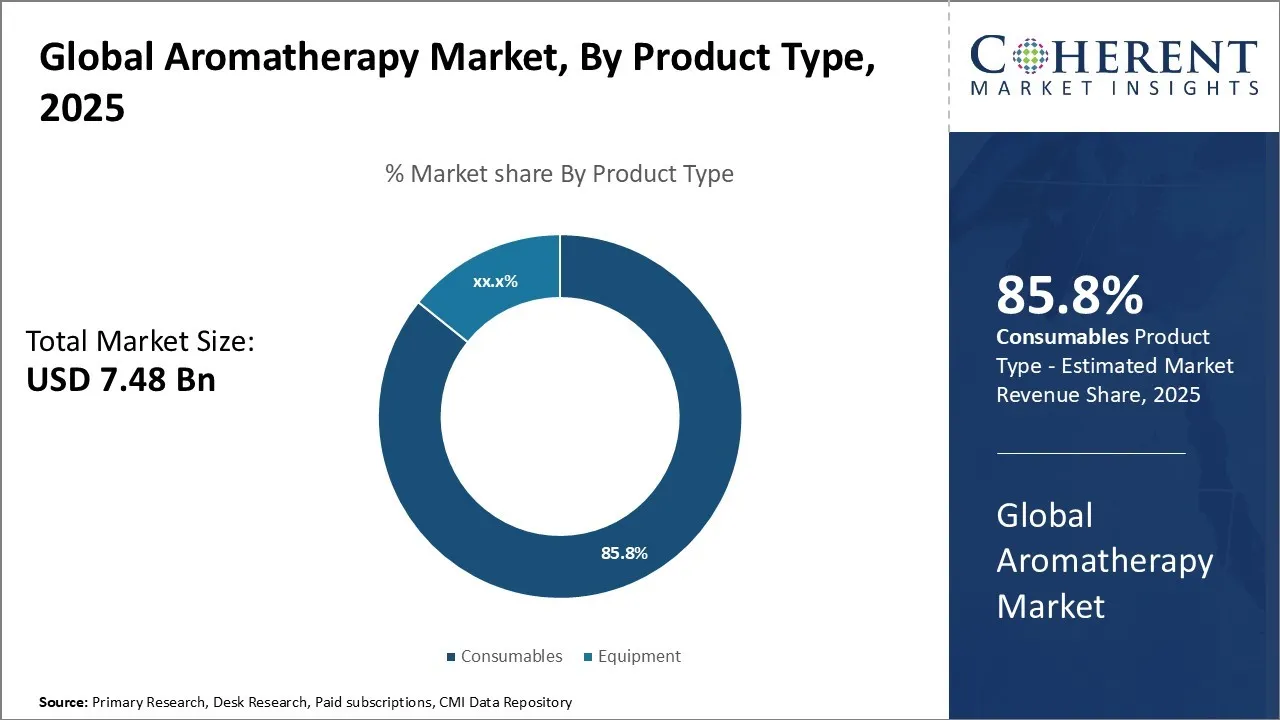
- Based on Product Type, the Consumables segment is expected to account for 86.8% of the market share in 2026, due to their ability to act as core functional products used across all modes of therapy.
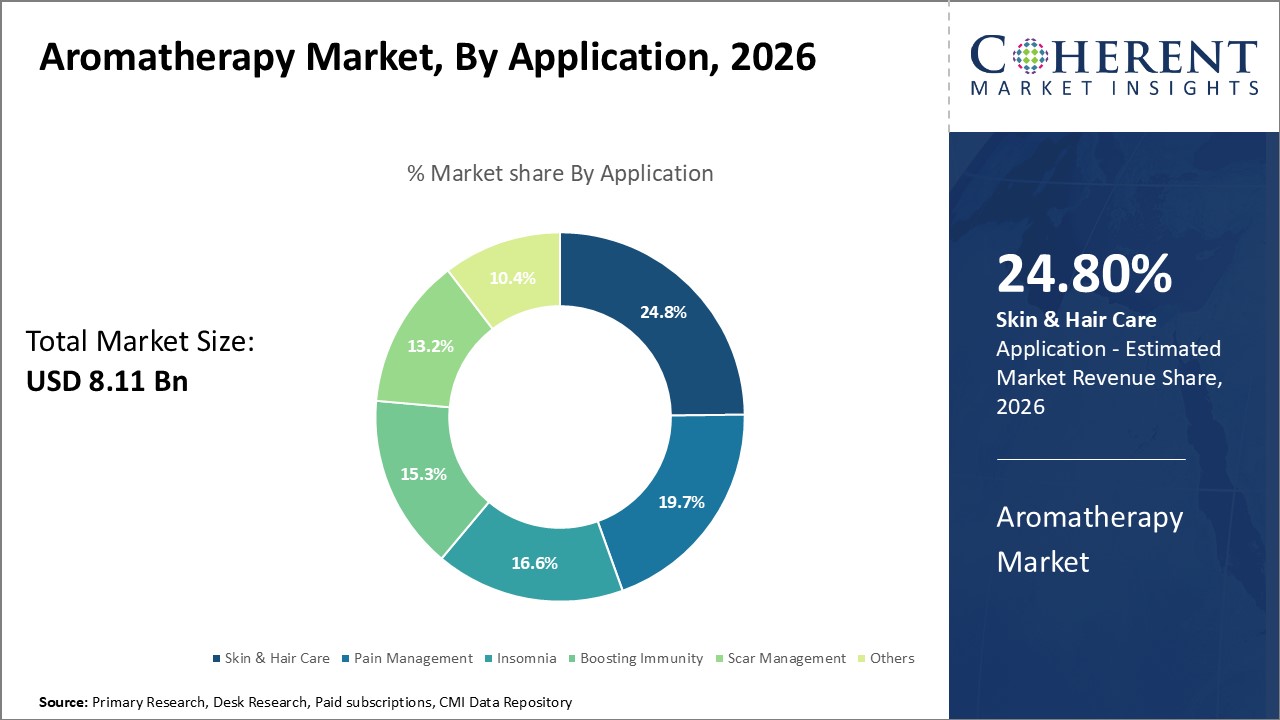
- Based on Application, the Skin & Hair Care segment is projected to hold the largest share of the market in 2026, primarily due to rising preference of natural and organic products.
- Based on Mode of Delivery, Topical application segment is expected to account of the highest share of the market in 2026, driven by its therapeutic and targeted relief.
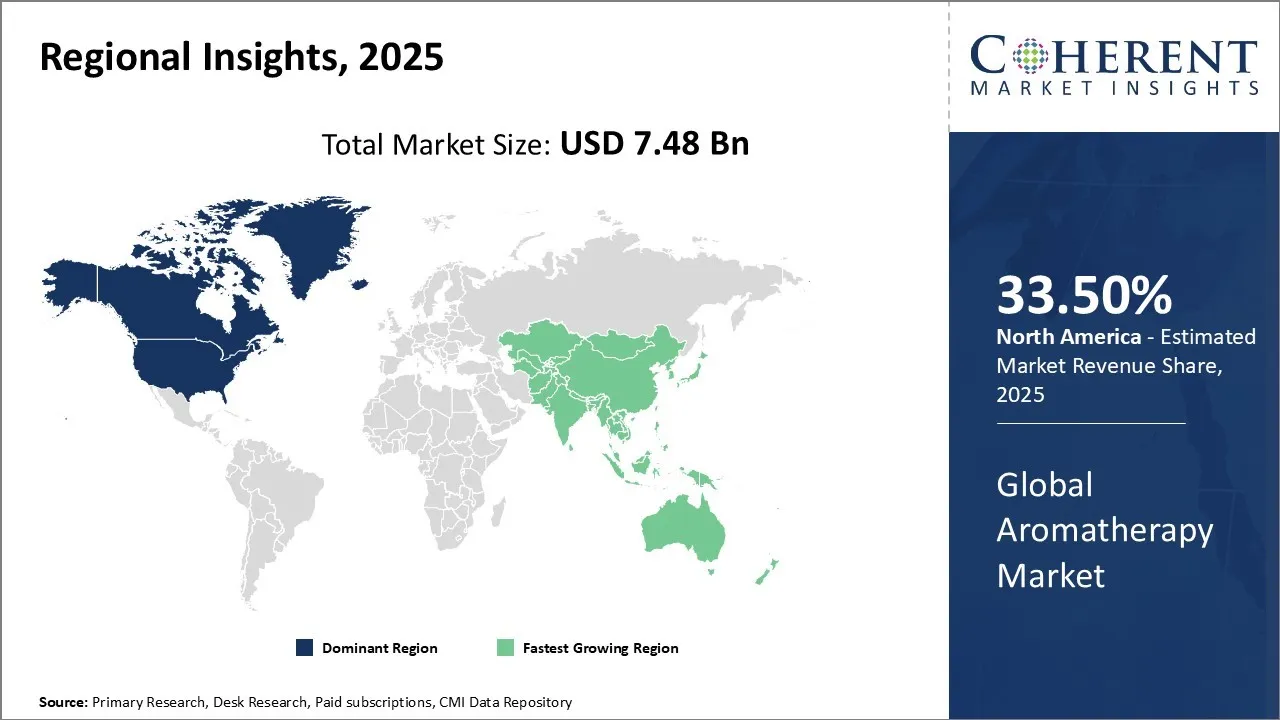
- Based on Region, North America is set to lead the global aromatherapy market in 2026 with a 33. 5% share. While, Asia Pacific is anticipated to be the fastest growing region during the forecast period.
Market Overview
The aromatherapy market is growing steadily, driven by rising demand for natural wellness solutions and increased awareness of essential oils’ therapeutic benefits. Consumers are turning to oils like lavender and eucalyptus for stress relief, pain management, and sleep support, boosting overall aromatherapy market demand.
Widespread use in spa treatments, home care, and personal wellness routines, along with e-commerce growth, is expanding global access. In healthcare, aromatherapy is gaining traction as a complementary therapy for anxiety and pain. Emerging markets in Asia-Pacific and Latin America are also seeing increased adoption due to rising incomes and interest in holistic health.
Current Events and their Impact on the Aromatherapy Market
Current Event | Description and its Impact |
Climate Pressures on Botanical Sourcing |
|
Technological and Ecological Advancements |
|
End-User Feedback and Unmet Needs in the Aromatherapy Market
Product Quality and Standardization
One of the most frequently cited issues by users is the lack of quality consistency across aromatherapy products. Consumers report that not all essential oils are created equal, and many are adulterated or diluted. There is a strong demand for third-party tested, certified organic, and therapeutic-grade oils. The absence of global regulatory standards makes it difficult for users to distinguish between genuine and low-quality products.
Transparency and Labeling
End-users are increasingly calling for clear labeling and transparency in ingredients. Many aromatherapy buyers complain about vague terms like "natural" or "pure," which can be misleading. There is a growing unmet need for accurate ingredient disclosure, botanical sourcing information, and clarity on usage safety.
- Current Industry Events of 2026
- Market Size Estimation
- Regional Breakdown
- Competitive Landscape
- Customer Intelligence
- Segmental Analysis
- Pricing Analysis
- Key Market Drivers, Challenges & Future Trends
- Customized Insights Section
Role of Artificial Intelligence (AI) in Aromatherapy
In March 2025, Osmo—a biotechnology company at the forefront of scent innovation—introduced Generation, an AI-powered fragrance house driven by olfactory intelligence (OI). Created by a multidisciplinary team of experts in machine learning, sensory neuroscience, data science, perfumery, and analytical chemistry, Generation empowers brands to craft cleaner, more sustainable fragrances while unlocking greater creative potential. This launch highlights the growing role of artificial intelligence in the aromatherapy market, where AI is increasingly used to analyze scent profiles, predict emotional and therapeutic effects, and design customized blends that enhance well-being, efficiency, and innovation in product development.
Segmental Insights
Aromatherapy Market Insights, By Product Type
Consumable Segment Acquires the Dominant Share
In terms of product type, the consumable segment is expected to contribute 86.8% share of the market in 2026, due to their ability to act as core functional products used across all modes of therapy. These include essential oils, carrier oils, and blends of items that are frequently replenished and central to both personal and professional aromatherapy use. Essential oils and blends are consumed regularly in diffusers, massages, and topical treatments, making them repeat-purchase products. Unlike equipment, consumables require frequent replenishment, creating ongoing demand.
Moreover, Consumables cater to a wide range of users from casual home users to professional aromatherapists and wellness centers. This broad customer base continuously drives sales. Essential oils are used across multiple sectors including beauty, healthcare, and homecare, boosting demand across industries. For example, lavender oil is popular in sleep aids, while tea tree oil is favored in skincare.
In January 2023, VedaOils has launched over 40 new fragrance oils and 15 essential‑oil blends, designed to enhance wellness and evoke festive moods. Highlights include seasonal blends like Christmas Wreath, Sleep, Pumpkin Pie, Unwind, and Autumn Wreath, all crafted from natural ingredients intended for aromatherapy and self‑care. The expanded fragrance lineup, featuring scents such as Marshmallow, Orange, Ylang Ylang, and Strawberry Shortcake, is ideal for candles, soaps, cosmetics, massage oils, diffusers, and room fresheners.
Aromatherapy Market Insights, By Application, Skin and Hair Care
Rising Preference for Natural and Organic Products is Driving the Skin and Hair Care Segment
In terms of application, the skin and hair care segment is projected to contribute the largest share of the global aromatherapy market in 2026, primarily due to rising preference of natural and organic products. Consumers increasingly prefer chemical-free, plant-based solutions for beauty and personal care. Essential oils like tea tree, lavender, rosemary, and argan offer natural antimicrobial, anti-inflammatory, and moisturizing benefits, making them popular in skin creams, serums, and hair oils. Essential Oil used in aromatherapy provides skin benefits such as help with acne, dryness, eczema, and anti-aging (e.g., frankincense for wrinkles, chamomile for irritation). And Hair benefits include promote hair growth, reduce dandruff, and soothe scalp inflammation (e.g., rosemary oil is known to stimulate follicles).
Additionally, the global shift toward holistic wellness and “clean beauty” has pushed brands to incorporate aromatherapy into skin and hair products, emphasizing safety, sustainability, and self-care. Companies are investing in aromatherapy-infused skincare lines, hair serums, and scalp treatments. These products blend essential oils with carrier oils (like jojoba or coconut) to enhance delivery and absorption.
In April 2023, Aromatherapy Associates has launched an eleven-piece skincare line that uniquely blends essential oils, active botanicals, and Skin Stress Relief technology to rejuvenate both mind and skin. The BioActive™ complex integrates calming essential oils such as blue tansy, sandalwood, and jasmine, alongside squalane and raspberry seed oil to strengthen barrier function and boost regeneration. Such Product innovations are propelling the aromatherapy market demand.
Aromatherapy Market Insights, By Mode of Delivery
Topical Segment Holds the Largest Share
In terms of mode of delivery, the topical application segment is estimated to contribute the highest share of the global aromatherapy market in 2026, driven by its therapeutic and targeted relief. Topical application allows direct delivery of essential oils to specific areas of the body. This is particularly effective for pain relief, muscle soreness, joint stiffness, and skin-related concerns, where localized action is needed. Unlike inhalation, which provides immediate but short-lived effects, topical use allows oils to absorb slowly into the skin, offering prolonged therapeutic benefits. Many essential oils have anti-inflammatory, antibacterial, and antioxidant properties, making them popular in skincare and cosmetic formulations. This dual benefit of aromatherapy plus skincare drives strong demand, especially among women and wellness consumers. Spas, wellness centers, and physiotherapy clinics widely use aromatherapy massage oils, contributing significantly to market growth in the topical segment.
In September 2023, Aromatherapy specialist Escents introduced a new Peppermint essential oil variant to its product lineup. Boasting high menthol content, the oil promises a cooling sensation on the skin along with digestive, respiratory, oral‑care, and mood‑enhancing benefits. Ideal for use in diffusers, blends, and topical applications, the release highlights the oil’s antimicrobial properties and potential to alleviate stress and support emotional balance.
Regional Insights
North America Aromatherapy Market Analysis & Trends
North America region is projected to lead the market with a 33.50% share in 2026, driven by strong consumer adoption and industry innovation. One standout example is the explosion of smart wellness products, including AI-powered body oils launched by beauty brands like Brunel to deliver essential-oil blends designed for mood enhancement and relaxation. This launch highlights how aromatherapy is moving beyond diffusers and bath products to become part of everyday wellness routines through high-touch, oil-based formulations that resonate with health-conscious consumers.
Meanwhile, the U.S. aromatherapy market, diffuser remains a powerhouse, with Americans increasingly integrating ultrasonic, IoT-enabled diffusers into their homes and workplaces. Major players like Young Living and doTERRA are expanding product lines with smart diffusers and targeted essential oil blends for stress relief, sleep enhancement, and mental clarity.
For instance, VedaOils, a prominent player in essential oils industry, unveiled its newly launched websites designed specifically for customers in the US and Canada. This major development highlights the brand's dedication to delivering premium essential oils and related products to its growing global customer base, further supporting the aromatherapy market revenue.
Asia Pacific Aromatherapy Market Analysis & Trends
Asia Pacific region is expected to exhibit the fastest growth in the aromatherapy market, fueled by a blend of traditional healing practices, a growing middle class, and the rapid expansion of wellness tourism. Countries like India, China, Thailand, and Indonesia are increasingly integrating aromatherapy into mainstream healthcare and spa services. For example, in China, researchers are exploring the use of traditional medicinal scents like wormwood and citrus peels for stress relief and fatigue management, reflecting how aromatherapy is merging with traditional Chinese medicine.
In India, premium spa chains such as Dessange Salon & Spa in Mumbai have introduced aromatherapy-based treatments as part of luxury wellness offerings, catering to the rising urban demand for natural and holistic therapies. For instance, Novotel Imagica Khopoli has unveiled its premium spa, O2, offering a range of classic treatments such as Aromatherapy massage, traditional Thai massage, Swedish massage, and more. This is further contributing to the aromatherapy market share.
Aromatherapy Market Outlook Country-Wise
The U.S. Aromatherapy Market Trends
The United States is a key driver of aromatherapy market demand, fueled by high consumer awareness and a strong focus on wellness and mental health. Essential oils are widely used for stress relief, sleep improvement, mood enhancement, and respiratory support, with products like diffusers and roll-ons becoming household staples.
Aromatherapy is deeply integrated into spa treatments, home care routines, and even clinical settings for anxiety and pain management. The rise of e-commerce, wellness influencers, and natural self-care trends continues to strengthen the U.S. position as a global leader in aromatherapy adoption.
AERON Lifestyle Technology, Inc., the company behind Belle Aroma and Drive Time fragrance diffusers, has launched a nitrile cup aimed at making it easier to remove scented waxes and resins from wax warmers. Such innovations are escalating the aromatherapy industry growth.
Japan Aromatherapy Market Trends
Japan is a major contributor to aromatherapy market demand, driven by a cultural preference for natural, stress-relief practices. Essential oil diffusers are commonly used in homes and offices to promote relaxation and focus, especially in a high-stress society. Aromatherapy is also widely integrated into spas, beauty salons, and wellness centers, often using native oils like yuzu and hinoki. Additionally, it’s gaining use in elder care, helping manage symptoms like anxiety and chronic pain. Japan’s blend of tradition, wellness innovation, and an aging population makes it a key market for aromatherapy.
Researchers at University of Tsukuba investigated the benefits of aromatic baths on the physical and mental well-being of teleworkers. Their study found that after four weeks of taking aromatic baths—both during the day and at night—with essential oils of their choice, participants experienced reduced presenteeism (a state of reduced productivity due to health issues) and showed signs of improved work performance. These findings suggest that aromatic baths may help decrease presenteeism and enhance work performance.
Market Report Scope
Aromatherapy Market Report Coverage
| Report Coverage | Details | ||
|---|---|---|---|
| Base Year: | 2025 | Market Size in 2026: | USD 8.11 Bn |
| Historical Data for: | 2020 To 2024 | Forecast Period: | 2026 To 2033 |
| Forecast Period 2026 to 2033 CAGR: | 8.4% | 2033 Value Projection: | USD 14.26 Bn |
| Geographies covered: |
| ||
| Segments covered: |
| ||
| Companies covered: | doTERRA International, Koninklijke DSM N.V., International Flavors & Fragrances Inc., Symrise, Eden Garden, Young Living Essential Oils, Frontier Natural Products Corporation, Rocky Mountain Oil, Mountain Rose Herbs, Plant Therapy Inc., Thann-Oryza Co. Ltd, G Baldwin & Co., Ouwave Aroma Tech Co. Ltd, RyohinKeikaku Co. Ltd, and Isagenix International LLC | ||
| Growth Drivers: |
| ||
| Restraints & Challenges: |
| ||
Global Aromatherapy Market Drivers
Essential oil manufacturers are focusing on expanding their aromatherapy product lines
Essential oil manufacturers are diversifying their product lines in aromatherapy by introducing innovative blends, diffuser technology, and complementary accessories. They are emphasizing unique scents and therapeutic properties, catering to specific wellness needs. This expansion aims to meet growing consumer demand for holistic well-being and personalized aromatherapy experiences. For instance, MONQ LLC, a manufacturer and retailer of portable essential oil diffusers for aromatherapy, launched a fresh line of personal aromatherapy blends modeled after Shinrin-yoku, the Japanese practice of forest therapy. Inspired by nature’s most calming and therapeutic regions. The Feel Nature series by MONQ includes three new terpene-rich aromatherapy blends in forest, ocean, and mountain, each formulated with organic plants from the respective geographic locations.
Increasing number of people suffering from arthritis prefer aromatherapy treatments
An increasing number of people suffering from arthritis are turning to aromatherapy as a complementary treatment option, contributing to the growing interest in the field, as noted in various aromatherapy market research studies. Arthritis, characterized by joint pain, stiffness, and inflammation, often leads patients to seek alternative therapies that offer pain relief without the side effects associated with long-term medication use.
Topical application of essential oils, such as lavender, eucalyptus, peppermint, and ginger, has shown promising results in reducing inflammation and improving joint mobility. For instance, a study published in Evidence-Based Complementary and Alternative Medicine found that aromatherapy massage using lavender oil significantly reduced pain and improved functional ability in patients with osteoarthritis of the knee. The anti-inflammatory and analgesic properties of certain essential oils make them particularly effective in managing chronic joint conditions.
Moreover, many arthritis patients report improvements in sleep quality and overall mood after regular use of aromatherapy, which plays a critical role in coping with chronic pain. As awareness of these benefits grows, both healthcare professionals and wellness practitioners are recommending aromatherapy as part of integrated arthritis management plans, further supporting the aromatherapy market revenue.
Global Aromatherapy Market Opportunity
The rise of e-commerce platforms provides opportunities for the sale of aromatherapy products
Online retail and e-commerce provide businesses in the aromatherapy market with access to a global customer base. This is especially valuable for companies that might not have a physical presence in multiple locations. For instance, in September 2023, Indesso, a renowned producer of essential oils and other natural ingredients for various sectors such as flavor and fragrance, pharmacy, and F&B, has proudly announced its latest initiative, the iSensoAroma E-Commerce Platform. The iSensoAroma E-Commerce Platform will enable smaller businesses to access the same quality of essential oils that have made Indesso a respected name in the industry. Clients can expect a user-friendly interface that facilitates browsing, selection, and purchasing processes.
Global Aromatherapy Market Key Trends
Growing interest in wellness and holistic health
Aromatherapy has gained popularity as people seek natural and holistic approaches to health and wellness. Consumers are increasingly looking for alternative therapies and remedies, which has driven the demand for essential oils and aromatherapy products. For instance, on August, 2023, Escents Aromatherapy, a leading company in natural wellness, plant-based personal care products, and scent, introduced an exceptional product to its extensive line - Tea Tree essential oil. This product is ideal for individuals who want to improve their overall wellness.
Analyst Opinion (Expert Opinion)
The aromatherapy market value is undergoing a notable shift—from being a niche segment within wellness to becoming an integrated component of preventive healthcare and emotional well-being regimens. This transformation is not merely consumer-driven but rooted in a deeper convergence of neuroscience, behavioral wellness, and sensory branding. The commodification of essential oils is no longer sufficient; what distinguishes market leaders now is functional innovation backed by measurable outcomes.
Brands like Vitruvi and Scentered are leveraging formulations tied to cognitive outcomes—such as improved sleep latency and reduced cortisol levels—rather than vague claims of “relaxation.” This strategy aligns with findings from the International Journal of Neuroscience, where lavender and rosemary were shown to significantly impact beta wave activity and memory retention, respectively. It is not aromatherapy in the traditional sense—it is sensorial neuroscience.
Another trend gaining traction is the medicalization of aromatherapy. In Japan and parts of Europe, clinics are using essential oil diffusions as adjunct therapies for mild anxiety and preoperative stress. A study published in Evidence-Based Complementary and Alternative Medicine demonstrated that inhalation of bergamot oil reduced anxiety in patients waiting for minor surgery, with a statistically significant decrease in heart rate and systolic blood pressure. The implication here is clear: markets with supportive regulatory frameworks will outpace those that treat aromatherapy as purely cosmetic.
Moreover, consumer skepticism is rising, and this is a healthy challenge to the industry. The growing demand for ISO-certified oils and transparent GC-MS (Gas Chromatography-Mass Spectrometry) reports reflects a maturing buyer base. For example, Neal’s Yard Remedies publicly shares batch-level quality data—something that’s increasingly seen not as a premium add-on but a baseline expectation. Aromatherapy brands that fail to embrace radical transparency may see their market share erode.
Apart from this, aerial diffusion is no longer the fastest-growing delivery format; topical application is quietly dominating due to its versatility and rising demand in functional skincare. Brands such as Aromatica and Edens Garden are innovating with roll-on serums and massage oils that combine essential oils with adaptogens or carrier oils rich in omega-3 fatty acids. This hybridization is not simply a trend—it is the next logical progression in making aromatherapy solutions clinically relevant and commercially scalable.
Speak to the analyst
Want personalized insights?
Take the findings above to one of our principal consultants, or have the report rebuilt around the segments, geographies and competitors you actually track.
Key Developments
- In May 2025, Brooklyn-based Aroma Amplifier has launched its cordless, eco-friendly aromatherapy diffuser, offering a waterless, flameless alternative to traditional scenting methods. The device employs a whisper‑quiet three-speed fan and rechargeable battery, delivering fragrance across spaces from 100 to 1,000 sq ft.
- In April 2025, Moods, a wellness brand, unveiled Moodrollers, an innovative aromatherapy fragrance line designed to act as “sensory supplements” for emotional well‑being. Rolled on at pulse points, these sleek blends aim to create quick resets for mood balance by delivering scents directly into the nervous system.
- In October 2024, Tholi Oil introduced the world’s first wearable essential‑oil sandal, merging aromatherapy with footwear. It is equipped with a refillable reservoir and wool delivery system, the premium leather sandals infuse a proprietary blend including cassia, cinnamon bark, hyssop, and spikenard through the 72,000 nerve endings in the feet, promising relief from inflammation, stress, and ailments with every step. It is designed for comfort and sustainability using cork, bamboo, and rubber, the Vidal patent‑equipped sandals.
- In June 2024, Boost Oxygen unveiled its new aromatherapy collection in portable, recyclable handheld canisters, all filled with 95% pure oxygen and safe for all ages. The lineup includes eight signature fragrances designed to refresh and invigorate, Calm Lavender, Revive Peppermint, Balance Pink Grapefruit, Breathe Menthol Eucalyptus, Focus Rosemary, Sport Orange, Outdoors Camo, and Natural (unscented).
Market Segmentation
- By Product Type (Revenue, USD Bn, 2021 - 2033)
- Handheld Aromatherapy
- Consumables
- Essential Oils
- Singles
- Herbaceous
- Woody
- Spicy
- Floral
- Citrus
- Earthy
- Camphoraceous
- Others
- Blends
- Singles
- Carrier Oils
- Essential Oils
- Equipment
- Ultrasonic
- Nebulizing
- Evaporative
- Heat
- By Application (Revenue, USD Bn, 2021 - 2033)
- Skin & Hair Care
- Pain Management
- Insomnia
- Boosting Immunity
- Scar Management
- Others
- By Mode of Delivery (Revenue, USD Bn, 2021 - 2033)
- Topical Application
- Aerial Diffusion
- Direct Inhalation
- By Region (Revenue, USD Bn, 2021 - 2033)
- North America
- U.S.
- Canada
- Latin America
- Brazil
- Argentina
- Mexico
- Rest of Latin America
- Europe
- Germany
- U.K.
- Spain
- France
- Italy
- Russia
- Rest of Europe
- Asia Pacific
- China
- India
- Japan
- Australia
- South Korea
- ASEAN
- Rest of Asia Pacific
- Middle East
- GCC Countries
- Israel
- Rest of Middle East
- Africa
- South Africa
- North Africa
- Central Africa
- North America
- Global Aromatherapy Market Key Players
- doTERRA International
- Koninklijke DSM N.V.
- International Flavors & Fragrances Inc.
- Symrise
- Eden Garden
- Young Living Essential Oils
- Frontier Natural Products Corporation
- Rocky Mountain Oil
- Mountain Rose Herbs
- Plant Therapy Inc.
- Thann-Oryza Co. Ltd.
- G Baldwin & Co.
- Ouwave Aroma Tech Co. Ltd.
- RyohinKeikaku Co. Ltd.
- Isagenix International LLC.
Sources
Primary Research Interviews from the following stakeholders
Stakeholders
- Interviews with essential oil producers, wellness product manufacturers, aromatherapy practitioners, retail buyers, supply chain managers, and wellness spa operators across key global markets.
Specific stakeholders
- Product development leads at wellness and beauty brands
- Purchasing heads at pharmacy and lifestyle retail chains
- Operations managers at aromatherapy centers and wellness spas
- Clinical aromatherapists and naturopaths practicing in hospitals and private clinics
- Procurement managers for raw botanicals and essential oil distillers
- E-commerce category managers in wellness and organic product platforms
- Export-import specialists and logistic heads for natural ingredients trade
Databases
- UN Comtrade Database
- World Trade Organization (WTO) Trade Statistics
- International Trade Centre (ITC) Trade Map
- Ministry of AYUSH (India)
- U.S. Department of Agriculture (USDA)
- Eurostat – Organic Products Trade Data
- Directorate General of Foreign Trade (DGFT), India
- Agricultural and Processed Food Products Export Development Authority (APEDA)
- China Customs Statistics – Essential Oils and Natural Extracts
Magazines
- Perfumer & Flavorist
- Aromatherapy Today
- Natural Products Insider
- Wellness Matters
- Organic & Wellness News
- Beauty Launchpad
- Spirituality & Health
- WholeFoods Magazine – Body Care Section
Journals
- Journal of Ethnopharmacology
- Journal of Essential Oil Research
- Complementary Therapies in Clinical Practice
- Phytotherapy Research
- International Journal of Aromatherapy
- Journal of Herbal Medicine
- BMC Complementary Medicine and Therapies
- Journal of Alternative and Complementary Medicine
Newspapers
- The Hindu Business Line – Wellness & Lifestyle
- The Economic Times – FMCG and Ayurveda Section
- Financial Times – Natural Products and Sustainability
- The Times of India – Health and Beauty
- USA Today – Wellness Economy
- Nikkei Asia – Natural Ingredients Trade
- South China Morning Post – Organic and Essential Oil Market
Associations
- National Association for Holistic Aromatherapy (NAHA)
- Alliance of International Aromatherapists (AIA)
- Essential Oil Association of India (EOAI)
- International Federation of Aromatherapists (IFA)
- International Federation of Essential Oils and Aroma Trades (IFEAT)
- Spices Board India – Essential Oils Division
- Aromatherapy Trade Council (UK)
- International Organization for Standardization (ISO) – Essential Oil Standards
Public Domain Sources
- Ministry of AYUSH (India)
- Pharmacopoeia Commission for Indian Medicine & Homoeopathy (PCIM&H)
- US Food and Drug Administration (FDA) – Aromatherapy Guidelines
- World Health Organization (WHO) – Traditional and Complementary Medicine Data
- U.S. National Institutes of Health (NIH) – National Center for Complementary and Integrative Health
- India Biodiversity Portal – Medicinal Plant Listings
- APEDA Export Dashboard – Essential Oils and Extracts
- Department of Agriculture, Australia – Botanical Oils Trade Overview
Proprietary Elements
- CMI Data Analytics Tool, and Proprietary CMI Existing Repository of information for last 8 years
*Definition: Aromatherapy is an alternative medicine treatment that is effective for treating pain, nausea, overall wellbeing, anxiety, sadness, stress, and sleeplessness. It can be used in an inpatient or outpatient setting. Preoperative anxiety, oncology, palliative care, hospice, and end-of-life care are all helped by it. Essential oils are potentially harmful and hazardous. Some of them are combustible, cause skin dermatitis, are phototoxic and can result in chemical burns, are toxic to the mouth, or can even be fatal.
Get access to 250+ pages report
Every segment, forecast, competitor profile and data table behind the analysis above — available for instant download.
- ESOMAR Member
- ISO 9001:2015 Certified
- D-U-N-S Registered
- GDPR & CCPA Compliant
Missing comfort of reading report in your local language? Find your preferred language:
Transform your Strategy with Exclusive Trending Reports
Frequently Asked Questions
The Aromatherapy Market is estimated to be valued at USD 8.11 Bn in 2026, and is expected to reach USD 14.26 Bn by 2033.
The CAGR of the Aromatherapy Market is projected to be 8.4% from 2026 to 2033.
Essential oil manufacturers are focusing on expanding their aromatherapy product lines and increasing number of people suffering from arthritis prefer aromatherapy treatments are expected to drive the global aromatherapy market growth.
Consumables is the leading product type segment in the global aromatherapy market.
Risk factors associated with aromatherapy are expected to hinder the global aromatherapy market growth over the forecast period.
The major players operating in the global aromatherapy market are doTERRA International, Koninklijke DSM N.V., International Flavors & Fragrances Inc., Symrise, Eden Garden, Young Living Essential Oils, Frontier Natural Products Corporation, Rocky Mountain Oil, Mountain Rose Herbs, Plant Therapy Inc., Thann-Oryza Co. Ltd, G Baldwin & Co., Ouwave Aroma Tech Co. Ltd, RyohinKeikaku Co. Ltd, and Isagenix International LLC.
Aromatherapy is a holistic therapy using essential oils for healing benefits, while simply using oils may lack therapeutic intent or method.