

Beta-thalassemia (B-thal) Market Size and Share Analysis- 2026 To 2033
The Beta-thalassemia (B-thal) Market size is anticipated to grow at a CAGR of 8.1% with USD 600 Mn in 2026 and is expected to reach USD 1,040 Mn in 2033. The primary drivers are defined by the rising burden of inherited hemoglobin disorders, expanding newborn and premarital screening programs across high-risk populations, continued dependence on blood transfusions, and wider adoption of iron chelation, erythroid maturation agents, and gene-based therapies. Beta-thalassemia is a genetic blood disorder caused by reduced beta-globin production, and the CDC notes that moderate or severe cases are mainly treated with blood transfusions and chelation therapy. Globally, WHO estimates around 5% of people carry a sickle-cell or supporting sustained treatment demand over time.
Key Takeaways
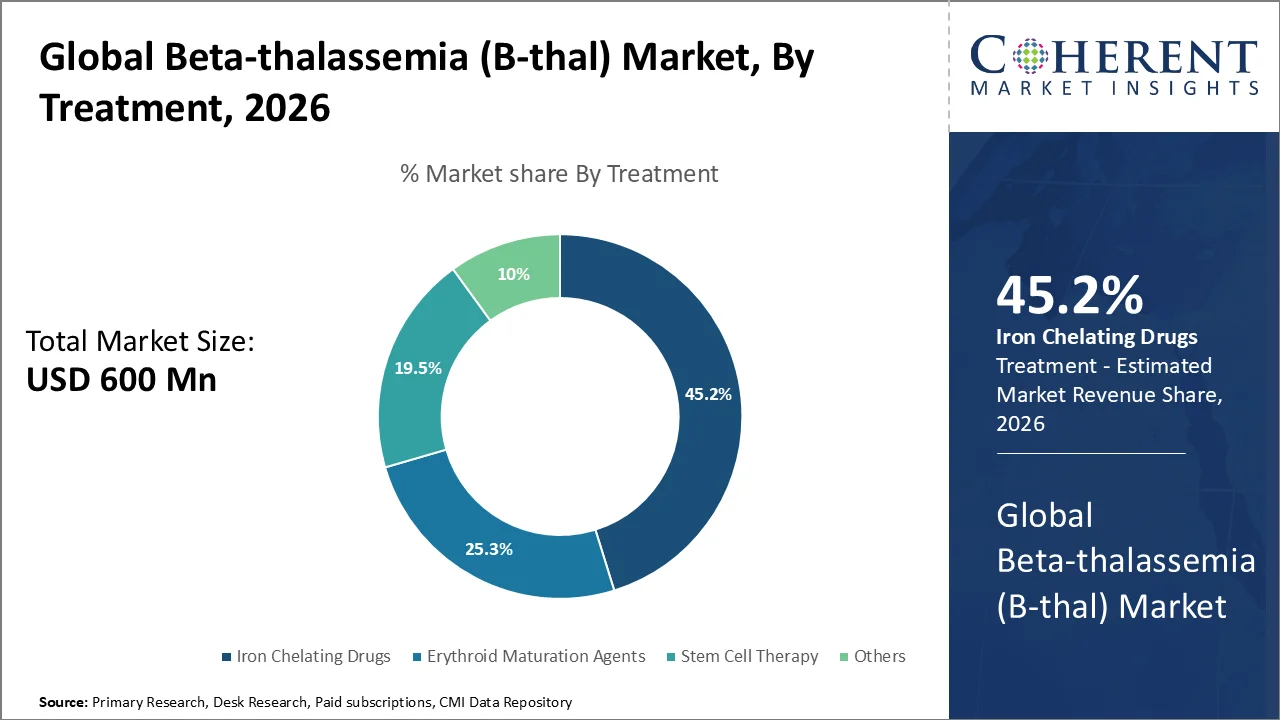
- Iron Chelating Drugs is likely to dominate the market with 45.2% in 2026. The segment’s growth is owing to its regular transfusion dependency, chronic iron overload management, and long-term use of chelation therapies. CDC states that people receiving regular transfusions are at risk of iron overload, and chelation therapy removes excess iron before it damages organs.
- Beta Thalassemia Minor segment is set to lead with 41.6% in 2026. The segment’s growth is owing to the wider carrier prevalence, routine blood screening, genetic counseling, and diagnosis-led monitoring. NCBI StatPearls states that beta-thalassemia carriers represent around 1.5% of the global population, supporting strong demand for diagnostic testing and counseling services rather than intensive treatment.
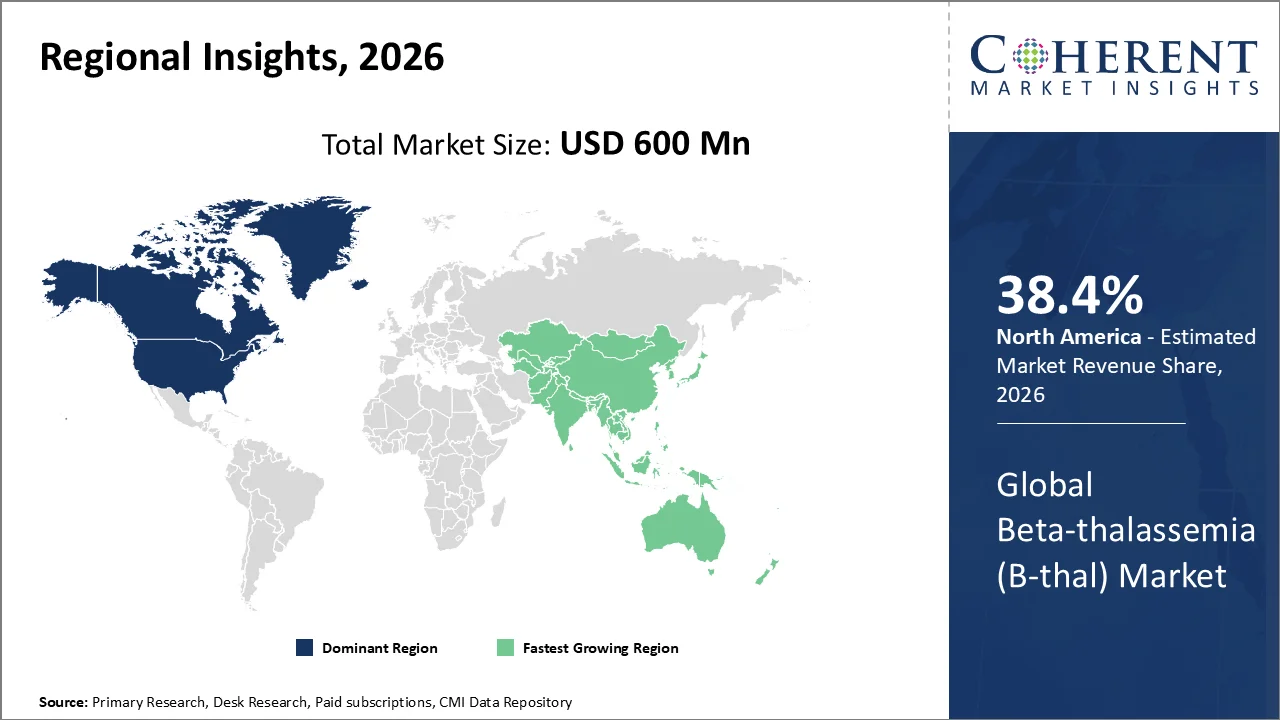
- North America is expected to acquire the prominent share of 38.4% in 2026. The region’s growth is owing to the strong hematology infrastructure, rare disease diagnosis, reimbursement support, and availability of advanced therapies. The FDA has approved Reblozyl for beta thalassemia-related anemia
Segmental Insights
Why is Iron Chelating Drugs Acquiring the Largest Share?
On the basis of treatment, the iron chelating drugs segment is projected to account for the largest Beta-thalassemia (B-thal) Market share of 45.2% in 2026. The segment’s growth is owing to the lifelong need to manage transfusion-related iron overload in moderate and severe beta-thalassemia. The CDC states that regular blood transfusion is the main treatment for moderate or severe thalassemia and that iron overload can affect organs such as the heart and liver, making chelation therapy necessary.
The segment includes established therapies such as deferasirox, deferiprone, and deferoxamine, which are widely used across transfusion-dependent patient groups. Even as advanced therapies enter the market, chelators are expected to remain central because not all patients are eligible for curative gene therapy, stem cell transplant, or high-cost therapies. According to Vertex, TDT requires frequent transfusions and iron chelation throughout life, reinforcing the commercial relevance of this segment.
- Current Industry Events of 2026
- Market Size Estimation
- Regional Breakdown
- Competitive Landscape
- Customer Intelligence
- Segmental Analysis
- Pricing Analysis
- Key Market Drivers, Challenges & Future Trends
- Customized Insights Section
Beta Thalassemia Minor hold the Largest Market Share
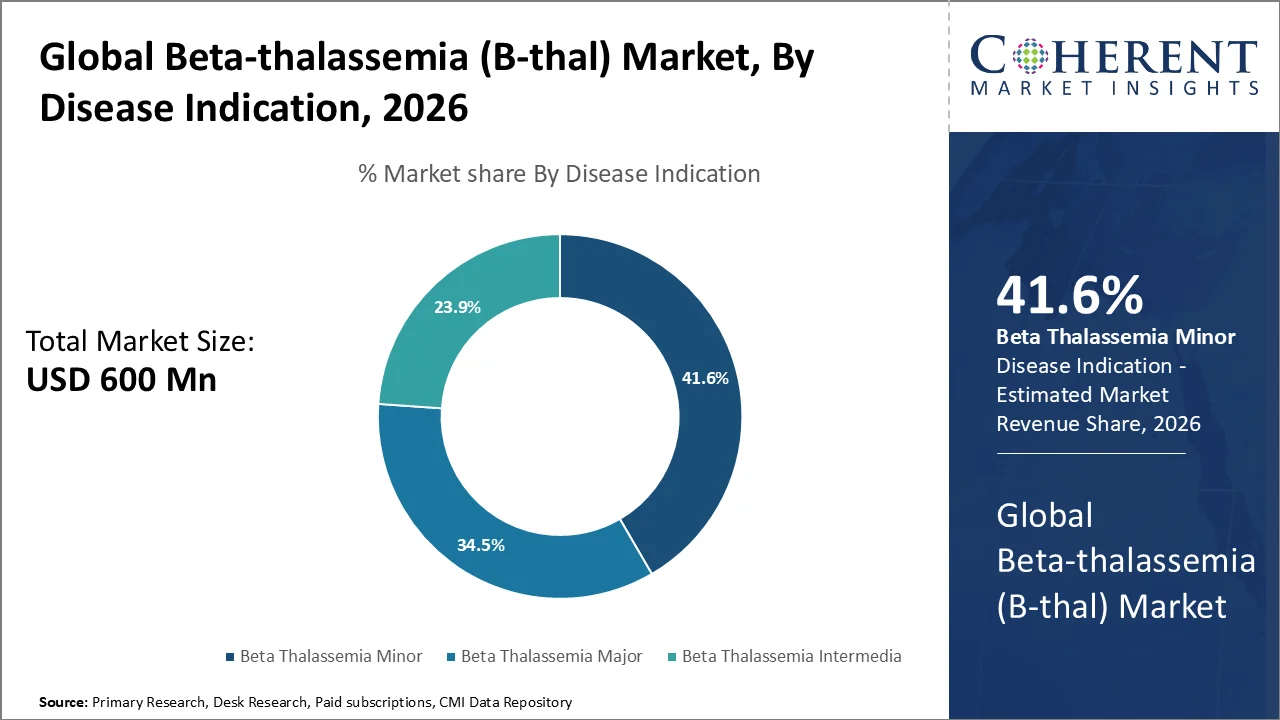
On the basis of disease indication, the beta thalassemia minor segment lead with a major 41.6% share in 2026. The segment’s growth is mainly because the carrier population is significantly larger than the severe treatment population. NCBI StatPearls defines beta-thalassemia minor as heterozygosity with one unaffected beta-globin gene and one affected gene, while major and intermedia occur through homozygosity or compound heterozygosity. It also estimates 80–90 million carriers globally, making this segment highly relevant for screening and diagnosis.
This segment is less treatment-intensive, but it propels the demand for hemoglobin electrophoresis, HPLC testing, genetic counseling, antenatal testing, and family screening. In India, the NHM guidelines state that thalassemia minor is the carrier state and that India has almost 42 million beta-thalassemia trait carriers, thereby supporting the demand for prevention-focused diagnosis.
Market Drivers
Rising Need for Lifelong Transfusion and Iron Chelation are Transforming the Beta-thalassemia (B-thal) Market
The increasing burden of transfusion-dependent beta-thalassemia is propelling the strong demand for lifelong management therapies. This is because the patients with severe disease require regular red blood cell transfusions, iron chelation therapy, and continuous hematology monitoring.
According to the CDC, blood transfusion remains the primary treatment for moderate to severe thalassemia, but repeated transfusions often lead to iron overload, alloimmunization, and infection-related complications. As a result, iron chelation therapy is essential to remove excess iron and prevent long-term organ damage, thereby sustaining the consistent demand for chelation drugs as well as diagnostic monitoring tools.
GeneReviews by NCBI reports that beta-thalassemia major typically presents between six and 24 months of age and requires lifelong transfusion and chelation support to maintain survival and growth. In addition, a 2024 New England Journal of Medicine study published via PubMed reported 91% transfusion independence with exagamglogene autotemcel, thereby highlighting the growing clinical shift toward gene-editing-based curative approaches.
CRISPR/Cas9 Gene-editing Therapies: A Major Breakthrough in Beta-thalassemia (B-thal) Market
CRISPR/Cas9 gene-editing therapies are becoming a major breakthrough in the Beta-thalassemia (B-thal) market. They shift treatment from lifelong transfusion support toward a potential one-time curative approach.
In January 2024, the U.S. FDA approved CASGEVY (exagamglogene autotemcel), a CRISPR/Cas9 gene-edited cell therapy, for transfusion-dependent beta-thalassemia patients aged 12 years and older. The approval is commercially significant because Vertex estimated that around 1,000 eligible U.S. patients could access this treatment. The clinical evidence is also supporting the market adoption, with trial data showing 94.2% transfusion independence, as 49 of 52 evaluable patients remained free from transfusions for an average of 32.4 months.
To support commercialization Vertex is working with experienced hospitals to expand authorized treatment centers, while its collaboration with CRISPR Therapeutics gives Vertex global manufacturing and commercialization leadership under a 60/40 program economics model. This strengthens premium gene-therapy demand in specialized hematology care and improves positioning versus conventional chronic treatment pathways.
Current Events and Their Impact on the Beta-thalassemia (B-thal) Market
Current Event | Description and its Impact |
NICE Recommends CASGEVY for NHS Use in Severe Beta-thalassaemia (September 2024) |
|
FDA Expands Access to Gene Therapy Ecosystem via New Authorized Treatment Centers (2024–2025) |
|
Beta-thalassemia (B-thal) Market Trends
- Rising adoption of disease-modifying therapies such as luspatercept and mitapivat reduces transfusion burden and supports advanced anemia management.
- Gene therapies such as Zynteglo and Casgevy are transforming treatment pathways by offering one-time, potentially curative options for transfusion-dependent beta-thalassemia patients.
- Increasing use of oral iron chelators improves long-term compliance, reduces iron overload complications, and strengthens chronic disease management worldwide.
- High carrier prevalence in Mediterranean, Middle Eastern, South Asian, and Southeast Asian populations continues to support screening, diagnosis, and treatment demand. Globally, around 25,500 infants with transfusion-dependent beta-thalassemia are estimated to be born every year, creating sustained need for transfusions, chelation, and curative therapies.
- Supportive approvals and reimbursement pathways are expanding patient access to novel therapies. The U.S. FDA approvals of Zynteglo and Casgevy strengthened commercial adoption of gene therapy options.
Regional Insights
North America Dominates Owing to the Early Adoption of Advanced Therapies
The North America region accounts for 38.4% of the market share in 2026. The region’s growth is owing to the strong specialty care access, early adoption of advanced therapies, and a favorable U.S. regulatory pathway for rare hematology drugs.
The demand is supported by transfusion-dependent patients who typically require regular blood transfusions every two to five weeks, creating sustained need for chelation therapy, monitoring, and disease-modifying treatments. The region also benefits from a developed treatment network, with the CDC listing 10 selected thalassemia treatment centers across major U.S. hospitals, thereby supporting specialized care delivery as well as clinical referral.
In December 2025, Agios Pharmaceuticals announced the U.S. FDA approval of Aqvesme (mitapivat) tablets for anemia in adults with alpha- or beta-thalassemia, making it the first oral treatment option for beta-thalassemia patients. This approval expands treatment choice beyond transfusion-led management and gene therapy, strengthening North America’s leadership in therapy commercialization.
Asia Pacific Beta-thalassemia (B-thal) Market Trends
Asia Pacific is expected to witness strong growth in Beta-thalassemia (B-thal) Market over the forecast period. The region’s growth is owing to the high carrier frequency, expanding screening programs, rising diagnosis, and improving access to transfusion and chelation therapy. India remains one of the largest burden countries. NHM guidelines state that India has around 1 to 1.5 lakh children with thalassemia major and 10,000–15,000 babies born with thalassemia major every year.
China, India, Thailand, and Indonesia are expected to remain major demand centers owing to the population size, carrier prevalence, and improving healthcare access. The wider newborn screening, antenatal testing, and government-backed hemoglobinopathy programs are expected to support the long-term beta-thalassemia (b-thal) market expansion.
Advanced treatment infrastructure is Accelerating the Beta-thalassemia (B-thal) Market in United States
The Beta-thalassemia (B-thal) market in the United States is driven by specialized hematology centers, newborn screening, transfusion services, and access to iron chelation therapies. The domestic treatment pool remains small but clinically significant. NIH-linked state data report beta-thalassemia major incidence at 1 in 55,000 newborns.
Also, the U.S. prevalence estimates indicate nearly 3,665 beta-thalassemia cases in 2023, equal to 1.07 per 100,000 persons. In addition, the CDC-funded public healthcare data show that up to 96% of older adult patients require lifelong transfusions and iron chelation, thereby sustaining the long-term demand for approved therapies.
China Beta-thalassemia (B-thal) Market Trends
In China, the Beta-thalassemia (B-thal) Market growth is driven by a high hereditary disease burden, expanding carrier screening, and stronger prenatal diagnostic infrastructure across high-prevalence southern provinces. A mainland China meta-analysis reported pooled β-thalassemia prevalence of 2.21%, with prevalence concentrated in southern regions.
Thalassemia is most frequent in Guangdong, Guangxi, and Hainan, while localized studies show particularly high β-thalassemia burden in parts of Guangxi, including Baise. The country is also estimated to have around 300,000 children/patients with major and intermediate thalassemia, thereby sustaining the demand for transfusion, iron chelation, and advanced disease-management services.
Who are the Major Companies in Beta-thalassemia (B-thal) Industry
Some of the major key players in Beta-thalassemia (B-thal) Market are Celgene Corp., BlueBird Bio, Protagonist Therapeutics, Agios Pharmaceuticals, Ionis Pharmaceuticals, Vifor Pharma, Orchard Therapeutics, Sangamo Therapeutics, CRISPR Therapeutics, DisperSol Technologies, Kiadis Pharma, Incyte Corporation, Editas Medicine, Global Blood Therapeutics, and Syros Pharmaceuticals.
Key News
- In May 2026, Agios Pharmaceuticals announced European Commission approval of PYRUKYND (mitapivat) for anemia in adults with alpha- or beta-thalassemia, including transfusion-dependent and non-transfusion-dependent patients
- In April 2025, Children’s Hospital of Philadelphia marked the two-year treatment anniversary of its first FDA-approved Zynteglo gene therapy patient for severe beta thalassemia. This highlights transfusion-free recovery after modified stem cell infusion and strengthening real-world confidence in curative gene therapies.
- In August 2023, Bristol Myers Squibb Company highlighted Reblozyl’s expanded FDA approval for treating anemia in adult patients, including those with beta-thalassemia requiring regular red blood cell transfusions. The approval strengthened its role as a key therapy by improving hemoglobin response and reducing transfusion dependency in affected patients.
Market Report Scope
Beta-thalassemia (B-thal) Market Report Coverage
| Report Coverage | Details | ||
|---|---|---|---|
| Base Year: | 2025 | Market Size in 2026: | USD 600 Mn |
| Historical Data for: | 2020 To 2024 | Forecast Period: | 2026 To 2033 |
| Forecast Period 2026 to 2033 CAGR: | 8.1% | 2033 Value Projection: | USD 1,040 Mn |
| Geographies covered: |
| ||
| Segments covered: |
| ||
| Companies covered: | Celgene Corp., BlueBird Bio, Protagonist Therapeutics, Agios Pharmaceuticals, Ionis Pharmaceuticals, Vifor Pharma, Orchard Therapeutics, Sangamo Therapeutics, CRISPR Therapeutics, DisperSol Technologies, Kiadis Pharma, Incyte Corporation, Editas Medicine, Global Blood Therapeutics, and Syros Pharmaceuticals | ||
| Growth Drivers: |
| ||
| Restraints & Challenges: |
| ||
Analyst Opinion
- Beta-thalassemia is driven by a persistent inherited disease burden. The estimated global incidence of thalassemia is roughly 120,000 new cases per year, supporting steady demand for early diagnosis, chronic transfusion care, and long-term disease management across endemic regions.
- Transfusion dependency remains the core treatment driver. Patients with beta-thalassemia major often need regular blood transfusions every 3–4 weeks, creating sustained demand for red blood cells, iron chelation drugs, monitoring, and specialty hematology care.
- Advanced therapies are reshaping the market. FDA-approved Aqvesme became the first oral treatment for anemia in adults with alpha- or beta-thalassemia, showing 30% transfusion reduction response vs. 13% with placebo.
Speak to the analyst
Want personalized insights?
Take the findings above to one of our principal consultants, or have the report rebuilt around the segments, geographies and competitors you actually track.
Market Segmentation
- By Treatment (Revenue, USD Mn, 2021-2033)
- Iron Chelating Drugs
- Erythroid Maturation Agents
- Stem Cell Therapy
- Others
- By Disease Indication (Revenue, USD Mn, 2021-2033)
- Beta Thalassemia Minor
- Beta Thalassemia Intermedia
- Beta Thalassemia Major
- By Region (Revenue, USD Mn, 2021-2033)
- North America
- U.S.
- Canada
- Latin America
- Brazil
- Mexico
- Argentina
- Rest of Latin America
- Europe
- Germany
- U.K.
- France
- Italy
- Spain
- Russia
- Rest of Europe
- Asia Pacific
- China
- India
- Japan
- Australia
- South Korea
- ASEAN
- Rest of Asia Pacific
- Middle East
- GCC
- Israel
- Rest of Middle East
- Africa
- South Africa
- Central Africa
- North Africa
- North America
Sources
Primary Research Interviews
- Hematologists & Pediatric Hematology Specialists
- Transfusion Medicine Specialists
- Bone Marrow / Stem Cell Transplant Centers
- Genetic Testing & Diagnostic Laboratory Experts
- Hospital Procurement Managers
- Pharmaceutical & Biotech Companies Developing Beta-thalassemia Therapies
- Blood Bank & Thalassemia Care Center Representatives
- Patient Advocacy Groups & Thalassemia Foundations
- Healthcare Payers & Reimbursement Consultants
- Others
Databases
- ClinicalTrials.gov
- PubMed
- NCBI
- Others
Magazines
- Hematology Times
- ASH Clinical News
- Fierce Pharma
- Pharmaceutical Technology
- BioPharma Dive
- GEN – Genetic Engineering & Biotechnology News
- Medical Device Network
- Others
Journals
- Blood Journal
- The Lancet Haematology
- New England Journal of Medicine
- Haematologica
- British Journal of Haematology
- American Journal of Hematology
- Journal of Clinical Medicine
- Bone Marrow Transplantation Journal
- Others
Newspapers
- Reuters
- Bloomberg News
- Financial Times
- The Wall Street Journal
- Business Standard
- The Economic Times
- Others
Associations
- Thalassemia International Federation (TIF)
- Cooley’s Anemia Foundation
- American Society of Hematology (ASH)
- European Hematology Association (EHA)
- European Society for Blood and Marrow Transplantation (EBMT)
- AABB – Association for the Advancement of Blood & Biotherapies
- International Society of Blood Transfusion (ISBT)
- Others
Public Domain Sources
- World Health Organization (WHO)
- U.S. Food and Drug Administration (FDA)
- European Medicines Agency (EMA)
- National Institutes of Health (NIH)
- National Heart, Lung, and Blood Institute (NHLBI)
- Centers for Disease Control and Prevention (CDC)
- ClinicalTrials.gov
- National Center for Biotechnology Information (NCBI)
- Orphanet
- World Bank Open Data
- Others
Proprietary Elements
- CMI Data Analytics Tool
- Proprietary CMI Existing Repository of Information for the Last 10 Years
Get access to 250+ pages report
Every segment, forecast, competitor profile and data table behind the analysis above — available for instant download.
- ESOMAR Member
- ISO 9001:2015 Certified
- D-U-N-S Registered
- GDPR & CCPA Compliant
Missing comfort of reading report in your local language? Find your preferred language:
Transform your Strategy with Exclusive Trending Reports
Frequently Asked Questions
The Beta-thalassemia (B-thal) Market is expected to reach USD 1,040 Mn in 2033.
Major players operating in the global Beta-thalassemia (B-thal) Market include Celgene Corp., BlueBird Bio, Protagonist Therapeutics, Agios Pharmaceuticals, Ionis Pharmaceuticals, Vifor Pharma, Orchard Therapeutics, Sangamo Therapeutics, CRISPR Therapeutics, DisperSol Technologies, Kiadis Pharma, Incyte Corporation, Editas Medicine, Global Blood Therapeutics, and Syros Pharmaceuticals.
The exorbitant costs of curative therapies, strict pricing and reimbursement policies, and limited healthcare infrastructure in developing regions are the key factors hampering growth of the market.
The increasing global prevalence of the disease, advancements in curative genetic therapies, and growing adoption of prenatal and neonatal screening is boosting the demand for Beta-thalassemia (B-thal).
The Beta-thalassemia (B-thal) Market is anticipated to grow at a CAGR of 8.1% between 2026 and 2033.
Among regions, North America is expected to account for a largest market share in the global Beta-thalassemia (B-thal) Market over the forecast period.
The Beta-thalassemia (B-thal) Market is the pharmaceutical and healthcare sector dedicated to the diagnosis, management, and treatment of beta-thalassemia. This includes traditional therapies (blood transfusions and iron chelation) as well as emerging medical advancements like gene therapies.