Bioelectronics Market Analysis & Forecast: 2026-2033
Bioelectronics Market Size and Forecast – 2026 – 2033
The Global Bioelectronics Market size is estimated to be valued at USD 12.5 billion in 2026 and is expected to reach USD 29.8 billion by 2033, exhibiting a compound annual growth rate (CAGR) of 12.4% from 2026 to 2033.
Global Bioelectronics Market Overview
The bioelectronics market comprises advanced medical devices that combine biological systems with electronic components to diagnose, monitor, and treat various health conditions. Key products include implantable devices such as pacemakers, neurostimulators, and cochlear implants, which target specific physiological functions. Wearable biosensors and diagnostic devices enable real-time health monitoring, tracking parameters like heart rate, glucose levels, and neural activity. Emerging bioelectronic therapeutics focus on modulating nerve signals to treat chronic diseases, including diabetes, arthritis, and neurological disorders. Continuous innovation, miniaturization, and integration with digital health platforms are driving adoption across hospitals, clinics, and home care settings, positioning bioelectronics as a transformative healthcare solution globally.
Key Takeaways
The neurostimulator segment holds a dominant market share.
The medical diagnostics application segment leads in adoption, fueled by increasing use of biosensors and implantable devices in hospitals, accounting for 45% of total market revenue in 2026.
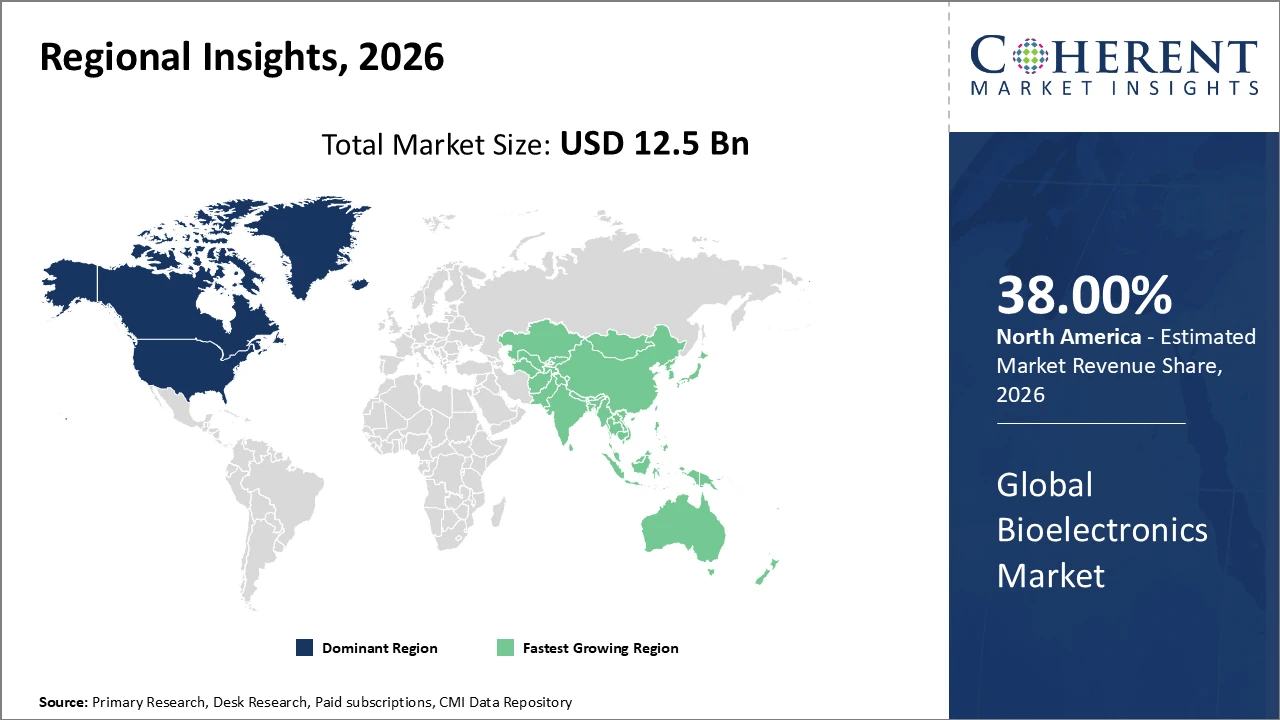
North America dominates the bioelectronics market, capturing approximately 38% of the market share in 2026, supported by a strong healthcare infrastructure and the presence of leading market players.
Asia Pacific exhibits the fastest CAGR, driven by growing investments in manufacturing capacity and increased healthcare digitization.
Europe maintains steady growth, focusing on regulatory facilitation and innovation hubs, supporting business expansion and favorable trends in bioelectronics development.
Bioelectronics Market Segmentation Analysis
To learn more about this report, Download Free Sample
Bioelectronics Market Insights, By Device Type
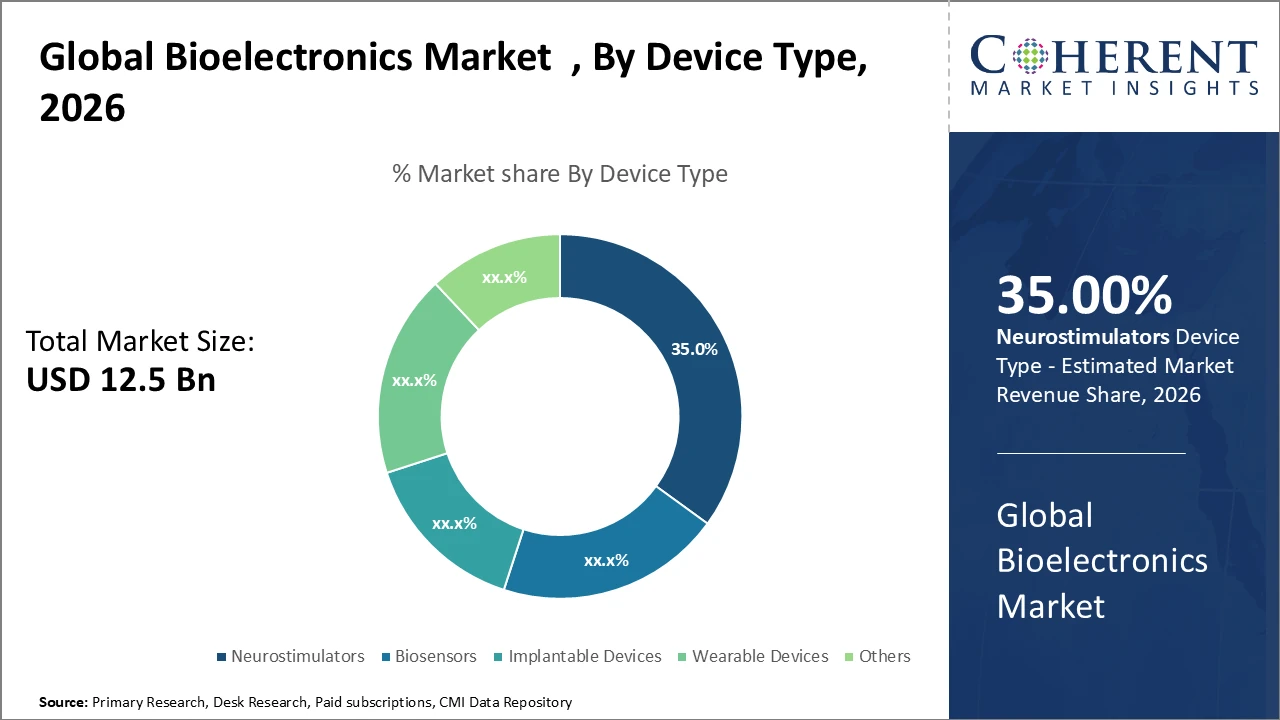
Neurostimulators dominate the bioelectronics market, accounting for approximately 35% of the share. They play a critical role in managing neurological disorders, with rapid advancements in minimally invasive and closed-loop systems driving their prominence. Rising prevalence of chronic neurological conditions and the adoption of next-generation stimulators offering enhanced precision and fewer side effects are key growth drivers. Biosensors are the fastest-growing subsegment, supported by expanding use in wearable health monitoring devices that track real-time biometrics and disease markers. Implantable devices, including pacemakers and drug delivery systems, maintain steady demand through ongoing innovation. Wearable devices focus on non-invasive monitoring, while the “others” category includes emerging technologies such as biodegradable sensors in early-stage development.
Bioelectronics Market Insights, By Application
Medical diagnostics leads the bioelectronics market with a 40% share, driven by the critical role of biosensors and implantables in early disease detection, continuous monitoring, and enabling personalized medicine approaches. Therapeutic devices, including neurostimulators and implantable drug delivery systems, show consistent growth due to the increasing prevalence of chronic conditions requiring long-term management. Health monitoring is the fastest-growing subsegment, supported by rising adoption of wearable biosensors for remote patient monitoring and telehealth solutions, especially following telemedicine expansions after 2024. Drug delivery systems are gaining attention by offering targeted, controlled medication administration that optimizes efficacy while minimizing systemic side effects. The “others” subsegment includes niche technologies such as regenerative bioelectronic implants, which are still in research and development.
Bioelectronics Market Insights, By End-User
Hospitals and clinics dominate the bioelectronics market with a substantial 50% share, driven by strong demand for implantable and diagnostic devices in clinical settings and the rising number of neurology and cardiology interventions globally. Research laboratories, while smaller in market share, play a crucial role in innovation by supporting dedicated R&D activities that develop new bioelectronic technologies. Home healthcare is the fastest-growing segment, fueled by increasing consumer adoption of wearable devices and remote monitoring solutions, enabling effective chronic disease management outside traditional healthcare facilities. The “others” segment includes specialized therapy centers and veterinary applications, offering niche but expanding revenue opportunities.
Bioelectronics Market Trends
The bioelectronics market is increasingly integrating AI and machine learning into device ecosystems, enhancing diagnostic accuracy and enabling personalized therapies.
AI-embedded biosensors introduced in 2025 improved predictive capabilities in cardiac monitoring by 22%, demonstrating the impact of advanced analytics on clinical outcomes.
Biodegradable electronic implants are emerging, addressing long-term environmental concerns, with successful clinical validations in 2024 supporting wider adoption.
Growing patient preference for minimally invasive and non-pharmaceutical therapies is driving demand for wearable bioelectronics, which saw a 25% growth in Europe in the past year.
Bioelectronics Market Insights, By Geography
To learn more about this report, Download Free Sample
North America Bioelectronics Market Analysis and Trends
North America leads the bioelectronics market, driven by a well-established healthcare infrastructure, strong research funding, and the presence of key industry players such as Medtronic and Abbott Laboratories. Annual investments in bioelectronic research exceed $200 million, supporting innovation in implantable devices, wearable biosensors, and therapeutic systems. The United States accounts for the majority of regional market share, aided by advanced insurance reimbursement policies that facilitate rapid adoption of bioelectronic technologies across hospitals, clinics, and specialty care centers. High demand for neurological, cardiac, and chronic disease management solutions further reinforces North America’s dominance, positioning the region as a global leader in bioelectronics development and commercialization.
Asia Pacific Bioelectronics Market Analysis and Trends
Asia Pacific is witnessing the fastest growth in the bioelectronics market, with a CAGR exceeding 14%, driven by rising healthcare digitization and the expansion of adaptable manufacturing ecosystems in countries such as China and South Korea. Government initiatives supporting medical technology innovation and cost-effective production further bolster market expansion. Companies like NERv Technologies and Stimwave Technologies are strengthening their regional presence through strategic partnerships, facility expansions, and localized product offerings. Increasing adoption of wearable devices, implantables, and remote monitoring solutions in hospitals and home healthcare settings is fueling demand, positioning Asia Pacific as a rapidly emerging hub for bioelectronics development and commercialization.
Bioelectronics Market Outlook for Key Countries
USA Bioelectronics Market Analysis and Trends
The USA continues to play a pivotal role in the bioelectronics market due to high healthcare expenditure and rapid adoption of implantable neurostimulators and wearable devices. In 2025, neurostimulator implant procedures in the U.S. increased by 20%, supported by streamlined FDA approvals and enhanced insurance coverage. Leading companies such as Boston Scientific have introduced AI-driven neurostimulation platforms, improving therapeutic precision and patient outcomes. These innovations have significantly boosted market revenue while reinforcing the country’s leadership in bioelectronics development. Strong healthcare infrastructure, regulatory support, and continued investment in R&D position the U.S. as a global hub for bioelectronics growth and innovation.
Germany Bioelectronics Market Analysis and Trends
The bioelectronics market in Germany is experiencing steady growth, driven by a strong healthcare infrastructure, high adoption of advanced medical technologies, and supportive regulatory frameworks. Neurostimulators and implantable devices are widely used for managing neurological and cardiac conditions, while wearable biosensors are gaining traction in preventive healthcare and remote patient monitoring. German companies and research institutions are investing in R&D for AI-integrated devices, minimally invasive systems, and biodegradable implants, fostering innovation. The country’s emphasis on clinical evidence, quality standards, and reimbursement policies ensures widespread adoption of bioelectronic solutions, positioning Germany as a key European market and innovation hub in the global bioelectronics landscape.
Analyst Opinion
The surge in demand for implantable bioelectronic devices is a key growth driver. Neurostimulation device implants grew by over 15% in 2025, fueled by rising Alzheimer’s and Parkinson’s patient populations. Advanced materials like biocompatible polymers reduced device rejection rates by 25% in 2024 clinical trials, boosting adoption.
Increasing use cases in diagnostics, particularly wearable biosensors for glucose and cardiac monitoring, have driven market revenue. In 2026, wearable biosensor shipments rose by 20% in North America and Europe, highlighting strong consumer acceptance and expanding market scope.
Production capacity expansions have been pivotal. In 2025, leading hubs increased microscale bioelectronic component production lines by 30%, enabling faster turnaround and lower costs, expanding market share in Asia Pacific.
Export trends show major Asian economies, including South Korea and China, increased bioelectronic component exports by over 18% in 2024, leveraging competitive pricing and technological advantages to boost industry revenue and shape global market strategies.
Market Scope
| Report Coverage | Details | ||
|---|---|---|---|
| Base Year: | 2025 | Market Size in 2026: | USD 12.5 billion |
| Historical Data for: | 2020 To 2024 | Forecast Period: | 2026 To 2033 |
| Forecast Period 2026 to 2033 CAGR: | 12.4% | 2033 Value Projection: | USD 29.8 billion |
| Geographies covered: |
|
||
| Segments covered: |
|
||
| Companies covered: | Medtronic, Boston Scientific, Abbott Laboratories, NeuroPace, Biotronik, Cochlear Limited, Cala Health, CorWave, LivaNova, Synchron | ||
| Growth Drivers: |
|
||
Uncover macros and micros vetted on 75+ parameters: Get instant access to report
Bioelectronics Market Growth Factors
Key drivers fueling bioelectronics market growth include the rising prevalence of chronic diseases such as epilepsy, Parkinson’s, and diabetes, which drive demand for advanced monitoring and therapeutic devices. For example, epilepsy-related neurostimulator implants increased by 18% globally in 2025, highlighting expanding market potential. Technological advancements in device miniaturization and wireless communication have improved usability, further boosting adoption. Global investment in bioelectronics research exceeded $500 million in 2026, supporting innovation and new product development. Additionally, growing patient awareness of non-pharmaceutical treatment options, reinforced by initiatives like the US FDA’s approval of novel bioelectronic classes in 2024, is accelerating market growth.
Bioelectronics Market Development
In 2025, Boston Scientific launched an AI-integrated neurostimulation platform that enhanced treatment precision for chronic neurological disorders. The device combined real-time neural signal monitoring with adaptive stimulation, improving patient outcomes and reducing side effects. Its introduction led to a 20% increase in neurostimulator adoption in North American hospitals, reflecting strong clinical acceptance and positioning Boston Scientific as a key innovator in the bioelectronics space.
Key Players
Leading Companies of the Market
Medtronic
Boston Scientific
Abbott Laboratories
NeuroPace
Biotronik
Cochlear Limited
Cala Health
CorWave
LivaNova
Synchron
Several leading companies have leveraged strategic partnerships to foster innovation and strengthen market presence. In 2025, Medtronic collaborated with emerging startups to launch minimally invasive neurostimulators, boosting market penetration by 12% and enhancing their position in neurological therapies. Similarly, Boston Scientific’s acquisition of a biosensor manufacturer in early 2026 allowed the company to diversify into wearable medical devices, driving a 15% increase in revenue within 12 months. These strategies reflect the industry’s focus on combining internal R&D with external collaborations to accelerate product development, expand offerings, and capture growing opportunities in the bioelectronics market.
Bioelectronics Market Future Outlook
The bioelectronics market is poised for robust growth, driven by rising prevalence of chronic and neurological diseases, technological advancements, and increasing patient preference for non-pharmaceutical therapies. Implantable devices, wearable biosensors, and minimally invasive neurostimulators are expected to see higher adoption, supported by AI integration, wireless connectivity, and personalized treatment capabilities. North America will continue to lead in revenue, while Asia Pacific is projected to record the fastest CAGR due to expanding healthcare infrastructure and cost-effective manufacturing. Continuous investment in R&D, regulatory support, and strategic collaborations will further accelerate innovation, making bioelectronics a transformative segment in global healthcare over the coming decade.
Bioelectronics Market Historical Analysis
The bioelectronics market has experienced steady growth over the past decade, driven by increasing demand for advanced diagnostic and therapeutic devices. Early adoption focused on implantable neurostimulators and cardiac devices, addressing neurological and cardiovascular conditions. Over time, innovations in wearable biosensors, minimally invasive systems, and wireless communication expanded market applications to chronic disease management and remote monitoring. Additionally, rising patient awareness of non-pharmaceutical therapies and growing investment in R&D accelerated the development of next-generation devices, laying the foundation for rapid market expansion and global commercialization in subsequent years.
Sources
Primary Research Interviews:
Neurologists and Cardiologists
Pain Management Specialists
Clinical Pharmacologists
Medical Device Engineers and Manufacturers
Databases:
IQVIA Pharmaceutical & Healthcare Data
Global Health Data Exchange (GHDx)
OECD Health Statistics
Magazines:
Pharmaceutical Technology
MedTech Insight
Drug Development & Delivery
HealthTech Magazine
Journals:
Clinical Therapeutics
Journal of Bioelectronics and Biosensors
Journal of NeuroEngineering and Rehabilitation
Biomedical Microdevices
Journal of Medical Devices
Newspapers:
The New York Times (Health)
The Guardian (Health)
Financial Times (Healthcare)
The Hindu (Health)
Reuters Health
Associations:
World Health Organization (WHO)
U.S. Food and Drug Administration (FDA)
Biomedical Engineering Society
European Medicines Agency (EMA)
International Society for Bioelectronics
Share
Share
About Author
Manisha Vibhute is a consultant with over 5 years of experience in market research and consulting. With a strong understanding of market dynamics, Manisha assists clients in developing effective market access strategies. She helps medical device companies navigate pricing, reimbursement, and regulatory pathways to ensure successful product launches.
Missing comfort of reading report in your local language? Find your preferred language :
Transform your Strategy with Exclusive Trending Reports :
Frequently Asked Questions

Credibility and Certifications

860519526

9001:2015

27001:2022


Need a Custom Report?
We can customize every report - free of charge - including purchasing stand-alone sections or country-level reports
Customize NowSelect a License Type
Joining thousands of companies around the world committed to making the Excellent Business Solutions.
View All Our Clients
 Schedule a meeting with report Author