

Bioplastics Market Size and Trends - 2026 to 2033
The global bioplastics market will surpass USD 15.91 Bn in 2026 and is likely to reach USD 59.37 Bn by 2033. The global market is exhibiting a compound annual growth rate (CAGR) of 20.7% from 2026 to 2033.
Key Takeaways
- Based on Product, Biodegradable segment is likely to hold around 58.1% of shares in the global market.
- By Application, Packaging division will hold around 37% of shares in 2026.
- North America will hold around 39.2% of shares in the global market during the forecast period.
Market Overview
The bioplastics market to witness growth, driven by growing demand from packaging industry. This is due to favorable government regulations on sustainable plastics. Bioplastics offer a sustainable alternative to conventional plastics made from petroleum. Environmental concerns among consumers have increased the demand for sustainable and biodegradable plastics.
Current Events and their Impact on the Bioplastics Market
Current Event | Description and its Impact |
Global Regulatory Push for Plastic Waste Reduction |
|
Technological Breakthroughs in Bio-Based Manufacturing |
|
Growth Factors Driving Bioplastic Market Growth
- Increasing Environmental Concerns – Awareness of plastic pollution and its impact is growing. Demand for sustainable alternatives is also rising.
- Sustainable Product Consumer Demand – Consumers prefer sustainable products. This drives brands and retailers to use bioplastics.
- Corporate Sustainability Targets – Large companies set high sustainability and social responsibility goals. They invest in sustainable solutions and share their efforts.
- Current Industry Events of 2026
- Market Size Estimation
- Regional Breakdown
- Competitive Landscape
- Customer Intelligence
- Segmental Analysis
- Pricing Analysis
- Key Market Drivers, Challenges & Future Trends
- Customized Insights Section
Segmental Insights
Global Bioplastics Market Insights, By Product
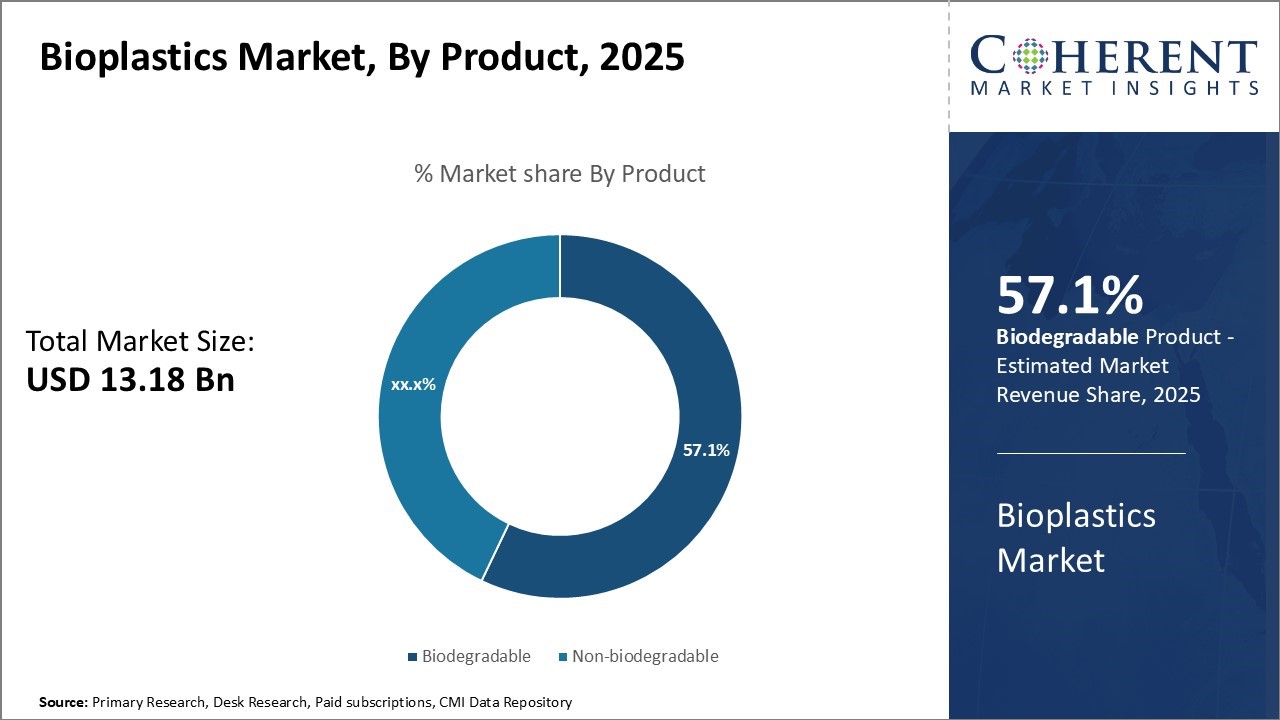
The biodegradable segment will hold 58.1% share in the global bioplastics market in 2026. Biodegradable plastics can decompose completely. It will break down into carbon dioxide, water, and biomass. Advancements in biodegradable plastic technologies have increased their competitiveness against fossil-fuel based options.
For instance, Green Dot Bioplastics expanded its Terratek® BD line. The expansion included nine new compostable grades. These grades were targeted for
Global Bioplastics Market Insights, By Application
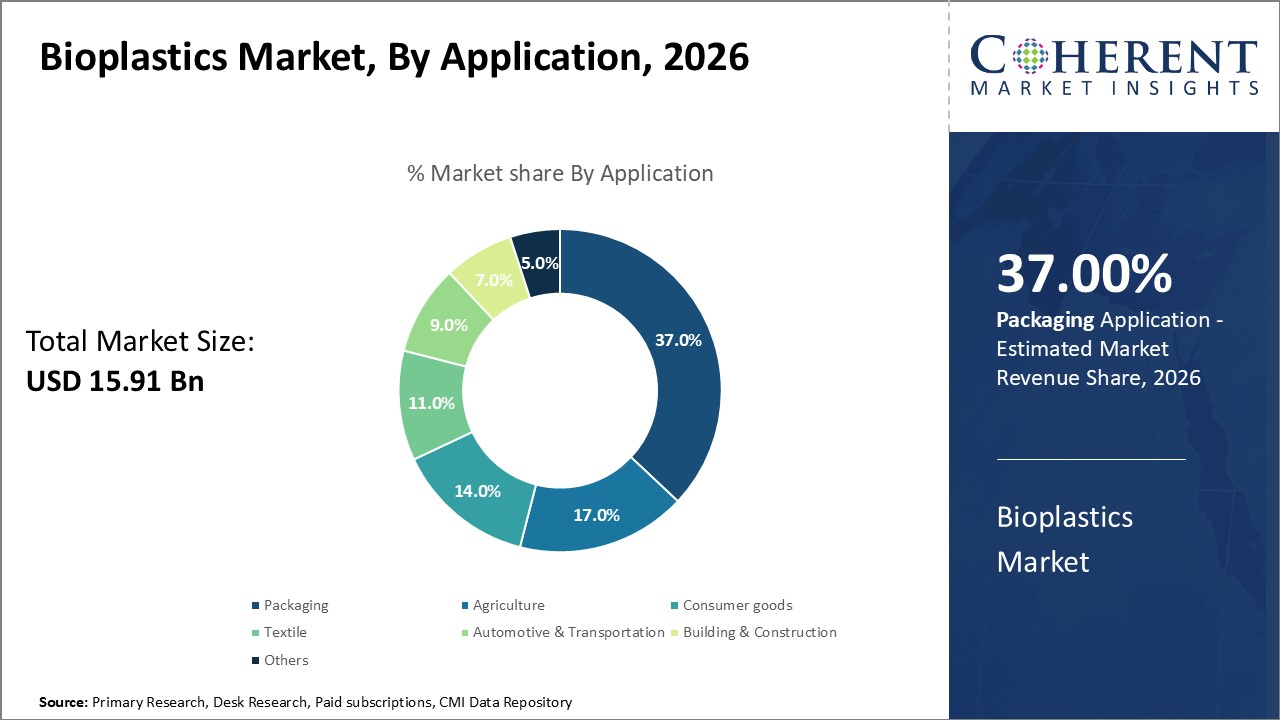
The packaging segment is likely to hold 37% share in the global bioplastics market in 2026. Bioplastics are used across various packaging formats. It includes food and beverage containers to shopping and garbage bags. Strict regulations to curb single-use plastics have created opportunities for bioplastics in packaging.
For instance, in September 2026, Advanced Materials Inc announced the launch of its latest line of sustainable bioplastics. The bioplastics were designed for packaging applications.
Regional Insights
North America Bioplastics Market Analysis and Trends
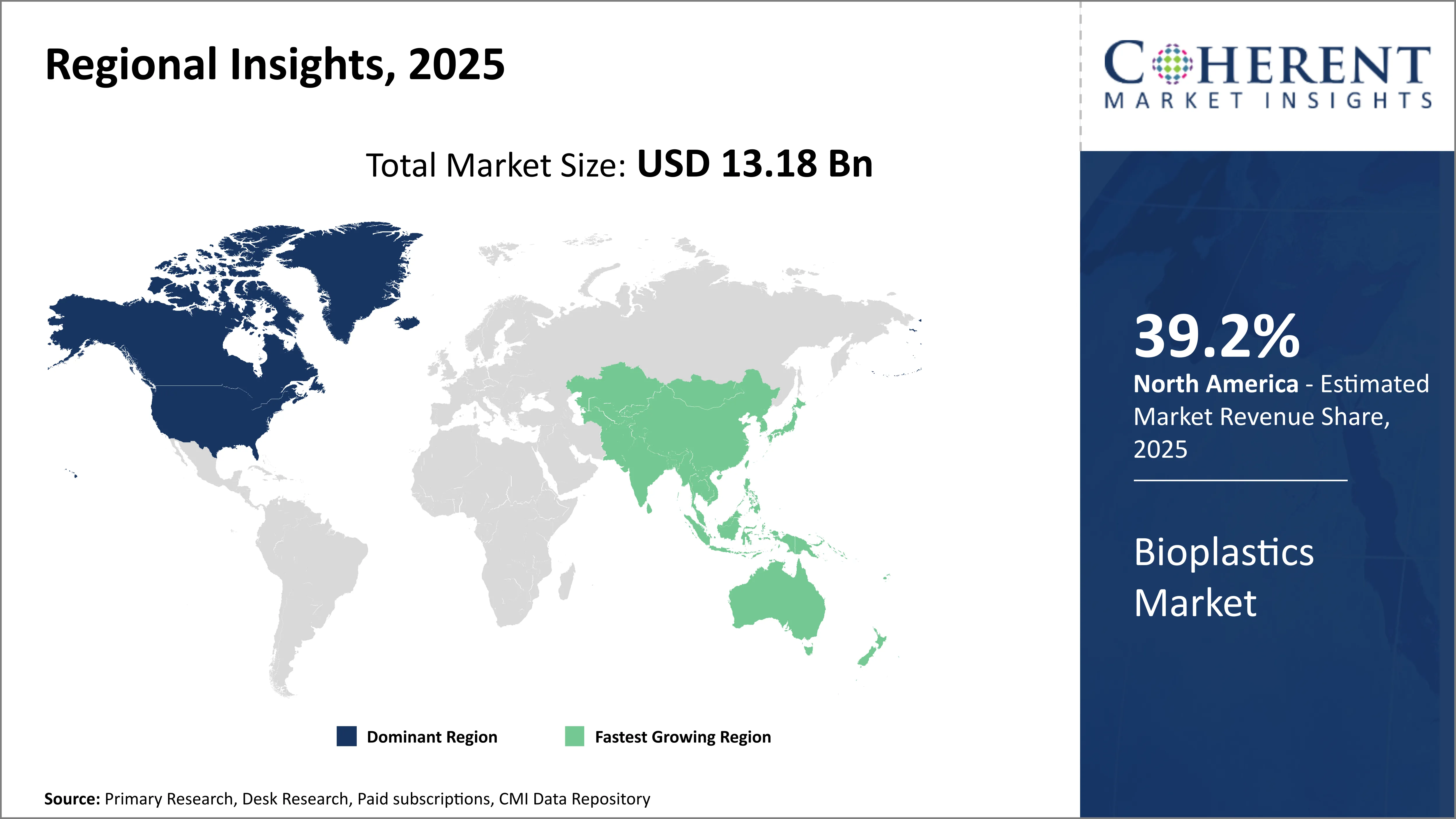
North America has established itself as the dominant region with 39.2% share in 2026. North America is a hub of manufacturers such as NatureWorks, BASF, Corbion, and Bioamber. These manufacturers are investing in R&D to launch new bioplastic grades.
For instance, in November 2023, AgroRenew LLC announced its plan to build an $83 million bioplastics plant. The 200,000 sq. ft. facility was used to convert food waste from cantaloupe, watermelon, and pumpkin farms in the U.S. into bioplastics.
Asia Pacific Bioplastics Market Analysis and Trends
Asia Pacific has emerged as the fastest‑growing market for bioplastics. Countries like China, India, Indonesia and Thailand offer huge markets. These nations have large populations and rapid economic growth. They view bioplastics as a chance to meet sustainability goals. They also use them to serve many industries.
For instance, an Odisha-based startup has been addressing environmental and food waste challenge. The startup will convert seafood waste into bioplastics.
Global Bioplastics Market – Dominating Countries
The U.S. Bioplastics Market Analysis and Trends
The U.S. is likely to hold a dominating position in the global bioplastics market in 2026. This is owing to strong government support and growing demand for sustainable materials. Increasing consumer awareness and strict environmental regulations also drive market growth.
For instance, Symphony Environmental Technologies announced a two-year exclusive US supply contract for their d2w biodegradable plastics technology. The contract covered nutritional supplement bottles. They also launched a new bottle in the US with Better Earth LLC (“Better Earth”) using d2w for nutritional supplements.
China Bioplastics Market Analysis and Trends
China is likely to hold a dominating position in the global bioplastics market. This is owing to rapid industrial growth and rising demand for eco-friendly products. China’s large manufacturing base supports mass production of bioplastics at lower costs. Growing investments in green technologies boost innovation and market expansion. Supportive policies and environmental goals encourage the use of bio-based materials.
For instance, in May 2023, Sulzer signed an agreement with Jindan New Biomaterials (Jindan) in China. Jindan is a major lactic acid (LA) producer. The deal aimed to enable the production of polylactic acid (PLA), a biobased plastic.
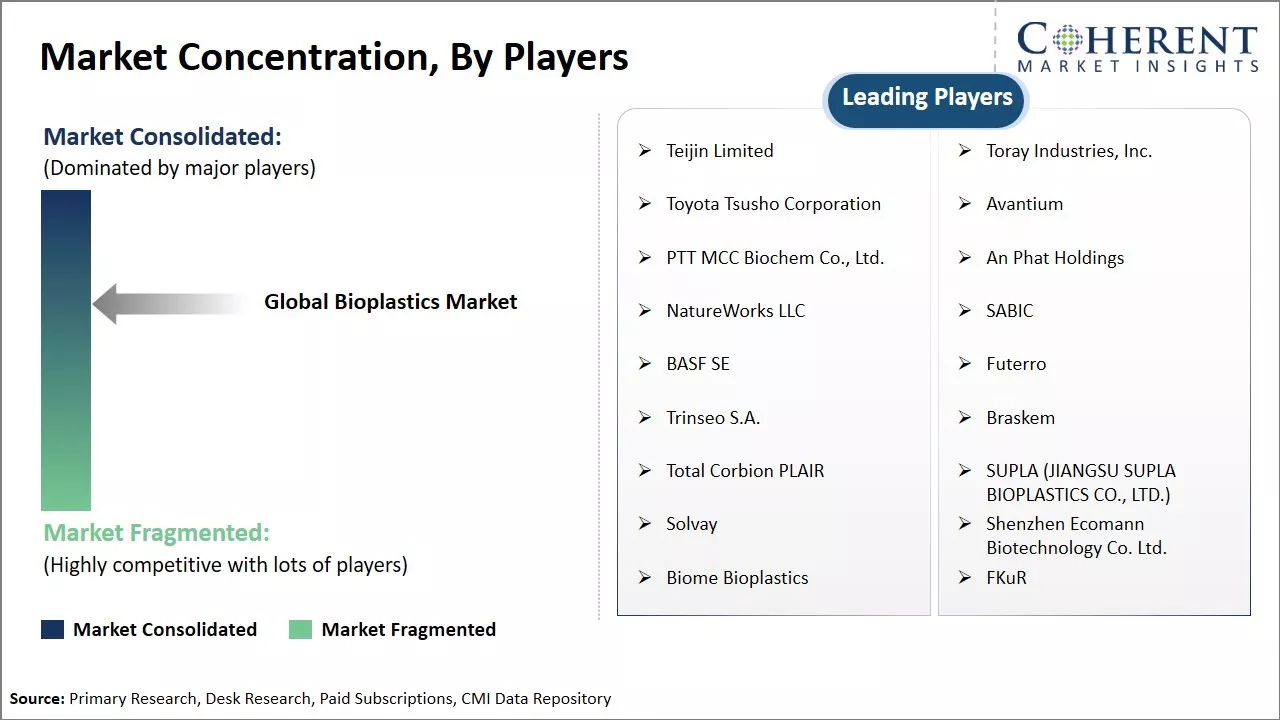
Market Concentration and Competitive Landscape
Analyst Opinion
- The global bioplastics market is likely to witness significant growth in 2025. Rising environmental concerns related to petroleum-based plastics and favorable government policies promote growth.
- Demand for plastics from industries such as packaging, food and beverages fuels growth. North America is dominating owing to strong government support and initiatives.
Speak to the analyst
Want personalized insights?
Take the findings above to one of our principal consultants, or have the report rebuilt around the segments, geographies and competitors you actually track.
Bioplastics Market News
- In May 2025, Intec Bioplastics, Inc. announced the launch of sustainable packaging, EarthPlus® Hercules Bioflex™ Stretch Wrap. It could be used for pallet wrapping and food wrapping.
- In September 2024, CSIRO and Murdoch University launched The Bioplastics Innovation Hub. It was an $8 million collaboration. It has worked with industry partners to develop a new generation of compostable plastic.
Market Report Scope
Bioplastics Market Report Coverage
| Report Coverage | Details | ||
|---|---|---|---|
| Base Year: | 2025 | Market Size in 2026: | USD 15.91 Bn |
| Historical Data for: | 2020 To 2024 | Forecast Period: | 2026 To 2033 |
| Forecast Period 2026 to 2033 CAGR: | 20.7% | 2033 Value Projection: | USD 59.37 Bn |
| Geographies covered: |
| ||
| Segments covered: |
| ||
| Companies covered: | Teijin Limited, Toray Industries, Inc., Toyota Tsusho Corporation, Avantium, PTT MCC Biochem Co., Ltd., An Phat Holdings, NatureWorks LLC, SABIC, BASF SE, Futerro, Trinseo S.A., Braskem, Total Corbion PLAIR, SUPLA (JIANGSU SUPLA BIOPLASTICS CO., LTD.), Solvay, Shenzhen Ecomann Biotechnology Co. Ltd., Biome Bioplastics, and FKuR | ||
| Growth Drivers: |
| ||
| Restraints & Challenges: |
| ||
Bioplastic Market Drivers
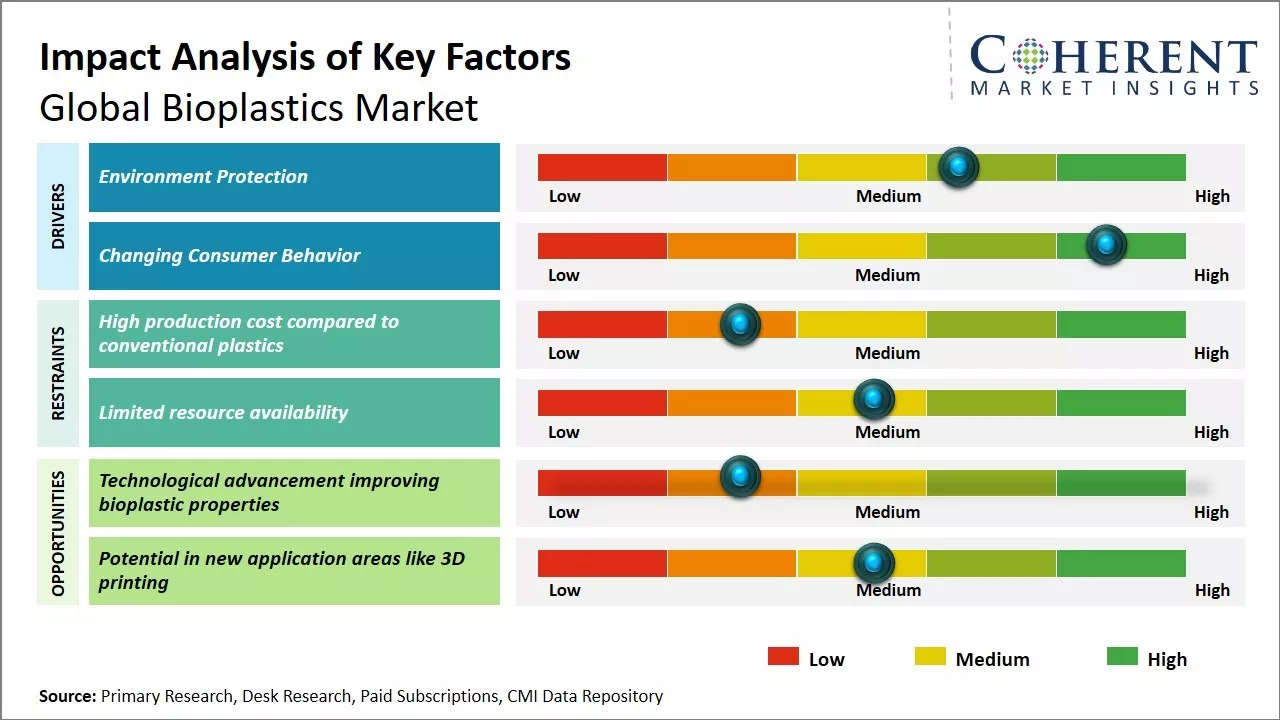
Environmental Protection
Environmental protection is now a major global concern. Pollution, global warming, and climate change are rising. People want sustainable alternatives to conventional plastics. Traditional plastics come from fossil fuels. They take hundreds of years to break down. Bioplastics are a better option. They are biodegradable or made from renewable sources.
Changing Consumer Behavior
Changing consumer attitudes towards sustainable products has boosted the bioplastics industry. Millennials and Gen Z, care about a products environmental and social impact. They check the facts before buying. They are willing to pay more for plastic-free or recyclable products.
Opportunities: Technological advancement improves bioplastic properties
Technological progress is growing the global bioplastics market. Bioplastics come from renewable sources like vegetable oils and fats. They are a greener option than regular plastics. Traditional bioplastics have been expensive and limited in use. Ongoing research is making them cheaper and better.
Market Segmentation
- Product Insights (Revenue, USD Bn & KT, 2021 - 2033)
- Biodegradable
- Polylactic Acid
- Starch Blends
- Polybutylene Adipate Terephthalate (PBAT)
- Polybutylene Succinate (PBS)
- Others
- Non-biodegradable
- Polyethylene
- Polyethylene Terephthalate
- Polyamide
- Polytrimethylene Terephthalate
- Others
- Application Insights (Revenue, USD Bn & KT, 2021 - 2033)
- Packaging
- Agriculture
- Consumer goods
- Textile
- Automotive & Transportation
- Building & Construction
- Others
- Regional Insights (Revenue, USD Bn & KT, 2021 - 2033)
- North America
- U.S.
- Canada
- Latin America
- Brazil
- Argentina
- Mexico
- Rest of Latin America
- Europe
- Germany
- U.K.
- Spain
- France
- Italy
- Russia
- Rest of Europe
- Asia Pacific
- China
- India
- Japan
- Australia
- South Korea
- ASEAN
- Rest of Asia Pacific
- Middle East & Africa
- GCC Countries
- Israel
- Rest of Middle East & Africa
- Key Players Insights
- Teijin Limited
- Toray Industries, Inc.
- Toyota Tsusho Corporation
- Avantium
- PTT MCC Biochem Co., Ltd.
- An Phat Holdings
- NatureWorks LLC
- SABIC
- BASF SE
- Futerro
- Trinseo S.A.
- Braskem
- Total Corbion PLAIR
- SUPLA (JIANGSU SUPLA BIOPLASTICS CO., LTD.)
- Solvay
- Shenzhen Ecomann Biotechnology Co. Ltd.
- Biome Bioplastics
- FKuR
Sources
Primary Research interviews
- Bioplastics manufacturers and producers
- Raw material suppliers and distributors
- End-use industry representatives (packaging, automotive, agriculture)
- Technology developers and research scientists
- Others
Databases
- IBISWorld Industry Research Database
- Bloomberg Terminal Database
- Others
Magazines
- Bioplastics Magazine
- Plastics Engineering Magazine
- European Bioplastics Magazine
- Sustainable Packaging Magazine
- Others
Journals
- Journal of Polymers and the Environment
- Bioresource Technology Journal
- Polymer Degradation and Stability Journal
- Others
Newspapers
- Financial Times
- The Wall Street Journal
- Reuters Business News
- Bloomberg News
- The Guardian Environment Section
- Others
Associations
- European Bioplastics Association (EUBP)
- Biodegradable Products Institute (BPI)
- Society of Plastics Engineers (SPE)
- Sustainable Packaging Coalition (SPC)
- Others
Public Domain sources
- U.S. Environmental Protection Agency (EPA) reports
- European Commission sustainability reports
- OECD environmental databases
- United Nations Environment Programme publications
- Others
Proprietary Elements
- CMI Data Analytics Tool
- Proprietary CMI Existing Repository of information for last 8 years
Get access to 250+ pages report
Every segment, forecast, competitor profile and data table behind the analysis above — available for instant download.
- ESOMAR Member
- ISO 9001:2015 Certified
- D-U-N-S Registered
- GDPR & CCPA Compliant
Missing comfort of reading report in your local language? Find your preferred language:
Transform your Strategy with Exclusive Trending Reports
Frequently Asked Questions
The Bioplastics Market is estimated to be valued at USD 15.91 Bn in 2026, and is expected to reach USD 59.37 Bn by 2033.
The CAGR of the Bioplastics Market is projected to be 20.7% from 2026 to 2033.
Environmental protection and changing consumer behavior are the major factors driving the growth.
High production cost compared to conventional plastics and limited resource availability are hampering the market growth.
In terms of Product, Biodegradable segment will dominate the market revenue share in 2026.
Teijin Limited, Toray Industries, Inc., Toyota Tsusho Corporation, Avantium, PTT MCC Biochem Co., Ltd., An Phat Holdings, NatureWorks LLC, SABIC, BASF SE, Futerro, Trinseo S.A., Braskem, Total Corbion PLAIR, SUPLA (JIANGSU SUPLA BIOPLASTICS CO., LTD.), Solvay, Shenzhen Ecomann Biotechnology Co. Ltd., Biome Bioplastics, and FKuR are the major players.
North America will lead the global bioplastics market.