

Botanical Supplements Market Size and Share Analysis - (2026-2033)
Botanical Supplements Market is estimated to be valued at USD 134.03 Bn in 2026 and is expected to reach USD 256.24 Bn in 2033, exhibiting a compound annual growth rate (CAGR) of 9.7% from 2026 to 2033.
Key Takeaways
- Based on Application, the Pharmaceuticals segment is expected to account for 48.8%share in 2026, owing to their therapeutic benefits and preventive health applications.
- Based on Distribution Channel, the Retail Pharmacies segment is expected to hold the largest share of the market in 2026, due to their accessibility, consumer trust, and wide product availability.
- Based on Region, North America is set to lead the botanical supplement market in 2026, with 35% While, Asia Pacific is anticipated to be the fastest growing region.
Market Overview
The botanical supplements market is experiencing robust growth in 2026, fueled by rising consumer awareness of natural health solutions and preventive wellness. Increasing demand for plant-based ingredients in pharmaceuticals, food, and personal care products is driving innovation and product diversification. Consumers are gravitating toward botanical supplements for immune support, stress relief, and chronic disease management. The botanical supplements market demand is further amplified by the global shift toward holistic lifestyles and clean-label products. With expanding retail and online distribution channels, the market is poised for sustained momentum across diverse demographics and regions.
Current Events and their Impacts on the Botanical Supplements Market
Current Event | Description and its Impact |
Regulatory Harmonization and FDA Modernization Efforts |
|
Technological Advancement in Extraction and Authentication |
|
Botanical Supplement Ingredient Production In 2025
Botanical Ingredient | Estimated 2025 Production Volume | Key Producing Regions | Primary Uses |
Turmeric | ~1.3 million metric tons | India, Bangladesh, Myanmar | Anti-inflammatory, antioxidant |
Ashwagandha | ~25,000 metric tons | India | Stress relief, immunity, vitality |
Ginseng | ~80,000 metric tons | South Korea, China, USA | Energy, cognition, adaptogen |
Green Tea Extract | ~150,000 metric tons | China, Japan, India | Weight loss, antioxidant, metabolism |
Echinacea | ~10,000 metric tons | USA, Germany, Canada | Immune support |
Ginger | ~3.5 million metric tons | India, Nigeria, China | Digestive health, anti-inflammatory |
- Current Industry Events of 2026
- Market Size Estimation
- Regional Breakdown
- Competitive Landscape
- Customer Intelligence
- Segmental Analysis
- Pricing Analysis
- Key Market Drivers, Challenges & Future Trends
- Customized Insights Section
Segmental Insights
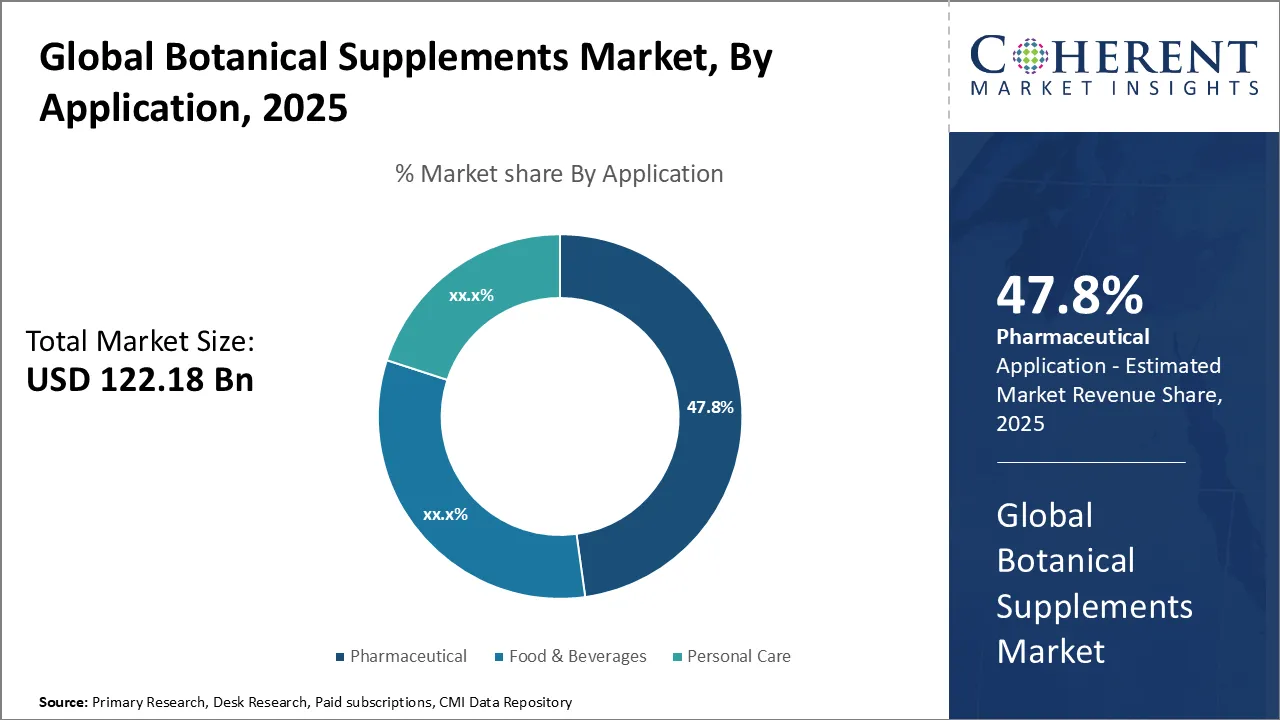
Botanical Supplements Market Insights, By Application: Pharmaceuticals Dominance Is for Their Therapeutic Benefits and Preventive Health Application
In terms of application, the pharmaceutical segment is projected to dominate the market with 48.8% share in 2026, driven by increasing consumer preference for natural and plant-based remedies. As awareness of chronic diseases and preventive healthcare grows, botanical supplements are being integrated into mainstream medical treatments and wellness routines. These products are often used to support immunity, manage stress, and address conditions like arthritis, cardiovascular issues, and digestive disorders. Regulatory bodies in many regions are also recognizing the therapeutic potential of botanicals, which has encouraged pharmaceutical companies to invest in research and development. This segment benefits from clinical validation, standardized formulations, and growing trust among healthcare professionals and patients alike.
For instance, in May 2025, DSM-Firmenich and Indena unveiled groundbreaking biotic and botanical combination concepts at Vitafoods Europe 2024. Designed to support immune, cognitive, and metabolic health, these innovations blend clinically backed ingredients with advanced delivery systems. The launch marks a strategic move in pharmaceutical-grade botanical supplements, highlighting the growing demand for natural, science-driven wellness solutions.
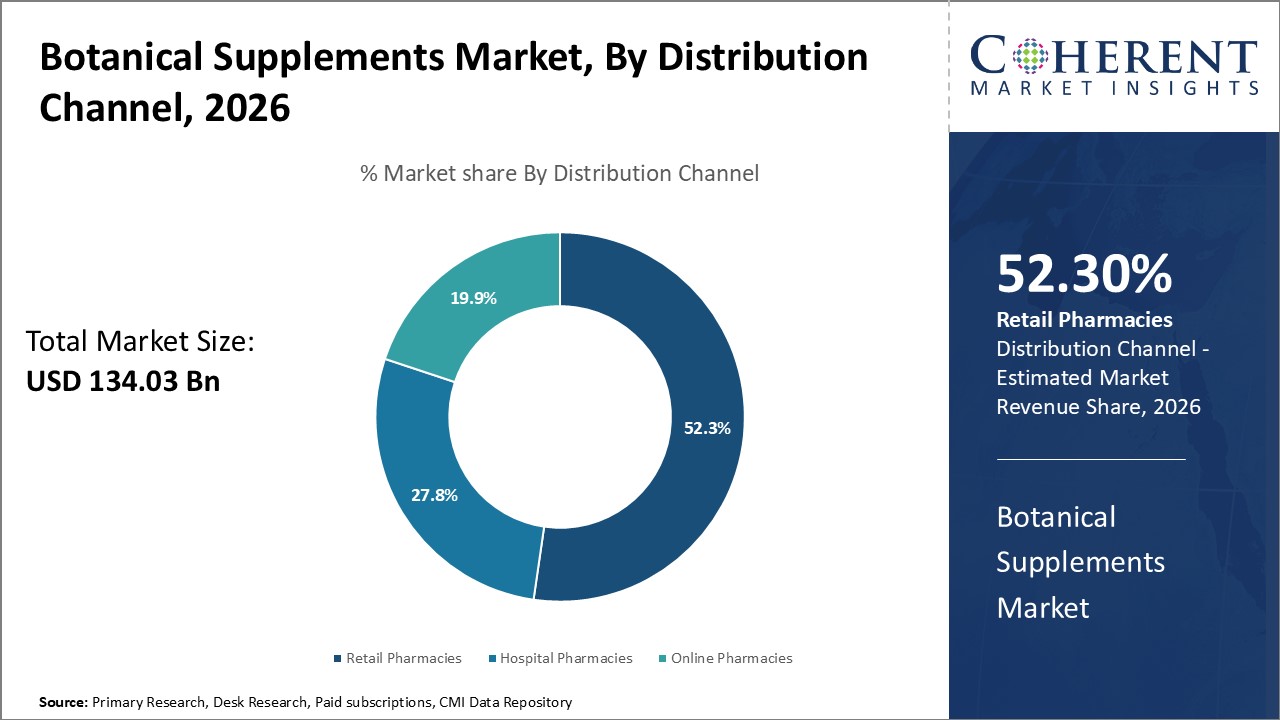
Botanical Supplements Market Insights, By Distribution Channel: Retail Pharmacies Dominate Due To Their Accessibility, Consumer Trust, And Wide Product Availability
In terms of distribution channel, the retail pharmacies segment is expected to lead the market with the largest share in 2026. Their widespread presence, ease of access, and established consumer trust make them the preferred channel for purchasing health-related products. Consumers often rely on pharmacists for guidance, especially when choosing supplements for specific health concerns. Retail pharmacies also offer a curated selection of reputable brands, which adds to their credibility. While online pharmacies are gaining traction due to convenience and digital health trends, retail outlets remain the most influential due to their physical presence and personalized service. Their role in bridging the gap between healthcare and consumer wellness continues to strengthen their market position.
For instance, in July 2025, Apollo AyurVAID launched India’s first tested safe Ayurveda products, marking a milestone in botanical healthcare. These certified herbal formulations are now available through Apollo’s retail pharmacy network, enhancing consumer access to trusted natural remedies. The initiative reflects growing demand for safe, science-backed botanical supplements in India’s wellness and preventive health market.
Regional Insights
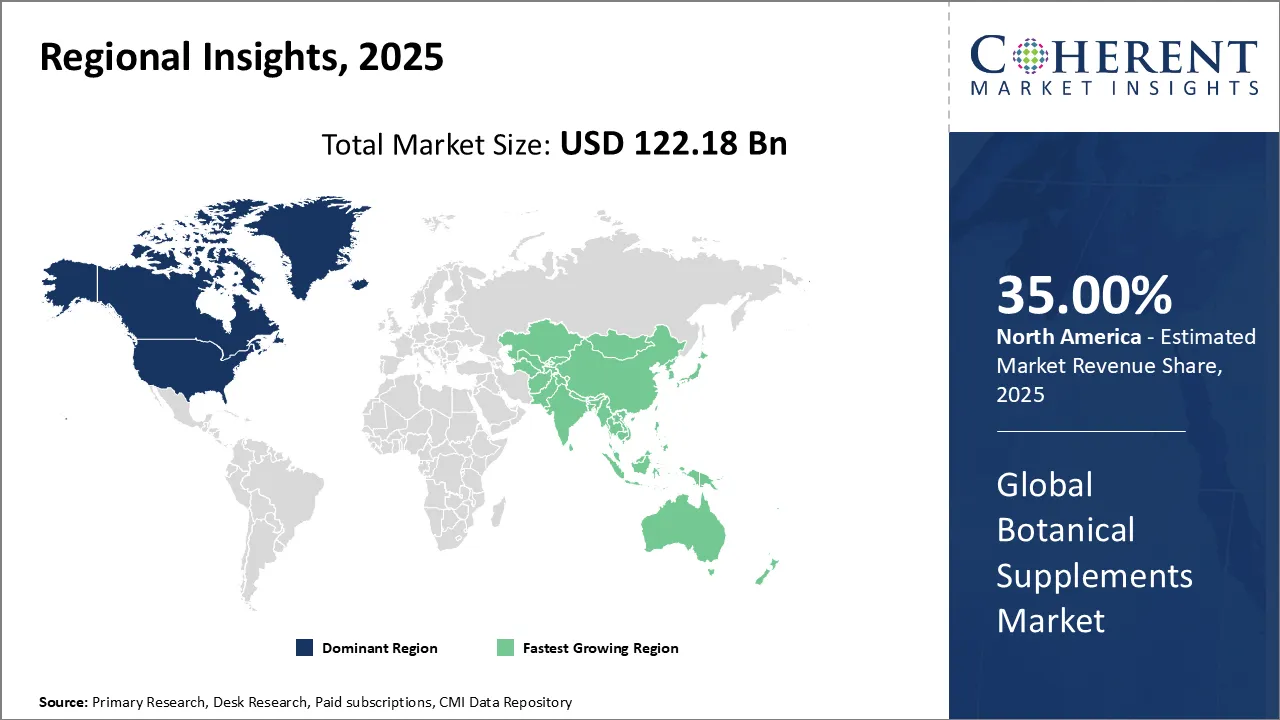
North America Botanical Supplements Market Analysis & Trends
North America, holding 35% share in 2026, is projected to dominate the botanical supplements market, driven by rising health consciousness, preference for natural remedies, and an aging population seeking preventive care. Increased awareness of plant-based nutrition, coupled with supportive regulatory frameworks and widespread retail availability, fuels consumer interest. The region also benefits from strong innovation and marketing in wellness products.
For instance, in July 2026, BioVivo Science launched a $70 million cGMP-certified facility in Jeffersonville, Indiana, to produce a new water-soluble American ginseng extract. Targeting the nutraceutical market, the extract supports cognitive and adaptogenic health. This U.S.-based expansion enhances supply chain resilience and meets growing demand for clean-label, traceable botanical supplements in functional foods and beverages.
Asia Pacific Botanical Supplements Market Analysis & Trends
Asia Pacific region is anticipated to be the fastest growing region in the botanical supplement market, driven by strong cultural roots in herbal medicine, rising health awareness, and growing disposable incomes. Countries like China and India promote traditional systems like Ayurveda and TCM, while urban consumers seek natural alternatives for wellness. Expanding e-commerce and supportive government policies further accelerate market growth.
For instance, in October 2024, Tonik launched transdermal patches across Asia that delivers vitamins and botanical extracts through the skin. Designed for sustained release and enhanced absorption, the patches offer a convenient alternative to oral supplements. This innovation taps into rising demand for plant-based wellness products and non-traditional delivery formats in the region’s growing nutraceutical market.
Botanical Supplements Market Outlook Country-Wise
The U.S. Botanical Supplements Market Trends
The U.S. botanical supplements market is thriving due to rising health awareness, preference for natural remedies, and an aging population seeking preventive care. Consumers increasingly favor plant-based, clean-label products for immunity, stress relief, and overall wellness. Robust e-commerce, innovation in delivery formats, and regulatory support further fuel demand across diverse demographics.
For instance, in October 2026, Dear Apothecary launched a new line of 100% Made-in-USA herbal supplements, emphasizing clean-label formulations and domestic manufacturing. The products are crafted entirely in the U.S., from sourcing to packaging, and adhere to GMP standards. This move caters to growing consumer demand for transparent, plant-based wellness solutions with traceable origins and high-quality production.
China Botanical Supplements Market Trends
China’s botanical supplements market is booming due to its deep-rooted tradition in herbal medicine, rising health awareness, and growing middle-class demand for natural wellness products. Government support for Traditional Chinese Medicine and expanding e-commerce channels further fuel consumer access. The trend reflects a shift toward preventive care and plant-based solutions across urban and rural populations.
For instance, in Novembre 2026, Natural Field unveiled its Ashwagandha white paper at the FTA Forum in Hangzhou, China, highlighting clinical research, formulation strategies, and global market trends. The initiative aims to promote evidence-based use of the adaptogenic herb in supplements, reinforcing Asia’s growing role in botanical innovation and functional health product development.
Market Report Scope
Botanical Supplements Market Report Coverage
| Report Coverage | Details | ||
|---|---|---|---|
| Base Year: | 2025 | Market Size in 2026: | USD 134.03 Bn |
| Historical Data for: | 2020 To 2024 | Forecast Period: | 2026 To 2033 |
| Forecast Period 2026 to 2033 CAGR: | 9.7% | 2033 Value Projection: | USD 256.24 Bn |
| Geographies covered: |
| ||
| Segments covered: |
| ||
| Companies covered: | ChromaDex, Inc., Nutraceutical International Corporation, NBTY, Inc., Surya Herbal, Ltd., BASF SE, NaturaLife Asia Co., Ltd., Bio-Botanica Inc., HERBALIFE Nutrition, Archer Daniels Midland Company (ADM), Integrated BioPharma, Inc., The Himalaya Drug Company, Ricola AG, MMJ International Holdings, and Pharmavite LLC. | ||
| Growth Drivers: |
| ||
| Restraints & Challenges: |
| ||
Global Botanical Supplements Market Drivers
- Increasing prevalence of chronic disorder: The increasing prevalence of chronic disorders is fueling demand for alternative botanical supplement formats like tinctures, gummies, and functional beverages. These options offer targeted support for conditions such as inflammation, diabetes, and cardiovascular health. As consumers seek natural remedies, botanical supplements market growth is accelerating globally, driven by innovation and personalized, plant-based wellness solutions.
- Elderly People Using Botanical Supplements: Elderly people are increasingly turning to botanical supplements for age-related health support, driving demand for alternative formats like soft chews, teas, and liquid extracts that are easier to consume. These innovations enhance accessibility and compliance among seniors. As a result, the botanical supplements market share is expanding within the aging population segment globally.
- Increasing geriatric population: The increasing geriatric population is driving demand for alternative supplement formats like gummies, powders, and liquid botanicals that are easier to consume and digest. These options support age-related health needs such as immunity, cognition, and joint care. As the botanical supplements market size grows globally, senior-friendly innovations are reshaping product development and accessibility. For instance, according to the U.S. Census Bureau, the U.S. geriatric population is expected to reach 77 million by 2034.
Global Botanical Supplements Market Opportunities
Alternative supplement options: In the global botanical supplements market, alternative formats like gummies, powders, and functional beverages are reshaping consumer preferences. These options offer convenience, taste, and personalization, fueling demand for plant-based wellness. As the botanical supplements market forecast predicts continued growth, innovation in delivery methods plays a vital role in expanding market reach and consumer engagement.
Analyst Opinion (Expert Opinion)
The global botanical supplements market value is undergoing a structural transformation driven by scientific validation, supply chain transparency, and regulatory tightening. Consumer demand has shifted from generic “natural” products to clinically supported formulations backed by verifiable traceability. According to the American Botanical Council (2024), U.S. herbal supplement sales continued to rise, highlighting sustained consumer willingness to pay premiums for quality and standardized botanical extracts.
However, DNA barcoding studies published in the Journal of Food Composition and Analysis (2023) revealed that over 25% of herbal supplements tested contained undeclared or substituted ingredients, emphasizing the need for molecular authentication and rigorous quality control. Regulators, including the U.S. Pharmacopeia and the European Medicines Agency, are increasingly pressing for standardized assays, clear labeling, and GMP compliance, factors that will determine long-term brand credibility.
Raw material scarcity is another emerging challenge. Reports from the Convention on Biological Diversity note overharvesting and climate pressures on high-demand species such as ginseng and ashwagandha. Companies investing in controlled cultivation, traceable sourcing, and biotechnological alternatives will gain competitive resilience.
Overall, the market is pivoting from volume-driven expansion to quality-led differentiation. Firms that align scientific validation, sustainable sourcing, and transparent labeling will sustain growth and outperform low-cost producers.
Speak to the analyst
Want personalized insights?
Take the findings above to one of our principal consultants, or have the report rebuilt around the segments, geographies and competitors you actually track.
Key Developments
- In August 2025, Greenspace Herbs unveiled its Quantum Ayurveda technology platform, blending traditional Ayurvedic wisdom with quantum biology and AI. Designed to personalize herbal wellness solutions, the platform enables data-driven formulation of botanical supplements. Launched in India, it marks a breakthrough in integrating ancient plant-based healing with modern science for targeted, holistic health support.
- In July 2025, Herbalife launched MultiBurn™, a science-backed weight management supplement featuring botanical ingredients like Morosil™, Metabolaid®, and Capsifen™. Designed to support metabolism, fat reduction, and energy, the vegan-friendly formula is free from synthetic dyes and gluten. MultiBurn™ is now available in the U.S., with a Puerto Rico launch planned for September 2025.
- In April 2025, VivaZen launched a new line of botanical gummies designed to deliver functional benefits with great taste. Infused with plant-based ingredients, the gummies support mood, energy, and relaxation. This innovation reflects growing consumer demand for natural wellness products in enjoyable formats, blending botanical science with convenience in the evolving supplement market.
- In December 2024, SuanNutra launched an innovative digital platform to streamline dietary supplement concept creation. The tool enables brands to develop customized formulations, including botanical-based products, by simplifying ingredient selection and market positioning. This platform supports faster product development and aligns with the growing demand for personalized, plant-powered wellness solutions in the global nutraceutical industry.
Market Segmentation
- By Application (Revenue, USD Bn, 2021 - 2033)
- Food and beverages
- Pharmaceutical
- Personal care
- By Distribution Channel (Revenue, USD Bn, 2021 - 2033)
- Hospital Pharmacies
- Retail Pharmacies
- Online Pharmacies
- By Region (Revenue, USD Bn, 2021 - 2033)
- North America
- U.S.
- Canada
- Europe
- U.K.
- Germany
- Italy
- France
- Spain
- Russia
- Rest of Europe
- Asia Pacific
- China
- India
- Japan
- ASEAN
- Australia
- South Korea
- Rest of Asia Pacific
- Latin America
- Brazil
- Argentina
- Rest of Latin America
- Middle East
- GCC
- Israel
- Rest of Middle East
- Africa
- Northern Africa
- Central Africa
- South Africa
- North America
- Global Botanical Supplements Market Companies
- ChromaDex, Inc.
- Nutraceutical International Corporation
- NBTY, Inc.
- Surya Herbal, Ltd.
- BASF SE
- NaturaLife Asia Co., Ltd.
- Bio-Botanica Inc.
- HERBALIFE Nutrition
- Archer Daniels Midland Company (ADM)
- Integrated BioPharma, Inc.
- The Himalaya Drug Company
- Ricola AG
- MMJ International Holdings
- Pharmavite LLC.
Sources
Primary Research — Interviews from the following stakeholders
Stakeholders
- Botanical ingredient growers and extractors (smallholders, cooperatives, contract farms)
- Raw material suppliers and botanical processors (dryers, extract houses, standardizers)
- Contract manufacturers / private-label supplement CMOs and formulation labs
- Finished-goods supplement brands and product managers (OTC, nutraceuticals, functional foods)
- Retail buyers / category managers at pharmacy chains, supermarkets, specialty natural-products retailers, and e-commerce platforms
- Distributors, wholesale trading houses, and export managers
- Regulatory & quality-assurance heads (QA/QC labs, GMP auditors, analytical labs)
- R&D, clinical affairs and product safety teams (to discuss substantiation and human studies)
- Packaging and supply-chain managers (cold chain where relevant, traceability leads)
- Procurement heads at institutional buyers (hospitals, wellness chains, corporate benefits)
- Independent herbalists, naturopaths, and formulators (practitioner perspectives)
- Import/export compliance officers and customs brokers
Specific Stakeholders
- Retail & e-commerce: category/digital leads at Walmart, Amazon (Global Marketplace), Reliance Retail, Carrefour, Boots, Walgreens.
- Pharmacies & health chains: procurement leads at CVS, Holland & Barrett, Apollo Pharmacy (India).
- Contract manufacturing & ingredient suppliers: heads of operations at major botanical ingredient houses and regional CMOs.
- Clinical & regulatory: heads of regulatory affairs at large supplement brands and clinical leads at hospital nutrition departments.
- Agriculture / sourcing: cooperative managers in Kerala, Guangxi, Yunnan (herb sourcing regions), and export managers at agricultural exporters.
- Quality & standards: laboratory directors at AOAC-accredited labs and national pharmacopoeia testing labs.
- Trade channels: category & merchandising leads at big grocery chains in EU, US, India, and SEA.
Databases
- World Trade Organization (WTO) — trade statistics and tariff measures
- UN Comtrade Database — HS code trade flows for botanical extracts, powders, essential oils
- FAOSTAT — agricultural production statistics for medicinal plants and key herbs
- U.S. Food and Drug Administration (FDA) — enforcement reports, warning letters, DSHEA guidance
- European Commission / Eurostat — trade and industry statistics relevant to supplements & ingredients
- China Customs Statistics (General Administration of Customs of China)
- Korea Customs Service Data Portal
- Japan External Trade Organization (JETRO) and METI trade statistics
- Directorate General of Commercial Intelligence & Statistics (DGCIS), India
- National pharmacopoeia / herb monograph databases (e.g., Indian Pharmacopoeia, Chinese Pharmacopoeia extracts)
- WHO Global Health Observatory (for public-health context where relevant)
Trade & Industry Magazines
- Nutraceuticals World
- Natural Products Insider
- Nutraceutical Business Review
- Botanical & Herb Business (or equivalent regional trade titles)
- Nutraceuticals Now / NutraIngredients (global & regional editions)
- WholeFoods Magazine / Specialty Food magazine (retail trends)
- Food Ingredients First (supplements/ingredient supply trends)
- Packaging Europe (packaging trends relevant to supplements)
Academic & Technical Journals
- Journal of Ethnopharmacology
- Phytotherapy Research
- Journal of Dietary Supplements
- Planta Medica
- Journal of Agricultural and Food Chemistry
- Food & Chemical Toxicology
- Journal of Functional Foods
- Journal of Nutrition (where clinical nutrition evidence is presented)
Newspapers & Mainstream Business Press
- The Wall Street Journal — Health / Consumer & Tech sections
- Financial Times — Food, Health & Consumer Markets coverage
- The New York Times — Business / Health sections (consumer trends)
- The Economic Times — Health & Retail (India)
- The Hindu Business Line — Pharma & Consumer Health (India)
- Nikkei Asia — electronics & supply chain reporting (useful for packaging/component disruptions)
- South China Morning Post — supply-chain and China sourcing stories
Associations, Standards Bodies & Consortia
- American Herbal Products Association (AHPA)
- American Botanical Council (ABC)
- Council for Responsible Nutrition (CRN) — dietary supplements trade association (policy & research)
- International Alliance of Dietary/Food Supplement Associations (IADSA)
- World Health Organization (relevant herb safety / plant conservation guidance)
- United States Pharmacopeia (USP) — dietary supplement standards & monographs
- AOAC International — analytical methods & validation resources
- Confederation of Indian Industry (CII) — foods & nutraceuticals committees (India)
- European Botanical Forum / national botanical associations
Public-Domain Government & Regulatory Sources
- U.S. Food and Drug Administration (FDA) — Center for Food Safety & Applied Nutrition (CFSAN), Dietary Supplement guidance and enforcement.
- European Food Safety Authority (EFSA) — health-claim evaluations, risk assessments.
- Codex Alimentarius Commission — international standards applicable to herbal products/contaminants.
- Ministry of AYUSH (India) — policy and guidelines for traditional herbal products.
- Ministry of Health / Food Safety Authority country pages (e.g., MHRA UK, Health Canada Natural Health Products Directorate).
- USDA and national agricultural ministries — cultivation, export assistance, phytosanitary rules.
- U.S. International Trade Commission (USITC) / national customs portals — tariff & trade investigations.
- Convention on International Trade in Endangered Species (CITES) — for protected botanicals.
Proprietary Elements
- CMI Data Analytics Tool
- Proprietary CMI Existing Repository of information for last 8 years
Definition: The botanical supplements are popularly known as herbal medicinal products and are in high demand due to growing consumer awareness about health and wellness. Botanical supplements include fresh or dried products in different forms such as tablets, capsules, powders, and tea bags. Garlic, ginger, Santalum, Plantago, ginseng, rhodiola extract, red clover extract, and soy extract are some of the widely used botanical supplements across the globe.
Get access to 250+ pages report
Every segment, forecast, competitor profile and data table behind the analysis above — available for instant download.
- ESOMAR Member
- ISO 9001:2015 Certified
- D-U-N-S Registered
- GDPR & CCPA Compliant
Missing comfort of reading report in your local language? Find your preferred language:
Transform your Strategy with Exclusive Trending Reports
Frequently Asked Questions
The Botanical Supplements Market is estimated to be valued at USD 134.03 Bn in 2026, and is expected to reach USD 256.24 Bn by 2033.
The CAGR of the Botanical Supplements Market is projected to be 9.7% from 2026 to 2033.
Increasing prevalence of chronic disorders, elderly people using botanical supplements, and an increasing geriatric population.
Major factors hampering the growth of the botanical supplements market during the forecast period include low adoption in some emerging economies, false advertising, and a lack of regulation.
Pharmaceutical segment held a dominant position in the market in 2026.
North America is expected to generate the highest revenue share in the botanical supplements market during the forecast period.