

Brachytherapy Market Size and Forecast — 2026-2033
The Global Brachytherapy Market size is estimated to be valued at USD 1.72 billion in 2026 and is expected to reach USD 2.85 billion by 2033, exhibiting a compound annual growth rate (CAGR) of 7.5% from 2026 to 2033.
Overview
Brachytherapy is a specialized form of radiation therapy that involves placing radioactive sources directly inside or near tumor sites, enabling precise delivery of high radiation doses while minimizing exposure to surrounding healthy tissues. It has become an essential treatment option for various cancers, including prostate, cervical, breast, and gynecological malignancies.
Advancements in imaging technologies, applicator design, and treatment planning have significantly enhanced the effectiveness and safety of brachytherapy. As the global cancer burden continues to rise, increased adoption of these minimally invasive techniques—along with expanding healthcare infrastructure and awareness—is driving its growing role in comprehensive cancer care worldwide.
Key Takeaways
Permanent Brachytherapy dominates the therapy type segment with 63% industry share due to its widespread usage in prostate cancer treatment and clinical validation supporting improved survival rates
Prostate cancer application continues to lead market revenue contributed by increasing incidence rates and favorable reimbursement policies in developed countries.
Hospitals retain the largest end-user segment share, accounting for over 66% of procedures worldwide, driven by infrastructure availability and multidisciplinary cancer care settings.
North America commands the largest regional market share at 42.5% owing to highly advanced healthcare ecosystems, progressive regulatory frameworks, and key market players headquartered in the region.
Asia Pacific stands out as the fastest-growing region, propelled by rising cancer incidence, healthcare infrastructure investments, and increasing adoption of modern brachytherapy technologies in countries like China and India.
Brachytherapy Market Segmentation Analysis
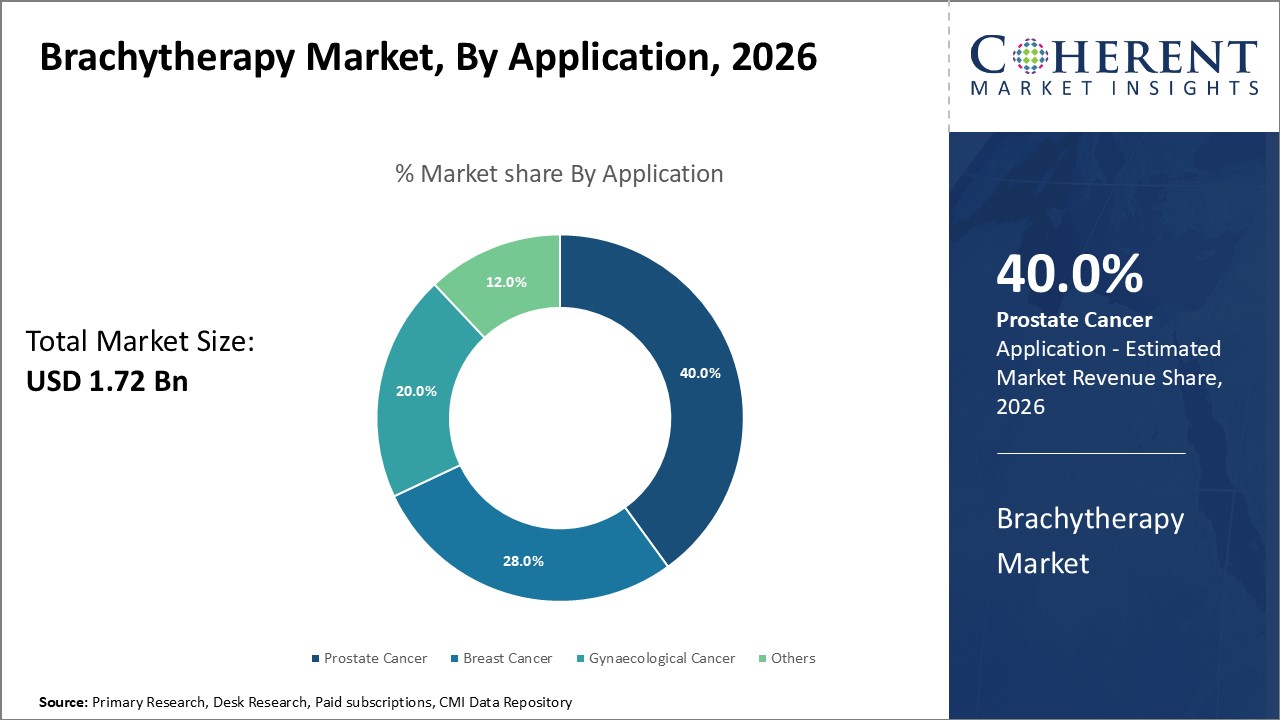
Brachytherapy Market Insights, By Application
Prostate cancer leads the market with the largest share at 40%, backed by increasing diagnostic rates and well-established treatment protocols favoring brachytherapy. This segment benefits from robust clinical evidence highlighting improved survival and reduced side effects, reinforcing its industry share dominance. Gynecological cancers are rapidly growing due to expanding screening programs and enhanced treatment accessibility, particularly in developing regions. Breast cancer applications are gaining traction with advancements enabling targeted radiation, minimizing recurrence risks.
Brachytherapy Market Insights, By Therapy Type
Permanent Brachytherapy dominates the market share due to its established efficacy in treating prostate cancer with sustained radiation doses over time. The sustained and localized treatment approach ensures minimal damage to surrounding tissues, supporting its widespread adoption. On the other hand, High Dose Rate (HDR) Brachytherapy is the fastest growing segment, driven by its precision in delivering high doses in shorter durations, improving patient throughput and clinical efficiency, particularly in gynecological and breast cancer treatments.
Brachytherapy Market Insights, By End-User
Hospitals dominate this segment with the highest market share, attributed to their comprehensive oncology services, availability of multidisciplinary teams, and infrastructure to support complex brachytherapy procedures. Ambulatory Surgical Centers represent the fastest-growing end-user segment due to their convenience, cost efficiency, and increasing capability to facilitate outpatient brachytherapy procedures, especially in developed markets.
Brachytherapy Market Trends
The brachytherapy is experiencing a shift toward hybrid therapy approaches combining brachytherapy with external beam radiation therapy (EBRT).
This trend enhances clinical outcomes and expands treatment indications, notably for complex cancer types.
In 2025, combined therapy protocols increased by 12% in leading oncology centers across Europe and North America.
Additionally, the adoption of AI-powered treatment planning systems and real-time dose monitoring technologies is revolutionizing precision treatment delivery, reducing side effects, and improving patient compliance.
Finally, the surge in ambulatory surgical centers providing outpatient brachytherapy has reshaped healthcare delivery models by improving accessibility and lowering treatment costs.
Brachytherapy Market Insights, By Geography
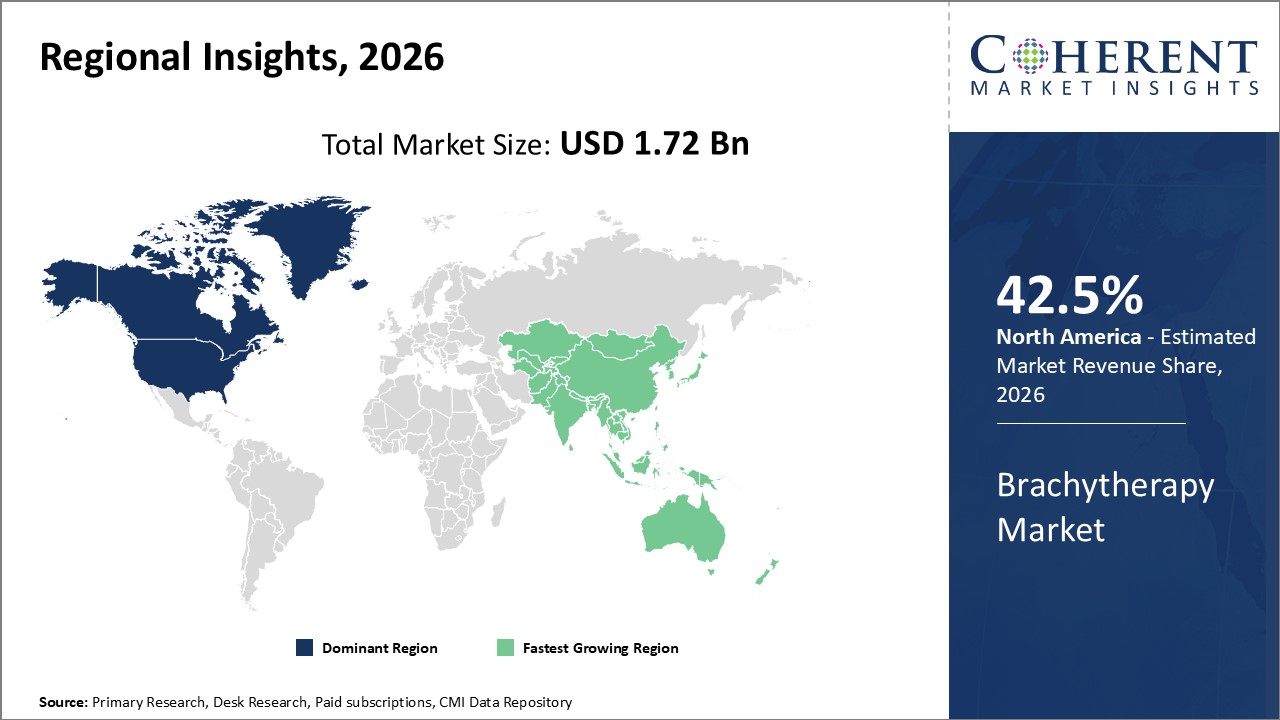
North America Brachytherapy Market Analysis and Trends
In North America, dominance in the brachytherapy market is underscored by a strong presence of leading market companies, advanced healthcare infrastructure, and proactive reimbursement frameworks. The U.S. alone contributes prominent market share, bolstered by high cancer incidence and widespread adoption of novel technologies. Market dynamics such as extensive clinical trials and governmental initiatives promoting cancer awareness sustain this regional market leadership.
Asia Pacific Brachytherapy Market Analysis and Trends
Due to the rising healthcare investments, increasing cancer patient populations, and expanding manufacturing capabilities, the Asia Pacific region exhibits the fastest growth. Countries such as China and India are witnessing rapid adoption of brachytherapy products due to enhanced government funding and expansion of oncology care networks, creating substantial market opportunities.
Brachytherapy Market Outlook for Key Countries
USA Brachytherapy Market Analysis and Trends
The U.S. market, commanding the largest share globally, benefits from advanced healthcare ecosystems and significant investments in cancer research. Noteworthy players such as Varian Medical Systems and Elekta have intensified their product innovations with image-guided and MRI-based brachytherapy solutions that improved clinical outcomes in prostate and cervical cancer treatments. Furthermore, federal support for cancer care, such as the Cancer Moonshot initiative, is facilitating wider insurance reimbursement coverage, accelerating market revenue growth in the country.
China Brachytherapy Market Analysis and Trends
In China, brachytherapy is experiencing exponential growth driven by increasing cancer prevalence and the expansion of modern oncology centers. Local companies alongside international market players are introducing cost-effective brachytherapy solutions to meet the growing demand, supported by public healthcare reforms encouraging advanced cancer treatments. The country's investments in clinical research and infrastructure upgrades have led to a surge in brachytherapy utilization, with notable uptakes observed in prostate and gynecological cancer segments.
Analyst Opinion
The prevalence of prostate cancer remains a critical demand-side indicator driving market growth. For instance, in 2025, over 290,000 new cases were recorded in the United States alone, accounting for a significant share of brachytherapy applications. This trend underscores the importance of prostate cancer treatment in expanding overall market revenue.
The adoption of advanced isotopes such as Cesium-131 and Iodine-125 has enhanced treatment efficacy, supporting higher pricing models and greater production capacities among leading manufacturers. In 2026, Cesium-131 seed implants experienced a 16% increase in clinical procedures, boosting overall supply-side expansion.
Import-export dynamics reveal an increasing cross-border trade of high-precision brachytherapy equipment, especially between North America and Asia Pacific. Notably, China's import of radiation sources surged by 22% in 2025, reflecting growing local manufacturing limitations and high demand for advanced products.
Brachytherapy Market Growth Factors
One of the primary growth factors propelling the market expansion is the rising global burden of cancer, particularly prostate, cervical, breast, and head & neck cancers. These cancers are often suitable for localized radiation therapy, making brachytherapy a preferred modality due to its ability to deliver high radiation doses directly to tumors while minimizing exposure to surrounding healthy tissues. The growing geriatric population, which is more prone to cancer, also contributes to increased demand for targeted and minimally invasive treatment options like brachytherapy.
Technological advancements have further accelerated market growth. The transition from low-dose-rate (LDR) to high-dose-rate (HDR) systems, the integration of 3D imaging and real-time treatment planning, and the development of MRI-compatible applicators have significantly improved precision, safety, and clinical outcomes.
- Current Industry Events of 2026
- Market Size Estimation
- Regional Breakdown
- Competitive Landscape
- Customer Intelligence
- Segmental Analysis
- Pricing Analysis
- Key Market Drivers, Challenges & Future Trends
- Customized Insights Section
Market Scope
| Report Coverage | Details | ||
|---|---|---|---|
| Base Year: | 2025 | Market Size in 2026: | USD 1.72 billion |
| Historical Data for: | 2020 To 2024 | Forecast Period: | 2026 To 2033 |
| Forecast Period 2026 to 2033 CAGR: | 7.5% | 2033 Value Projection: | USD 2.85billion |
| Geographies covered: |
| ||
| Segments covered: |
| ||
| Companies covered: | Elekta AB, Varian Medical Systems, Inc., C.R. Bard (a Becton Dickinson company), Eckert & Ziegler BEBIG, IsoRay, Inc., Theragenics Corporation, Siemens Healthineers AG, ViewRay, Inc., Nanovi Radiotherapeutics, Precise RadioTherapy, Nucletron (an Elekta company), Best Medical International, Xoft, Inc., MHI (Mitsubishi Heavy Industries), Eckert & Ziegler AG, RAO MedTech, BEBIG GmbH, IsoAid LLC, Oncosil Medical Ltd. | ||
| Growth Drivers: |
| ||
Brachytherapy Market Development
June 2026: Swaroop Rani Nehru (SRN) Hospital in Prayagraj, India, under the Prime Minister's Health Protection Scheme (PMSSY), unveiled a High-Dose Rate (HDR) Brachytherapy machine to enhance cancer treatment services. With the construction of the necessary radiation-safe underground bunker underway, the hospital anticipates procuring the machine soon, making advanced treatment accessible to cancer patients across the region.
In late 2025 / early 2026, Papua New Guinea’s Angau Memorial Hospital in Lae restarted its radiotherapy services and began brachytherapy treatments, especially for gynaecological cancers, supported by the International Atomic Energy Agency (IAEA). The resumption follows several years without such services, aiming to improve access to localized cancer care for a large underserved population.
Key Players
Leading Companies of the Market
● Varian Medical Systems, Inc.
● C.R. Bard (a Becton Dickinson company)
● Eckert & Ziegler BEBIG
● IsoRay, Inc.
● Theragenics Corporation
● Siemens Healthineers AG
● ViewRay, Inc.
● Nanovi Radiotherapeutics
● Precise RadioTherapy
● Nucletron (an Elekta company)
● Best Medical International
● Xoft, Inc.
● MHI (Mitsubishi Heavy Industries)
● Eckert & Ziegler AG
● RAO MedTech
● BEBIG GmbH
● IsoAid LLC
● Oncosil Medical Ltd.
Among these market companies, Elekta AB and Varian Medical Systems have adopted aggressive growth strategies by expanding their R&D capabilities and integrating AI-driven treatment planning. For example, Varian’s acquisition of ViewRay in 2025 enhanced its portfolio with MRI-guided brachytherapy technology, improving clinical outcomes and market share. Meanwhile, C.R. Bard has focused on product portfolio diversification, launching novel isotope delivery systems that increased hospital adoption rates by 19% in 2026.
Brachytherapy Market Future Outlook
The future outlook for the brachytherapy market is optimistic, with forecasts projecting significant growth over the next decade. Key drivers include the increasing incidence of cancer worldwide, the demand for cost-effective and precise radiation therapies, and continued adoption of advanced HDR and image-guided techniques. Moreover, the integration of AI in treatment planning and the rise of personalized medicine are expected to enhance the accuracy, speed, and safety of brachytherapy procedures, particularly in prostate, cervical, and breast cancers.
Additionally, growing awareness among oncologists and patients, supportive clinical guidelines, and the availability of innovative applicators and radioactive isotopes are set to boost demand. Challenges such as training shortages, regulatory hurdles, and reimbursement disparities may persist, but strategic collaborations, digitization of workflows, and increased public-private partnerships are expected to mitigate these barriers, shaping a robust and inclusive global brachytherapy market.
Brachytherapy Market Historical Analysis
Over the past decade, the brachytherapy market experienced steady growth, largely driven by the rising global cancer burden—particularly gynecological, prostate, and breast cancers. Historically, North America and Europe dominated the market due to their early adoption of image-guided and high-dose-rate (HDR) brachytherapy systems, well-established cancer care infrastructure, and favorable reimbursement policies. Countries like India, China, and Brazil gradually expanded their radiotherapy capacity, supported by public health initiatives and international collaborations (e.g., with the IAEA).
Technological advancements also played a key role in shaping the market historically. The transition from low-dose-rate (LDR) to HDR systems, increased use of 3D imaging, and the integration of treatment planning software improved treatment precision and outcomes. While surgical and external beam therapies remained dominant modalities in the early 2010s, brachytherapy gained traction due to its minimally invasive nature, reduced treatment times, and localized delivery of radiation.
Sources
Primary Research Interviews
Oncologists (Radiation Oncologists)
Brachytherapy Technologists
Medical Physicists
Cancer Center Administrators
Databases:
World Health Organization (WHO) Database
International Atomic Energy Agency (IAEA) Database
U.S. Food and Drug Administration (FDA) Database
Centers for Medicare & Medicaid Services (CMS)
Central Drugs Standard Control Organization (CDSCO), India
Magazines:
Oncology Times
World Pharma Today
PharmaLive
Cancer Today
HealthCare Business News
Diagnostic Imaging Magazine
Journals:
Brachytherapy (Journal of the American Brachytherapy Society)
Radiotherapy and Oncology
International Journal of Radiation Oncology • Biology • Physics
Journal of Contemporary Brachytherapy
Journal of Medical Physics
Cancer Radiothérapi
Newspapers:
The Hindu (Health)
Times of India (Health & Wellness)
The Guardian (Global Health)
The New York Times (Health)
Economic Times (Health & Pharma)
Washington Post (Science & Health)
Associations:
American Brachytherapy Society (ABS)
European Society for Radiotherapy and Oncology (ESTRO)
Indian Brachytherapy Society
International Organization for Medical Physics (IOMP)
Association of Medical Physicists of India (AMPI)
International Agency for Research on Cancer (IARC)
Get access to 250+ pages report
Every segment, forecast, competitor profile and data table behind the analysis above — available for instant download.
- ESOMAR Member
- ISO 9001:2015 Certified
- D-U-N-S Registered
- GDPR & CCPA Compliant
Missing comfort of reading report in your local language? Find your preferred language:
Transform your Strategy with Exclusive Trending Reports
Frequently Asked Questions
The dominant players include Elekta AB, Varian Medical Systems, and C.R. Bard, which hold significant market shares due to their extensive product portfolios and innovation-driven growth strategies.
The market size is projected to reach USD 2.85 billion by 2033, growing at a CAGR of 7.5% from 2026 to 2033, based on increasing cancer prevalence and technological advancement.
Hospitals represent the largest growth opportunity owing to the presence of comprehensive oncology centers and accessibility to advanced brachytherapy facilities globally.
The market is expected to witness greater integration of AI technologies, hybrid treatment models, and expansion in ambulatory surgical centers, improving treatment precision and patient outcomes.
The competitive landscape is marked by innovation in isotope delivery and treatment planning systems. Challenges include high equipment costs, regulatory approvals, and limited awareness in emerging regions.
Players focus on strategic acquisitions, R&D investments, partnerships with healthcare institutions, and expansion into emerging markets to enhance market presence and revenue.